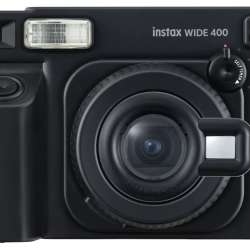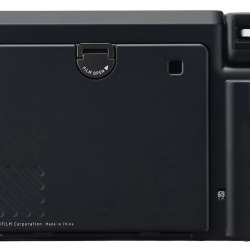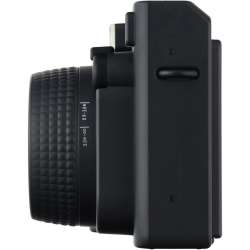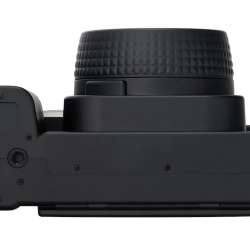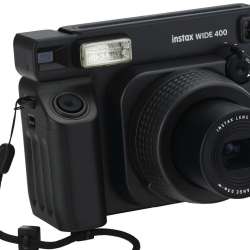
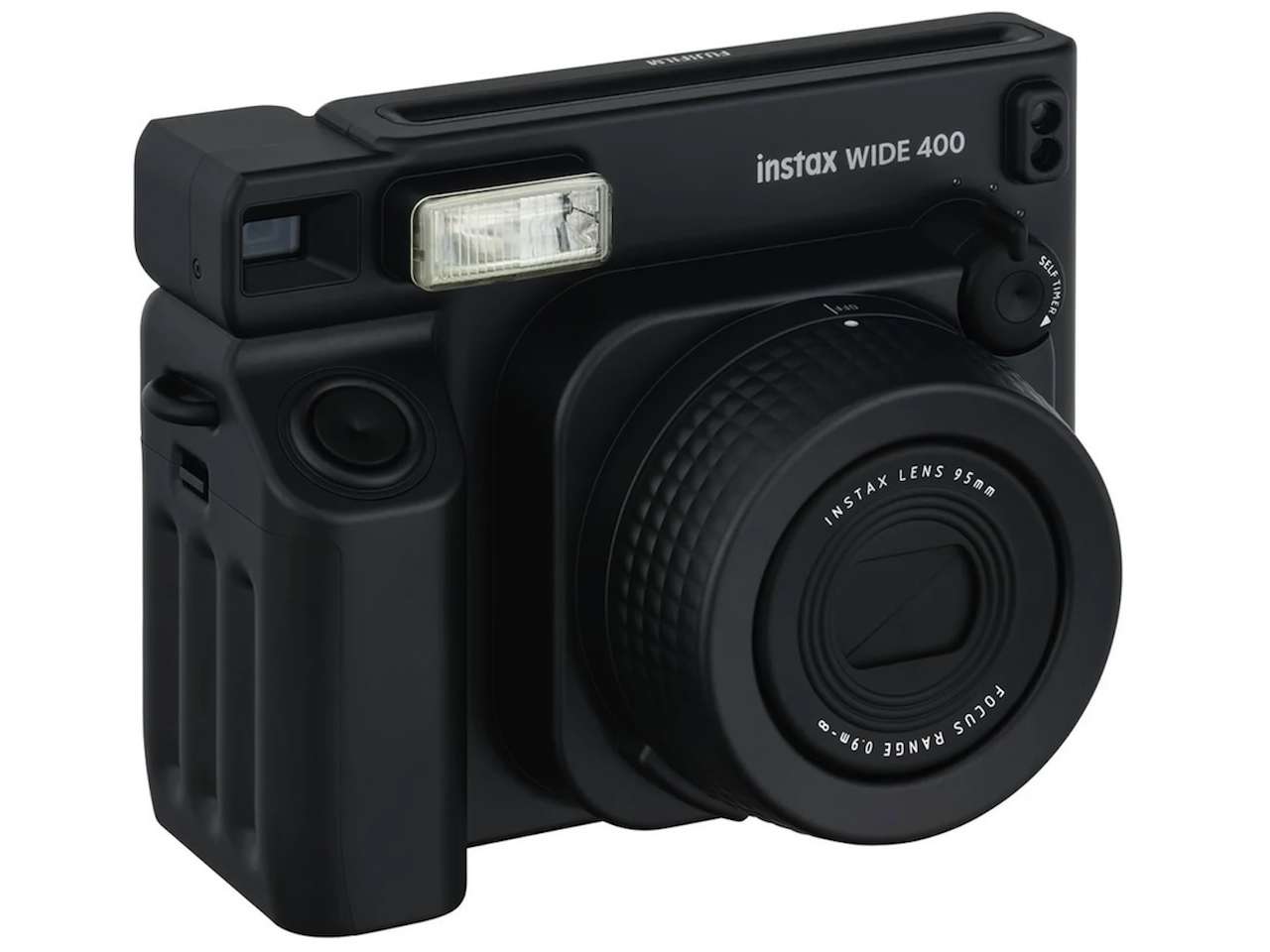
Fujifilm is adding a jet black colorway to its Instax Wide 400 instant camera, giving the company’s largest consumer instant camera a more refined look nearly two years after its initial launch. The original sage green model arrived in June 2024 with a clear focus on simplicity and wide format prints. Now the same camera gets a matte black finish that targets a broader, more style-conscious audience. It’s a smart expansion of the Instax lineup that doesn’t require any new engineering. The black model shares every spec with the green version.
Price: $174.95
Where to Buy: Adorama, B&H
This release comes days after Fujifilm refreshed its most popular instant film camera, the Instax Mini 13. Instant film continues to be a reliable revenue driver for the company, which posted record revenue and profits earlier this year. The Instax product family spans everything from entry-level Mini cameras to the hybrid digital Wide EVO, and Fujifilm keeps filling gaps between them. Adding a second colorway to the Wide 400 fits that pattern.
The black finish opens the camera to a different audience, one that found the sage green a bit much for their style. The matte black body wouldn’t look out of place at a wedding, a dinner party, or a gallery opening. That kind of visual range is exactly what the green version lacked.
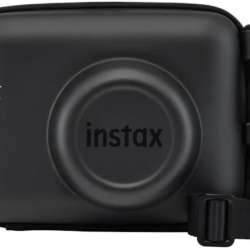
The jet black Instax Wide 400 is available for preorder now and ships on March 31. Pricing matches the sage green model at $174.95, a clean move that avoids any premium for the new finish. A coordinated black carrying case launches alongside it at $22.50.
What the new finish changes
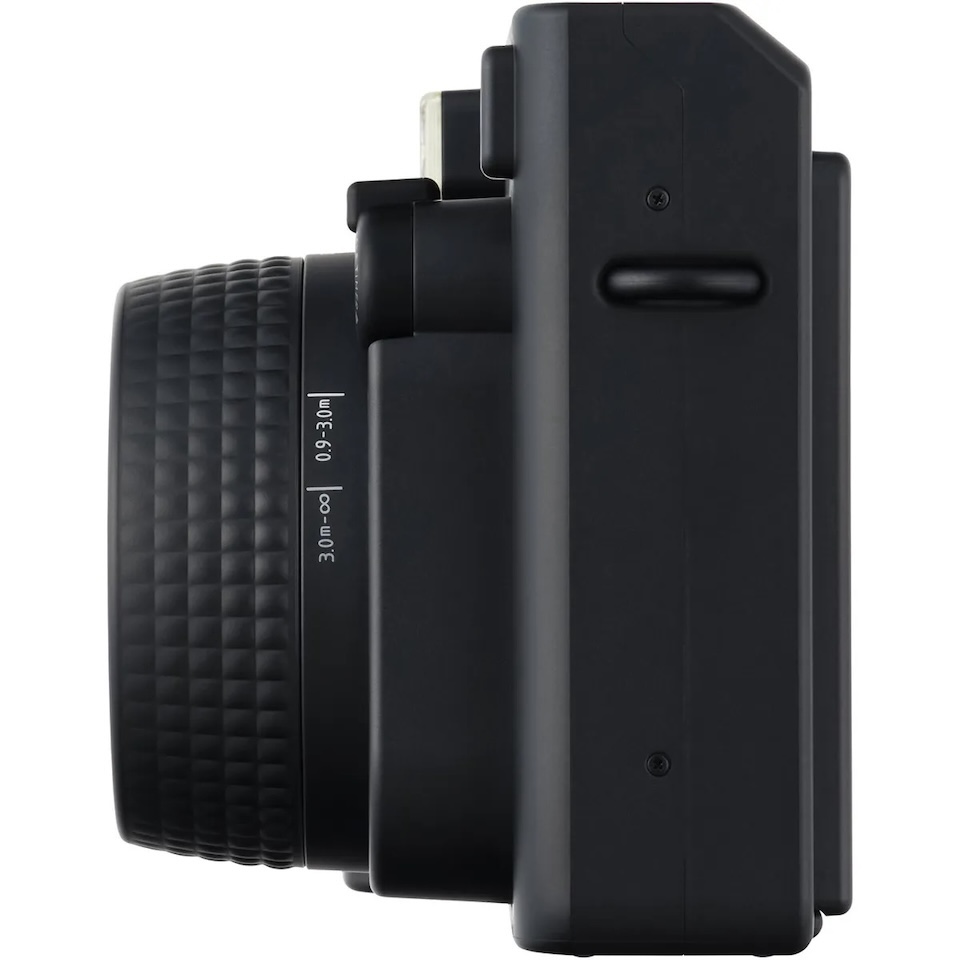
The matte black surface changes the camera’s presence more than a color swap suggests. Where the sage green felt light and casual, the jet black absorbs light and reads as deliberate. The proportions remain identical, but the darker finish gives the body a sense of weight the green couldn’t manage. Fujifilm describes the colorway as conveying “a calm and refined impression.” The matte texture also resists fingerprints, a practical benefit for a camera that gets passed around at events.
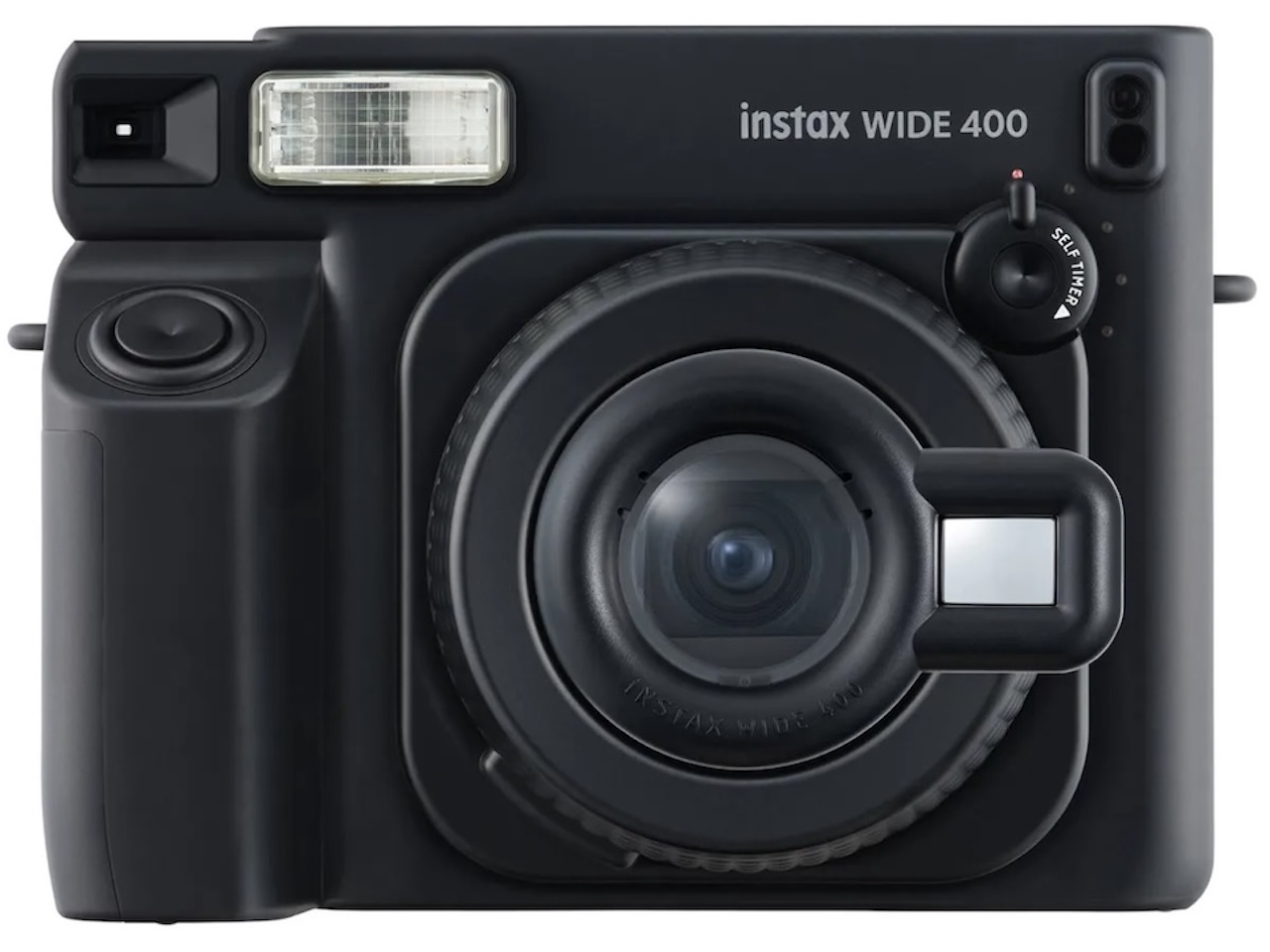
Fujifilm calls out weddings, parties, and formal occasions as ideal settings for the jet black model, a noticeable shift from the Wide 400’s original marketing. The sage green leaned into casual energy suited to outdoor snapshots. Black broadens the camera’s appeal without changing how it performs, fitting dressier settings and reading cleaner as a shelf display or flat lay prop. The company has consistently expanded its Instax line through color variants rather than redesigns, generating retail visibility for a category built on impulse purchases.
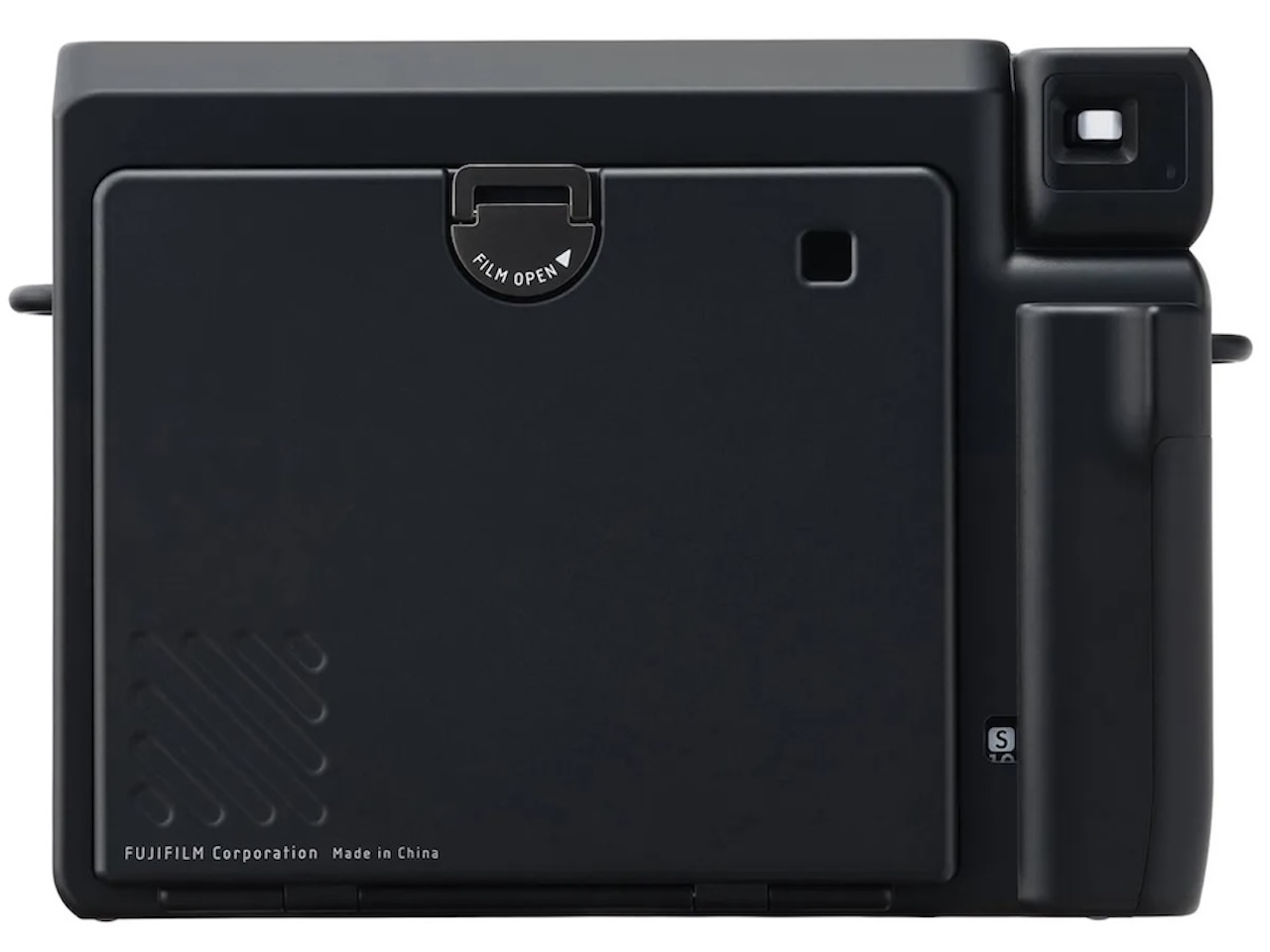
Internally, the jet black Wide 400 is the same camera Fujifilm released in 2024. It shoots on wide format Instax film measuring 3.4 by 4.25 inches, more than double the print area of a standard Mini shot. Its retractable 95mm f/14 lens covers a field of view close to 35mm equivalent. Automatic exposure handles all metering with no manual control. The camera feels well-built and looks stylish in either color, and someone with no experience can be shooting within seconds.
Pricing and availability
The Fujifilm Instax Wide 400 Jet Black is available for preorder now at $174.95, with the matching black case at $22.50. Both ship on March 31 through Fujifilm’s usual retail partners, including B&H Photo. The sage green model stays available at the same price point, and both options will coexist going forward. Wide format Instax film is sold separately and remains unchanged from existing stock. Existing wide format film stock works with the new camera immediately.
Price: $174.95
Where to Buy: Adorama, B&H
The choice between green and black is purely aesthetic. There’s no performance difference between the two and no limited edition scarcity driving urgency. The matte black finish does position the Wide 400 as a more gift-friendly option, since a camera that looks refined out of the box requires less explanation for someone new to instant photography. Whether the black finish translates to stronger sales will depend on how well it resonates with the slightly older, more style-conscious audience Fujifilm is targeting. The camera itself hasn’t changed, but the way it presents itself to the world is noticeably different. Beyond color, the two cameras are identical.