
REVIEW – Most phones at $630 ask you to pick your battles. Keep the battery, lose the camera. Get the processor, shrink the screen. skipped that conversation entirely, and then skipped a whole generation number while they were at it. The 17 jumped straight from 15 to 17, a move that puts it nose to nose with the iPhone on store shelves and search results.
But forget the numbering stunt. What lands harder is the spec sheet: a 6,330 mAh silicon-carbon battery stuffed into a 6.3-inch body, Snapdragon 8 Elite under the glass, and triple 50MP Leica Summilux optics you can actually feel in the color science. This isn’t a budget phone pretending to compete. It’s a compact flagship that showed up with receipts.
Price: $630 MSRP | $955.13
Where to Buy: Amazon
What the Xiaomi 17 actually is (and isn’t)
The Xiaomi 17 is the compact entry point in Xiaomi’s 2025 flagship range, sitting below the Pro, Pro Max, Ultra, and Ultra Leica Edition. Xiaomi is positioning it directly against the base iPhone 17.
The Xiaomi 17 specs tell the story fast. Snapdragon 8 Elite Gen 5, 12GB of RAM, 256GB or 512GB of storage. The 6.3-inch display peaks at 3,500 nits, putting it among the brightest screens at this price. Battery capacity sits at 6,330 mAh in a silicon-carbon cell with 824 Wh/L energy density. For something this compact, that’s a serious number.
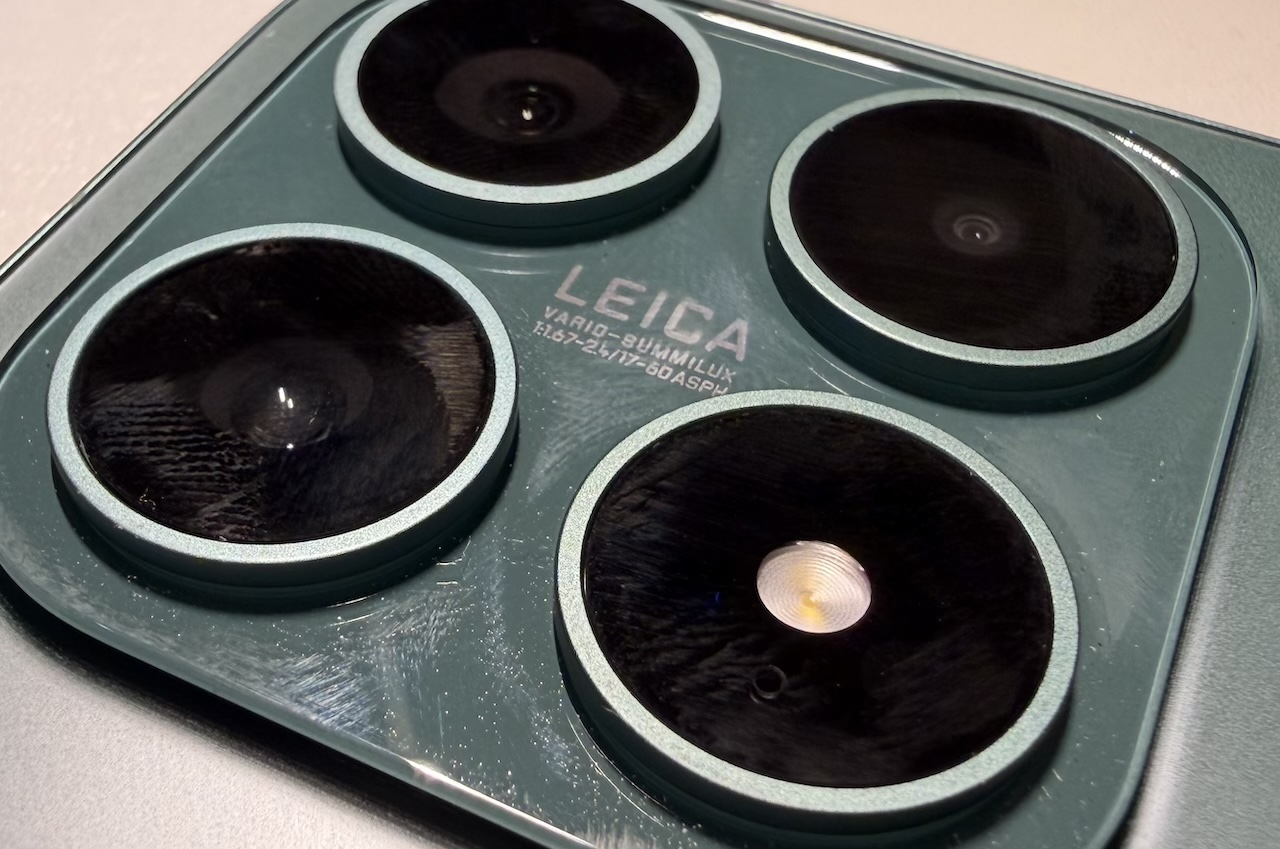
Cooling runs through what Xiaomi calls the “Stereoscopic Annular Cold Pump,” a name that belongs on a sci-fi prop sheet but claims 3x faster heat dissipation than traditional vapor chambers. All three rear cameras shoot at 50MP: a Light Fusion 950 main sensor (1/1.31″, f/1.67, 13.5EV dynamic range), a 60mm floating telephoto with 5x optical zoom and 10cm macro, and a 102-degree ultra-wide. The 50MP front camera adds autofocus. Video reaches 8K at 30fps, 4K Dolby Vision at 60fps, and Log recording. HyperOS 3 runs the software side, with Black, Venture Green, Alpine Pink, and Ice Blue as your color options.
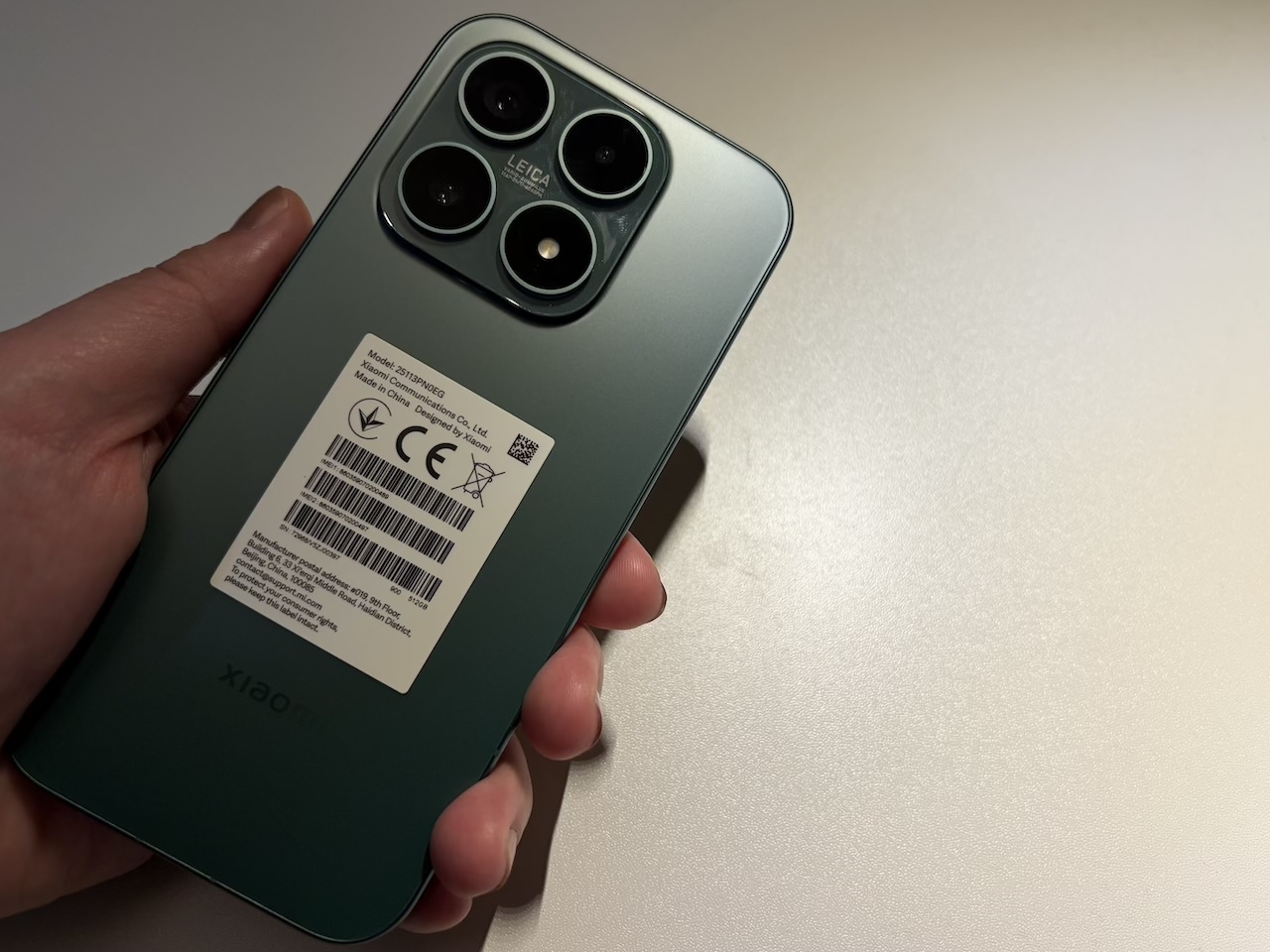
Xiaomi 17 design and build: familiar lines, new muscle
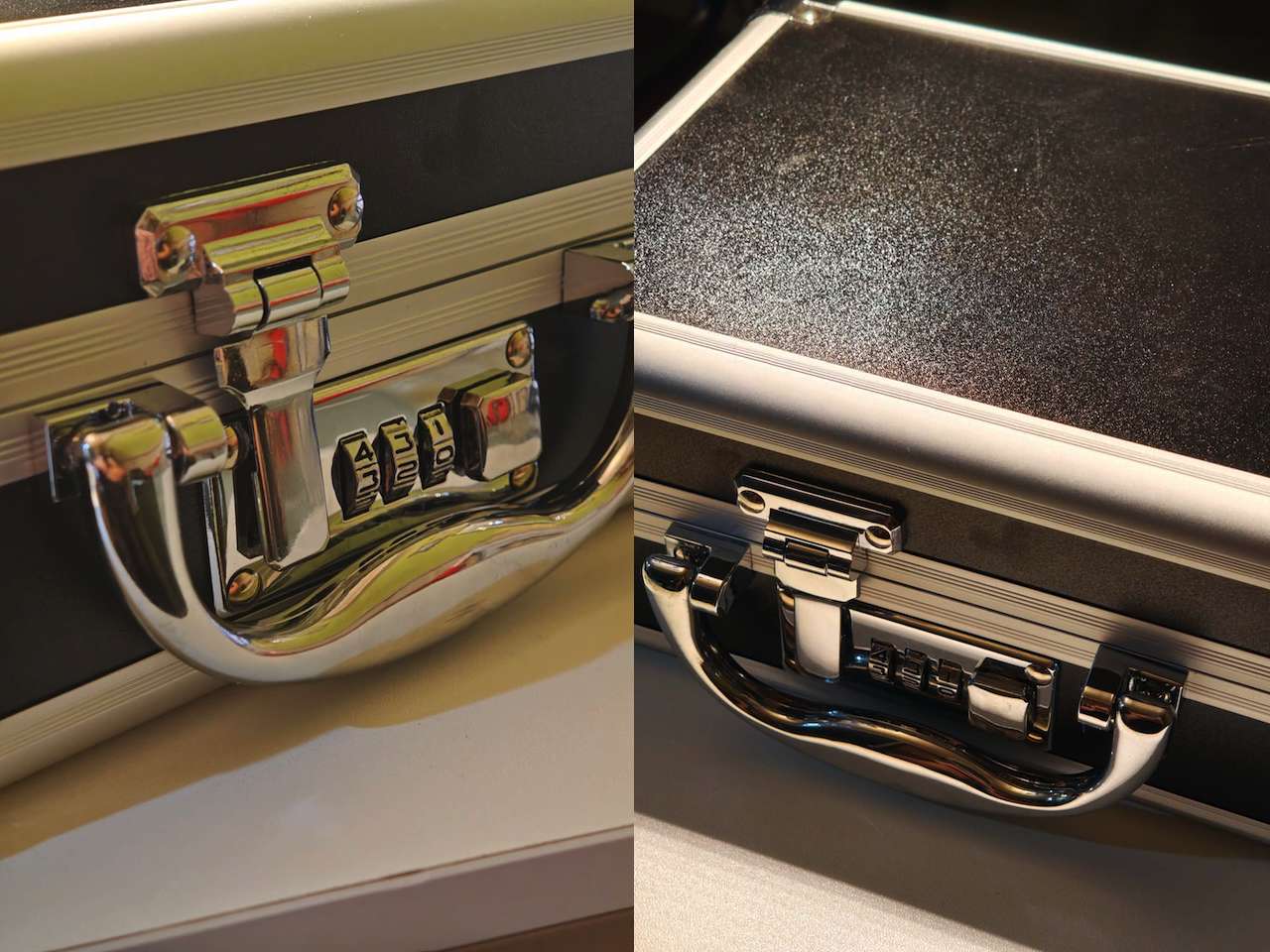
Four weeks ago, this phone showed up on my doorstep in a sleek aluminum case, and the presentation was top-notch. It felt like a high-end piece of tech, but without the ‘fragile’ anxiety, since today’s phones are built so tough. Even for the base model, it felt incredibly special.
I stopped fiddling with display settings after the first day. Text looks sharp at every size, and the screen runs slightly warm out of the box. That warmth actually works in your favor: photos and video look richer and more lifelike than the cooler, washed-out tones you get on a lot of phones. Color transitions stay smooth where cheaper screens would show ugly streaks, and the color range covers what photographers and editors care about. The borders around the screen are so thin you stop noticing them within minutes.
Take this phone outside on a bright day and you can still see everything. Reading texts, checking maps, snapping a photo: none of it requires you to cup your hand over the screen or duck into the shade. Most phones around this price make you squint outdoors, and the Xiaomi 17 doesn’t. The screen gets brighter on its own when it needs to, and the switch happens so fast you won’t catch it.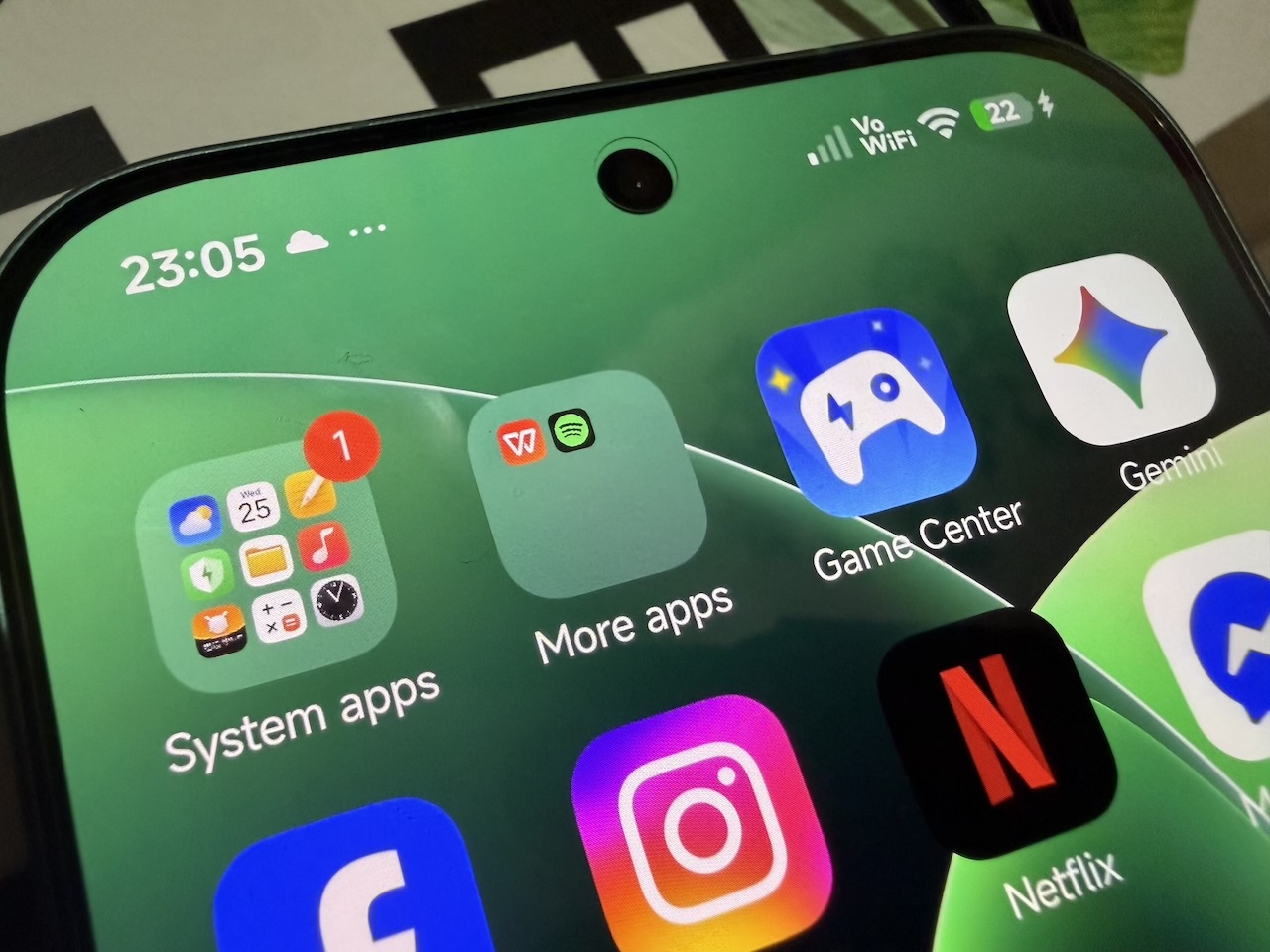
Everything scrolls smoothly, and games look great without draining the battery. The screen adjusts on its own depending on what you’re doing, and it does it so well you won’t even think about it. Where you’ll feel the difference is at the end of the day, when you’ve still got plenty of charge left. This screen sips power compared to last year’s Xiaomi 15, and over a full day of use, that adds up.
This phone looks a lot like a recent iPhone. The flat edges and camera layout make that obvious the moment you pick it up. Some people won’t mind because it feels familiar. Others will call it a copy. Either way, most buyers will slap a case on it and move on.
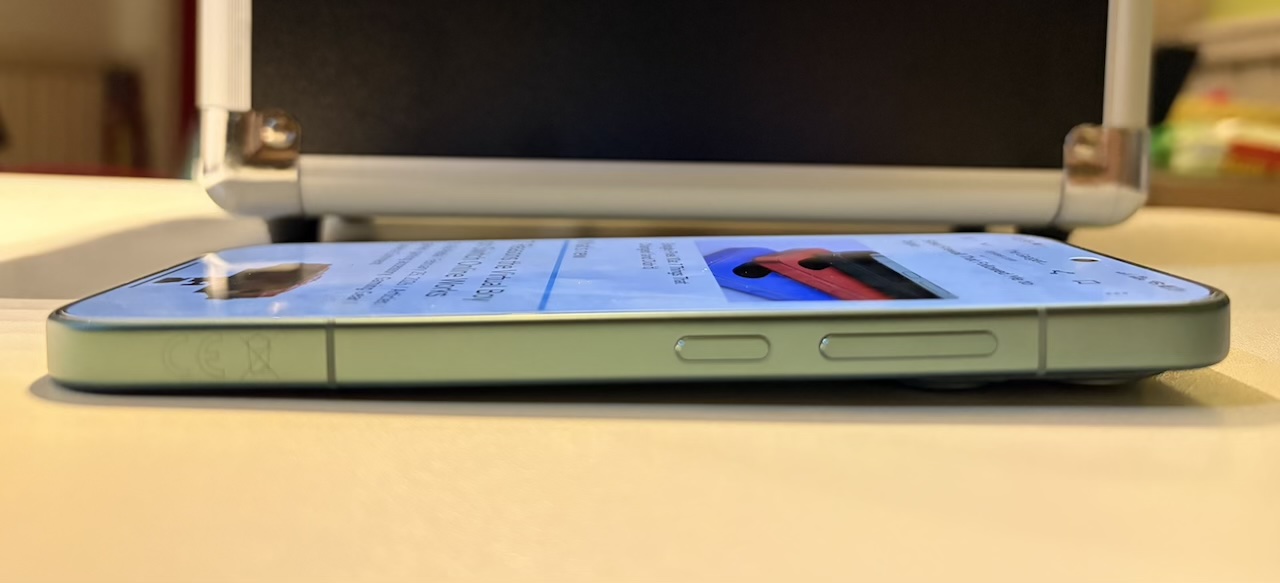
Buttons sit on the right side: volume rocker top, power/lock below. Both feel solid under your thumb with a satisfying click that doesn’t wobble or rattle inside the aluminum frame. Xiaomi got the spacing right here, and you can tell because you won’t accidentally hit the wrong one while reaching across the screen.
The stereo speakers surprised me. At half volume they’re clear and full enough for a YouTube video in the kitchen, and pushing past 75% doesn’t introduce the tiny distortion you’d expect from a phone this thin. Voices stay distinct from background music, which is a small win for podcast listeners. Dolby Atmos adds some spatial width when you’re wearing earbuds, though the effect through the speakers themselves is subtle. If you put this next to an iPhone playing the same track, you’ll notice the Xiaomi holds its own without sounding strained.
The haptics are good. Each keystroke on the stock keyboard feels like a short, clean tap instead of a loose buzz. Notifications come through as a gentle pulse you can feel in your pocket without it being annoying. Most Android phones at this price don’t get the vibration right, and the Xiaomi 17 does.
Snapdragon 8 Elite performance: what the Xiaomi 17 handles
The Snapdragon 8 Elite is Qualcomm’s top silicon right now, and it handles everything I’ve thrown at it without hesitation. Chrome, Gmail, Instagram, Messenger, and Calendar all open in one to two seconds. Coming from an iPhone 12 where some apps took a good five seconds to fully load, the difference is immediate and obvious. Switching between apps felt instant, and I didn’t notice any stutters or frame drops during normal use.
That cooling system name is ridiculous, but if it actually prevents throttling during extended sessions, I’ll forgive whoever signed off on it. After about ten minutes of gaming, the phone gets warm to the touch. Not hot. Not uncomfortable. Warm, the way you’d expect any phone to feel when it’s working hard. I kept waiting for the heat to build up and it didn’t. The case might be absorbing some of it, or the cooling system is doing its thing, but the result is the same: you can game for a good stretch without wanting to put the phone down. Most phones at this price would’ve turned into a hand warmer by now, and the Xiaomi 17 never got there.
The 12GB of RAM keeps apps in memory well. I didn’t notice aggressive background killing during my use, though.
Xiaomi 17 battery life: 6,330 mAh silicon-carbon in a compact body
Six thousand three hundred thirty milliamp hours, packed into a silicon-carbon cell that Xiaomi calls the Surge Battery. That number, combined with 100W wired and 50W wireless charging, is the single biggest reason this phone caught my attention, and it’s the spec most likely to convince someone to buy it over an iPhone.
My daily routine isn’t heavy. I check email, scroll through Slack notifications, browse the The Gadgeteer site, hop between messaging apps, and spend time on Facebook. Reels pull me in for maybe one to two hours total across the day, and I’m messaging friends throughout. With Wi-Fi always on and that usage pattern, plus letting my kid play Roblox for at least an hour, the Xiaomi 17 lasted three full days before needing a charge. That’s not a typo.
The real test came when I traveled out of town for a wedding. I spent most of the day shooting video on mobile data, which is about as demanding as phone usage gets. It took from morning to evening to drop from 100% to 50%. Most phones I’ve used would’ve been dead or gasping by dinner. (My iPhone 12 was down to 30% during our one hour travel. That bad, I know.)
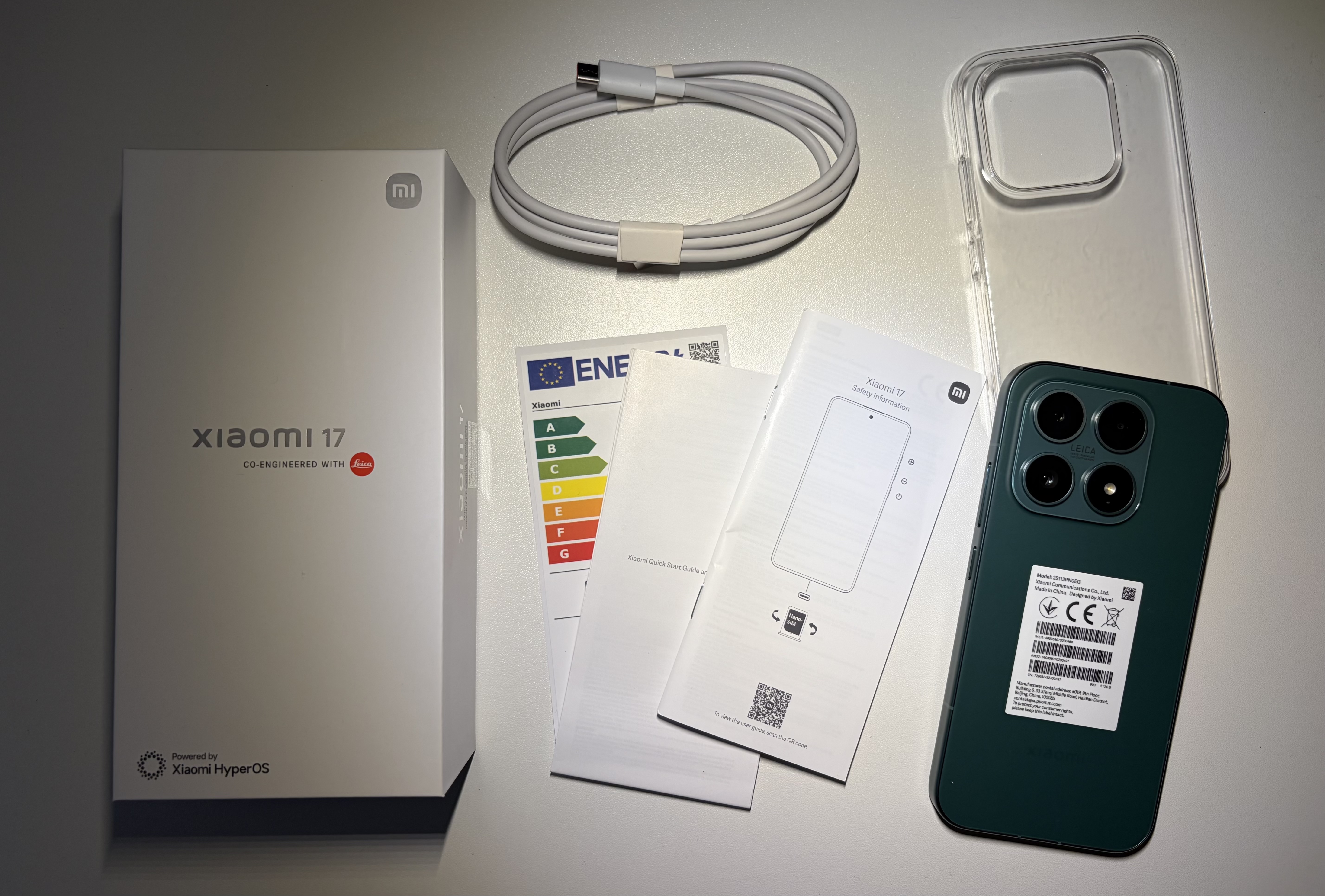
Xiaomi doesn’t include a charger in the box, just a USB-A to USB-C cable. I plugged into an old Adaptive Fast Charging wall charger I had lying around, and it took roughly an hour to go from 20% to full. That’s with a basic charger, not Xiaomi’s 100W brick. You’d likely cut that time in half with the right adapter.
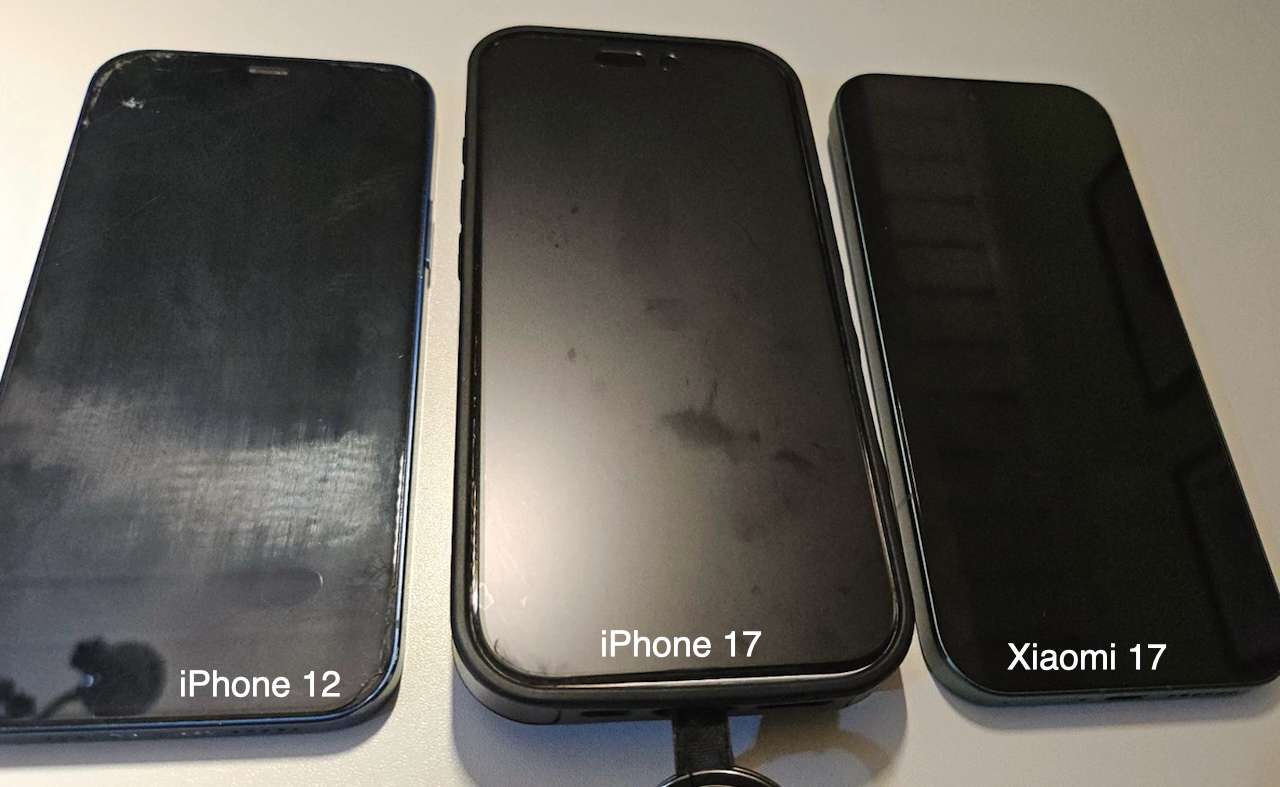
I’ve got an iPhone 12, an iPhone 17, and a Galaxy Z Flip 5 at home. The Xiaomi 17 battery life outlasts all of them, and it isn’t close. This is the one spec where the number on paper matches exactly what you feel in your hand at the end of a long day. The 6,330 mAh battery isn’t a marketing headline. It’s the reason I stopped carrying a power bank.
Xiaomi 17 camera with Leica tuning: where it lands
The Leica branding is here, and so is a genuinely strong camera setup. Three 50MP rear cameras: a Light Fusion 950 main sensor (1/1.31″, f/1.67, 13.5EV dynamic range), a 60mm floating telephoto with 5x optical zoom and 10cm macro, and a 102-degree ultra-wide. The 50MP front camera gets autofocus with auto-framing. Video goes up to 8K at 30fps, 4K Dolby Vision at 60fps, and Log recording at 4K 60fps.


Daylight shooting is a treat. Sharpness and color accuracy hit right from the first snap, and the dynamic range held up even when the sky went from clear to overcast mid-session. I shot through a sudden cloudy stretch while out of town and the photos still got the full scene without blowing out the sky or losing the shadows. That’s a nice surprise for a phone at this price.
I’ll be honest: I forgot about the Leica branding after the first few days. Whether it’s the Leica tuning doing the work or the Light Fusion 950 carrying the load on its own, I can’t tell. The colors come out natural and warm without looking processed, and that’s the best thing I can say about any phone camera. You notice it when you scroll back through your gallery and everything looks the way you remember it.
 Where the Xiaomi 17 camera caught me off guard was the zoom. I pushed it all the way to 60x on a distant tree and the result was still usable, sharp enough to crop and share. At 5x optical it’s genuinely clean. I can’t wait to try this at a concert or an outdoor event where reach matters more than wide framing.
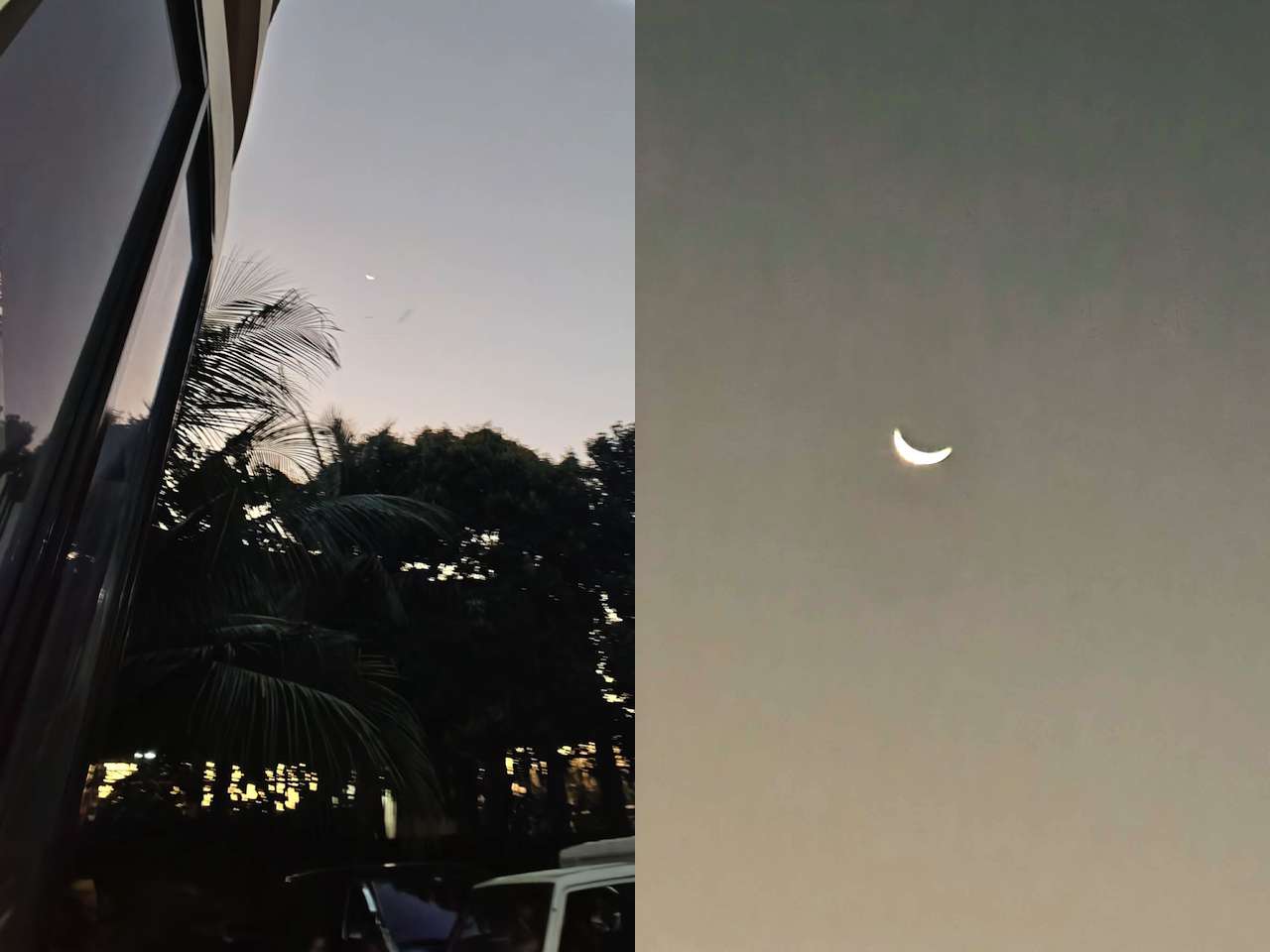
I only got one early evening session out of town for low-light, but I managed to capture the moon with detail I never pulled off on my old iPhone 12. Night photos landed on par with the iPhone 17 and the Galaxy Z Flip 5, maybe a step ahead of both. Noise stayed controlled and the processing didn’t smear everything into mush.
Selfies made me look good without me touching a single setting. The autofocus locked on fast, the auto-framing adjusted when I shifted angles, and the skin smoothing was subtle enough to feel real. I’m not changing anything in the beauty settings. I’m happy with what I see. (But I’m not sharing here. :p )
Video has 4K and 8K with 30fps and 60fps options, and stabilization stayed smooth across everything I shot. For everyday clips and social posts, it gets the job done without drama. Nothing wildly different from the iPhone 17 in normal use, but a clear step up from the iPhone 12 and the Z Flip 5. If you’re not doing pro-level video work, this won’t hold you back.




HyperOS on the Xiaomi 17: the software tradeoff
Every Android phone maker does things a little differently. Samsung has One UI, Google has stock Android, and Xiaomi has HyperOS. If you’ve used any Android phone before, you’ll figure it out fast. The basics are all there, and the layout won’t throw you off. But coming from iOS like I did, the first few days tested my patience. Things aren’t where you expect them to be, settings are organized differently, and some gestures just don’t work the way your fingers remember. I caught myself tapping the wrong corner more than once.
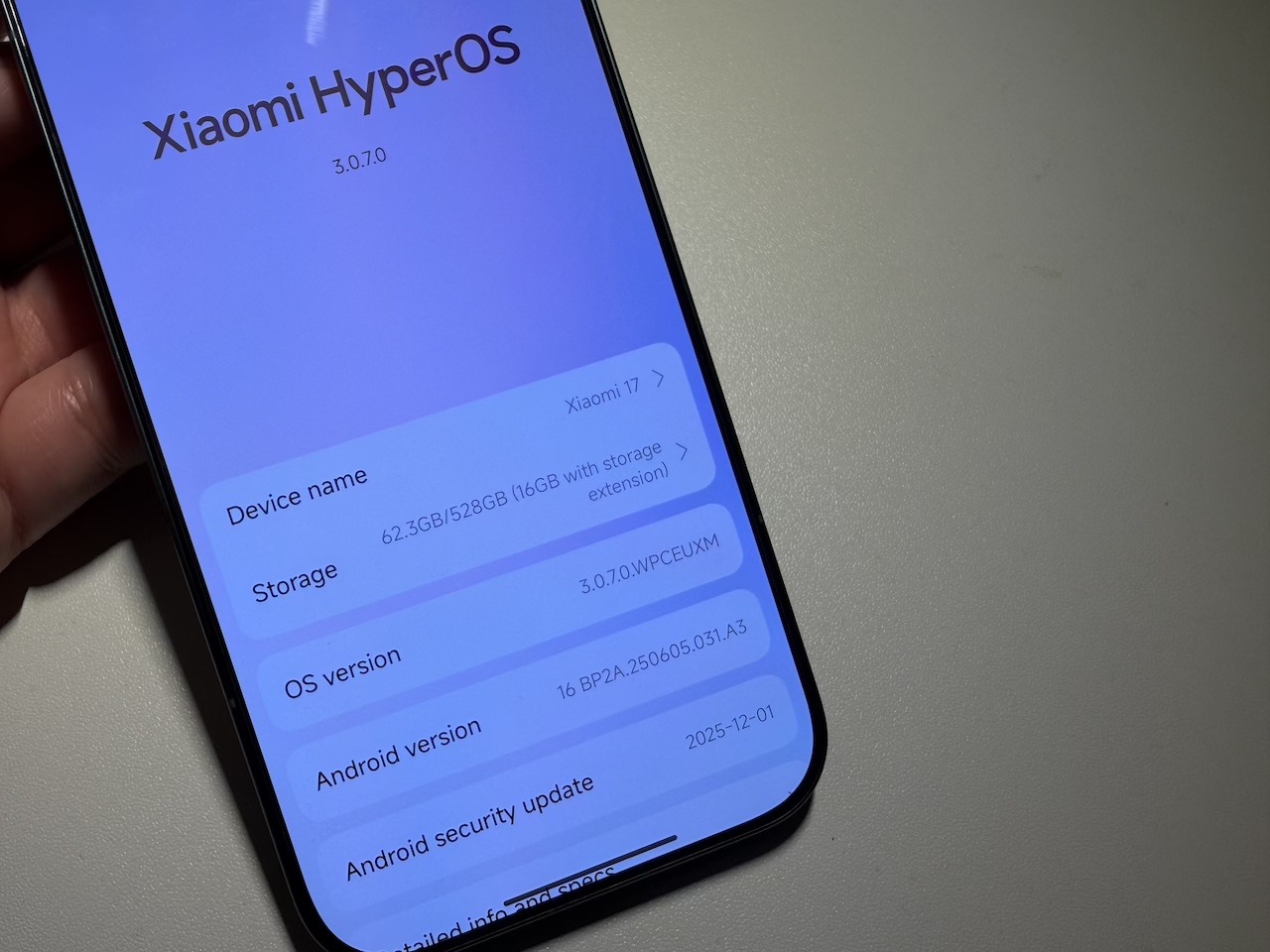
That said, it clicks after about a week. Once I stopped looking for the iPhone version of everything and let HyperOS be its own thing, daily use felt smooth. It’s not iOS, and it doesn’t try to be. For anyone already on Android, this won’t even register as a learning curve. For iPhone users thinking about switching, just give yourself a few days before you judge it.
How I tested the Xiaomi 17
I’ve had the Xiaomi 17 for four weeks. It wasn’t my only phone, but it got close. Most days I carried it alongside my iPhone 12, using the Xiaomi for email, Slack, Messenger, and the usual social media scroll. Facebook and Instagram got the most screen time after work hours, with Reels pulling me in more than I’d planned. Photography happened whenever something caught my eye. I made a wedding reel with it and I’m happy with how it turned out, coming from someone who isn’t a videographer and was really there as a friend with a phone.
When we went out, my kid took over. YouTube was the go-to, capped at 30 minutes per session because screen time rules still apply even on review units. Gaming fell to the little one too, and the feedback was straightforward: the phone gets warm after about 15 minutes of play, but nothing that made it uncomfortable to hold. It never got hot enough to put down, and battery held up through a full hour of gaming without needing a top-up. That said a lot more about the 6,330 mAh cell than any benchmark would.
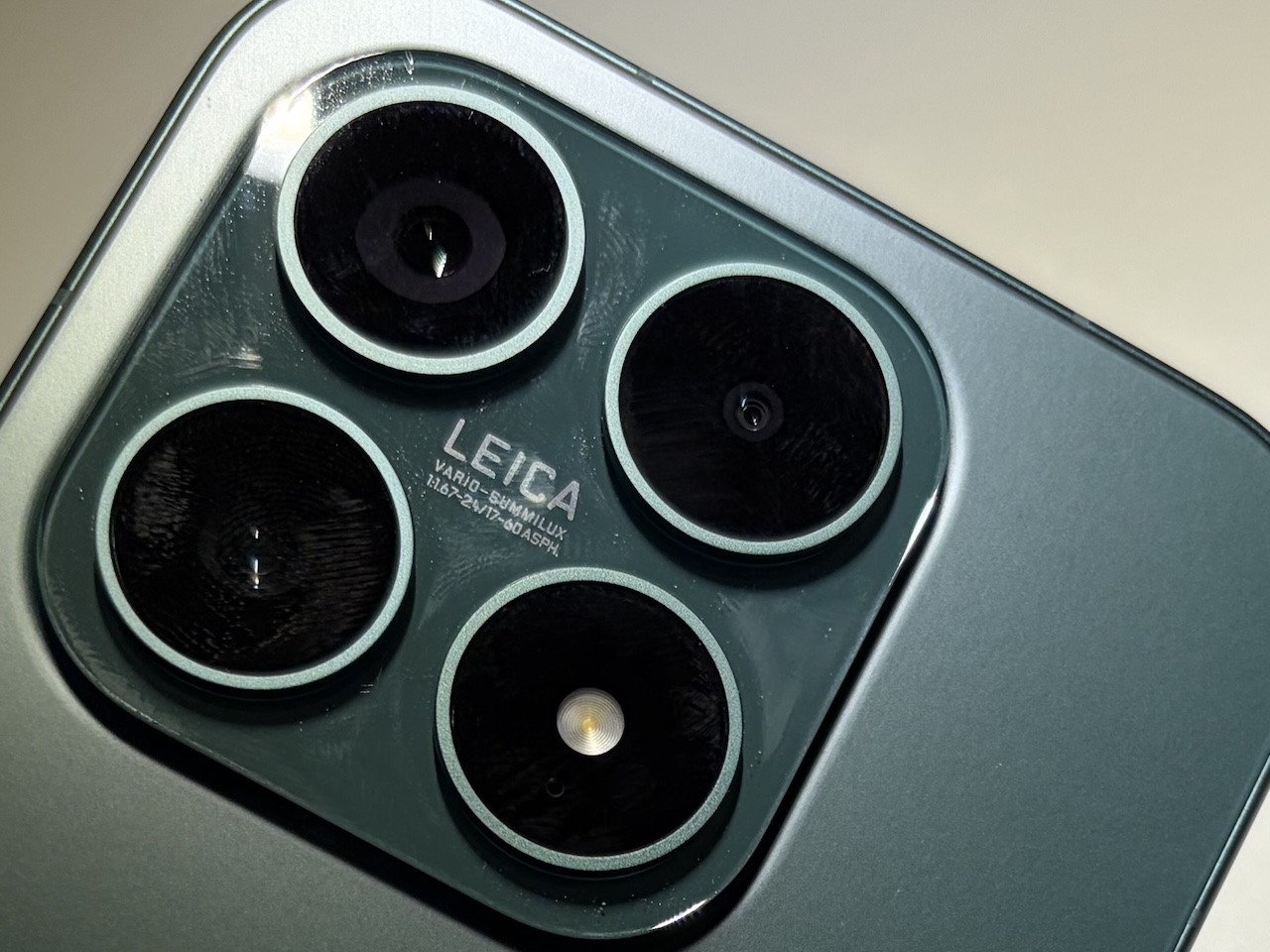
Outdoor brightness got a real workout under direct sunlight, which is about as harsh as screen testing gets. The phone came with a transparent case in the box, and I used it for the full four weeks. After living with it daily, I don’t think I’d ever use this phone without one. The glass back picks up fingerprints fast, and the flat edges feel like they’d show every micro scratch if you went bare. That said, the Xiaomi Shield Glass held up well under the case, and the 6M42 aluminum frame still looks clean after a month of pocket-and-table life.
Who the Xiaomi 17 is for (and who should skip it)
Best for: You want a fast phone with a battery that won’t quit, and you don’t want to spend over $700 to get it. If you’re upgrading from an older Android and want something compact that still feels like a flagship, this is the one I’d point you to.
Also good for: iPhone users who’ve been curious about Android but didn’t want to pay Samsung prices. The flat edges feel familiar if you’re coming from an iPhone, and the money you save leaves room for a case and charger.
Skip it if: You care more about cameras than anything else (the Ultra is where Xiaomi put the best hardware). You want years of guaranteed software updates (Samsung and Google still have the edge there). Or you’re deep in the Apple world and switching means giving up iMessage, AirDrop, and your Apple Watch.
Xiaomi 17 vs iPhone 17: the $630 question
Xiaomi picked this fight with the numbering, so let’s talk about it. The Xiaomi 17 costs around $630. The iPhone 17 starts at $799. That’s $170 you’re saving before you even open the box, and honestly, what you get for that lower price doesn’t feel like a compromise.
Battery is where the gap hits hardest. The Xiaomi 17 has 6,330 mAh. The iPhone 17 sits at 3,692 mAh. I got three days on a single charge doing my usual stuff, and my iPhone 17 still needs the charger every night. Charging speed isn’t close either: 100W wired on the Xiaomi versus 40W on the iPhone. You notice that difference when you’re rushing out the door.
Screens are both 6.3 inches, both 120Hz, and both look great when you’re indoors. Take them outside and the Xiaomi pulls ahead. It gets up to 3,500 nits versus 3,000 on the iPhone. Under sunlight, I could read the Xiaomi clearly while the iPhone needed me to cup my hand over the screen. That alone told me a lot.
Cameras are where it got personal for me. The Xiaomi 17 has three 50MP cameras, including a 5x optical zoom telephoto. The iPhone 17 has two 48MP cameras with no dedicated telephoto lens, just a 2x crop zoom from the main sensor that Apple calls “optical quality.” The Xiaomi gives you a real 5x optical telephoto with a separate lens. For the stuff I actually shoot (food, my kid, random street moments) the Xiaomi gave me warmer colors and more natural results. The iPhone photos were fine, but the Xiaomi photos looked closer to what my eyes saw. I didn’t expect that.
Software is where the iPhone still wins, and I won’t pretend otherwise. iOS feels more polished, updates come for years, and everything works together if you’re already in the Apple world. HyperOS is fine for daily use, but if your life runs on iMessage, AirDrop, and iCloud, switching means rebuilding from scratch. That’s a cost that doesn’t show up on the price tag.
The whole Xiaomi 17 vs iPhone debate comes down to priorities. If you’re already on Android, the Xiaomi 17 gives you more battery, better cameras, and a brighter screen for less money. If you’re coming from Apple like me, it comes down to what matters most to you. I care about camera and battery life. The Xiaomi 17 beat my iPhone 17 in both, and that caught me off guard.
Wrap-up
At a Xiaomi 17 price of $630, you get a lot right. The 6,330 mAh silicon-carbon battery with 100W wired and 50W wireless charging gave me three days on a single charge during normal use. That alone is worth the price of entry. Pair that with Snapdragon 8 Elite performance that opens every app in under two seconds, a screen that peaks at 3,500 nits so you can actually see it outdoors, and triple 50MP Leica cameras that genuinely compete with phones costing twice as much, and you’ve got a compact flagship that punches way above its price.
It’s not perfect. The design borrows heavily from Apple’s playbook, and if you’ve seen a recent iPhone, you’ve basically seen this phone’s silhouette. The standard model also misses out on the best camera hardware, which Xiaomi saved for the Ultra. If cameras are your top priority, the base Xiaomi 17 isn’t the one to get.
Price: $630 MSRP | $955.13
Where to Buy: Amazon
But is it worth it? Yes, if you don’t want to spend iPhone 17 or Galaxy S25 money and still want a phone that feels like a flagship. The Xiaomi 17 makes a strong case that you don’t need to spend $1,000 or more to get flagship performance in a compact body. I came into this review carrying an iPhone. Four weeks later, the Xiaomi 17 is still the phone I grab when I walk out the door. The battery earned that spot, and the camera kept it.



Gadgeteer Comment Policy - Please read before commenting
Where can I buy this phone for $630?