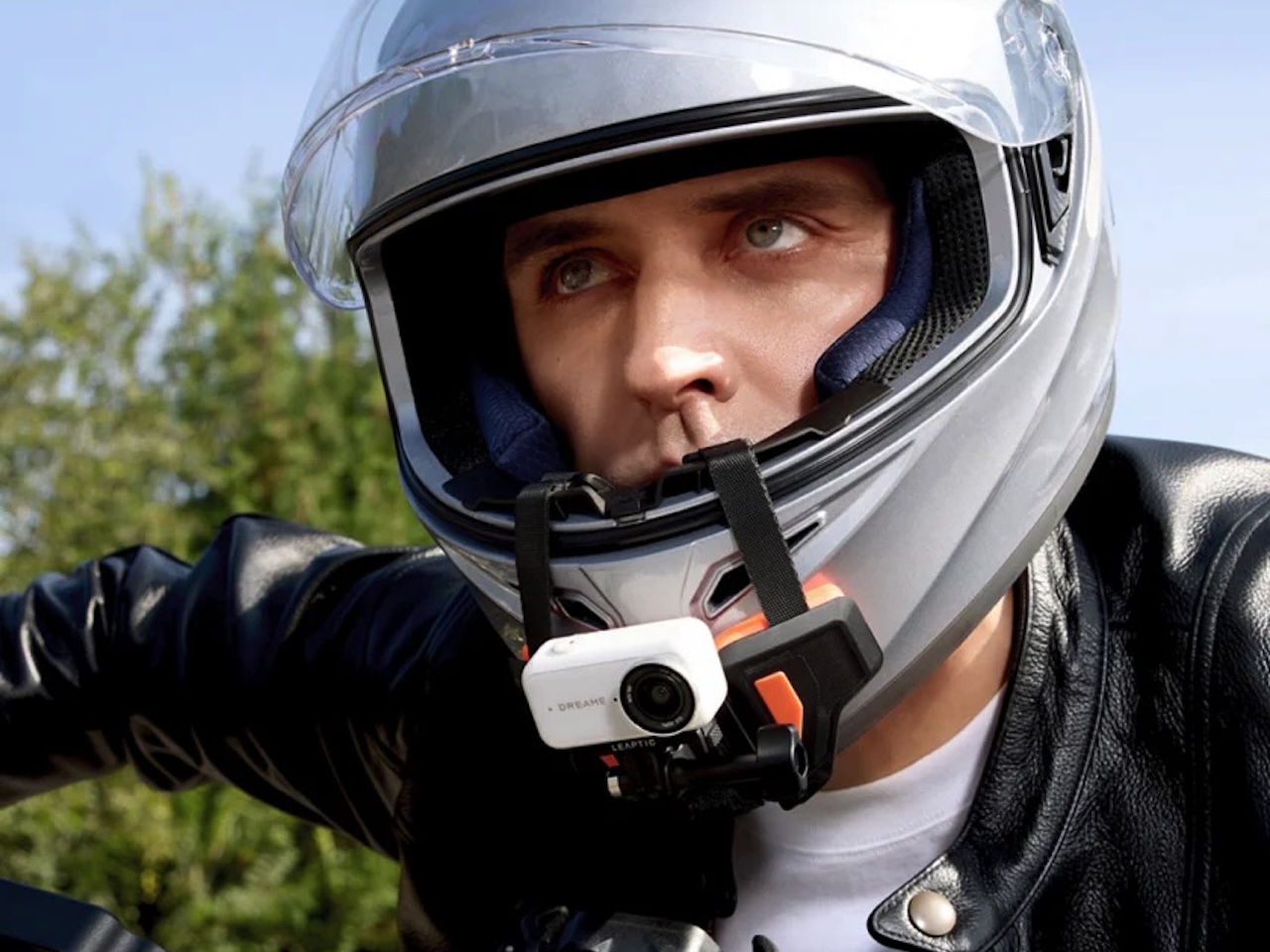
ARTICLE – Action cams keep getting sharper, yet the hardest shots still lose to the dumbest problem: there’s nowhere clean to put the thing. You feel it the moment you’re staring at a clamp and a cramped gap, with wind noise in your ears and grit on your fingers.
Price: $439.99 (64GB), $459.99 (128GB)
Where to Buy: Dreame
You can strap a brick to a helmet all day, but try slipping one under a skateboard deck and the wheels turn it into a sandblaster target. Clip one to a pet harness and the frame wobbles like it’s on a spring, which isn’t a great look when you want steady POV.
That’s why Dreame showing a split, thumb sized camera at CES 2026 felt like a smart swing. The idea is physical, almost toy like at first glance, and that makes it easy to understand when you’re standing under harsh expo lights.
So the real question is: does splitting the camera from its screen make weird mounting easier, or does it turn a simple action cam into two things you’ll lose in a week.
Why Now
The category’s hit a wall where resolution upgrades read like numbers for people who already bought in. If you’ve ever watched 4K footage on a phone in bright sun, you know how little the extra pixels matter once the clip gets compressed.
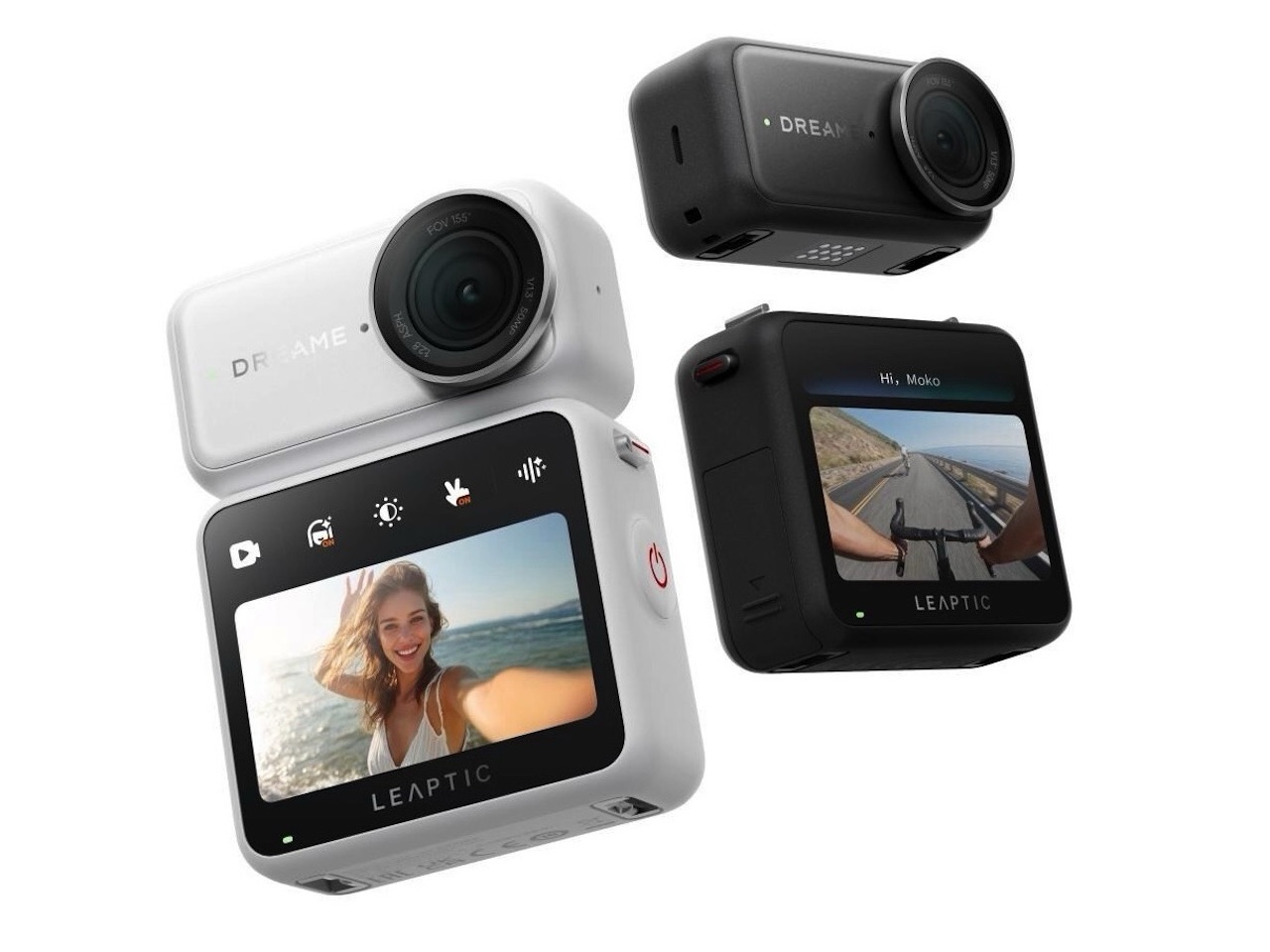
A modular setup changes the everyday problem instead: where you can place the lens, and how quickly you can confirm the framing. That’s a practical shift, and it feels like a better bet than yet another spec bump.
What It Is
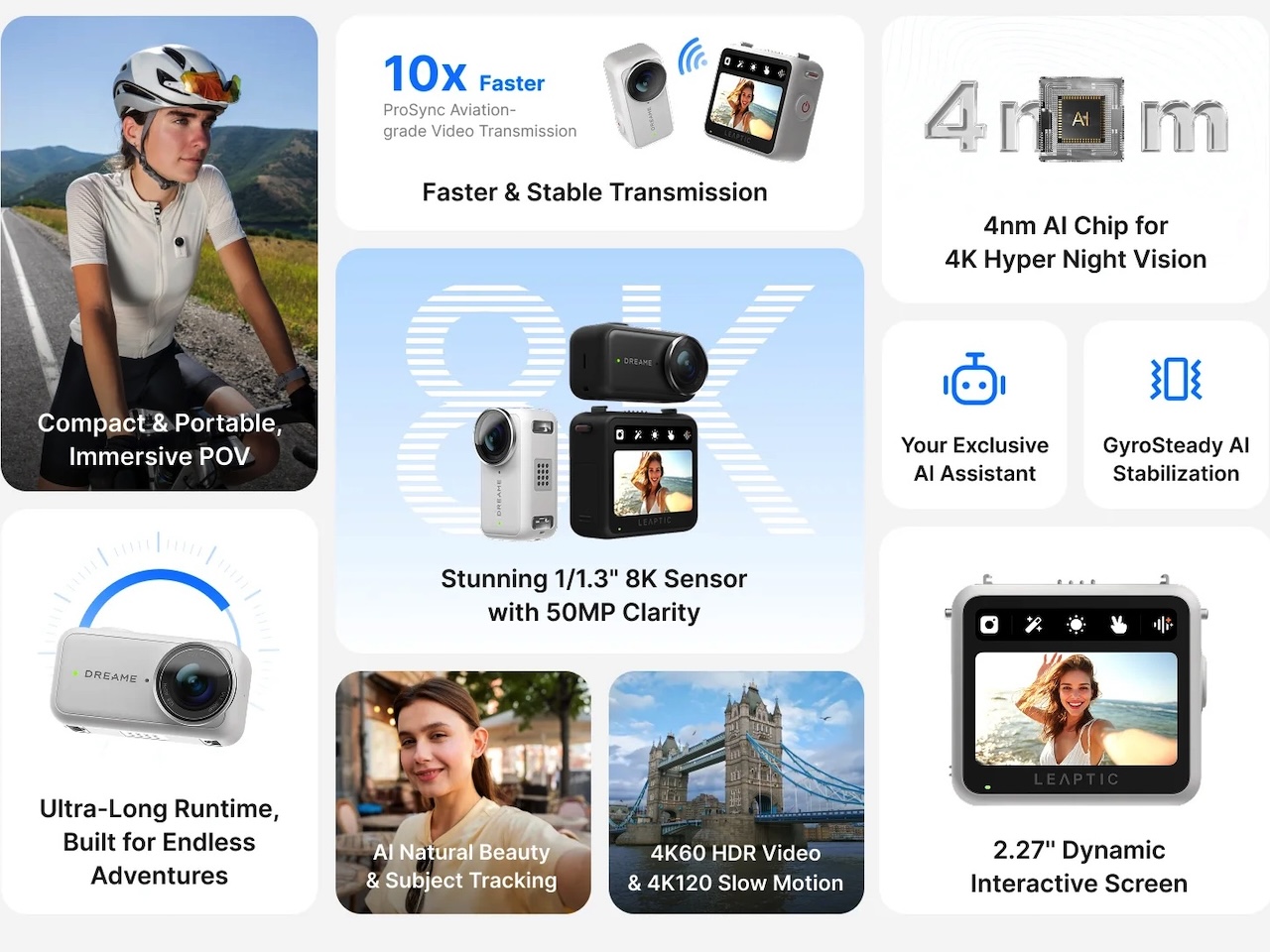
The Leaptic Cube is Dreame’s first action camera, built as two pieces: a small camera module and a separate body with the screen and controls. That split is the whole point, and it reads like a clean answer to tight spaces where a normal camera body can’t sit.
The camera’s live preview can work from up to 98 feet away, which sounds like a real quality of life upgrade when the module’s stuck somewhere awkward. It’s the kind of range that lets you stand in shade, hold the screen at eye level, and stop guessing.
Inside, it tops out at 8K video at 30fps, with 4K at 60fps and HDR when you want motion to look smoother. The spec sheet reads great, but heat and processing are what decide whether it stays clean after more than a demo loop.
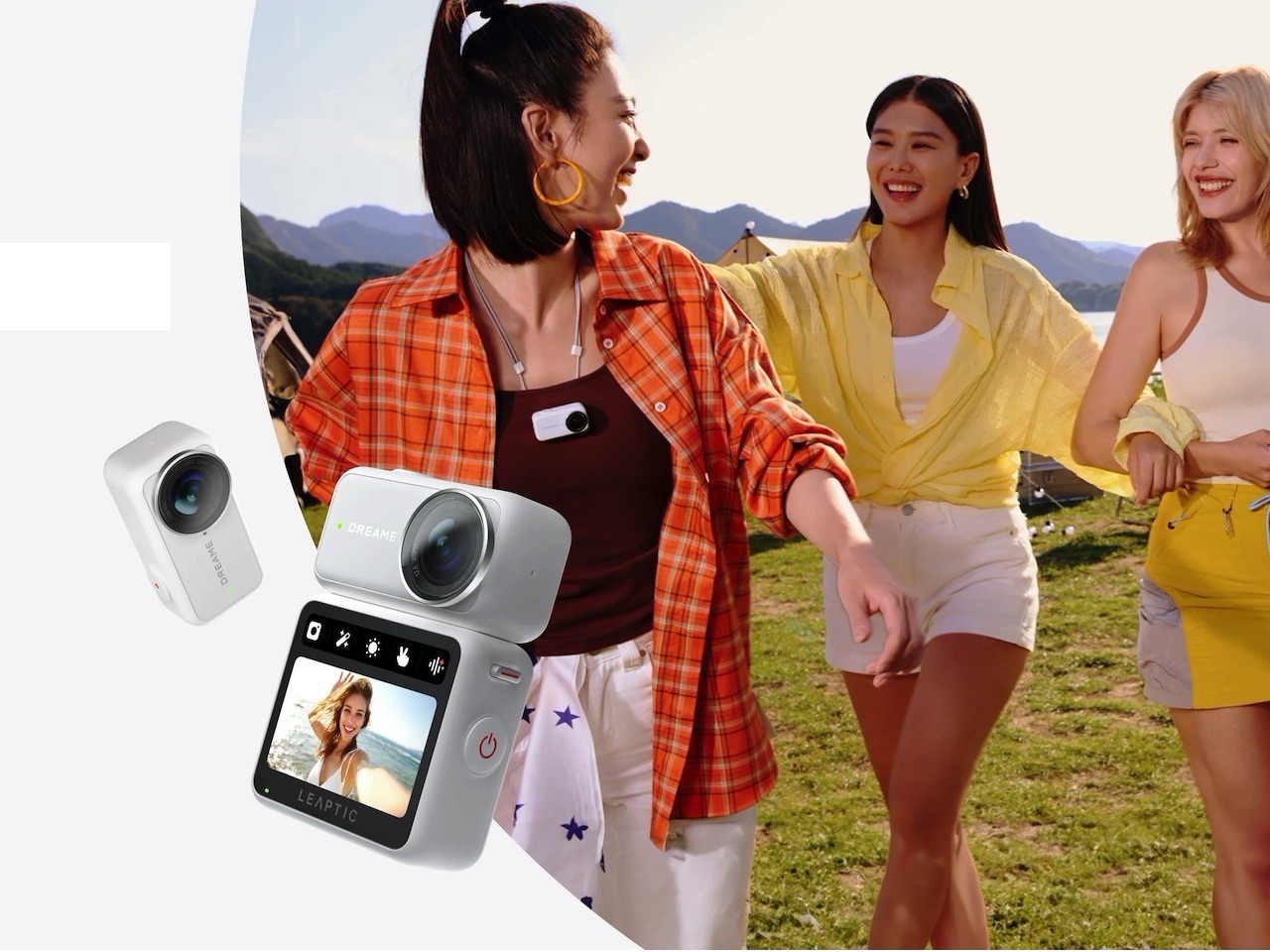
It uses a 1/1.3 inch sensor with a 155 degree f/2.8 lens, and that combo should help in mixed light where action cams can look thin. If you’ve shot late afternoon glare off water or a trail that flips from sun to shade, you know how fast highlights can get ugly.
Dreame’s also leaning on AI tricks like tracking and auto framing, plus voice control through its mobile app. That could be a good call in gloves or with wet hands, and it could also be the first feature people switch off when it gets confused by a shout.
Storage lives in two places: the camera module comes with 64GB or 128GB built in, and the screen body takes a microSD card up to 1TB. Battery life is quoted at about 90 minutes on the module alone, and around 200 to 220 minutes with a magnetically attached external battery dock, which sounds fine until cold air and real stabilization settings start chewing through it.
Who Should Skip This
Got a trip coming up where you can’t gamble on quirks and patches. First gen hardware can be a rough ride, and you’ll feel it when the app hiccups right as you’re trying to grab the shot.
If your GoPro or DJI setup already fits your life, keep it. Dialed in mounts and muscle memory are hard to beat, and rebuilding an accessory kit gets annoying fast when every pouch starts filling up.

Mostly shooting simple angles, like helmet, chest, or handlebar. A one piece camera already nails that, so the split design can turn into extra stuff to charge, pack, and keep track of.
Who This is For
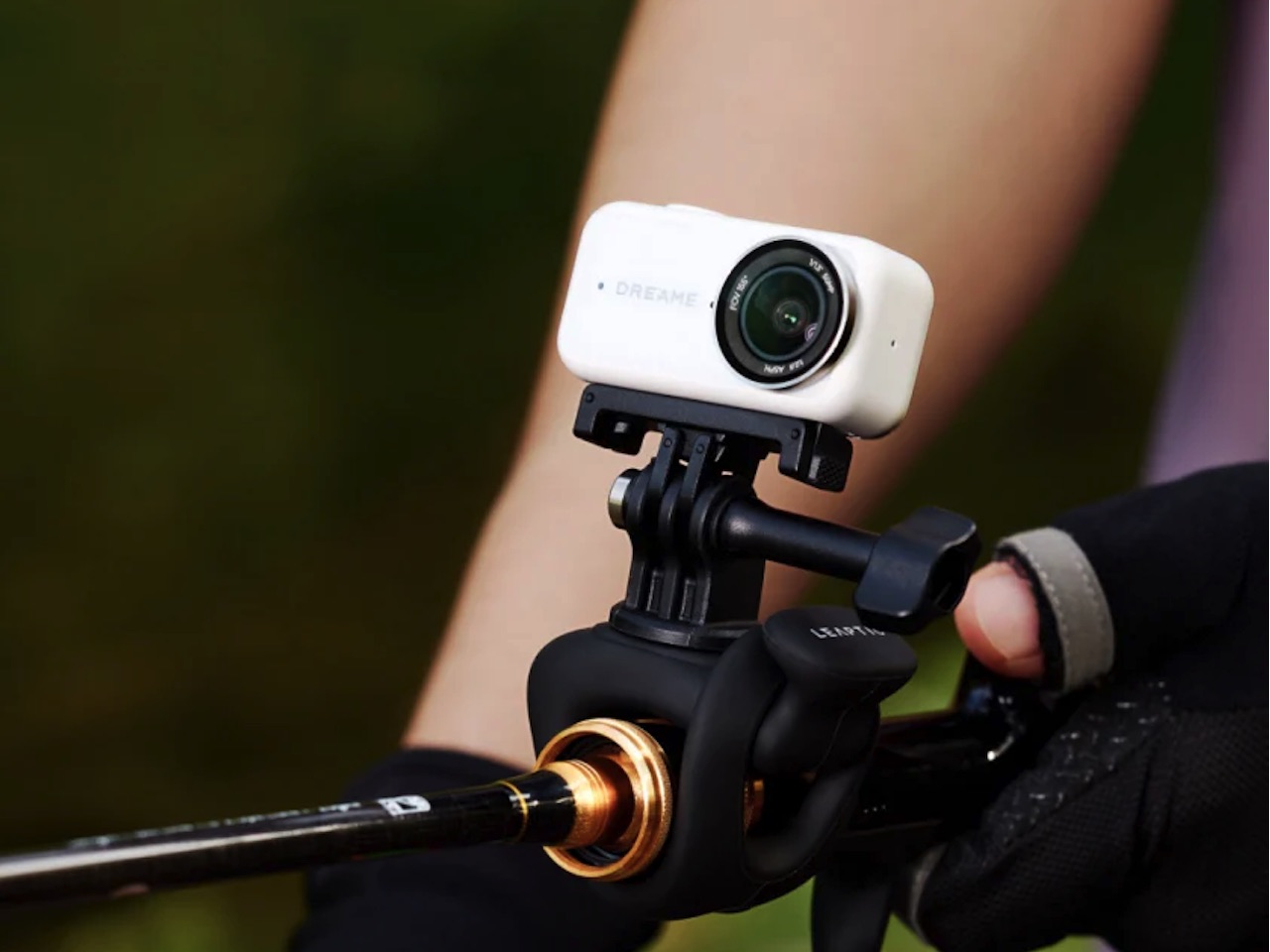
This is for the person who keeps chasing angles that normal action cams can’t reach without turning the whole shot into a mounting hack. If you’ve ever tried to sneak a camera into a bike frame triangle or under a board, you know how satisfying a smaller module can feel when it actually fits.

It’s also for solo shooters who like seeing the frame without waving their arms around like a signal flag. Being able to place the module, then hold the screen like a little remote viewfinder, sounds like a workflow win you’ll notice right away.
This doesn’t read like a tiny spec bump. It’s a small camera that pairs 8K capture with AI driven tools in a compact package, and that’s a smart combo if you want cleaner shots without babysitting settings.
Dreame’s press release points to a North America rollout sometime in 2026, with early pricing listed at $439.99 for the 64GB Standard Set and $459.99 for the 128GB Standard Set. That’s real money for something this small, so it only feels worth it if the split design keeps you filming instead of redoing the mount.
Durability is the part that still feels unanswered, especially around water sealing on the bare module. A dive case is mentioned, yet you’ll probably want hard details before trusting this on a rainy ride or near surf spray.
WHERE TO BUY
Price: $439.99 (64GB), $459.99 (128GB)
Where to Buy: Dreame
If you’re tired of the same old rectangle and you want cleaner POV angles, this one’s worth tracking as it moves from show floor promise to something you can actually buy. The form factor is the story, and the rest needs to earn it.