
Sleep audio has always been a delivery problem, not a content problem. Most adults who struggle to fall asleep have tried audio. Podcasts. Rain sounds. Guided meditation. The content works. The hardware does not. Earbuds press into side sleepers’ ears. Over-ear headphones trap heat. Phone speakers bleed into shared bedrooms. Pillow speakers muffle and distort. White noise machines fill the room instead of reaching one person.

The friction is not finding relaxing sounds. The friction is getting those sounds to one listener without sealing an ear canal or waking a partner three feet away.
Super Early Bird: $42 (52% off $89 MSRP)
Estimated Delivery: March 2026
Ships To: Worldwide
Where to back: SluTune Q2 on Kickstarter
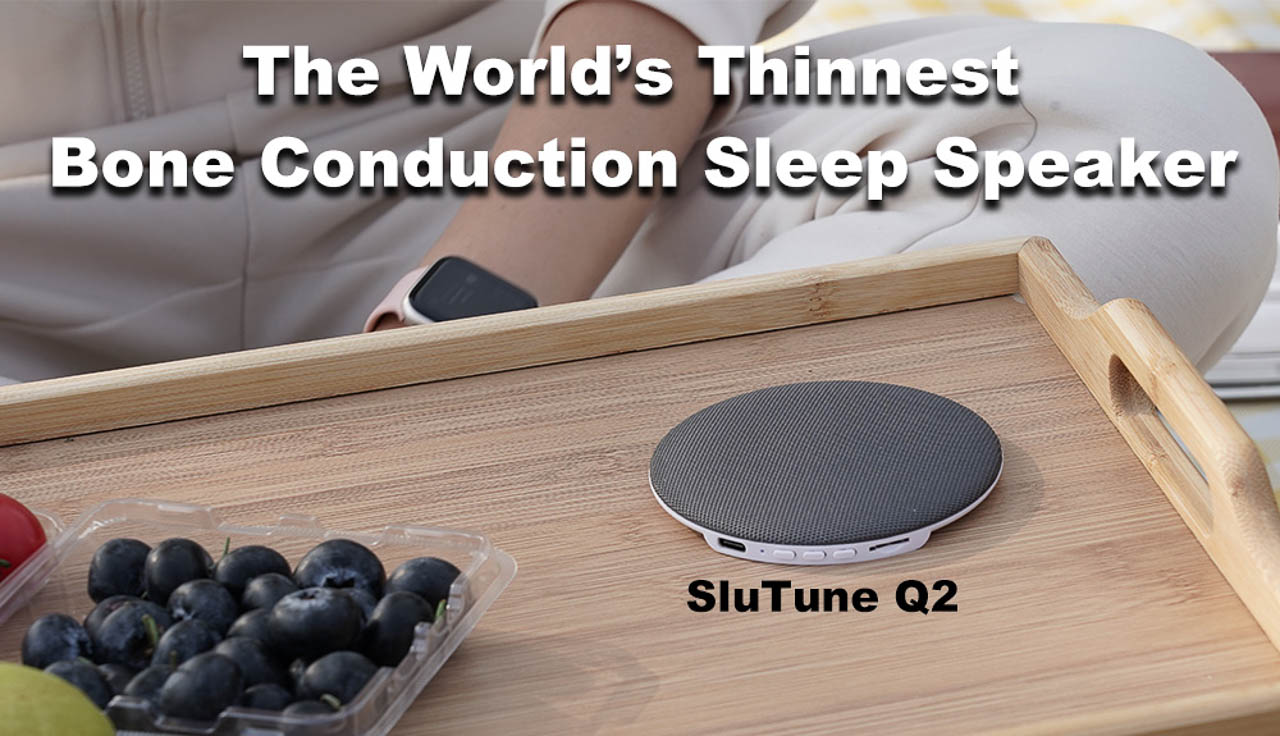
SluTune’s Q2 takes a different approach: an 11mm-thick portable speaker that combines bone conduction and traditional air conduction in a single flat chassis. The profile is thin enough to slip inside a pillowcase without creating a lump.

What Bone Conduction Actually Does
Bone conduction is not new technology. It has been used in hearing aids and specialty headphones for years. The mechanism bypasses the ear canal entirely by transmitting vibrations through solid surfaces (skull, jaw, or in this case, a pillow) directly to the inner ear.
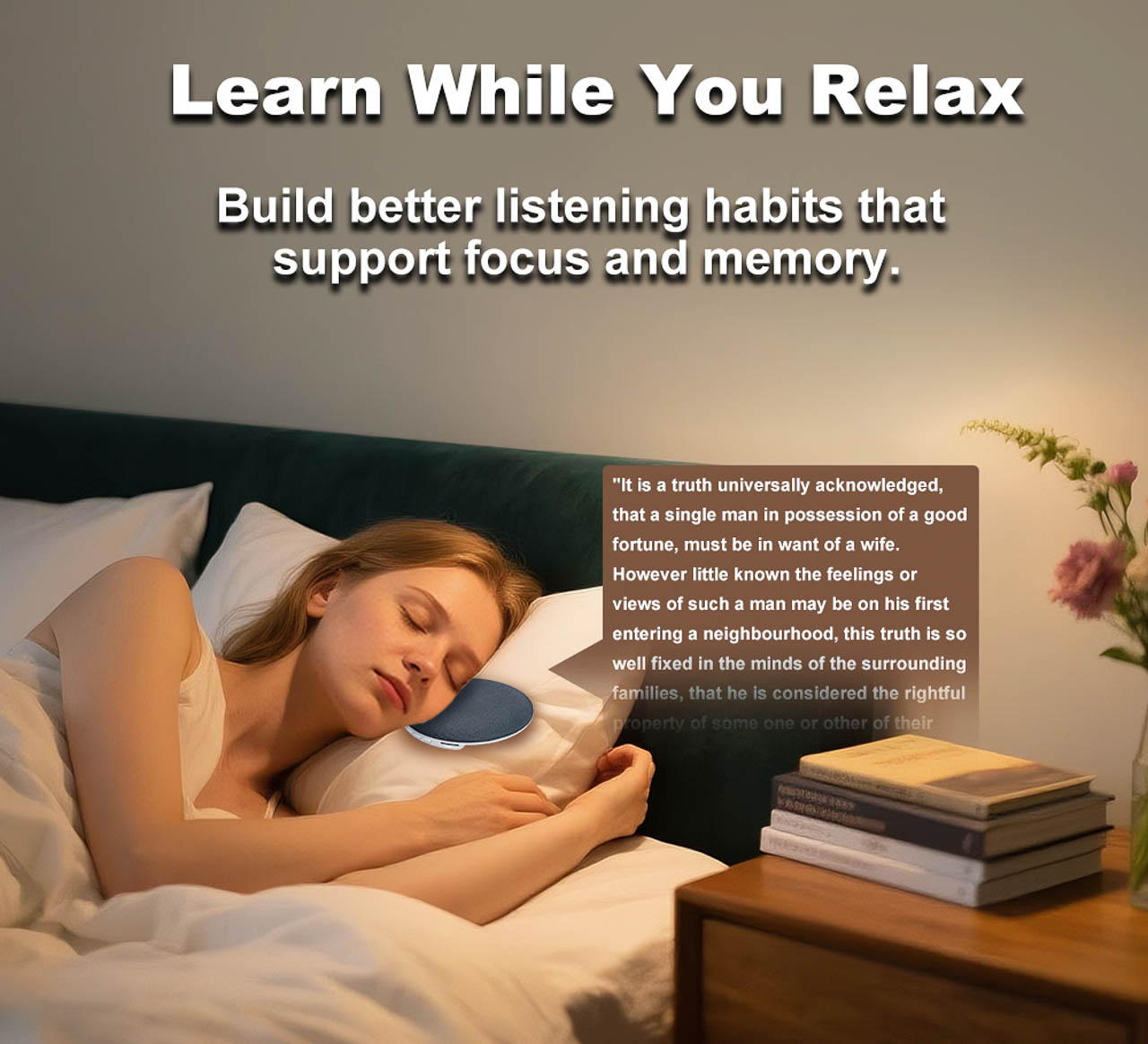
For sleep applications, this matters. There is no seal. No pressure. No earpiece wedged against fabric. The listener perceives sound without blocking ambient noise or creating the discomfort that comes from hours of physical contact with traditional earbuds.
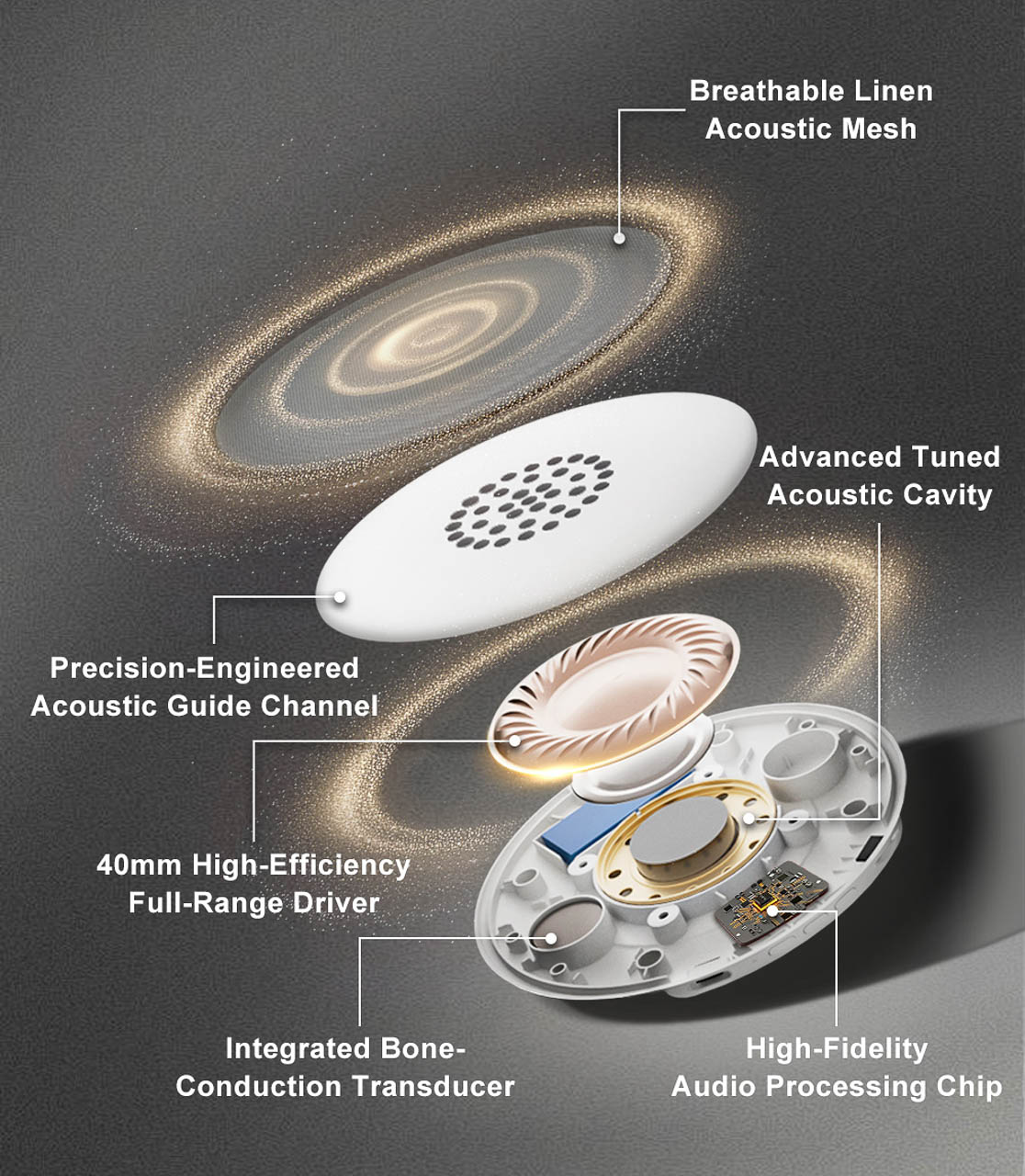
The Q2 houses both a bone conduction transducer and a conventional 2W air conduction speaker in the same device. These systems are physically separated inside the chassis with independent acoustic chambers to prevent resonance and crossover distortion. The engineering choice allows the speaker to vibrate sound through a pillow at night and play podcasts out loud during the day.
The dual-mode architecture is the core differentiator. Most sleep speakers commit to one delivery method. This one treats context as a variable.

Why Thinness Matters More Than Volume
At 11mm thick, the Q2 is flatter than a deck of cards. SluTune compares it to AirPods Pro at 27mm as a visual reference point, not a functional one, but it communicates the profile.
For side sleepers, this is the point. A traditional Bluetooth speaker under a pillow creates a hard lump. The Q2 does not. It sits flat, stays flat, and remains undetectable when placed inside a standard pillowcase. The 2W output is modest by portable speaker standards but appropriate for close-range listening. This is not a speaker designed to fill a room. It is designed to reach one person from inches away.

Removing the Phone From Sleep
One of the Q2’s less obvious features may be its most useful: MicroSD card playback. Loading audio files directly onto a MicroSD card allows the speaker to operate independently of a phone. No notifications interrupting white noise. No Bluetooth reconnection issues at 2 a.m. No overnight battery drain on a device needed the next morning. For users who have built sleep routines around specific audio, this removes the phone from the equation entirely.
A built-in two-hour auto-shutoff reinforces this design philosophy. The Q2 powers down automatically, supporting sleep rather than running until the battery dies. The timer assumes the user will be unconscious and plans accordingly.

Design Built Around Where It Lives
The Q2 uses a TPU exterior: soft to the touch, resistant to moisture and stains, durable enough to survive life inside bedding. This is not a hard plastic shell. It is a material chosen for where the device actually spends its time.
A magnetic base allows attachment to bed frames, metal desks, tent poles, or any ferrous surface. The magnet strength is intentionally low. Enough to hold position, not enough to snap aggressively or scratch.
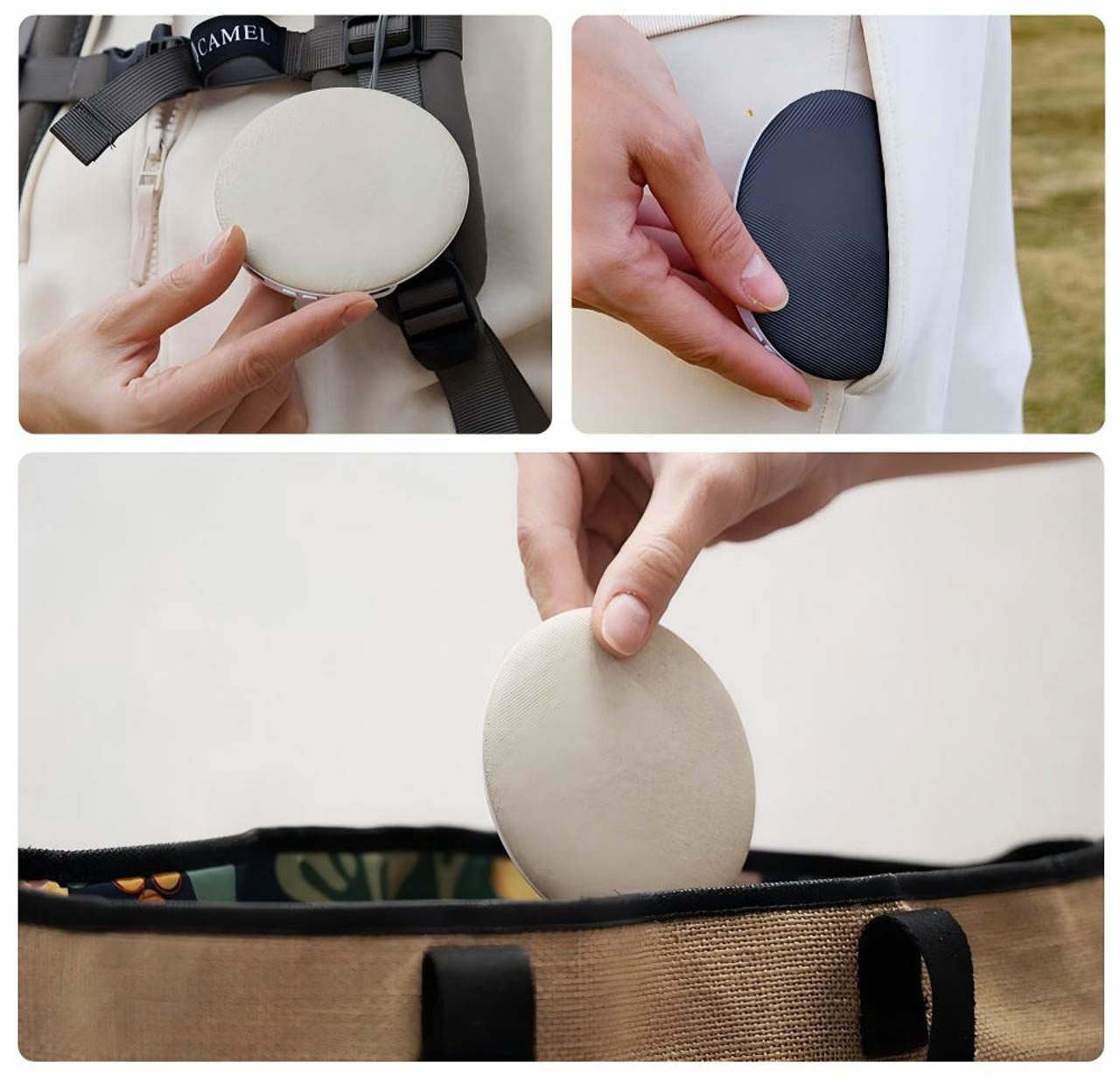
An integrated hook (built into the chassis rather than added as an accessory) allows the Q2 to clip onto backpack straps, belt loops, or gear loops. This positions it as both a sleep device and an outdoor speaker for hikers, campers, or travelers who want audio without packing headphones.
Wireless connectivity uses Bluetooth 5.4 with a stated stable range of up to 10 meters. The Q2 is compatible with iOS, Android, and HarmonyOS. For users who prefer wired sources or offline playback, the MicroSD slot handles that without requiring a phone connection at all.

Who This Is For (And Who Should Skip It)
The Q2 fits a specific set of problems:
This makes sense for:
- Side sleepers who cannot tolerate earbuds pressing into their ears
- Couples where one partner listens to audio at night without disturbing the other
- Travelers who want personal audio without packing over-ear headphones
- Campers who want ambient sound without broadcasting to the entire campsite
- Parents listening to audiobooks quietly after kids fall asleep
- People with sensitive ear canals who find any in-ear device uncomfortable
Skip this if:
- You need room-filling volume (2W will not do that)
- You sleep on your back and have no pillow-pressure issues with earbuds
- You already own a sleep headband that works for you
This is not a speaker for parties or room-filling sound. It is a speaker for personal, close-range audio, especially when comfort and discretion matter more than volume.

Availability
The SluTune Q2 is currently funding on Kickstarter, with delivery estimated for March 2026. The campaign has exceeded its funding goal, and units ship worldwide.
Super Early Bird: $42 (52% off $89 MSRP)
Estimated Delivery: March 2026
Ships To: Worldwide
Where to back: SluTune Q2 on Kickstarter
| Thickness | 11mm |
| Speaker Power | 2W |
| Audio Modes | Bone conduction + Air conduction |
| Bluetooth | 5.4 |
| Wireless Range | Up to 10 meters |
| Storage | MicroSD playback |
| Timer | 2-hour auto shutoff |
| Exterior | TPU finish |
| Mounting | Magnetic base, built-in hook |

Gadgeteer Comment Policy - Please read before commenting
cool. might be good for sufferers of tinnitus.