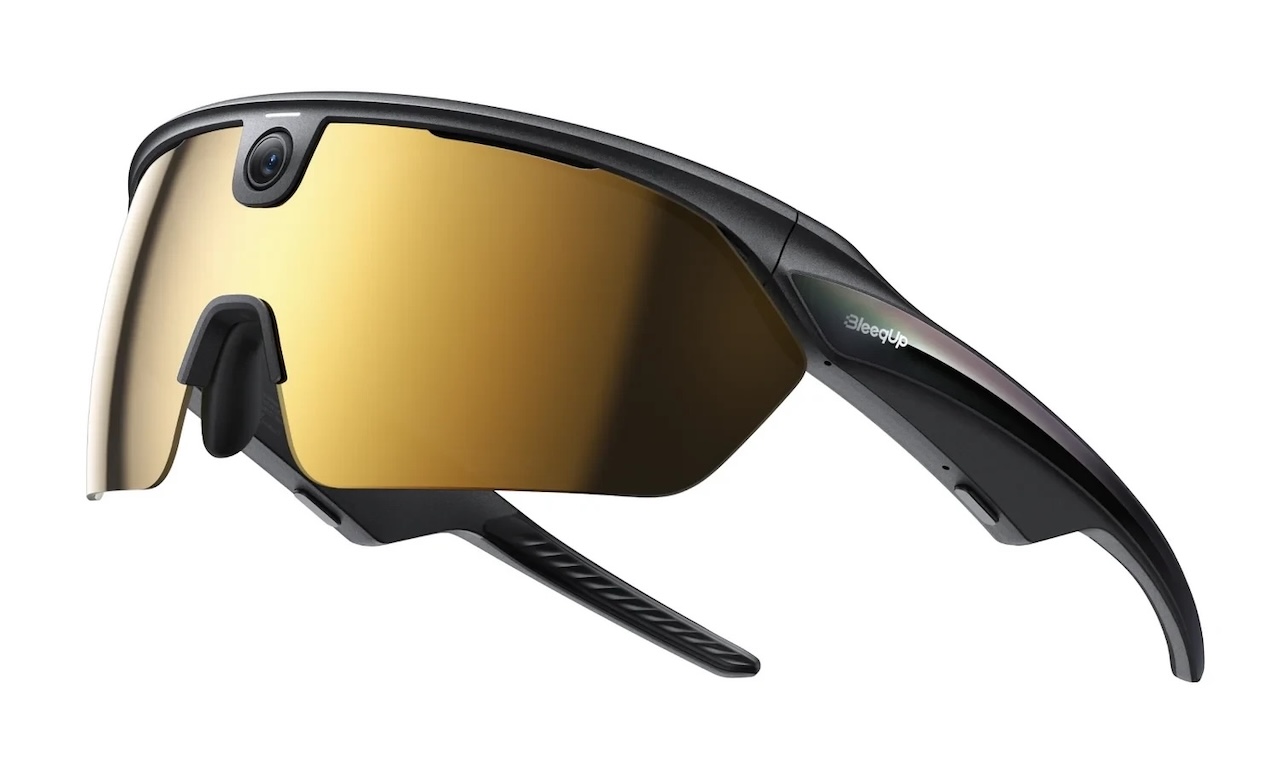
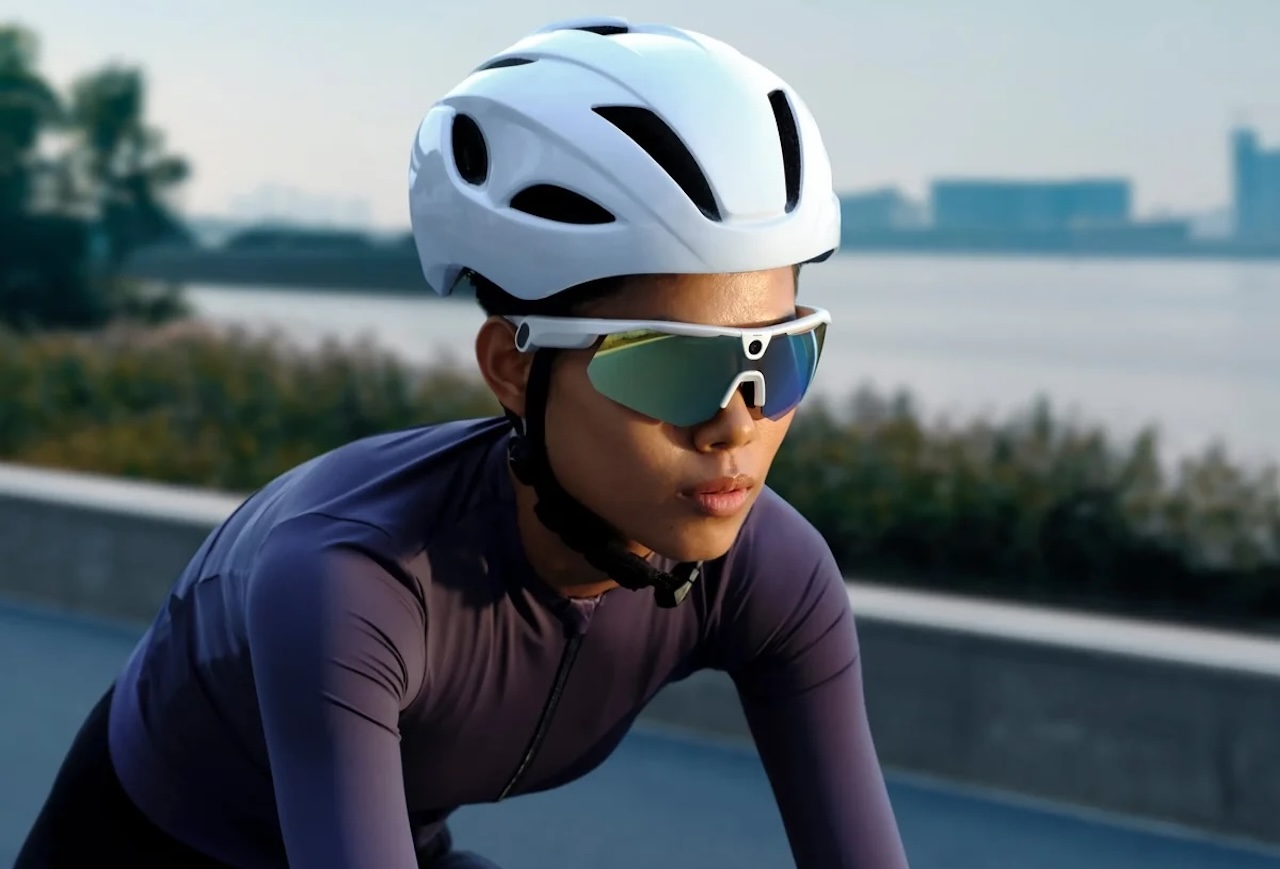
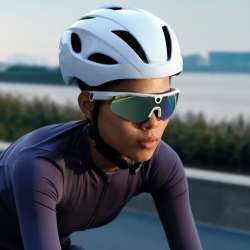
Helmet- and glasses-mounted cameras usually have one fixed view, even though a cyclist’s head position changes with the bike, terrain, and riding posture. BleeqUp’s new Rover sports glasses address that problem with a camera that physically tilts to three positions. That small mechanical choice may be more useful than the long list of AI features surrounding it.
Price: $459
Where to Buy: Bleequp
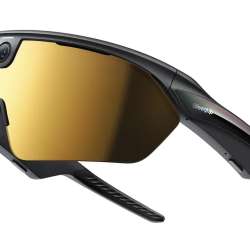
Rover is available from BleeqUp’s US store for $459 with a 64GB configuration and ZEISS lenses. It combines a 16MP camera, open-ear audio, microphones, onboard storage, and app-connected riding features inside a 53g frame. The hardware looks promising, but several of the safety and AI functions need careful testing before anyone treats them as reliable ride tools.
The camera can look where the rider is looking
Rover’s camera tilts to three positions: 10 degrees, level, and 15 degrees upward, to better suit helmets, hats, upright riding, and the forward lean of road or gravel bikes.
That addresses a common problem with fixed camera mounts, which can record too much pavement when a rider looks down or too much sky when the angle is off. The adjustable lens should help riders frame the road without changing their natural head position.
BleeqUp says Rover records 1080p or 3K video at 30 or 60fps in horizontal or vertical formats. Its listed features include a 120-degree field of view, electronic stabilization, HDR, low-light recording, loop recording, and 4,656 × 3,496-pixel stills.
Those are manufacturer specifications, not yet independently tested results. Video quality, stabilization, low-light performance, heat management, wind noise, and the lens mechanism’s durability still need real-world riding time.
 One hour of recording is the first ownership limit
BleeqUp claims the 260mAh glasses deliver about one hour of video or eight hours of audio. The optional 1,600mAh Power Plus module raises those claims to five hours of recording or 48 hours of audio.
It is not included with the $459 glasses; the $519 bundle adds it and a Bluetooth controller. The base kit includes a magnetic charging cable, prescription insert, and storage accessories.
Rover has 64GB of storage and loop recording, which overwrites older footage when full.
Open-ear audio keeps the ears uncovered
Two speakers provide open-ear audio for music, calls, navigation prompts, and the company’s voice assistant. Five microphones handle voice pickup and noise reduction. BleeqUp claims its wind-noise system remains useful at speeds up to 35 km/h, roughly 22 mph.
Open-ear sound makes sense on a bike because it does not seal the ear canal, but it does not guarantee that a rider will hear every vehicle, warning, or pedestrian. Volume, crosswinds, helmet straps, traffic, and the rider’s own hearing all change the result.
Rover also supports an app-based walkie-talkie feature. BleeqUp says members of a group can communicate through the app, including people using phones instead of multiple pairs of glasses. That makes it closer to an internet-connected group-audio feature than a standalone two-way radio. Cellular coverage, phone battery, app permissions, and connection stability still matter.
The safety features should be treated as assistance
BleeqUp says Rover can detect sudden braking and preserve footage from the 10 seconds before an event. It also claims the system can identify incidents such as close passes or crashes, then make those clips easier to find. Map and weather data can provide alerts for climbs, descents, sharp turns, and changing conditions. Breathing monitoring and activity summaries round out the training pitch.
These functions sound helpful, but Rover should not be described as an emergency-response device. BleeqUp’s product page does not promise automatic contact with emergency services, and the company notes that not every sudden stop is an emergency. False positives, missed events, GPS accuracy, phone connectivity, and the availability of pre-event footage all need controlled testing.
A later review should use repeatable braking events in a safe closed environment, compare saved clips with a separate action camera, and document what happens with the phone offline. It should also check whether alerts distract from the road and whether the breathing feature produces useful information instead of generic prompts.
 AI editing and privacy
Rover can search clips by voice, find highlights, build a route-based Video Roadbook, and create stylized edits. That could save cyclists time sorting footage after a ride.
BleeqUp does not clearly explain whether those AI tasks run on the glasses, phone, or cloud. Its privacy policy covers location data and media submitted to its services, so buyers should understand where their footage, routes, and voice requests go. Riders should also follow local recording laws and respect others’ privacy.
Built for outdoor use
Rover has an IP65 rating for dust and water-jet resistance, making it suitable for sweat and rain but not swimming. The 53g TR90 frame includes an adjustable nose pad, UV400 ZEISS lenses, and an included prescription insert.
Fit and long-ride comfort still need testing, especially with different helmets, head shapes, and rough-road vibration.
The bottom line
The adjustable camera is Rover’s most compelling feature because it solves a practical framing problem that fixed camera glasses cannot. Its AI features, wind-noise reduction, endurance, data handling, and safety functions still need independent testing.
Price: $459
Where to Buy: Bleequp
The $519 bundle is the more relevant option for longer rides, since the $459 base glasses are rated for only about an hour of recording. Rover could eventually replace a simple ride camera and open-ear headphones for some cyclists, but it needs hands-on testing to prove it works reliably as a complete system.