

ARTICLE – A good Bluetooth speaker can still make your home feel clumsy. The moment you’ve got two, the music stops moving with you, and the silence between rooms suddenly feels louder than it should. If you’re cooking, tidying up, or bouncing between spaces, the annoyance shows up fast. One speaker keeps going while the other sits idle, and what should be background sound turns into a little routine of reconnecting and babysitting devices.
Price: $299.99
Where to buy: Marshall
Marshall’s Heddon is the brand’s attempt to turn that daily annoyance into something that behaves like a system. It’s a hub meant to live near your router, not a tiny dongle you lose, which is a nice signal that Marshall expects it to stay part of your setup.
The Ports and Connections That Decide Whether This Feels Effortless
Wi-Fi is the main connection method, according to Marshall, and there’s also Ethernet for wired networking. That’s a practical choice, because home Wi-Fi can get flaky at the worst time, and you notice dropouts fast when a chorus hits. For analogue sources, Marshall says the hub includes RCA in for something like a turntable, as long as there’s a preamp in the chain. That’s a fun feature because it turns one physical source into a whole house moment, and it feels a little indulgent in the best way.
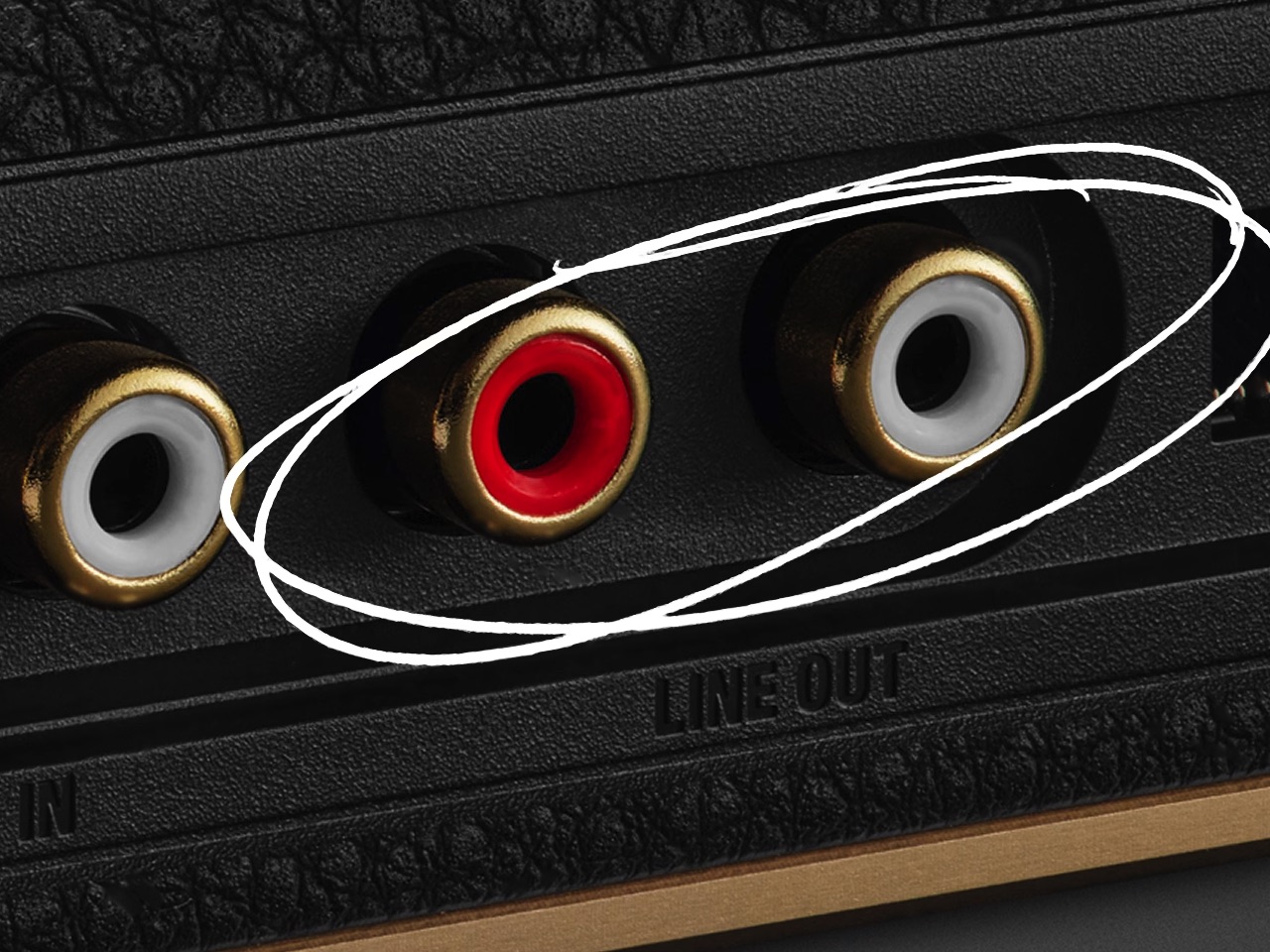
RCA out is here too, per Marshall, for connecting legacy gear. That’s a thoughtful move, because a simple cable can keep an older speaker in rotation instead of pushing you into a full replacement cycle.
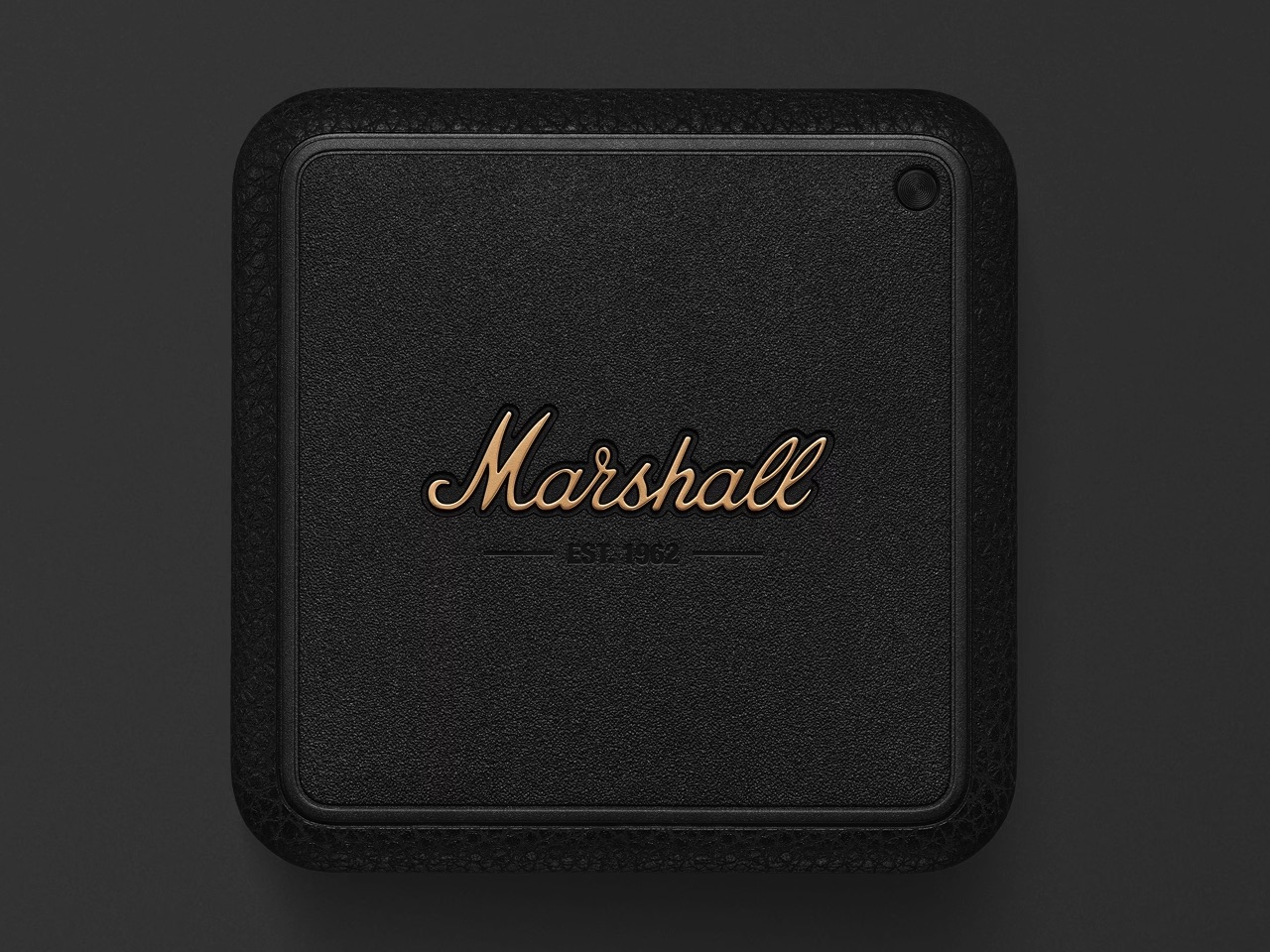
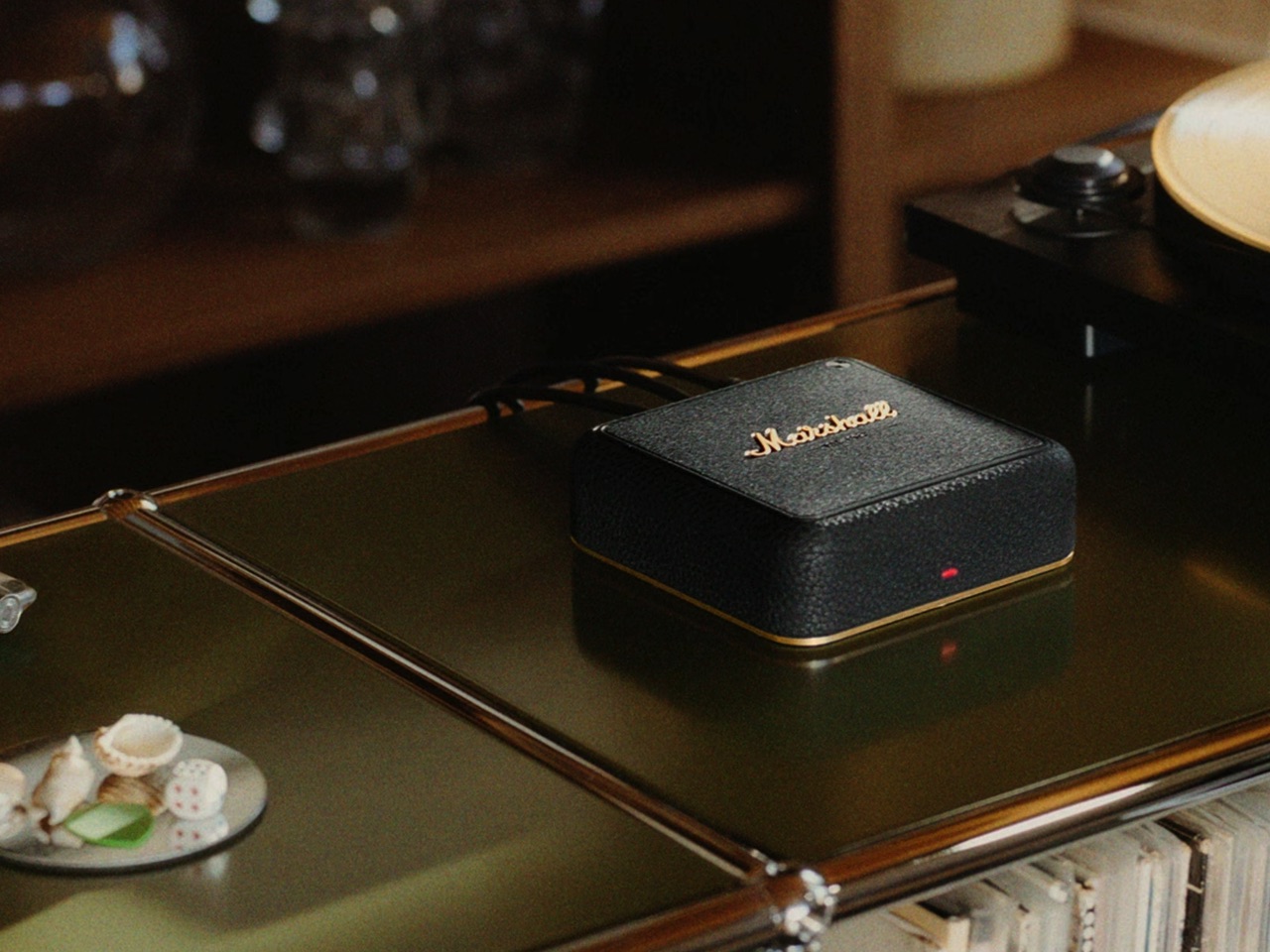
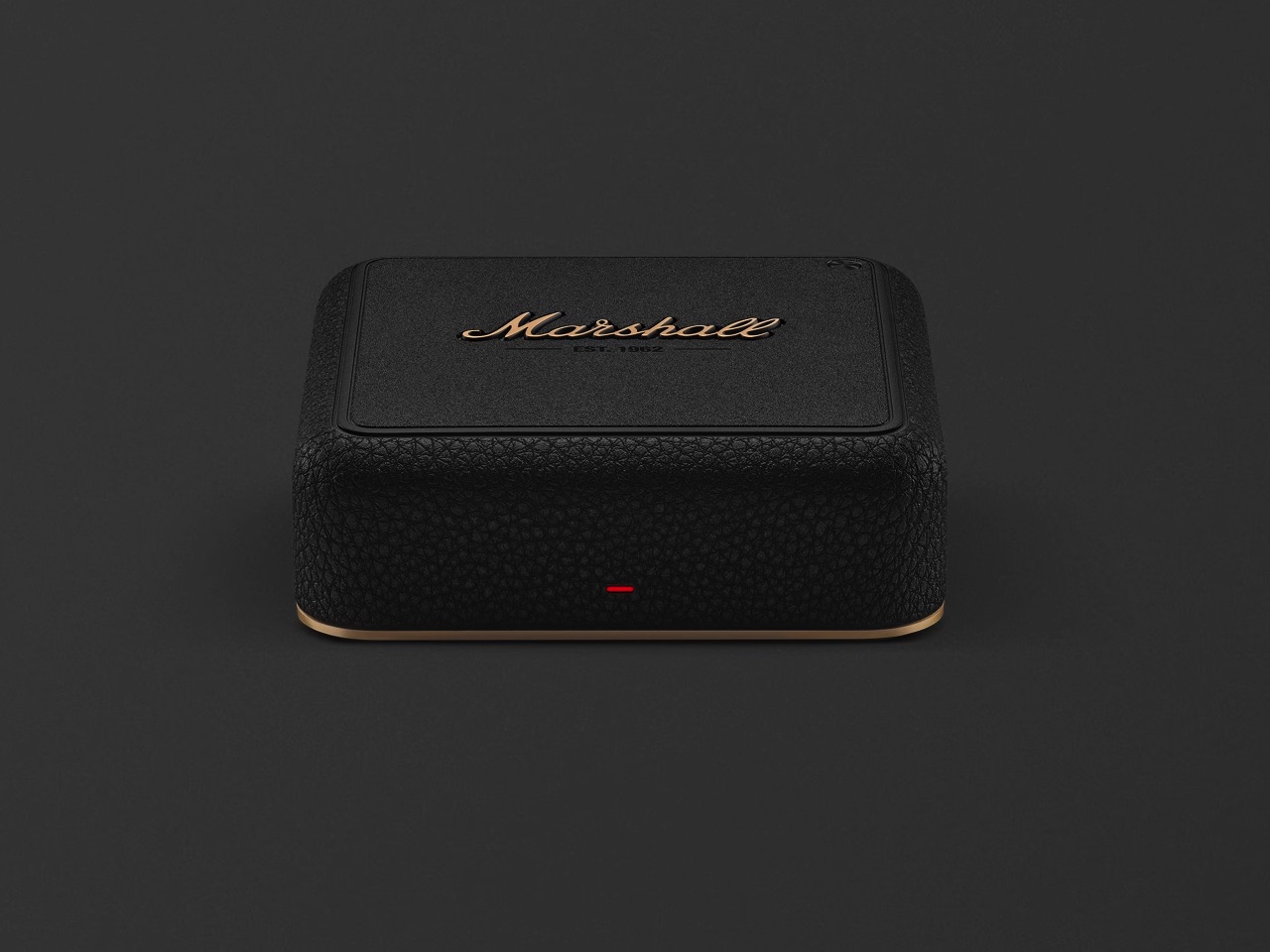
On the outside, Marshall describes Heddon as a compact square unit finished in black Tolex style material. That texture is a nice match for the brand, and it won’t look out of place next to a turntable or console.
Software updates are planned over time, Marshall says. That’s encouraging, but updates only feel good when they’re stable, and you’ll know quickly if the app turns into the part you dread.
Which Speakers It Connects To, and Why That Part Matters
Marshall lists Acton III, Stanmore III, and Woburn III as compatible speakers for wireless use with Heddon. That’s the clean path, and it’s the one that should feel closest to plug and play.
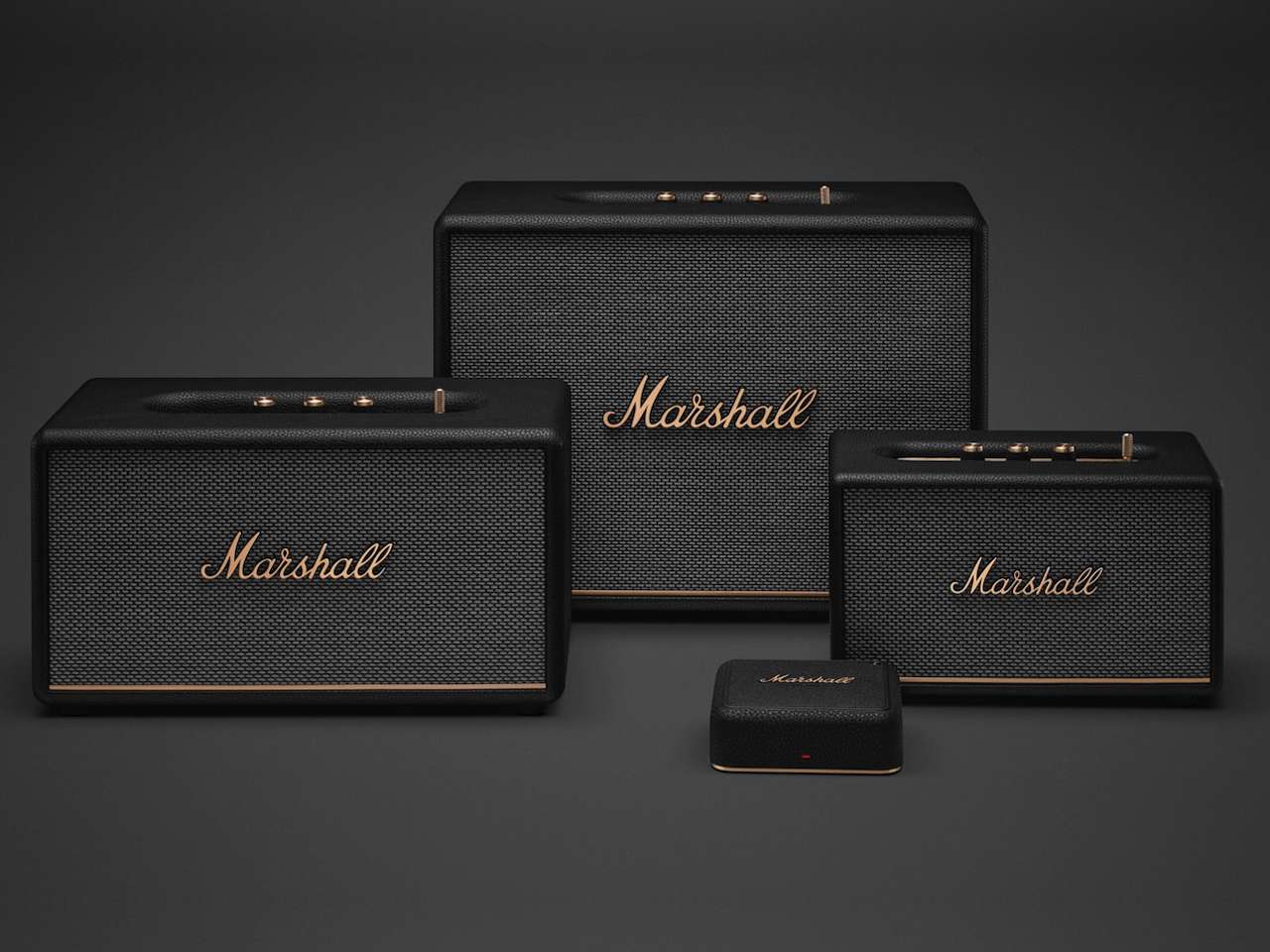
Marshall also positions Heddon as a bridge for older setups through wired connections. That’s a welcome angle if you’ve got a favorite cabinet that already fits your shelf and you don’t want to start over.
What Heddon Is
Marshall calls Heddon a Wi-Fi music streaming hub that streams music via Wi-Fi, then uses Auracast to broadcast it across multiple connected Marshall speakers. That’s a practical direction because it’s built around playing in sync from room to room, which matches the multi room promise.
Instead of treating every speaker like its own Bluetooth island, Heddon is meant to act like the traffic controller. It streams music via Wi-Fi, then sends it out to compatible speakers, which sounds cleaner than juggling device lists and reconnect prompts.
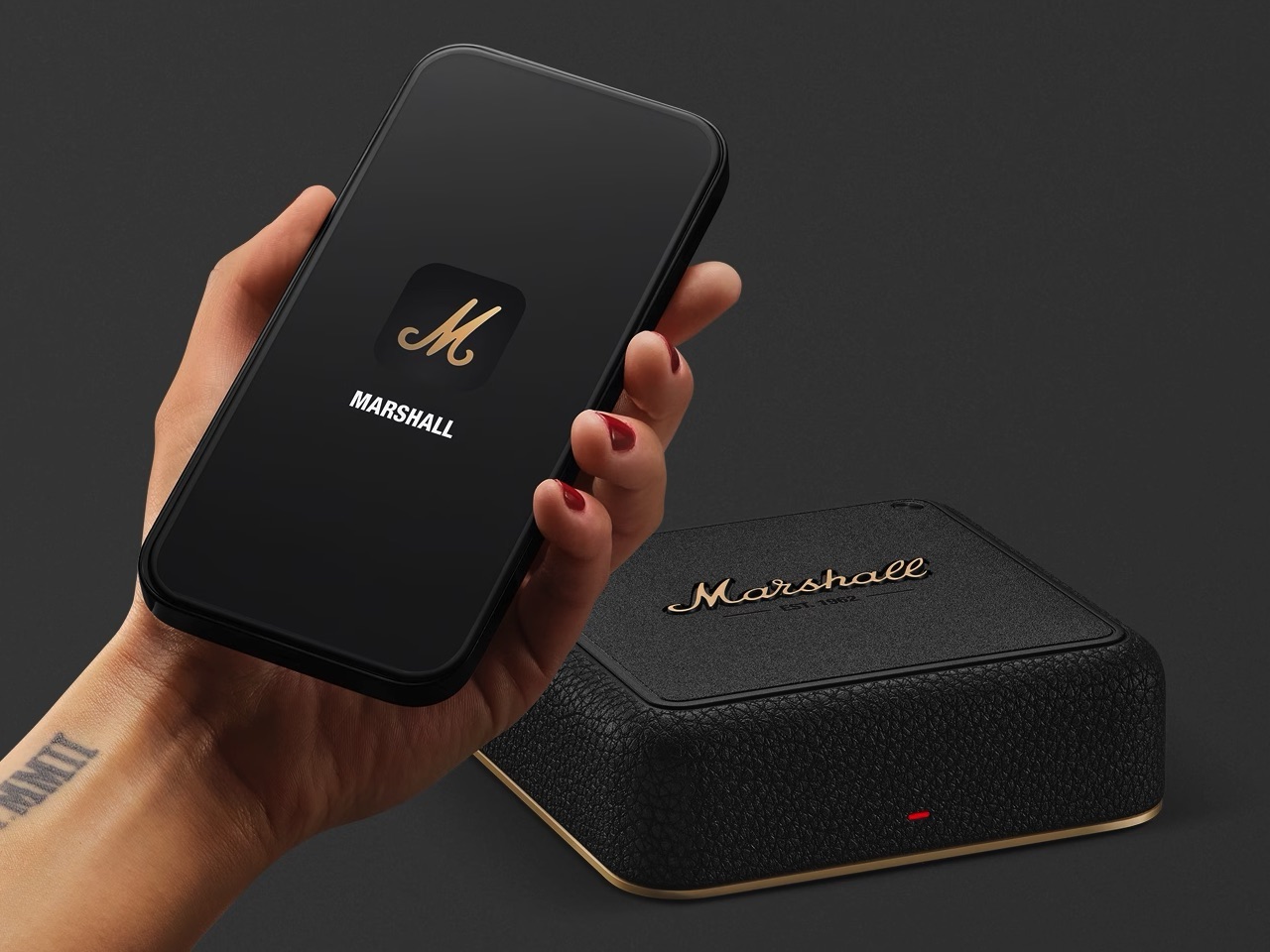
The Marshall Heddon supports Spotify and TIDAL for direct streaming, and it also supports Apple AirPlay and Google Cast for other services. That mix is a smart choice because it matches how people actually play music now.
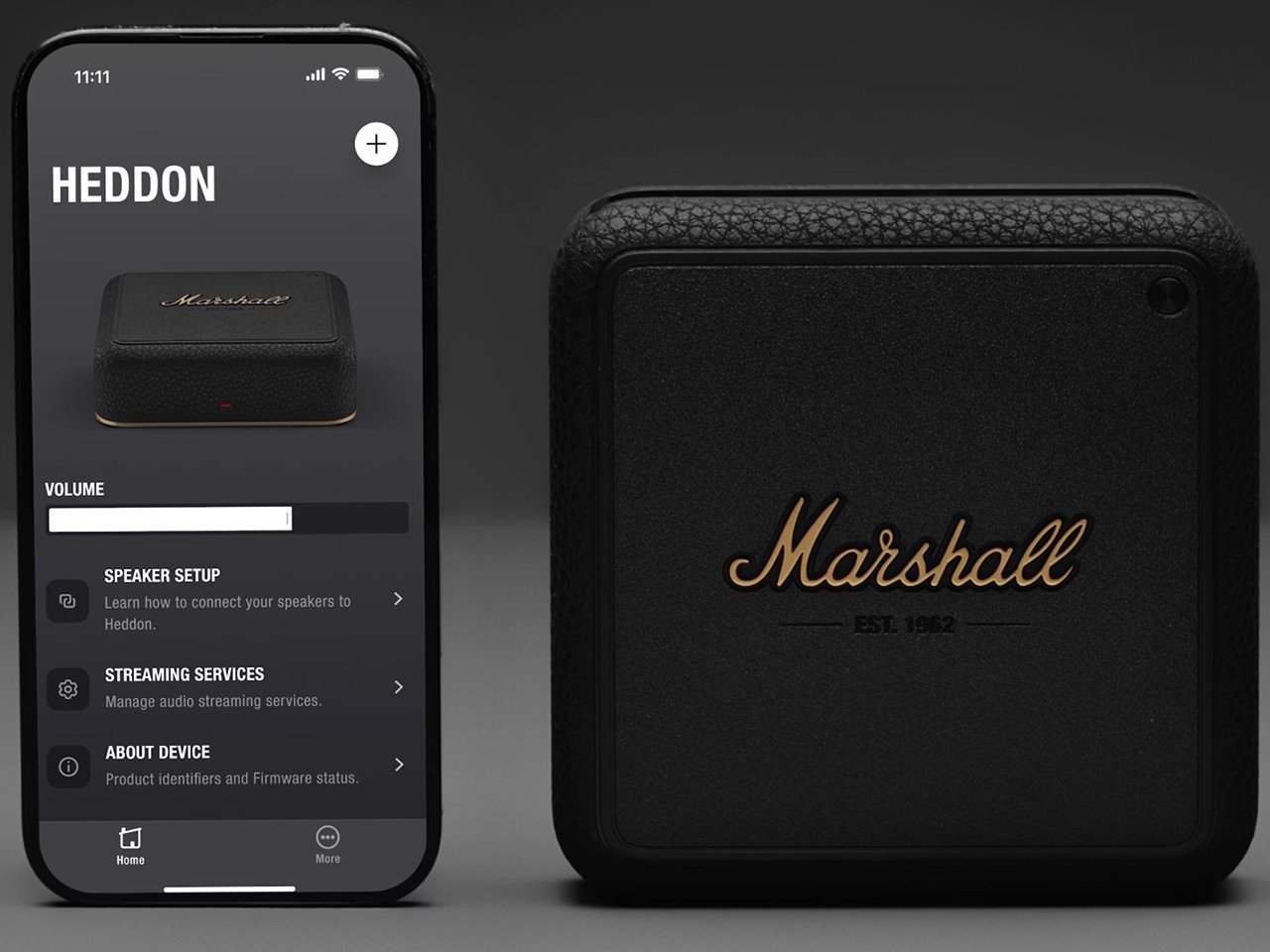
Control is meant to run through the Marshall app. That’s convenient when it’s smooth, and it’s a small misfire when it isn’t, because nobody wants a stylish speaker stack that behaves like a fussy settings screen.
If you’re mixing speakers across rooms, timing is the unglamorous enemy. Drift shows up first in vocals and sharp snare hits, so the whole pitch depends on whether sync feels invisible.
Marshall’s promise is basically that the music should follow you without drama. If it lands, it’ll feel like your speakers finally learned manners.
Price, Bundles, and What This Signals for Marshall’s Speaker Ecosystem
The listed US price is $299.99. That’s not cheap for a small box, so it only feels reasonable if it genuinely removes daily friction and makes multiple speakers behave like one system.
The positioning is familiar Marshall confidence. It’s pitched as a way to unify the company’s home speakers without replacing everything, which is a smart move because it protects the value of older purchases that already look right on a shelf.
Discounts are where the story gets louder. The company says Heddon drops to half price when you buy it with an Acton III, Stanmore III, or Woburn III, which is a clean nudge if you were already thinking about adding a second speaker.
Buy two or more eligible speakers and Marshall says the hub becomes free. That’s a persuasive incentive because it turns the hub into a bonus, not a separate decision you have to justify.
Who This Makes Sense For
If you already own multiple Marshall speakers or you’re building toward that kind of setup, the value proposition is obvious. Put one speaker in the living room and another in a bedroom, and one stream everywhere starts sounding like a real quality of life upgrade.
Price: $299.99
Where to buy: Marshall
If you’ve only got one speaker, the payoff is harder to justify. Bluetooth already covers the basic use case, and the hub’s main trick won’t show up until there’s at least a second speaker on the network.

NetumScan Book & Document Camera, Multi-Language OCR and English Article Recognition by AI Technology, Real-time Projection, Video Recording, Foldable & Portable, Capture, Windows/MAC/Linux- NS-800NC
(as of March 8, 2026 18:27 GMT -05:00 - More infoProduct prices and availability are accurate as of the date/time indicated and are subject to change. Any price and availability information displayed on [relevant Amazon Site(s), as applicable] at the time of purchase will apply to the purchase of this product.)
