

ARTICLE – Most smartwatch owners have accepted a frustrating compromise without realizing it. They charge their devices every night, pack cables for weekend trips, and treat battery anxiety as simply part of owning a wearable. Nobody questions whether this trade-off is actually necessary. The assumption runs deep enough that most people stopped imagining alternatives.
⬇︎ Jump to summary (pros/cons)
Regular Price: $499.99
Deal Price: $344.99
You Save: $155 (31% off)
Where to buy: Amazon
Garmin decided to challenge that assumption directly, and the Instinct 2X Solar represents their most aggressive attempt to eliminate charging as a regular behavior. This isn’t about extending intervals between plug-ins by a few days. The engineering team built something that promises unlimited battery life under specific conditions, which sounds like marketing language until you examine the mechanism. Three hours of direct sunlight daily keeps it running indefinitely, not for weeks or months, but forever as long as the sun cooperates. The larger case exists specifically to capture 50% more solar energy than standard models, a deliberate trade-off between size and liberation from cables. If you’ve dismissed solar charging as a gimmick before, the physics behind this model might shift your perspective. The expanded solar panel isn’t decorative; it fundamentally changes what a watch can promise.
Here’s the tension worth understanding: Garmin built a watch that could theoretically outlast your interest in wearing it. That’s a strange product category to occupy.
The Deal That Changes the Math
We’ve covered plenty of adventure watches on The Gadgeteer, and price has consistently been the barrier for Garmin’s solar lineup. At $499.99, the Instinct 2X Solar competed directly against the Apple Watch Ultra and high-end Fenix models, positioning that made sense for serious mountaineers but left casual outdoor enthusiasts looking elsewhere. The math never worked for someone who wanted rugged GPS capability without committing to expedition-level pricing. That reality kept solar Garmins in a niche that felt smaller than the technology deserved. Now something shifted. The current $344.99 price point represents more than a sale; it repositions where this watch fits in the market entirely.
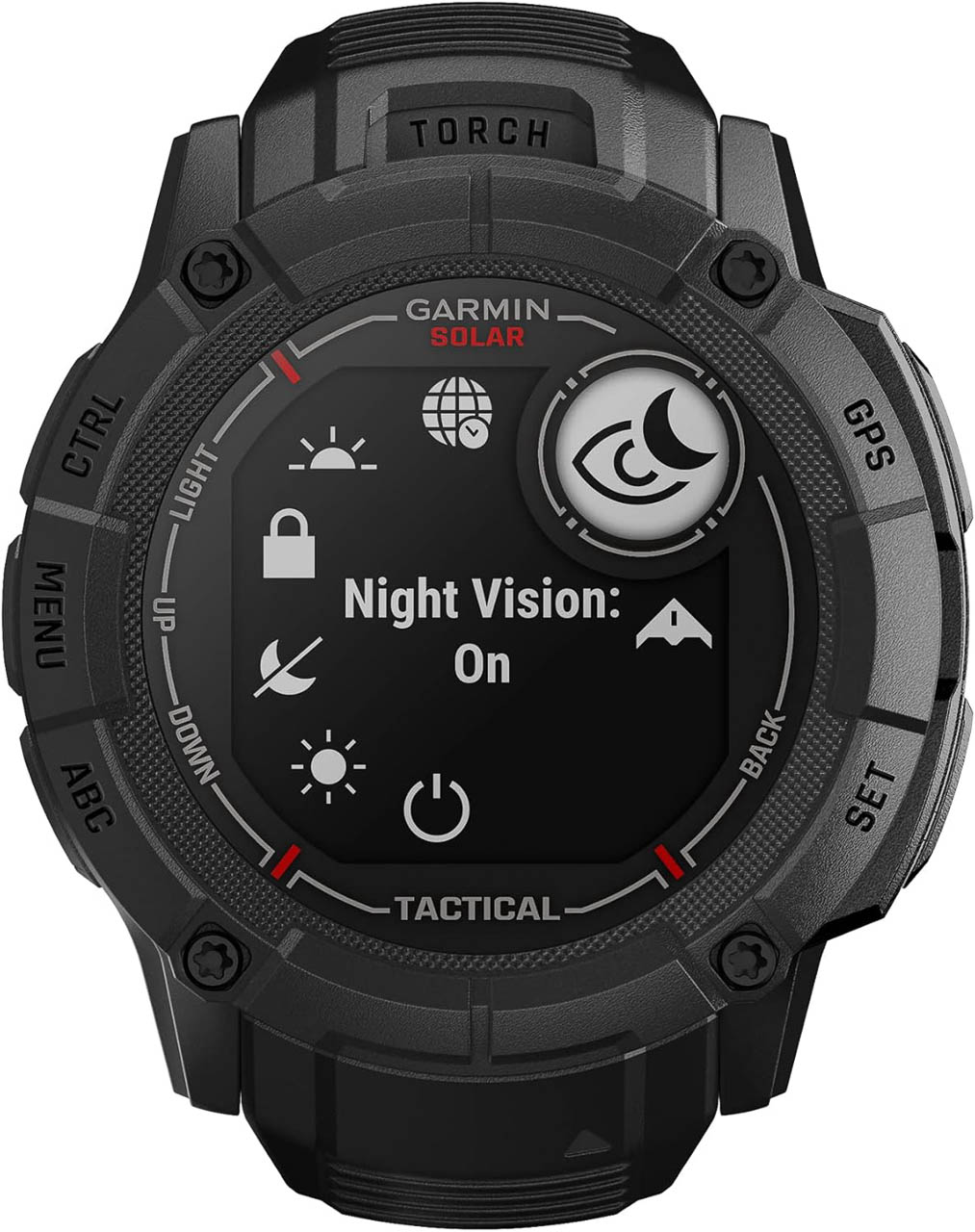
That’s a $155 discount, about 31% off the original price, and it changes the competitive conversation completely. If you’ve been watching the rugged GPS category and waiting for an entry point, this is the moment worth paying attention to. The value calculation shifts dramatically at this price tier. Solar capability at this cost competes with basic fitness trackers, not premium adventure gear.
Why Garmin Built This
Traditional smartwatches force a choice between capability and battery endurance, and the industry has largely accepted that trade-off as permanent. Apple Watch owners carry chargers on overnight trips because missing a charge means a dead device by afternoon. Samsung’s Galaxy Watch lineup pushes maybe four days with careful management. Even Garmin’s own Fenix series, legendary for battery life, still requires regular charging if you’re using GPS features with any intensity. The expedition crowd needed something fundamentally different, a device that could operate for weeks without access to power, something that treated outlets as optional rather than mandatory. Those users don’t just want longer battery life. They need a watch that removes charging from the equation entirely, because where they go, outlets don’t exist.

Picture this scenario: you’re five days into a backcountry trek with no outlets, no power banks, just sunlight. Your navigation device needs to work when you need it most.
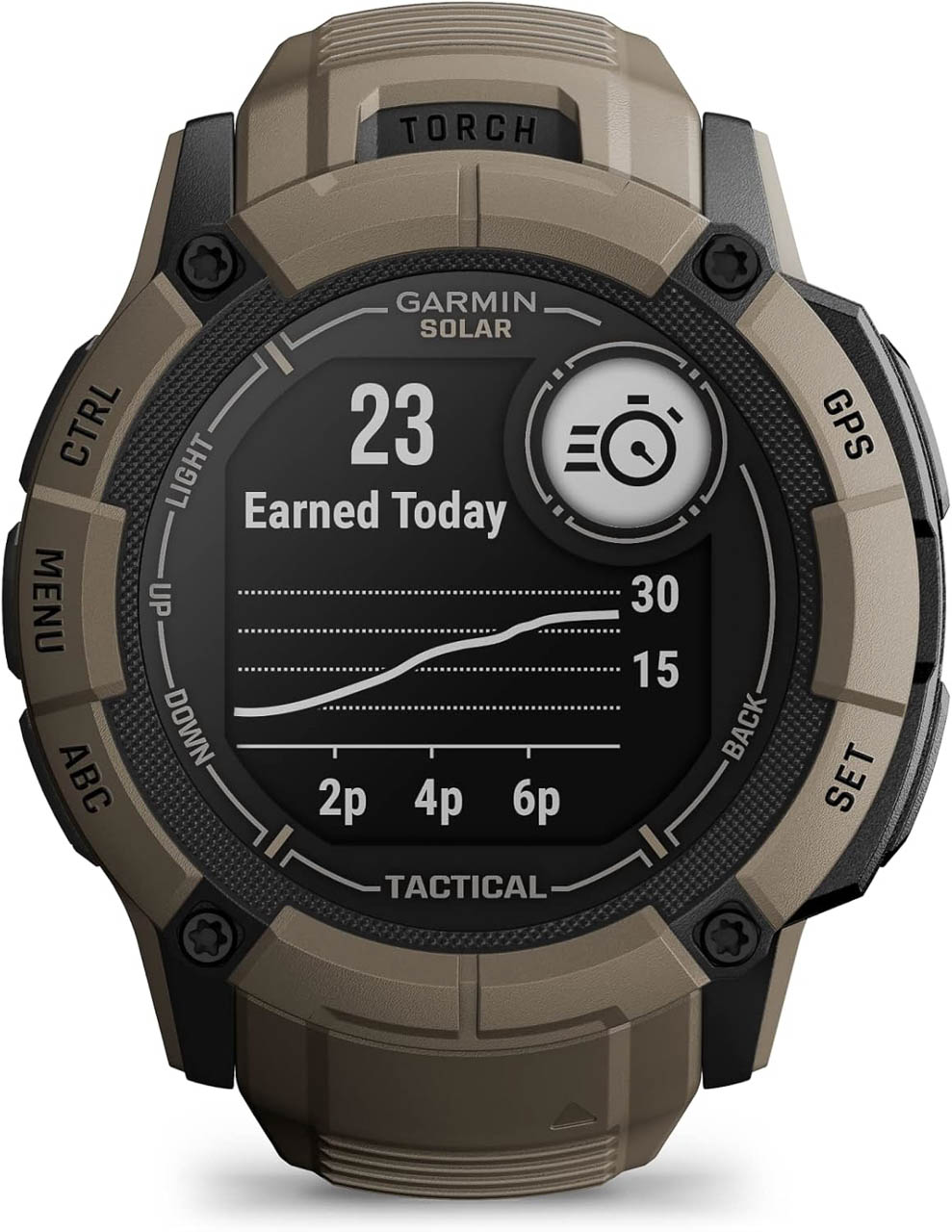
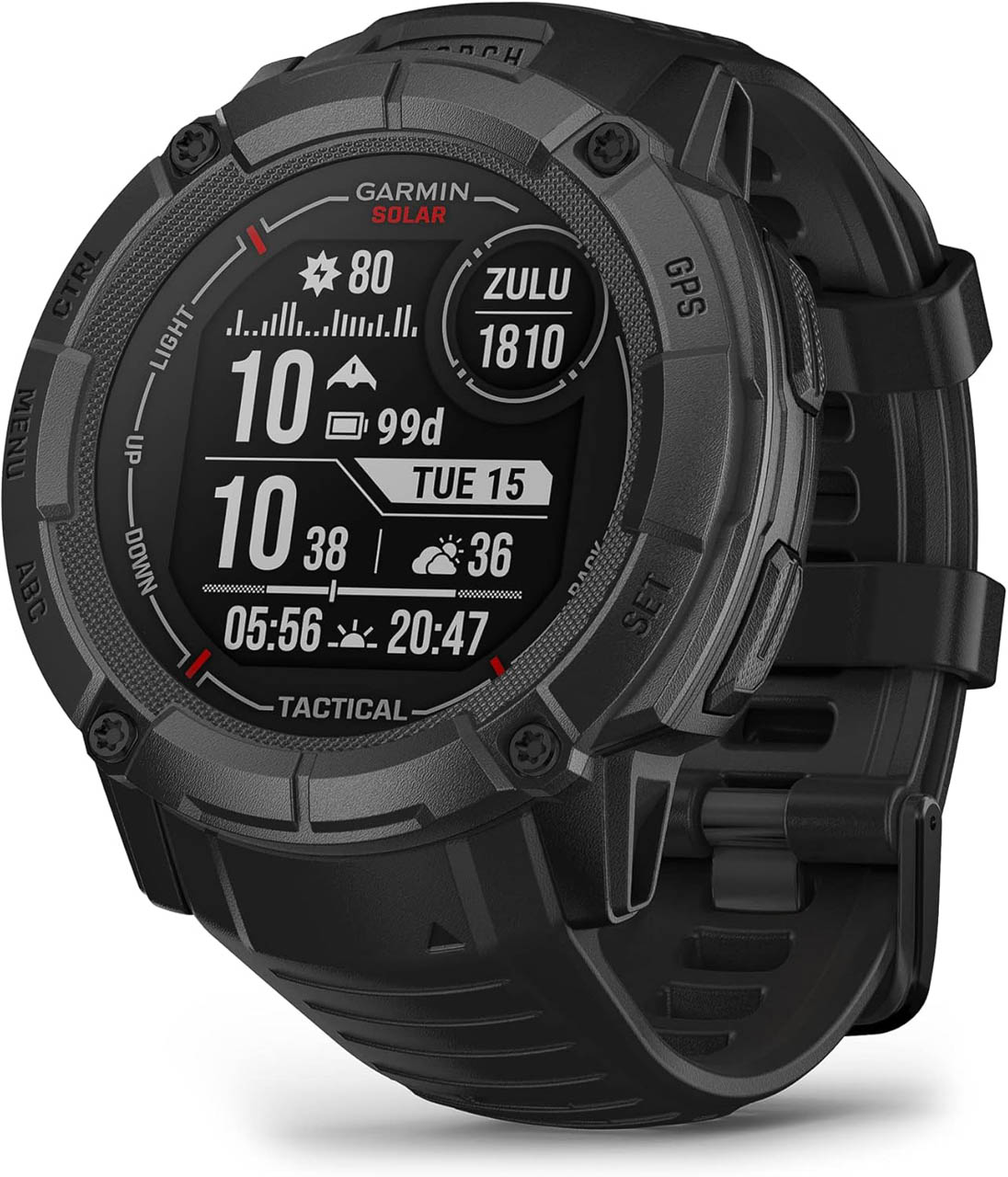
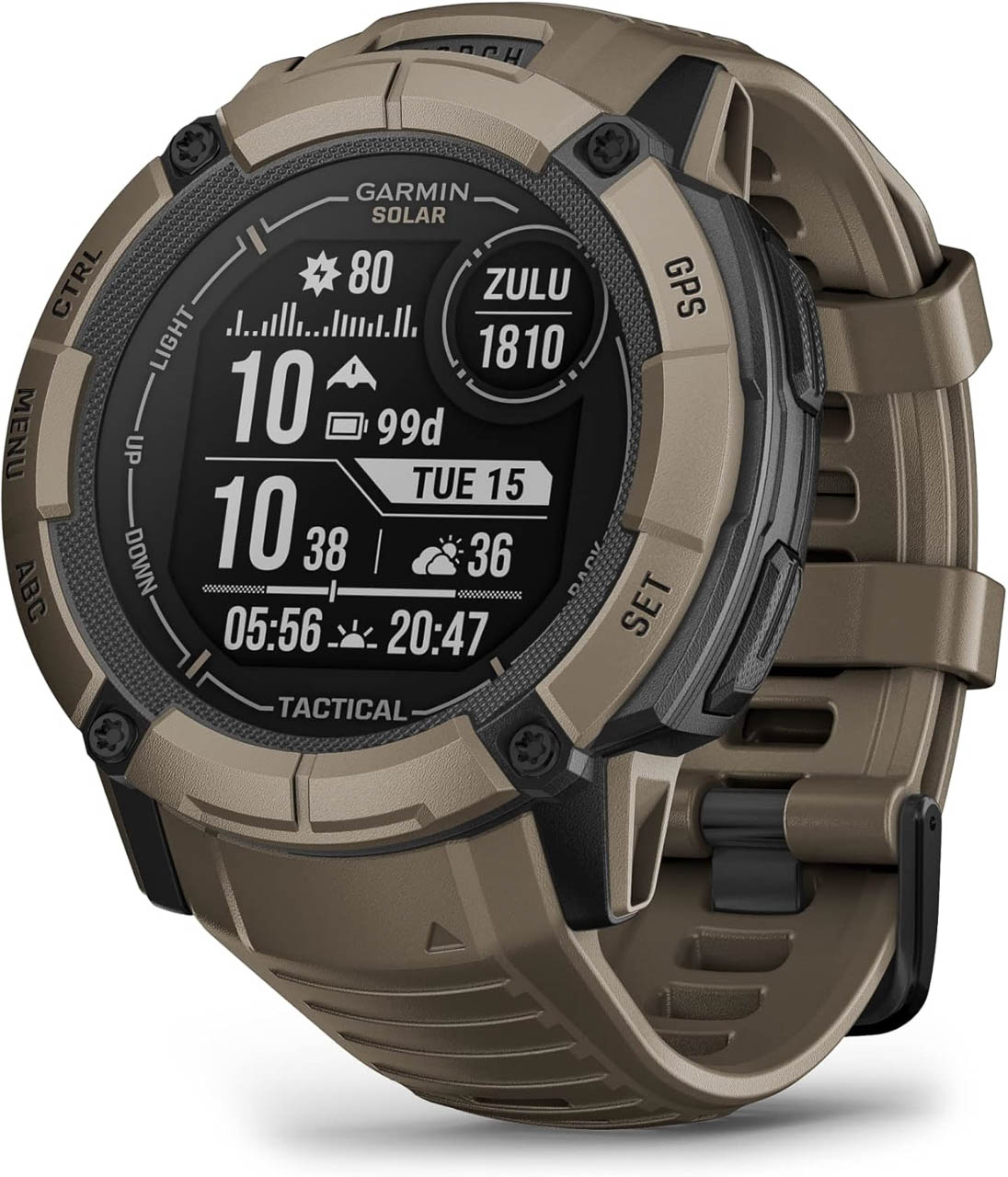
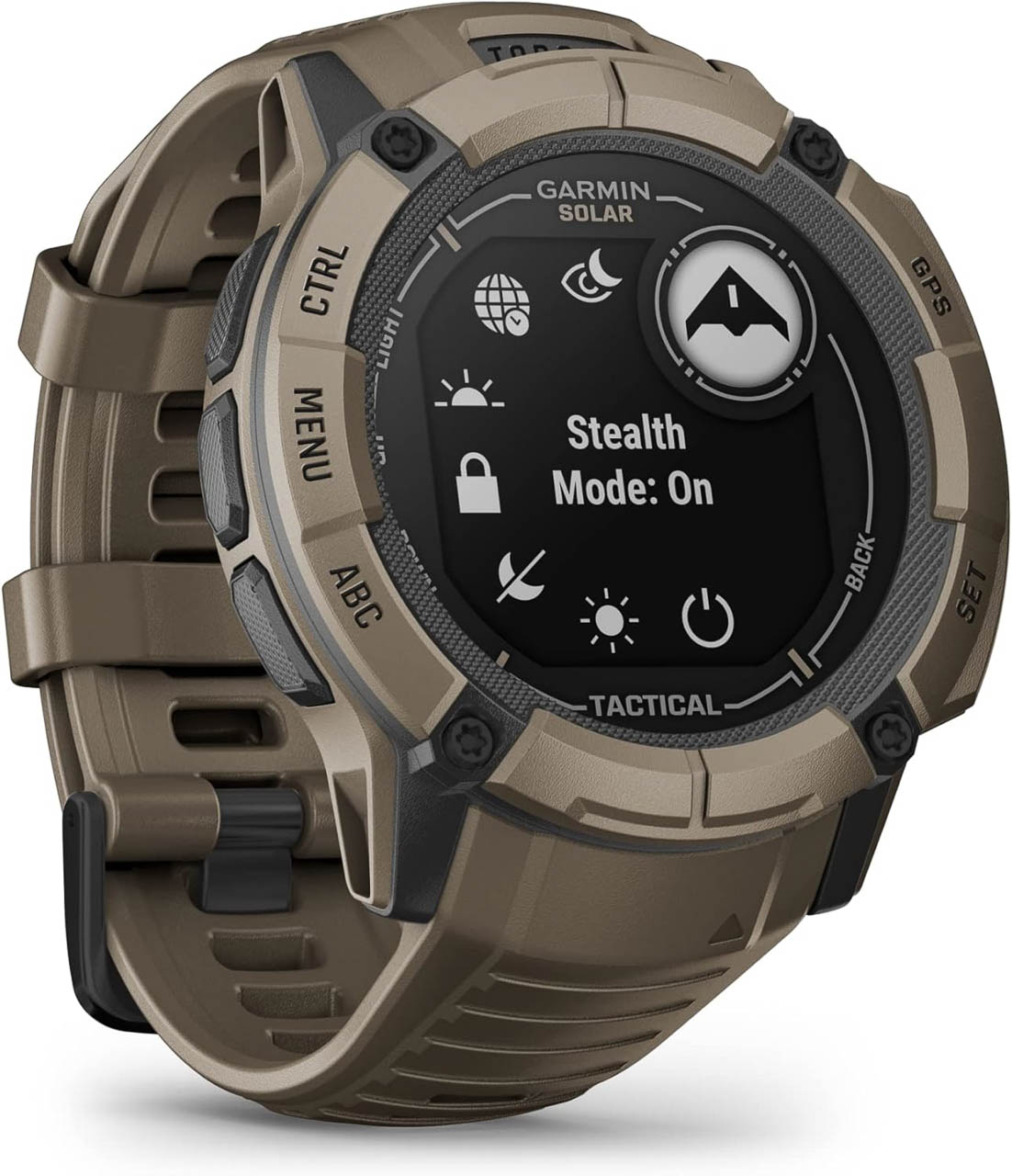
The Instinct 2X Solar targets exactly that situation with engineering built around solar capture as a primary power strategy rather than a supplementary boost. At 50 x 50 x 14.5mm with a 1.1-inch display, it wears larger than typical fitness watches, a conscious design choice that accommodates the expanded solar panel. The additional real estate isn’t about aesthetics; it’s about energy math. Despite the bulk, it weighs just 67 grams, light enough that the size becomes background noise on your wrist after the first hour.
MIL-STD-810 certification covers thermal shock, shock resistance, and water protection up to 100 meters, the kind of durability testing that separates adventure gear from consumer electronics pretending to be rugged. The watch doesn’t just resist damage; it’s built to operate in conditions that would kill most smartwatches within hours. Temperature extremes, humidity, altitude changes, vibration, all tested against military standards. You could drop this from a cliff, fish it out of a stream, and strap it back on without worrying whether the GPS will still acquire satellites. That kind of confidence matters when your navigation tool doubles as your lifeline. The button-driven interface means no touchscreen failures from wet fingers or frozen conditions. Physical controls work when capacitive touch gives up.
Solar Reality Check
Unlimited battery life comes with conditions you should understand before buying, and Garmin is actually transparent about the requirements. Garmin specifies approximately three hours of direct sunlight at 50,000 lux daily to maintain indefinite operation. That’s bright outdoor light on a clear day, not office windows or overcast afternoons.
Without solar assistance, the baseline numbers remain impressive enough to justify the purchase even if you never see optimal sun exposure. Standard smartwatch mode delivers up to 40 days between charges, which already exceeds most competitors by a factor of ten. GPS tracking runs for 60 hours baseline and stretches to 145 hours with solar help, enough for multi-day adventures with continuous tracking. Expedition GPS mode manages 60 days normally and goes unlimited with consistent sun exposure. Max battery GPS mode pushes past 150 hours before solar even factors into the equation. Most users will land somewhere between baseline and unlimited depending on outdoor time, lifestyle, and geographic location. The range between worst case and best case remains practical either way.
These specifications matter for practical trip planning and setting realistic expectations. A week-long backpacking trip works. A multi-day cycling tour works. Extended wilderness camping works.
Beyond the Battery
Solar charging dominates the conversation, but this watch packs features that justify attention independently of its headline capability. Double-click the control button from any screen and a built-in LED flashlight activates, a small addition that proves surprisingly useful in practice. Adjustable brightness levels offer flexibility between preserving night vision and actually seeing your path. Strobe mode provides emergency signaling. A red light option preserves night vision for tent navigation or early morning trail starts. The tactile feedback from the button confirms activation even with thick gloves, no screen-checking required in freezing conditions.
Multi-band GPS represents technology Garmin previously reserved for premium Fenix and Epix lines, now accessible at this price point. Faster satellite acquisition and improved accuracy in challenging terrain conditions come standard. If you’ve experienced GPS drift in deep canyons or dense forest, the multi-band capability addresses that frustration directly. Urban canyons between tall buildings, heavily wooded trails, and slot canyon scrambles all benefit from the signal redundancy that multi-band provides.
Health tracking covers expected territory with meaningful depth that goes beyond checkbox features. Heart rate monitoring runs continuously, feeding into Body Battery calculations that estimate energy reserves throughout the day. VO2 max readings provide fitness benchmarking. Sleep analysis tracks duration, quality, and recovery patterns. Training load metrics help serious athletes schedule recovery periods and avoid overtraining. Pulse oximetry measures blood oxygen levels, useful for altitude acclimatization. The watch supports dozens of activity profiles, covering everything from trail running to open water swimming to backcountry skiing. Garmin Pay enables contactless purchases, and smartphone notifications appear when you want them, silenceable when you don’t.
The interface runs entirely through five physical buttons, no touchscreen involved. That’s either a feature or a limitation depending on your preferences.
Who Should Skip This
Pass on this watch if touchscreen interfaces and extensive app ecosystems matter more to you than battery endurance, because the Instinct 2X Solar runs entirely on button navigation through Garmin’s Connect platform. It won’t replace an Apple Watch or Galaxy Watch for people who want tight smartphone integration, third-party app support, and responsive touch controls. The form factor prioritizes rugged capability over sleek daily-wear aesthetics. If you’re primarily interested in notification management, music control, and fitness tracking for gym sessions, this watch does too much in areas you don’t need and not enough in areas you do. The value proposition makes sense only if outdoor capability and battery independence rank high on your priority list.
Skip this if you spend most of your time indoors or in consistently overcast climates. The solar advantage disappears without regular sun exposure, and you’d be paying for capability you can’t access.
The Bottom Line
At $344.99, the Garmin Instinct 2X Solar moves from niche adventure tool to genuinely accessible outdoor watch, occupying a price tier that previously contained only basic fitness trackers and entry-level GPS devices. This isn’t a compromised version of premium technology; it’s premium technology at a price point that changes who can reasonably consider it. That discount transforms a hard sell into an easy recommendation for the right buyer. The value equation no longer requires justifying expedition-level spending for occasional trail use.
This watch solves a real problem for people who’ve experienced dead GPS at the worst possible moments, when weather changes, trails fork, or daylight fades. Solar charging works as advertised when conditions cooperate. Even when they don’t, the baseline battery life exceeds anything comparable.
Regular Price: $499.99
Deal Price: $344.99
You Save: $155 (31% off)
Where to buy: Amazon
For extended wilderness trips, multi-day adventures, or simply refusing to accept battery anxiety as inevitable, nothing else in the market matches what Garmin built here. The price drop makes it worth serious consideration even if you’re not summiting peaks every weekend. The watch doesn’t care whether you’re a mountaineer or a day hiker; it just keeps running. That kind of reliability has value that extends beyond any spec sheet, and at this price, the decision gets significantly easier. Strap it on, walk out the door, and forget it exists until you need it. That’s the whole point.

2-Pack LED Video Light Kit, NiceVeedi Studio Light, 2800-6500K Dimmable Photography Lighting Kit with Tripod Stand&Phone Holder, 73" Stream Light for Video Recording, Game Streaming, YouTube
(as of April 4, 2026 19:15 GMT -05:00 - More infoProduct prices and availability are accurate as of the date/time indicated and are subject to change. Any price and availability information displayed on [relevant Amazon Site(s), as applicable] at the time of purchase will apply to the purchase of this product.)

Gadgeteer Comment Policy - Please read before commenting
Is this a review or an ad?
Does it say review anywhere? The article is what you make of it.
It just feels like an odd post for The Gadgetteer – which usually has either longer reviews or shorter ‘look at this cool thing’ posts. With this not being a review, normally something like this would be 2-3 paragraphs long.
Bit of a blasé and dismissive attitude to a relevant question.
A response that is the antithesis of the spirit that Julie and Judie imbued this site with.
I’m out.