
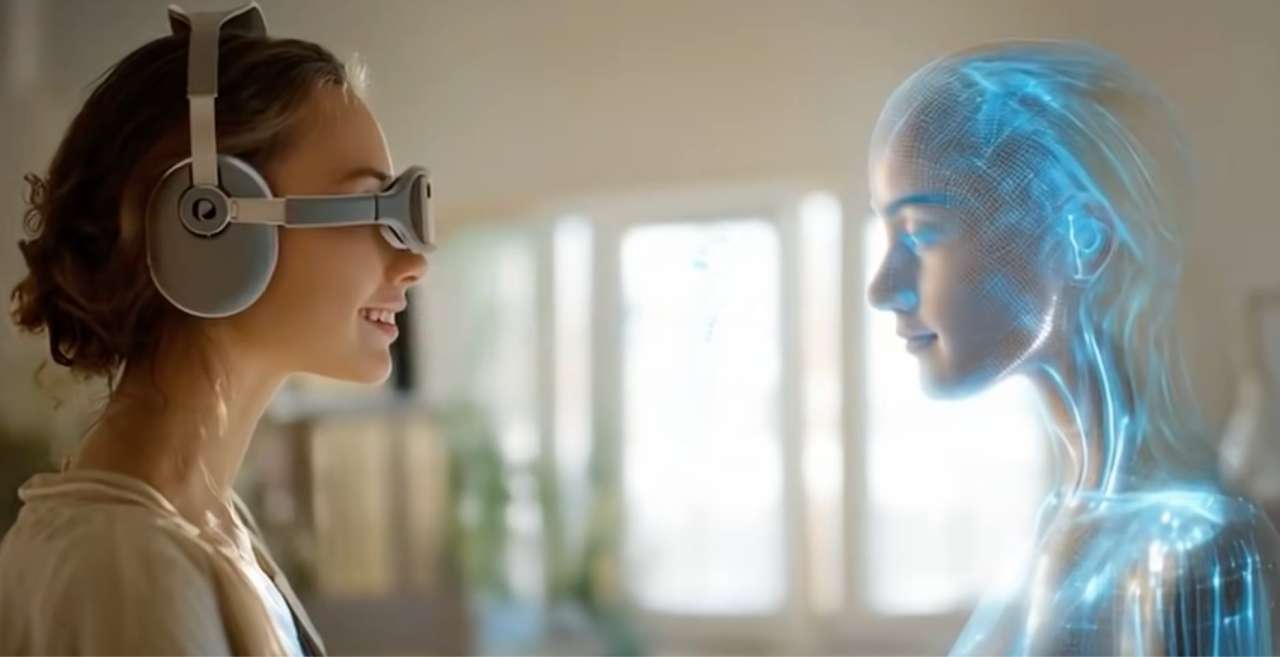
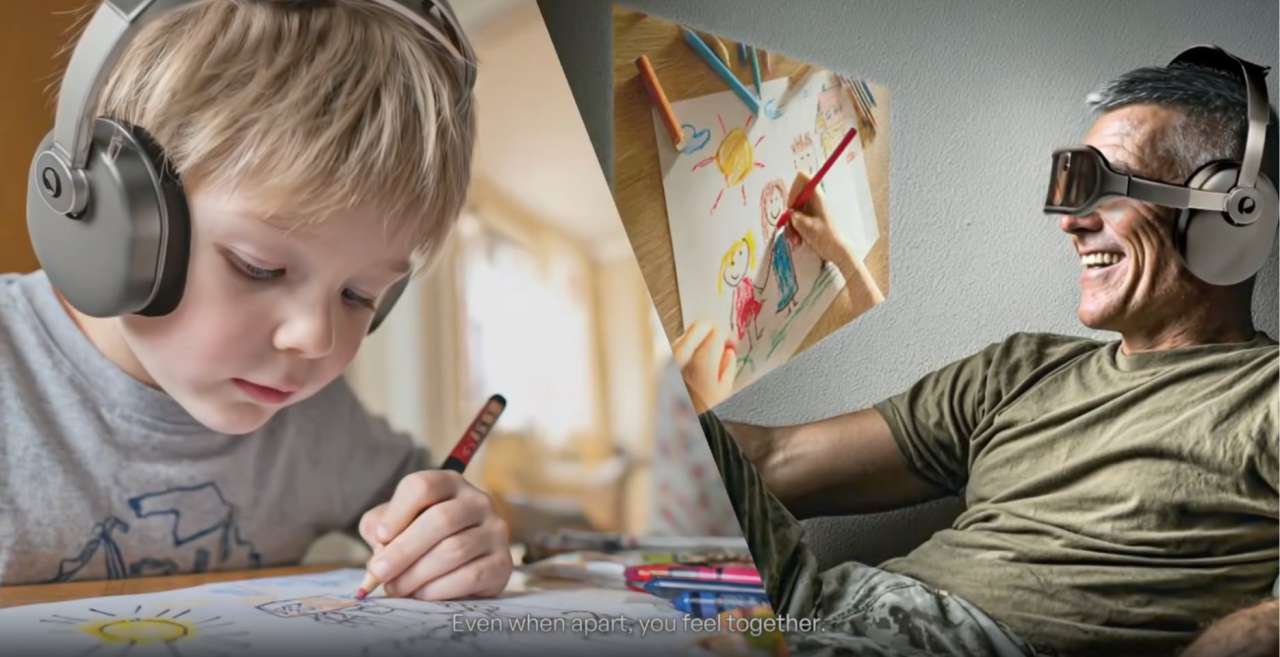
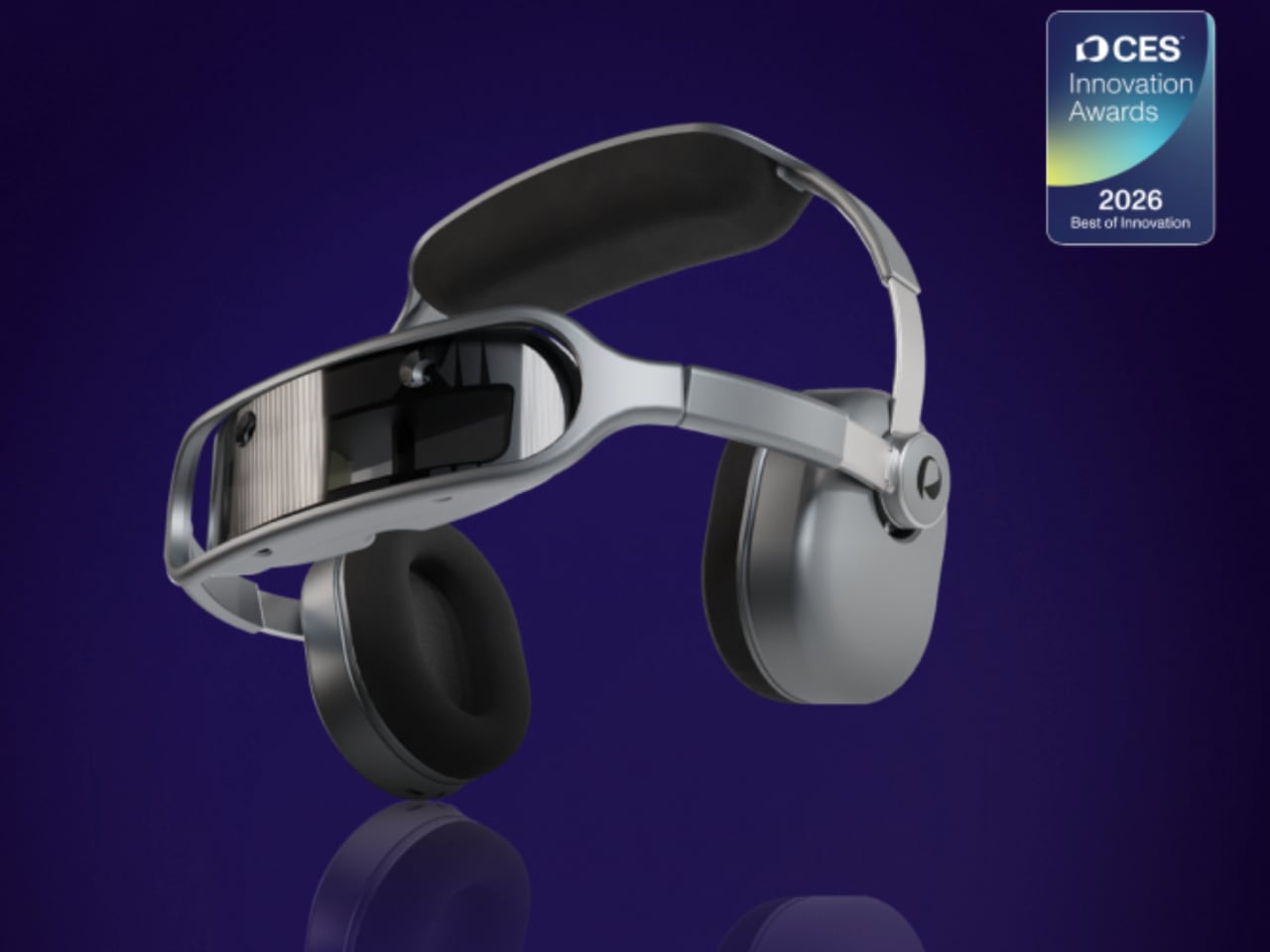
CES 2026 News – Every portable display makes you choose: commit to the headset experience or don’t bother. Perisphere from Geeks Loft tries something different. Dual screens that rotate down when you want them, then disappear into what looks like a pair of headphones when you don’t.
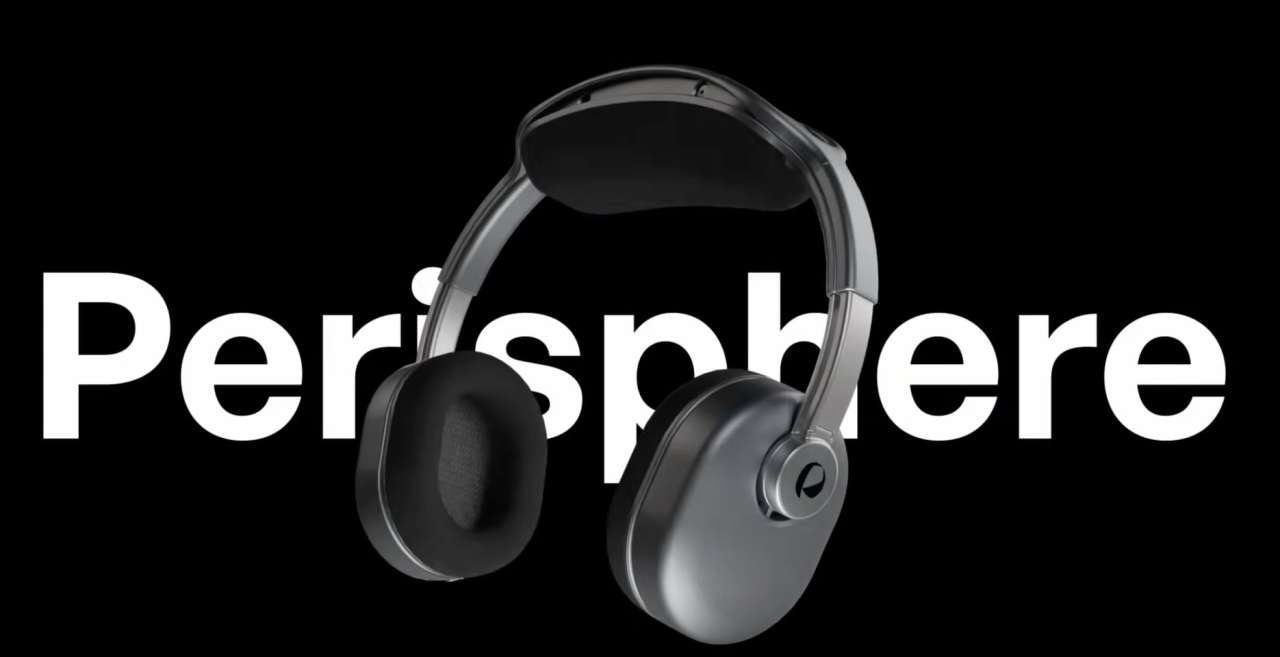
We’ve all seen those chunky VR headsets that make you look like you’re about to pilot a mech. And we’ve seen those clip-on screen things that never quite work. Perisphere takes a different approach: dual 1920×1080 displays mounted on rotating arms that swing down from a headband, position themselves in front of your eyes, then tuck back up into what basically looks like a slightly thick pair of over-ear headphones. The company’s calling it a “smart headphone,” which honestly tracks better than calling it another XR device.
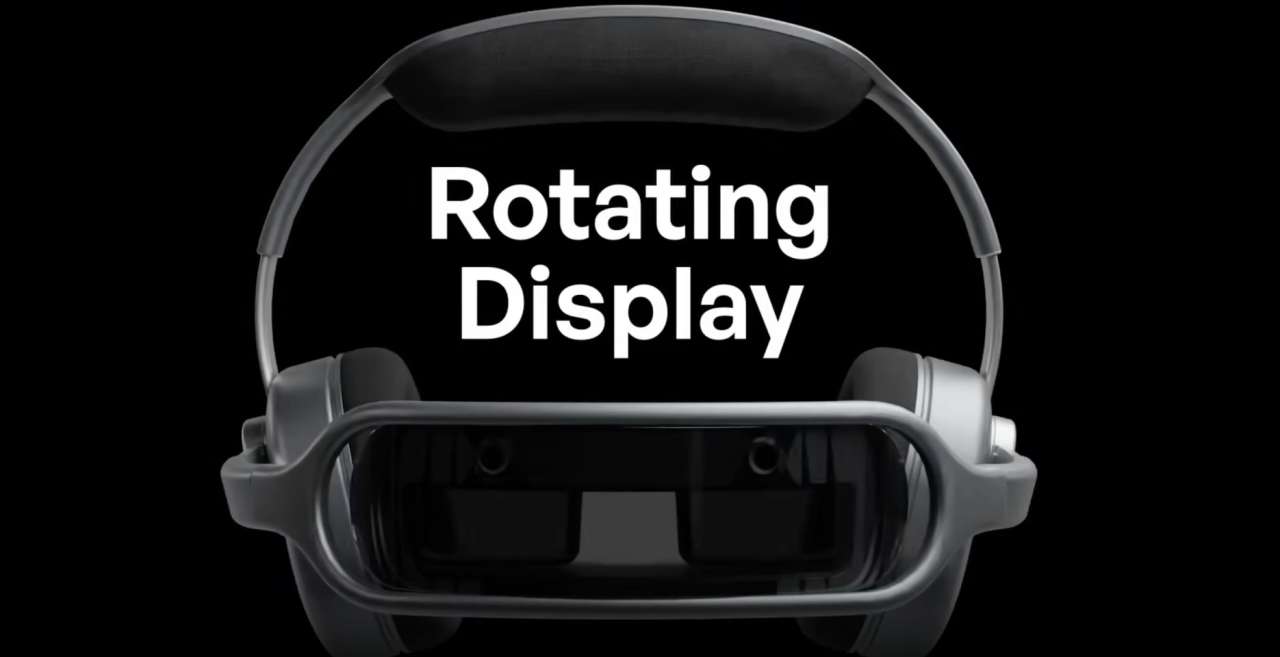
The transition between modes is mechanical, not software. You physically flip the screens down. There’s something satisfying about that, like flipping open a laptop lid. No waiting for boot sequences. No gesture recognition failing in a coffee shop. Just… screens down, you’re watching. Screens up, you’re listening to music.
How the Display Actually Works
So the mechanism itself is pretty clever. Each display sits on an articulating arm that rotates downward from the headband, putting an FHD screen directly in front of each eye. When you’re done, flip them back up and the whole thing collapses into the headphone body. From a distance, you’d probably just think someone was wearing bulky cans.
Spec-wise, you’re looking at 1920×1080 per eye, a 53-degree field of view, and 1,800 nits peak brightness. That last number matters if you’re actually going to use these on a plane or outdoors. Most personal displays wash out the moment you’re not in a dark room.
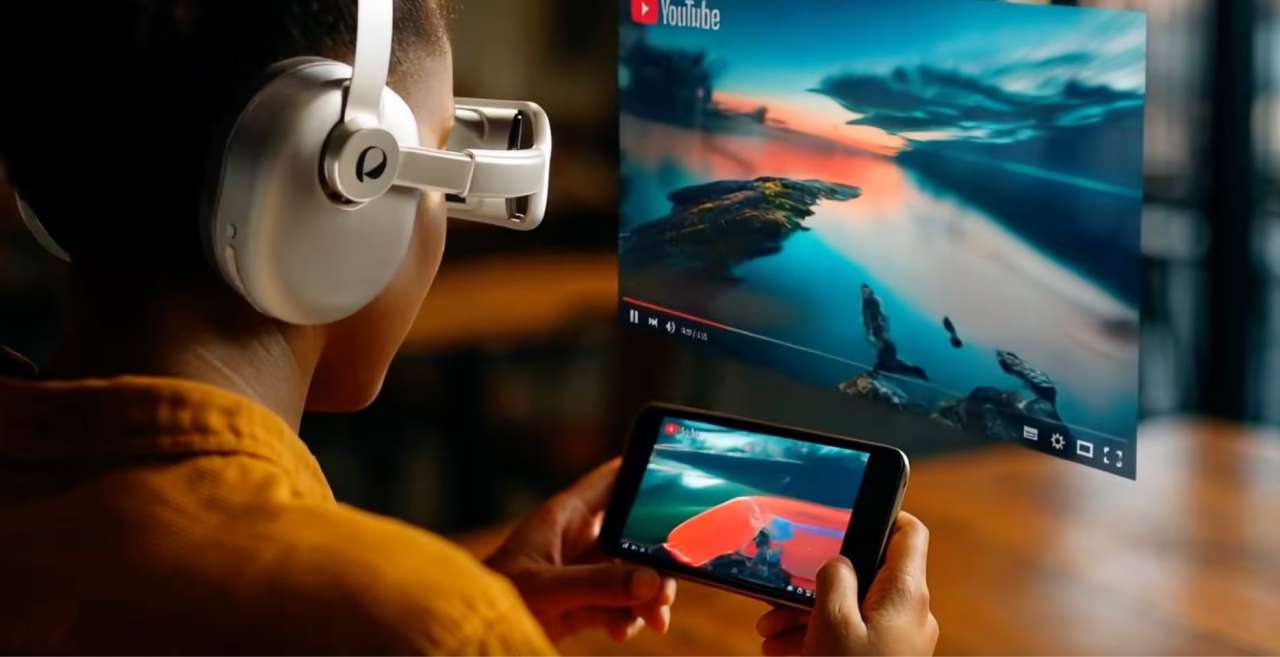
53 degrees of FOV isn’t going to give you that fully-immersed VR feeling, but that’s kind of the point. You still have peripheral vision. You can still notice if the flight attendant’s coming down the aisle. It’s more “personal cinema” than “complete isolation from reality.”
Still unknown: how heavy these feel after an hour. Whether the displays get warm against your face. How the weight shifts when you flip between modes. Those are the things that’ll make or break the actual experience, and we won’t know until we try them at CES.
Built-In 3D Cameras (Yes, Really)
This is where it gets interesting. Perisphere has four cameras built in. Two sets of dual 5MP stereo cameras designed specifically for 3D video capture. You can record whether the displays are down or up, and the spatial audio system captures sound to match.
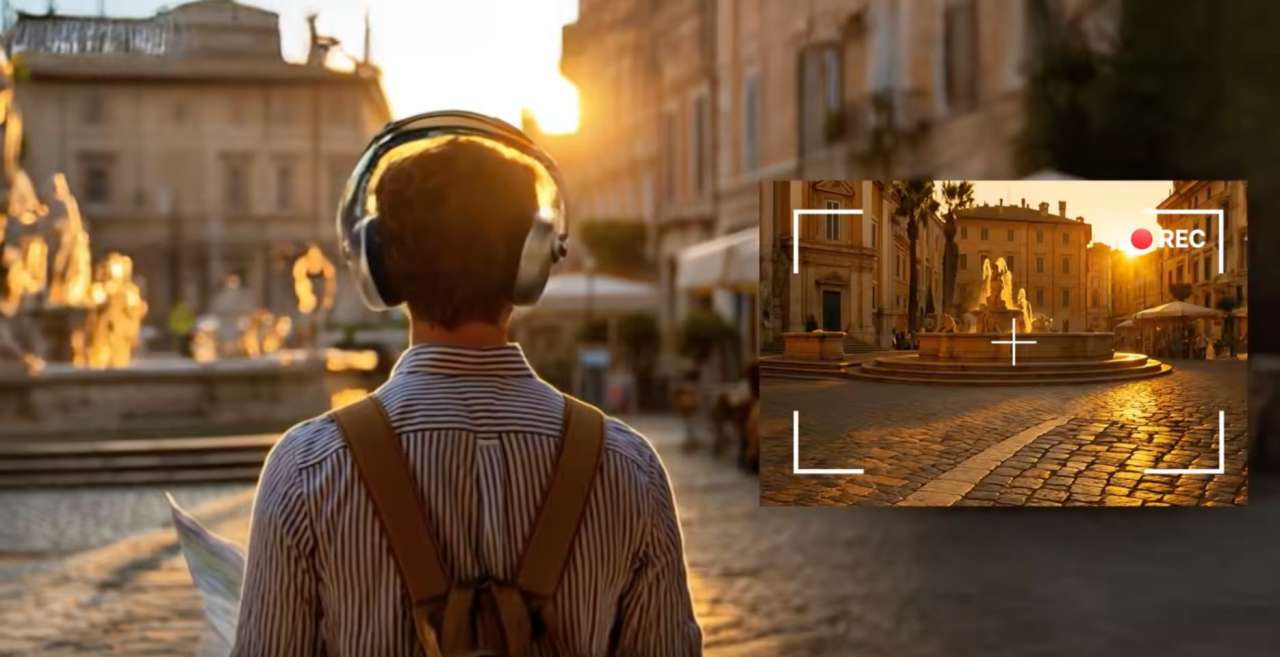
5MP stereo cameras could produce decent 3D content, or they could be a total gimmick. It really depends on sensor quality, processing, and low-light handling, none of which Geeks Loft has detailed yet. Picture this: you’re at a concert, you capture a few minutes of spatial video, then flip the screens down and watch it back with the crowd noise still echoing around you. If that actually works well, travel vloggers and event shooters might pay attention. If it doesn’t, you’ve got extra weight and battery drain for a feature you’ll never use.
Real footage at CES will tell us whether this is a genuine secondary feature or just spec-sheet padding.
Battery, Connectivity, and Other Practical Stuff
Let’s get the not-so-great news out of the way: three hours of video playback. That’s one long movie or a couple episodes before you’re hunting for a USB-C cable. Not terrible for what this is, but don’t expect to binge an entire season on a transatlantic flight.
Connectivity is Bluetooth 5.x plus Wi-Fi Direct. Spatial audio is on board, though we don’t know yet if it’s head-tracked or just virtualized surround. The company’s promising continuous OTA updates, which for a first-gen product in a brand new category probably means “we’re still figuring some stuff out.” That’s fine, honestly. I’d rather they iterate than ship something half-baked and walk away.
Who Makes This Thing?
Geeks Loft is a Korean company with a US office in Syracuse, New York. You probably haven’t heard of them. They’ve been building credibility through partnerships: Bumjin Electronics for manufacturing, Brain Vector for healthcare applications (think vision therapy and meditation), and a TEDx Melbourne collab focused on cognitive enhancement. Not the most obvious combination, but it suggests they’re thinking beyond just entertainment.
Here’s what matters though: Perisphere debuted at SXSW Sydney 2024, which means working units have been in public hands for over a year. That’s unusual for a CES announcement. Most stuff at CES is six months away from being real at best. Geeks Loft has already been letting people try these, which suggests they’re confident the hardware holds up. That confidence will get tested when someone inevitably wears these through airport security.
Should You Care?
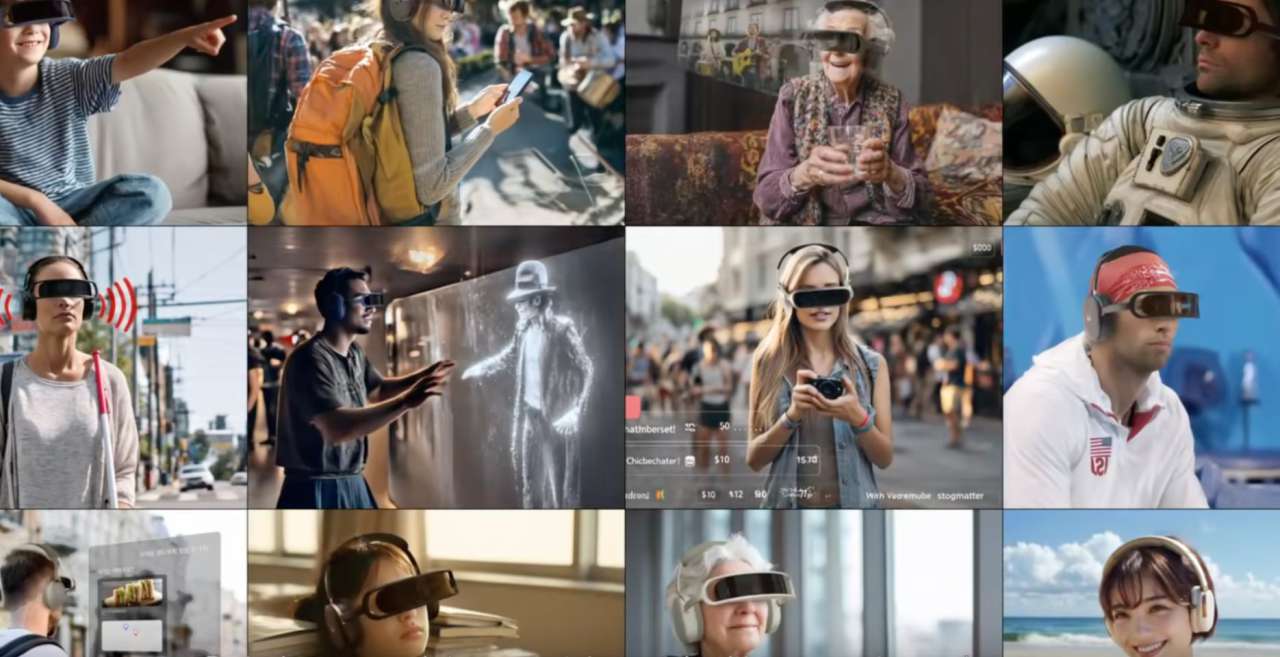
Depends on who you are. If you’re a frequent flyer who’s tired of squinting at a phone screen or lugging a tablet, this consolidation play makes sense. If you’re into spatial video and want to experiment with capture-and-review workflows, the camera system is worth testing. If you’re a gamer who wants portable display gaming without packing extra gear, maybe.
If you need all-day battery life, want Vision Pro quality, or hate being an early adopter for products that don’t have competitors yet, sit it out. Perisphere is genuinely alone in its category right now. There’s no “wait for the second-gen version” option because nobody else is making this.
For everyone else: if you currently travel with premium headphones and some kind of portable display, Perisphere’s pitch is that you only need one thing now. Whether that’s worth whatever they end up charging is the question.
When Can You Get It?
Geeks Loft is targeting first half 2026, with units on display at CES 2026 in Las Vegas. No pricing yet, but given the tech inside, expect this to land well above your typical noise-canceling headphones. We’re probably talking premium pricing for a premium concept.
And the fact that they’re letting press and attendees try these at CES? Encouraging. Companies hide unfinished products behind glass. We’ll see how freely they let people test them.
Bottom Line
Perisphere is a weird product. That’s not an insult. It’s trying to solve a real problem: personal displays that don’t make you look ridiculous and don’t require full commitment to a headset experience. Screens that physically disappear when you don’t need them is a genuinely clever mechanical solution.
Whether Geeks Loft can actually pull this off is the CES question. The specs look reasonable, the form factor is interesting, and they’ve been refining this for over a year with real prototypes. First-gen products in new categories are always risky, but this one at least seems to know what it’s trying to be.
We’ll be at CES to try these out and report back on how they actually feel. That rotating display mechanism is either going to be satisfying every single time, or it’s going to get annoying fast.
More info at Geeks Loft and their CES 2026 page.
L39 Ultra Slim UV Protective Filter for Leica Q3 43 Q2 Camera with Moisture-Proof Case & Removal Tool 19 Layers Mulit-Coated UV Ultraviolet Filter 99.3% Light Transmission Water Oil Scratch Resistant
(as of March 25, 2026 18:34 GMT -05:00 - More infoProduct prices and availability are accurate as of the date/time indicated and are subject to change. Any price and availability information displayed on [relevant Amazon Site(s), as applicable] at the time of purchase will apply to the purchase of this product.)
