AI glasses are moving out of the camera novelty phase and into a more practical fight: what can they put in your line of sight without making you look like you wandered out of a sci-fi prop closet? MemoMind One enters that fight today as a pair of AI display glasses from MemoMind, a new AI hardware brand incubated by XGIMI.
The pitch is simple. These are glasses with a dual-eye display, integrated audio, real-time translation, note capture, navigation, captions, and a memory-focused AI layer. They also skip the camera entirely, which immediately separates MemoMind One from camera-forward smart glasses and makes the privacy argument easier to understand.
MemoMind One AI glasses
Price: Standard Edition starts at $399, or $499 with prescription lenses. Custom Edition starts at $449.
Where to Buy: Kickstarter
MemoMind says MemoMind One is now available to order through Kickstarter, with the Standard Edition starting at $399. That puts it in the same conversation as the broader AI display glasses category, where buyers are asking less about novelty and more about price, battery life, subscription costs, and whether the product can survive normal daily wear.
Why most display glasses ask for too much attention
MemoMind One is not being positioned as a full AR headset. It is closer to everyday eyewear with a small private display and an AI assistant built around useful interruptions. The official press materials describe real-time translation, intelligent note-taking, contextual assistance, navigation, live captions, calendar help, and an adaptive teleprompter.
That restraint is the interesting part. A display in your glasses can turn into a bad idea quickly if it demands too much attention. MemoMind’s public framing is quieter: information appears when you need it, then gets out of the way.

The hardware side is where XGIMI’s involvement makes sense. XGIMI is best known for projectors, and MemoMind says the glasses use dual Micro-LED near-eye displays with 640 by 350 resolution, up to 2000 nits brightness, a 25 degree field of view, and a 30Hz refresh rate. The creator brief in the official media kit also says the image can appear at an adjustable viewing distance from 1 meter to 5 meters, with about 2.5 meters as the default.
That tells you what this is and what it is not. This is for glanceable information, captions, prompts, directions, and summaries. Buyers should keep expectations closer to a glanceable companion than a headset.
The confirmed feature list is broad
Eight features carry the launch story. MemoMind is calling the core assistant Memo AI, and according to the official press release, it provides Q&A, live translation, navigation guidance, contextual assistance, and an adaptive teleprompter experience.
AI Translator supports real-time translation across more than 26 languages. Listen-in Mode passively translates an ongoing conversation, while Dialog Mode is meant for back-and-forth communication between speakers.
Idea Notes captures voice notes and turns them into organized, searchable text. AI Recorder records meetings, lectures, and conversations, then generates structured summaries. AI Captions places live subtitles in the user’s field of view, with instant Q&A and Smart Listen support.
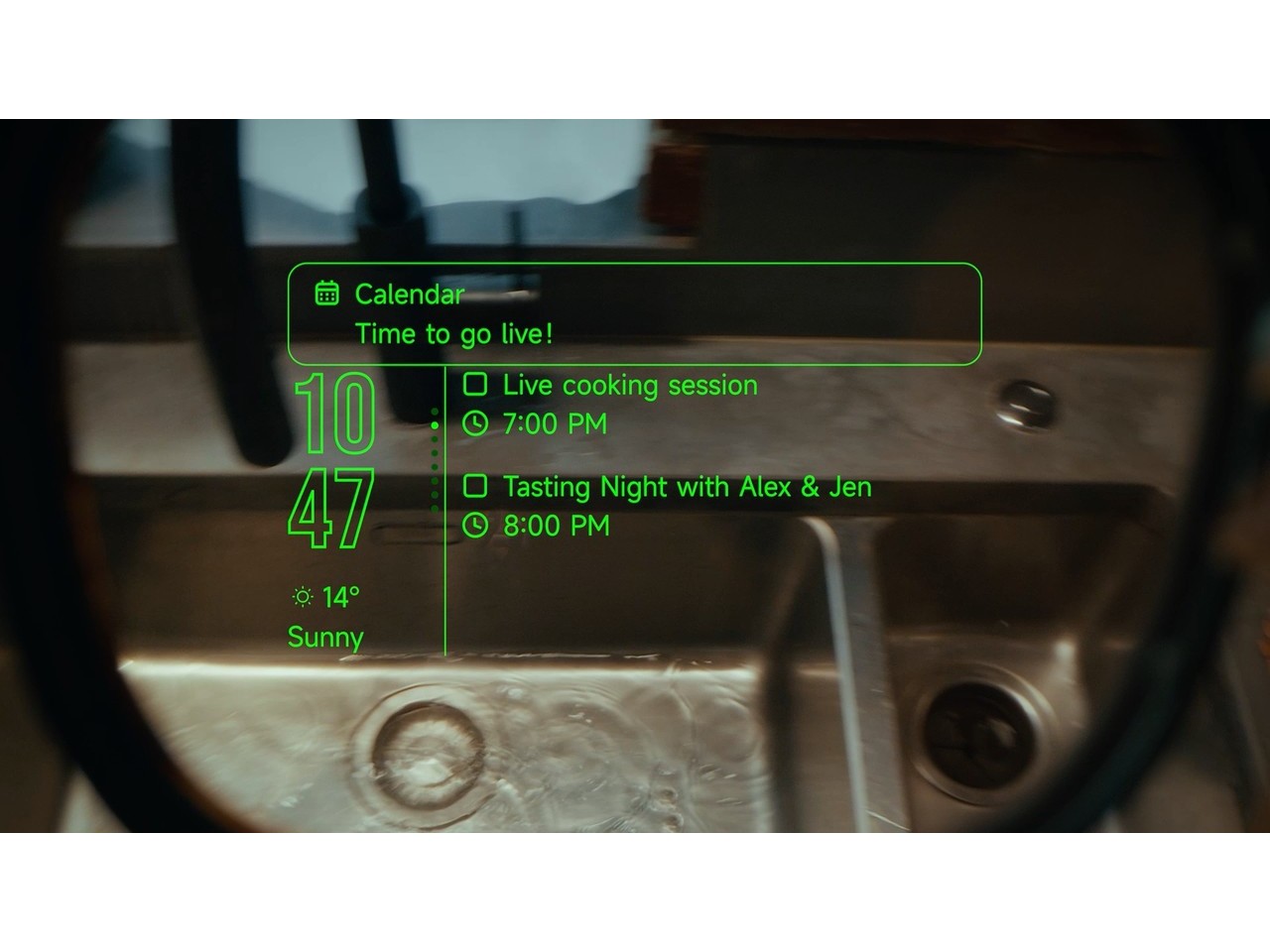
Map Navigation handles walking and cycling directions, with destinations shown in the user’s line of sight. The Calendar feature pulls schedules, tasks, reminders, and suggested priorities into the glasses experience.
The media kit adds several hardware details that help explain the daily-wear angle. MemoMind One is listed at about 46.6 grams and uses magnesium-aluminum alloy, beta titanium, and acetate. It supports iOS, Android, and HarmonyOS. It uses open-ear Harman AudioEFX audio, triple microphones, BLE bridge connectivity, a single button, voice control, and head gestures.
That control mix is worth testing in the real world.
No camera is the smartest trade-off
This design choice may decide whether people feel normal wearing them. The official creator brief says the glasses have no camera by design, not by omission. That means they will not replace camera glasses, action cameras, or visual capture devices.
The missing camera is doing work here. It cuts off photo and video use, but it also removes the social friction that follows camera glasses into every meeting, coffee shop, and dinner table. A display-only pair of AI glasses still raises privacy questions because it can record audio, but it avoids the more obvious problem of pointing a lens at everyone in the room.
For Gadgeteer readers, that makes the product easier to place. If you want photos, video, or first-person capture, MemoMind One is the wrong tool. If you want captions, translation, reminders, directions, meeting summaries, and quick notes without pulling out a phone, choose the no-camera approach.
The subscription question is unavoidable
The core feature set is labeled “No Subscription Required” in the official press release, but MemoMind also has an optional subscription called Memo+. That’s where the company’s AI Long Memory idea lives.
Memo+ costs $19.99 per month. The official press release says deposit holders get 12 months free, while Kickstarter backers get 6 months free. MemoMind describes AI Long Memory as a system that organizes and connects moments, intentions, tasks, recordings, and context across daily life.
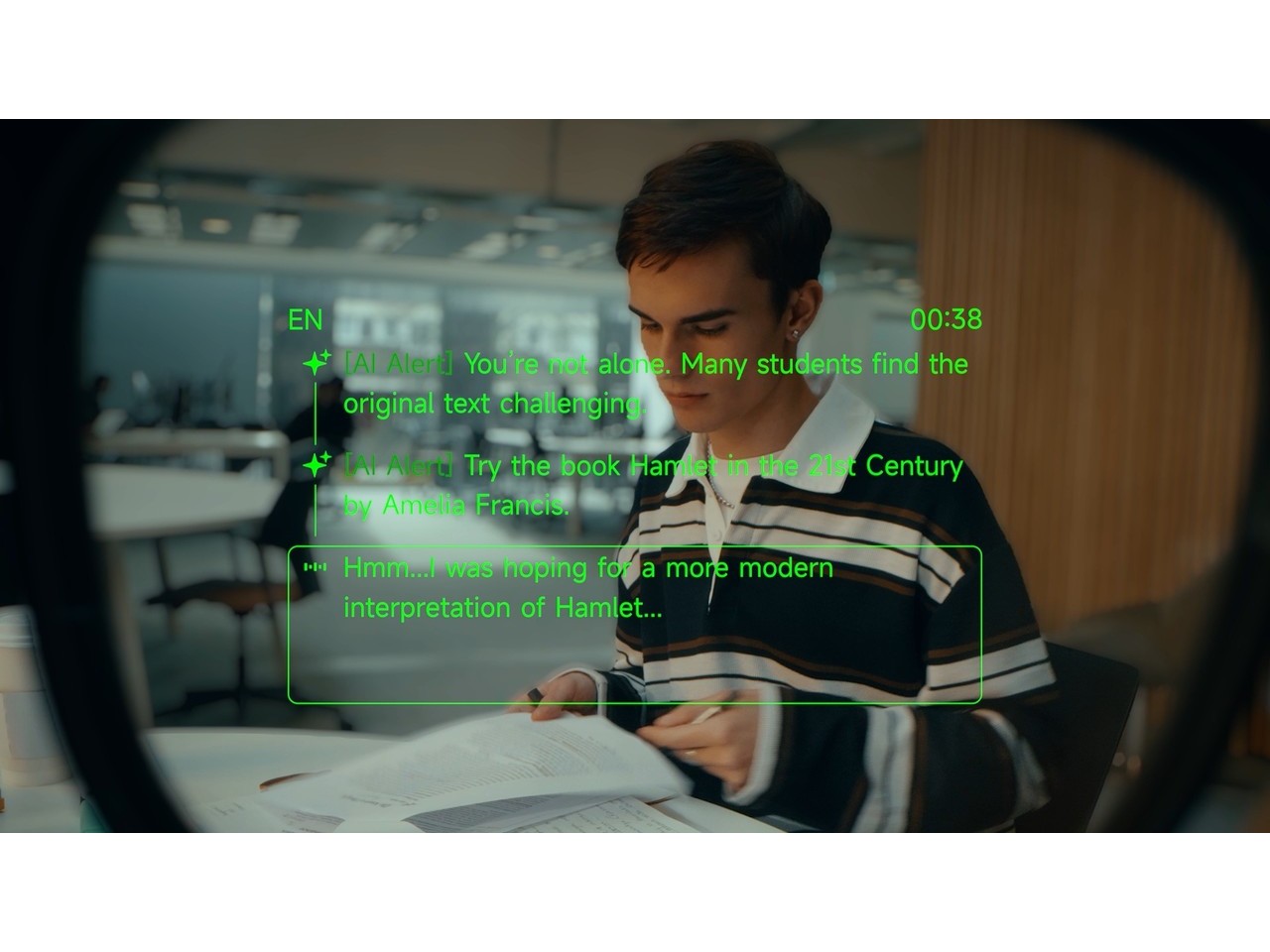
Memo+ has three pillars. Moments creates AI-generated daily journals with illustrations and chapters. Up Next surfaces tasks, reminders, and future intentions from conversations. Memo AI+ lets users search across meetings, conversations, recordings, and Moments through a unified memory system.
A searchable personal memory layer is useful if it works well and respects privacy. It is also the feature that needs the most trust. The official media kit says MemoMind uses on-device processing and end-to-end encryption, but buyers still need clear controls over what is stored, processed, and remembered.
Memo+ is the product’s biggest promise. Wait for real privacy controls before trusting it with a workday.
Pricing, frames, lenses, and battery life
MemoMind One comes in three frame styles: Nomad, Archive, and Gotham. Nomad is described as square-round, Archive as round, and Gotham as square. The official press release says seven customizable color options will be available, and prescription lens support is included.
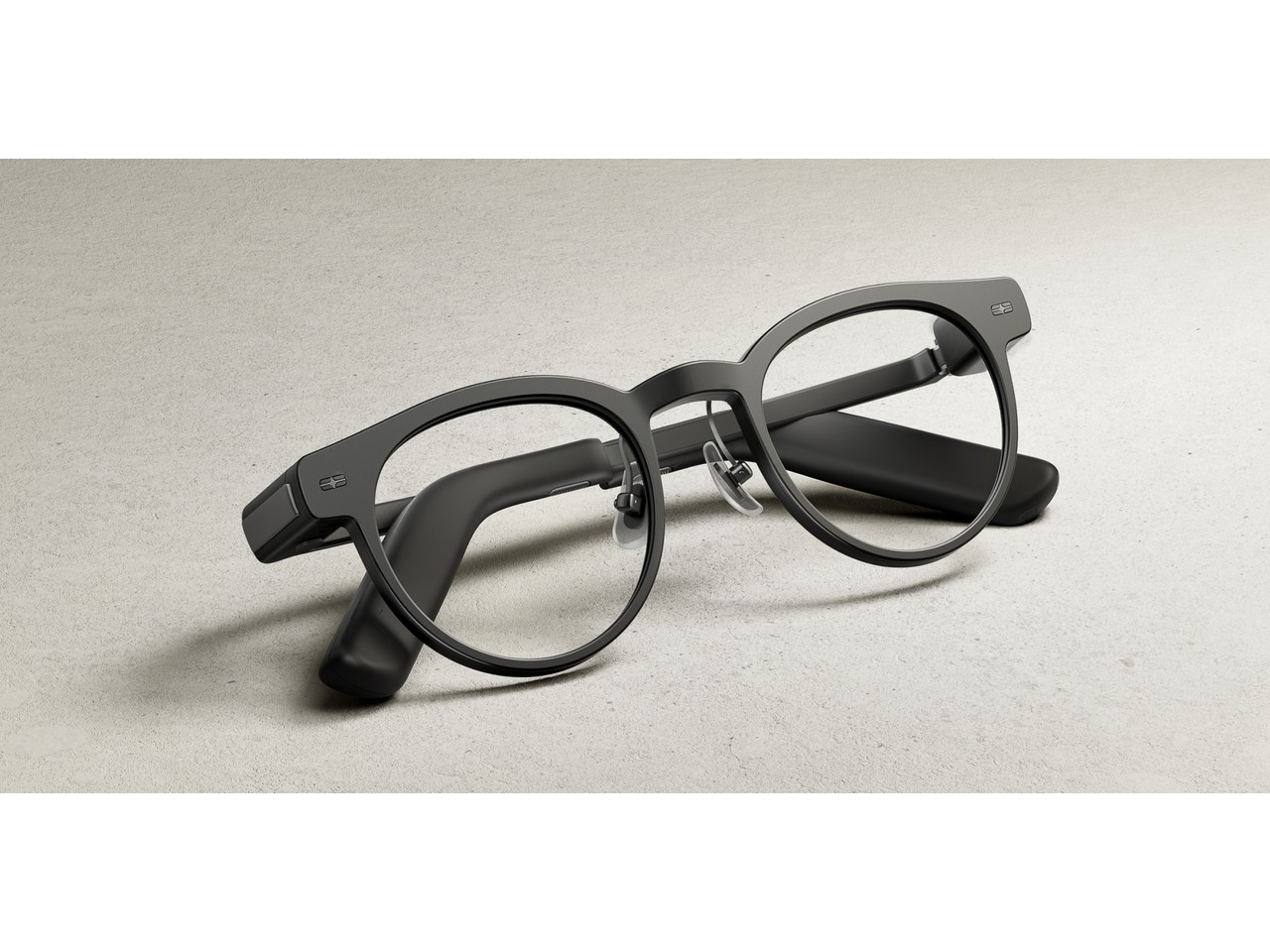
The Standard Edition starts at $399, or $499 with prescription lenses. The Custom Edition starts at $449. MemoMind notes that Kickstarter pledge tiers are priced in Hong Kong Dollars, so GBP prices are approximate and can change with exchange rates.
Battery life is one of the stronger claims. MemoMind says the glasses deliver up to 16 hours under standard usage. The creator brief lists more than 16 hours of mixed usage, 3 or more days of connected standby, and 10 or more days of disconnected standby. The glasses are described as splash-resistant, not waterproof.
That mix suggests a wearable built for workdays and travel days, not workouts in bad weather. It also means the 16 hour claim needs real-world testing with translation, captions, audio, and navigation in use.
Buy the battery claim as a promise to verify, not a guarantee.
Where MemoMind fits in the smart glasses race
The current AI glasses market is splitting into a few lanes. Some products lead with cameras and social capture. Some lead with AR visuals. Some lead with translation or notifications. MemoMind One is trying to sit in the quieter productivity lane: display, audio, translation, notes, prompts, and memory.
That gives TG a clear comparison point with our recent smart glasses coverage, including Meta’s $299 AI glasses, INMO GO3 translation glasses, and our earlier XGIMI no-camera glasses coverage from MWC 2026.
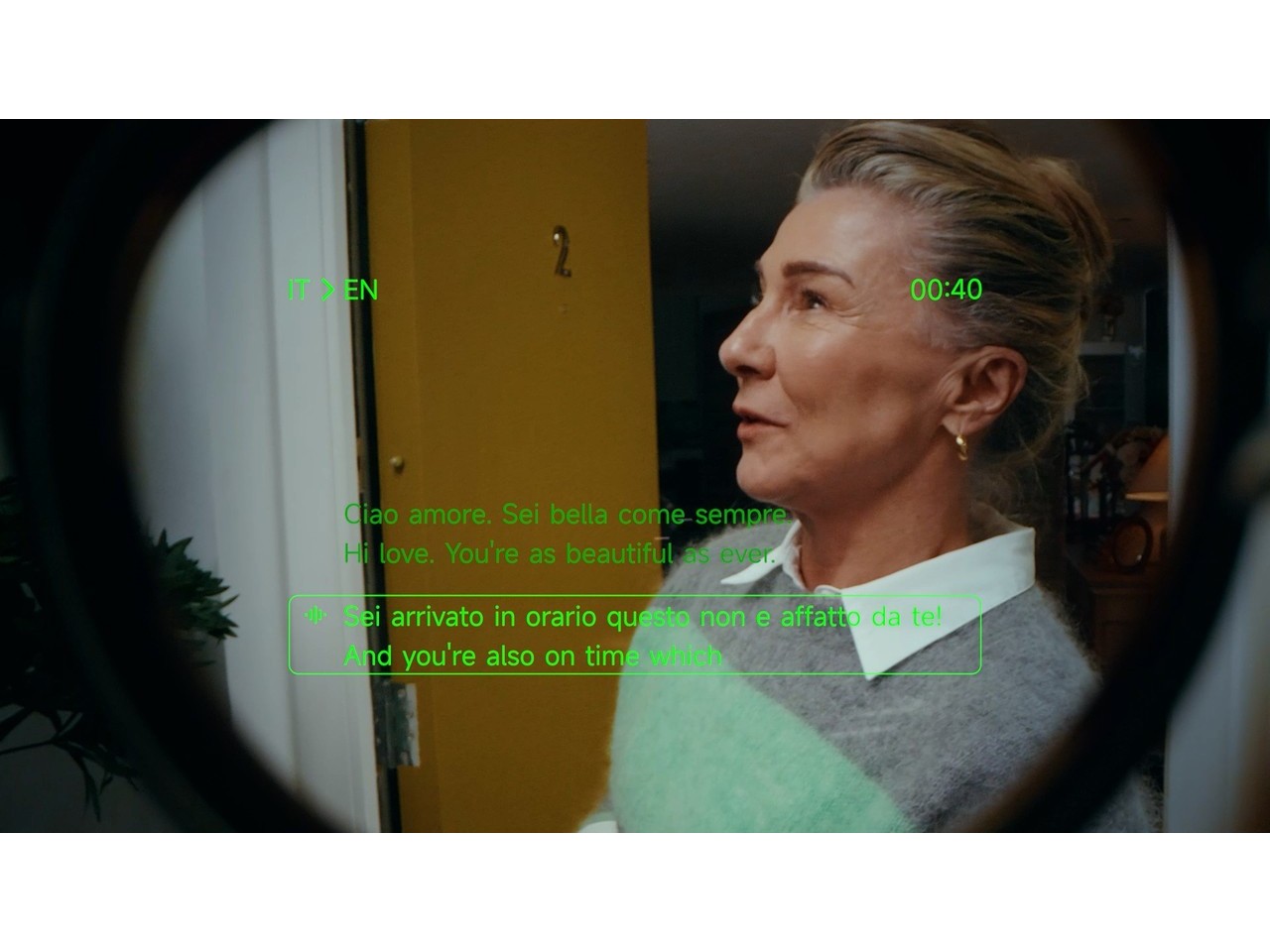
The strongest reader hook is not that MemoMind One has AI. Everything has AI now. The hook is that these are display glasses with no camera, a full day battery claim, prescription support, and a memory layer that tries to make recordings, notes, tasks, and reminders useful after the moment passes.
The risk is just as clear. Kickstarter hardware still carries delivery risk, and AI memory features can sound better in a demo than they feel in daily use. The display is also modest by phone or headset standards, so buyers should keep the expectation to glanceable information rather than rich visual computing.
MemoMind One AI glasses
Price: Standard Edition starts at $399, or $499 with prescription lenses. Custom Edition starts at $449.
Where to Buy: Kickstarter
A quieter kind of AI wearable
MemoMind One is interesting because it doesn’t try to win the smart glasses category by being louder. No camera. No full AR promise. No claim that your phone is suddenly obsolete.
Instead, it aims at the moments when a small private display makes sense: reading captions, getting directions, translating a conversation, glancing at a talk track, saving a thought, or pulling up what was said in a meeting. That’s a more believable version of AI glasses than another gadget that wants to turn your face into a content rig.
If MemoMind delivers the comfort, battery life, display readability, and privacy controls promised in the official materials, MemoMind One has a real shot at being one of the more practical AI glasses launches of 2026. If those pieces don’t hold up, it will be another reminder that the hardest part of smart glasses is still making them feel like glasses.