For years, if your friend asked which security camera to buy, you said Ring. That answer’s starting to feel dated. The default has shifted, and the shift didn’t come from where you’d expect.
Price: $99 (Discounted from $149.99)
Where to Buy: Amazon
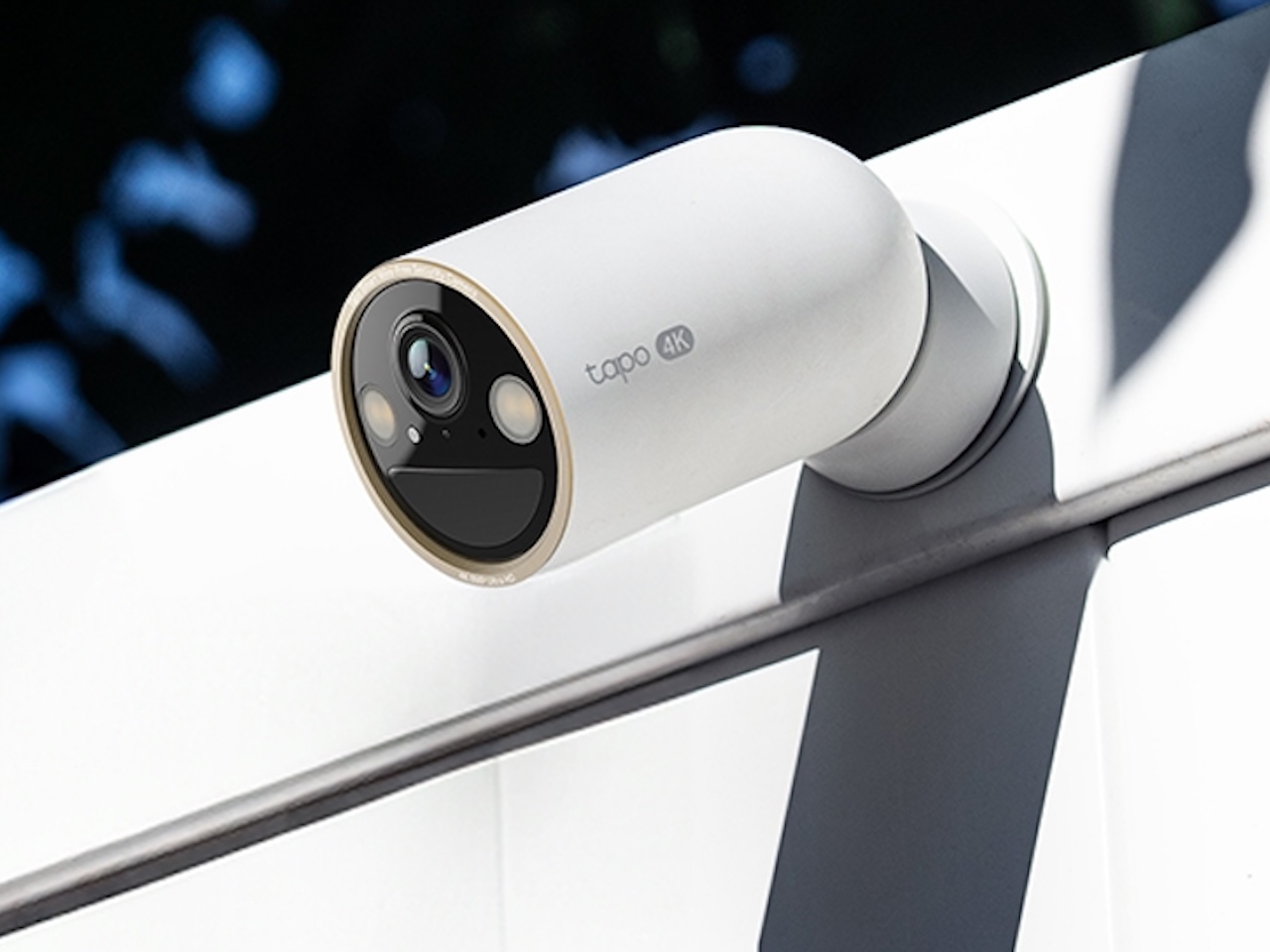
It came from a $90 camera most American buyers haven’t heard of. TP-Link’s Tapo C460 runs 4K AI detection on the camera itself, recognizes people, pets, and vehicles without a monthly fee, and stores clips locally to a microSD card. That’s the trifecta Ring still asks you to pay extra for, and it’s why the lineup below leads with the Tapo instead of the brand you’d expect.
The other six cameras in this roundup aren’t filler. They’re here because no single camera fits every house: eufy if you want a connected system that recognizes faces, Arlo if you’ll pay for the prettiest video, Nest if your home already speaks Google, Wyze if the budget is brutal, UniFi if you’d rather own your data than rent it, and Reolink if power outlets are the problem. The Tapo wins the default. The rest win specific lives.
Why the Ring default just broke
Ring didn’t get worse. The competition got smarter, faster, and cheaper, all at once.
The single biggest shift is where the AI lives. Three years ago, every smart camera ran its detection in the cloud, which is a polite way of saying behind a subscription. Today, the better cameras run detection on-device. That means your camera knows the difference between a delivery driver and a raccoon without phoning home to a server farm, and without you forking over $5 a month for the privilege.
Ring still uses the older model. You can buy a Ring camera tomorrow and watch it work fine for basic motion alerts, but the actually useful AI sits behind Ring Home. Meanwhile, the camera at the top of this list does the smart stuff for free, out of the box.
That’s the case being killed. Not Ring the product. Ring the assumption.
Tapo C460, the camera that flipped the default
The Tapo C460 is the reason this article exists. It’s an outdoor, wire-free, 4K (8MP) AI camera that sells for $89.99 as a single unit on TP-Link’s own store, or $99.98 for the solar-panel KIT that effectively runs forever.
What makes it the lead pick isn’t the spec sheet, although the spec sheet is solid: 4K resolution, a 10,000mAh battery rated up to 200 days per charge, Starlight color night vision, and IP66 weatherproofing. It’s the philosophy. The C460 ships with on-device person, pet, and vehicle detection enabled. No trial. No paywall. No “unlock smart alerts for $3.99/month.” You buy the camera, you get the AI.
Price: $99.98 (Discounted from $149.99)
Where to Buy: Amazon
The trade-offs are real and you should know them. There’s no facial recognition like you’d find on a high-end eufy or a UniFi rig. The mobile app is fine but not elegant. And TP-Link is under genuine US scrutiny right now: in March 2026 the FCC added foreign-made consumer routers to its Covered List, the Texas Attorney General filed suit in February 2026 alleging the company’s devices give Chinese state-sponsored actors a foothold, and Microsoft’s April 2026 threat intelligence reporting tied compromised TP-Link router fleets to Russian state-sponsored Forest Blizzard activity. The actions target routers, not the Tapo camera line, but the corporate parent overlap is real, and if your threat model includes nation-state concerns this isn’t your camera.
For everyone else, it’s the easiest recommendation in the category right now.
Why it leads: real AI, no subscription, sensible price
Watch out for: smaller smart-home ecosystem, no familiar-face recognition
Best for: the friend who’s about to buy a Ring and doesn’t know there’s a better answer
eufyCam S3 Pro, the AI ecosystem play
If the Tapo wins on price and principle, eufy wins on depth.
The S3 Pro is a 4K outdoor cam with BionicMind, eufy’s on-device facial recognition system, plus the usual person, vehicle, and pet detection. Pair it with a HomeBase 3 and the whole eufy lineup (indoor cams, video doorbells, floodlight cams) starts sharing a single brain. Your floodlight cam recognizes the same face your doorbell does. That’s the part Ring still hasn’t matched in any meaningful way.
Price: $799.99
Where to Buy: Amazon
The catch is the upfront cost. You’re paying real money for the camera, and you’ll want the HomeBase to get the most out of it. The 2-camera kit with HomeBase 3 is $399.99 on sale at Best Buy (regular $549.99), and the 4-cam kit runs $799.99 direct from eufy.
Why it’s here: the most coherent AI ecosystem in consumer security
Watch out for: higher upfront spend, HomeBase recommended
Best for: households committed to a single brand for everything
Arlo Pro 5S 2K, gorgeous video, expensive smarts
Arlo makes some of the best-looking video in the category. The Pro 5S 2K delivers HDR-capable 2K with strong low-light performance, and the AI alerts (person, vehicle, package, animal) are reliably accurate.
Price: $129.99
Where to Buy: Amazon
Then you read the fine print. Most of the AI sits behind Arlo Secure, the brand’s monthly subscription. Without it, you get a security camera that records motion clips and sends generic notifications. With it, you get the smart camera the marketing suggests. Arlo Secure Plus is $7.99/month for a single camera and $17.99/month for unlimited cameras when billed annually (monthly billing runs higher); Arlo Secure Premium (the new 24/7 recording and professional monitoring tier that replaced legacy CVR plans on April 1, 2026) runs $24.99/month on the same annual cadence.
We still include it because the hardware genuinely is good and because the Arlo app remains one of the more usable interfaces in the space. Just go in knowing the real cost is the camera plus a subscription, indefinitely.
Why it’s here: best-in-class image quality
Watch out for: AI features locked behind Arlo Secure
Best for: buyers who want premium video and don’t mind the recurring fee
Google Nest Cam (Wired, 2nd gen), the Google Home native
If your house already runs on Google Assistant, the Nest Cam is the path of least resistance.
It’s the camera that talks to your Nest Hub without setup gymnastics. It does person, vehicle, animal, and familiar-face detection well. The integration with Google Home routines is genuinely useful: motion at the front door can trigger your hallway lights and a Hub announcement, no third-party automation app required.
Price: $155 (Discounted from $179.99)
Where to Buy: Amazon
The downsides are predictable. Some of the better features (familiar face detection in particular, plus extended event history) sit behind what Google now calls Google Home Premium, the rebrand of Nest Aware. Standard runs $10/month or $100/year, Advanced runs $20/month or $200/year, and current-gen Nest Cam buyers get a one-month trial. The camera handles basic detection without a subscription, but Premium is where the familiar-face and Gemini-powered smart-home magic actually lives.
Why it’s here: the cleanest Google Home integration
Watch out for: the best AI is gated
Best for: Google Home-first households
Wyze Cam v4, the ultra-budget AI bet
Wyze sits in an awkward spot. The hardware-per-dollar story is genuinely incredible, the v4 ships at a price that makes the Tapo look mid-range, and the camera takes a credible swing at AI detection through Cam Plus.

Price: $35
Where to Buy: Amazon
The complicating factor is trust. In February 2024, a third-party caching library bug briefly exposed event thumbnails to roughly 13,000 customers, echoing a smaller September 2023 thumbnail-glitch incident reported by The Verge. NIST also catalogued a separate v3 cloud-infrastructure auth flaw (CVE-2024-6248). The good news is the response cycle has tightened: by early 2026, CNET publicly resumed recommending Wyze cameras citing the company’s security improvements, and Wyze now publishes an open vulnerability-disclosure program. If you’re price-sensitive and willing to keep the camera on an indoor segment of your network, the v4 is defensible. If you want a camera you can mount outdoors and forget about, look up the stack.
Why it’s here: unbeatable on price
Watch out for: security track record, AI behind Cam Plus
Best for: indoor monitoring on a tight budget, with networking discipline
Ubiquiti UniFi Camera AI Pro, the no-subscription endgame
This is the camera you buy when you’ve gotten tired of all the others.
The AI Pro is a 4K (8MP) outdoor camera that runs through Ubiquiti’s UniFi Protect ecosystem. The AI (person, vehicle, package, and facial recognition) runs entirely on your own UniFi NVR or AI-equipped Cloud Key. No subscription. Ever. Your video never leaves your network unless you explicitly route it elsewhere.
Price: $510
Where to Buy: Amazon
The ask is real. The UniFi Camera AI Pro is $499, you’ll add a CloudKey+ HDD at $199 or the SSD variant at $249, and you need to be comfortable with networking. The upfront stack cost is meaningfully higher than buying a Tapo and calling it a day. But for buyers who care about privacy, who don’t want to pay forever, or who are wiring up a small business, nothing else in this lineup gets close.
Why it’s here: on-prem AI with zero recurring fees
Watch out for: networking know-how required, higher all-in cost
Best for: privacy-focused buyers and prosumers
Reolink Argus 4 Pro, the off-grid 4K option
For anyone with a corner of the property that isn’t easy to wire up, the Argus 4 Pro is the cam to beat.
It’s a 4K dual-lens cam stitched into a 180° view, it ships with a 6W solar panel, and it runs person, vehicle, and animal detection on-device. The standalone-plus-solar package runs $179.99 on Amazon, and the full Home Hub bundle with the Argus 4 Pro plus 6W panel lands at $549.99. There’s no required subscription for the core AI alerts, and storage runs to microSD (up to 512GB) or the Home Hub.
Price: $199.99
Where to Buy: Amazon
Where it’s not as strong: the app is functional but less polished than Arlo’s or Nest’s, and Reolink’s smart-home integrations are thinner than the household names. None of that matters if you’re trying to monitor a driveway or a shed where running a power line is more hassle than the camera is worth.
Why it’s here: wire-free 4K with on-device AI
Watch out for: less polished app, narrower ecosystem
Best for: off-grid placements and outbuildings
Where Ring still actually wins
We should be fair. Ring isn’t dead, and there are specific situations where it’s still the right answer.
Ring’s video doorbell hardware is mature and the response speed is consistently good. The neighborhood-level features inside the Ring app (with all the privacy caveats that come with them) are genuinely useful in some communities. And if you’ve already got two Ring cameras and a Ring doorbell, buying a third Ring camera is the easy call.
What’s changed is that Ring is no longer the obvious recommendation for a first-time buyer. The case the brand used to make on its own (easy, reliable, smart enough) has been quietly outflanked. The Tapo C460 makes it cheaper. eufy makes it smarter. UniFi makes it more private. Arlo makes it prettier. Ring’s left holding the middle, and the middle is harder to defend every year.
How to pick the right one
Forget the spec wars for a minute. Pick the camera that matches how you actually live.
If you want one camera, you want it to work, and you don’t want to pay a subscription, get the Tapo C460. If you want a connected system that recognizes faces across your house, get the eufyCam S3 Pro and a HomeBase 3. If you’re already pot-committed to Google Home, the Nest Cam is the smoothest path. If your top concern is privacy and you’re okay with a Saturday afternoon of setup, the UniFi AI Pro is the only real answer.
For outbuildings or off-grid mounts, the Reolink Argus 4 Pro. For indoor budget monitoring on a network you trust, the Wyze Cam v4. For the best-looking video and a subscription you’ll budget for, the Arlo Pro 5S 2K.
Final word
The Tapo C460 isn’t perfect. It’s just better at the thing AI security cameras are supposed to do than the camera most people will reach for by default.
That’s a quiet shift, the kind that doesn’t make headlines because the new winner doesn’t have a marketing budget the size of a stadium. But it’s real, it’s measurable, and if you’re spending money on a security camera this year, it’s the one you should hear about first.
FAQ
What security cameras have the best AI detection?
In 2026, the cameras with the most reliable AI detection are the ones running it on-device rather than in the cloud. The Tapo C460, eufyCam S3 Pro, UniFi Camera AI Pro, and Reolink Argus 4 Pro all run their core AI locally. That’s the right thing to optimize for, because it means faster alerts, no subscription dependence, and detection that keeps working if your internet drops.
Are AI security cameras worth it?
Yes, if you’ve ever been woken up by your phone buzzing about a leaf moving in the wind. AI detection’s main job isn’t fancier features, it’s filtering out the noise so you only get pinged when something actually matters. The cost difference between a basic motion-alert camera and an AI cam is now small enough that it’s hard to recommend the older kind.
Do I need a subscription for an AI security camera?
No, but most of the big brands prefer you do. The Tapo C460, eufyCam S3 Pro (with HomeBase), UniFi AI Pro, and Reolink Argus 4 Pro all deliver real AI features without a monthly fee. Arlo, Ring, and Nest gate most of their best features behind a subscription. Wyze sits in the middle.
Is the Tapo C460 better than a Ring camera?
For most home buyers, yes, on the metrics that matter most in 2026. The C460 does on-device AI without a subscription, costs less, and stores video locally if you want it to. Ring still wins on app polish, doorbell-camera maturity, and neighborhood features, but those aren’t usually the reasons you buy your second security camera.