

The Apple cofounder made a surprise appearance in San Francisco this week at the launch of something most people didn’t see coming: the Dreame Aurora Nex, a modular smartphone from a company best known for cleaning your floor.
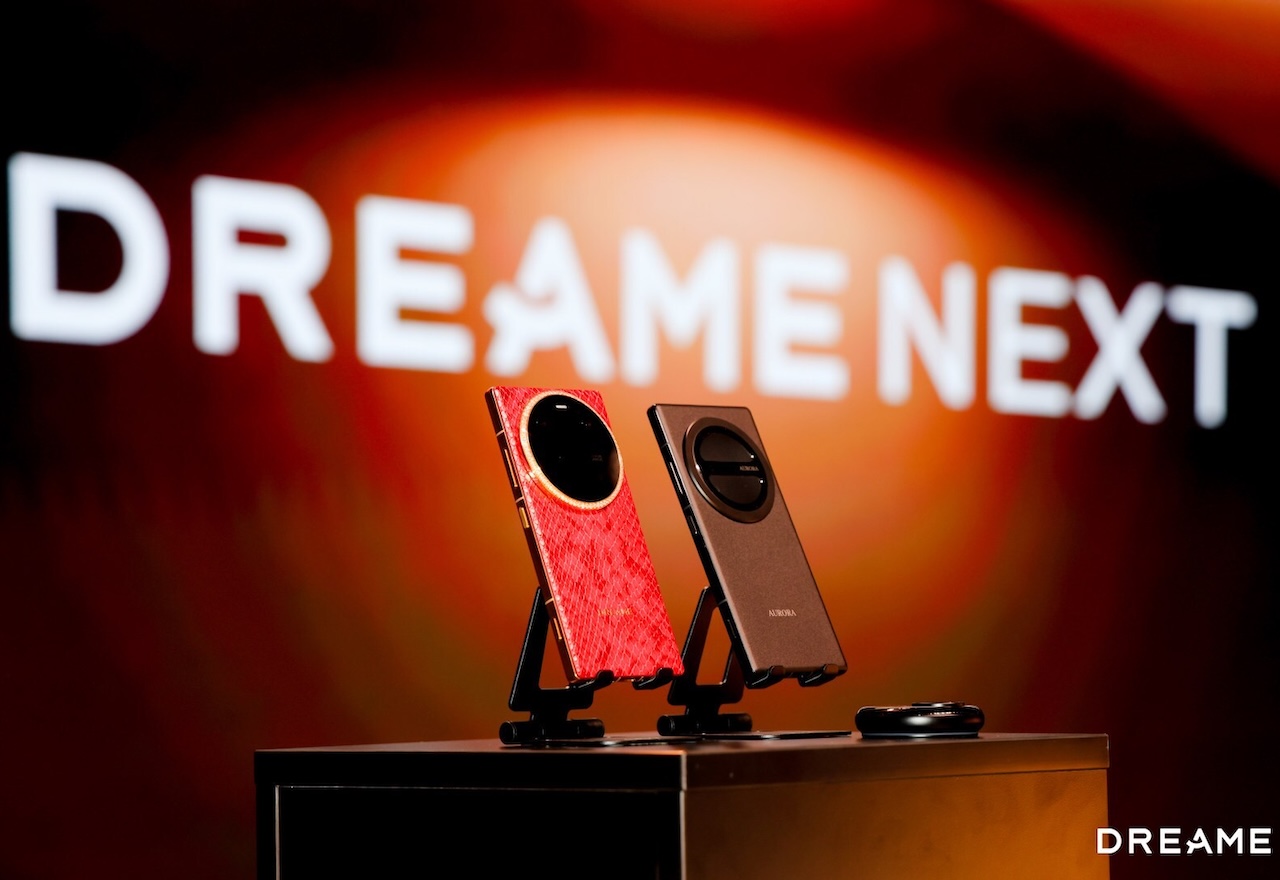
Dreame Technology used the Connect Next part of its DREAME NEXT event at the Palace of Fine Arts to launch two phones, the Aurora Nex and the Aurora Lux. The brand says the rollout covers more than ten breakthroughs across modular hardware, software, cameras, and communications. Steve Wozniak joined Dreame’s Chang Xinwei on stage to talk about where phones are headed next, and Counterpoint general manager Jeff Fieldhack also weighed in on Aurora’s market positioning from a technology and industry trends angle. Wozniak’s take on the next decade of phones was simple: “Look at what you got today. How can you make it better? Improve it, improve it, keep taking steps towards the eventual great future.”
For a brand that built its name on robot vacuums, this is a loud entrance into a market where most newcomers don’t last.
Inside the Aurora Nex Modular System
The Aurora Nex is the headline phone, and the hardest part of the launch to dismiss. It uses a modular design with a magnetic spot on the back that holds swappable modules. Dreame says the lineup includes a steady action camera, a telephoto unit for low-light distance shots, a satellite module for off-grid use and emergencies, and a “smart module” that runs on its own and learns your habits over time.
That is a clear break from the fixed-hardware approach phones have used for more than a decade. Whether it sticks is another question, and a familiar one. Google tried it with Project Ara. Motorola shipped Moto Mods on four generations of the Moto Z before quietly moving on. LG tried it with the G5 and pulled back after one generation. None of those efforts reshaped the industry. Dreame’s modular phone now has to clear the same bar. Dreame is stepping into that history with its eyes open.
An OS That Wants to Act Before You Do
Software is where Dreame’s plans get loud. The Nex was demoed running Aurora AIOS 1.0, Dreame’s own operating system. The brand says it is built for proactive service, not passive response. Dreame describes a traditional UI as the underlying layer, paired with a smart mode that adapts to your habits, takes action on its own, and coordinates multiple AI agents to finish complex tasks. The brand says it supports touch, voice, and vision input.
Dreame has separately said the official AIOS 1.0 release is targeted for the second half of 2026, and hands-on demos at the event were limited, so treat the experience claims as forward-looking. AIOS will live or die by how it feels in daily use, and Dreame has not shown enough of that yet to judge.
The Camera and Connectivity Claims
On cameras, Dreame says the Aurora platform delivers 200-megapixel capture at every focal length, full-focal-range Lofic technology, 3D spatial modeling, 8K 60fps video without cropping, and 14-bit RAW multi-frame photos. The pitch points to pro-level output and computational photography across all focal lengths, not just the main lens.
The communications stack is just as bold. Dreame says the Nex stays stable in temperatures from -25°C to 40°C, thanks to a custom temperature-compensation algorithm that holds frequency deviation within 10ppm. The RF front-end covers global carrier frequencies in a single design. Satellite voice calls connect in under 10 seconds, which Dreame says is 70 percent faster than the industry average.
These are launch-stage claims, so treat the numbers as Dreame’s marketing until independent testing comes in.
The Lux Is the Jewelry Box of the Lineup
If the Nex is the engineering swing, the Aurora Lux is the flex. There is no modular system here. Instead, the Lux leans on craft details: pieces are detailed by hand, engraved in three dimensions, and finished with methods that pull more from fine-jewelry workshops than smartphone factories. The Lux launches in five design collections, each with its own look.
The Lux is not aimed at people reading spec sheets. It is aimed at people picking finishes.
What Dreame Has Not Said
Dreame did not share pricing or release dates for either phone at the launch. Some Chinese-market reporting has floated a starting price near $999 for the standard tier and a roughly $9,600 to $13,800 range for Lux variants, with luxury custom configurations reportedly running into six figures in RMB. Dreame did not confirm any of those numbers on stage, so treat them as leaks until the company sets official prices. Either way, the biggest questions for buyers, when you can buy one and what it really costs, do not have answers yet.
For context on the company, Dreame says it operates in more than 120 countries, runs over 6,500 offline stores, serves more than 42 million households, and has filed more than 10,000 patents worldwide as of December 31, 2025. That is a real footprint behind the phone push, even if the phone push is brand new. Dreame has spent the past year stretching well beyond vacuums into kitchen appliances, hair tools, and air purifiers, which makes the smartphone move less of a sudden pivot and more of a continuation of going beyond vacuums.
DREAME NEXT ran through April 30 at the Palace of Fine Arts in San Francisco.
