ARTICLE – The physical keyboard on a smartphone isn’t dead. It just spent a decade in hiding while the rest of the industry chased bigger screens and thinner bezels. Unihertz has been quietly building QWERTY phones since its original Titan launched with a Passport-style square display, and the lineup has attracted a loyal following of typists who never stopped missing their BlackBerrys. The company showed up at MWC 2026 in Barcelona with something that changes the conversation: a smaller, sleeker successor that looks less like a novelty device and more like a phone you’d actually carry every day. So we ask: can a QWERTY phone shrink enough to feel modern without losing what made people love physical keyboards in the first place?
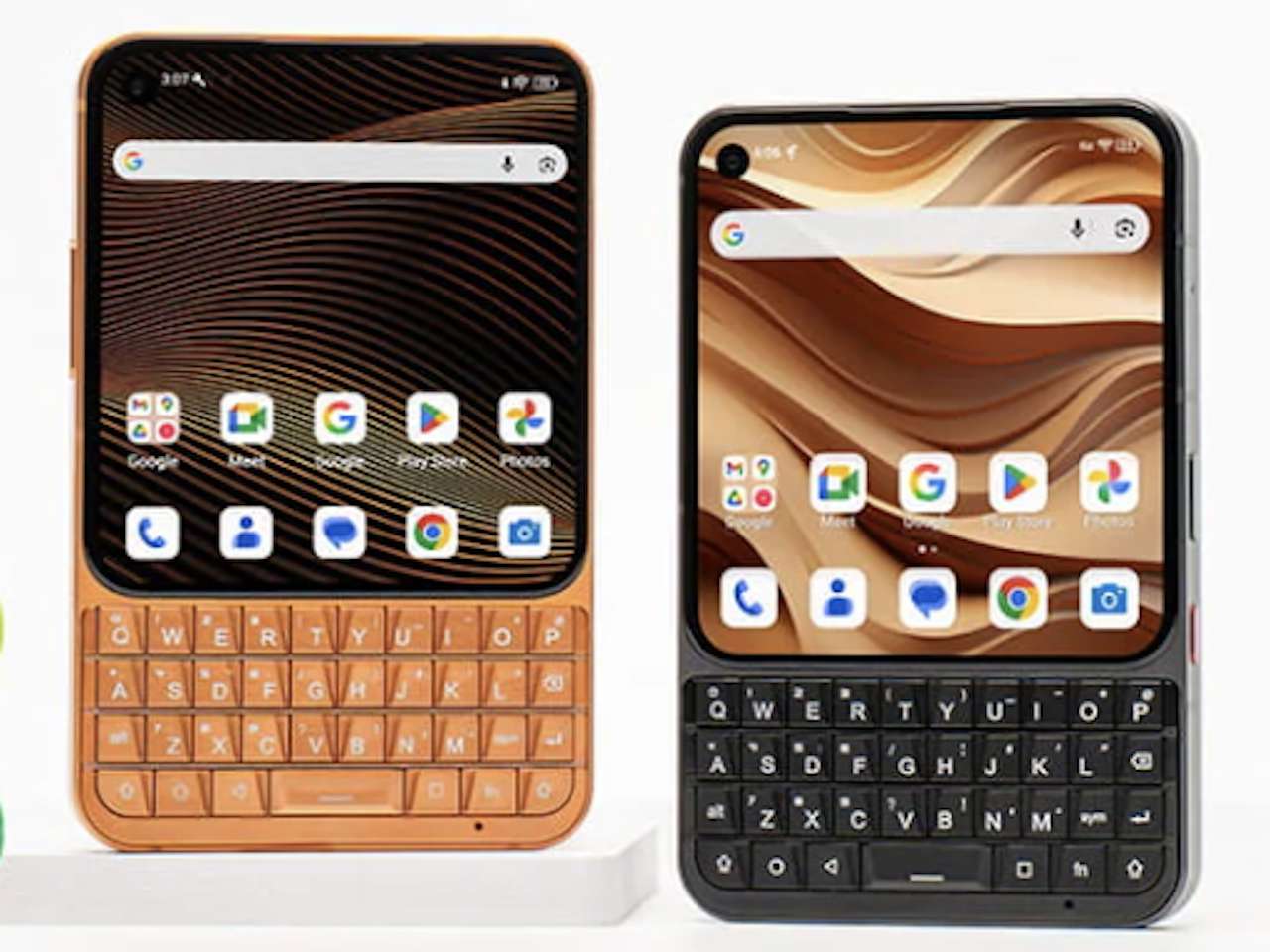
The Unihertz Titan 2 Elite trades the chunky proportions of its predecessor for a compact form factor that fits comfortably in one hand. Where the Titan 2 went wide with a 4.5-inch square LCD and a secondary rear display, the Elite slims everything down to a 4.03-inch AMOLED panel running at 1,080 by 1,200 pixels with a 120Hz refresh rate. Colors pop, scrolling is smooth, and the upgrade to OLED means you get true blacks and better outdoor visibility. The secondary screen on the back is gone entirely, a choice that shaves weight while removing a feature some Titan 2 owners have described as rarely useful in user reviews.
Pick it up and you notice immediately that it feels pocketable. The Titan 2 earned its name honestly, built like a slab of industrial equipment that demanded cargo pants or a belt holster. The Elite brings the dimensions closer to a standard smartphone, though it runs thicker than current flagships to accommodate the keyboard hardware.
The keyboard that scrolls
The full QWERTY layout sits below the display with slightly smaller keys than the Titan 2, and the typing surface carries over capacitive touch sensing across every single key. Run your thumb up and down the keyboard and the screen scrolls as if you’d swiped the display itself. It’s a gesture BlackBerry introduced in its final generation of phones, and feeling it work on a modern Android device triggers a very specific kind of muscle memory for anyone who owned a Key2.
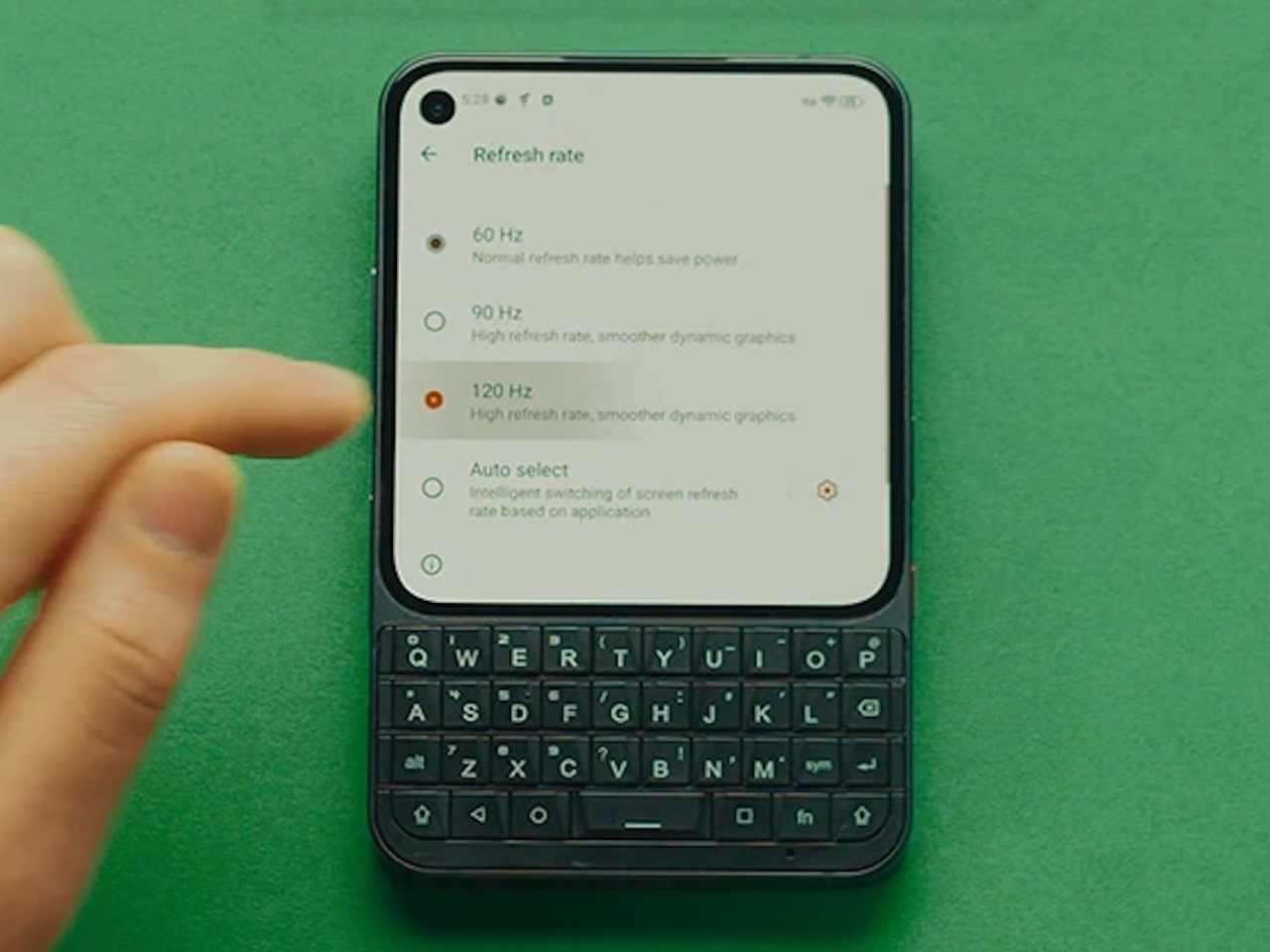
Split the keyboard mentally down the middle and you can configure the left half to control a cursor while the right half handles vertical scroll, then tap the right side to click. That turns the keyboard into a trackpad with mouse-like precision, which sidesteps one of the biggest complaints about small-screen phones: your thumbs block whatever you’re trying to tap. Early hands-on impressions noted that this cursor mode was “a little rough in execution” on the beta software at MWC, so it could tighten up before the retail launch.
Every physical letter key also supports programmable shortcuts through long-press or short-press gestures. Set Y to open YouTube, M to launch your email, B for your browser. That gives you over 26 one-tap launchers without touching the screen, plus a dedicated programmable button on the right side for one more. Keyboard backlight activates automatically in low light.
What’s inside
Unihertz is offering two chipset options: the MediaTek Dimensity 7400 and a higher-end Dimensity 8400. Both represent a significant step up from the Dimensity 7300 in the Titan 2. Storage starts at 256GB with microSD expansion up to 2TB. The camera system features dual 50-megapixel rear sensors and a 32-megapixel front-facing camera, matching the Titan 2’s selfie resolution while swapping its 8-megapixel telephoto for a second 50-megapixel lens.
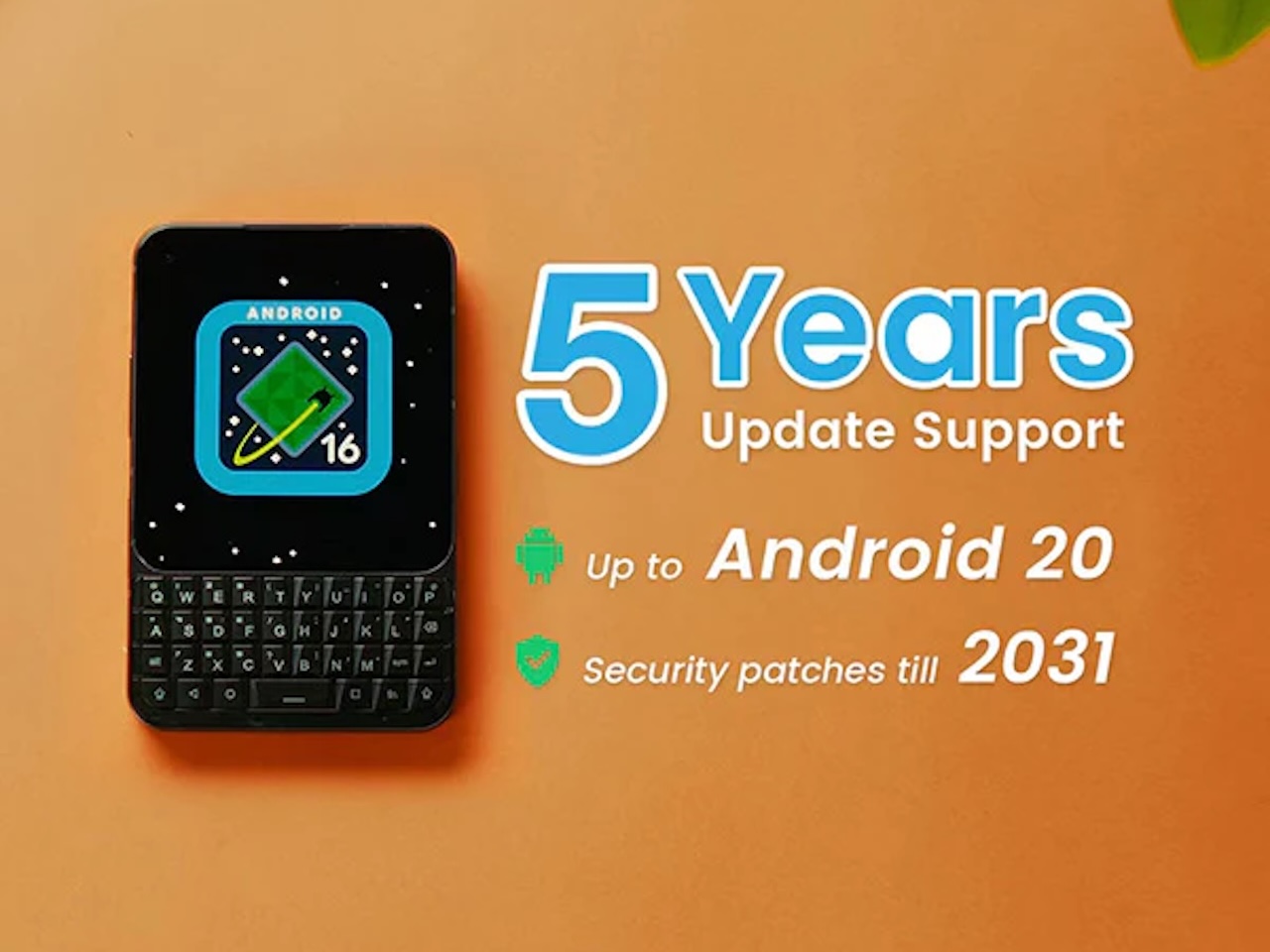
Battery capacity drops from 5,050mAh to 4,050mAh, a trade-off for the smaller body. The switch from LCD to a more power-efficient AMOLED panel should offset some of that difference, but real-world screen time remains to be seen. Android 16 ships out of the box with five years of software and security updates, which is notably generous for a niche manufacturer outside the Samsung and Google ecosystem.
Connectivity covers dual nano-SIM slots plus eSIM, 5G across global bands, Bluetooth 5.4, NFC, dual-band GPS, and an infrared port. One notable absence: there’s no 3.5mm headphone jack. USB-C handles charging and data. Unihertz hasn’t confirmed US carrier compatibility for the Elite yet, but the Titan 2 works on T-Mobile and Verizon (with SIM activation on a certified device first) while AT&T remains unsupported.
The RAM question
One detail remains unresolved heading into the Kickstarter launch. Unihertz has said that the RAM shortage and rising prices have created uncertainty about how much RAM the production units will carry. Demo units at MWC ran 12GB with an additional 12GB of “memory extension,” a virtual RAM feature that likely borrows temporary capacity from storage. Whether backers get 8GB or 12GB of physical RAM could meaningfully affect multitasking on a phone positioned for productivity-focused users who want to type emails, manage spreadsheets, and run messaging apps at the same time.
Specs at a glance
| Spec | Titan 2 | Titan 2 Elite |
|---|---|---|
| Display | 4.5″ LCD, 1440×1440 | 4.03″ AMOLED, 1080×1200, 120Hz |
| Processor | Dimensity 7300 | Dimensity 7400 / 8400 |
| RAM | 12GB | TBD (8GB or 12GB) |
| Storage | 512GB, no microSD | 256GB + microSD up to 2TB |
| Rear cameras | 50MP + 8MP telephoto | Dual 50MP |
| Front camera | 32MP | 32MP |
| Battery | 5,050mAh | 4,050mAh |
| OS | Android 15 (updated to 16) | Android 16 |
| SIM | Dual nano-SIM | Dual nano-SIM + eSIM |
| Rear display | 2″ secondary screen | None |
| Headphone jack | No | No |
| Price | $399.99 | TBD (Kickstarter) |
What Actually Changed
The Elite isn’t a direct replacement for the Titan 2, which remains on sale at $399.99. It’s a different take on the same idea. The Titan 2 offers a larger keyboard with roomier keys, a bigger display, a larger battery, and that secondary rear screen. The Elite counters with better display technology, a faster processor, and a body that doesn’t feel like you’re carrying a walkie-talkie.
The Unihertz community has been comparing the two since the Elite’s January teaser. Typists who prioritize key size and battery life lean toward the Titan 2, while users who want something they can pocket without a holster are excited about the Elite. The rounded edges and slimmer profile give it a contemporary look that wouldn’t feel out of place next to an iPhone or Galaxy.
The Clicks Communicator factor
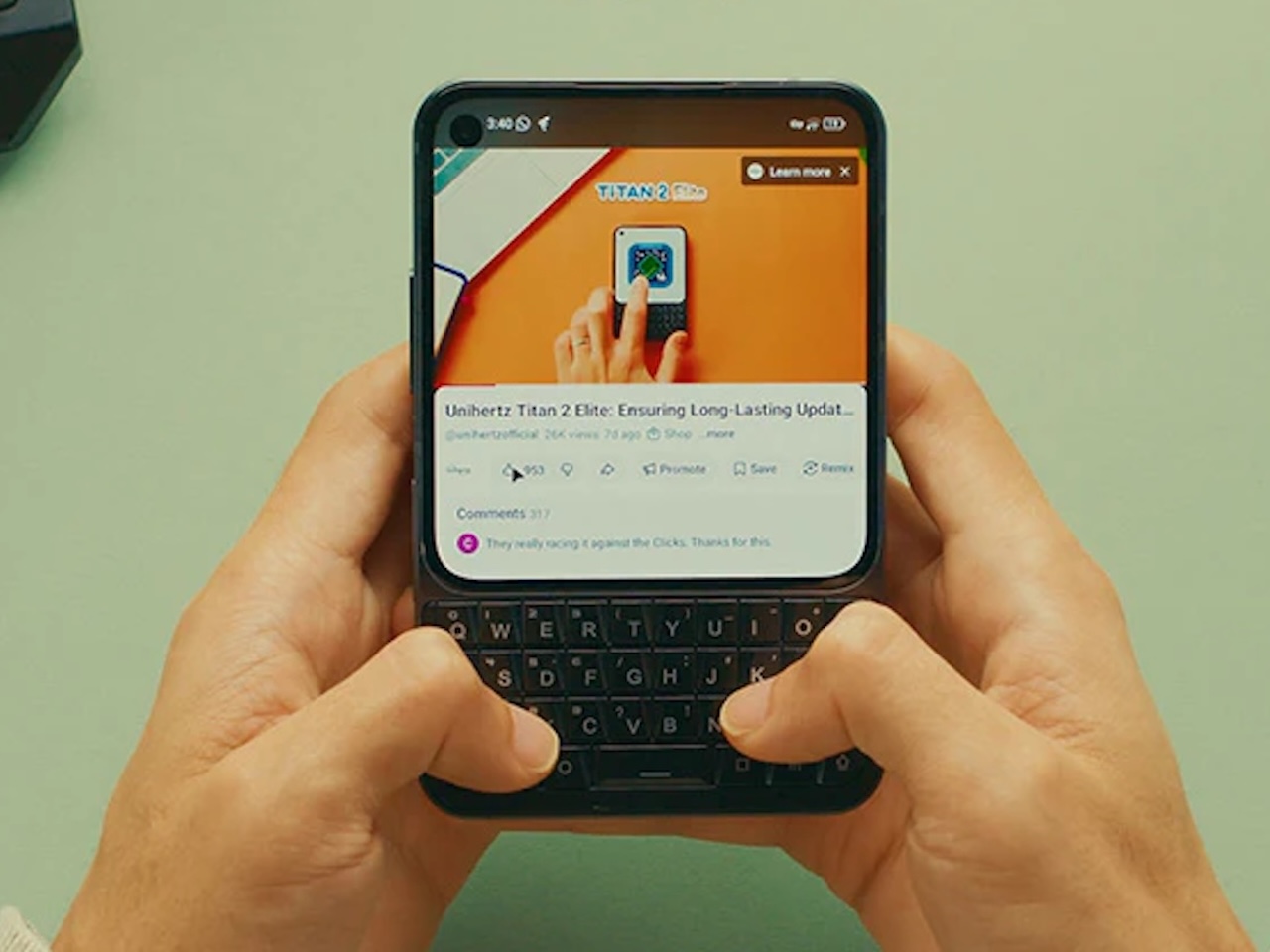
The Titan 2 Elite isn’t arriving in a vacuum. Clicks is launching the Clicks Communicator as a standalone QWERTY phone around the same time frame. Both devices target keyboard loyalists, and the category suddenly has competition for the first time in years, which is exactly the kind of pressure that produces better products for the people who’ve been waiting since BlackBerry left the market.
Pricing and a firm release date haven’t been announced, but Unihertz has confirmed the Titan 2 Elite will launch on Kickstarter soon, with reports pointing to a spring 2026 campaign. The phone comes in black and an orange colorway that’s been compared to the iPhone 17 Pro’s trendy orange. The keyboard layout itself drew BlackBerry Curve comparisons from reviewers, and for a phone that wears its nostalgia openly, neither reference is accidental. If you’re tracking what else dropped at the show, we covered the full MWC 2026 lineup in our Barcelona roundup.
Who Should Skip This
If you’ve made peace with typing on glass and don’t feel the pull of physical keys, the Titan 2 Elite won’t convert you. The 4-inch screen is genuinely small by 2026 standards, and apps built for 6.7-inch displays will feel cramped no matter how clever the trackpad gestures are. Anyone who needs a headphone jack should look elsewhere, and the Kickstarter launch model means you’re backing a product with unresolved RAM specs and no firm ship date. That’s a real ask for anyone who wants to buy a phone, not fund one.
Photography-focused users won’t find what they’re looking for here either. The compact body leaves little room for the kind of sensor hardware that flagship shooters carry, and Unihertz hasn’t published full camera specs like stabilization details yet. If the camera is your primary decision driver, this isn’t your phone.
Who This Is For
The Titan 2 Elite is for the person who types more than they scroll. If your phone is a productivity tool first and an entertainment device second, the physical keyboard changes how quickly you move through emails, messages, and notes. Travelers who rotate SIM cards across countries will appreciate the dual nano-SIM plus eSIM setup paired with global 5G bands. BlackBerry veterans who’ve spent years waiting for something that fits the same mental model without the same cargo-pocket bulk finally have a phone that respects both the nostalgia and the practicality. The compact body, the capacitive scrolling, the programmable shortcuts: it all points toward someone who values speed of input over size of output. That’s a narrow audience, but it’s one that hasn’t had a proper option in years.