Every EDC brand wants to sell you a knife. The category treats sharpening like a personality trait, and most tools try to do everything while compromising everywhere. Steel rusts after a few months of real carry. Locks fail quietly after a year of rattling against keys. What almost nobody builds is a tool that treats the blade as disposable.
Price: HK$ 379 (About $49)
Where to Buy: ThreePeters
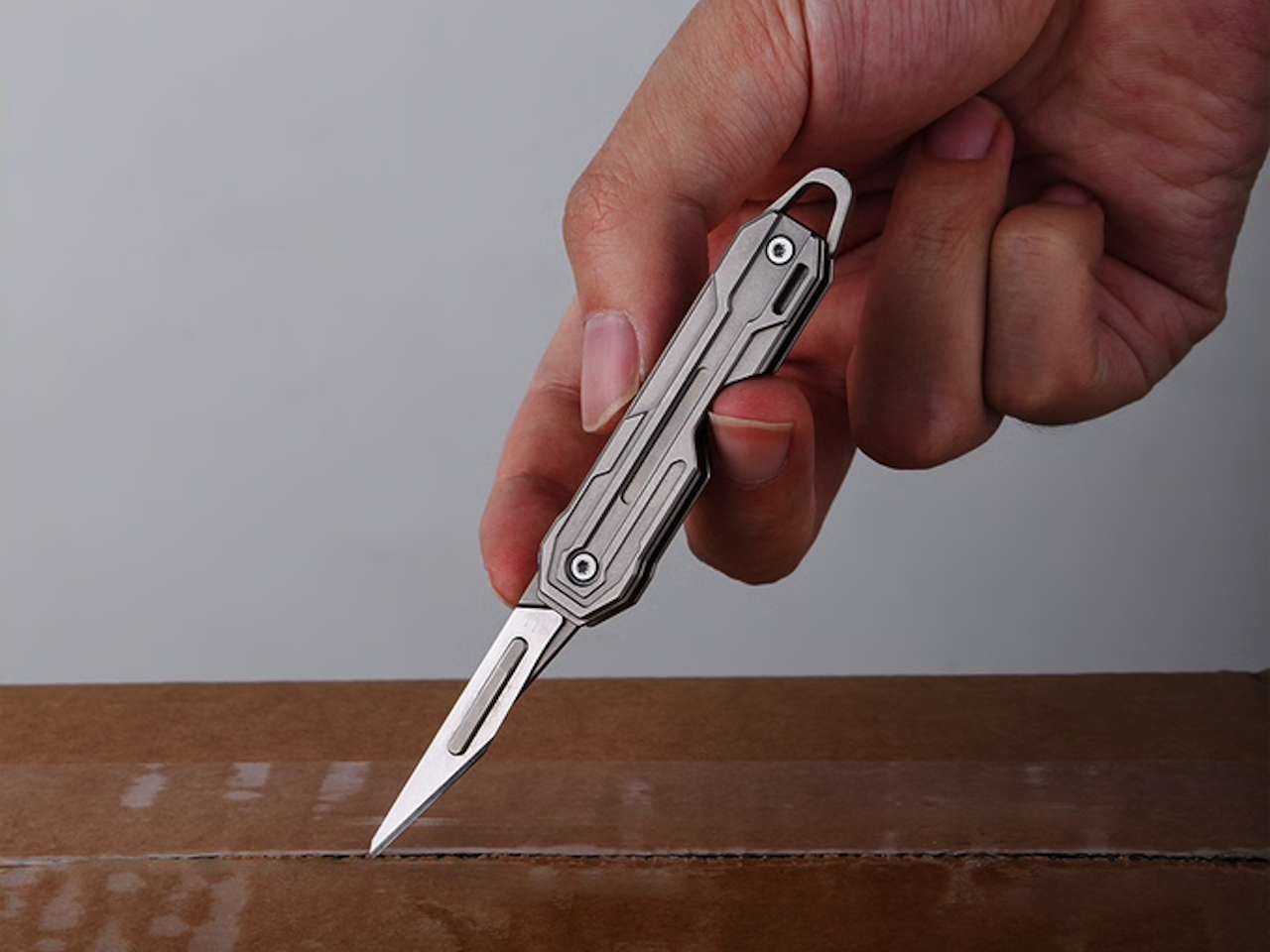
Surgeons figured this out decades ago: you don’t sharpen a scalpel, you swap it. ThreePeters, a small design studio, compressed that logic into a GR5 titanium keyring tool called Keypel. The result isn’t a knife. It’s a handle that accepts standard scalpel blades and lives on your keychain without adding noticeable weight.
So the real question is: can a scalpel-based EDC tool replace the folding knife you’ve been reaching for? The Kickstarter launched February 3 and has passed 400% of its $1,279 goal, with 69 backers committing over $5,100. Eight days remain, and the total keeps climbing. That velocity says plenty about demand nobody saw coming.
The pitch is disarmingly simple. One piece of titanium, four blade shapes, zero sharpening. That restraint is rare in a category that keeps adding features, and it’s the smartest thing about the whole design.
One titanium handle, four scalpel blades
Keypel accepts four standard scalpel blade types (#11, #11A, #15, and #15C), covering fine hobby cuts through general utility slicing. GR5 titanium, the same aerospace alloy used in aircraft structures and implants, forms the entire body. It feels dense for its size but lighter than stainless steel at comparable strength.
The alloy won’t corrode from moisture, won’t react to sweat, and won’t rust from sitting in damp pockets. It’s biocompatible too, which matters for bare-handed grip during precision cuts. When tolerances hold this tight over years of carry, every cut stays clean.
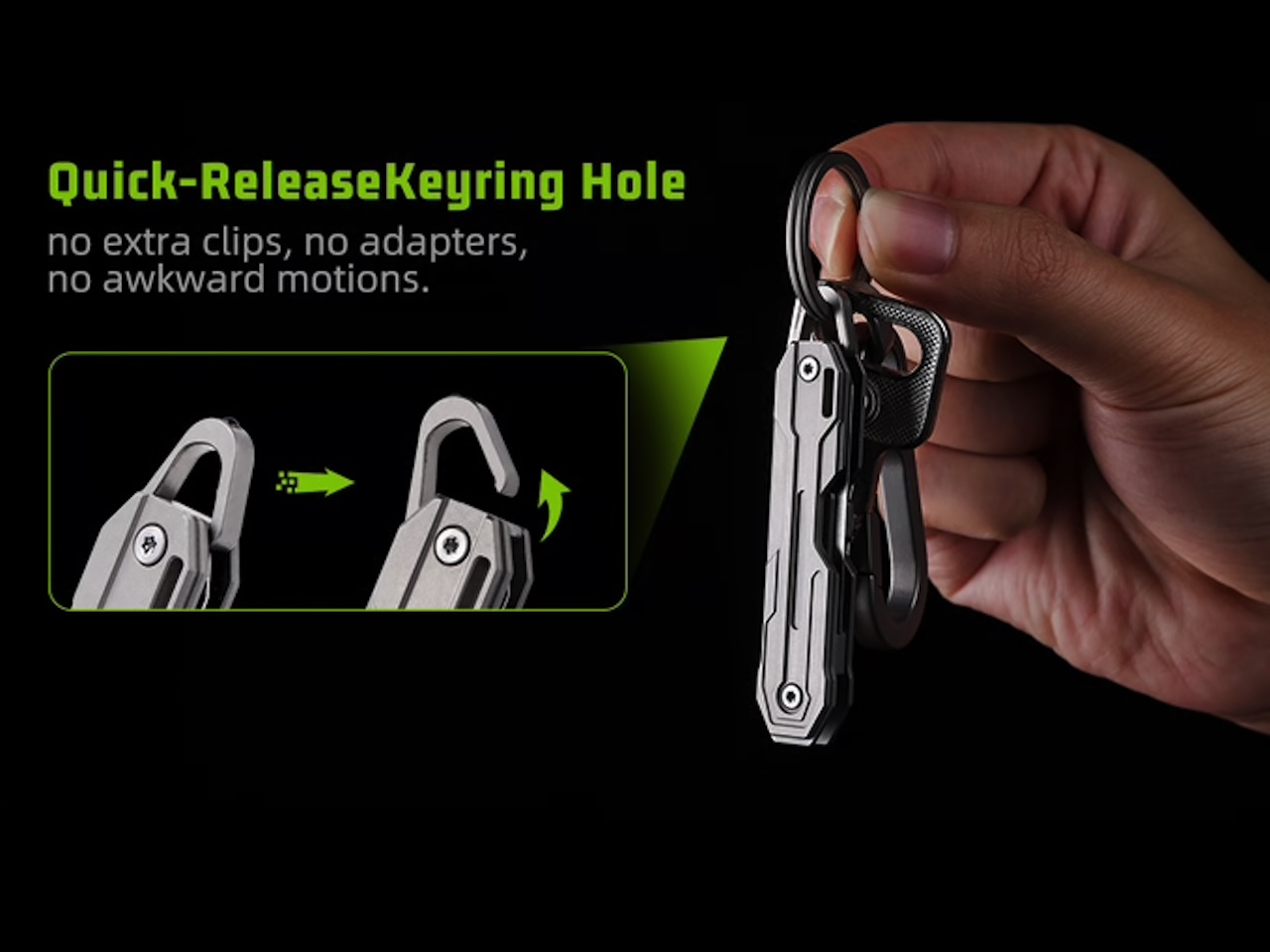
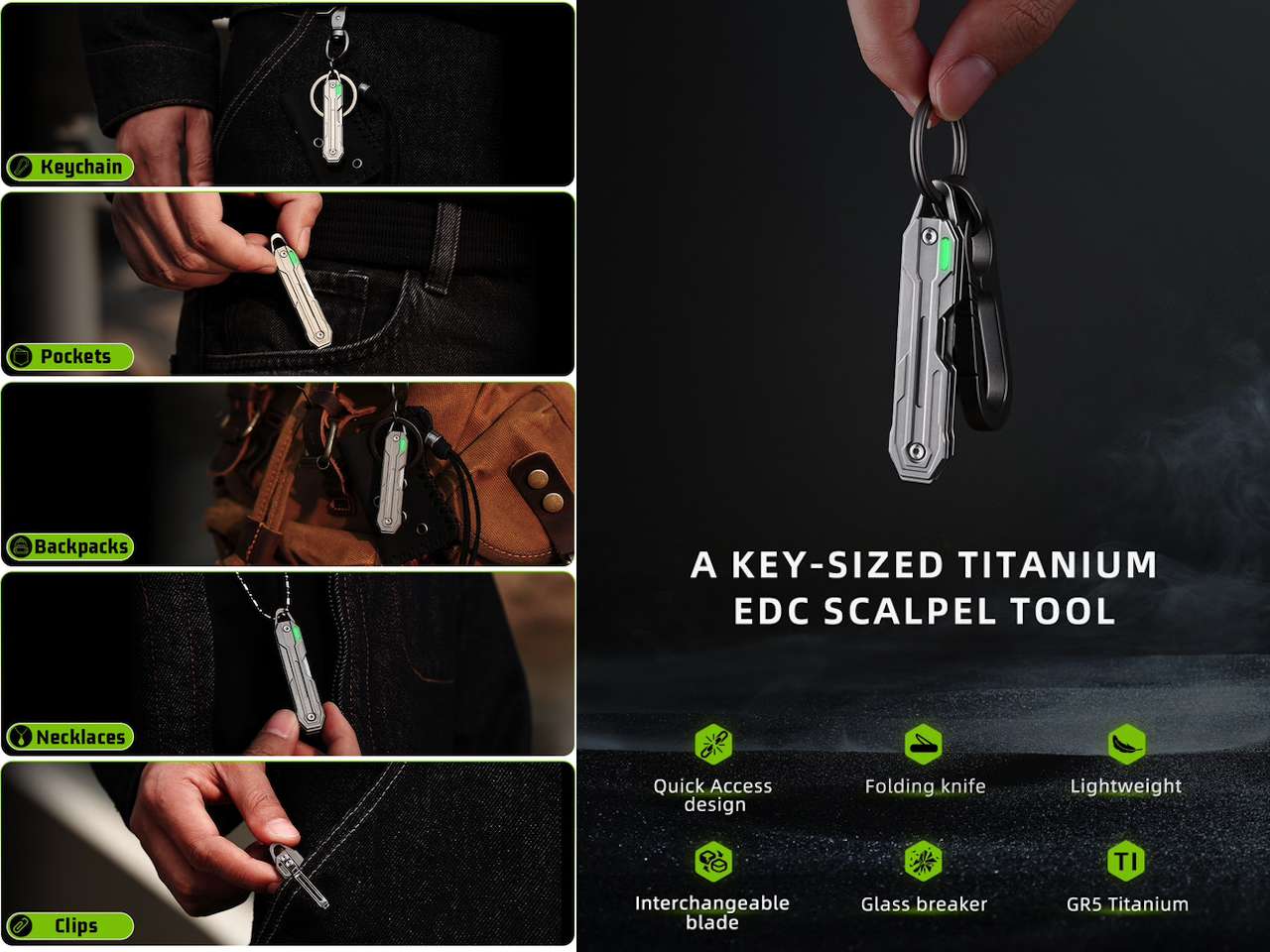
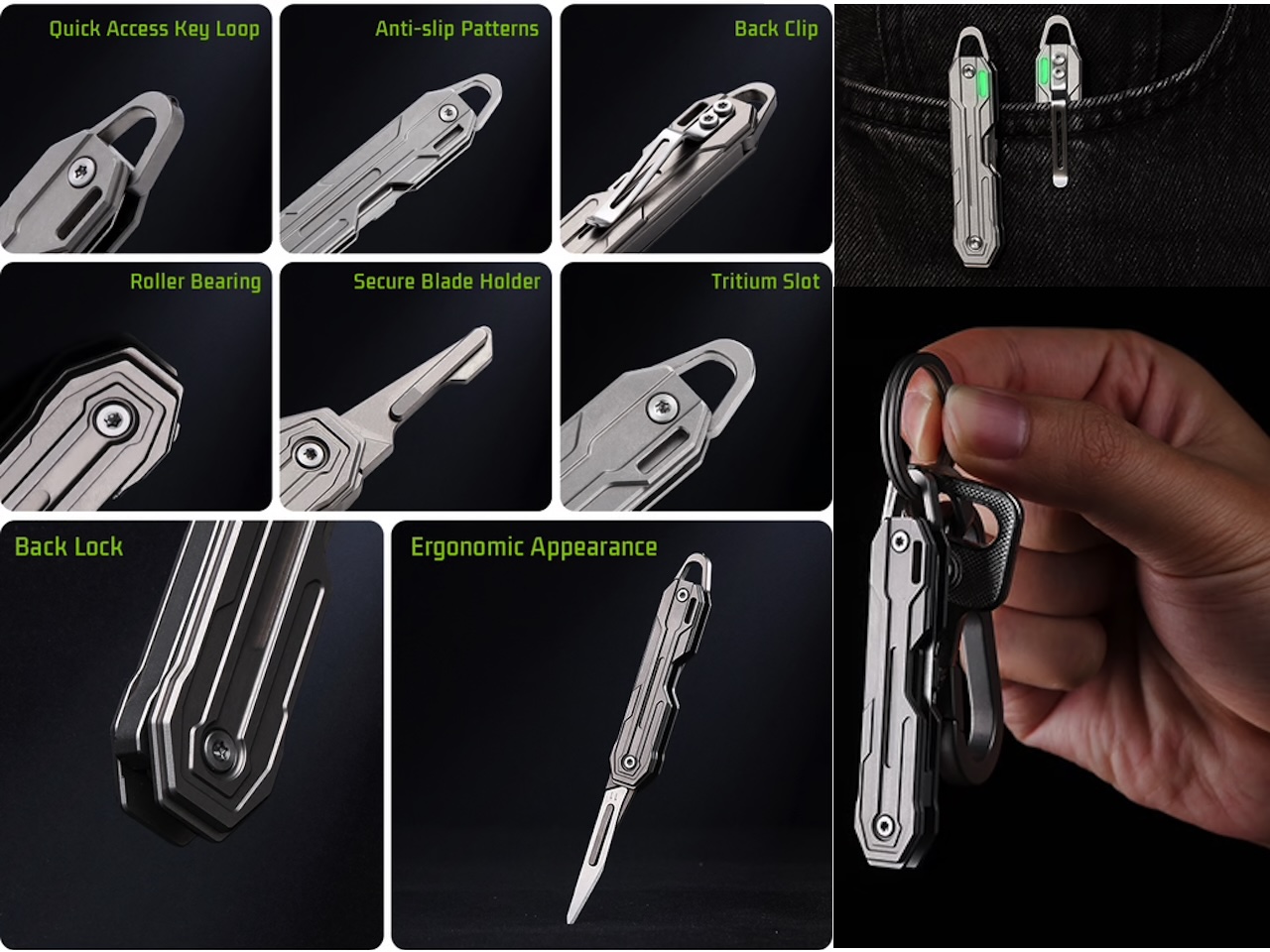
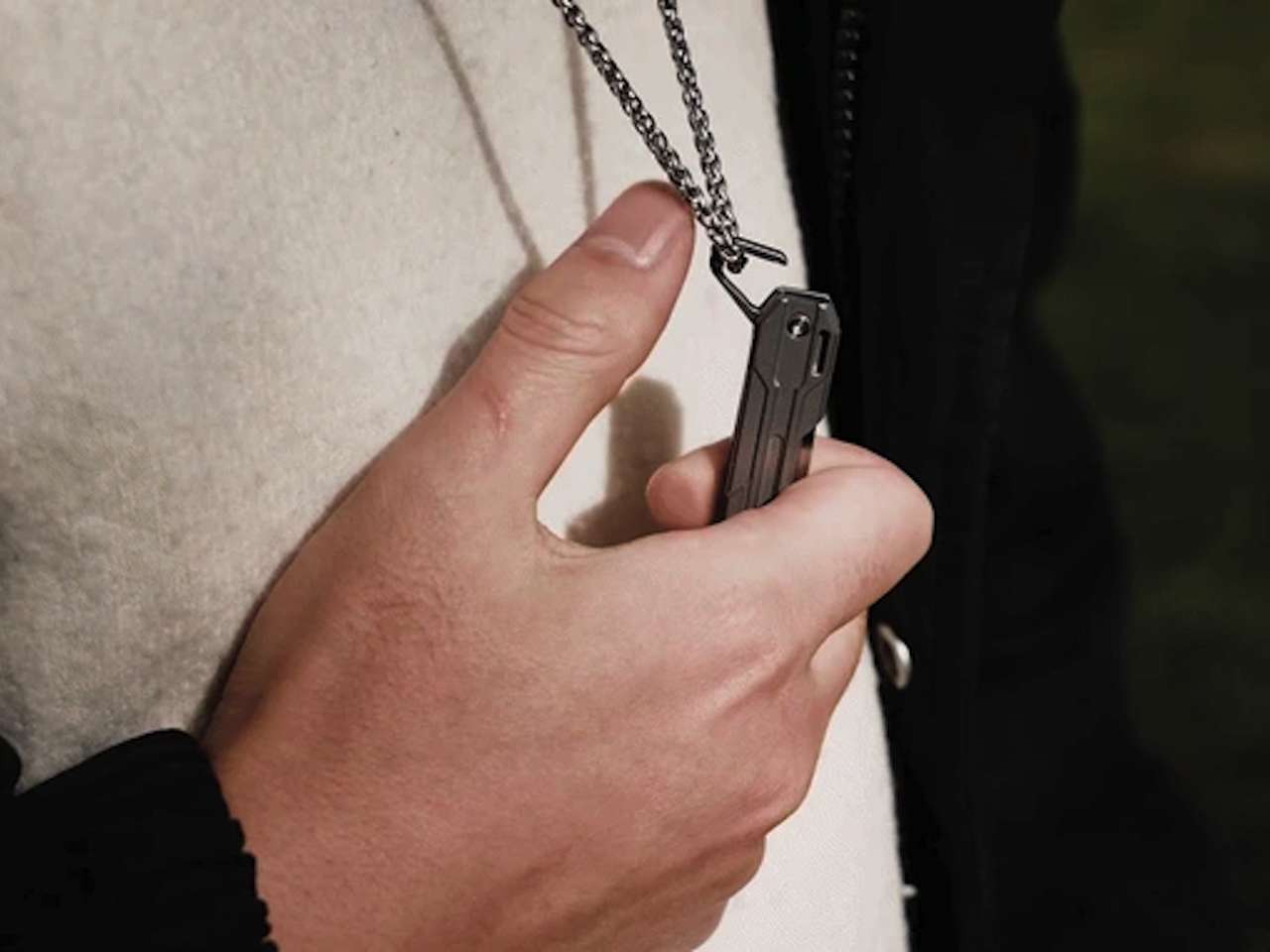
Two carry methods ship standard. A keyring hole threads onto your existing key loop, while a pocket clip provides faster draw access. Both keep the profile slim enough to sit flat between two keys without adding bulk.
The flat single-piece construction means there’s no pivot, spring, or lock adding thickness to the stack in your pocket. Pull it from the ring and you’re cutting in one motion. ThreePeters added tritium slots along the body for low-light findability, a feature from watch dials and firearm sights that glows without batteries.
On a keychain tool this small, it’s a genuine design flex. A glass breaker tip integrates flush into the geometry, shaped so it doesn’t snag fabric or compromise the silhouette. You’d miss it on inspection if nobody pointed it out. That’s smart industrial design: the emergency function hides until you need it.
Without a blade installed, Keypel is designed to pass TSA screening. Strip the blade before a flight, reinstall at your destination, and you’ve got a cutting system more travel-friendly than any folder. No folding knife matches that portability without checking a bag. If you fly regularly, that convenience alone justifies the format.
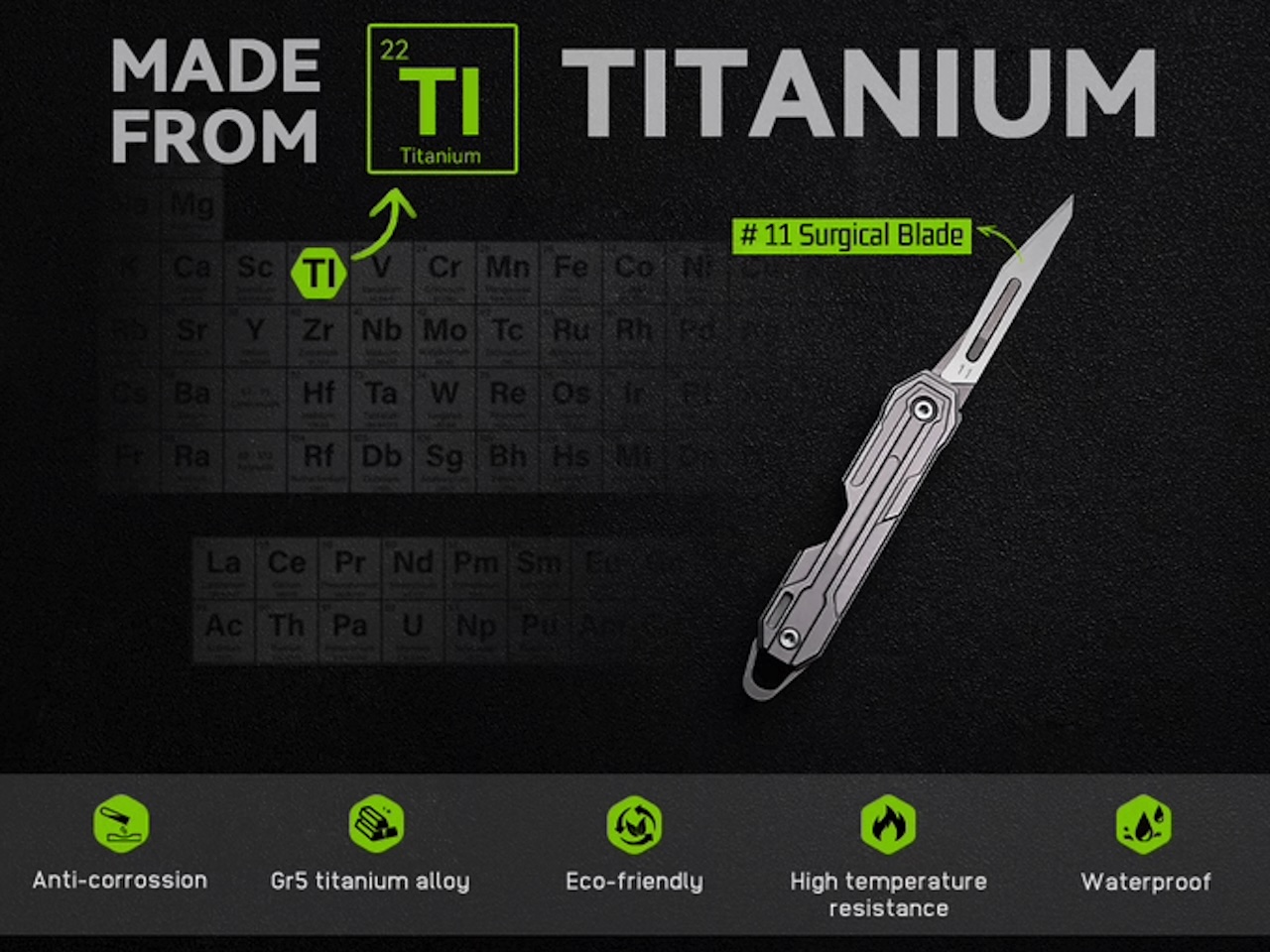
GR5 resists fatigue cycling and holds dimensional stability across temperature swings that would warp aluminum or zinc. If you’ve carried a budget tool that developed wobble after a year of pocket time, you’ll feel the difference immediately. Blade seating stays snug. That consistency is the real payoff of the alloy choice.
ThreePeters didn’t pick titanium for marketing alone. The material earns its cost when cheaper metals would’ve failed twice over. GR5’s track record suggests Keypel should look and cut the same years from now. Stop sharpening, stop oiling, stop replacing, and the economics speak for themselves. That’s the quiet argument for switching from knife to scalpel.
When a scalpel isn’t the right EDC blade
If you need to cut cardboard, rope, or thick material regularly, Keypel isn’t the right tool. Scalpel blades thrive on precision, not brute force. Push one through corrugated cardboard and it’ll snap faster than you’d expect. This is built for surgical sharpness, and if your daily tasks involve breaking down boxes or cutting zip ties under load, a folding knife still wins. Keypel doesn’t try to replace it, and it shouldn’t.
Blade replacement requires an ongoing commitment too. You’ll need spare #11 or #15 blades stashed in your desk, bag, or glovebox. It’s pennies per blade, but it’s a system. If you’d rather sharpen on a stone and never restock, this won’t match your workflow. Keypel runs closer to a razor in philosophy: factory sharp, disposable, swapped when dull. A 100-pack of surgical blades costs less than one professional knife sharpening, so the economics land cleanly. But the habit shift from “maintain your edge” to “swap your edge” is real. It’s also Kickstarter-only for now, with no confirmed retail pricing, so if backing a small studio’s first run gives you pause, waiting is fair.
The case for carrying a scalpel every day
Keypel fits a specific kind of carrier: someone who does detail work and finds folding knives too thick, too dull between sharpenings, or too much tool for the tasks they actually perform. You want precision over versatility. A scalpel pocket knife solves a problem most knife brands don’t acknowledge exists.
It also fits the traveler who won’t check a bag. Business trips, conference travel, weekend flights: all situations where a folding knife creates friction at security, and the alternative is carrying nothing. Keypel fills that gap. Strip the blade, fly, reinstall on the ground. Layer in the glass breaker and tritium, and it stops looking like a novelty and starts looking like a deliberately engineered carry tool. The campaign runs through February 28 with early-bird tiers still open. If you’ve been waiting for a keyring-scale scalpel that doesn’t feel like a toy, this is the first product that takes the concept seriously.
The EDC space has chased bigger and heavier for years, and the momentum is finally shifting. ThreePeters isn’t a legacy brand with product lines to protect, and that freedom shows in how stripped-back the design landed. There’s no accessory collection, no limited colorway drops, no upsell strategy. When every keychain tool tries to be a multitool, the one that commits to a single function starts looking like the smartest option on the ring.
Price: HK$ 379 (About $49)
Where to Buy: ThreePeters
That restraint carries credibility in a market stuffed with feature creep. Keypel is one tool, one material, one purpose, and the simplicity is the point. Whether an EDC scalpel knife replaces your folder depends on what you value. For the right user, the answer has always been precision. Keypel is one of the few keyring tools that bets on it without hedging. The blade is sharper, the carry is lighter, and the maintenance is gone.