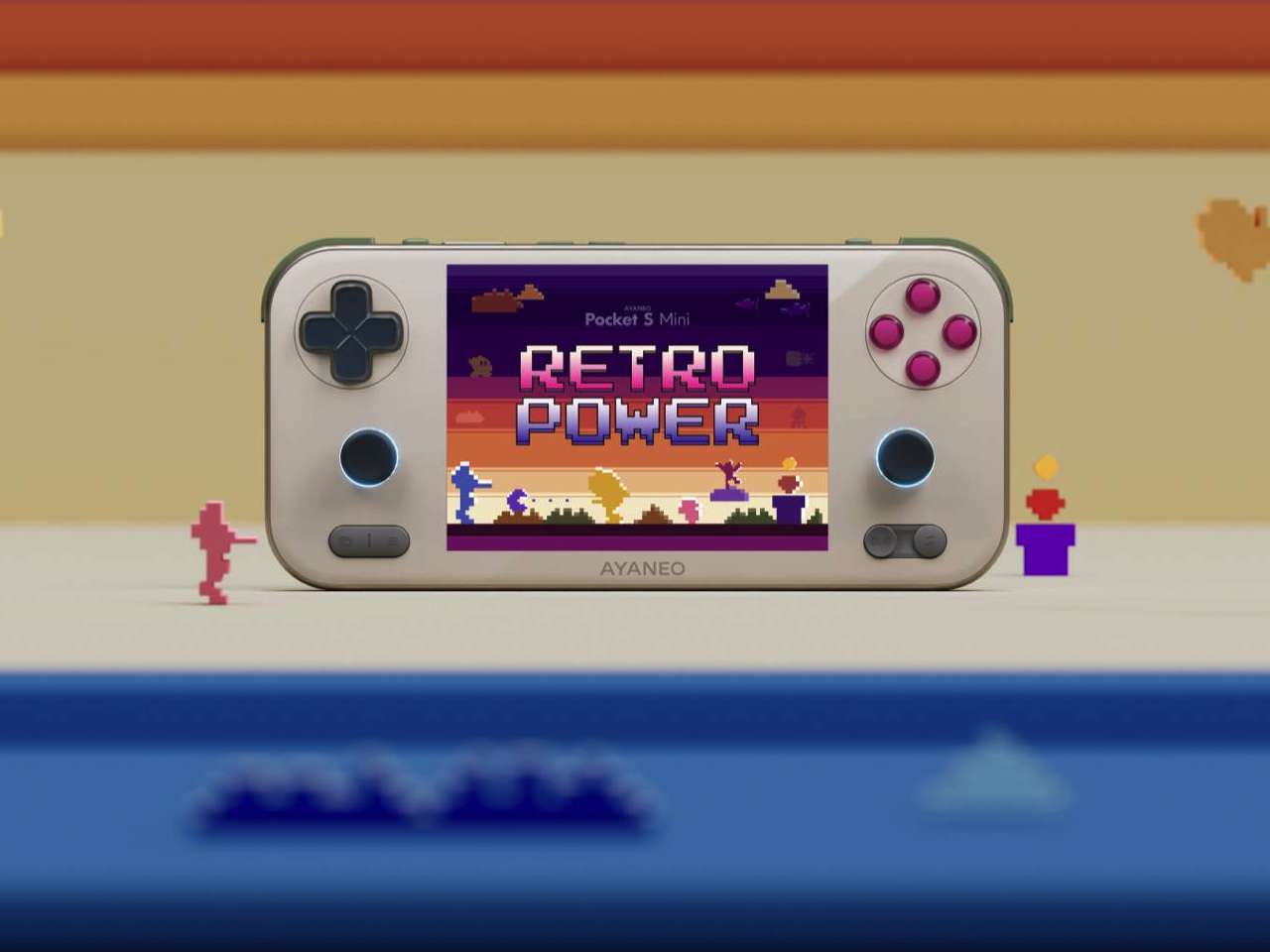
ARTICLE – Most portable gaming devices use widescreen displays because smartphone makers spent the past decade normalizing that format. AYANEO’s Pocket S Mini rejects the trend completely, shipping with a 4.2-inch 4:3 screen at 1280 × 960 resolution instead of the 16:9 or 16:10 ratios dominating handheld screens. Finding suppliers willing to manufacture 4:3 displays in 2026 creates real sourcing challenges and drives up component costs compared to buying readily available widescreen panels. This decision wasn’t driven by nostalgia.
Price: $319
Where to Buy: Ayaneo
Classic games from NES through PlayStation 2 were designed for 4:3 displays, and stretching them to widescreen distorts what developers intended. Load Super Metroid or Final Fantasy Tactics on a widescreen handheld and you choose between letterboxing with black bars or stretching that warps sprites and UI elements. AYANEO’s betting retro gaming enthusiasts care enough about visual accuracy to justify hardware built around an aspect ratio the industry abandoned with HD televisions. For players who value pixel-perfect presentation, widescreen handhelds force a constant compromise. If you’re playing games designed for 4:3 screens, AYANEO argues the display should match that format without adjustments. So the question becomes whether pixel-perfect aspect ratio matching matters enough to build an entire handheld around it.
AYANEO argues that retro games deserve displays matching their original presentation standards, and the Pocket S Mini exists to prove that point. Widescreen became universal because content shifted to that format, but classic games never made that transition, making the 4:3 format the technically correct choice for pre-HD gaming rather than a throwback. Players who care about visual fidelity have been asking for devices like this for years, and AYANEO’s finally delivering one with premium build quality instead of budget compromises.
Build and Design
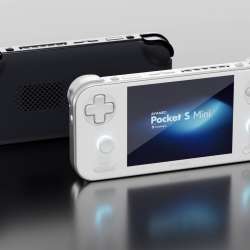
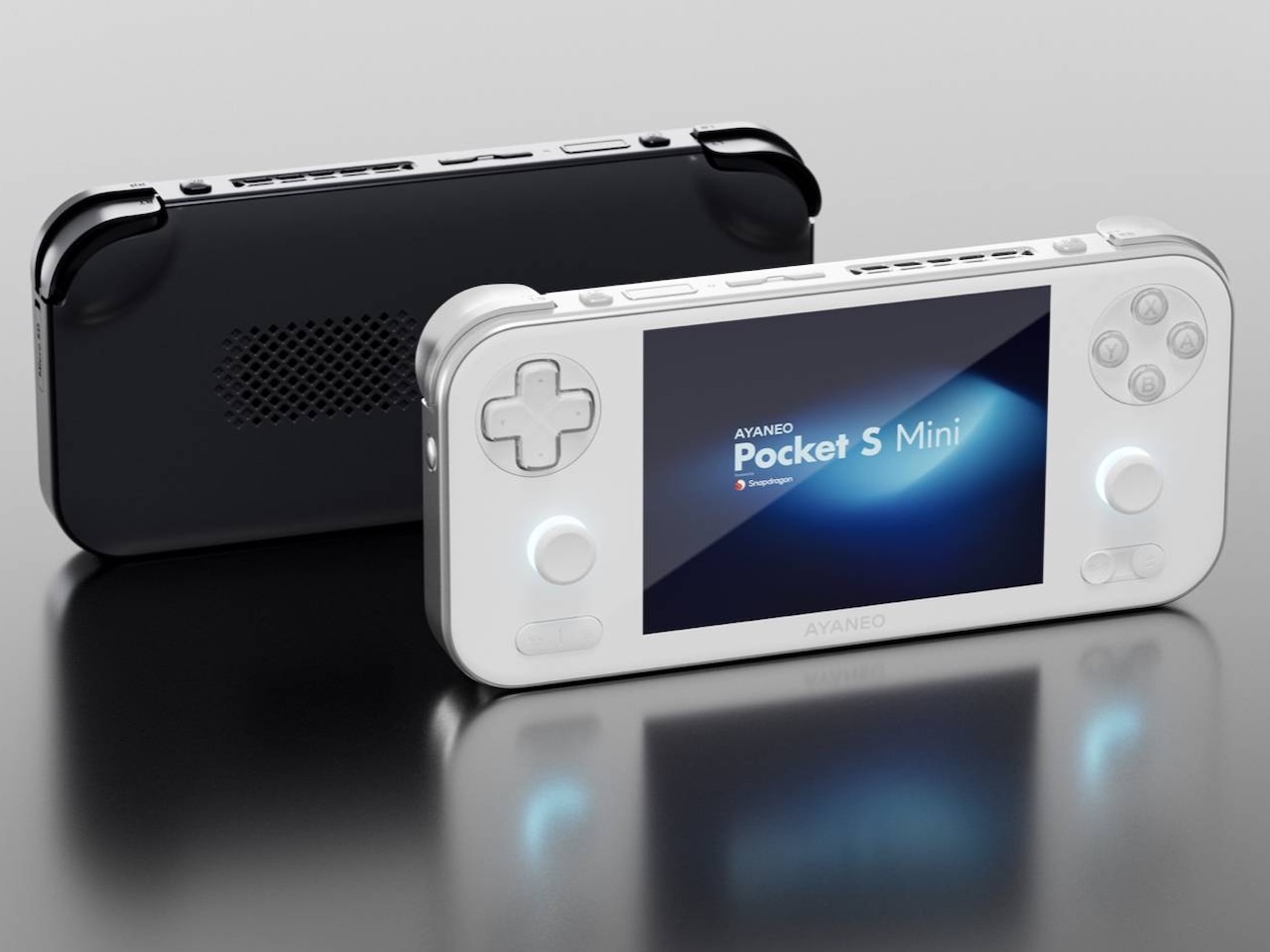
AYANEO designed the Pocket S Mini for portability without sacrificing material quality. It measures 167.1 × 77.85 × 18.5 mm and weighs 305 grams, light enough for extended sessions while feeling solid rather than hollow like budget devices. The frame uses CNC-machined metal with rounded edges that distribute pressure evenly across your palms, and a glass front panel covers the screen with scratch-resistant clarity. The construction matches smartphone standards instead of the plasticky feel typical of sub-$400 handhelds. You notice the weight distribution immediately, it sits balanced instead of front-heavy. The compact size fits in jacket pockets without creating awkward bulges or pulling fabric. Smooth button edges and chamfered USB-C openings show AYANEO prioritized finishing quality over cutting costs. The device feels deliberately engineered for comfort rather than assembled from available components. Holding it reveals no flex or creaking from the chassis, which signals proper internal bracing and component integration rather than hollow shells common in cheaper builds.
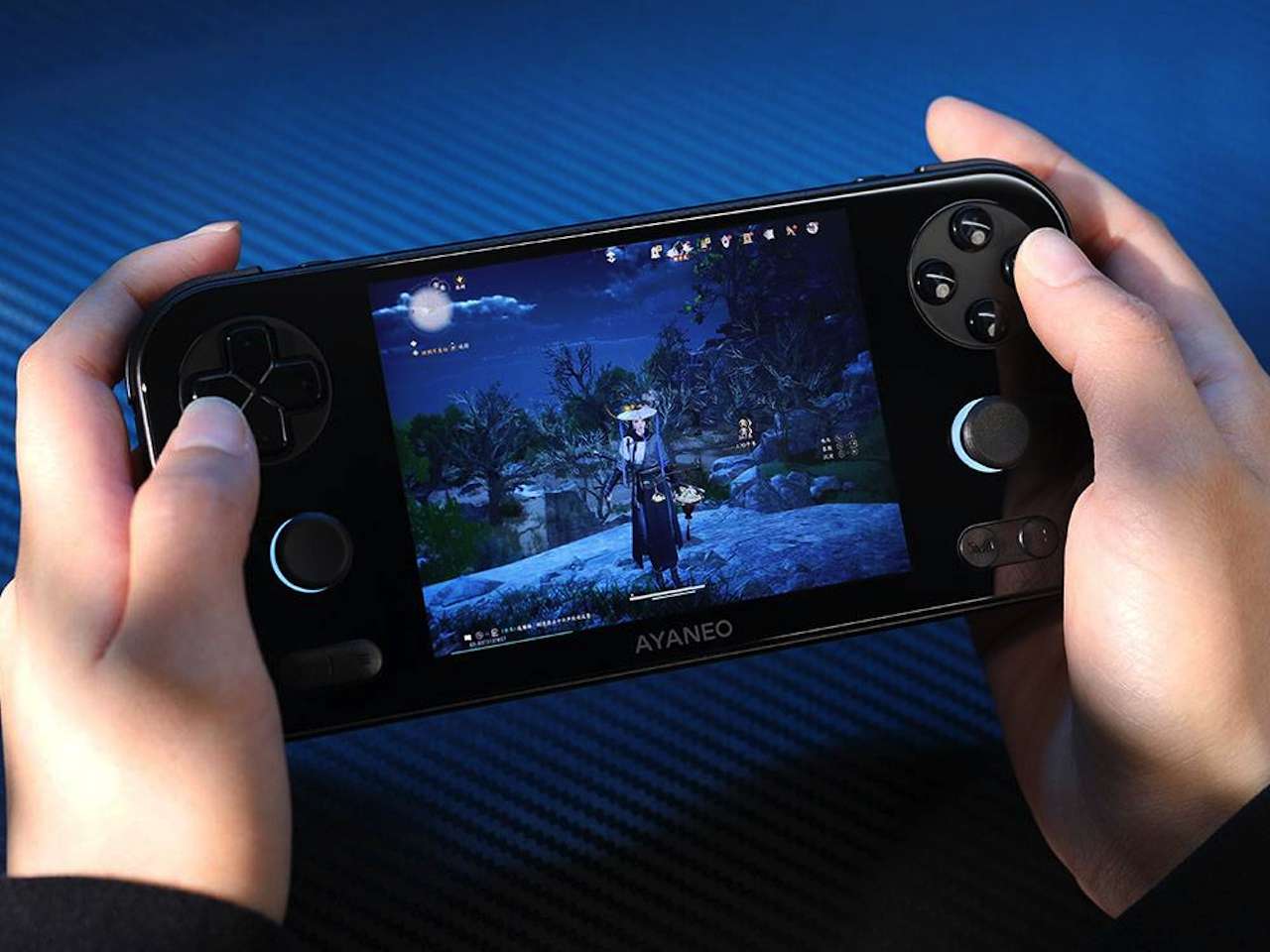
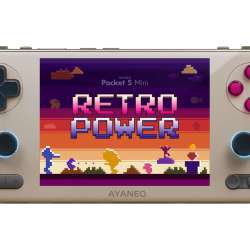
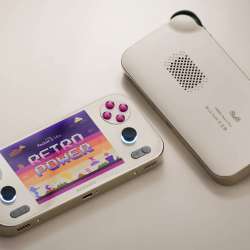
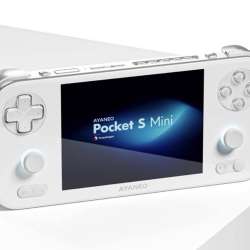
Three color options are available: Ice Soul White, Obsidian Black, and Retro Power. All versions share identical internal hardware and control layouts, so the choice comes down to aesthetic preference.
The 4:3 Display
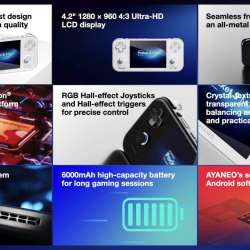
The 4:3 display defines the Pocket S Mini’s identity. At 4.2 inches with 1280 × 960 resolution, it provides exact pixel matching for Game Boy Advance at 3× scaling and SNES at 4× scaling. AYANEO optimized the LCD for color accuracy rather than chasing 120Hz refresh or peak brightness. The screen produces clean whites without blue tint, and you notice the tuning when loading games like Castlevania or Chrono Trigger, where artists worked within hardware limits.
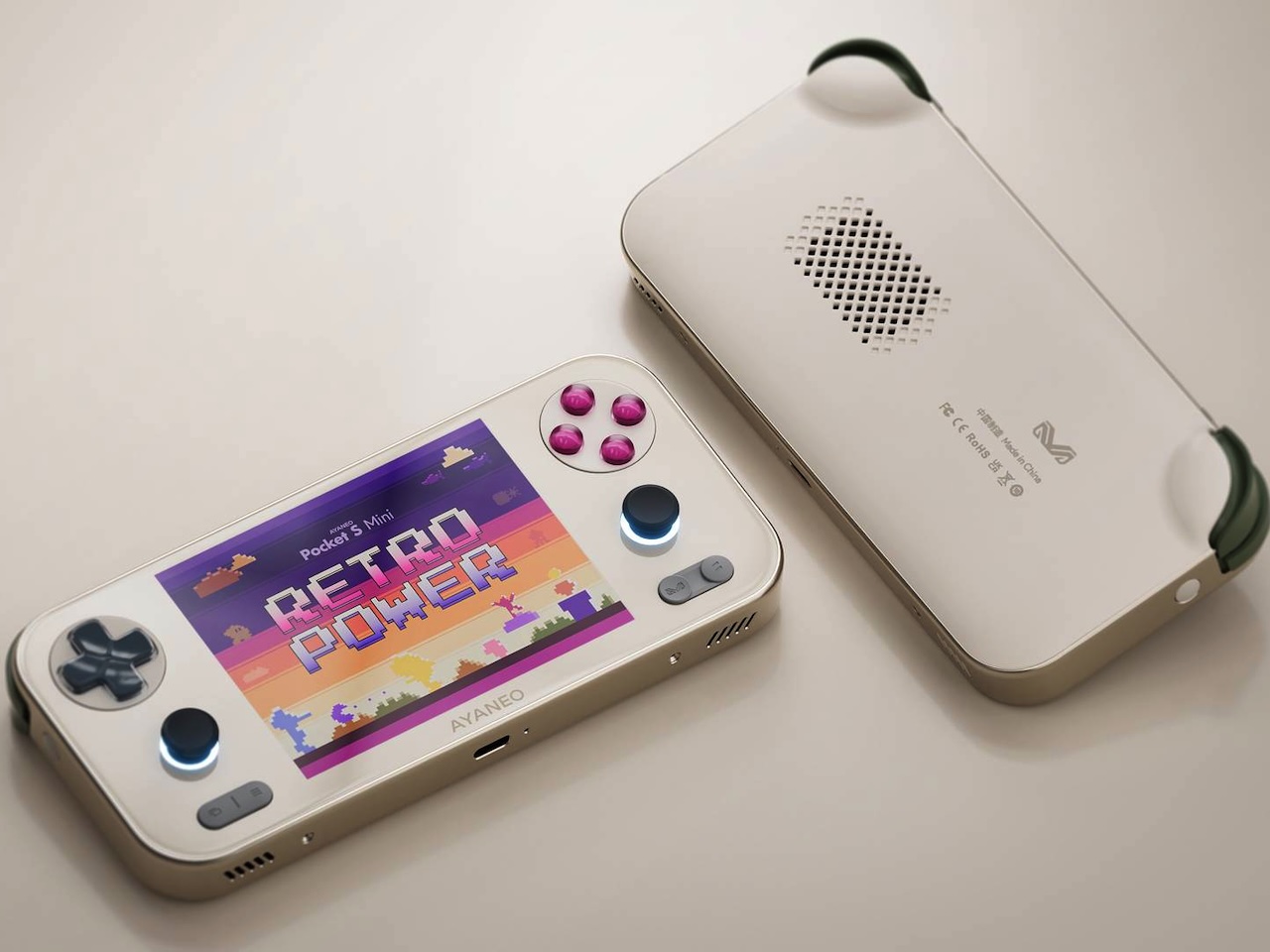
Games designed for CRT displays show up without the visual compromise widescreen devices force. Load Sonic or Street Fighter Alpha 3 on a 16:9 handheld and you choose between black bars or stretched images. The Pocket S Mini eliminates that choice by matching the original aspect ratio. The panel doesn’t match OLED contrast or 60Hz+, but those matter less for games at original frame rates. Getting aspect ratio and color right outweighs cutting-edge display tech. It’s a focused decision that prioritizes use case over specs.
Controls follow standard handheld layouts compressed into the smaller chassis. Button spacing works fine for average hands but might feel cramped if you have larger fingers.
Performance and Controls
Snapdragon G3x Gen 2 handles everything needed. Built on 4nm with 8-core Kryo CPU and Adreno A32 GPU, it runs PS2 emulation smoothly and modern Android games without throttling. AYANEO added active cooling with biomimetic ventilation that pulls heat through air channels. The system operates quietly under game audio. A 6000mAh battery powers it, with PD fast charging hitting 90 minutes from empty. Runtime varies by emulation load and brightness. The capacity balances size constraints with the 305-gram target.
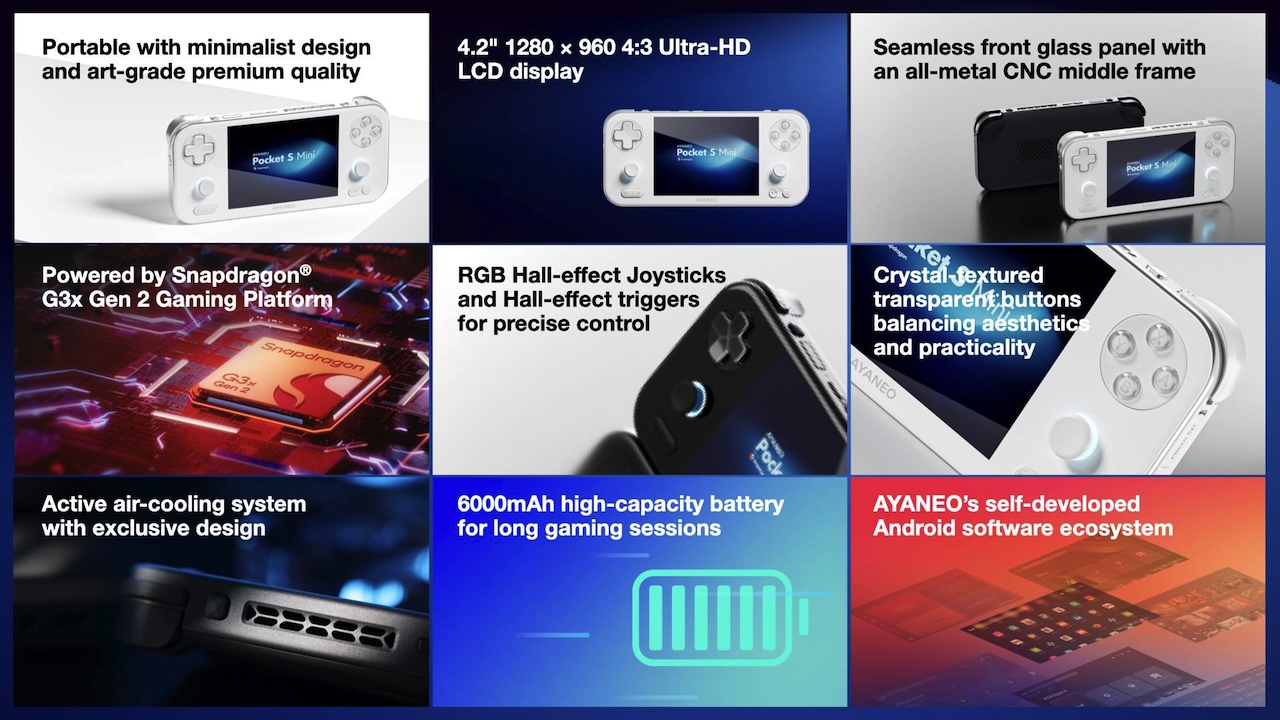
RGB Hall-effect joysticks eliminate drift through magnetic sensing rather than contact points. Hall-effect triggers provide longer travel and analog sensitivity for variable input. The textured D-pad and buttons use rubber internals for tactile feedback between clicky switches and mushy membranes. The layout follows conventional placement, so Switch or Steam Deck muscle memory transfers immediately.
AYANEO includes USB-C for charging and data transfer, stereo speakers positioned for forward-firing audio, and microSD expansion for adding storage beyond the base capacity.
The software runs Android with Play Store access. AYANEO’s launcher organizes your library and performance settings, but you can switch to stock Android. Bluetooth 5.3 handles controllers and audio, Wi-Fi manages connectivity, and a fingerprint sensor enables quick unlocking.
Who’ll Actually Want This
This targets players who want 4:3 displays and feel frustrated by the lack of quality options. If you regularly play Game Boy Advance, SNES, Genesis, or PS1 games and care about original aspect ratios, the Pocket S Mini solves a problem widescreen handhelds can’t. It’s built for players who value construction and controls over OLED or 120Hz specs. AYANEO’s pricing starts at $319 for early pre-orders, with capacity split between China and international markets. They’re selling directly, which shortens delivery but means limited stock first-come first-served.
Price: $319
Where to Buy: Ayaneo
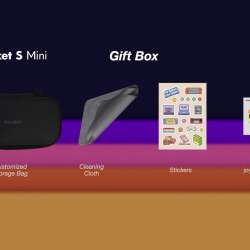
Pre-orders include an exclusive accessory bundle, though AYANEO didn’t specify bundle contents in the announcement. The direct sales approach removes Kickstarter’s typical delays but also means no stretch goals or community voting on features, you get what AYANEO decided to build.