Got a phone, a laptop, maybe a tablet. What you don’t have, yet, is a speaker that goes where those go. A Bluetooth speaker follows you from the kitchen counter to the campsite, from a hotel shower to a backyard grill.
The trick is picking the right size, the right sound signature, and the right price without overpaying for features you won’t use. The 2026 Bluetooth speaker market splits into two camps. On one side, the ultra-portables you clip on a bag strap and forget. On the other, the bigger boxes that fill a room.
Between them sits a range of options that mostly use Bluetooth 5.0 or newer, but differ wildly in tuning, battery life, and water resistance. Here’s how to choose.
Quick Picks
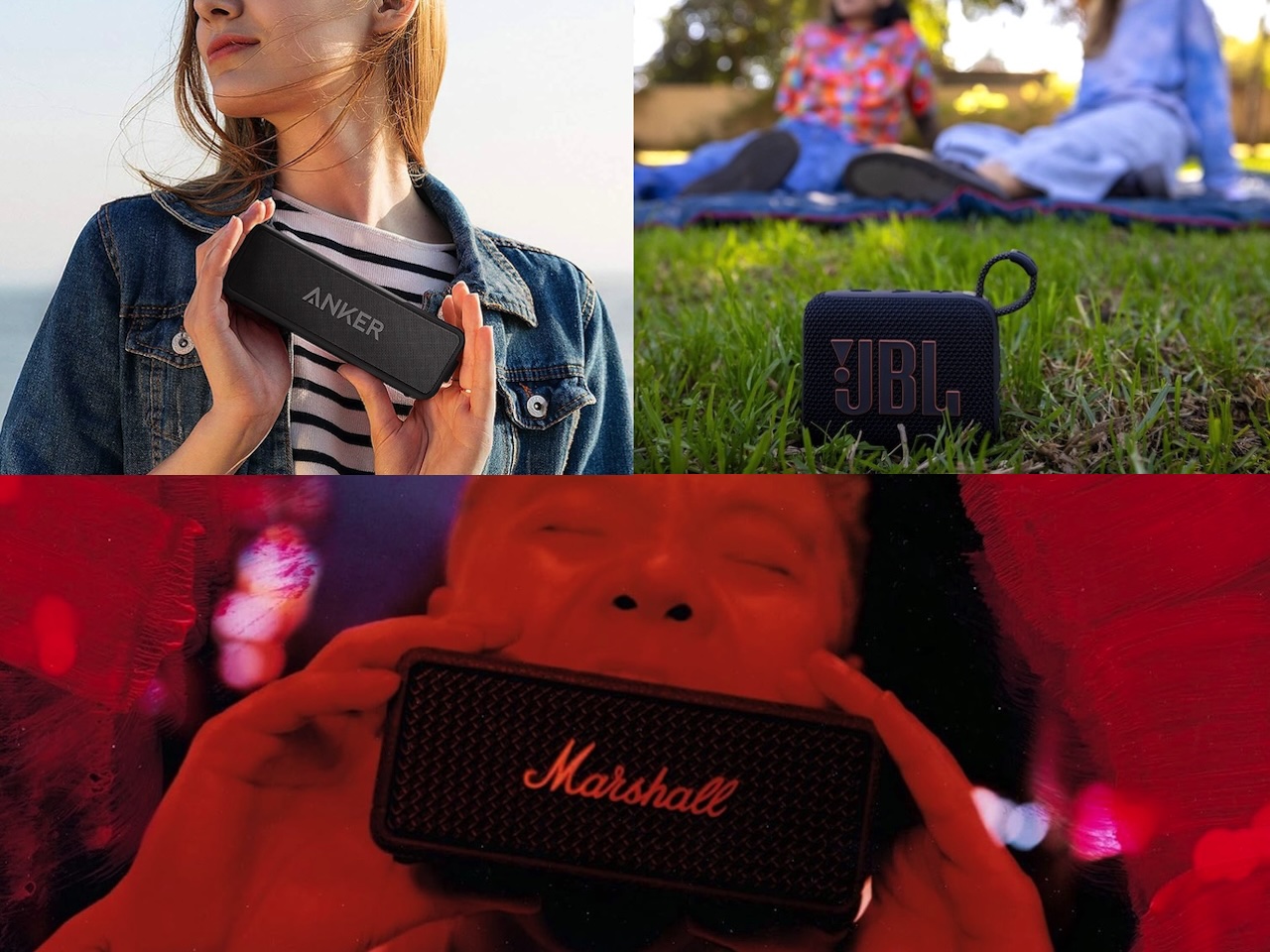
- Best all-around portable: Marshall Emberton III – $129.99. Big sound from a small box, 32+ hours of battery, IP67 rated.
- Best ultra-portable: JBL Go 4 – $49.95. Clips on a bag, fills a campsite, lasts 7 hours.
- Best on a budget: Anker Soundcore 2 – $29.99. 24-hour battery, IPX7 rated, under thirty bucks.
- Best mid-range all-rounder: JBL Flip 5 – $79.95. The most reviewed Bluetooth speaker in this class for a reason.
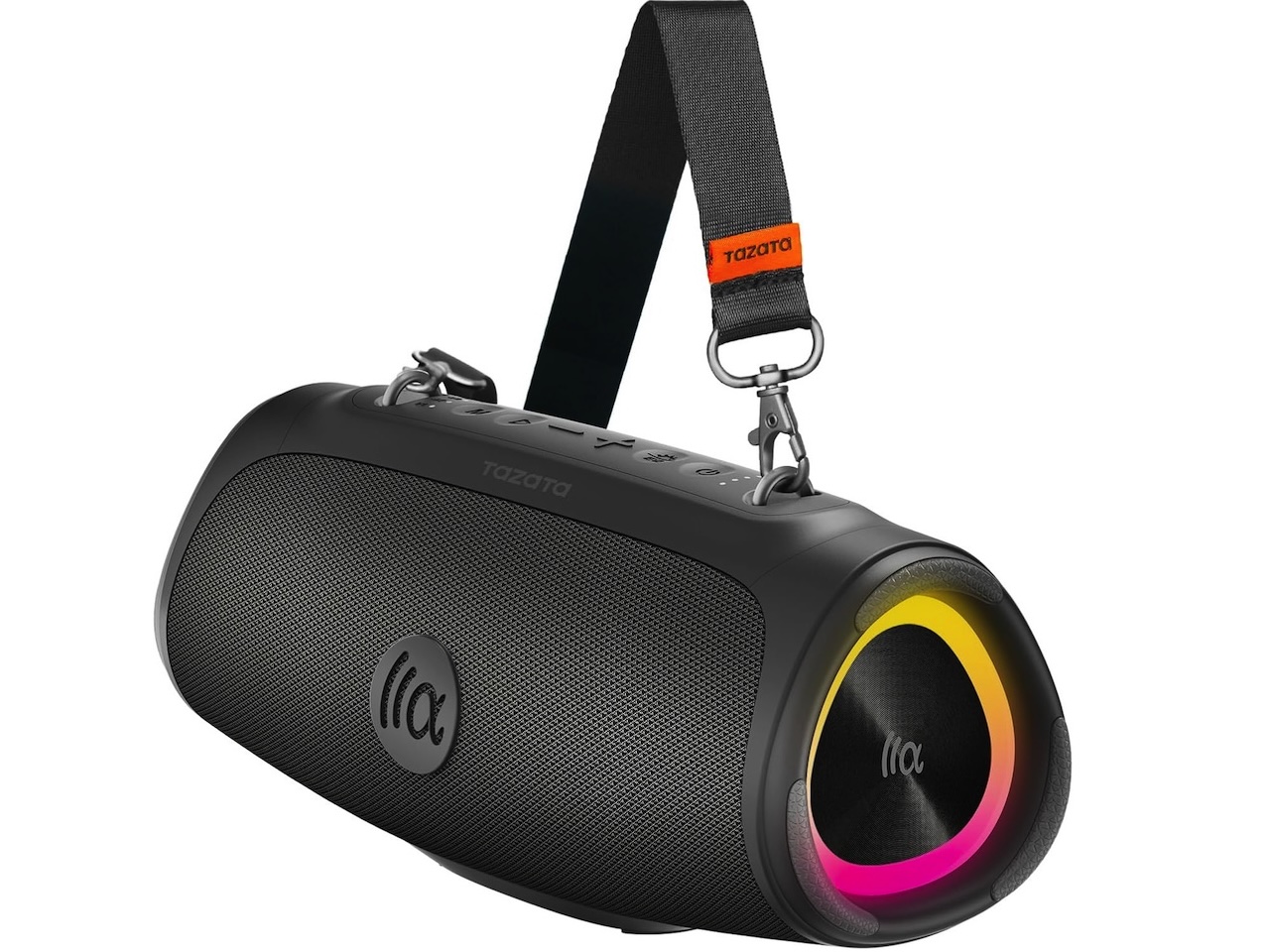
- Best value for the size: TAZATA Portable Loud BT – $56.88. 60W output at half the price of comparable speakers.
How to Choose a Bluetooth Speaker in 2026
Size, battery, and the real-world difference
This is the first question, not the second. A speaker that stays home because it’s too big to pack is a bad speaker for your life. Ultra-portable models like the JBL Go 4 fit in a cup holder and weigh under 200 grams. Mid-size speakers like the JBL Flip 5 and Anker Soundcore 2 sit between a water bottle and a lunchbox. The Marshall Emberton III is the largest of this group at 0.7 kg, and it delivers the most volume per gram.
Battery numbers tell half the story. Shorter than manufacturers claim, always. Real-world battery depends on volume. A speaker rated for 24 hours at 50% volume will give you maybe 8 hours at full blast. The Marshall Emberton III claims 32+ hours, the longest in this roundup. The JBL Go 4 claims 7 hours, which is short but acceptable for a speaker its size. The Anker Soundcore 2’s 24-hour claim at moderate volume is the most realistic here based on user reports.
Water resistance and sound
IP67 means the speaker survives a drop in a meter of water for 30 minutes and is fully dust-sealed. The Marshall Emberton III and JBL Go 4 both carry this rating. IPX7 means water-resistant but not dust-tested. The Anker Soundcore 2 and JBL Flip 5 both have it. The TAZATA carries an IPX7 rating, so it handles rain and submersion but is not dust-tested.
Speaker size still determines bass. A 40mm driver in the JBL Go 4 can’t produce the low end a larger passive radiator in the Emberton III or Flip 5 can. If you listen to bass-heavy music at a party, skip the ultra-portables and go straight to the Emberton III or Flip 5. If you need podcasts and background music, even the Soundcore 2 at $29.99 is fine.
Comparison Table
| Speaker | Price | Battery | Water- Resistance |
Key Feature |
|---|---|---|---|---|
| Marshall Emberton III | $129.99 | 32+ hrs | IP67 | Stack mode, big sound |
| JBL Go 4 | $49.95 | 7 hrs | IP67 | Integrated clip |
| Anker Soundcore 2 | $29.99 | 24 hrs | IPX7 | Best value |
| JBL Flip 5 | $79.95 | 12 hrs | IPX7 | PartyBoost link |
| TAZATA Portable Loud BT | $56.88 | 8 hrs | IPX7 | 60W output |
Marshall Emberton III: Top Portable Pick
💰Price: $129.99 | Where to Buy: Amazon
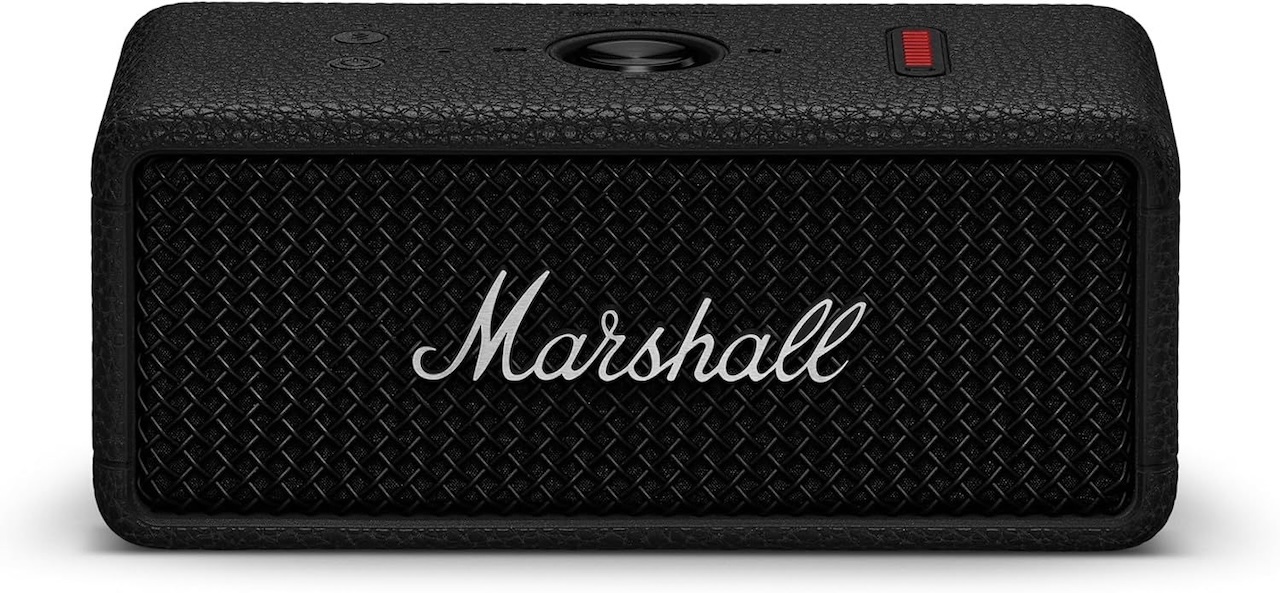
Covers the kitchen, the patio, the campsite, and the hotel room. All without making you think about it. Marshall packed a full-range driver and dual passive radiators into a 0.7 kg box the size of a paperback novel. The sound is warm and present. Not the hyped treble you get from budget speakers, but a balanced signature that works for both music and spoken content. The IP67 rating handles a splash in the pool, a dusty trail hike, and a kitchen counter covered in pancake batter. Battery life is a genuine 32+ hours at moderate volume, about three times what the JBL Go 4 offers.
Buy this if you want one portable speaker that does everything well. The premium price makes sense for the sound quality and battery alone. Skip this if: You need a speaker for a single purpose, like a shower speaker or a desk beater, cheaper options do that one thing just as well.
The caveat: Stack mode lets you pair two Emberton III units for stereo, but a stereo pair costs over $200. Buy one first. See if it’s enough.
JBL Go 4: Best Ultra-Portable
💰 Price: $49.95 | Where to Buy: Amazon
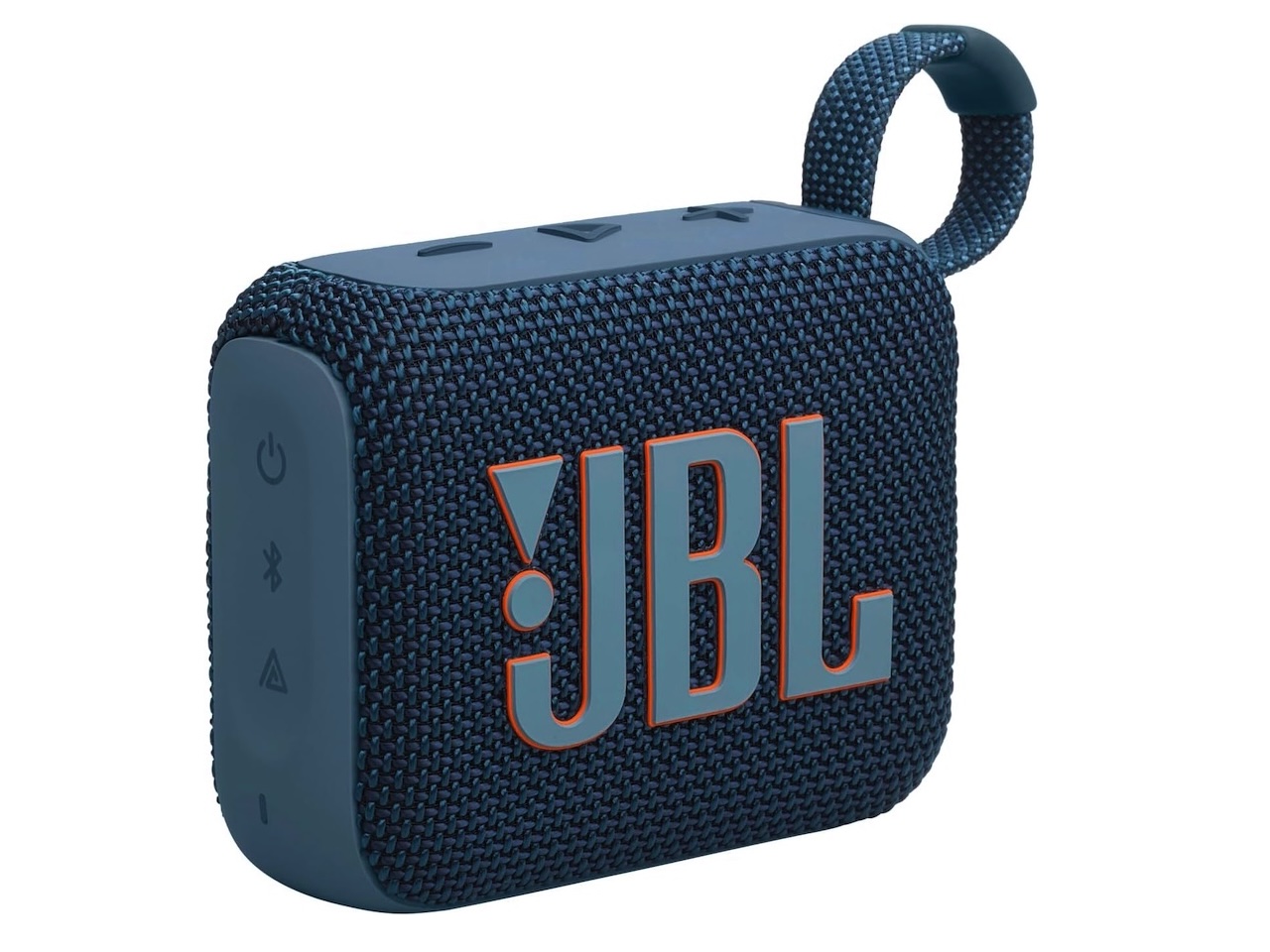
Ninety-four millimeters wide, 190 grams. Smaller than a smartphone. Lighter than most wallets with coins in them. The integrated clip is the killer feature: backpack strap, belt loop, stroller handle, tent pole. It stays put.
And it floats. Best poolside speaker in this group.
Sound quality is limited by physics. A 40mm driver can’t produce bass, and the Go 4 doesn’t fake it with a passive radiator. What it does well is clarity at low-to-medium volume. Podcasts, audiobooks, acoustic music, and YouTube dialogue come through clean. Push it past 70% and distortion creeps in, but that’s true of every speaker this size.
Great for: Hikers, bike commuters, anyone who needs a speaker that disappears in a bag.
Not for: Anyone who wants bass, room-filling volume, or more than a few hours of playback. Seven hours of battery is short enough that you need to charge it after a long day. The caveat: USB-C is a welcome upgrade over older models, but 7 hours is 7 hours. Plan accordingly.
Anker Soundcore 2: Best on a Budget
💰Price: $29.99 | Where to Buy: Amazon
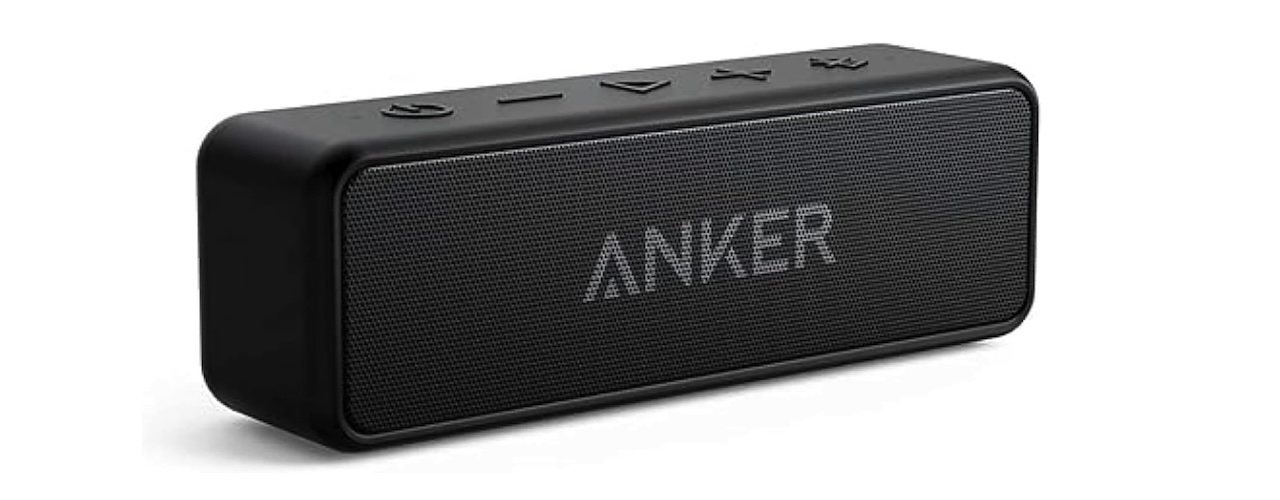
At $29.99, the Anker Soundcore 2 costs less than a pizza delivery for two. Buy it when you need something that makes sound and you don’t care about brand names.
The 24-hour battery claim is the most honest in this roundup. Real-world use at moderate volume gets you close. The Soundcore 2 has an IPX7 rating, surviving full submersion in a meter of water for 30 minutes. No dust seal, so sandy beaches and dusty trails are a risk.
The sound is fine for the price. Bass-heavy and muddy in the mids, but perfectly listenable for podcasts, radio, and background music.
Best for: Anyone where budget is the priority. Dorm room, workshop, backup speaker. Avoid if you care about sound quality beyond the basics, or if you need dust resistance.
The caveat: The Soundcore 2 is a 2016 design. Micro USB. Bluetooth 5.0. It works, but the hardware is dated.
JBL Flip 5: Best Mid-Range All-Rounder
💰 Price: $79.95 | Where to Buy: Amazon
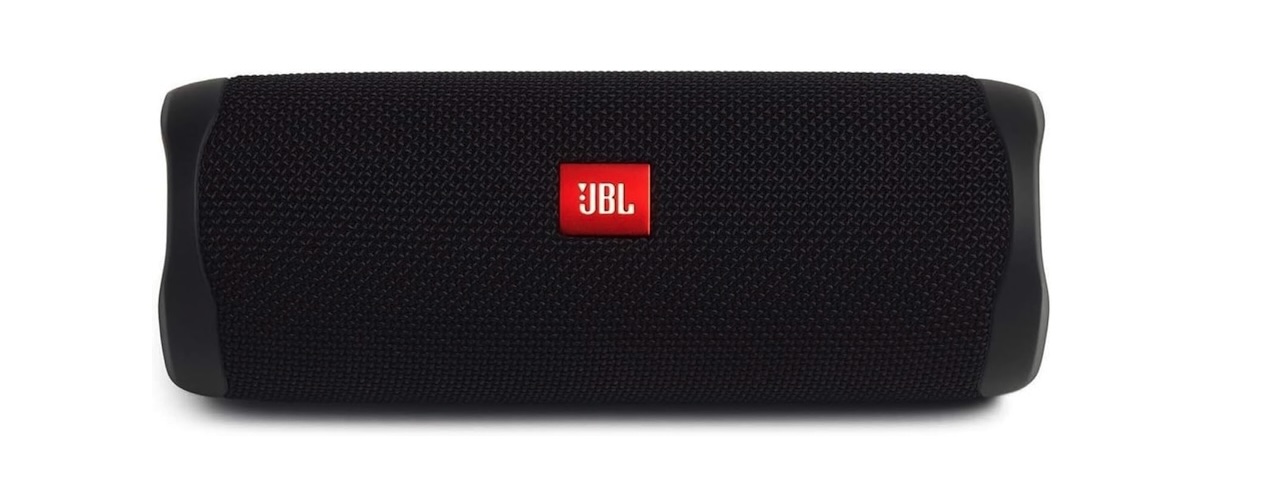
What does 84,800 reviews and a 4.8 average tell you? That this speaker hits the sweet spot. Large enough to produce real bass through its passive radiator, small enough to fit in a packed bag, rugged enough to survive a drop on concrete.
Battery life is rated at 12 hours. Realistic at moderate volume, about 6 or 7 at full volume. The IPX7 rating means it survives full submersion but is not dust-sealed. PartyBoost lets you link multiple JBL speakers, useful if you already own another JBL PartyBoost speaker.
Grab it if: You’re a first-time buyer who wants one speaker that doesn’t compromise on sound or portability. Safest recommendation in this roundup. Pass if: You already own a JBL Flip 4 or Charge 4, the upgrade is marginal. You lose the 3.5 mm aux input the Flip 4 had.
The caveat: No aux input. No voice assistant. Bluetooth only. For most people none of that is an issue, but if you need a wired connection, this isn’t it.
TAZATA Portable Loud BT: Best Value for the Size
💰 Price: $56.88 | Where to Buy: Amazon
Sixty watts in a lunchbox-sized package. Roughly three times the output of the JBL Flip 5 at two-thirds the price.
The sound profile is tuned for volume. Loud and proud, boosted bass that works well for outdoor parties and garage hangs.
Battery life is rated at 8 hours. At high volume, expect less.
IPX7 means it handles rain, pool splashes, and submersion. Dust is not officially tested, so fine sand is still a risk.
Ideal for party hosts, tailgaters, and anyone who wants the loudest speaker for the money. At $56.88, it leaves room for a second one. Not for anyone who needs a compact form factor or a trusted brand name.
The caveat: The bass boost gets boomy at max volume. Fine for parties, less good for critical listening. Worth the gamble at this price though.
Buying Advice for 2026
Bluetooth version isn’t a dealbreaker for most buyers. Bluetooth 5.3 is standard on the Marshall Emberton III, JBL Go 4, and TAZATA. The JBL Flip 5 ships with Bluetooth 4.2. The Anker Soundcore 2 is on Bluetooth 5.0. For audio streaming, none of these make a practical difference unless you’re walking more than 30 feet from the source.
Don’t pay for features you won’t use. PartyBoost, Stack Mode, multi-speaker linking. They’re handy if you already own compatible speakers from the same brand. If you’re buying your first Bluetooth speaker, skip them.
The charging port is a hidden cost. The Marshall Emberton III, JBL Go 4, JBL Flip 5, and TAZATA use USB-C. The Anker Soundcore 2 uses Micro USB. All-USB-C household? Factor the extra cable into the price.
Check the real-world battery. Divide the manufacturer’s claim by 2 for a realistic estimate at 70%+ volume. The Marshall Emberton III is the exception. Its 32-hour claim holds up well, making it the safest bet for long days away from an outlet.
Want more audio gear recommendations? Check out our best portable speakers roundup and our guide to waterproof Bluetooth speakers.
Final Recommendation
The Marshall Emberton III is the best Bluetooth speaker in 2026 for most people. It balances sound quality, battery life, portability, and ruggedness better than any other speaker here. Need something smaller? The JBL Go 4 is the best ultra-portable for active use. On a strict budget? The Anker Soundcore 2 costs less than dinner for two and gets the job done.
If you want a single recommendation: get the Marshall Emberton III. You won’t regret it.
Frequently Asked Questions
Can I use a Bluetooth speaker for phone calls?
Most modern Bluetooth speakers have a built-in microphone. The Marshall Emberton III, JBL Go 4, and JBL Flip 5 all support speakerphone use. The Anker Soundcore 2 has a mic but call quality is average. The TAZATA isn’t designed for calls.
How do I connect two Bluetooth speakers for stereo?
The Marshall Emberton III uses Stack Mode. The JBL Flip 5 uses PartyBoost. Not cross-compatible. Two JBL speakers work together. Two Marshall speakers work together. A JBL and a Marshall don’t.
What’s the difference between IPX7 and IP67?
IPX7 means the speaker survives water submersion but hasn’t been tested for dust. IP67 means it survives both. IP67 is better for outdoor use.
Are expensive Bluetooth speakers worth it?
At $129.99, the Marshall Emberton III costs four times the Anker Soundcore 2. You get better sound, longer battery, USB-C, IP67, and a more refined design. Whether that’s worth the price depends on how much you care about sound quality.