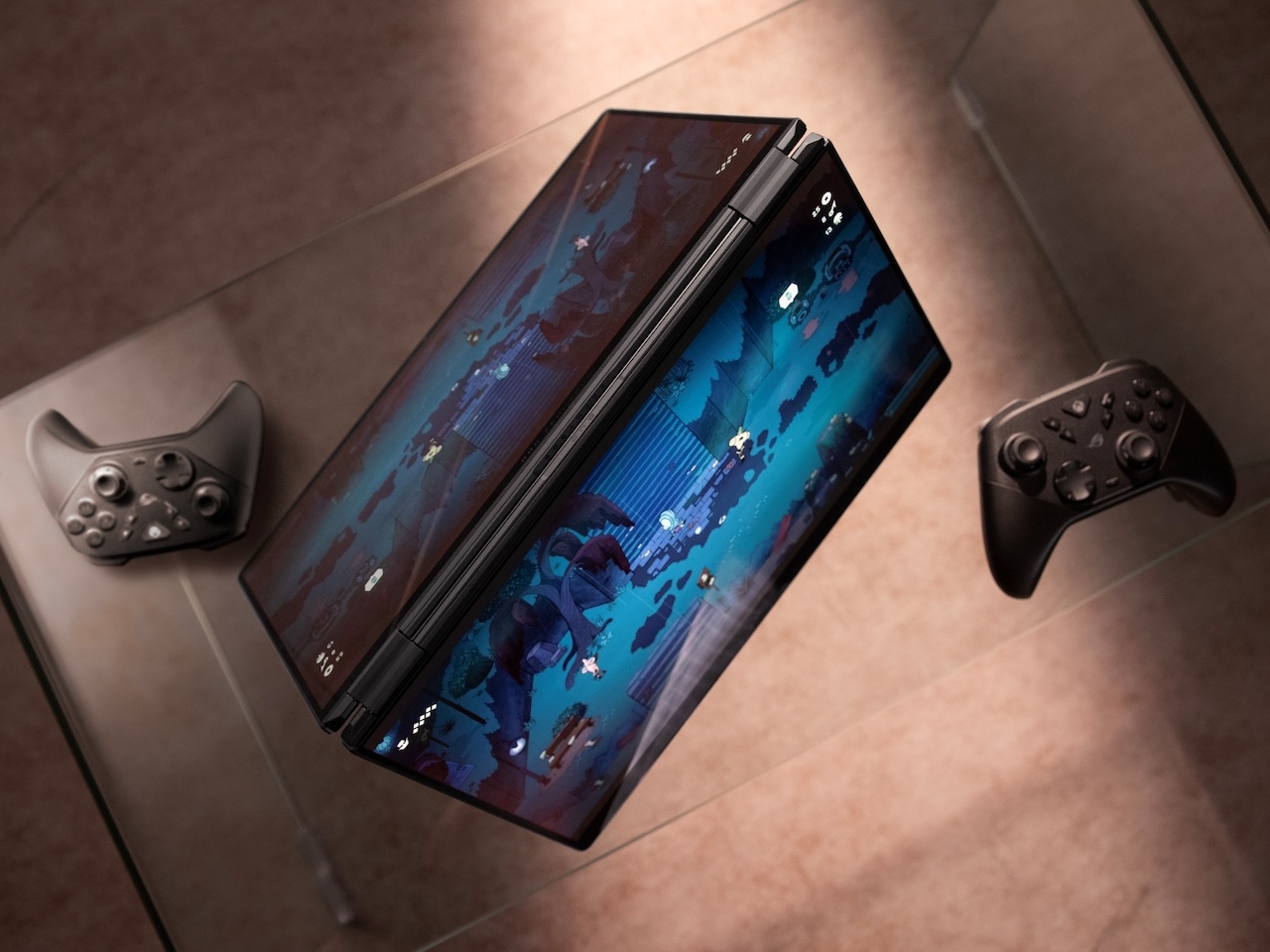
ASUS just dropped a $5,500 gaming laptop with two full 16-inch OLED screens, and pre-orders are live today. The 2026 ROG Zephyrus Duo ditches the old half-height secondary panel for a pair of matched 3K ROG Nebula HDR OLED touchscreens, which ROG is calling the world’s first 16-inch dual-screen OLED gaming laptop. We’ve already argued that dual-screen laptops have stopped being a gimmick, and this is the machine that pushes that case the hardest yet.
Price: $4,499.99 to $5,499.99
Where to Buy: Asus
ASUS is pitching this one as a return rather than a debut, and the spec sheet earns the comeback. Pricing starts at $4,499.99 for the RTX 5070 Ti configuration and climbs to $5,499.99 for the RTX 5090 build, both running on Intel’s new Core Ultra 9 386H. A 90-degree kickstand, a 320-degree hinge, and a magnetic Bluetooth keyboard let the same chassis flip between five operating modes, which is the whole reason the dual-screen layout earns its keep this time. It’s a flagship priced like a flagship, and the “do everything at once” pitch is finally backed by hardware that can answer for it.
Two 16-Inch OLED Panels, Not One Screen and a Strip
This is the part that reframes the whole product. ROG calls it the world’s first 16-inch dual-screen OLED gaming laptop, and that’s because both panels are full 16-inch 3K ROG Nebula HDR OLED touchscreens, not a main display paired with a smaller secondary panel. Stack them and you’ve got two full-sized work surfaces in the same chassis instead of the keyboard-strip arrangement the original Duo used.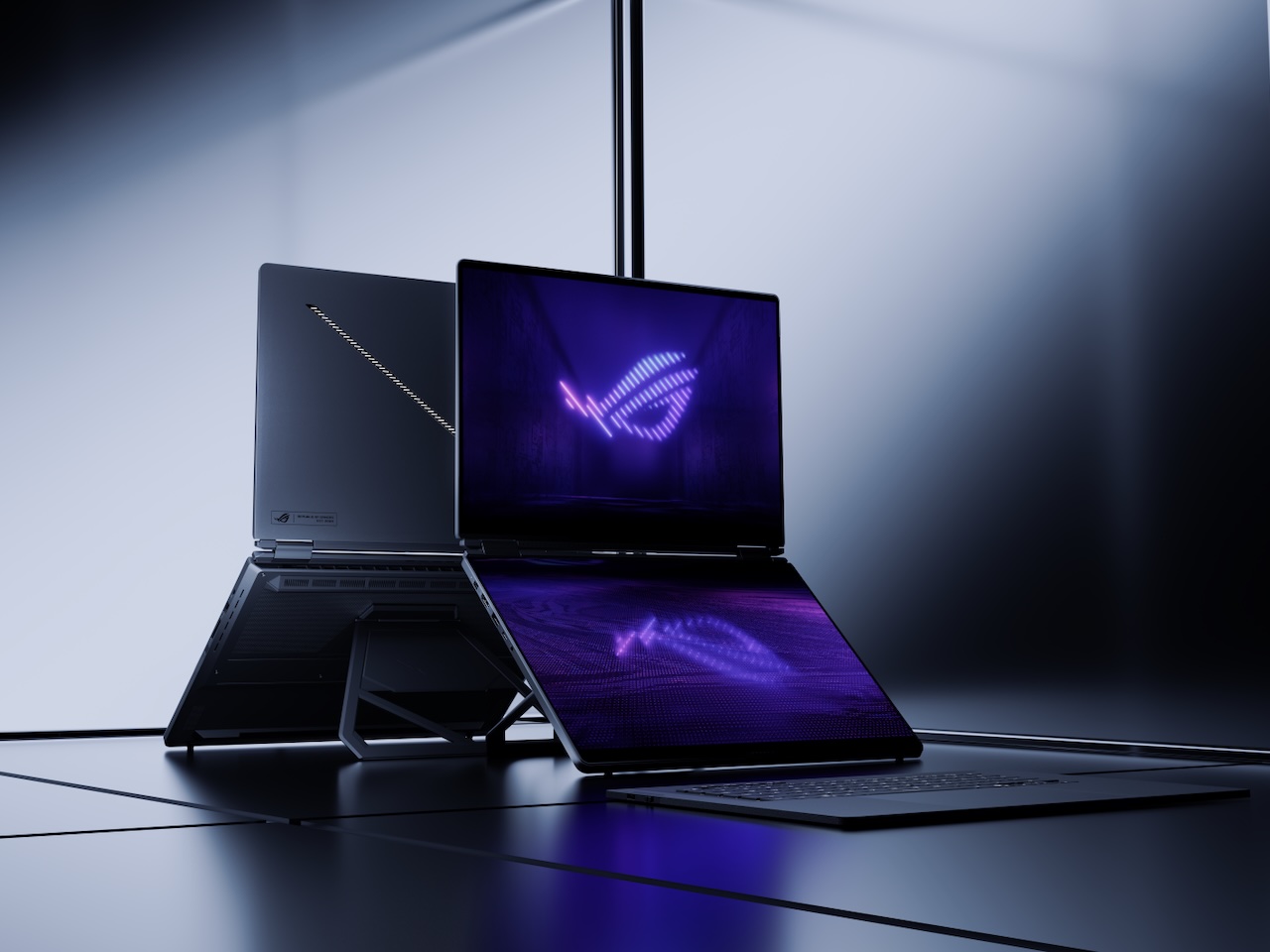
Both screens run at 120Hz with a 0.2ms response time. ASUS lists peak HDR brightness at 1100 nits and a VESA DisplayHDR True Black 1000 certification, which you usually only see on standalone OLED monitors. For people who edit photos or color grade, the panels cover 100% of DCI-P3 with a Delta E rating below 1 out of the box. That’s a lot of display to carry around in a laptop bag.
Five Layouts, One Machine
The hinge does most of the heavy lifting here. With a 90-degree kickstand and 320-degree rotation, ASUS gets five distinct operating modes out of the same hardware. Dual Screen Mode pops the kickstand and removes the magnetic keyboard, so you’ve got an instant multi-monitor setup with no dongles. Laptop Mode is the standard clamshell with the keyboard sitting under the main screen for normal gaming or work.


Sharing Mode lays the whole thing flat at 180 degrees so two people can sit across from each other and see their own screen, useful if you’re walking a teammate through something. Book Mode rotates both displays into portrait orientation, which is the one I’d reach for when reading code or long documents. Tent Mode props the machine into an A-frame with both screens facing outward, framed for two-player co-op or showing a portfolio to a client.
The detachable keyboard itself is interesting. It’s only 5.1mm thick, but ASUS still managed to give it 1.7mm of key travel, which is in line with its other premium gaming laptops. There’s one-zone RGB backlighting baked in, and it pairs over Bluetooth the moment you lift it off the deck.
Intel Core Ultra 9 Inside, RTX 5090 if You Want It
The Zephyrus Duo runs on Intel’s latest Core Ultra 9 386H, a 16-core, 32-thread chip that ASUS is positioning as the multitasking engine for all those open windows. Graphics options top out at an NVIDIA GeForce RTX 5090 Laptop GPU at a 135W TGP, with a step-down RTX 5070 Ti also available. Both configurations get DLSS 4, Frame Generation, and 4th-gen ray-tracing cores, which is what you’d expect from a current-gen flagship.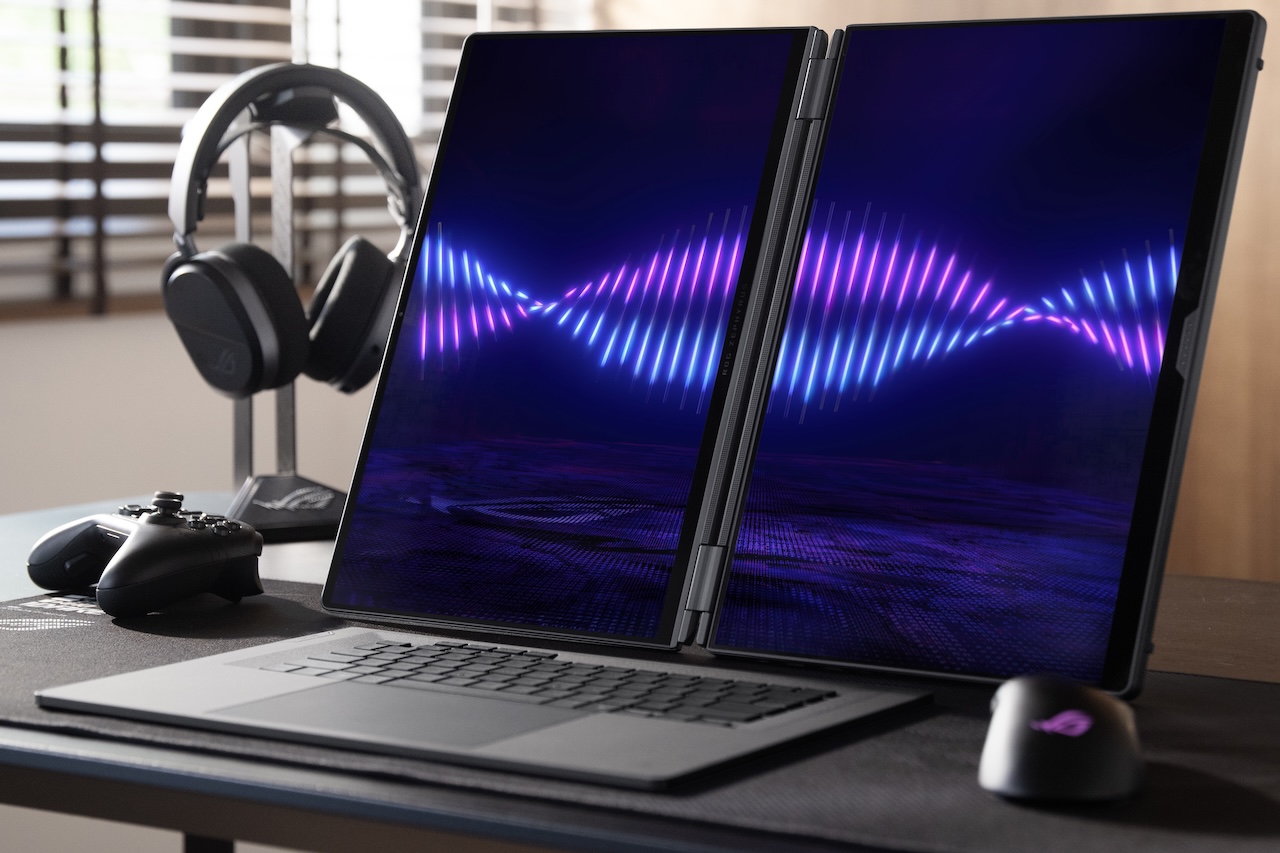
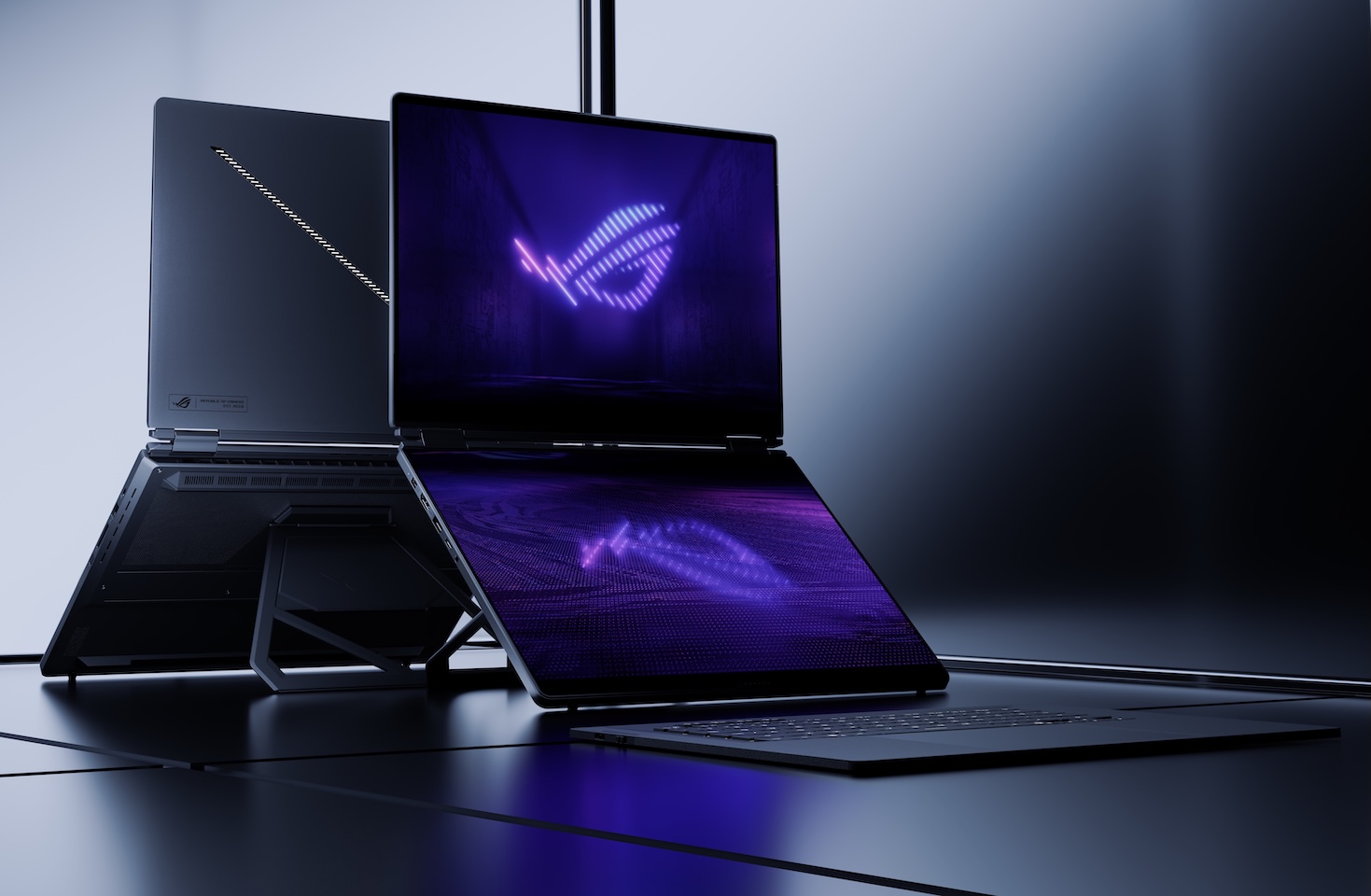
Cooling was clearly a design challenge here, since the detachable keyboard rules out the usual airflow path through the deck. ASUS says it overhauled the thermal stack with a larger vapor chamber and reworked fans to keep the 135W GPU and Core Ultra 9 fed. Whether that holds up under sustained load is a review-bench question, but the engineering effort is at least visible on paper.
Memory is fixed at 32GB of LPDDR5X-8533 onboard, and storage runs through a 1TB PCIe 5.0 Performance SSD. Audio comes from a six-speaker array with two tweeters and four woofers, which is more hardware than most 16-inch laptops bother with. Connectivity covers HDMI 2.1 FRL, two USB 3.2 Gen 2 Type-A ports, two Thunderbolt 4 Type-C ports with DisplayPort 2.1 and Power Delivery 3.0, an SD card reader (UHS-II), and an audio combo jack. Wireless is WiFi 7 and Bluetooth 6.0.
Stellar Grey, Slash Lighting, and a 6.22-Pound Footprint
Design-wise, ASUS keeps the Zephyrus aesthetic but pushes it more upscale. The chassis arrives in a new Stellar Grey colorway, and the Slash Lighting on the lid now spans 35 discrete zones encased in a glass enclosure. It’s flashy in a controlled way, which fits where the Zephyrus line has been heading.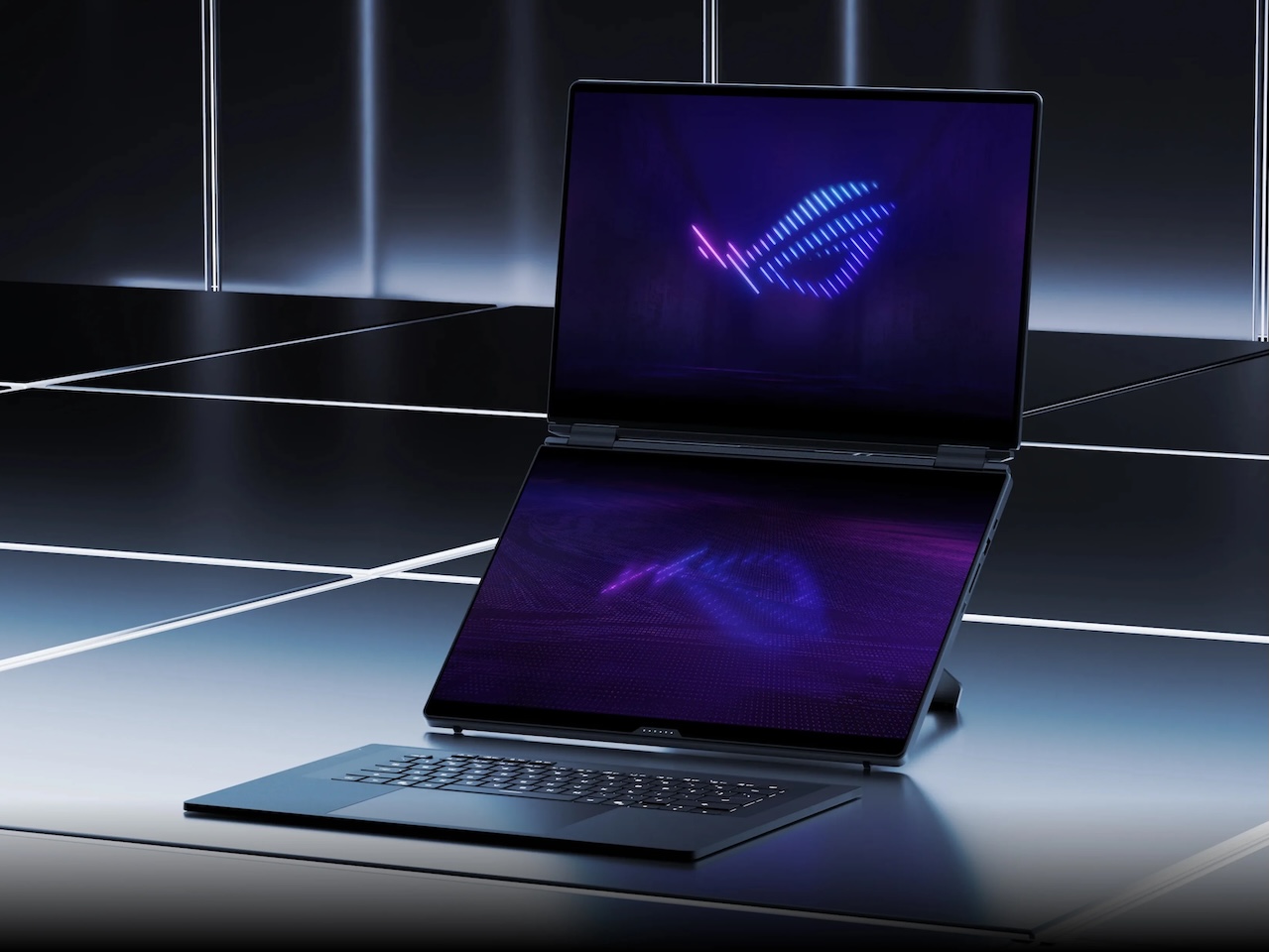
Dimensions come in at 35.5 x 24.6 cm with a thickness between 1.99 and 2.49 cm (13.98″ x 9.69″ x 0.78″ to 0.98″), and the whole thing weighs 2.82 kg (6.22 lbs). That’s not light, but for a machine carrying two 16-inch OLED panels, it’s about what you’d expect. Battery is rated at 90WHrs, paired with a 250W adapter for charging.
Pre-Order Pricing and Availability
ASUS lists two configurations: the Zephyrus Duo with the RTX 5070 Ti (GX651AR-DB96) at $4,499.99, and the RTX 5090 model (GX651AX-DB96) at $5,499.99. Both run Windows 11 Home. Pre-orders are live at the ASUS Online Store and through retail partners including Abt, Ant Online, Excaliber PC, HID Evolution, Newegg, and Xotic PC, with broader availability promised at launch.
Price: $4,499.99 to $5,499.99
Where to Buy: Asus
It’s a flagship priced like a flagship, and the audience is clearly people who want a portable studio with gaming muscle, not the average laptop shopper. Whether the dual-screen workflow actually pays off in daily use is the question worth answering once review units start landing.