
Most people assume their monitor setup is a solved problem. You’ve got the resolution, the refresh rate, maybe an external webcam that doesn’t look terrible. The accessories that show up in your feed promise better posture or cleaner cables, and none of them make you rethink what the screen itself might be doing to your body.
Price: $249
Where to Buy: SunLED
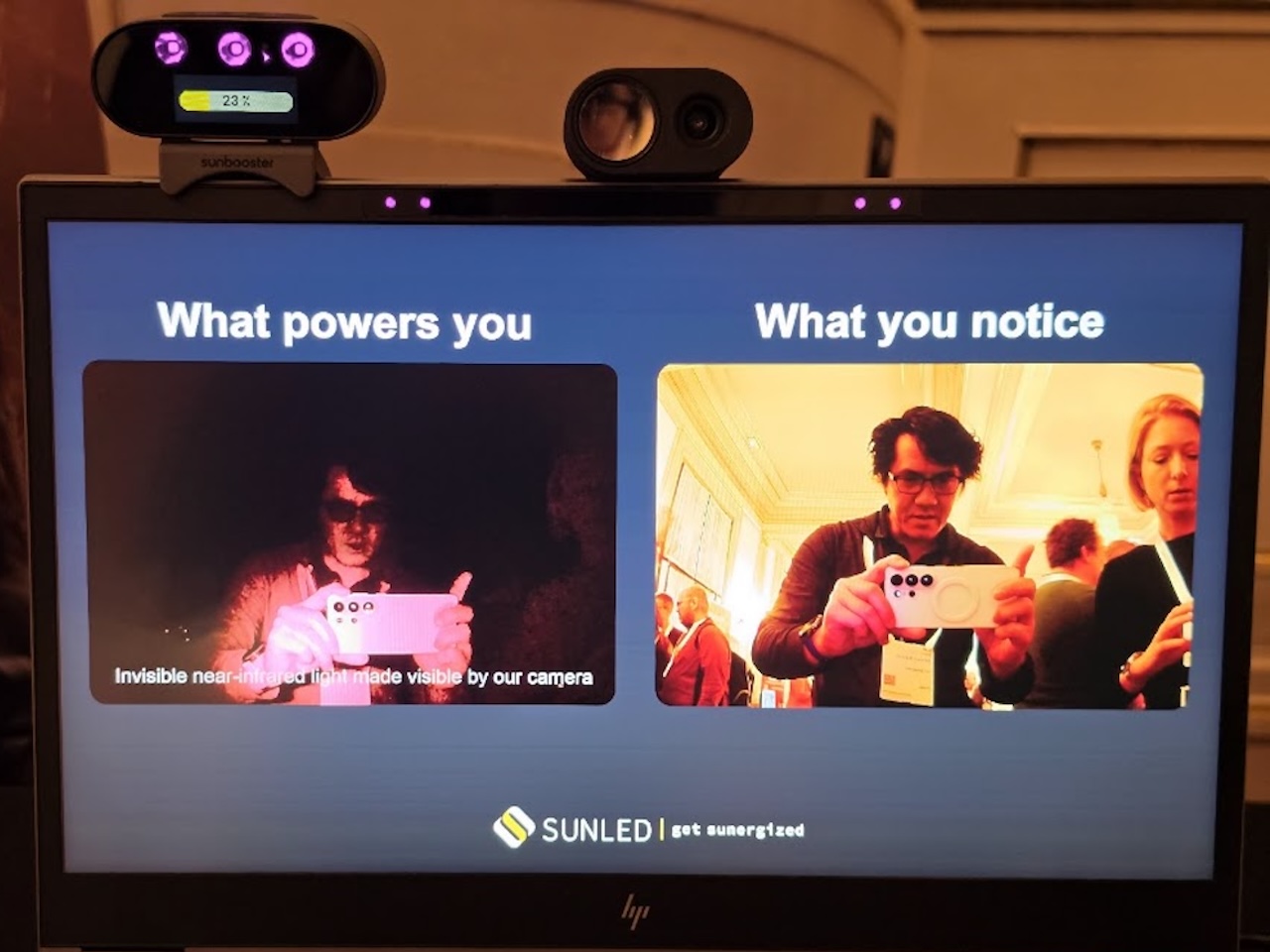
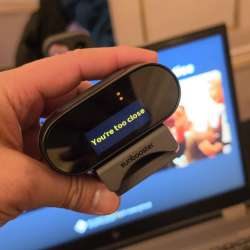
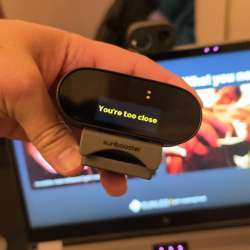
SunLED Life Science showed up at MWC 2026 with a different pitch entirely, and we got hands on with it at the show. The Amsterdam startup’s SunBooster is a USB-C clip-on that projects invisible 850nm near-infrared light at your face and neck while you work. It’s heading to the US this April at $249, and it’s already on sale in the Netherlands. So the real question is: can a small light bar clipped to your bezel actually return something your body has been missing from sunlight?
The timing matters here. Near-infrared light makes up roughly half the solar spectrum, and over 50 years of published studies connect it to cellular energy production, mood regulation, and immune function. Modern windows filter most NIR out. Indoor lighting doesn’t generate it at all.
If you’re spending 90% of your waking hours inside, and most people are, you’re cut off from a wavelength your cells actually use. That gap keeps widening as remote work cements itself, and the research on NIR has finally reached the point where a consumer product can point to something more substantial than marketing language.
How SunBooster works
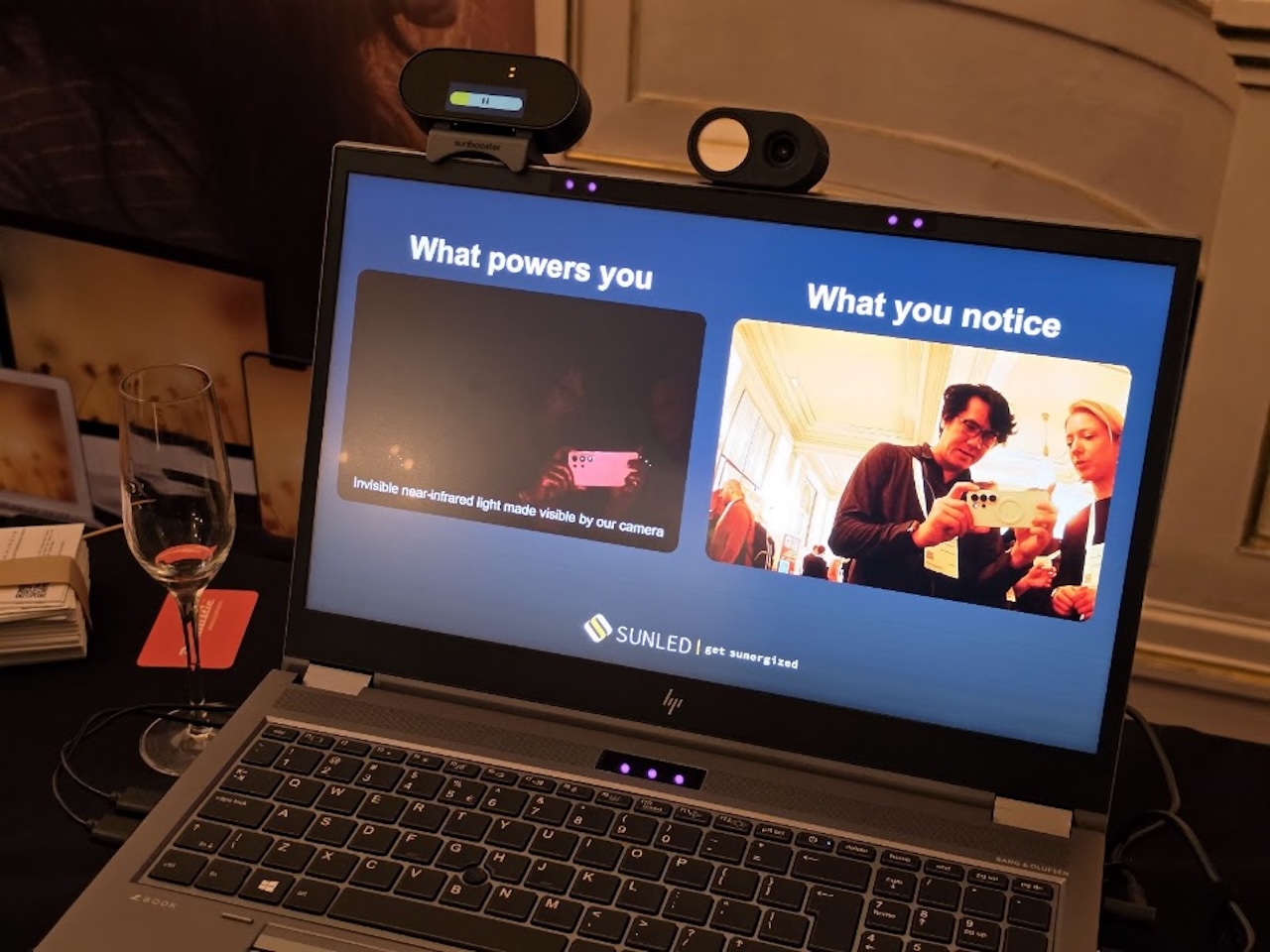
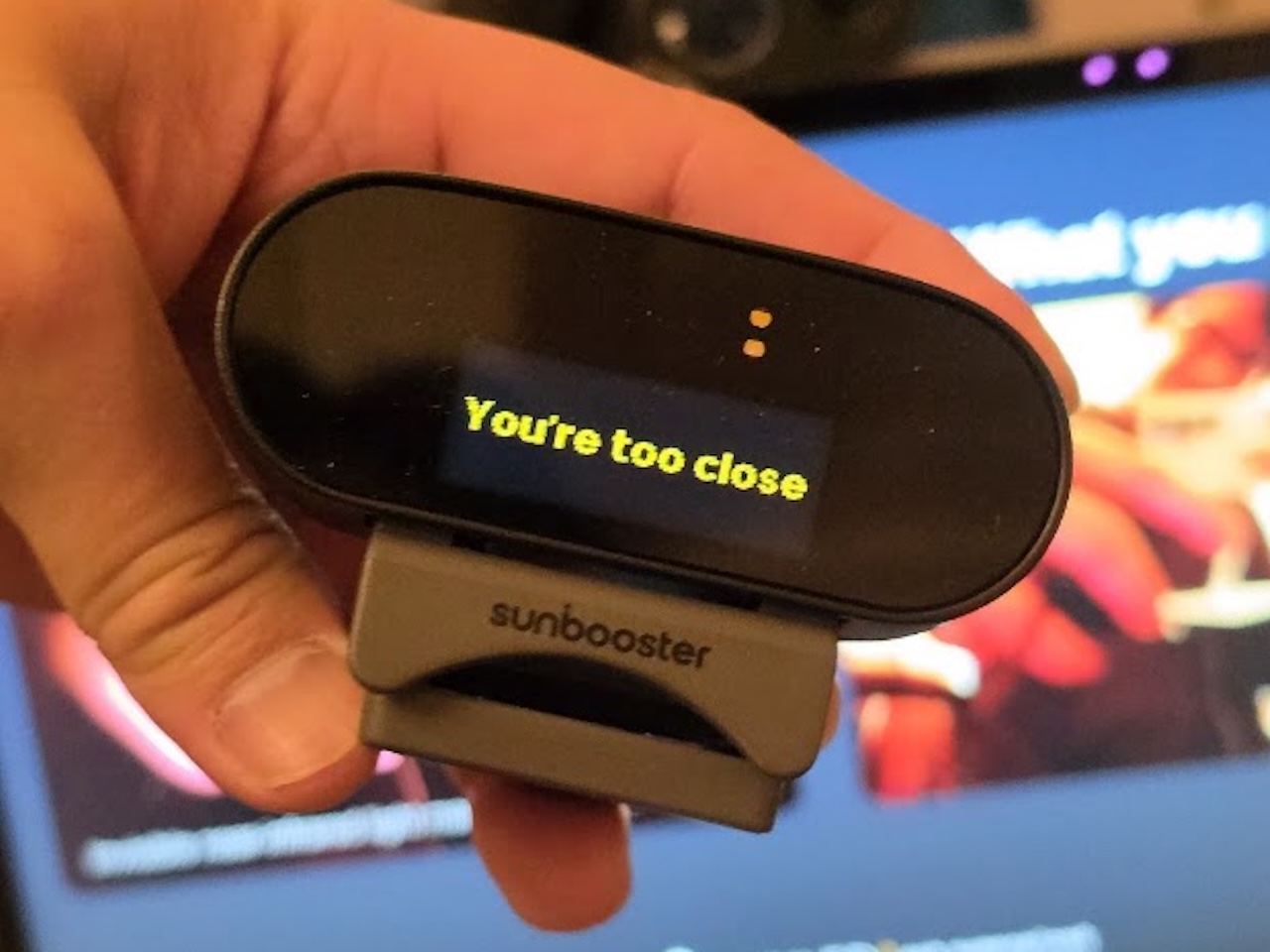
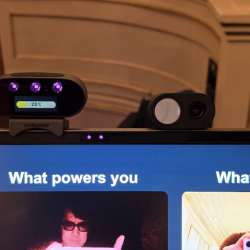
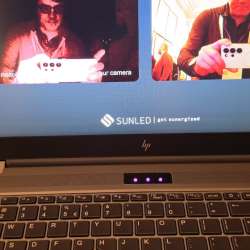
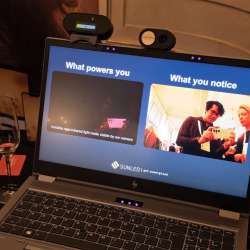
The device looks like a compact webcam and works about as simply. It clips onto a laptop or monitor, draws power through USB-C, and projects targeted 850-nanometer near-infrared light toward your face and neck. No glow, no warmth. That wavelength sits past what your eyes can detect, so the screen looks exactly the same with SunBooster running.
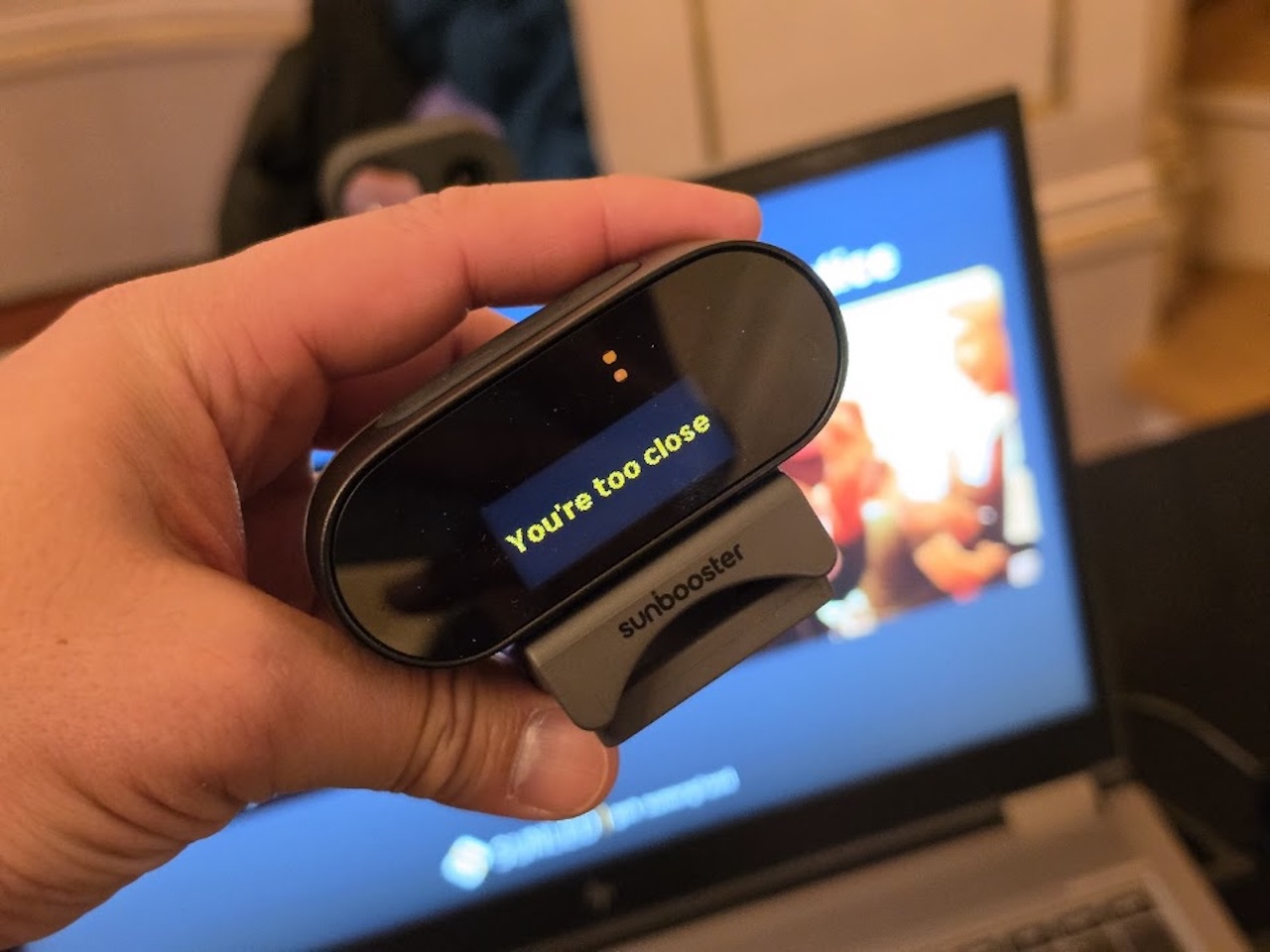
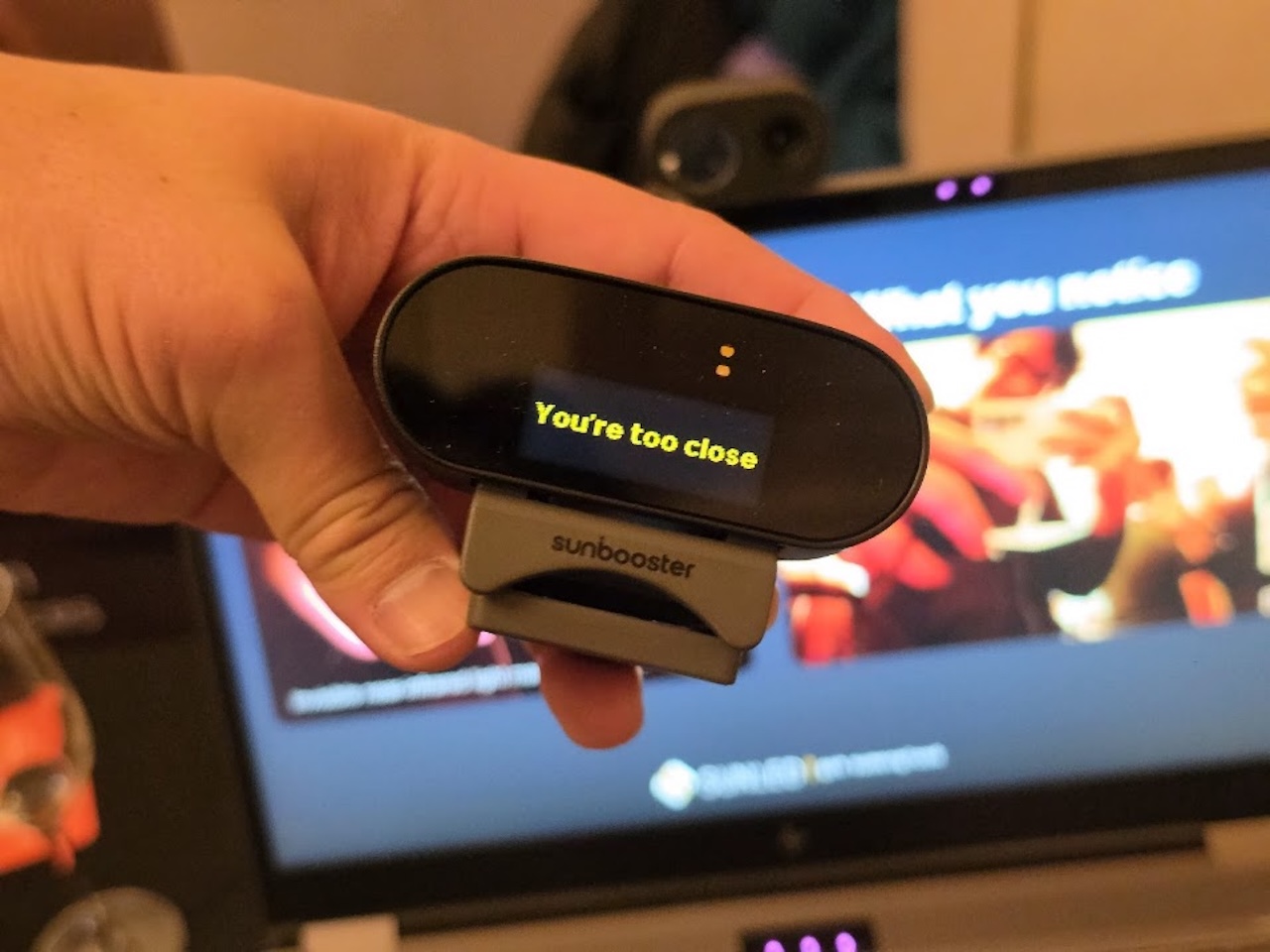
A companion app tracks your NIR exposure throughout the day, which is a smart inclusion if you want data on something completely invisible. Setup takes ten seconds. Once it’s clipped on, you forget it’s there, and that frictionless disappearing act is the entire design philosophy.
The science SunLED is building on
Dr. Anne Berends is SunLED’s CTO and co-founder, a nanomaterials scientist with a PhD from Utrecht University who spent over five years researching near-infrared light before helping launch the company. Serious credentials for a clip-on. She partnered with CEO Ayhan Siriner, who brings 24 years in the lighting industry, to turn lab research into shelf-ready hardware.
The technology targets mitochondria, the cellular structures responsible for energy production. When exposed to near-infrared wavelengths, mitochondria absorb photons through an enzyme called cytochrome c oxidase, which can increase ATP production. That’s the simplified version, but it’s the mechanism that anchors SunLED’s entire product line.
Human studies conducted with SunLED’s system showed reduced blood inflammatory markers in participants. Encouraging, though early. The broader body of peer-reviewed work on consumer-grade NIR devices is still building, and clinical photobiomodulation has deeper data behind it. Translating those findings to a passive clip-on at lower intensity is a step that needs long-term validation.
A 2023 review paper published through the National Institutes of Health specifically highlights NIR-LEDs as a viable method for delivering daylight-equivalent near-infrared exposure indoors. That paper gives SunLED’s approach a credible foundation beyond its own internal testing.
The wider research spans decades, connecting NIR to improved alertness, reduced drowsiness, and stronger immune response. What SunLED contributes is a way to make that exposure portable and passive rather than clinical. Whether the specific dosage from a clip-on matches what clinical studies tested remains an open question, but the direction is grounded in real science rather than wellness hype.
Not a SAD lamp, not a red light panel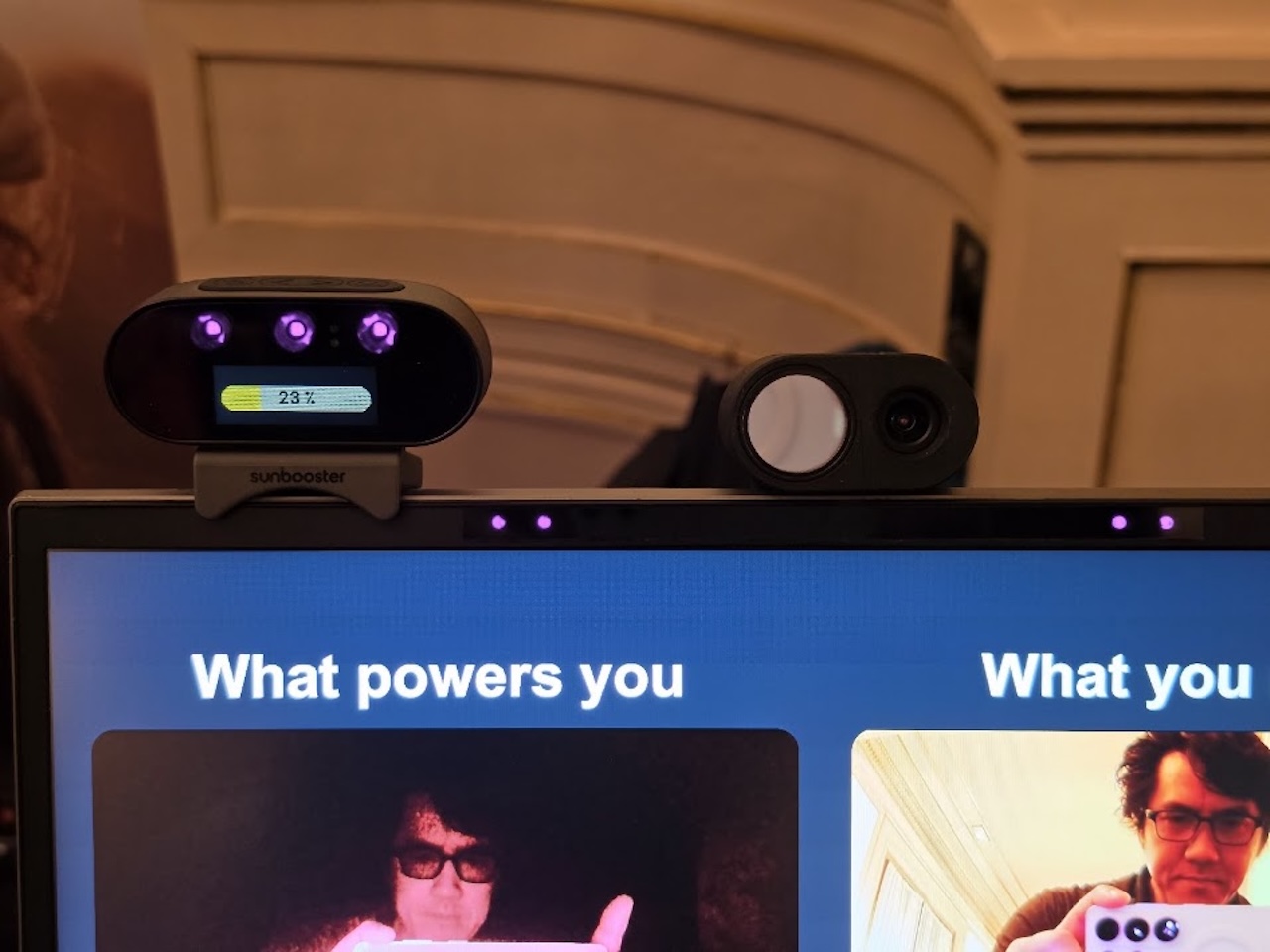
If you’re picturing a seasonal affective disorder lamp, reset that image. Wrong wavelength entirely. SAD lamps flood a room with intense visible brightness to influence circadian rhythm through your eyes. SunBooster targets cellular function with invisible light rather than simulating daylight to trigger wakefulness.
The closer comparison is desktop red light therapy panels, which work in similar wavelength ranges but run $500 or more and demand dedicated sessions. SunBooster treats near-infrared exposure as something that should happen passively in the background during a normal workday. You don’t have to carve time out for it, and that makes adoption far more realistic for someone who can’t add another wellness ritual to an already packed morning.
That difference in approach could matter more than the device itself. If manufacturers eventually integrate SunLED’s technology directly into laptop and monitor panels, the clip-on becomes a footnote. The real product is the wavelength.
Where you can get one
SunBooster is already on sale in the Netherlands, and Nordic markets follow in March 2026. US launch hits April. Later this year, the UK, France, and Germany join the rollout, which is an aggressive map for a product most shoppers have never seen on a shelf.
At $249, it’s positioned well below the $500-plus red light therapy panels it loosely competes with. That price turns it into a try-it-and-see purchase rather than a major commitment, which is a smart entry for a product category most consumers haven’t encountered before.
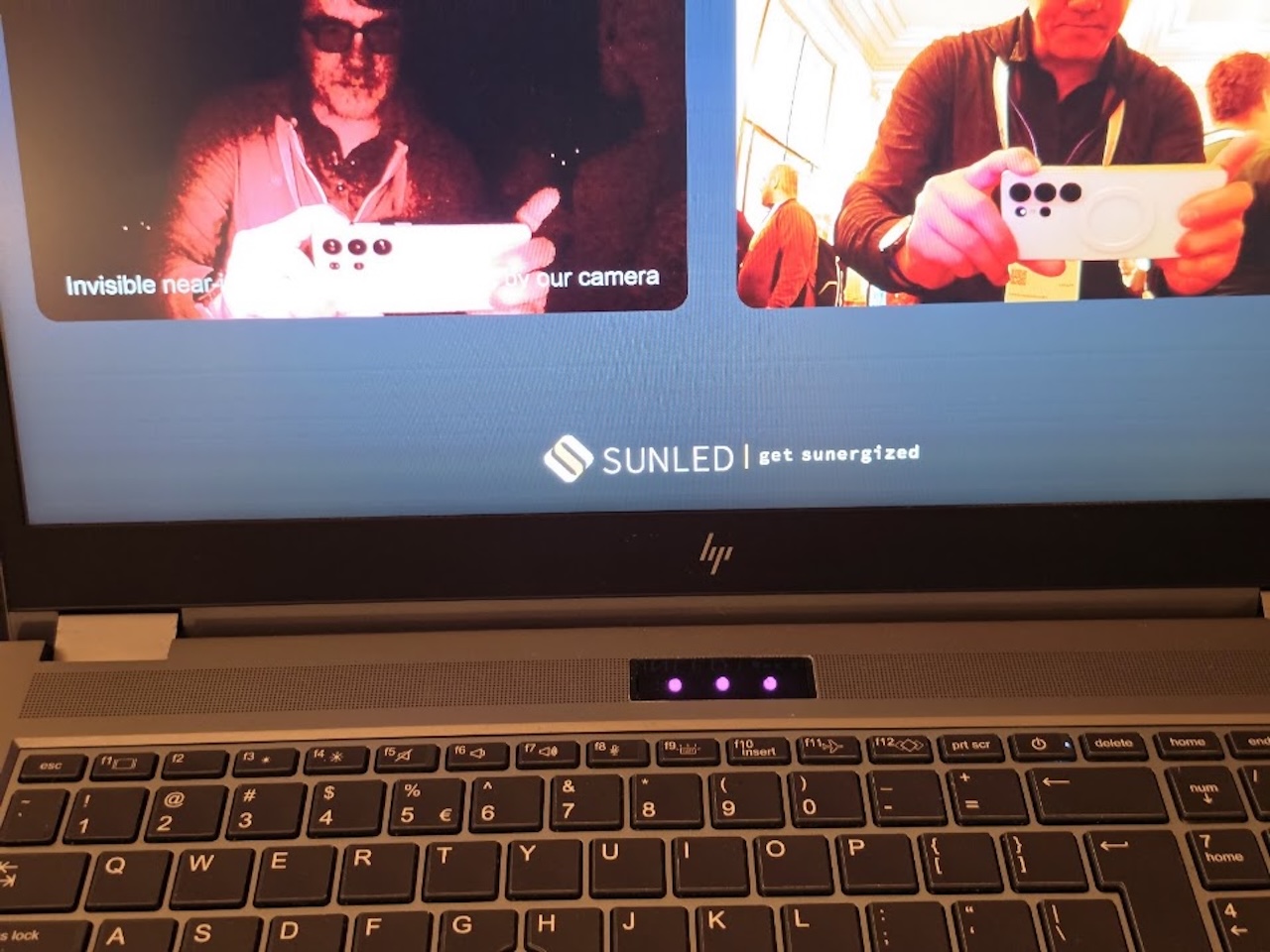
SunLED is actively pitching its patented near-infrared technology to laptop and monitor manufacturers for direct screen integration. That would mean NIR light built into the display itself, no bezel clip needed.
An eight-person team runs the entire operation out of Science Park in Amsterdam, and both Dr. Berends and product manager Zhou Zhou spent MWC fielding partnership conversations on the show floor. Selling the clip-on isn’t the endgame. It’s licensing the wavelength to every screen manufacturer willing to listen.
Who should skip this
Anyone expecting an immediate, noticeable mood shift within the first few minutes should look elsewhere. SunBooster doesn’t work like caffeine or a bright SAD lamp that you can feel activating your senses. Near-infrared effects on cellular energy are cumulative and subtle, and if you need obvious session-by-session feedback, a traditional red light panel with its visible warmth and higher intensity will probably satisfy that expectation better.
People who already spend significant time outdoors during daylight hours are getting natural NIR exposure without paying $249 for it. If your commute involves a 30-minute walk and you eat lunch outside, SunBooster is solving a problem you might not actually have.
Who this is for
Remote workers who spend eight or more hours a day behind a screen in rooms with sealed windows are the obvious audience. If your daily sunlight exposure amounts to the walk from your front door to your car, SunBooster addresses a real gap that most people don’t realize exists.
Office dwellers in northern climates where usable daylight drops to a few hours between November and March will find the pitch landing harder than someone in a sun-filled coworking space. The product makes the most sense for people who’ve already optimized their desk setup and are looking for the next thing that actually affects how they feel at 3 PM.
Price: $249
Where to Buy: SunLED
SunLED’s real ambition goes well beyond the clip-on. This $249 device is the proof of concept for screen-integrated NIR, and the company’s MWC conversations were aimed squarely at getting the wavelength into every laptop panel on the market. Whether SunBooster itself becomes a lasting product or a stepping stone to built-in technology, it’s the first piece of hardware that treats invisible sunlight like a feature your screen should already have.
Gerber Gear 22-47162N Fast Draw Folding Assisted Opening Pocket Knife, Fine Edge, Black
(as of March 9, 2026 18:29 GMT -05:00 - More infoProduct prices and availability are accurate as of the date/time indicated and are subject to change. Any price and availability information displayed on [relevant Amazon Site(s), as applicable] at the time of purchase will apply to the purchase of this product.)
