
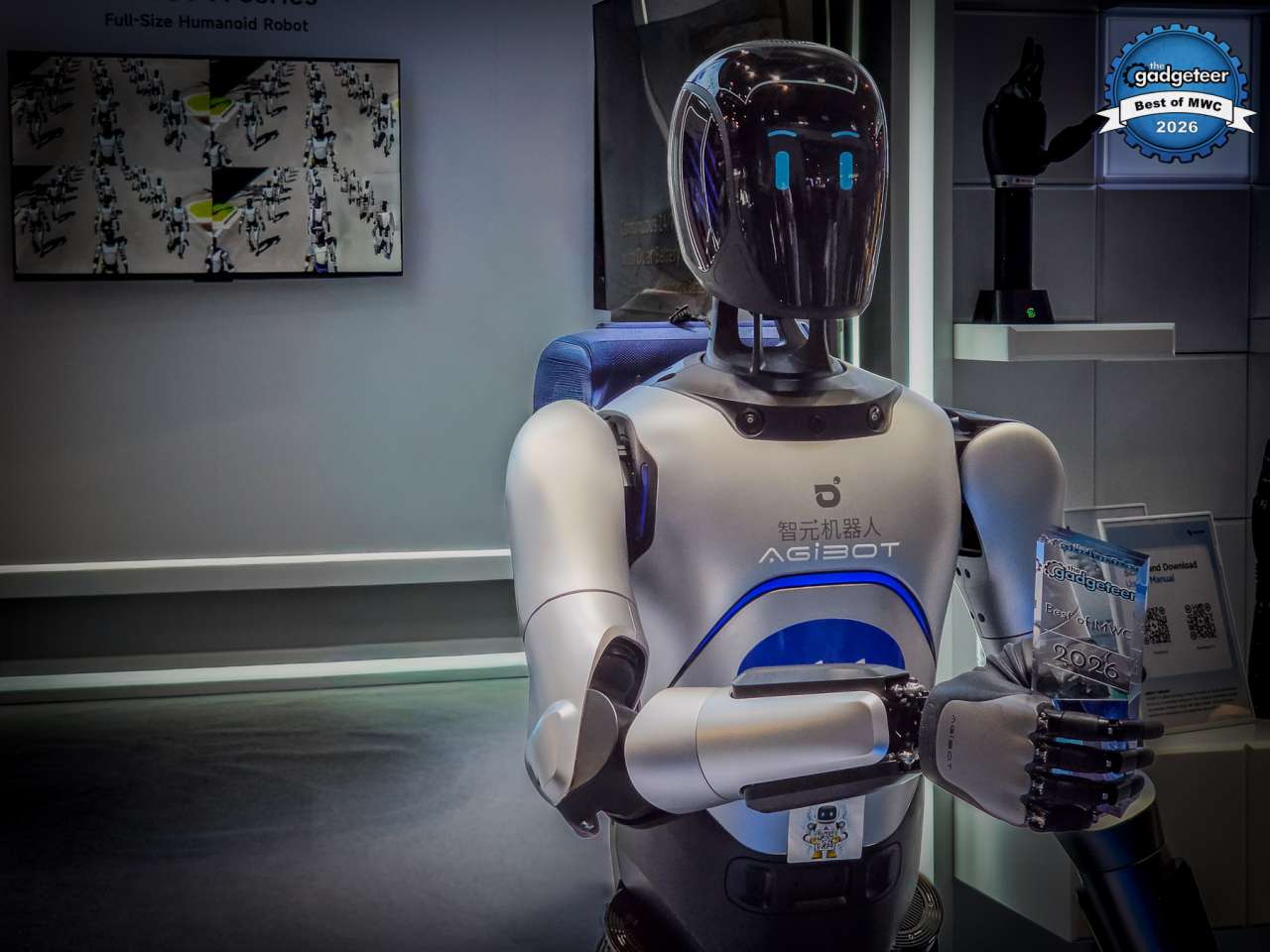
ARTICLE – The night before MWC officially opened, AGIBOT brought a robot to the Palacio Real de Pedralbes in Barcelona. The crowd at Showstoppers had come to see new gadgets. What they got was a 131 centimeter machine performing a martial arts sequence, then hip hop choreography, then dropping into a full split on the marble floor. The split landed with a loud thud.
Nobody counted it down. Nobody warned the room. It just happened.
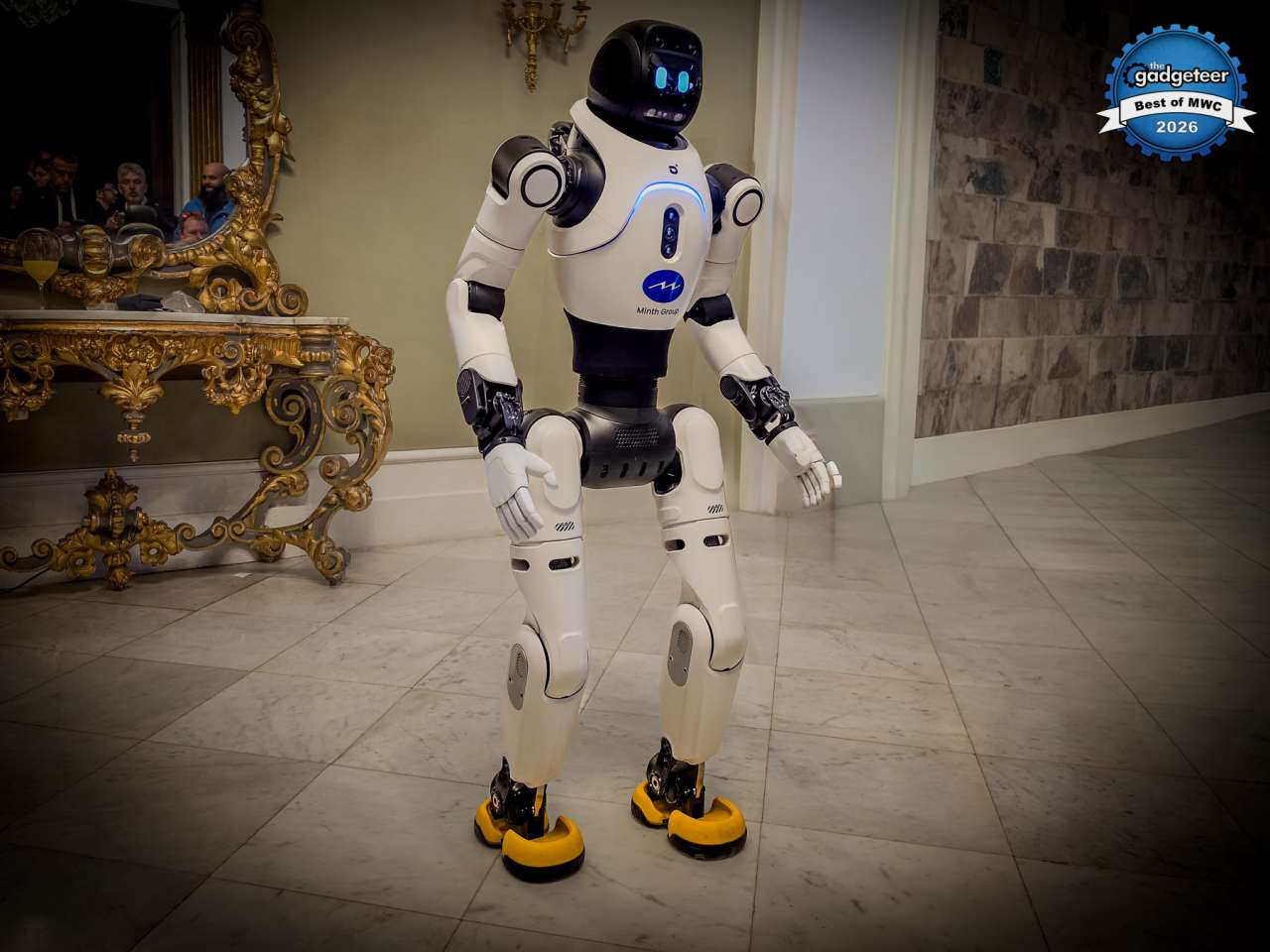
Showstoppers is always a bit chaotic. It’s the night before MWC officially opens, and everyone’s still in conference mode, moving fast between tables, nursing drinks, checking phones. The Palacio Real de Pedralbes is a beautiful venue for it, all stone arches and garden courtyards, but the crowd rarely stops to breathe. Then the X2 started moving. And I watched people freeze mid conversation.
Add The Gadgeteer as a preferred source to see more of our coverage on Google.
Who is AGIBOT
If you’ve been tracking the humanoid robot race, AGIBOT is the name that keeps coming up. Founded in Shanghai by robotics engineer Peng Zhihui, a former Huawei developer known in China for building experimental robots and open robotics projects, they say they’ve shipped more than 5,000 robots across their lineup. Their A2 humanoid previously completed a 100 kilometer endurance walk between Suzhou and Shanghai, across real streets, over real distance. That’s not a lab benchmark, and it’s a stronger flex than most companies can pull off publicly.
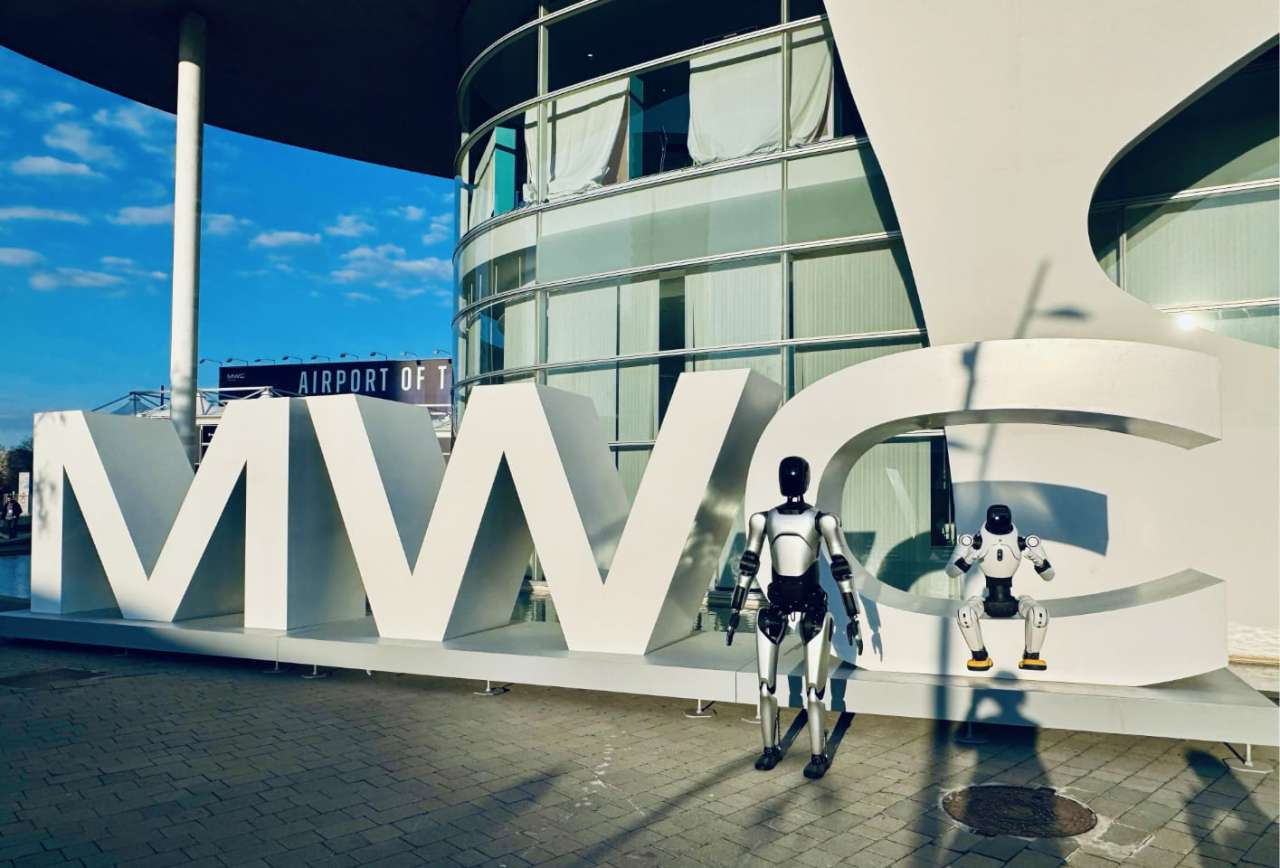
They’d already come to Europe before MWC, showing up in Milan and Munich in the months prior. Barcelona wasn’t their introduction to the continent. It was their biggest statement yet, and they came prepared with six distinct robot platforms, live demos at their own booth, and a commercial announcement that changed the conversation entirely.
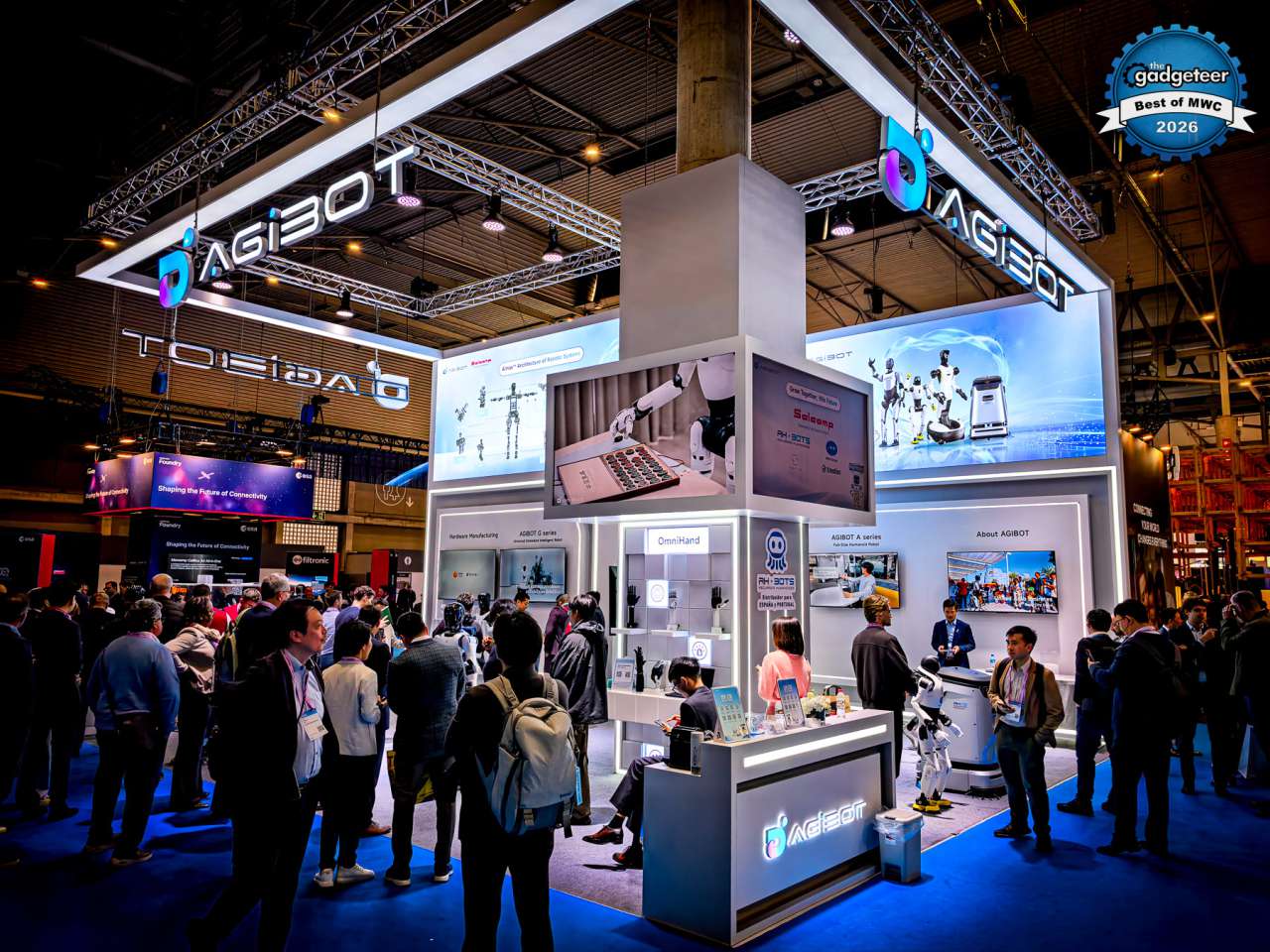
The scale of it hit me first. Most exhibitors at an event like this bring one or two products. AGIBOT had built an entire staging area, and you notice it fast because the booth feels more like a rehearsal space than a display. Six platforms. Multiple robots running simultaneously. From fifteen meters away I could already see the A2 standing upright near the back, taller than I expected, and the X2 running through a sequence in the center. You could feel the weight of the presentation before you got close, which is a rare thing to say about a trade show booth.
The X2 performance, in detail
The X2 opened with a martial arts sequence. Controlled and deliberate, about 45 seconds. The crowd was polite but not yet hooked. Then it shifted to hip hop, and the vibe changed from “nice demo” to “okay, wait, hold on.”
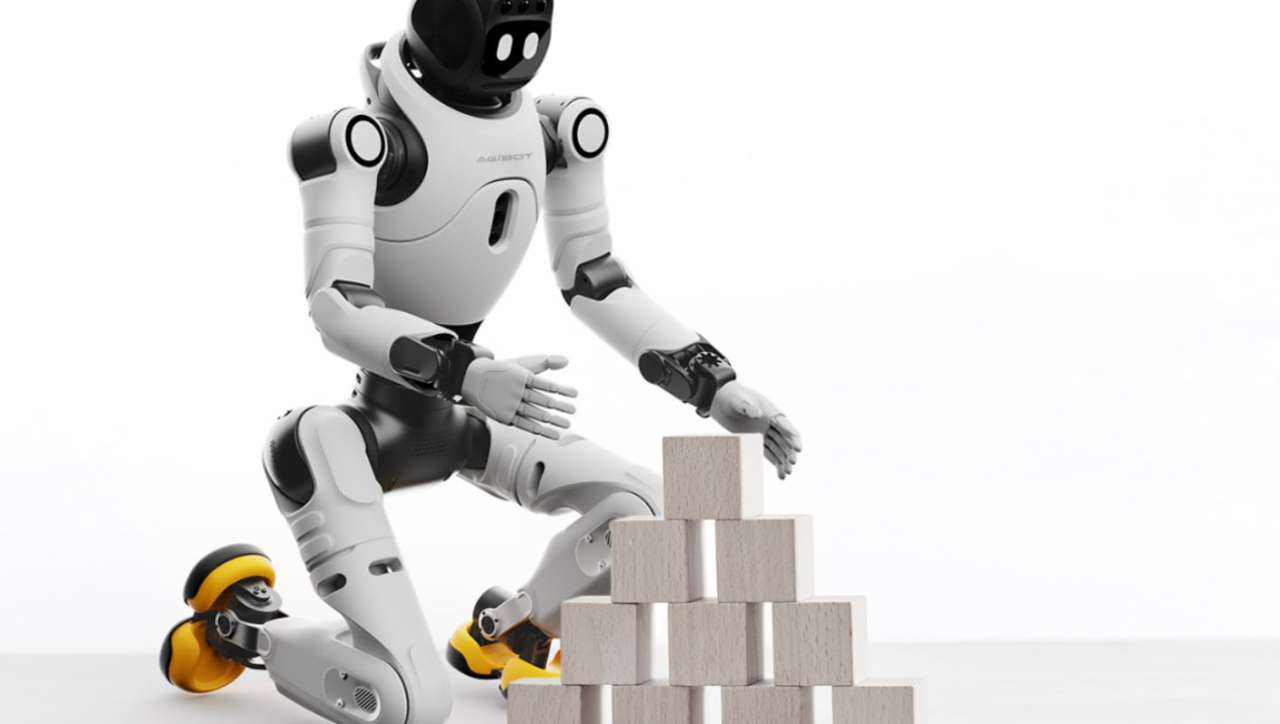
For the next couple minutes, the X2 ran through a full choreographic routine. Heel toe steps. Arms waving while turning side to side. At one point it did the robot, which is either the most meta thing that has ever happened at a tech conference or proof the programmer has a sense of humor. Probably both.
Visit AGIBOT for more details
Where to buy: AGIBOT
Then came the split. The X2 dropped low, extended both legs, and landed on the marble floor. The thud was audible across the room. Someone near me said, completely deadpan, that they were now convinced the next Michael Jackson is going to be a humanoid robot.
The funny part is that a few people missed the split in real time because they were already drifting to the next thing, and they still heard about it seconds later. That detail matters because it means the moment traveled faster than the people who actually saw it.
From where I was standing, the thing that got me was not the split. It was the transitions. Most robots telegraph every move. You see the decision happening before the limb moves, a slight pause while the system calculates and commits. The X2 did not feel like that. It was not perfectly smooth, but there was something almost anticipatory about it, like the motion was already underway before you consciously registered the setup. The hip hop segment was when I stopped treating it like a demo and started watching it like a performance, which is not how you want to react to a machine unless it is doing something genuinely different.
What makes the X2 more than a performer
The X2 is not being positioned as a showcase robot that lives in demo mode. It is a commercial product introduced at CES 2026, available now through AGIBOT’s store, and priced above $20,000 to purchase. That price point is not casual, but it also is not in the “call procurement and start a six month process” tier. It sits in that rare middle ground where the robot still feels purchasable, and that is part of why it is getting so much attention.
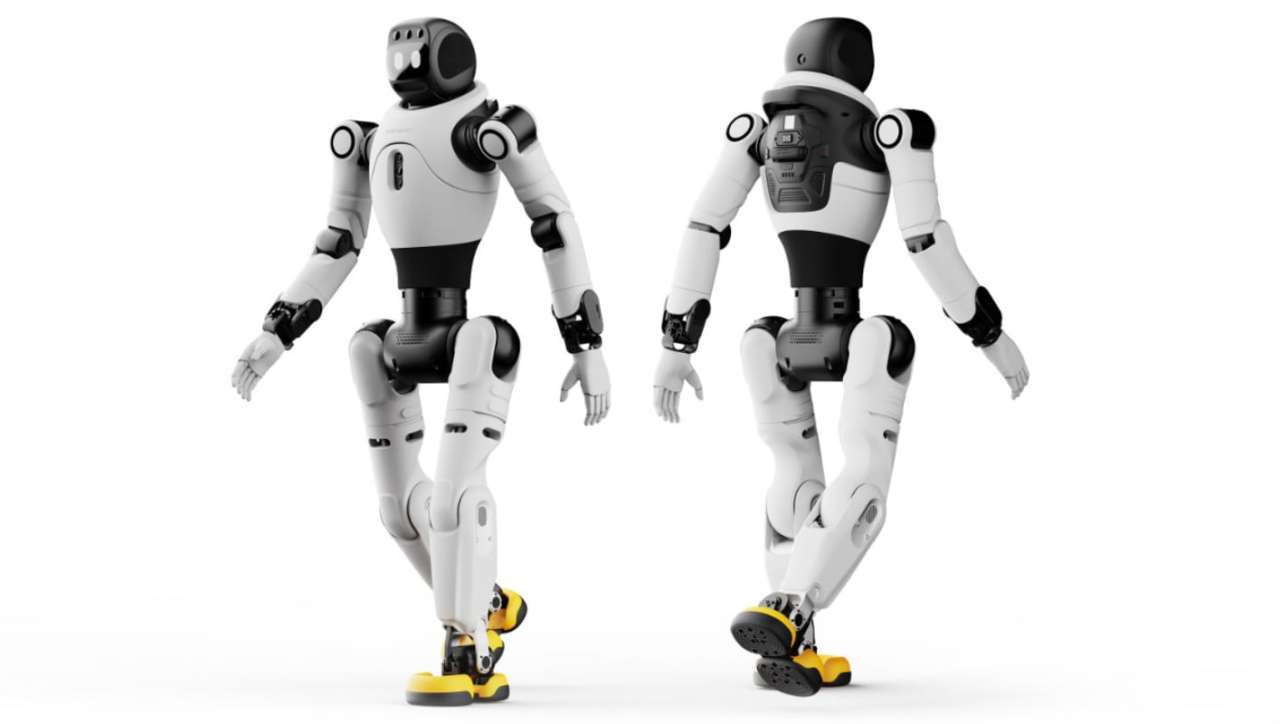
What runs underneath the X2 is the more interesting story. AGIBOT says its robots operate on a shared AI platform that lets knowledge learned by one robot improve the others. The X2, the full size A2, the wheeled G2, the quadruped D1. One intelligence architecture, adapted for different physical forms. You do not have to be an engineer to understand why that matters, and if you look closely, it also helps explain why the booth demos felt unusually confident.
Most robotics companies build products. AGIBOT is building a platform, and those are different bets. A platform can learn in public, in messy environments, and that gap is exactly where humanoid robotics has been getting stuck.
The full lineup AGIBOT brought to Barcelona
The X2 was the showpiece, but AGIBOT didn’t fly six product lines to Barcelona to let one robot do all the work. Each platform targets a specific real world problem, and the booth made that clear in a way that felt practical instead of flashy.
The A2 is the full size model: 169 centimeters, 69 kilograms, with a hot swappable 700Wh battery designed for environments where downtime isn’t acceptable. Pricing runs from $100,000 to $190,000. The quick swap battery isn’t a marketing bullet point. It’s a decision made by people thinking about operational continuity, not convention demos, which is a smart choice if you’re trying to convince businesses you’re serious.
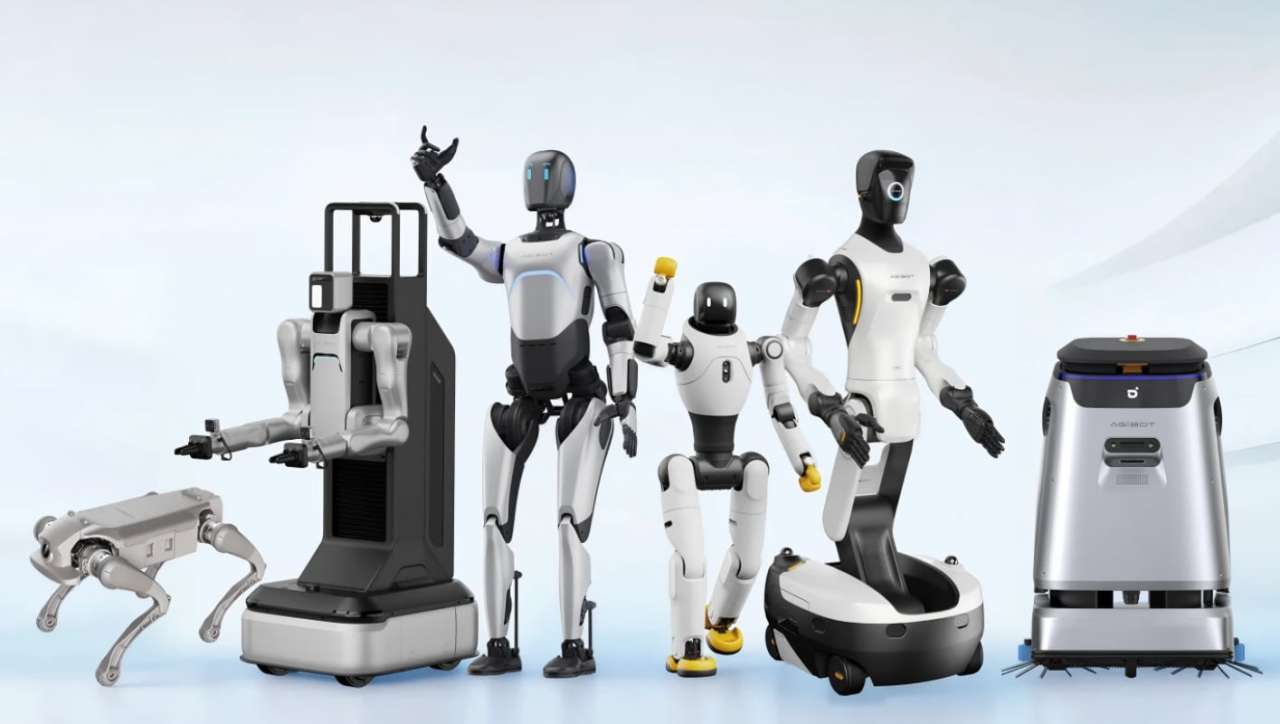
The G2 is a wheeled humanoid, which sounds like a compromise until you think about precision factory assembly. Wheels outperform legs in structured environments, and it isn’t even close. AGIBOT built the right tool for the job instead of forcing bipedal motion where it doesn’t add value. The D1 is a quadruped designed for logistics and security patrol, and at the China Telecom pavilion nearby, AGIBOT demonstrated telecom integrated robotics experiments with the D1 in collaboration with China Telecom. That’s not a spec sheet claim. That’s a live connectivity integration with a major telecom partner on a conference floor, and it reads as an infrastructure play more than a gadget stunt.
OmniHand is a standalone high dexterity manipulator available as its own product, not just an attachment. When a company sells the hand separately, they’re telling you the hand’s that good. The C5 rounds out the lineup as an autonomous cleaning solution, probably the least glamorous platform AGIBOT builds and almost certainly the one closest to daily commercial deployment right now, even if nobody’s lining up to film it doing anything dramatic.
You can rent a humanoid robot now
This is the part of the MWC announcement that caught people off guard. At MWC the company also introduced a Robot as a Service program allowing companies to rent humanoid robots starting at roughly €899 per day. The US specific platform comes online later this month. The minimum rental term is one day, and on site technical support is included, which is a welcome detail because nobody wants to babysit a robot while pretending they’re not nervous.
Here’s how the process works: you describe your scenario, and AGIBOT determines the right robot for it. You don’t have to navigate the product lineup yourself. From the moment you submit the request to the robot being on site, the company says it takes as little as two working days, and that timeline feels like the real point because it makes the whole thing operational instead of aspirational.
The use cases span a wider range than most people expect. Corporate events and retail grand openings, where the robots perform group choreographed routines or serve as hosts. Cultural and tourist venues, where the fleet runs interactive guided experiences. Weddings and birthday parties, where a humanoid robot as receptionist is apparently a thing people want now. Live stream and short form video content, where AGIBOT positions the robots as co hosts that drive engagement. School tours and community events. Security patrol using the D1 quadruped. It’s a wild list, but it’s also an honest one because it admits where the market is today.
If that list feels broader than “industrial robot company,” that’s intentional. The industry is in what analysts are starting to call the utility gap: humanoid robots are technically impressive but not yet ready for the complex, long sequence factory labor they’re ultimately designed for. The rental model generates revenue while that gap closes, and every commercial gig produces real world operating data that feeds back into the AI, which is a good call if your long term bet is autonomy at scale.
At €899 a day, a curious business doesn’t need an enterprise capital budget to find out what these machines can do in a real environment. That’s a strategic decision as much as a commercial one, and it sets up the next comparison everybody’s already making.
The competitive picture
Most of the search interest in humanoid robots right now clusters around Tesla Optimus. That’s a recognizable brand doing recognizable things in a recognizable way, and it’s an easy headline to write. But AGIBOT’s position at MWC was distinct from anything Optimus has done publicly: a full split on a marble floor, six live platforms on a conference floor, 5,000 units already shipped, and a rental program that’s live today.
AGIBOT’s closest rival in the Chinese market is Unitree, which has claimed the global lead in pure humanoid unit shipments. AGIBOT’s answer to that comparison isn’t a number. It’s a system. Six robot types. One AI platform. A service layer that lets anyone try the hardware for less than the cost of a weekend conference, and that’s the kind of framing you can’t easily copy with a single hero robot.
William Shi, who leads AGIBOT’s European operations, framed the Barcelona moment directly: “Europe is a vital innovation hub, and we are committed to building strong local partnerships.” The company signed a formal MOU with Singtel Enterprise to develop robotics applications on Singapore’s 5G infrastructure. They were presenting alongside Microsoft and Qualcomm partners on the same floor, and those partnerships are doing quiet work in the background, which is usually where the real momentum lives.
What surprised me most was how unsurprised I was by the end. I went in expecting spectacle and got that. What I didn’t expect was how considered the commercial layer felt. The rental model isn’t a PR stunt. The two day deployment window, the support included in the fee, the scenario matching approach where you describe what you need and they pick the right robot: that’s a real service model, not a slide deck promise.
My skepticism is around sustained performance outside controlled environments. A robot doing hip hop on marble at a conference is a very different thing from a robot doing security patrol in a shopping center at 2am, and the gap between those two situations is where the real test lives. But right now, in early 2026, AGIBOT looks closer to crossing that gap than anyone else I’ve seen in person, which makes the whole thing hard to shrug off.
What makes the AGIBOT lineup worth watching
What I like:
- The X2 transition quality in motion is the closest thing to natural movement I’ve seen from a sub $25K humanoid robot.
- The D1 gait is noticeably more stable than competitors at the same price tier.
- The OmniHand standalone product is underrated. Individual finger articulation that close to human range is a bigger deal than it looks in spec sheets.
- The A2 proportions are clearly designed for real world deployment, not for photos.
- Six distinct platforms running on one AI architecture.
- Guinness certified 100km walk suggests real world endurance, not just lab metrics.
- X2 movement quality is genuinely surprising, even for people who’ve seen robot demos before.
- RaaS rental at €899 per day removes the $100K plus barrier to entry entirely.
- Two day deployment from request to on site means it’s operationally usable, not theoretical.
- 5,000 units shipped across the lineup. The scale looks real.
What I’d want to know more about:
- G2 and C5 full specs still aren’t public.
- Long term performance data outside controlled environments.
- How the rental model scales once robots are in non demo settings for extended periods.
- Industrial deployment timelines for complex factory tasks.
Bottom line: AGIBOT came to MWC 2026 with the most complete humanoid robotics story at the show. A robot doing a full split on marble is a memorable image. A company that ships 5,000 units, claims a Guinness record, runs six platforms on one AI system, and rents humanoid robots for under $1,000 a day looks like a serious operation. The split is what you’ll remember, and the platform is what matters.
Visit AGIBOT for more details
Where to buy: AGIBOT
This was the most complete robotics story at MWC 2026 and it wasn’t close. The X2 performance is what people will screenshot and share. The rental platform is what actually matters for where this industry goes in the next 18 months. AGIBOT’s built a system, not just a product, and you can feel that when you’re standing in front of it.
