
 NEWS – Glasses-free 3D on a creator laptop. A foldable gaming handheld that turns into a desktop. A modular AI PC that lets you swap its ports. Lenovo’s MWC 2026 lineup doesn’t play it safe, and the production hardware behind the concepts is just as loaded.
The company brought four concept machines, a new ambient AI platform called Qira rolling out across 20-plus devices (with a first wave covering six languages across nine regions and a debut on motorola smartphones later in 2026), a full ThinkPad refresh with iFixit repairability scores as high as 10/10, and consumer hardware spanning unified 128GB memory architectures to sub-600g tablets. It’s one of the broader single-event launches Lenovo has assembled in recent memory.
Quick Highlights
- Four concept products: Glasses-free 3D laptop, foldable gaming handheld, modular AI PC, AI desk companion
- Lenovo Qira: New ambient AI platform debuting on Idea Tab Pro Gen 2, expanding to motorola smartphones in 2026
- ThinkPad T16 Gen 5: Perfect 10/10 iFixit repairability score with customer-replaceable USB-C ports
- Yoga Pro 7a: 128GB unified memory where CPU and GPU share the same pool, competing directly with Apple Silicon
- Legion Go Fold Concept: 32GB RAM in a handheld chassis, more than any shipping competitor offers
- ThinkPad T14s Gen 7: Available across Intel, AMD, and Snapdragon platforms, the widest silicon choice in the lineup
- Pricing: Consumer devices from $419 to $2,299, business devices from $499 to $1,999
Is Any of Lenovo’s MWC 2026 Concept Hardware Close to Real?
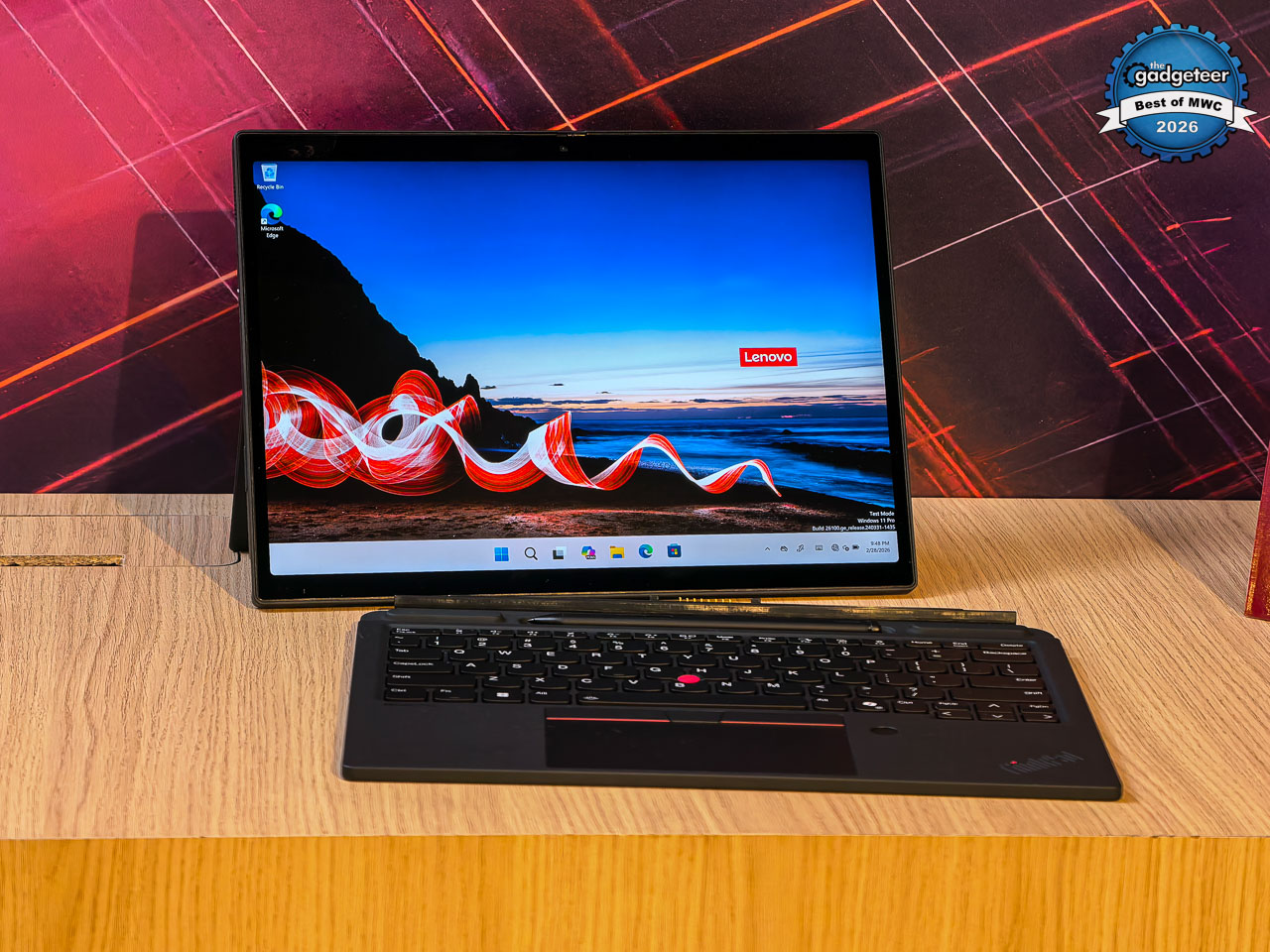
Lenovo unveiled four proofs of concept at MWC, two on the consumer side and two on the business side. None of them are shipping with price tags attached yet. But they’re the clearest signal of where Lenovo thinks hardware is going over the next few years, and at least two of them are hard to dismiss.
Is the Yoga Book Pro 3D the First Glasses-Free Creator Laptop That Actually Works?
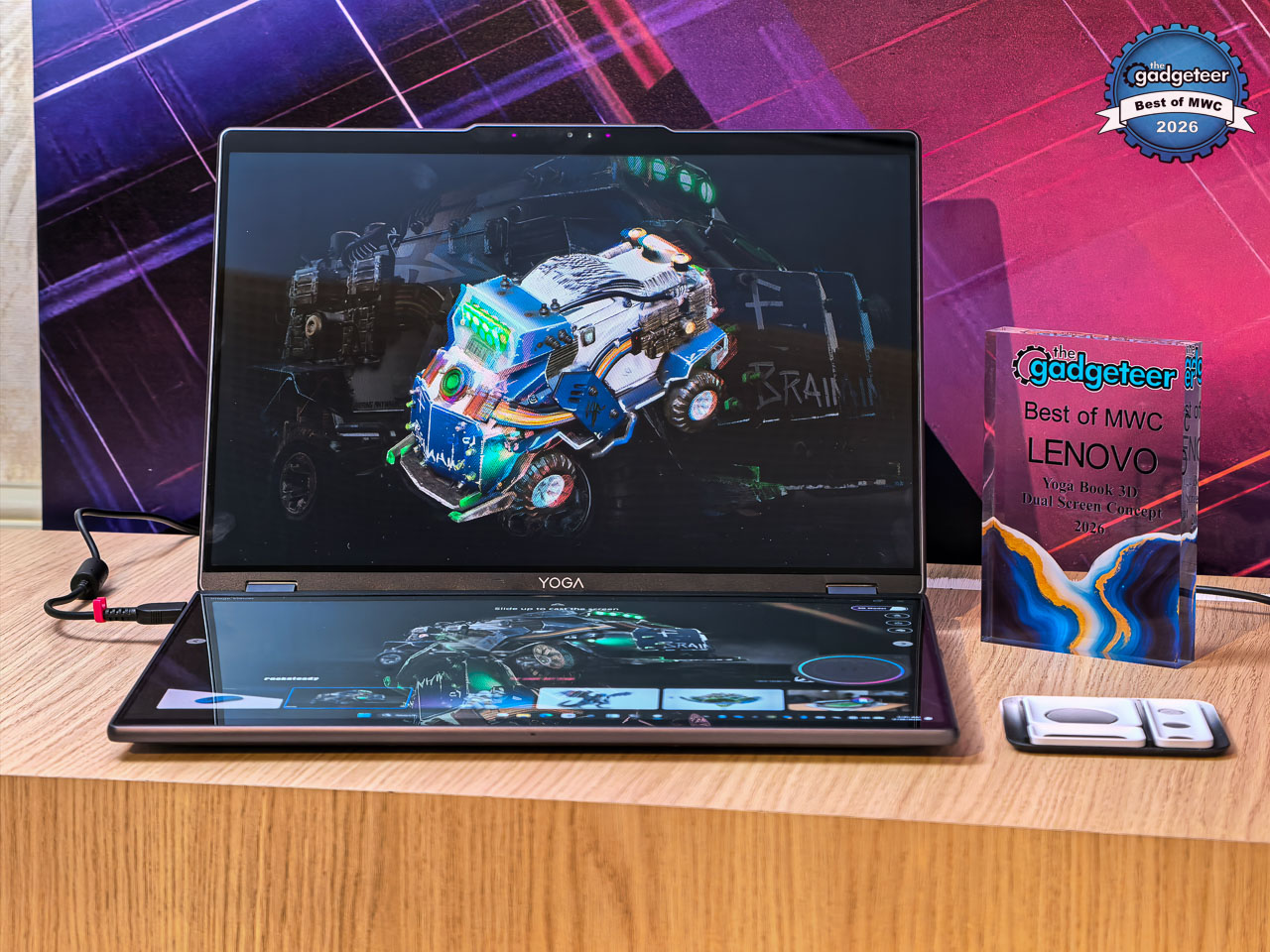
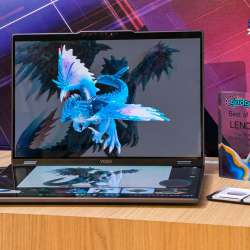
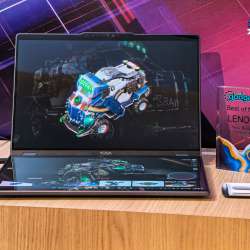
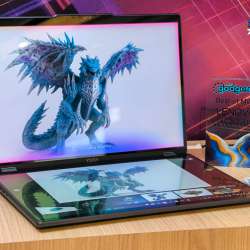
The Yoga Book Pro 3D is built around a glasses-free 3D display. It uses dual PureSight Pro Tandem OLED panels and Lenovo’s own AI software to convert 2D content into 3D in real time, generating environments around converted objects automatically. Zero-touch gesture control runs through an RGB camera, and snap-on pads on the lower display let you adjust lighting, viewing angle, and tone without opening a menu.
Under the hood it’s running an Intel Core Ultra 7 paired with an NVIDIA GeForce RTX 5070. That’s serious hardware for a concept positioned at 3D creators, not a demo piece. The spec sheet reads like a production-ready workstation aimed at professional 3D workflows, and the price tag when it ships will tell you exactly how confident Lenovo is in that audience.
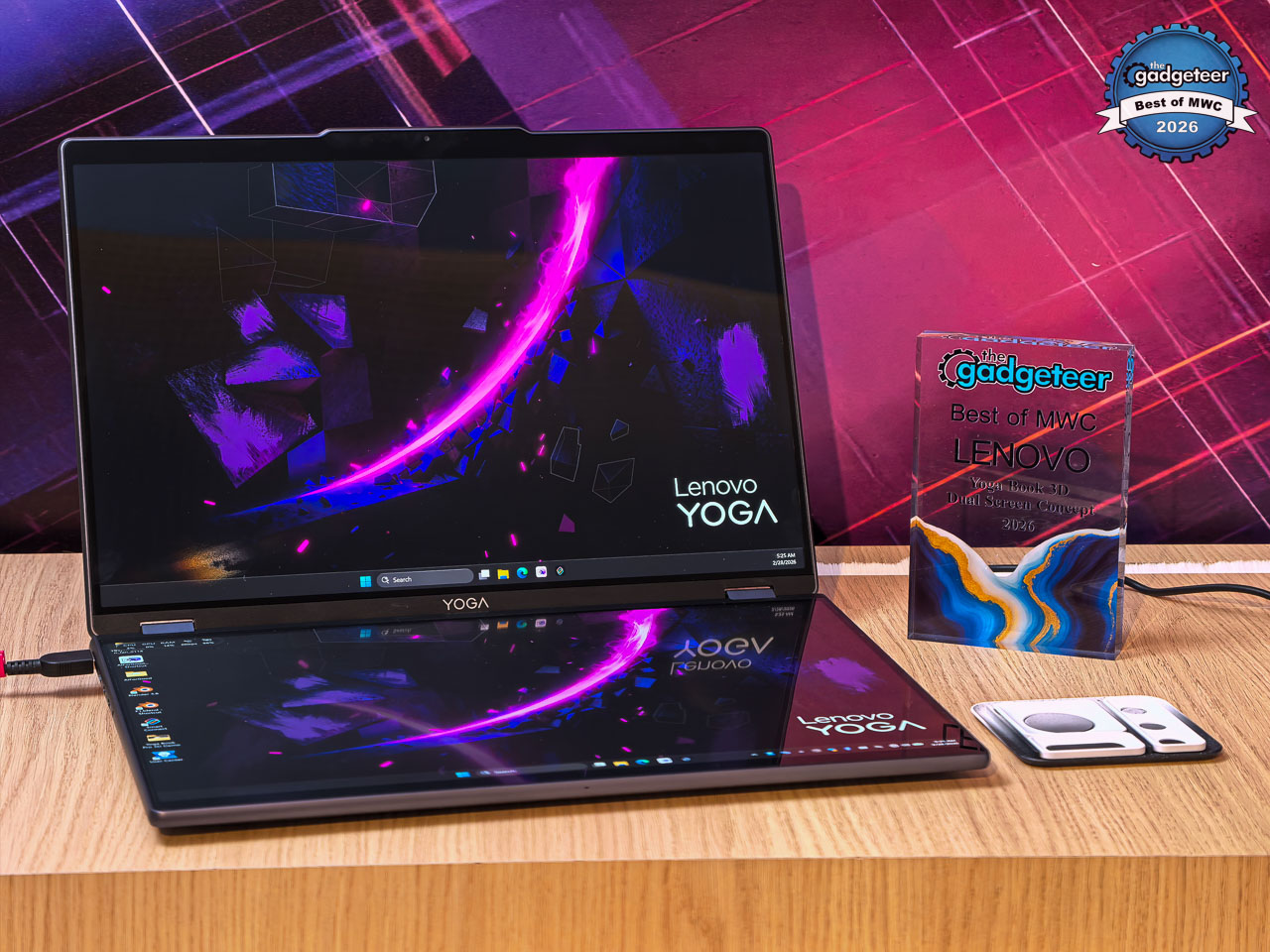
Sitting with it at the show, the glasses-free effect is more convincing than you’d expect. The depth field holds even when you shift your viewing angle slightly, which is the thing that usually breaks the illusion on these displays. It doesn’t feel like a gimmick at close range. The conversion from 2D feels like a deliberate authoring choice rather than a filter slapped on top.
The zero-touch gesture control is the part that needs more time to assess properly. In a noisy show floor environment, the RGB camera tracked gestures reasonably well, but you’d want to use it for a week in a real workspace before drawing conclusions. The potential is there. Whether the tracking holds under less controlled conditions is the open question.
The snap-on pads are what I keep coming back to. They click into place with a snap that feels purposeful, and adjusting lighting and tone through physical controls rather than a software menu is a completely different workflow. If Lenovo ships this, it’s the kind of detail that separates the product from anything else in the creator laptop category. I’d buy this if it came to production at a reasonable price.
The global glasses-free 3D display market is projected to triple between 2025 and 2032, and creator demand for AI-assisted 3D workflows is outpacing consumer entertainment as the adoption driver. That projection reframes the Yoga Book Pro 3D from a flashy demo into a calculated product strategy with real market math behind it.
What Makes the Legion Go Fold Different From Every Other Handheld?
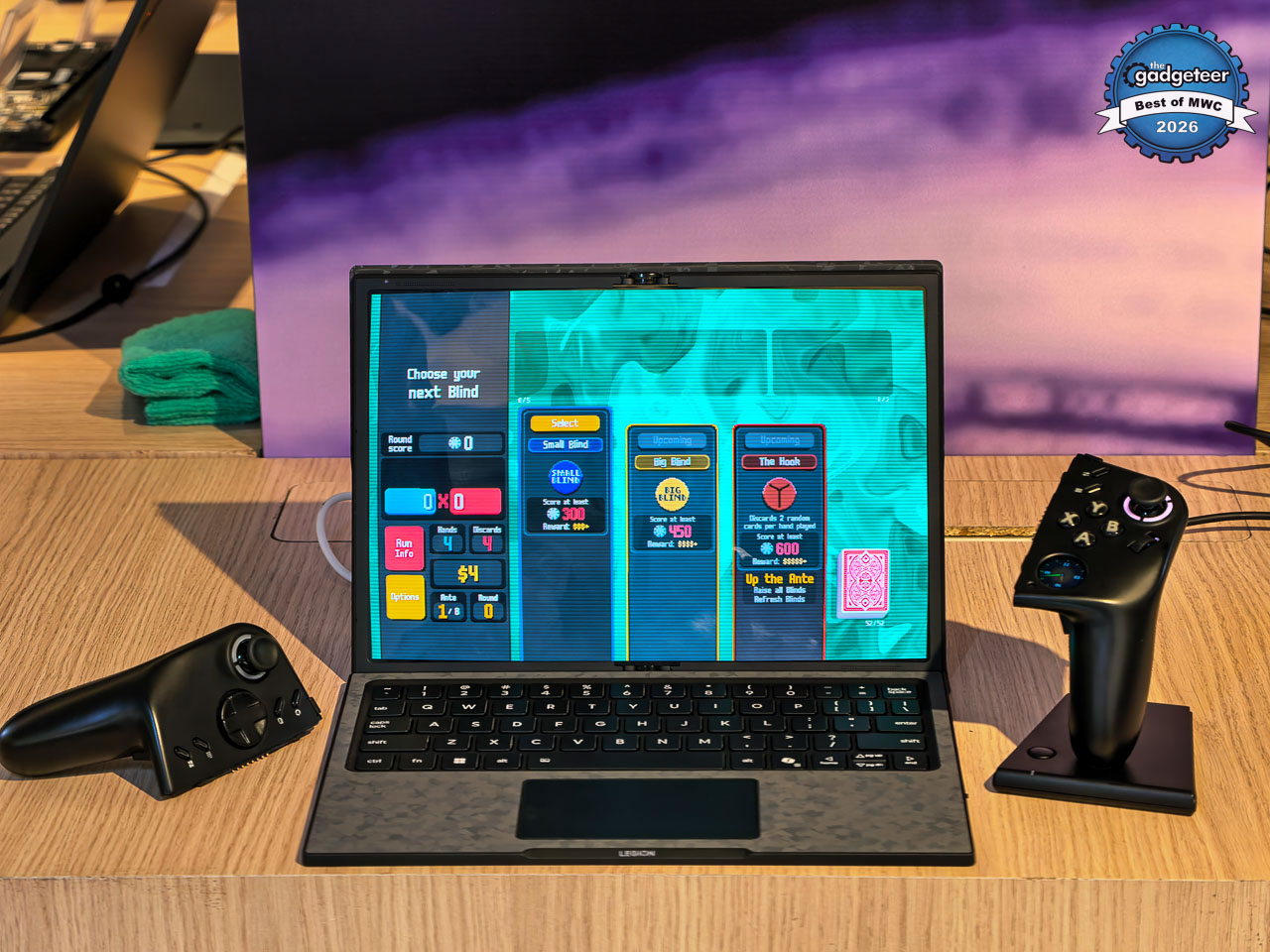
The Legion Go Fold is a foldable gaming handheld with a POLED display that unfolds from 7.7 inches to 11.6 inches. It follows the Legion Go Gen 2 shown at IFA 2025, which means Lenovo’s handheld roadmap now has a clear proof-of-concept lineage from standard form factor to foldable. Four operating modes cover the range from standard handheld play to a full expanded desktop configuration with a wireless keyboard and touchpad. The right controller doubles as a vertical mouse, carries a small secondary screen for real-time performance metrics, and includes a customizable hotkey.
Hardware specs come in at Intel Core Ultra 7 258V, 32GB RAM, and a 48Whr battery. For a concept handheld, that’s a production-ready spec sheet. The 258V chip is the same silicon powering premium ultraportables right now, and the 32GB RAM figure is the standout: no current shipping handheld from any manufacturer offers that capacity. That alone puts the Legion Go Fold in a different performance conversation than the ROG Ally, Steam Deck, or MSI Claw.
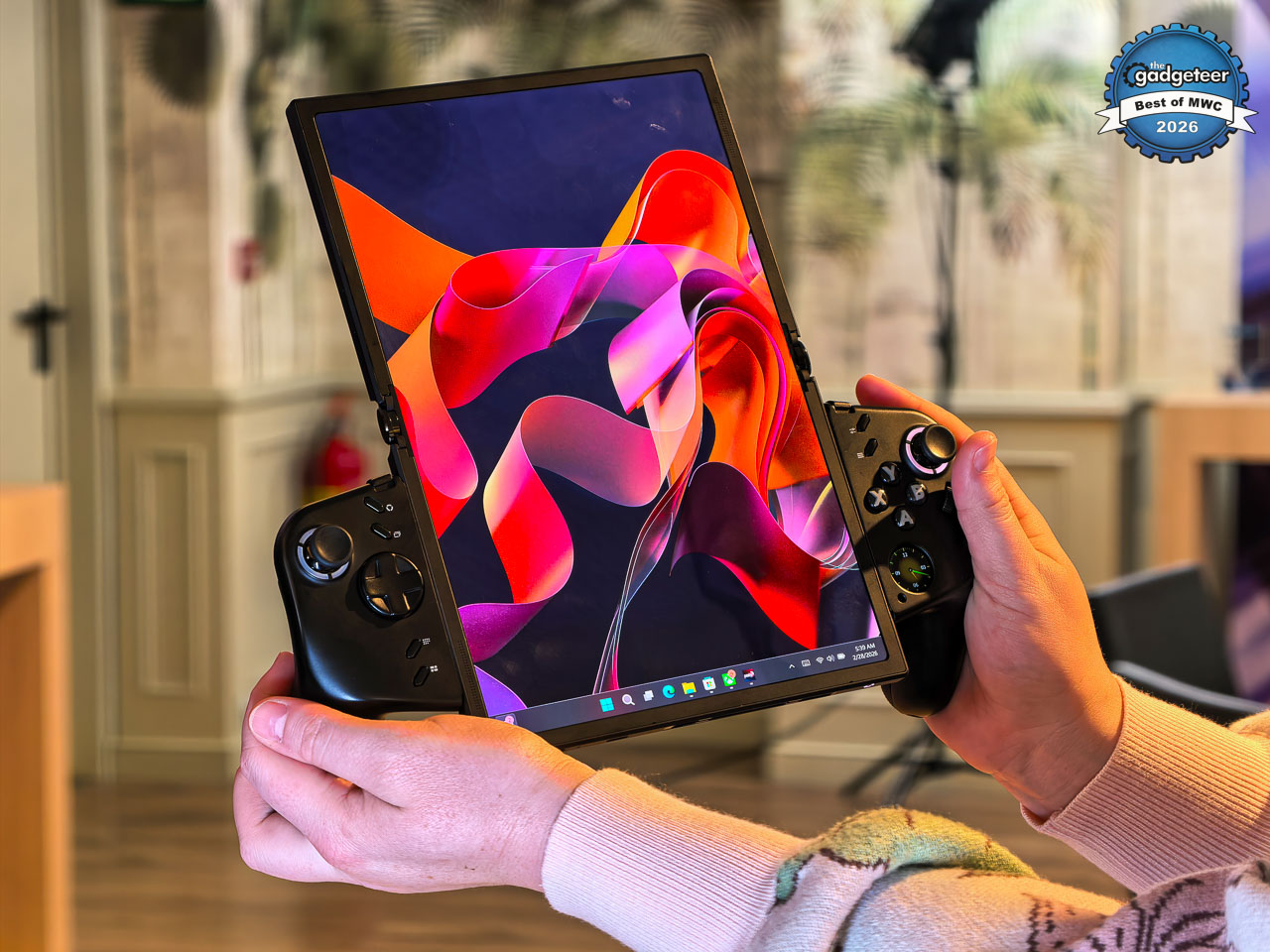
Holding it in standard handheld mode, the balance is better than the unfold-to-11-inch form factor suggests it should be. The weight distributes well toward the center, and the controllers feel planted rather than awkward. Going from handheld to horizon full-screen is genuinely quick, closer to unfolding a paperback than wrestling with a hinge mechanism.
The right controller’s secondary screen is a small detail that ends up feeling essential. Having performance metrics visible without tabbing out of a game is the kind of thing you don’t know you want until you’re using it. The customizable hotkey next to it means you can bind whatever matters most to you without digging into menus.
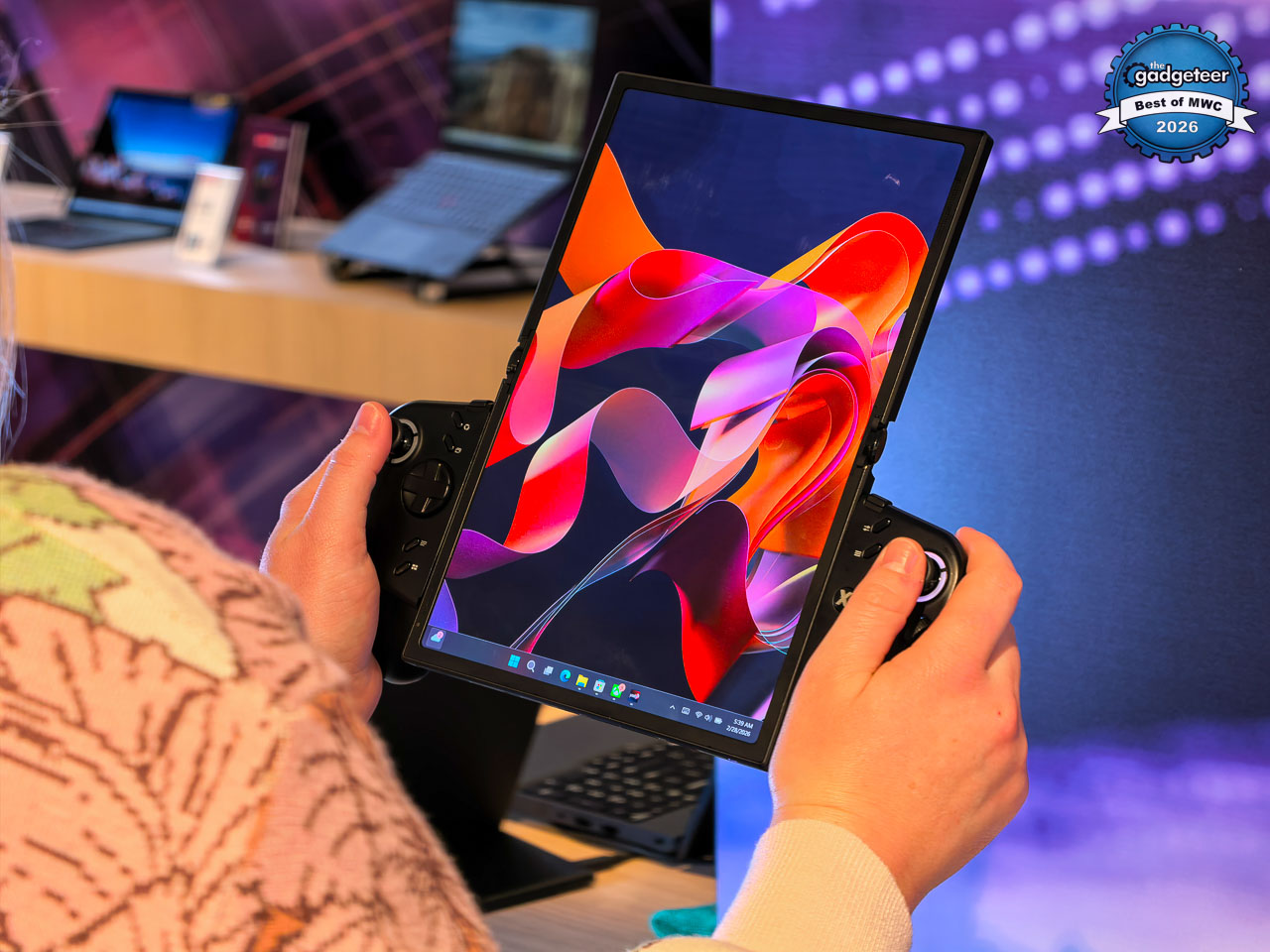
The expanded desktop mode with the wireless keyboard is where things get interesting in a way that doesn’t translate well to a spec sheet. Running a proper desktop layout on a screen that fits in a jacket pocket is a different category of useful than a gaming handheld has any business being. I spent about twenty minutes in that mode and came away genuinely thinking about how this would work as a travel device, not just a gaming one. That’s the reaction a concept should produce. I want this to ship.

ThinkBook Modular AI PC Concept
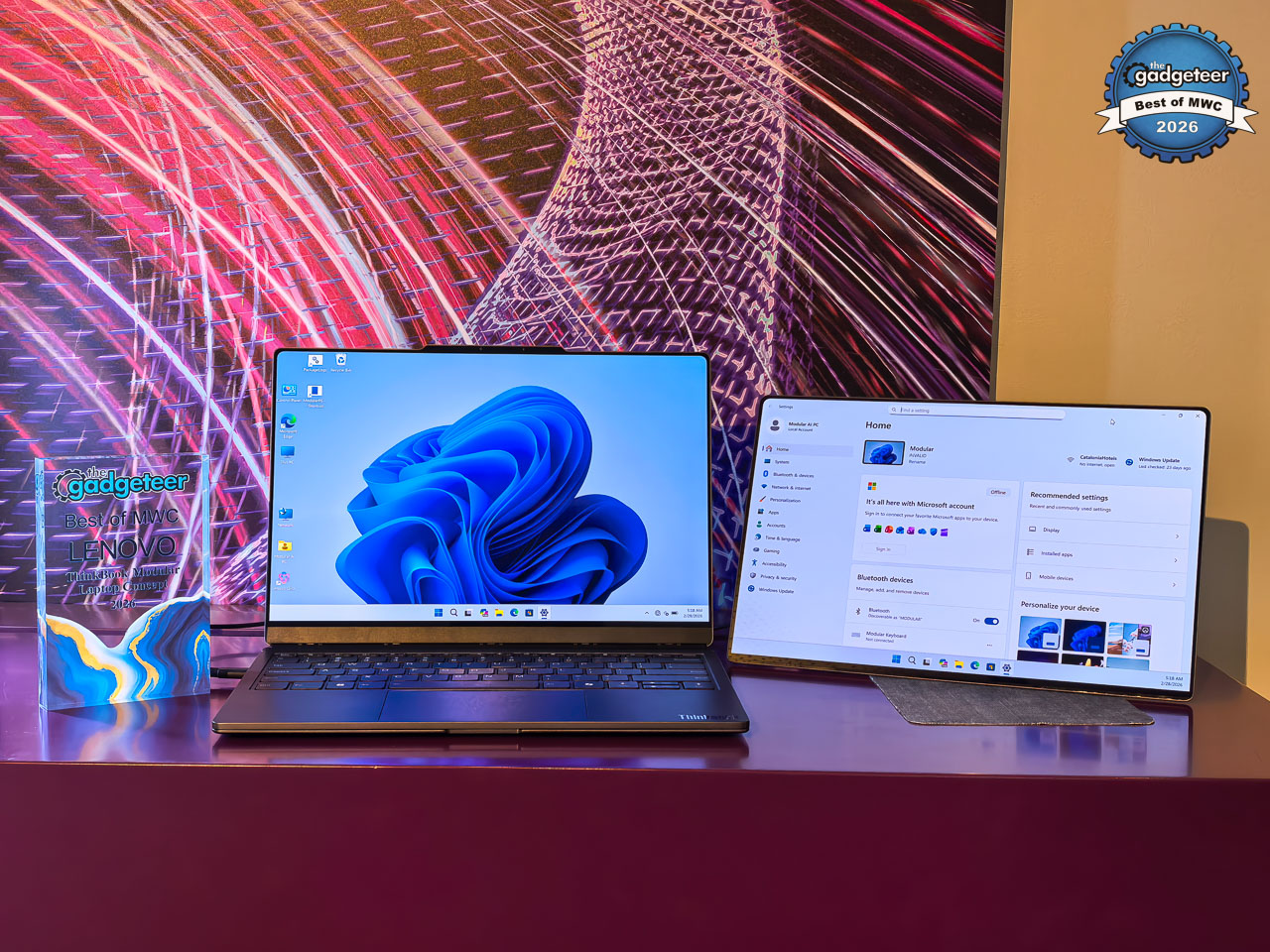
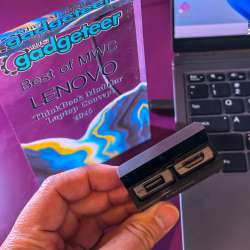
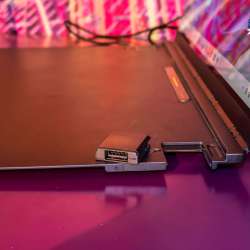
The ThinkBook Modular AI PC is the sleeper of the four. The pitch is straightforward: carry small, use big. You start with a 14-inch ultra-thin base. Attach a secondary display and you’re looking at roughly a 19-inch combined viewing area. IO ports are swappable through pogo-pin connectors, covering USB Type-A, USB-C, and HDMI. A detachable Bluetooth keyboard completes the picture.
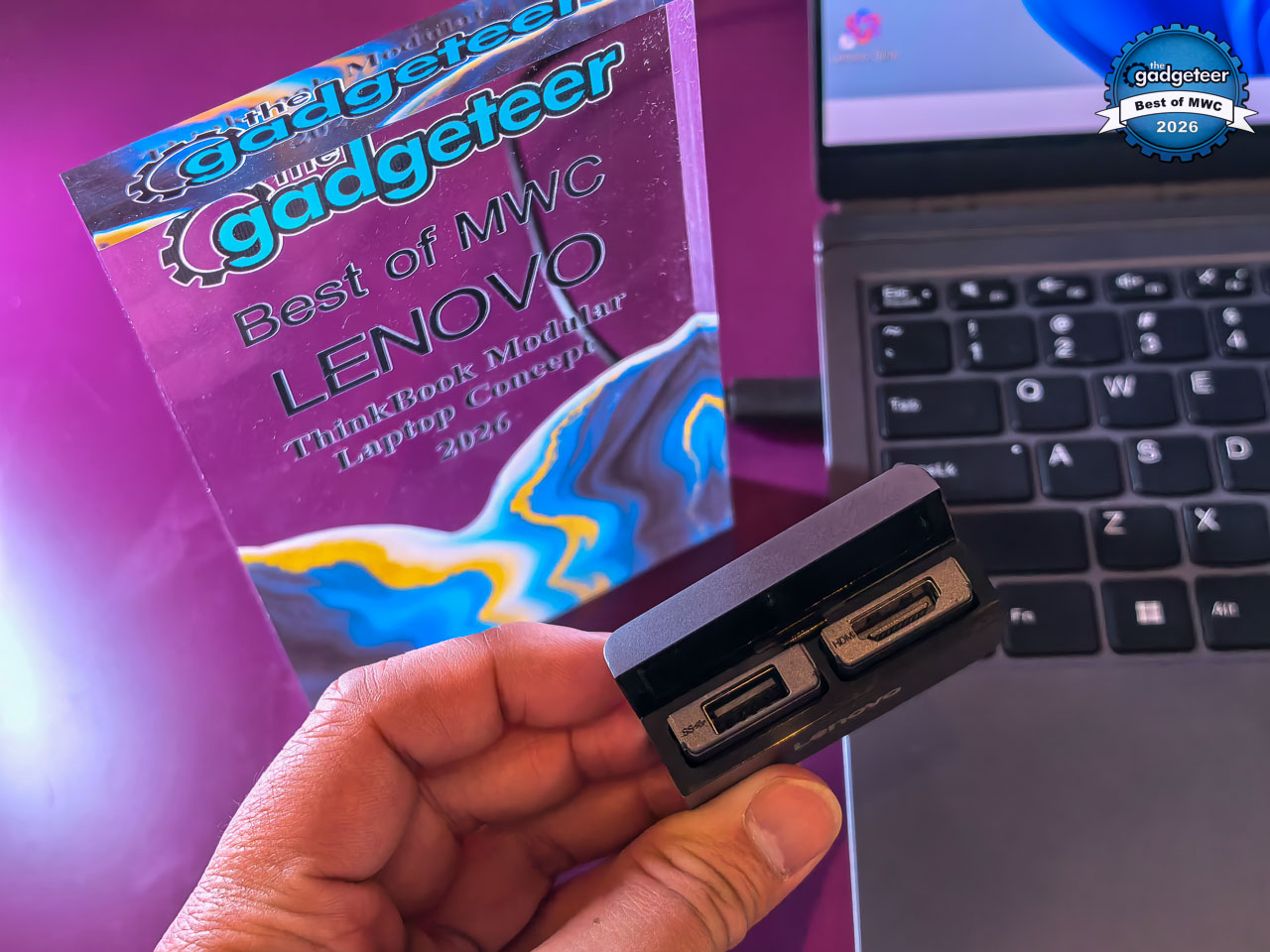
Modular PCs have been a recurring concept for decades, but the specific combination here is more practical than most. Swappable IO, pogo-pin simplicity, and a dual-screen mode that approaches monitor territory is a genuinely useful proposition for people who travel frequently and want desktop-grade workspace without the bag weight.
Swapping ports in person takes about two seconds. The pogo-pin connection is solid and doesn’t wobble, which is the failure mode that kills most modular hardware concepts before they get to market. The secondary display mount locks without any noticeable flex. That build quality at the concept stage is a better signal than the feature list.
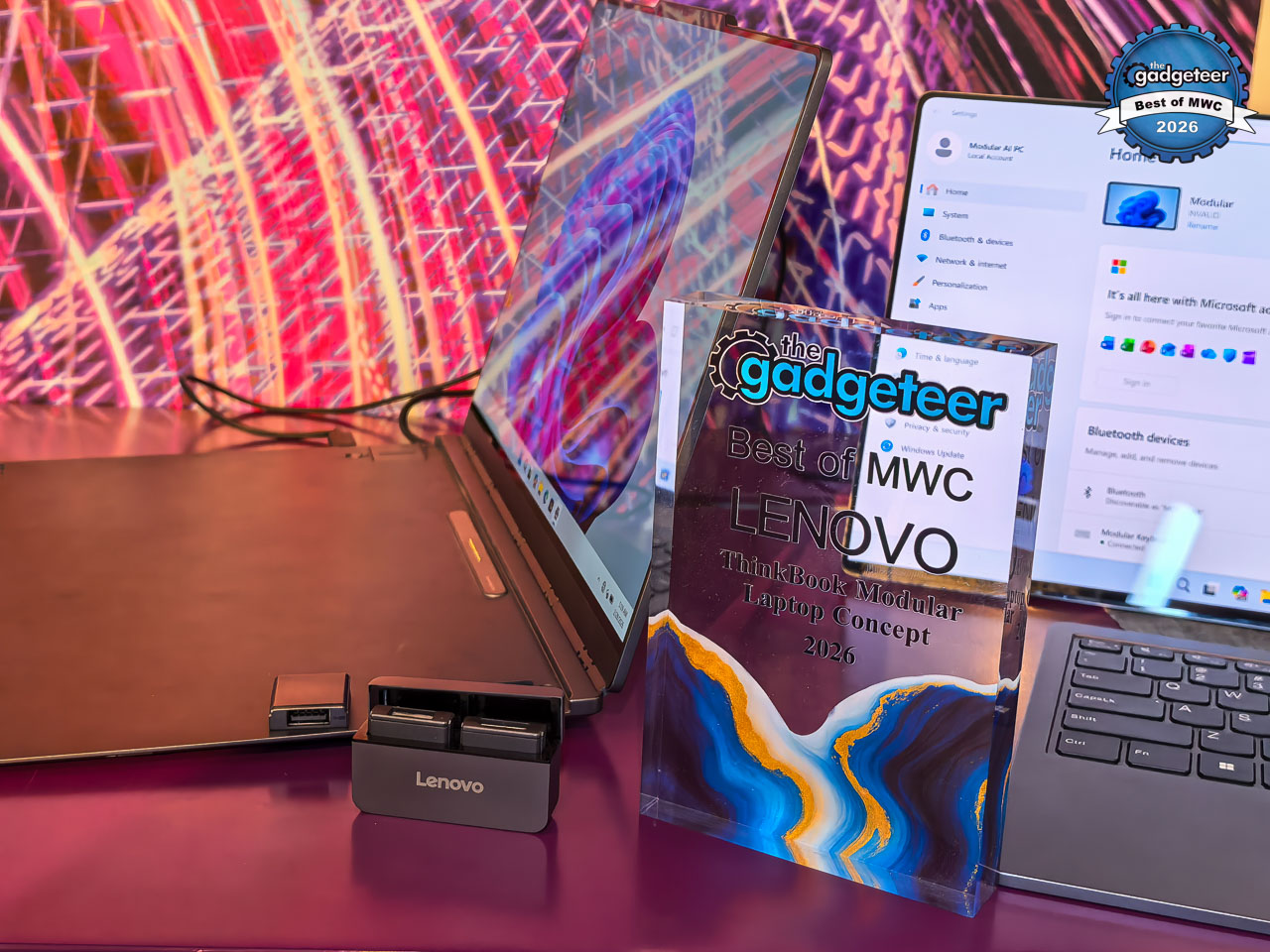
The combined 19-inch viewing area is usable in a way the number doesn’t fully communicate. It’s not 19 inches of a single panel. It’s two panels with a visible seam, and that seam matters depending on what you’re doing. For documents, email, and reference material it’s a non-issue. For video work or anything where you’re tracking content across that line, you’d notice it. That’s an honest limitation of the form factor, not a deal-breaker. The question isn’t whether the concept works. It’s whether Lenovo can ship it at a price point that makes sense, because the execution in this prototype is closer to production-ready than most concepts on the MWC floor.
The enterprise angle is actually where this concept gets strongest. Modular IO through swappable pogo-pin ports means IT departments could standardize on one base unit and configure port layouts per department, eliminating the usual procurement headache of buying different SKUs for different teams. Extended device lifecycle is the other play here. Instead of replacing an entire laptop when a port standard changes, you swap a module. That’s a procurement flexibility pitch that resonates differently than the consumer portability story, and it’s the framing that could actually get this concept funded through to production.
Lenovo AI Workmate Concept
The AI Workmate is positioned as an always-on desk companion. It projects onto your desk or wall, handles document scanning and summarizing, and responds to writing, voice, gesture, and spatial input. On-device AI means it doesn’t require a cloud connection for its core functions.
Lenovo hasn’t released specs or dimensions. The demo was controlled, but what it showed was enough to understand the premise. Projection onto the desk surface worked cleanly under the show lighting, which is a harder environment than most people give it credit for. The scanning function picked up a physical document and summarized it in roughly the time it takes to read the first paragraph.
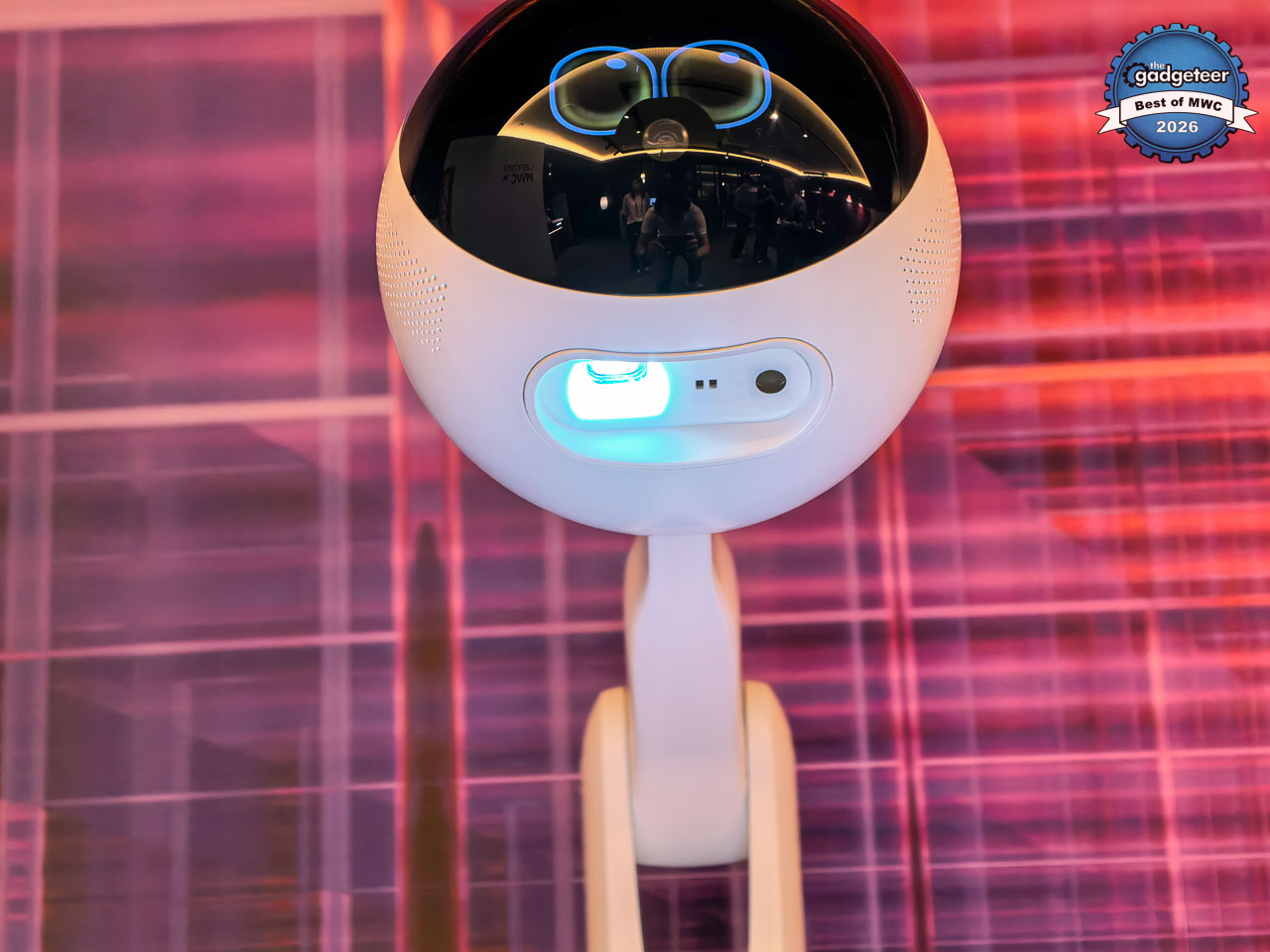
The gesture and spatial input layer is the least defined part. In the demo it responded to hand movements over the projected surface with reasonable accuracy, but sustained precision over hours of real use, versus the kind of deliberate, stylized movement that makes these interactions feel like work, is the gap between demo and daily driver. Voice and writing input felt more immediately natural.
The on-device AI processing is a deliberate choice that carries real enterprise weight. Nothing leaves the device for cloud processing, which aligns directly with Lenovo’s broader ThinkShield security platform and addresses the data privacy concerns that have stalled AI adoption in regulated industries. That privacy-first positioning turns the Workmate from a consumer curiosity into a potential enterprise deployment tool.



It’s the most speculative of the four, but it’s also the one that gestures toward an interaction paradigm that doesn’t exist in shipping hardware yet. The projection model removes the screen as the primary surface entirely, and that’s a genuinely different bet. The gap between concept and shipping product is wide, and the Workmate sits closer to the concept end than the other three. I’d like to see it ship in some form, even if the first version is considerably narrower in scope than what’s on the floor here.
How Does Lenovo’s MWC 2026 Lineup Stack Up Against the Competition?
Lenovo is hitting MWC 2026 at a moment when every major PC maker is trying to own the AI narrative. The Ryzen AI Max+ platform gives the Yoga Pro 7a and Legion 7a a unified memory story that competes directly with Apple Silicon on memory bandwidth and scalability, especially at the 128GB ceiling. Samsung and ASUS have concept hardware of their own, but neither has shown a glasses-free 3D laptop or a foldable gaming handheld with four distinct operating modes at this event.
The ThinkPad iFixit scores are a meaningful differentiator in the enterprise space, where Right to Repair is becoming a real procurement consideration. Customer-replaceable USB-C ports push that story further than most competitors are willing to go publicly. Lenovo Qira faces direct competition from Microsoft Copilot+ and Samsung Galaxy AI, but the cross-device ambition spanning PCs, tablets, and motorola smartphones is broader than either rival currently offers. The tri-platform silicon flexibility across Intel, AMD, and Snapdragon on the T14s Gen 7 is another enterprise play that no other vendor at MWC is matching at this scale.
Consumer Laptops: Three Different Bets
Yoga 9i 2-in-1 Aura Edition
The Yoga 9i 2-in-1 Aura Edition is Lenovo’s flagship convertible for 2026. It runs a 2.8K PureSight Pro OLED panel with up to 1,100 nits peak brightness and complete coverage of DCI-P3, Adobe RGB, and sRGB. At 1.29kg and 15.29mm thin, it lands squarely in premium ultraportable territory.
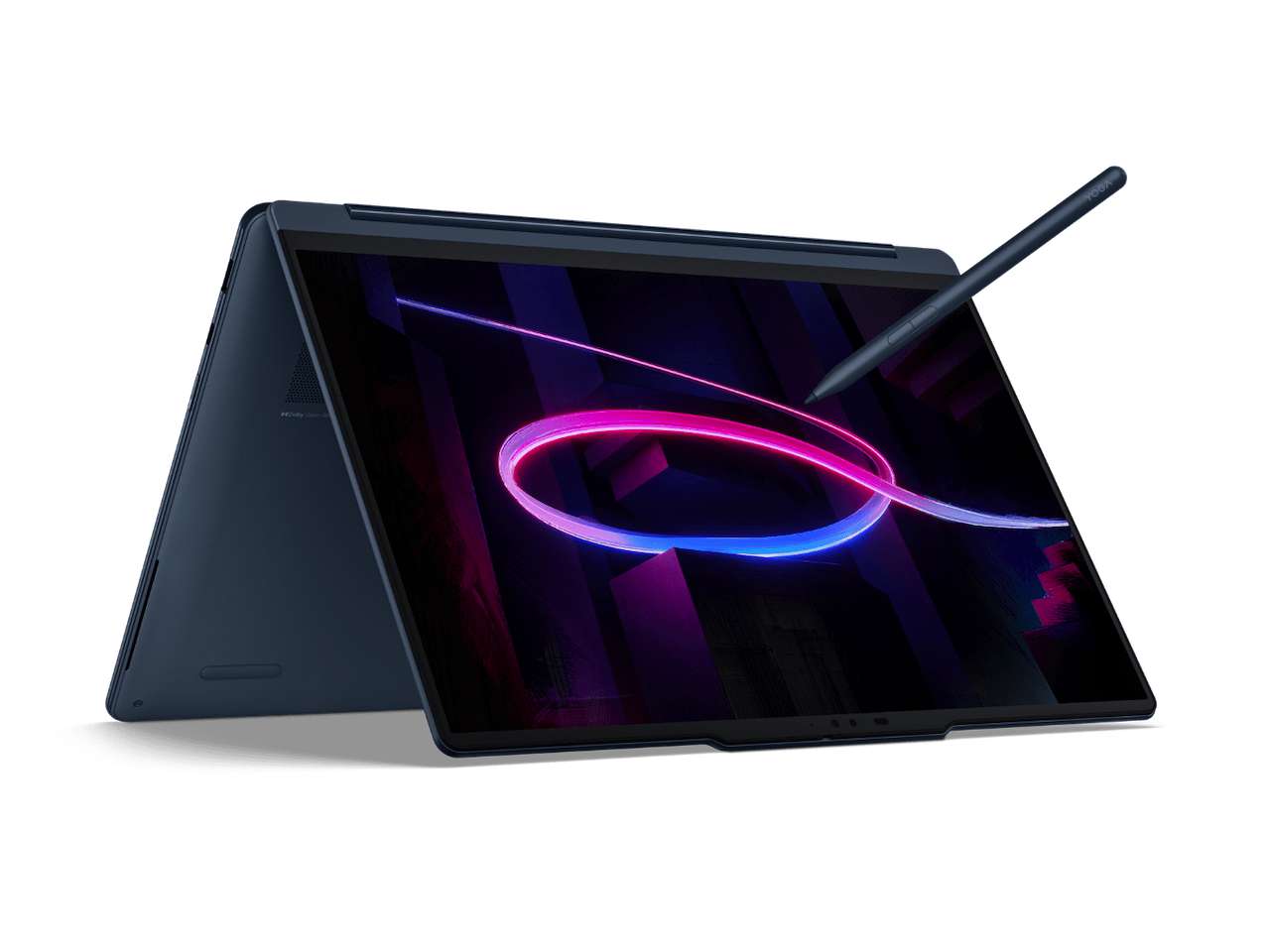
The audio setup is more interesting than the spec sheet usually makes it sound. Four speakers with hinge-integrated tweeters and bottom woofers, four microphones with 360-degree pickup, and Voice ID. That’s a configuration more commonly found in video conferencing hardware than a consumer convertible. Intel Core Ultra Series 3 inside, Copilot+ certified, available in Cosmic Blue with mirror-finish sidewalls.
Lenovo’s Comfort Edge design carries over here, and the name matters because it signals an engineered ergonomic choice rather than a cosmetic one. The rounded palm edges and tapered profile are designed for extended use in tablet and tent modes where your hands wrap the chassis for long stretches. Port selection is thorough: two Thunderbolt 4, one USB-A 3.2 Gen 2, HDMI 2.1 FRL, and an audio jack. MIL-STD-810H tested, which means it’s been validated against temperature extremes, humidity, vibration, and mechanical shock across 29 procedures. It’s $1,949 starting in May 2026, and it’s the most complete package Lenovo has put in this form factor.
Yoga Pro 7a
The Yoga Pro 7a runs AMD Ryzen AI Max+ with a unified memory architecture that scales to 128GB RAM, where the CPU and GPU share the same memory pool. That shared architecture is the entire story here. It means GPU-intensive workloads can access the full memory capacity without the bottleneck of dedicated VRAM limits, and it’s the same fundamental approach Apple Silicon uses. That ceiling is unusual for a consumer laptop, and it puts the machine in a different conversation than most 15-inch Windows portables. The display is a 15.3-inch 2.5K PureSight Pro OLED paired with a Yoga Pen Gen 2 and a Wacom Force Pad.
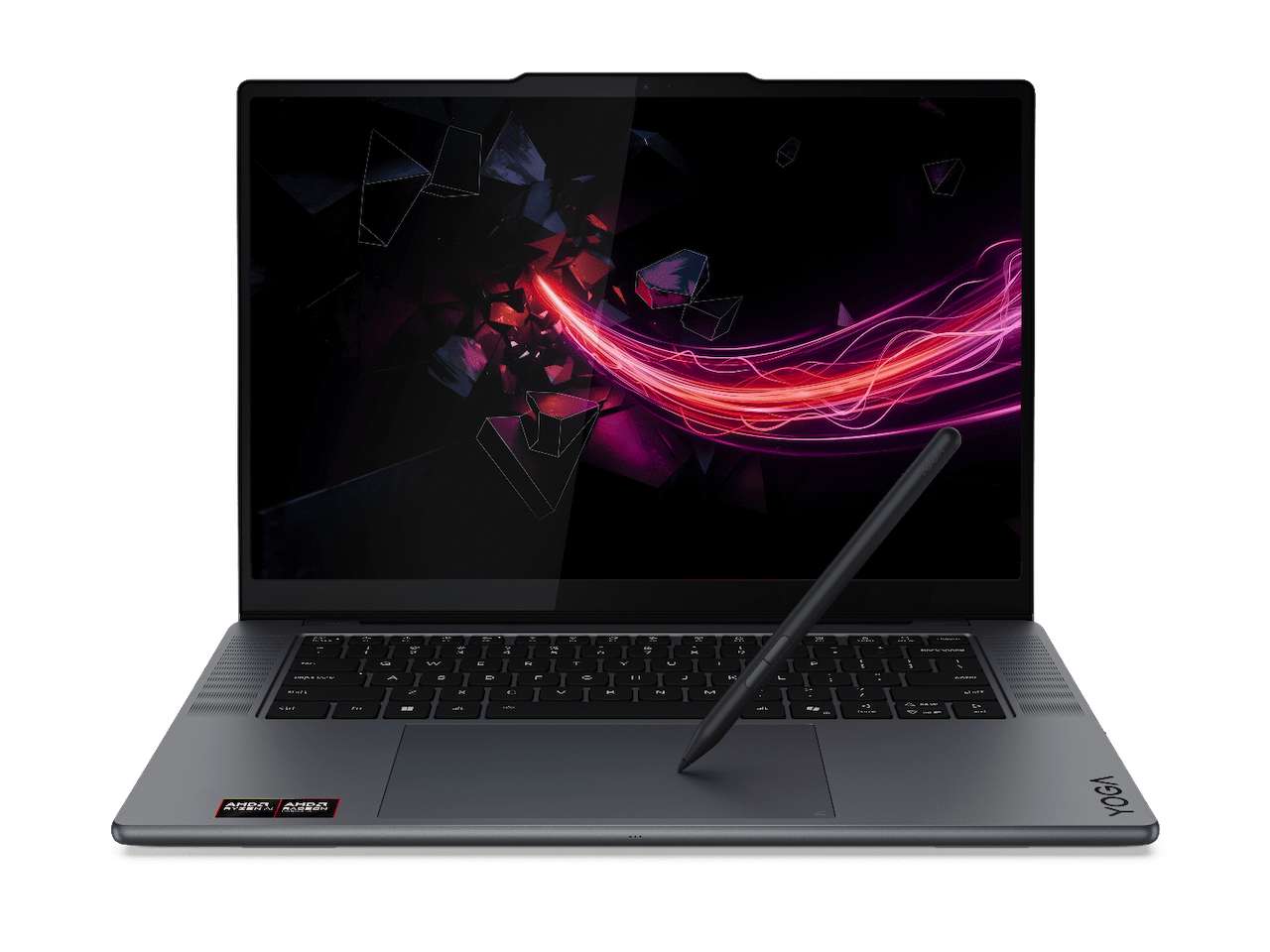
Lenovo’s X Power thermal system handles cooling with three power modes: Extreme Power Boost, Adaptive Performance, and Extreme Low Power. At 95W TDP it can push hard, and at 22dB on the quietest setting it can stay genuinely quiet while doing it. Dolby Atmos speakers and four 3D noise-cancelling microphones round out the package.
At $2,099 arriving in August 2026, it’s competing with machines like the Dell XPS 15 and the ASUS ProArt Studiobook on price. The Ryzen AI Max+ with 128GB unified memory is the differentiator that makes it worth a serious look, especially for creative professionals who’ve been watching Apple Silicon eat the high-memory laptop market.
IdeaPad Slim 5i Ultra
The IdeaPad Slim 5i Ultra makes its argument on thinness and battery. At 11.9mm and 1.15kg in an aluminum chassis, it’s one of the lighter 14-inch Windows laptops in this crop. The 65Wh battery with Rapid Charge Boost lands around 20 hours of video playback under internal lab conditions, which is a legitimate all-day claim. The Rapid Charge Boost numbers are the consumer-friendly detail: 15 minutes plugged in gets you up to two hours of use. Three USB-C ports handle connectivity across the board.
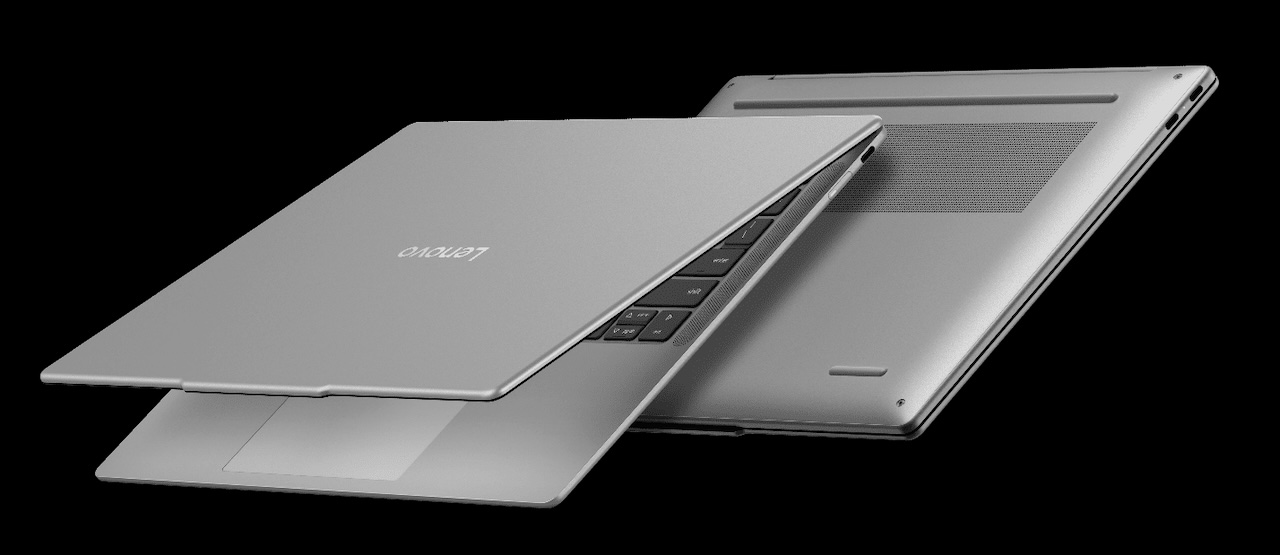
Display choices are WUXGA OLED or WQXGA IPS LCD at 120Hz, both in a 16:10 aspect ratio that adds vertical space for documents and browsing compared to the 16:9 panels still common at this price point. An FHD IR camera with a privacy shutter is included. There’s no exotic hardware here. It’s a very clean machine aimed at people who want something light, long-lasting, and well-built without paying flagship money. $799 in October 2026.
Gaming: AMD Headlines Both Tiers
Legion 7a
The Legion 7a uses Ryzen AI Max+ with integrated Radeon graphics inside a 15.3-inch PureSight OLED chassis. At 1.65kg it’s competitive on weight for a 15-inch gaming laptop, and the unified memory architecture means it shares the same high-bandwidth memory story as the Yoga Pro 7a on the creative side. At $2,299 arriving in July 2026, it’s positioned at the premium AMD gaming tier.
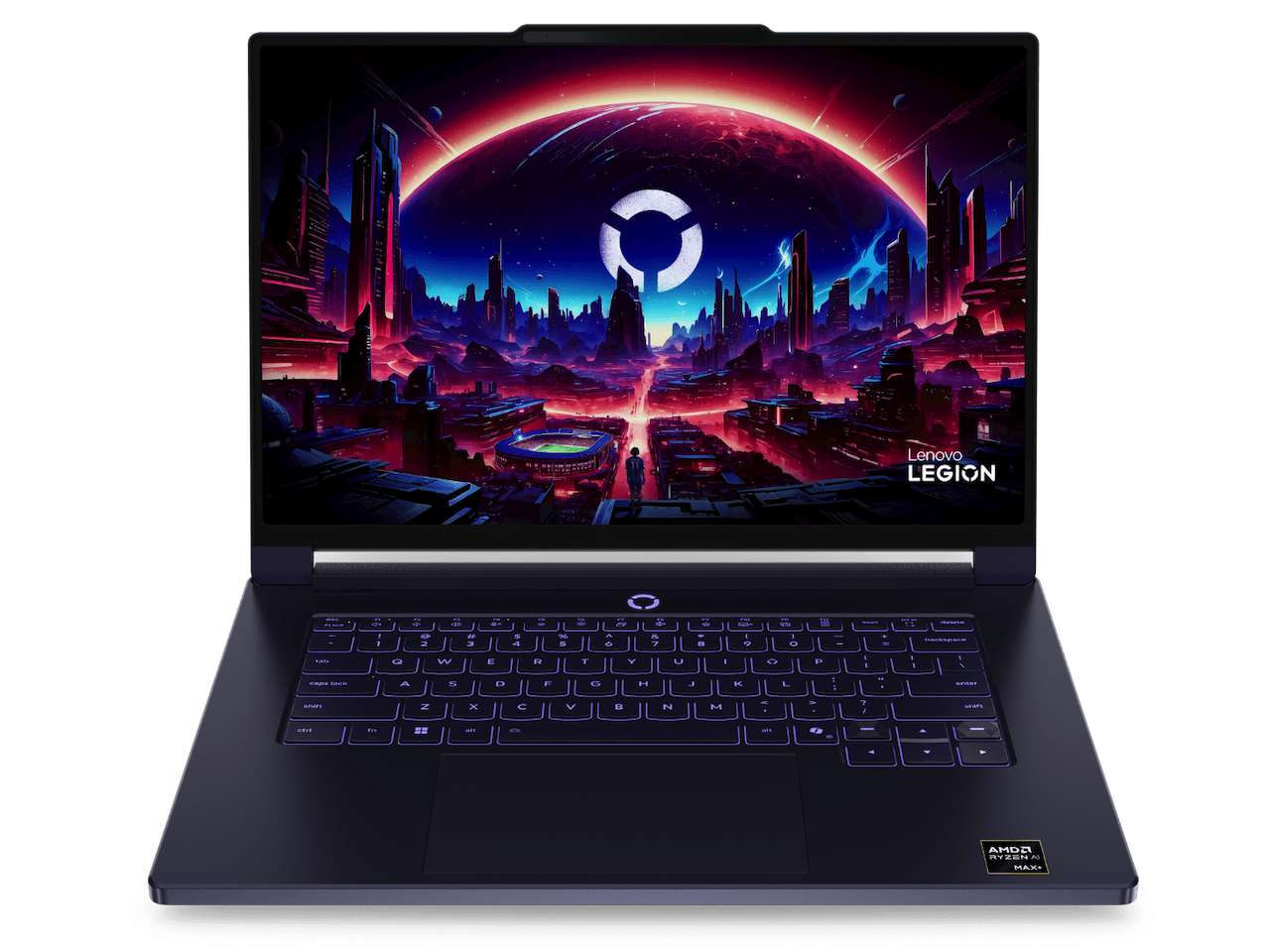
Lenovo hasn’t released detailed performance benchmarks yet, which is expected given the embargo timing. But the Ryzen AI Max+ with Radeon integration is a genuinely different architecture than the discrete GPU configurations that dominate the category. How it performs in practice against NVIDIA-equipped competitors will be the real test.
Legion Tab (Gen 5, 8.8″)
The Legion Tab returns with Snapdragon 8 Elite Gen 5, a 3K 165Hz panel at 600 nits, and a new Legion Coldfront Vapor cooling system that’s rated 32% more efficient at heat dissipation compared to the previous generation Legion Tab. At 360g, it’s one of the lighter gaming tablets available. Memory tops at 16GB RAM and 512GB storage, battery lands at 9000mAh.
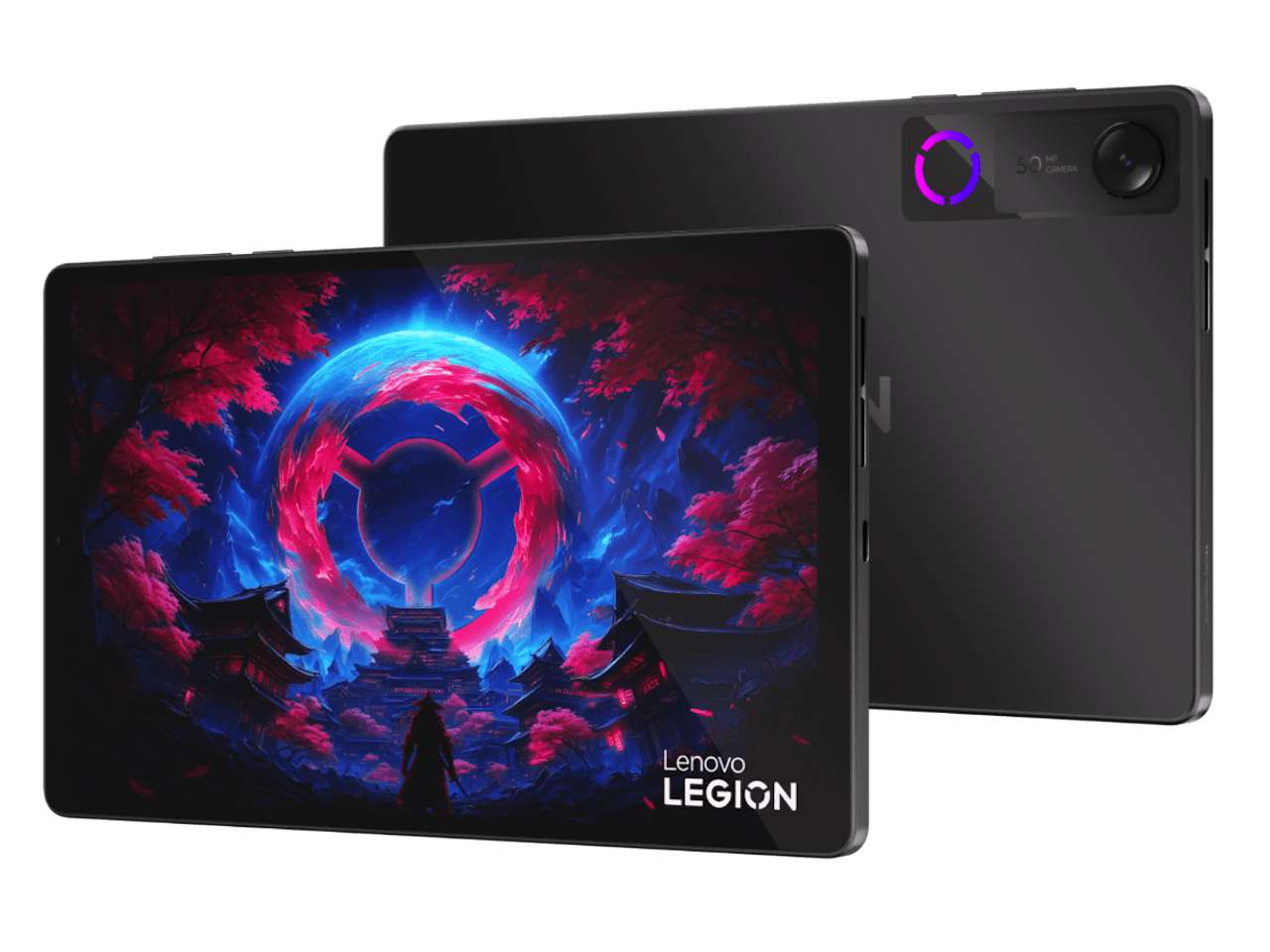
Three color options: Eclipse Black, Glacier White, and Surge. It’s $849 in May 2026. For a gaming tablet, the combination of a premium Snapdragon chip, high-refresh display, and serious thermal management at that weight is a strong value case.
Tablets and the Qira Platform
Idea Tab Pro Gen 2
The Idea Tab Pro Gen 2 is running Snapdragon 8s Gen 4 inside a 6.20mm chassis that comes in under 600g. The 13-inch 3.5K PureSight Pro display supports Dolby Vision, and quad JBL speakers with Dolby Atmos handle audio. Battery is 10200mAh charging at 45W. Color options are Luna Grey, Cloud Grey, and Jelly Mint.
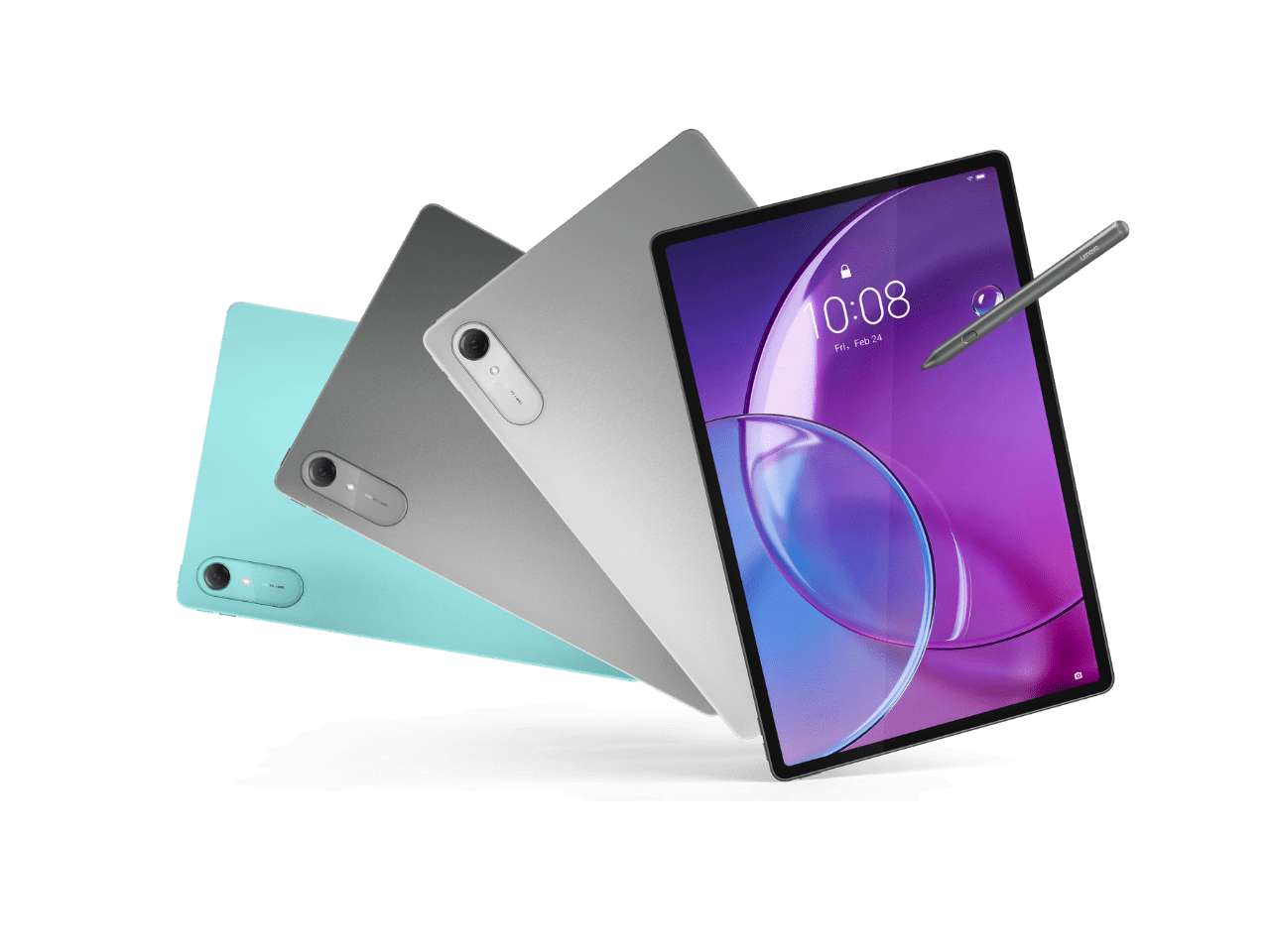
Display options include a matte anti-glare panel and a constant contrast feature, both of which matter for student and mixed-lighting environments where reflections kill readability. The AI learning workflow is more developed than on previous Idea Tab iterations. Smarter Reader, Lenovo AI Notes, live transcription, Smart Key, and Smart AI Input are all built in at a system level. It’s $419 in July 2026, and it’s the first device to ship with Lenovo Qira.
Lenovo Qira
Qira is Lenovo’s answer to the ambient AI platform question. It’s a system-level intelligence layer that runs across PC, phone, tablet, and wearables, with a rollout to 20-plus Lenovo devices starting with the Idea Tab Pro Gen 2. Language support at launch covers English across three regional variants, Spanish across two, plus French, Italian, German, and Brazilian Portuguese.
The first wave covers six languages across nine regions, with English (US, UK, India), Spanish (US, Latin America, Spain), French, Italian, German, and Brazilian Portuguese at launch. The cross-brand expansion is the strategic signal: Qira is set to debut on motorola smartphones later in 2026, which means Lenovo is building an ambient AI layer that spans its entire hardware ecosystem, not just the PC lineup.
The positioning is personal ambient intelligence rather than a discrete assistant you invoke. That’s a meaningful distinction from how most AI features ship on Windows machines. The cross-device ambition, running seamlessly across a user’s entire Lenovo device ecosystem including motorola, is broader than what Microsoft Copilot+ and Samsung Galaxy AI currently promise. Whether the execution lives up to that ambition is something you’d only know after living with it.
Business Hardware: ThinkPad Gets Serious About Repairability
ThinkPad T-Series
The T-Series refresh is the most important business story out of MWC 2026. The iFixit partnership is what makes it. The ThinkPad T16 Gen 5 earns a perfect 10/10 repairability score. The T14s Gen 7 scores 9/10. For an enterprise laptop line to publish those numbers publicly is a meaningful commitment, and it puts Lenovo ahead of most competitors on a procurement criterion that’s quietly becoming more important.

Hardware improvements across the line include an optional 5MP camera with vHDR support, larger speakers than previous generations, narrower bezels, a centered key nomenclature redesign that signals the 2026 industrial refresh, and a new Cosmic Blue color option. Audio accessibility is a new addition: the T-Series now supports audio cues for system events designed for blind and visually impaired users, an enterprise credibility detail that most competitors haven’t addressed publicly. All T-Series models carry Calm Tech Certified Platinum status, which recognizes devices that minimize distraction and treat user attention with some respect. That’s a softer differentiator, but it speaks to a real enterprise concern about meeting fatigue and notification overload.
Processor coverage is wide. Intel Core Ultra Series 3, AMD Ryzen AI PRO 400, and on the T14s Gen 7, Snapdragon X2 Elite and X2 Plus options. That tri-platform choice across Intel, AMD, and Snapdragon is a strategic story Lenovo is pushing hard: no other vendor at MWC 2026 is offering enterprise buyers that breadth of silicon flexibility in a single product line. The T14s Gen 7 is the lightest of the group at roughly 1.1kg with a 58Wh battery, priced at $1,899 for Q2 2026. The T14 Gen 7 starts at $1,799 with LPCAMM2 memory. The T16 Gen 5 also opens at $1,799 in a larger chassis with the perfect iFixit score.
The T14s 2-in-1 Gen 2 adds a garaged pen, Intel Core Ultra Series 3 with vPro, and a 1.34kg weight target at $1,849 in Q2 2026. It’s a solid convertible for enterprise buyers who need pen input but don’t want to compromise on portability.
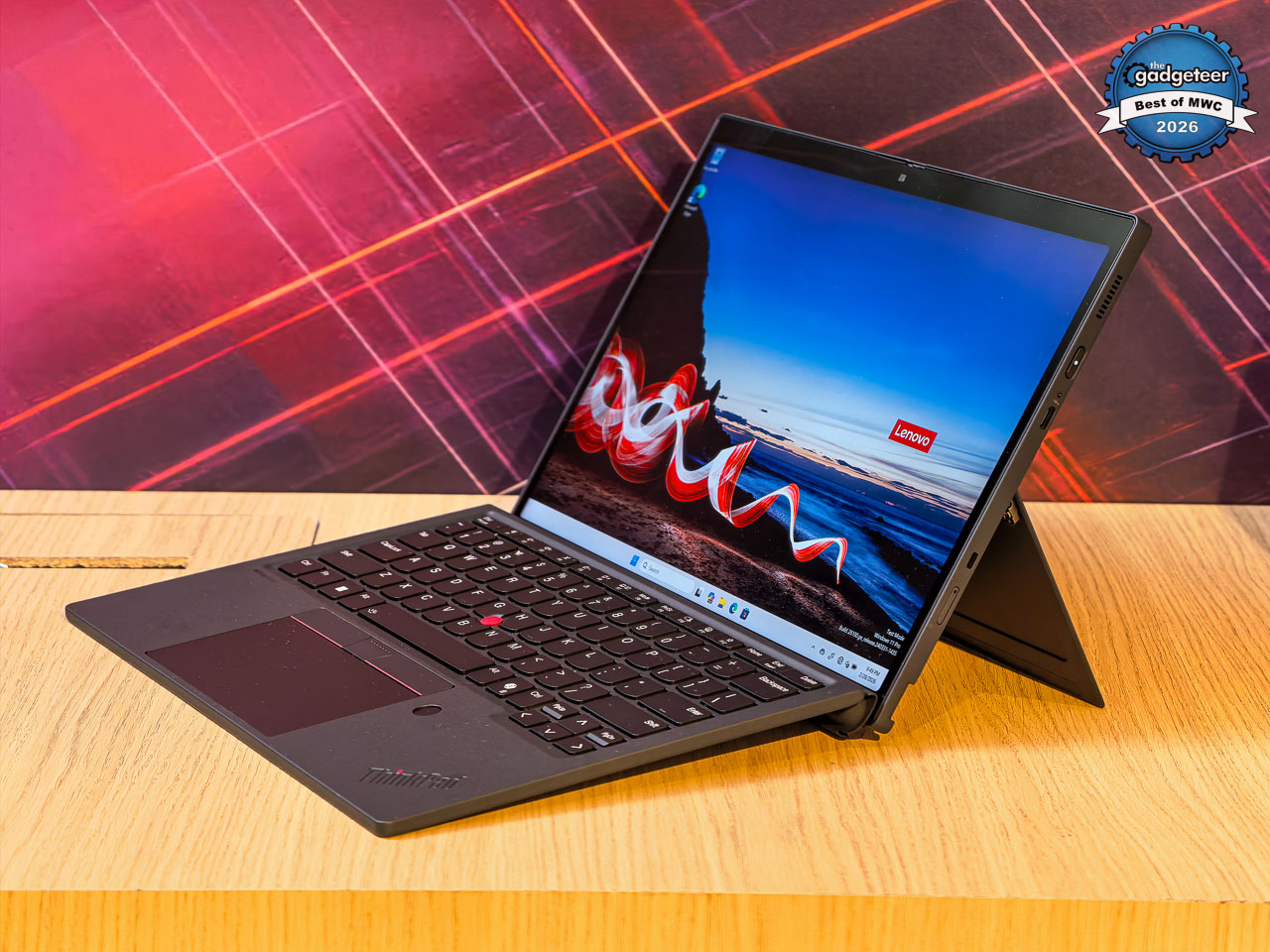
ThinkPad X13 Detachable
The X13 Detachable is a 13-inch Windows detachable with Intel Core Ultra Series 3, up to 64GB of memory, dual Thunderbolt 4, and a dockable pen. At 500 nits with Windows 11 Pro, it’s enterprise-positioned in spec and price. It arrives in Q3 2026 at $1,999.
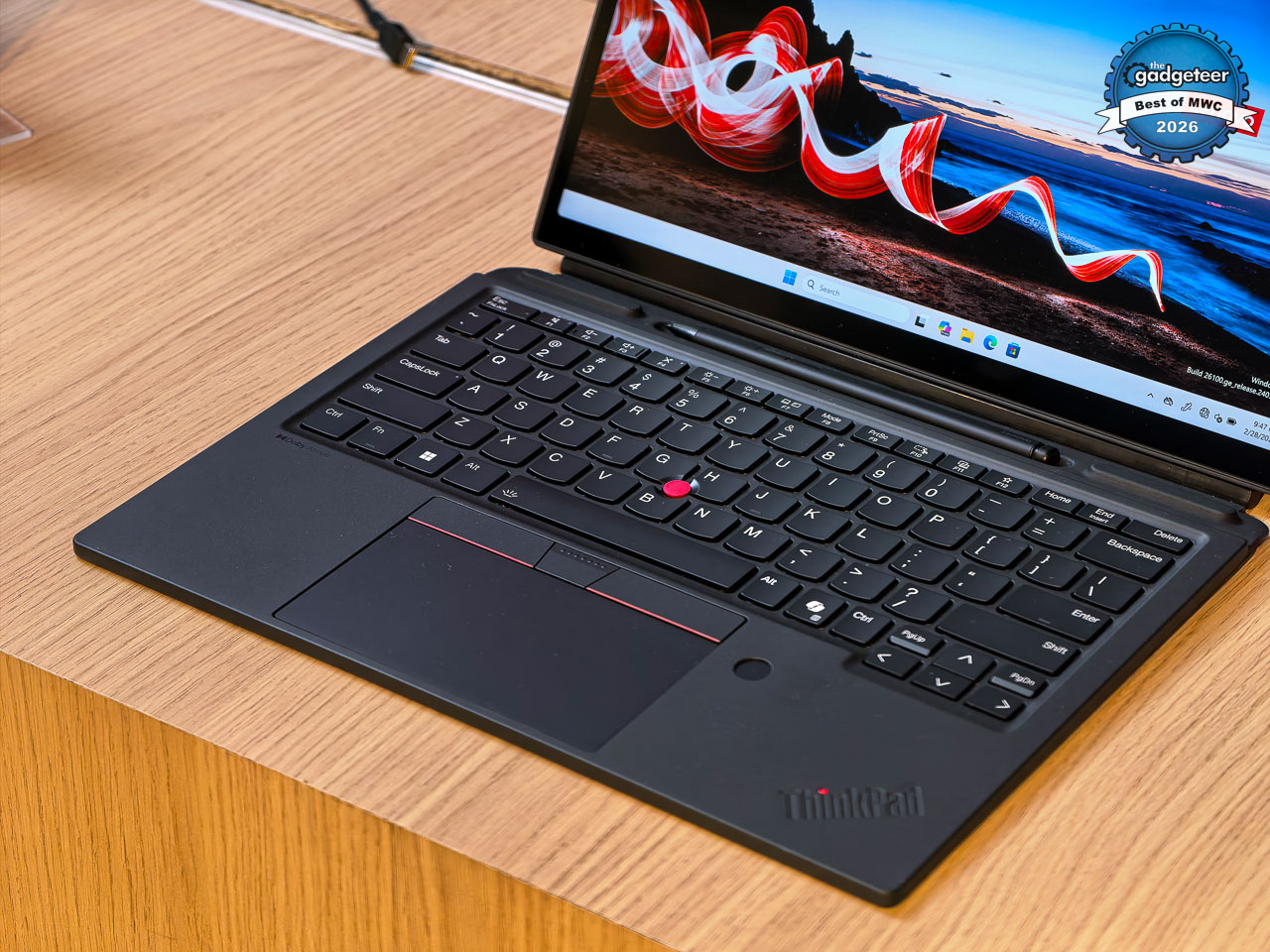
Detachables haven’t dominated enterprise purchasing the way tablets with keyboards once seemed they might, but 64GB of memory and dual Thunderbolt 4 are spec points that justify the form factor for certain workflows. Document-heavy and visual-collaborative roles especially.
ThinkTab X11
The ThinkTab X11 is the rugged enterprise tablet of the MWC 2026 lineup, and the screwless removable battery is the detail that stands out. Snapdragon 7s Gen 3 inside, IP68-rated, MIL-STD-810H tested, with front-mounted NFC, dual USB-C, and enterprise management built in. A battery-less operating mode adds flexibility for tethered deployments, and the use cases are specific: vehicle-mounted terminals that run off external power, shift-based deployments where hot-swapping batteries between users matters, and fixed kiosk installations where a battery is dead weight.
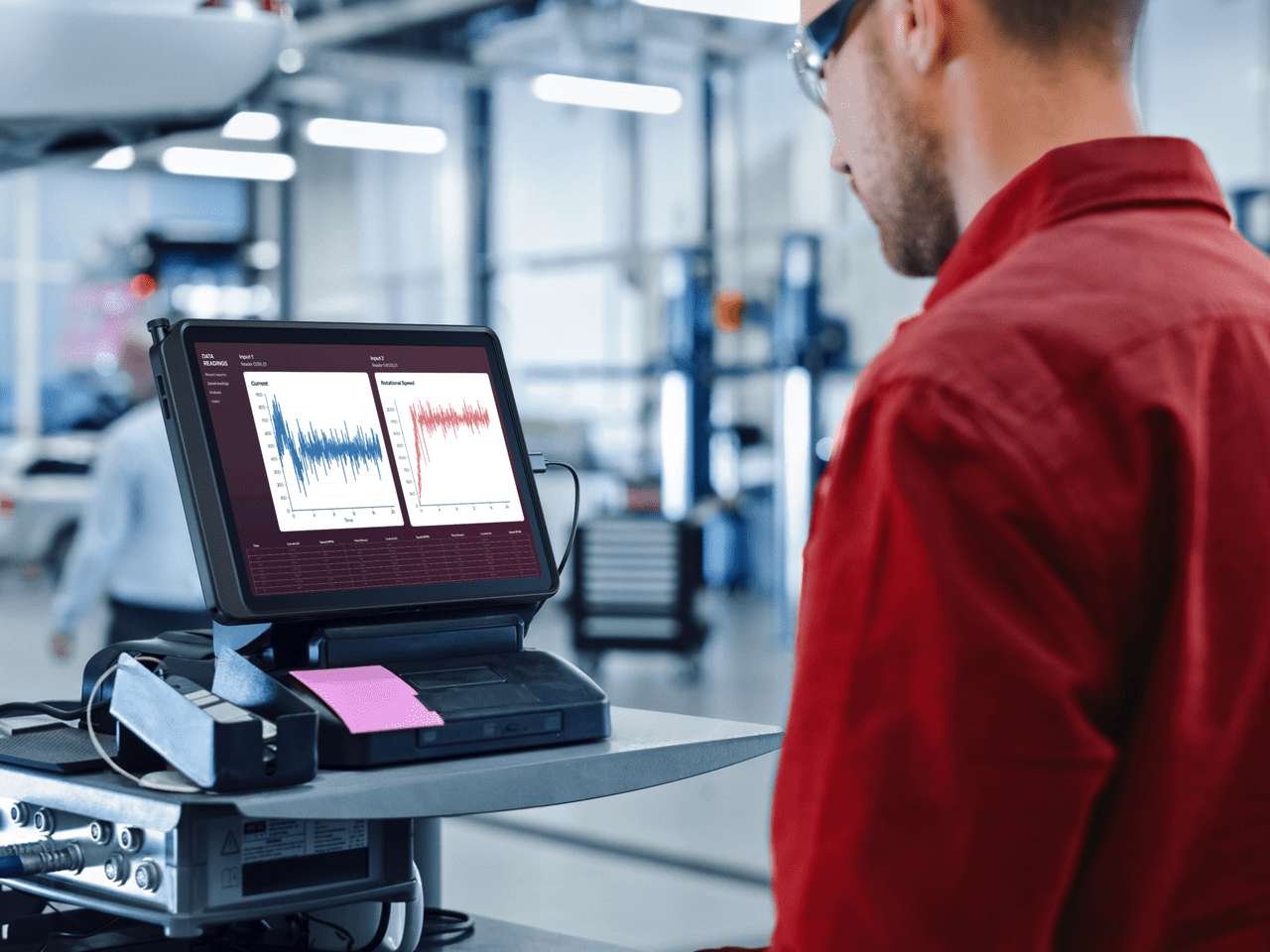
At $499 in Q2 2026, it’s priced well below the rest of the ThinkPad and ThinkBook portfolio. For field service, healthcare, or logistics deployments where durability and serviceability matter more than raw processing power, it’s a compelling and practical option.
ThinkBook 14 2-in-1 Gen 6
The ThinkBook 14 2-in-1 Gen 6 uses Intel Core Ultra Series 3, a 360-degree hinge, 14-inch WUXGA touch display, and Thunderbolt 4. The Magic Bay Tiko companion adds a modular accessory angle similar to what Lenovo has been developing across the ThinkBook line. It’s $1,754 in Q2 2026.
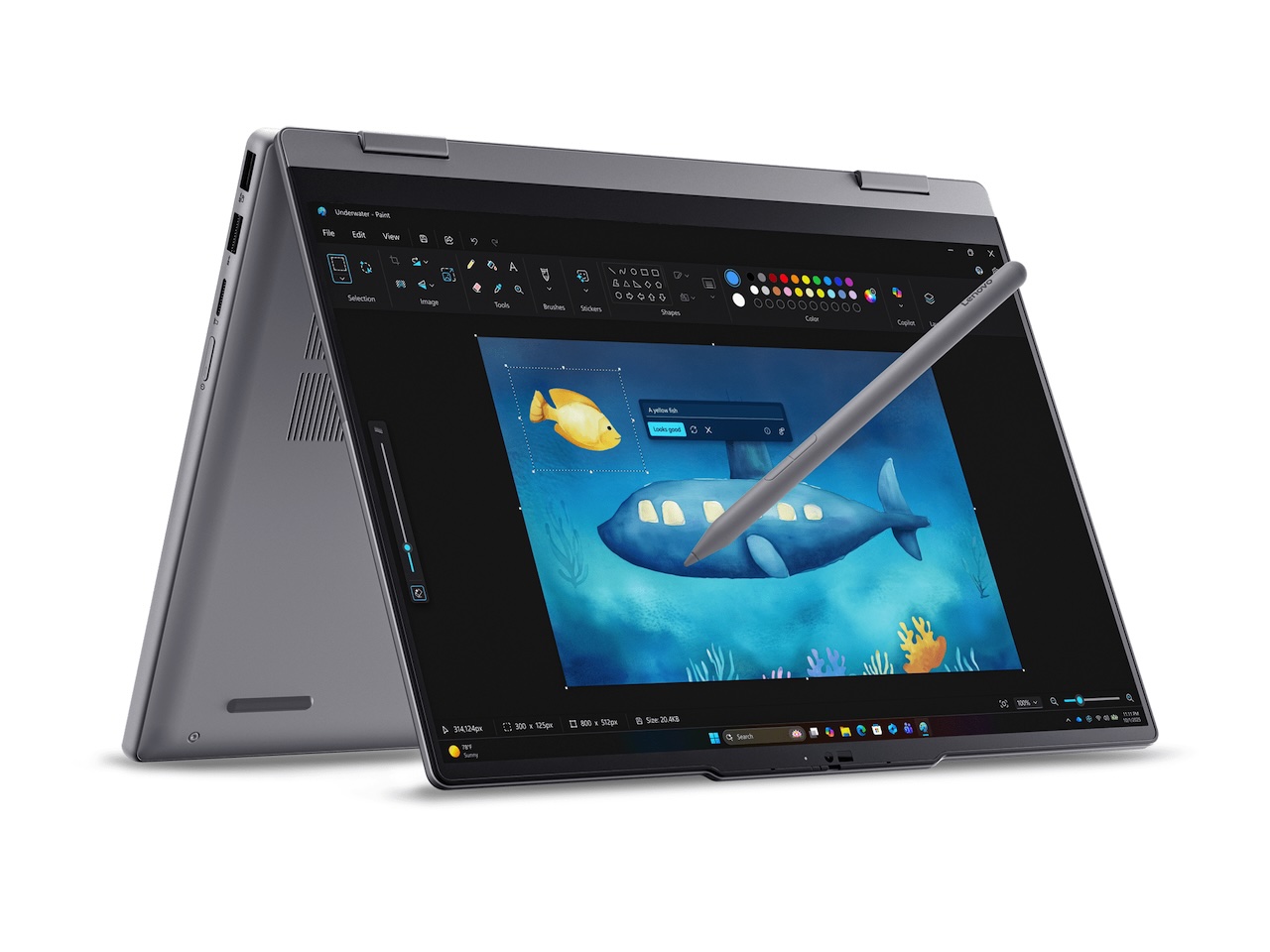
The Magic Bay ecosystem is still building out its accessory library, but the 360-degree hinge and Thunderbolt 4 are solid baseline specs for a business 2-in-1 at this price. It sits below the ThinkPad line in brand tier but above the consumer Yoga lineup, which is the right positioning for SMB and prosumer buyers who want ThinkPad-adjacent durability without the full enterprise price.
ThinkVision M16
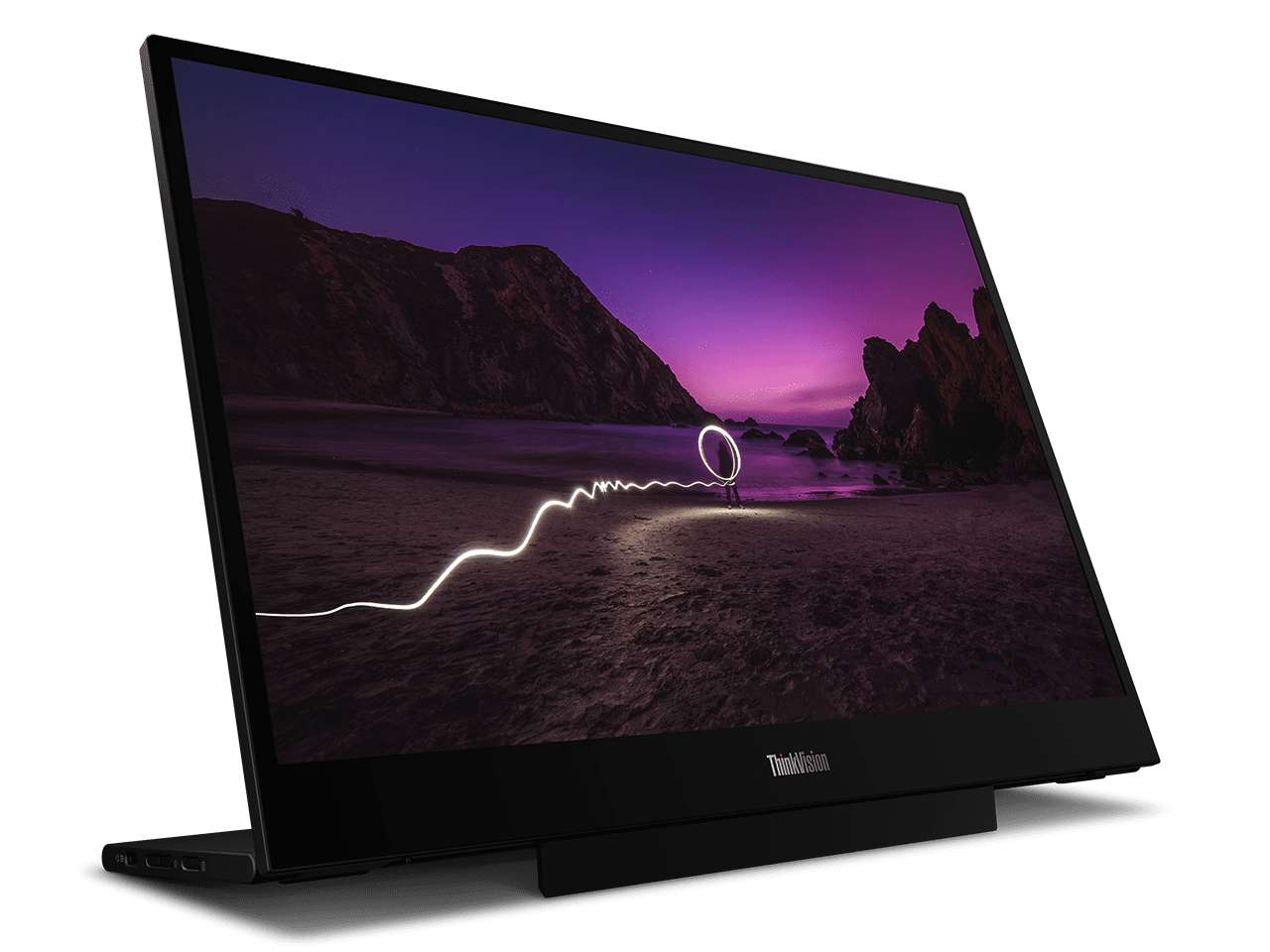
The ThinkVision M16 is the most straightforward product of the entire MWC 2026 announcement. A 16-inch 16:10 portable monitor, USB-C power pass-through, portrait and landscape support. It’s $259 in Q3 2026. For anyone who travels with a ThinkPad and wants a second screen without the bulk of an external monitor setup, it pairs cleanly with the ThinkPad T-Series ecosystem and the ThinkBook 14 2-in-1.
What Lenovo Is Really Signaling at MWC 2026
Step back from the individual product announcements and a strategic picture emerges. Lenovo isn’t just refreshing its lineup at MWC 2026. It’s positioning itself as the most platform-flexible AI PC vendor in the industry.
The threads connect clearly once you lay them out. Qira is building an ambient AI layer that spans PCs, tablets, and motorola smartphones, broader than anything Microsoft Copilot+ or Samsung Galaxy AI currently attempts. ThinkShield security underpins the enterprise story, with on-device AI processing on the Workmate concept and privacy-first design across the business portfolio. Repairability is no longer a talking point but a published commitment, with iFixit scores of 9/10 and 10/10 on the flagship ThinkPad T-Series and customer-replaceable USB-C ports that push Right to Repair from theory into procurement specs.
Unified memory on the Ryzen AI Max+ platform gives the Yoga Pro 7a and Legion 7a a shared architecture that competes directly with Apple Silicon at the 128GB ceiling. Concept experimentation across four proof-of-concept devices shows Lenovo testing form factors, from glasses-free 3D to foldable handhelds to modular ports, that no competitor is showing at this scale. And cross-silicon flexibility on the T14s Gen 7, spanning Intel, AMD, and Snapdragon, gives enterprise buyers procurement optionality that no single rival matches.
The consumer and business announcements aren’t parallel tracks. They’re a unified ecosystem story. The vendor who offers the widest platform flexibility, the strongest repairability credentials, and the broadest ambient AI reach wins the next enterprise refresh cycle, and Lenovo is positioning itself as that vendor. MWC 2026 is the opening argument.
Full Pricing and Availability
| Product | Price (North America) | Availability |
|---|---|---|
| Yoga Slim 7i Aura Edition | $1,449 | April 2026 |
| Yoga 9i 2-in-1 Aura Edition | $1,949 | May 2026 |
| Yoga Creative Keyboard AngryMiao | $299 | May 2026 |
| Legion Tab (Gen 5) | $849 | May 2026 |
| Idea Tab Pro Gen 2 | $419 | July 2026 |
| Legion 7a | $2,299 | July 2026 |
| Yoga Pro 7a | $2,099 | August 2026 |
| IdeaPad Slim 5i Ultra | $799 | October 2026 |
| IdeaPad Slim 3i (17″) | $599 | October 2026 |
| Lenovo L16 Mobile Monitor | TBA | Q3 2026 |
| ThinkPad T14s Gen 7 | $1,899 | Q2 2026 |
| ThinkPad T14s 2-in-1 Gen 2 | $1,849 | Q2 2026 |
| ThinkPad T16 Gen 5 | $1,799 | Q2 2026 |
| ThinkPad T14 Gen 7 | $1,799 | Q2 2026 |
| ThinkTab X11 | $499 | Q2 2026 |
| ThinkBook 14 2-in-1 Gen 6 | $1,754 | Q2 2026 |
| ThinkPad X13 Detachable |

Lenovo 2026 New V15 Laptop for Student & Business | Intel Pentium 4-Core Processor | 15.6 FHD Screen (1920 x 1080) | 12GB RAM | 256GB SSD | Ethernet RJ-45 | Windows 11 with Office 365 for The Web
(as of March 1, 2026 14:02 GMT -06:00 - More infoProduct prices and availability are accurate as of the date/time indicated and are subject to change. Any price and availability information displayed on [relevant Amazon Site(s), as applicable] at the time of purchase will apply to the purchase of this product.)