
NEWS – The camera on the back of HONOR’s new phone follows you around a room. Not digitally, not through a crop or a zoom. The actual camera module physically rotates and tilts on a motorized gimbal to stay locked on you as you move. And when you ask it a yes-or-no question, it nods.
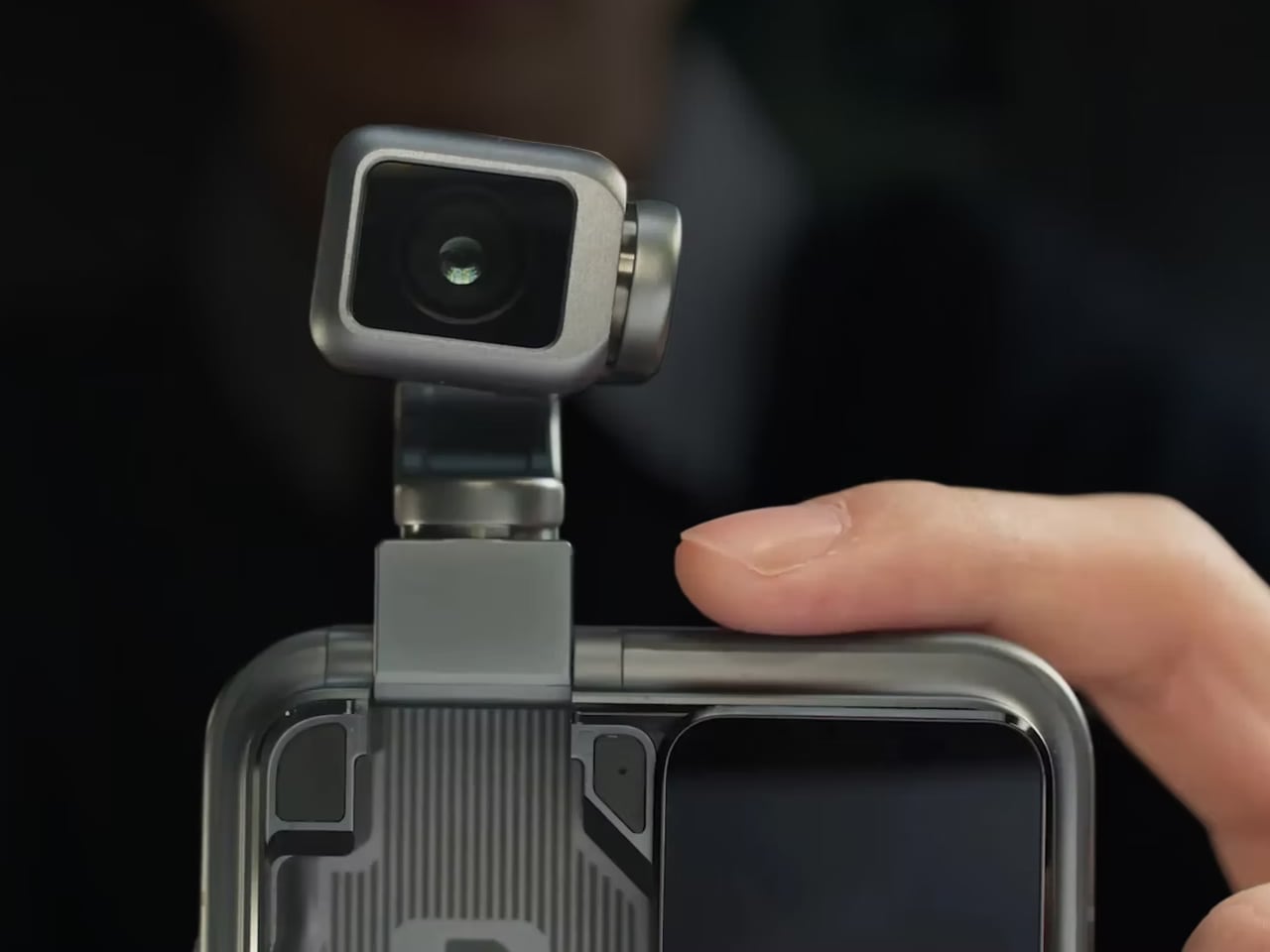
HONOR showed off the Robot Phone at MWC Barcelona on March 1st, confirmed mass production starts in the first half of this year, and said it’ll go on sale in China in the second half. This isn’t a concept. It’s a product.
What it actually is
There’s a 3-axis motorized gimbal mounted to the back of this phone. HONOR calls the system 4DoF, four degrees of freedom, and built it around what they say is the smallest micro motor ever fitted in a smartphone gimbal, 70% smaller than the prototype generation before it. That size reduction is what makes this possible inside a body you’d actually carry.
A sliding panel closes over the entire assembly when it’s retracted, covering both the gimbal and the two fixed cameras beside it. Deploy the mechanism and the panel slides open, the module rises, and the camera can now pivot on three axes. It’s the mechanical equivalent of a camera operator with a stabilized rig, except the rig is inside the phone.
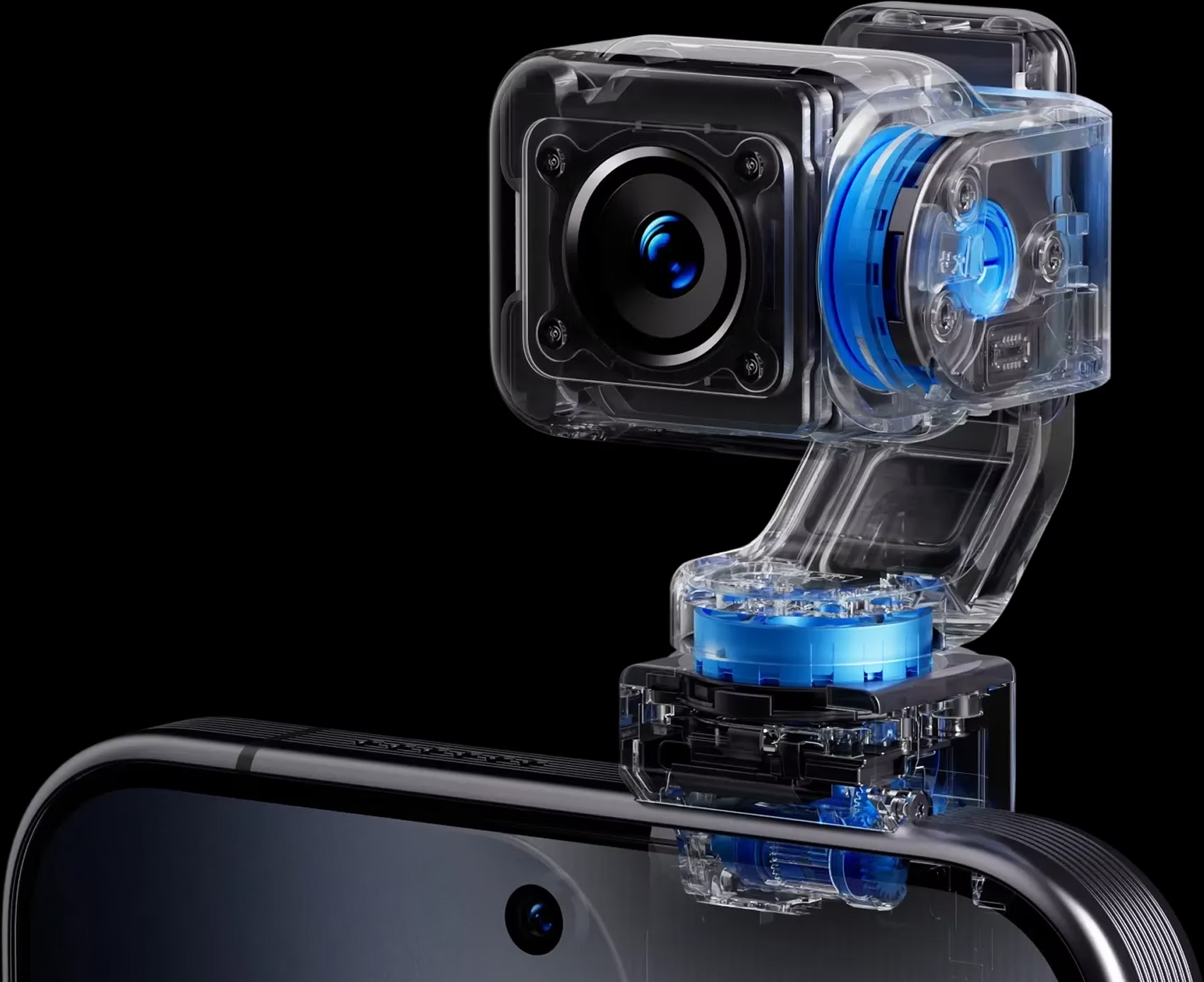
HONOR brought in ARRI to work on the imaging system. ARRI builds cameras for serious film production, the kind where a single body costs more than a good used car. Their involvement here is positioned as a technical collaboration, not a logo deal. That’s a meaningful distinction, because it means ARRI’s engineering standards are built into how this camera captures and processes footage, not just printed on the box.
The camera that doesn’t stay still
Double-tap a subject in the frame and the gimbal physically moves to keep them centered. If something passes between the phone and the subject, the system re-identifies and resumes tracking once the obstruction clears. HONOR says the tracking anticipates movement rather than just reacting to it, so the gimbal is already getting ahead of where the subject is going.
For video calls, this solves something that’s quietly annoyed everyone since remote work normalized. You stand up, walk to a whiteboard, and the call shows your forehead or the ceiling. The Robot Phone’s camera tracks you across the room in real time, physically moving to follow, so you stay in frame whether you’re sitting, standing, or pacing. No tripod. No fussing with the angle every time you move.
AI SpinShot takes that tracking in a different direction entirely. Select the mode and the gimbal executes a smooth 90-degree or 180-degree arc around your subject in a single take. That’s a cinematic move that usually requires a dedicated rig, a gimbal operator, and at least two takes to get clean. This phone does it with one tap.
This phone has body language
Play music and the camera module bobs along with the beat. Ask it a question and it nods for yes, shakes for no. Pull off something worth celebrating and it does a small backflip.
HONOR’s framing is that they wanted the phone to respond rather than just answer. That’s not a marketing line, it’s a genuine design position. Every other smartphone communicates through the screen. This one communicates through movement, and that changes something about the experience of being near it. When the phone reacts physically to what you’re doing, you start relating to it differently than you do to a flat rectangle that buzzes.
Is the nodding useful? Not particularly. Is watching a phone dance to your music useful? No. But that’s the wrong question. The right question is whether it changes how the device feels to live with. A phone that shakes its head when you cancel a meeting is doing something no phone has ever done. Whether that’s compelling or annoying will depend entirely on the person holding it, and that tension is exactly what drives Discover clicks.
Why this is hard to build
A motorized gimbal inside a smartphone is a problem with a long list of things that can go wrong. The motor has to be small enough to fit inside a form factor you’d actually carry. The mechanism has to survive pocket pressure, humidity, and the occasional drop. Power draw has to be reasonable. And the whole thing has to work without making the phone conspicuously thicker or heavier than a standard flagship.
The 70% motor size reduction is the part that made this feasible. HONOR miniaturized the entire actuation system to fit alongside three cameras within the same body envelope you’d expect from any current flagship. The sliding protective panel handles durability by sealing the mechanism completely when it’s not in use, so you’re not leaving an exposed motorized assembly open to debris every time you sit down.
The phone also reads its own orientation. Lay it face-down on a flat surface and the gimbal flips upward, auto-levels, and treats that surface as a base. You don’t set anything up. The phone works out what position it’s in and compensates, which is the kind of invisible engineering that separates a product that’s impressive in a demo from one that works reliably in actual use.
No phone competes with this
There’s no honest comparison to make here, because no other smartphone does what this one does. The DJI Osmo Pocket 3 is the closest conceptual relative, a compact gimbal camera with serious stabilization and tracking, but it’s a standalone device, not a phone. HONOR essentially put that concept inside the device you already carry.
Samsung’s Galaxy S26 Ultra and Apple’s iPhone 16 Pro Max have exceptional fixed cameras. They compensate for movement with optical image stabilization and increasingly capable computational photography. They don’t physically move. Xiaomi showed the 17 Ultra at the same MWC event, with a Leica collaboration and a strong camera system, but it’s a fixed array. No kinetic element.
The Robot Phone isn’t iterating on what any of those devices do. It’s adding a dimension they don’t have: the camera moves. That’s either the beginning of a new category or an expensive experiment. Either way, there’s nothing else on the market to compare it against right now.
Who this is for
Best for: Content creators who want real tracking shots without carrying a separate rig. Remote workers who move during video calls. Anyone who films kids, pets, or anything that doesn’t stay still. Early adopters who want something that hasn’t existed before.
Also good for: People who shoot a lot of workout or cooking content from a fixed surface. Anyone who’s set up a phone on a tripod and immediately needed to move.
Skip it if: You need a confirmed spec sheet before committing. You’re in the US, where HONOR has limited distribution and no confirmed availability. You need a phone that’ll ship globally in the next six months.
Price and when it arrives
Mass production starts in the first half of 2026. China sale in the second half. No global release date has been set. An early UAE retail listing put the 16GB RAM / 512GB model at AED 8,199, roughly $2,233 USD, though HONOR hasn’t confirmed that number globally.
That lands in foldable flagship territory, a price point where buyers expect a lot from both the hardware and the experience. Whether this phone delivers at that level depends on the full spec sheet, which HONOR hasn’t released, and on real-world camera performance, which won’t be testable until units reach reviewers.
What’s already clear is that no one else is selling this. For buyers who care about that distinction, the price comparison almost doesn’t apply.
HONOR Robot Phone Specifications
| Spec | Detail |
|---|---|
| Gimbal System | 4DoF (4 Degrees of Freedom), industry’s smallest |
| Gimbal Axes | 3-axis mechanical stabilization |
| Motor | Industry’s smallest micro motor, 70% size reduction vs. prior gen |
| Camera Configuration | Gimbal-mounted main camera + 2 fixed cameras (wide, ultra-wide, telephoto: sensor specs TBC) |
| Protective Mechanism | Sliding protective panel (covers gimbal + fixed cameras when retracted) |
| Orientation Modes | Upright (hand / pocket / stand) and face-down (gimbal flips up) |
| AI Tracking | AI Object Tracking: double-tap to lock, re-identifies after obstruction |
| AI SpinShot | 90° and 180° cinematic gimbal rotation modes |
| Video Calling | All-angle AI Video Calling: tracks user across a room in real time |
| Emotional Responses | Nods (agree), shakes head (disagree), backflip (celebration), dances to music |
| Stabilization | 3-axis mechanical + AI stabilization engine (compensates in real time) |
| RAM | 16GB |
| Storage | 512GB |
| Chipset | [TO FILL, not yet confirmed by HONOR] |
| OS | [TO FILL] |
| Battery | [TO FILL] |
| Display | [TO FILL] |
| Connectivity | [TO FILL, 5G expected] |
| Cinema Partnership | ARRI (strategic technical collaboration) |
| Launch Market | China first (H2 2026), global TBC |
| Price (UAE) | AED 8,199 (~$2,233 USD), unconfirmed globally |
HONOR Robot Phone FAQ
| Question | Answer |
|---|---|
| When does the HONOR Robot Phone go on sale? | HONOR confirmed a China launch in H2 2026. Mass production begins H1 2026. Global availability has not been announced. |
| What is the HONOR Robot Phone price? | An early UAE retail listing shows AED 8,199 (roughly $2,233 USD) for the 16GB/512GB model. No official global price has been confirmed by HONOR. |
| What is the gimbal on the HONOR Robot Phone? | It’s a 3-axis motorized gimbal with 4 degrees of freedom (4DoF), the industry’s smallest, built around a micro motor 70% smaller than previous versions. It’s comparable in concept to a DJI Osmo Pocket gimbal, built directly into the phone body. |
| Can the HONOR Robot Phone track moving subjects? | Yes. Double-tap a subject and the AI Object Tracking system locks on and follows them, even if they’re briefly obscured. It re-identifies and resumes tracking automatically. |
| What is AI SpinShot? | AI SpinShot is a cinematic camera mode that executes a smooth 90-degree or 180-degree arc around a subject using the motorized gimbal, in a single take, no rig required. |
| Why does the HONOR Robot Phone nod and dance? | HONOR designed the phone to respond physically to inputs: nodding to agree, shaking to disagree, and moving to the beat of music. The goal is to add body language to phone interaction, making the device feel more responsive and expressive. |
| Is the HONOR Robot Phone a concept or a real product? | It’s a real product heading to market. Bloomberg confirmed a China sale in H2 2026, and HONOR has stated mass production begins in H1 2026. PCMag initially labeled it a concept at CES 2026, but the MWC 2026 announcement confirmed commercial plans. |
| What is the ARRI collaboration on the HONOR Robot Phone? | HONOR entered a strategic technical partnership with ARRI, the renowned professional cinema camera manufacturer, to develop cinema-grade imaging standards for the Robot Phone’s camera system. |
| Will the HONOR Robot Phone be available in the US? | No US availability has been announced. HONOR doesn’t currently have wide US distribution, so the Robot Phone will likely launch in China and select international markets first. |
| How many cameras does the HONOR Robot Phone have? | Three total. One main camera is mounted on the motorized gimbal. Two additional cameras are fixed in place for standard wide, ultra-wide, and telephoto shooting. Sensor specs for all three haven’t been officially confirmed. |

Auto Tracking Phone Holder, Auto Face Tracking Tripod, Portable All-in-one Smart Selfie Stick 360 Rotation Fast Face & Object Tracking Cameraman Robot Mount for Phone Video Vlog Live Streaming(White)
(as of March 1, 2026 08:36 GMT -06:00 - More infoProduct prices and availability are accurate as of the date/time indicated and are subject to change. Any price and availability information displayed on [relevant Amazon Site(s), as applicable] at the time of purchase will apply to the purchase of this product.)