
Between runway shows, photographers have minutes to deliver images that used to take hours to process. Designers expect selects by morning. Brands want street style live before the day ends. During Fashion Week, editing time becomes the real bottleneck.
Evoto AI Photo Editor
Learn more: Try Evoto AI
Evoto cites a pattern where editing can consume up to six hours for every hour spent shooting. A four hour runway session can quickly turn into a full day of culling, retouching, color correction, and export. For Fashion Week 2026, the company is positioning a connected three part workflow aimed at shrinking that gap.
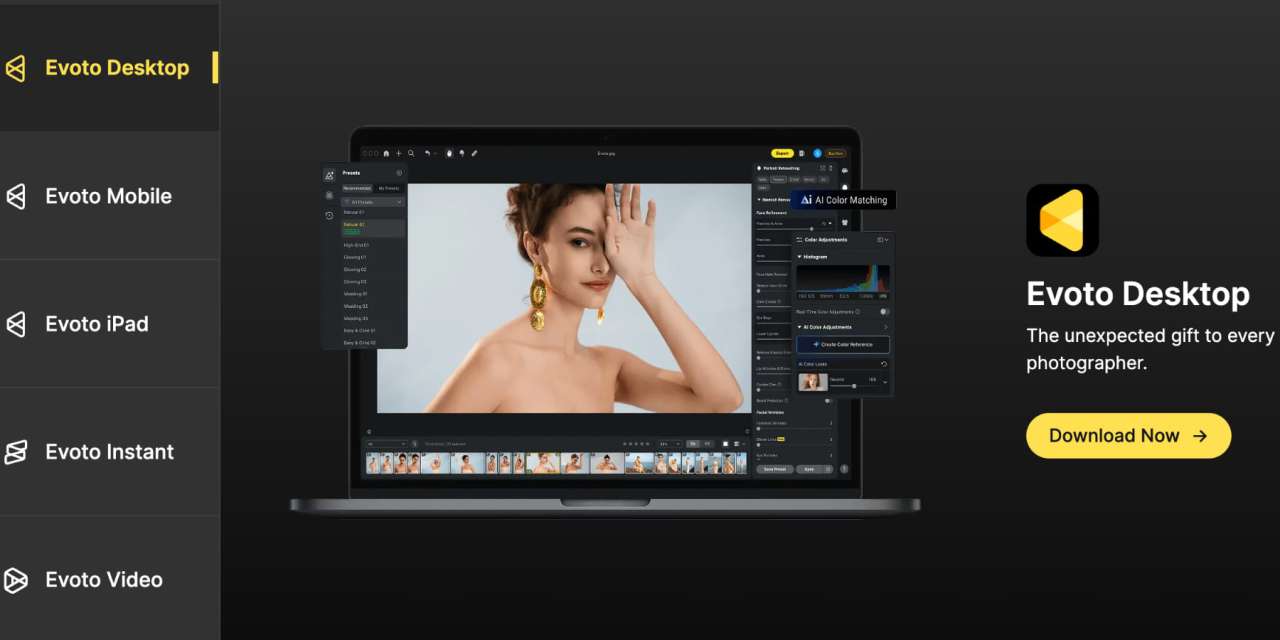
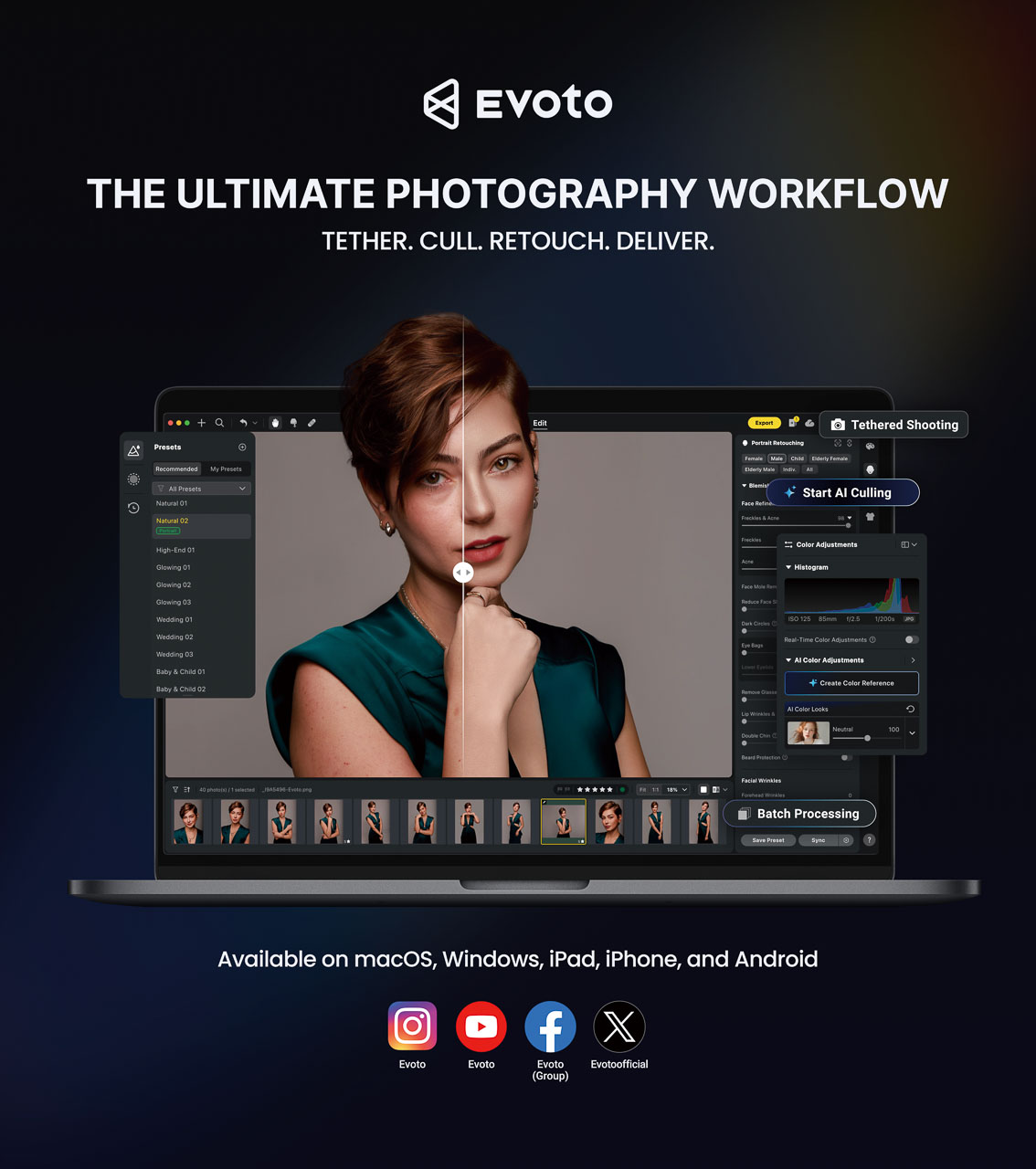
Evoto Mobile handles on location edits. Evoto Desktop 6.2 consolidates tethered capture, AI culling, and batch processing into one interface. Evoto Instant 1.4 adds same day delivery as a built in option. Together, the ecosystem targets up to 65% editing time recovery.
The Ecosystem: Built for Runway Deadlines
When a designer’s team emails asking for selects while you’re still shooting the next collection, friction is not abstract. It shows up when you bounce between tethering, culling, retouching, and export, especially when files are due before you leave the venue.
Instead of switching between multiple programs, photographers can stay within a single environment from capture to delivery. Desktop and mobile apps share presets and edits, allowing work started on a laptop to continue seamlessly on a phone during downtime.
That continuity matters in high volume environments. Wedding photographers, school portrait studios, and corporate event shooters face similar volume pressure. Thousands of frames require quick triage before deeper edits begin.
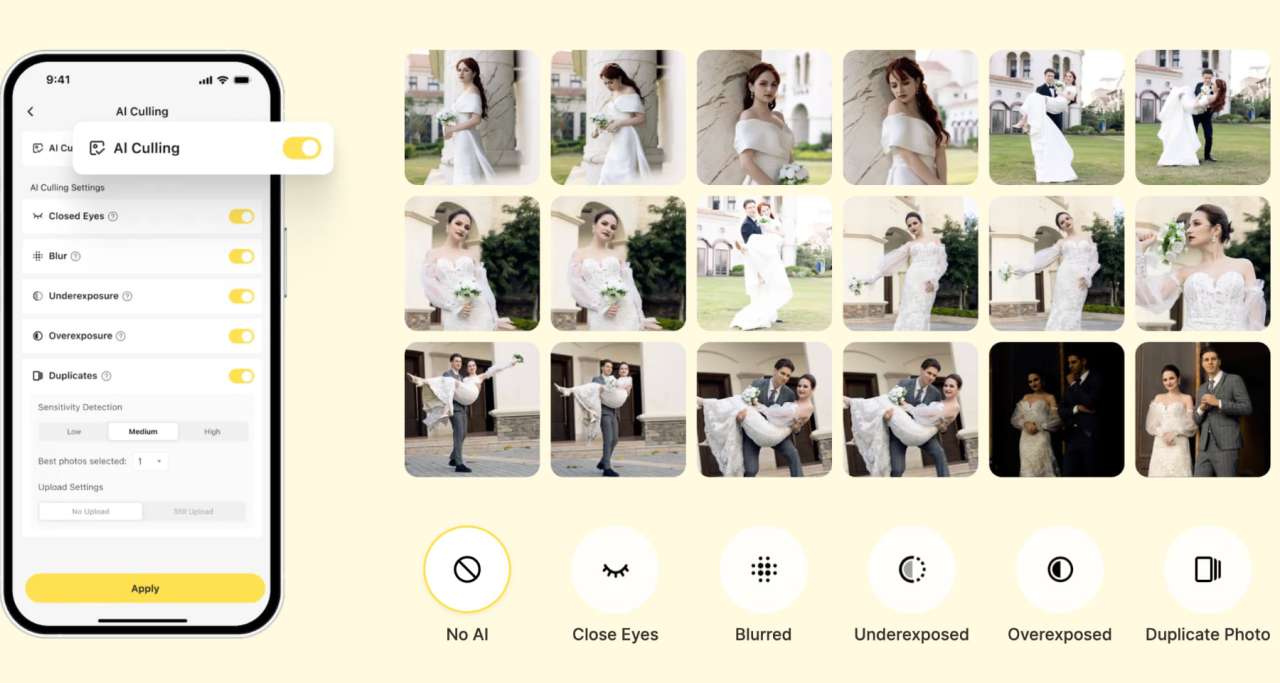
AI handles initial selections and basic retouching while photographers retain final creative control. The emphasis is not automation for its own sake, but fewer hours lost to repetitive tasks.
Automated culling has historically struggled with edge cases, including backlit subjects, intentional motion blur, or subtle expression differences. The company says its system is built to operate across varied lighting and real world scenarios. How consistently it performs across messy galleries is what determines its real world value.
Evoto Mobile: Editing Between Shows
Backstage at a fashion show, there is rarely a workstation. There is a phone, a tight deadline, and a client expecting images before the models leave the venue. During Fashion Week, waiting to return to a laptop is often not an option.
Evoto Mobile serves as the on location component of the broader workflow, bringing desktop level capabilities into a mobile environment. It enables photographers to cull, retouch, and prepare images while moving between shows rather than postponing everything until the end of the day.
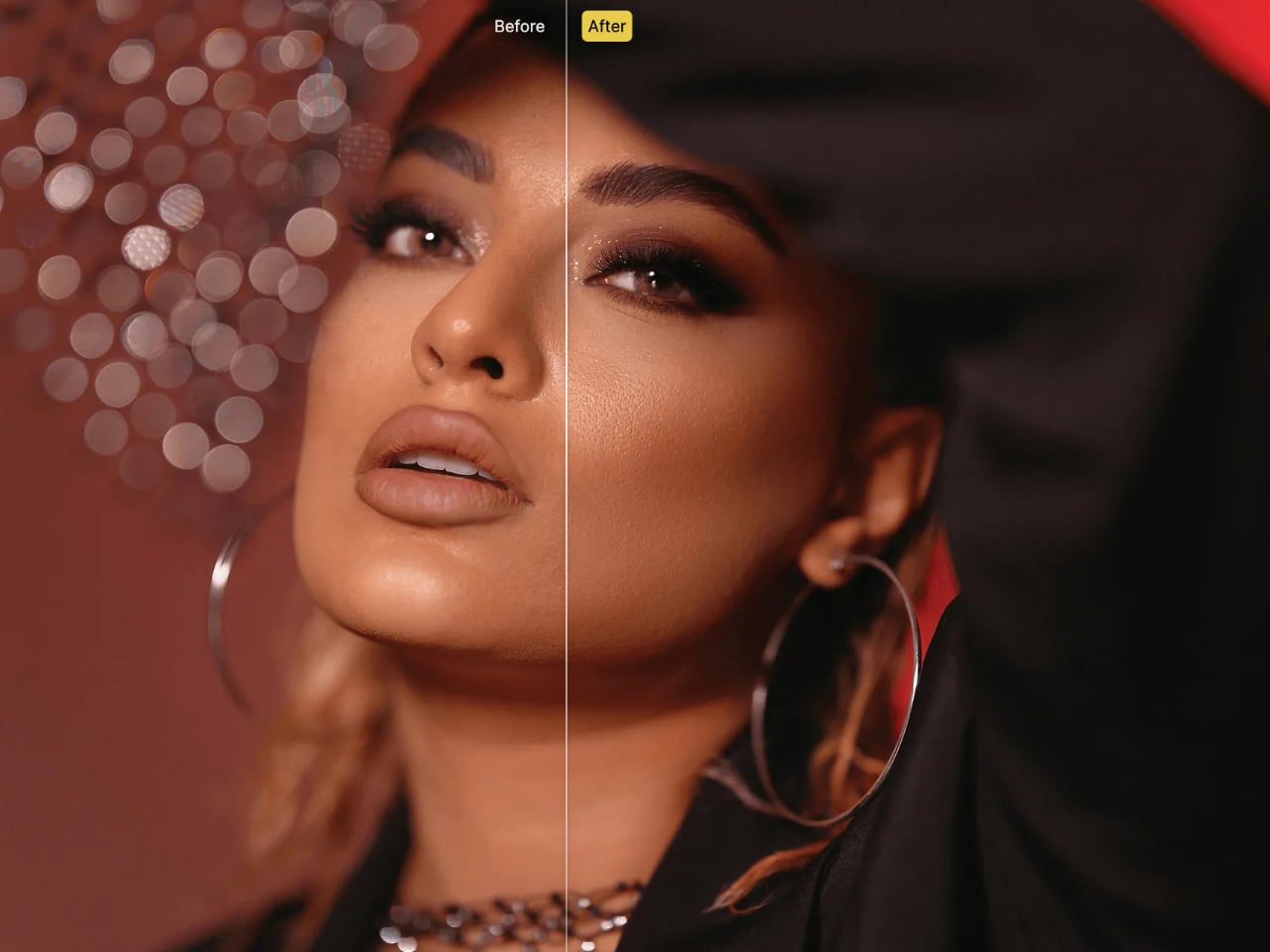
Portrait tools sit at the core of the mobile experience. Skin cleanup, body adjustments, stray hair correction, and other visual refinements are built directly into the app. These are the kinds of edits clients notice immediately, yet they are often delayed or skipped when deadlines compress.
Automation handles the repetitive first pass, while photographers retain final creative control over what looks natural for each subject. The intent is not to push faces into artificial territory. It is to accelerate routine corrections while preserving aesthetic judgment.
By reducing galleries in real time and handling early retouching on location, the mobile workflow shortens the later desktop session. Instead of returning to thousands of untouched files, photographers begin their laptop edit with a smaller, more manageable set and fewer repetitive adjustments waiting.
Evoto Desktop 6.2: Consolidation Over Fragmentation
After the last show ends, the full batch work begins. Evoto Desktop 6.2 combines tethered capture, AI culling, retouching, and delivery inside a single interface.
Rather than importing images into one app, culling in another, retouching in a third, and exporting from a fourth, users remain in one window throughout the process. Each application switch adds friction. Across thousands of images, that friction compounds.
The AI culling system can process roughly 5,000 images in about ten minutes, accelerating what is typically one of the most time consuming stages of post production.
Batch processing and preset syncing help maintain visual consistency across entire galleries. The shared preset library between desktop and mobile allows photographers to move between devices without rebuilding edits from scratch.
Evoto Instant 1.4: Same Day Delivery as Leverage
During Fashion Week, turnaround speed influences who gets hired again. Brands prioritize photographers who can deliver edited images while events are still unfolding, not days later.
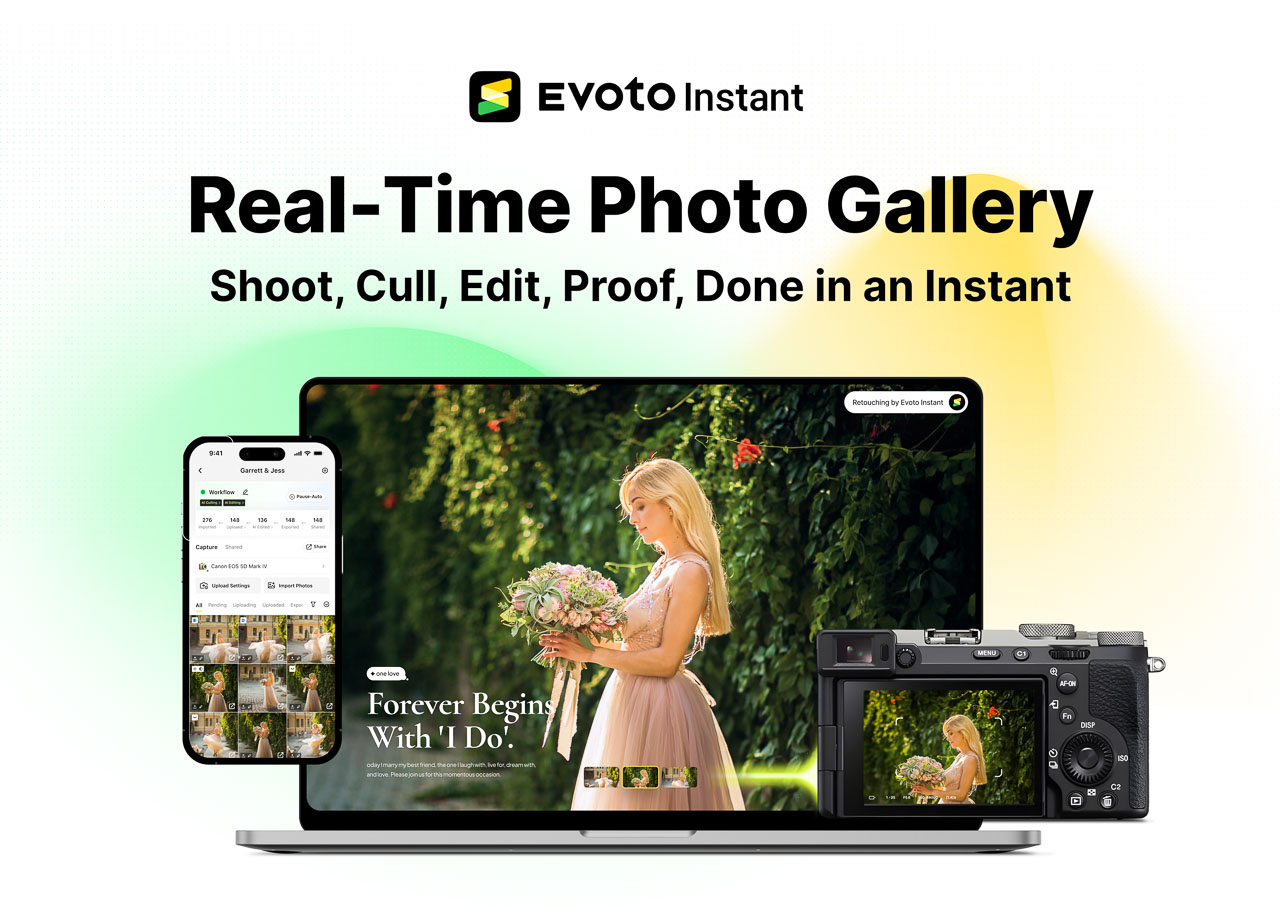
Evoto Instant 1.4 is built to support structured same day delivery workflows. According to the company, studios using the system have reported up to a 30% increase in upsells when offering same day delivery as a premium option.
The logic is practical. Clients are often most emotionally invested immediately after an event. Delivering polished images within hours increases the likelihood of additional purchases, expanded usage rights, or upgraded packages.
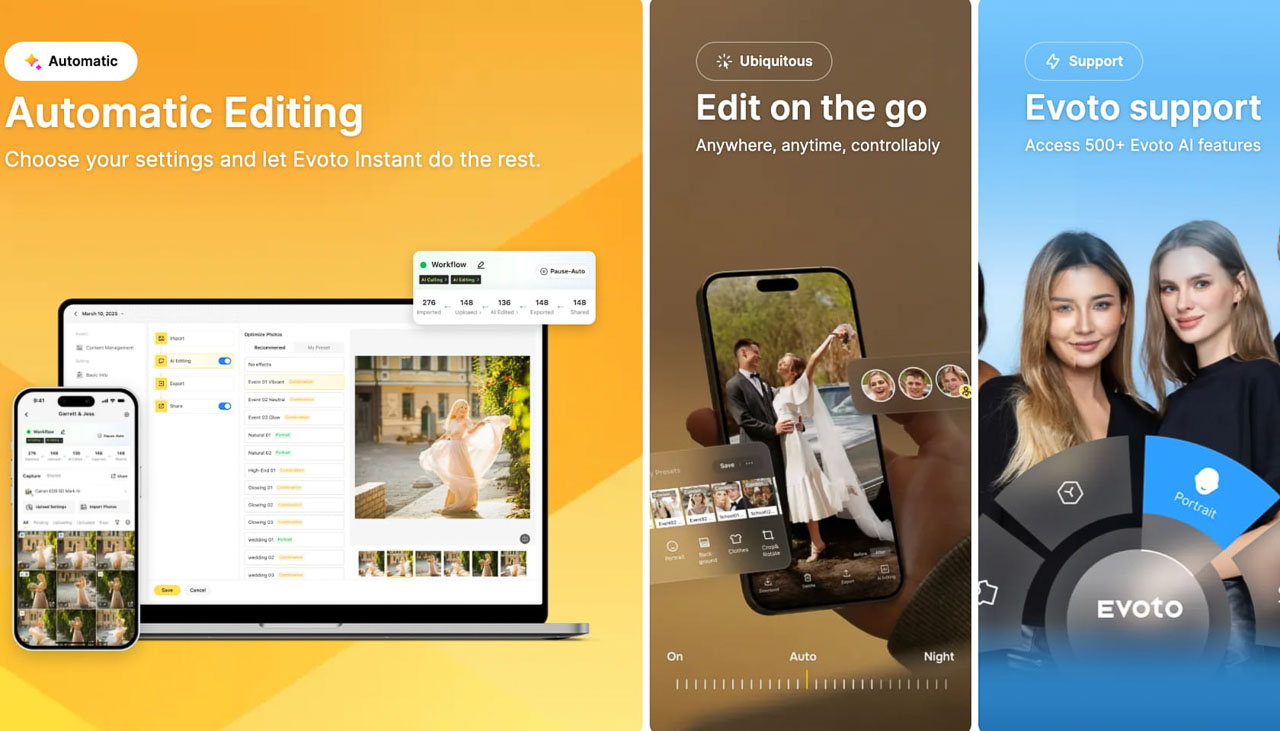
Within the broader ecosystem, Instant turns workflow speed into a business tool. When culling happens faster and first pass edits are handled earlier in the day, final delivery can move forward without compressing quality control into a late night rush.
Speed becomes more than convenience. It becomes pricing power.
Why Speed Became Non Negotiable
Evoto’s 2026 lineup centers on time. The company cites up to 65% editing time recovery across its connected workflow. For high volume photographers, reclaimed hours can translate into additional bookings, extended client time, or fewer late nights behind a screen.
Color tools such as AI Color Looks and AI Color Match aim to maintain consistency across large sets. Additional refinements, including wrinkle removal and garment cleanup, target the details clients notice but photographers often skip under compressed deadlines.
Reducing the number of applications in a post production pipeline also simplifies file management and lowers cognitive load. For photographers already working within established toolchains, switching systems carries trade offs. For others prioritizing speed and consolidation, a unified workflow may offer practical gains.
Where This Gets Tested
Fashion photographers do not need more standalone features. They need workflows that reduce editing time without flattening creative decisions.
Evoto Mobile accelerates on location edits. Evoto Desktop consolidates post production into a single environment. Evoto Instant turns rapid turnaround into a structured offering.
Evoto AI Photo Editor
Learn more: Try Evoto AI
If the workflow performs as described, the most significant impact will not be the AI itself. It will be the time photographers regain during one of the most demanding weeks of the year.
The Real Question
Fashion photographers don’t need another app that promises speed. They need tools that actually survive runway deadlines, mixed lighting, and the chaos of street style without flattening their creative decisions. The 2026 workflow lineup is a direct response to one of photography’s most persistent frustrations: the imbalance between shooting and editing time. Evoto positions its mobile app as a way to shift more of the post production process into on location moments, reducing the backlog that traditionally waits until photographers return to their desks. On the desktop side, the software consolidates tethered capture, AI culling, and batch editing into a single interface designed to streamline the entire pipeline.
The same day delivery tool turns quick turnaround into a monetizable service. A 65% time recovery claim sets a measurable benchmark, and environments like Fashion Week are where that benchmark faces real pressure. Feedback from photographers working through multi day weddings, large corporate events, and back to back portrait sessions will ultimately determine how consistently the AI culling and retouching perform under volume demands. The 2026 workflow lineup signals a clear direction: reduce editing time without overriding creative control, and give photographers greater flexibility in high pressure environments.
