
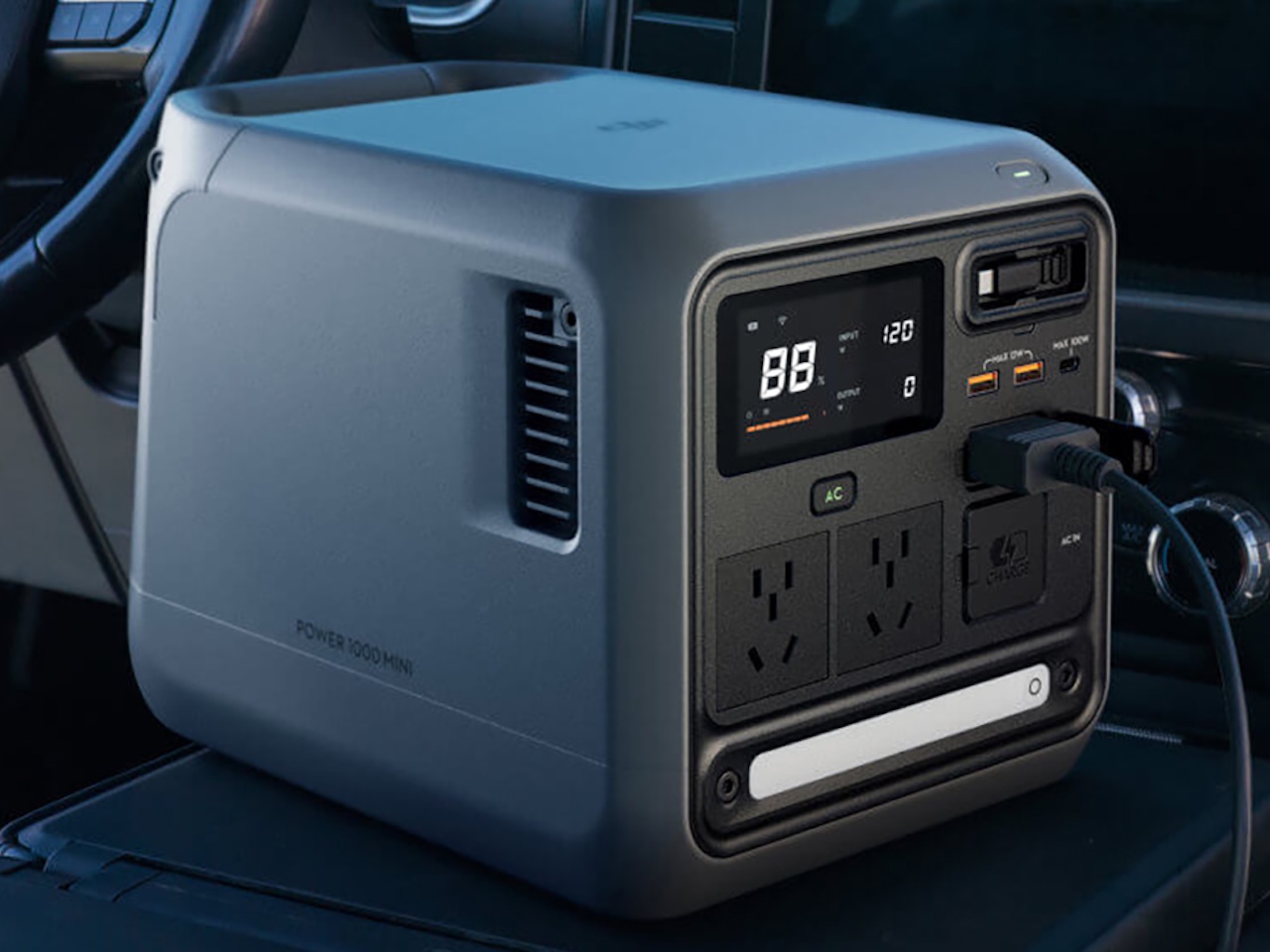
ARTICLE – Portable power stations weren’t supposed to get better by getting smaller. The whole category started because people needed more capacity, not less bulk. But that’s the tension DJI is now betting on with the Power 1000 Mini, a 1,000 Wh lithium iron phosphate battery that weighs 11.5 kg and measures 314 x 212 x 216 mm. It launched in China in January 2026 at CNY 2,499 (roughly $359 USD), and it’s visibly smaller and lighter than the Power 1000 V2 that arrived six months earlier. The V2 weighs 14.2 kg and stretches to 448 mm in length, so the Mini shaves off 134 mm and nearly 3 kg. That’s the difference between a box you carry with two hands and one you can grab with a single grip. So the real question is: what happens when a power station stops trying to do everything and starts optimizing for the moment when you actually have to pick it up?
Price: CNY 2,499 ($360)
Where to Buy: DJI
What It Is
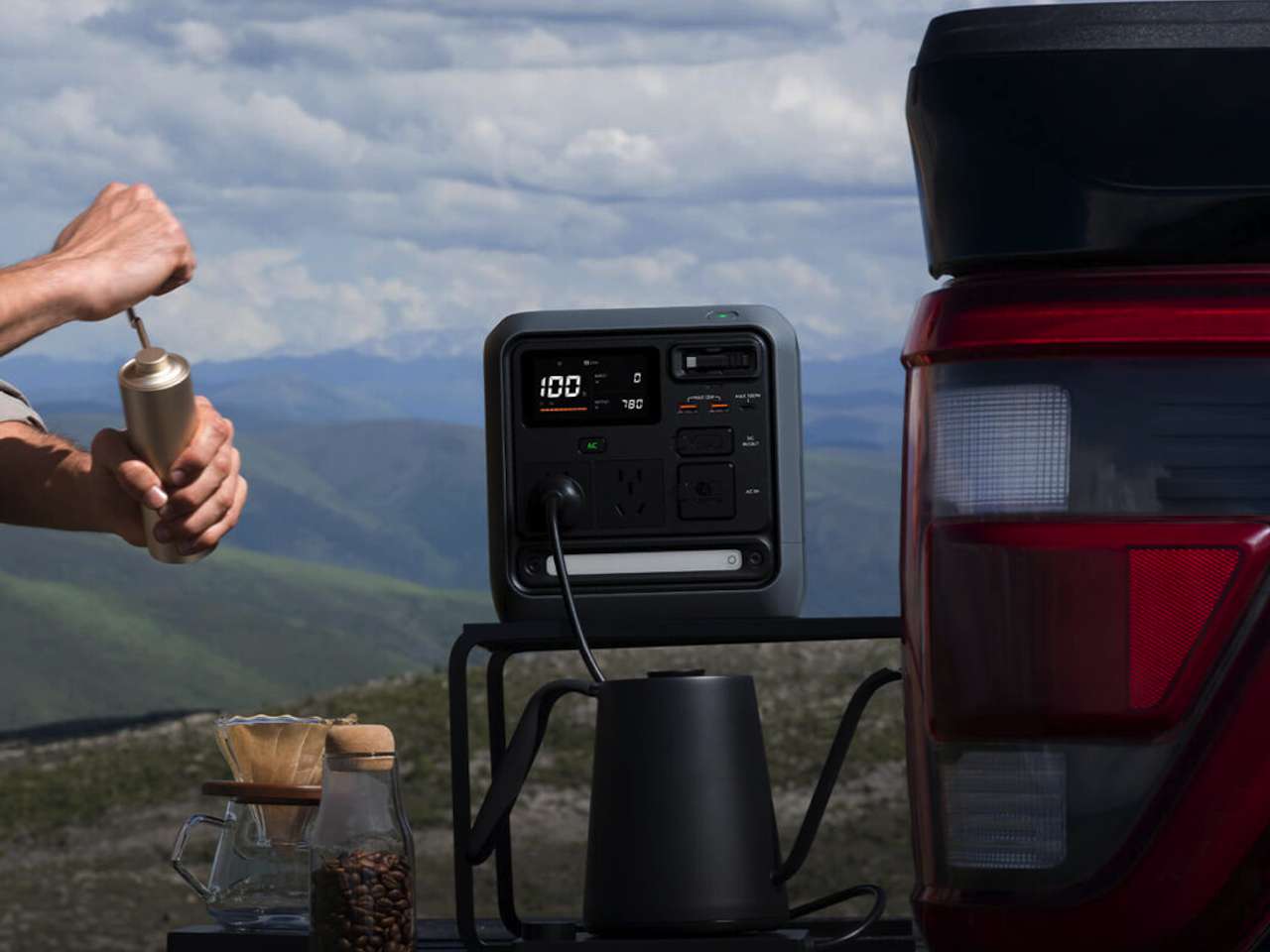
The DJI Power 1000 Mini is a rechargeable battery box built around 1,000 Wh of LiFePO4 cells. It’s designed to run laptops, cameras, drones, portable projectors, and smaller kitchen appliances away from wall outlets. Maximum output tops out at 1,000W with 800W continuous load support, which is enough for most mobile workflows but well below the 2,600W ceiling on the Power 1000 V2.
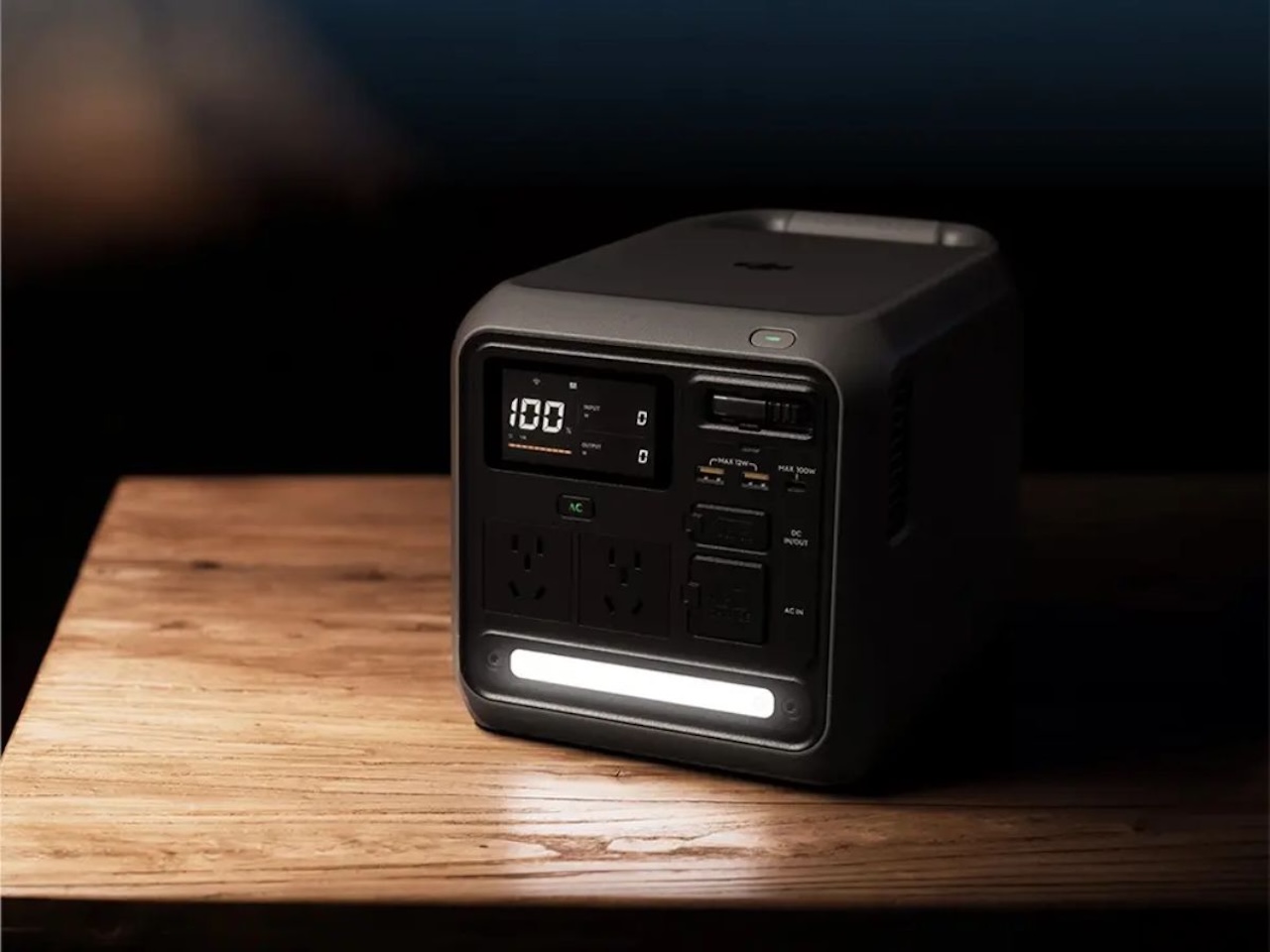
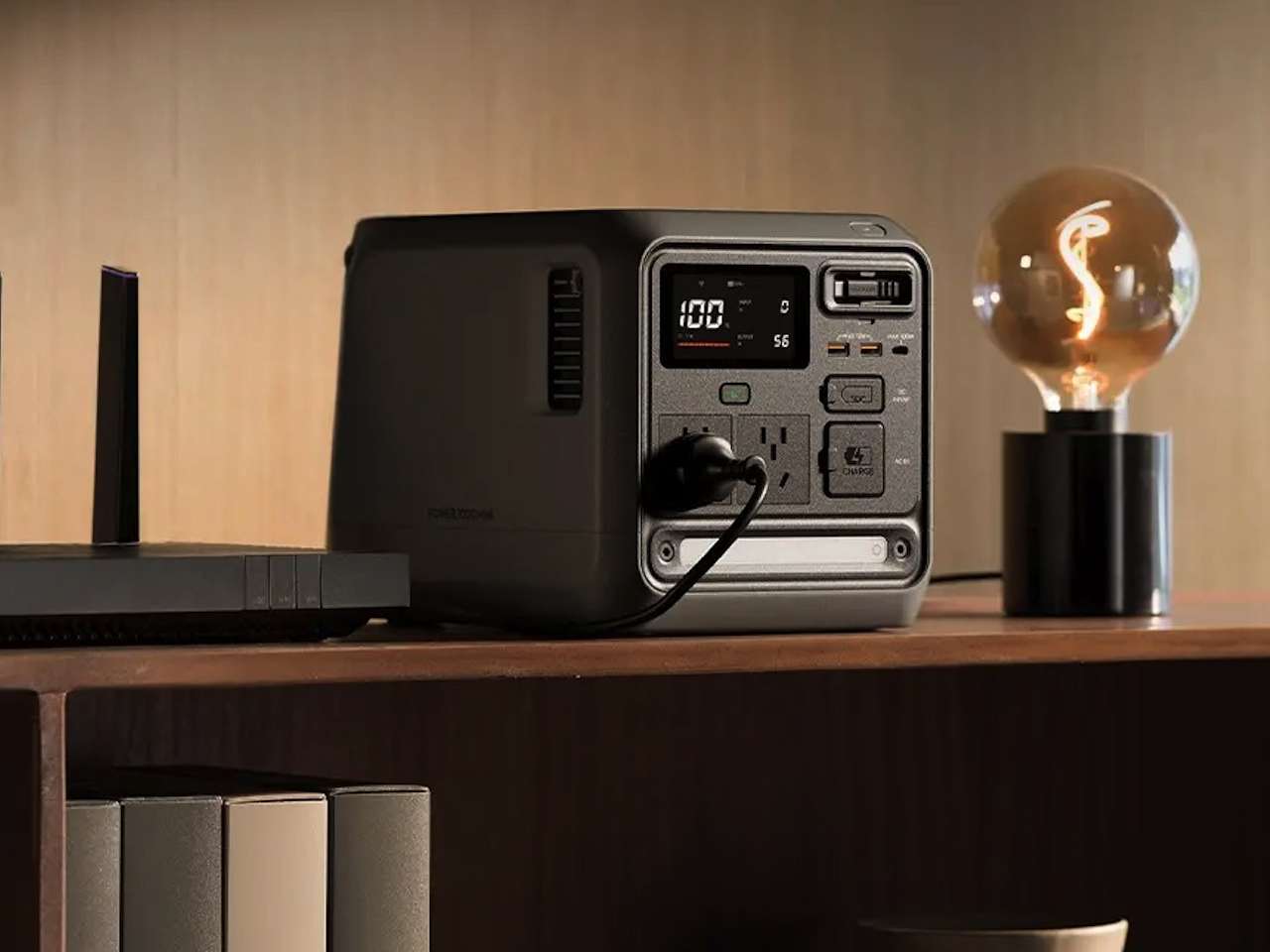
One detail that separates this from most competitors at the price point is a retractable USB-C cable built into the body. The cable supports 100W bidirectional charging, meaning it can deliver power to a connected device or accept incoming charge through the same cord. You pull it directly out of the power station, so there’s no need to carry a separate charging cable for quick top-ups on phones, tablets, or smaller laptops. It’s a small addition, but it removes one item from the bag. DJI also included a built-in LED light with an SOS flashing mode for camping or emergency situations. The light sits near the top of the unit and operates independently of the main output ports.
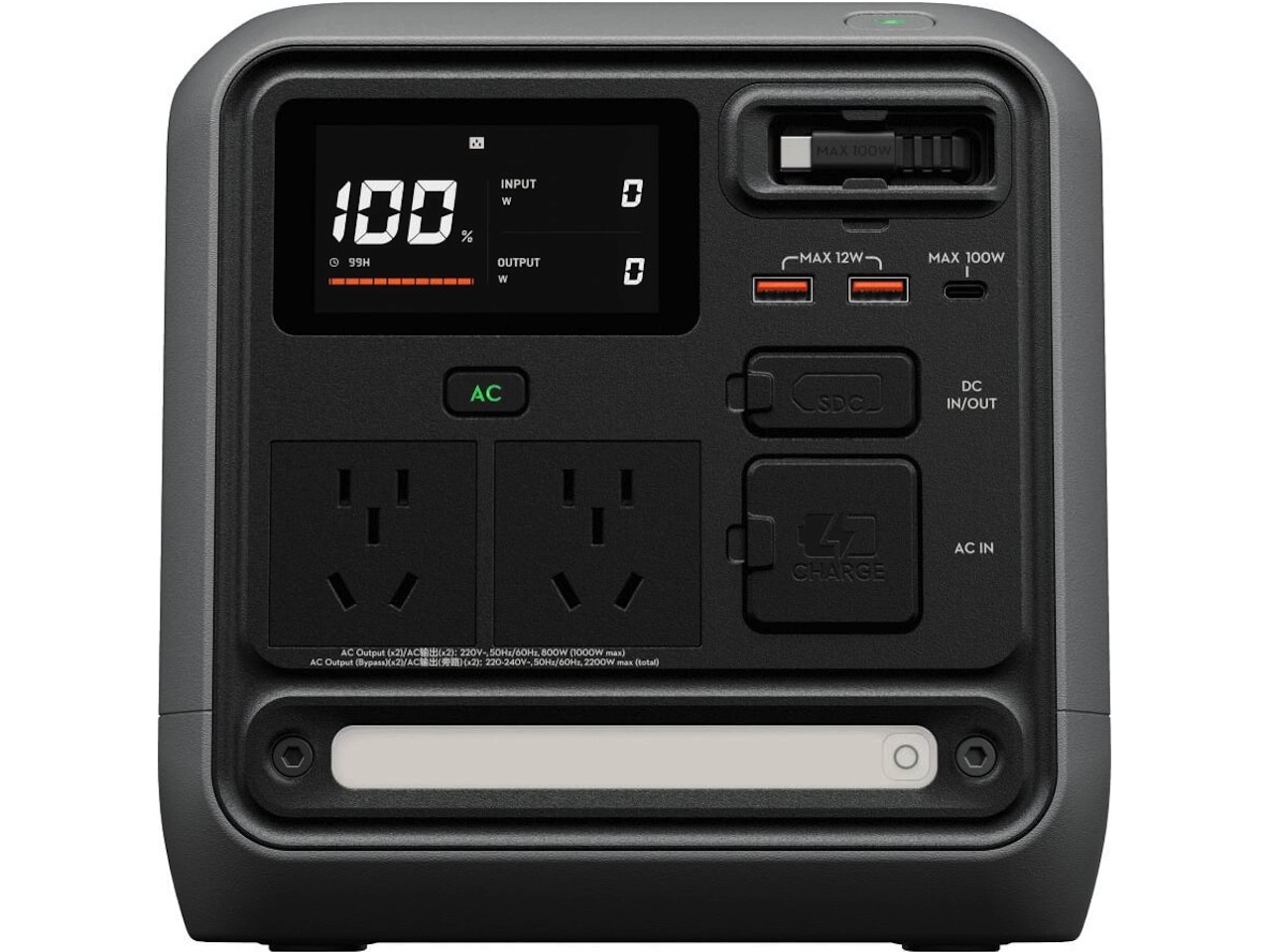
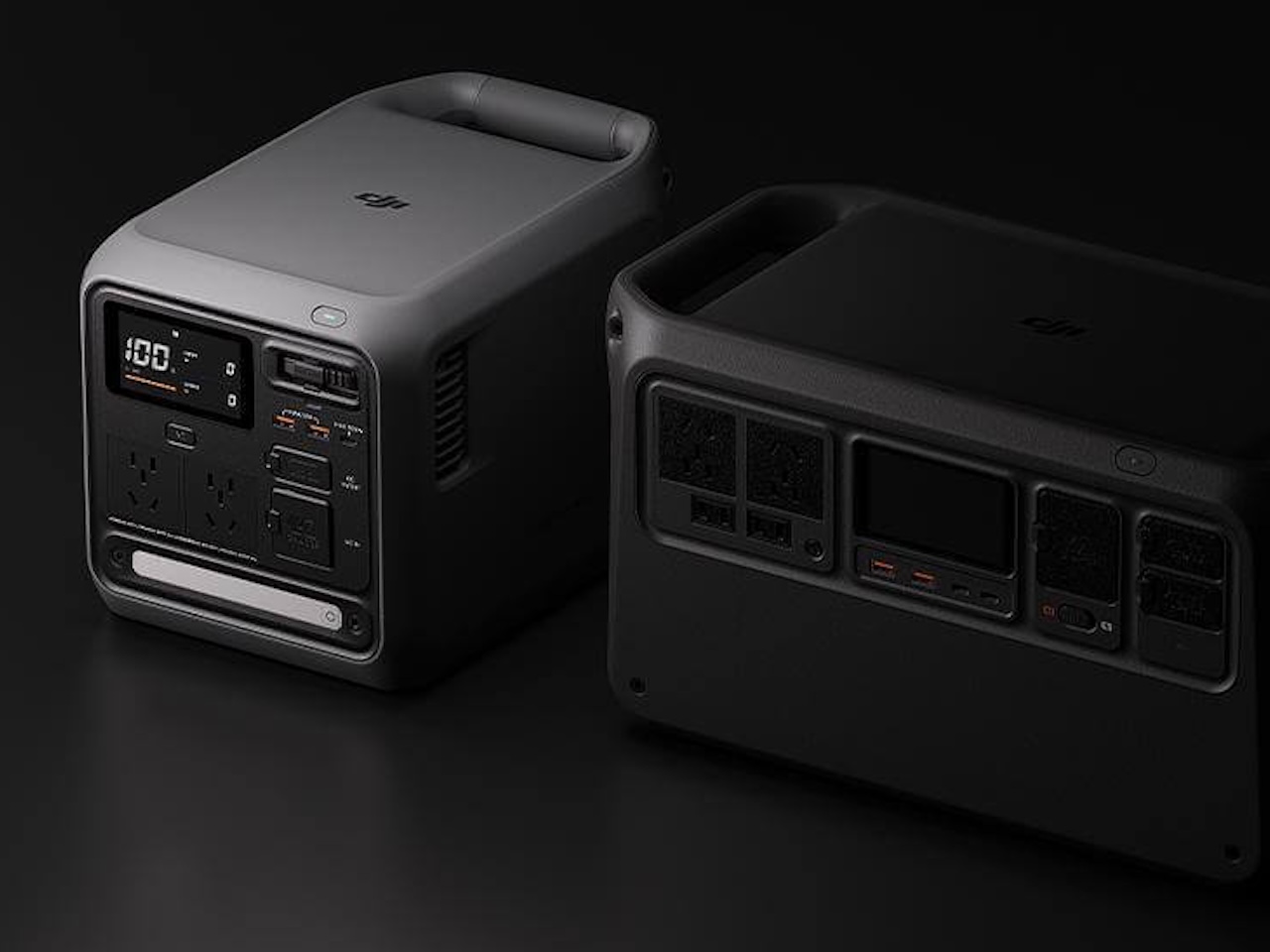
The front panel carries two AC outlets, one 100W USB-C port, two 12W USB-A ports, and one SDC port that connects directly to DJI’s drone batteries and accessories. You’ll notice the port count is lower than the V2, which carries four AC outlets. The Mini isn’t trying to power a full camp kitchen or run multiple high-draw devices simultaneously.
What DJI Removed to Make It Smaller
The Power 1000 V2 carries four AC outlets and a 2,600W maximum output. The DJI Power 1000 Mini cuts that to two AC outlets and a 1,000W maximum output, with 800W continuous load support. That’s a significant reduction in raw power ceiling, so if you’re running multiple high-draw devices at once or powering something like a portable heater or electric kettle, the Mini won’t handle it. DJI made deliberate cuts to the output configuration to reduce the internal components, which allowed the smaller chassis and lighter weight.
The Mini also loses some of the V2’s expandability features. The V2 supports external battery packs and more complex charging setups, which makes it better suited for extended off-grid use or situations where you need to scale capacity up over time. The Mini is a fixed-capacity unit with no expansion options. What you buy is what you get.
DJI kept the 1,000 Wh capacity identical between the two models, so the physical size reduction didn’t come at the expense of stored energy. The Mini and the V2 hold the same amount of power. The difference is in how much of that power you can pull at once and how many devices you can connect simultaneously.
The retractable USB-C cable is the only feature the Mini adds that the V2 doesn’t have. Everything else is a subtraction or reduction. That’s not a criticism, it’s a design philosophy.
The Mini isn’t trying to be a better version of the V2. It’s trying to be a different product for a different use case. DJI is clearly betting that enough users will prioritize portability and ease of transport over maximum output and port flexibility. Whether that bet pays off depends on how well the Mini’s target audience aligns with its actual buyers. The trade here is obvious: DJI cut two AC outlets and dropped the output ceiling to make the box physically manageable. The integrated handle on top supports one-handed transport, and the unit fits inside a car trunk alongside other gear without demanding its own dedicated space.
Charging Speed and Battery Longevity
DJI states that the Power 1000 Mini reaches a full charge in approximately 75 minutes through AC input, with an 80 percent charge completing in under one hour. Those numbers place it among the faster options in the LiFePO4 power station category at this capacity. Most competing units at 1,000 Wh take two hours or more to fully charge, so the Mini’s charge speed is a real advantage if you’re trying to top it off quickly between uses. The station also accepts charge through USB-C and compatible solar panels, which gives off-grid users a path to recharging without AC access. DJI doesn’t specify the solar input wattage, but most units in this category support 100W to 200W solar input, which translates to roughly five to ten hours of full-sun charging depending on panel size and efficiency.
The lithium iron phosphate chemistry carries a rating of at least 80 percent capacity retention after 4,000 full charge cycles. At one full cycle per day, that translates to roughly a decade of consistent performance before the battery drops below the threshold. LiFePO4 cells also operate more safely across wider temperature ranges than standard lithium-ion chemistry, which is a practical consideration for outdoor and vehicle-based use. If you leave the Mini in a hot car or use it in cold weather, the battery won’t degrade as quickly as traditional lithium-ion alternatives.
Why This Exists
DJI’s timing here aligns with a broader shift in the portable power station market. Brands like Bluetti, Jackery, and EcoFlow have all been shrinking their mid-capacity models while maintaining or increasing charge cycle counts. The trend is toward lighter, more manageable units that still offer enough capacity for short-term off-grid use or mobile work setups. The Power 1000 V2 arrived when DJI was establishing itself in the category and needed to demonstrate maximum capability.
The Mini arrives after DJI’s established credibility, when the company can afford to focus on a narrower use case. It’s aimed at users who found the V2 capable but too large for regular transport. Content creators shooting on location, campers who need overnight device charging, and drone operators already invested in DJI’s ecosystem all fit the intended audience. The retractable USB-C cable and reduced footprint suggest DJI is chasing the segment of buyers who want power station capacity without committing to power station bulk. The price difference reinforces that positioning.
In China, the Mini retails for CNY 2,499, while the Power 1000 V2 currently sells for $699 in North America. That’s a significant gap, and it creates clear separation for buyers who don’t need the V2’s higher output ceiling. DJI hasn’t confirmed when or whether the Mini will launch in North America, Europe, or other international markets.
The Power 1000 V2 followed a similar pattern when it debuted in China before expanding to additional regions several months later, so a staggered rollout for the Mini would be consistent with DJI’s recent approach. If the Mini does reach international markets at a competitive price, it’ll put direct pressure on compact LiFePO4 models from established competitors. The chassis uses a matte finish that resists fingerprints and scratches better than glossy alternatives, and the handle is wide enough to accommodate gloved hands, which matters in cold weather or when you’re working outdoors.
Who Should Skip This
If you need to run multiple high-draw devices at once, the Mini’s 1,000W maximum output and 800W continuous load won’t cut it. The Power 1000 V2 or a larger unit with a higher wattage ceiling is the better option. If you’re powering a multi-device camp kitchen setup, running power tools, or need more than two AC outlets, the Mini’s reduced port count and lower output become real limitations.
The lack of expandability also means this isn’t the right choice for users who want to scale capacity over time or add external battery packs. If your power needs vary significantly or you’re planning for extended off-grid use where you might need to grow the system, the V2’s flexibility is worth the extra bulk and cost. The Mini also doesn’t make sense if you’re primarily using it in a fixed location.
If the unit sits in one place and rarely moves, the size and weight reduction don’t provide meaningful value. You’re better off with a higher-output model that offers more ports and greater flexibility. The Mini’s advantages only show up when portability matters, when you’re frequently moving the unit between locations, or when you need to carry it by hand across distances.
Price: CNY 2,499 ($360)
Where to Buy: DJI
Bottom Line
The Power 1000 Mini is DJI’s answer to the question of what a power station looks like when it stops trying to replace a wall outlet and starts optimizing for the carry. It’s smaller, lighter, and faster to charge than the Power 1000 V2, but it sacrifices output ceiling, port count, and expandability to get there. For users who found the V2 capable but too large for regular transport, the Mini offers a clear alternative. For users who need maximum output or flexibility, the V2 remains the better option. Whether the Mini reaches international markets at a competitive price will determine how much pressure it puts on compact LiFePO4 models from Bluetti, Jackery, and EcoFlow. For now, it’s a China-only release that signals where DJI thinks the portable power station category is heading: toward lighter, more manageable units that prioritize the moments when you actually have to pick them up.

NetumScan Book & Document Camera, Multi-Language OCR and English Article Recognition by AI Technology, Real-time Projection, Video Recording, Foldable & Portable, Capture, Windows/MAC/Linux- NS-800NC
(as of March 25, 2026 00:08 GMT -05:00 - More infoProduct prices and availability are accurate as of the date/time indicated and are subject to change. Any price and availability information displayed on [relevant Amazon Site(s), as applicable] at the time of purchase will apply to the purchase of this product.)
