
CES 2026 NEWS – Screen size has always been a permanent choice made at checkout. Lenovo’s CES 2026 proof-of-concepts treat it as a variable you control in the moment.
CES is full of prototypes that never ship, but Lenovo’s 2026 lineup doesn’t feel like a stunt. It feels like a stress test for what happens when your laptop, monitor, and even your glasses all get AI brains and rollable screens.
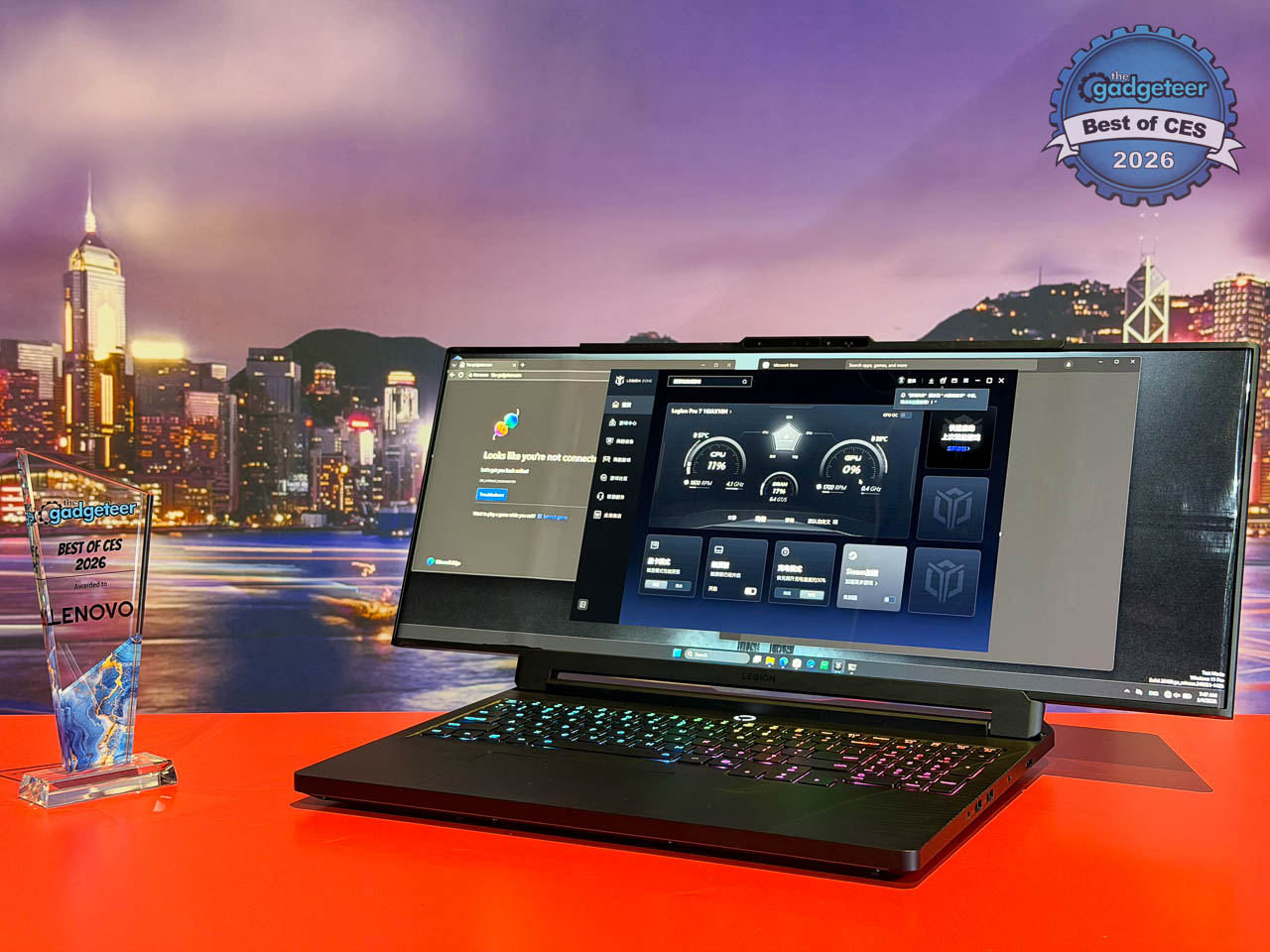
In one corner of Lenovo’s booth, a Legion Pro gaming laptop quietly unrolls from a backpack-friendly 16-inch panel into a desk-filling 24-inch OLED arena. A few steps away, a ThinkPad scrolls upward like a digital legal pad, turning a 13.3-inch work machine into a 16-inch canvas when you need more room. On the other side, a pair of 45-gram AI glasses promises live translation, teleprompter mode, and notification triage without strapping a VR brick to your face.
None of these are shipping products yet. Lenovo is calling them “proof of concepts,” and that’s the right phrase: they’re less about one hero device and more about a bet that the next wave of PCs won’t be defined by CPU bumps, but by screens that change shape and interfaces that understand context. Here’s what stood out, and what it might mean for the laptops and monitors you actually buy in a few years.
Add The Gadgeteer as a preferred source to see more of our coverage on Google.
Legion Pro rollable: a gaming laptop that stretches from backpack mode to battle station
The gaming variant starts at a compact portable size and expands through multiple configurations, reaching display dimensions significantly larger than traditional gaming laptops. You notice the shift in how Lenovo frames the modes: Focus for portable gaming sessions where backpack fit matters, Tactical for desk setups where you want monitor-class real estate without an actual monitor, Arena for those moments when maximum screen size stops being excessive and starts being the point. The PureSight OLED panel maintains image quality across all configurations, which sounds simple until you consider the mechanical complexity of rolling a high-refresh display without destroying pixel uniformity.
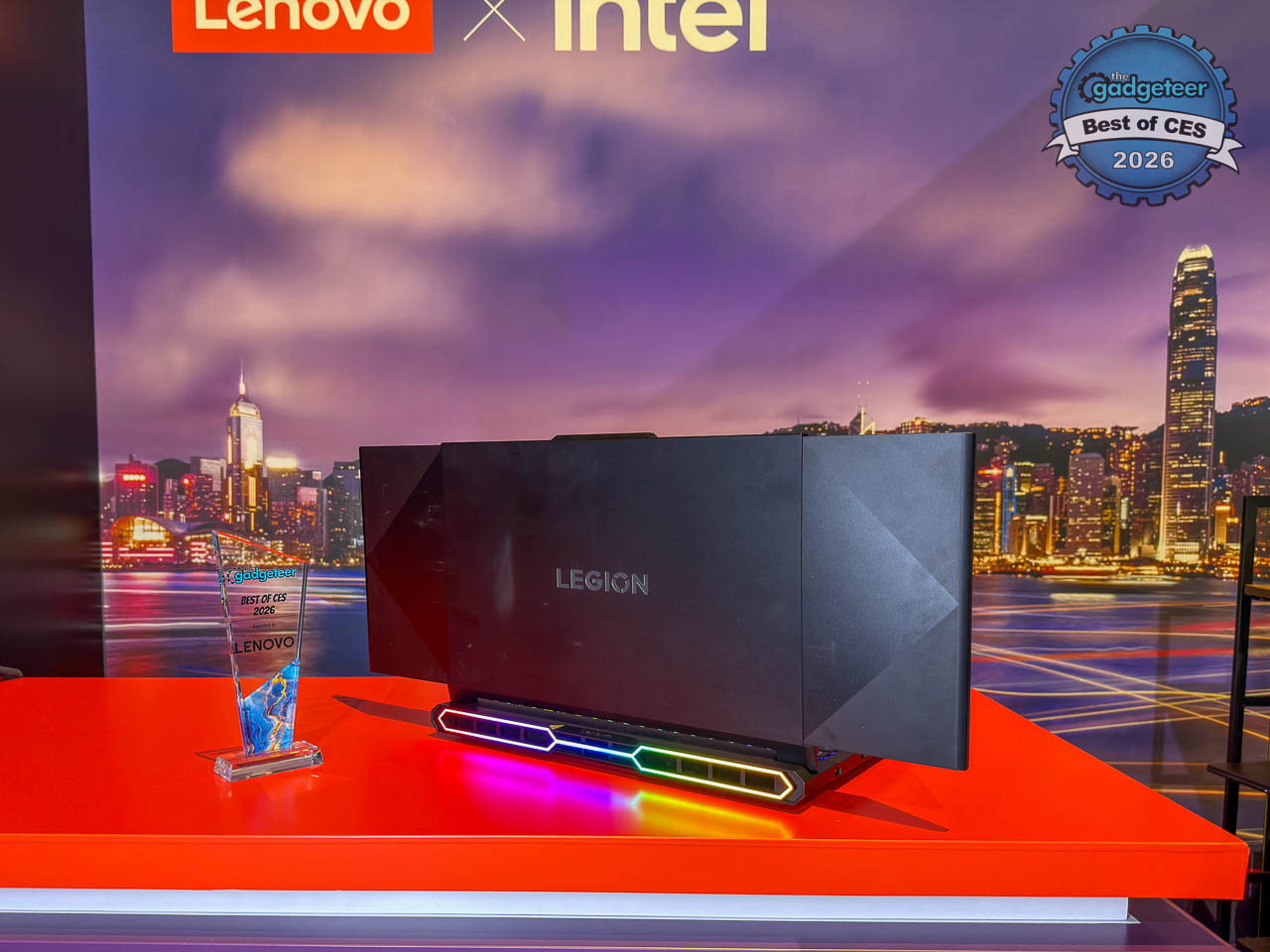
The flagship-class discrete GPU capability and Lenovo’s AI acceleration stack signal this isn’t a display gimmick bolted onto compromised hardware. Lenovo built the concept around high-end internals, suggesting they see rollable gaming laptops as eventually replacing traditional form factors rather than supplementing them.
The thermal implications of a rollable gaming laptop running desktop-class graphics remain unclear, and that’s worth noting because cooling a rollable chassis introduces engineering challenges that fixed-frame laptops never face. The flexible display housing limits where heat pipes can run, the expansion mechanism adds moving parts that can’t tolerate extreme temperatures, and the variable surface area means thermal solutions must work across multiple physical configurations. Whether Lenovo has solved these problems or simply demonstrated that rollable gaming is theoretically possible makes the difference between a near-term product and a perpetual concept. The high-end GPU inclusion suggests confidence in the thermal design, but CES demos rarely stress-test sustained load scenarios.
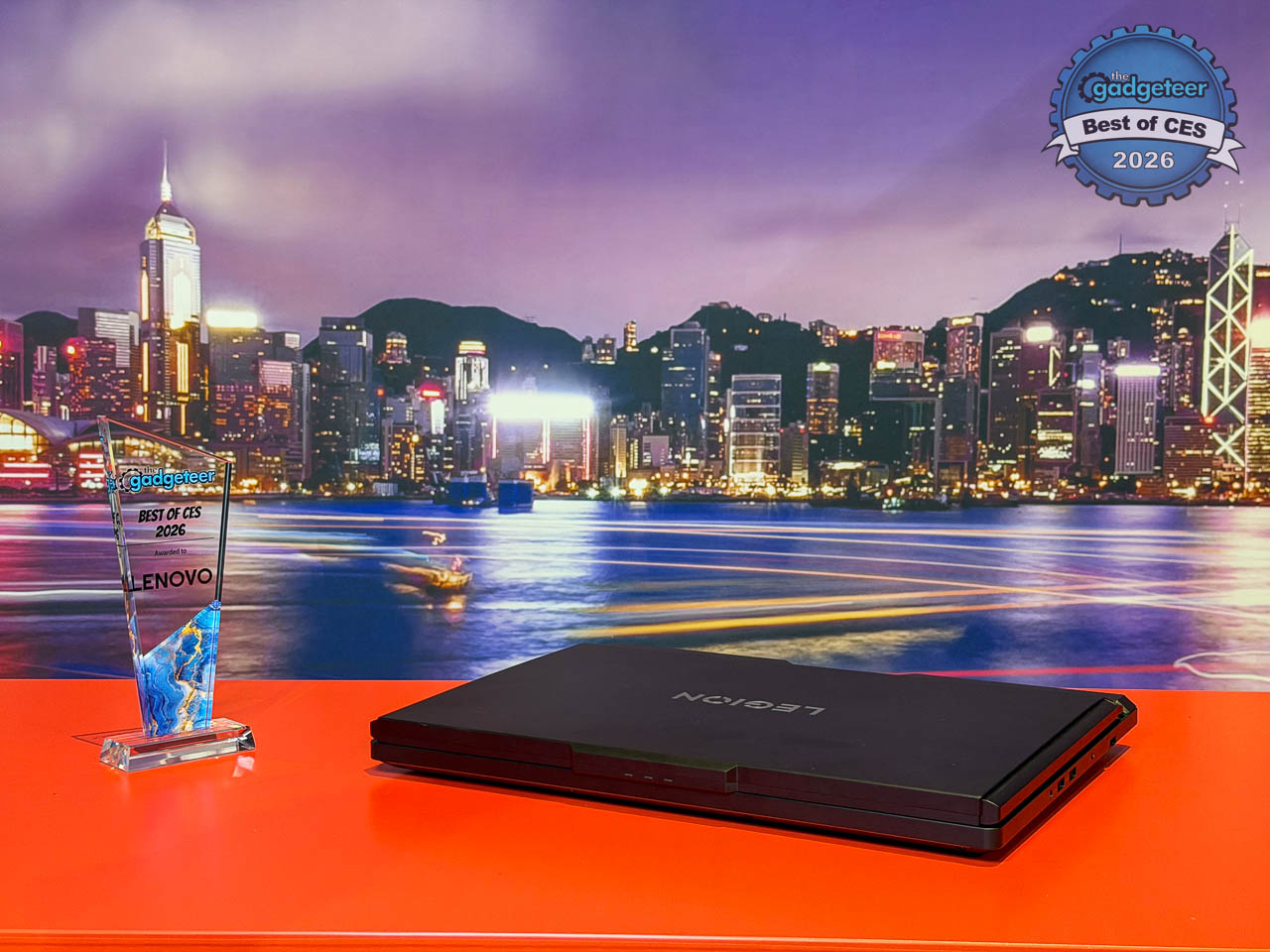
What you feel when watching the expansion is surprisingly mechanical for a display-based transformation. The rolling motion produces audible feedback, the chassis shifts perceptibly as internal components redistribute, and the whole process takes several seconds rather than happening instantaneously. Whether that deliberate pace reflects engineering necessity or user experience design remains unclear. Fast expansion might feel unstable. Slow expansion might feel intentional.
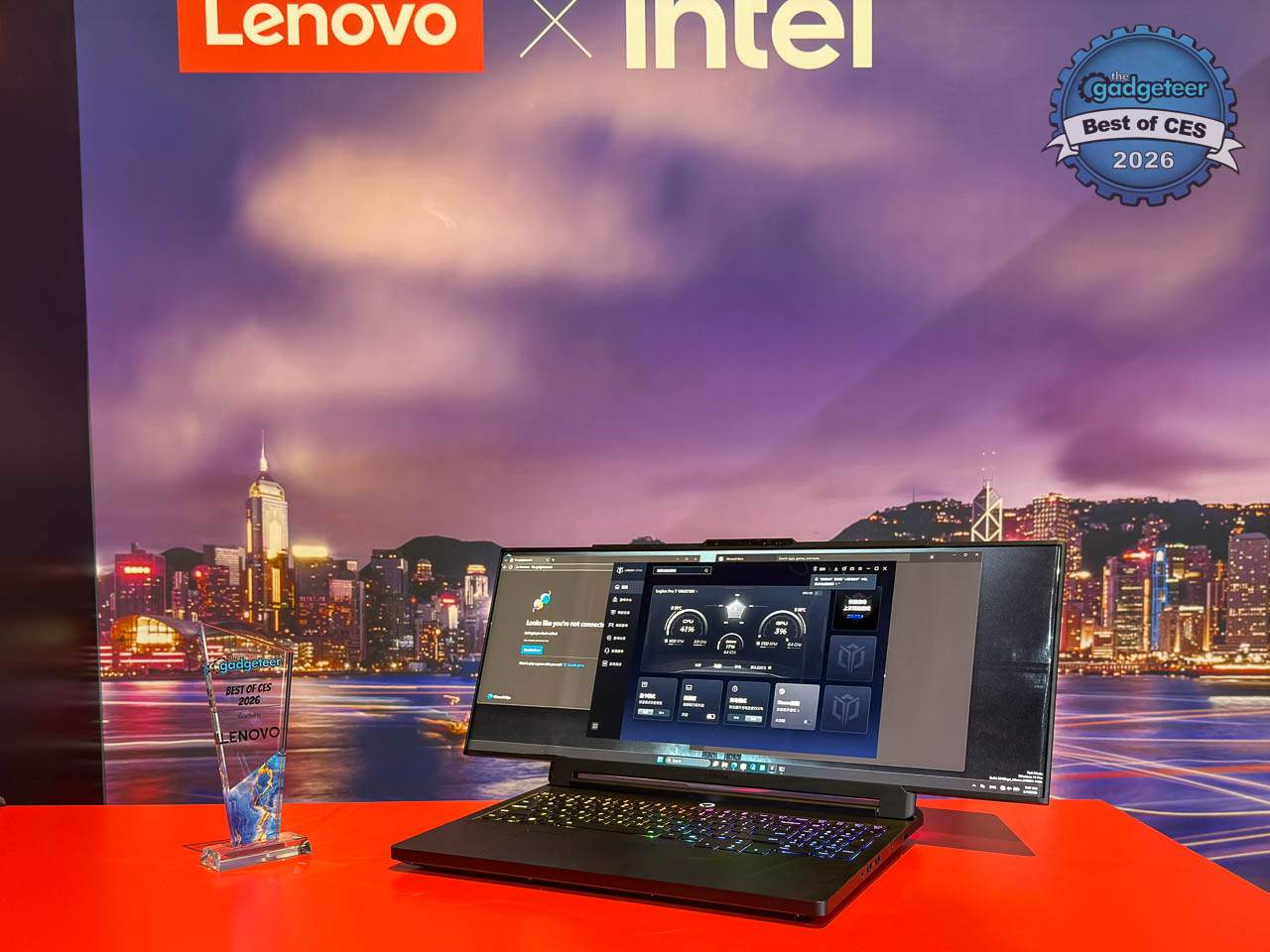
For anyone gaming on a cramped desk or in a dorm, the idea of a laptop that travels as a 16-inch machine but expands to a 24-inch OLED when you’re home is more than a party trick: it’s a way to dodge buying a separate monitor.
ThinkPad Rollable XD turns a 13-inch workhorse into a 16-inch canvas with a swipe
The business variant takes a more conservative expansion approach: a compact ultraportable starting size grows to a significantly larger working canvas, adding substantial screen real estate without changing the footprint you carry. The Corning Gorilla Glass Victus 2 protection over the rolling mechanism addresses the obvious durability question, though long-term reliability across thousands of expansion cycles remains unproven. AI-powered features including live translation and gesture-based controls hint at how the extra space might actually be used in professional contexts, turning the additional display area into functional workspace rather than just bigger versions of the same windows. The ThinkPad branding suggests Lenovo sees enterprise customers as early adopters, which makes sense given business travelers face the screen size tradeoff most acutely: carrying a compact ultraportable means accepting that spreadsheets and presentations will always feel cramped.
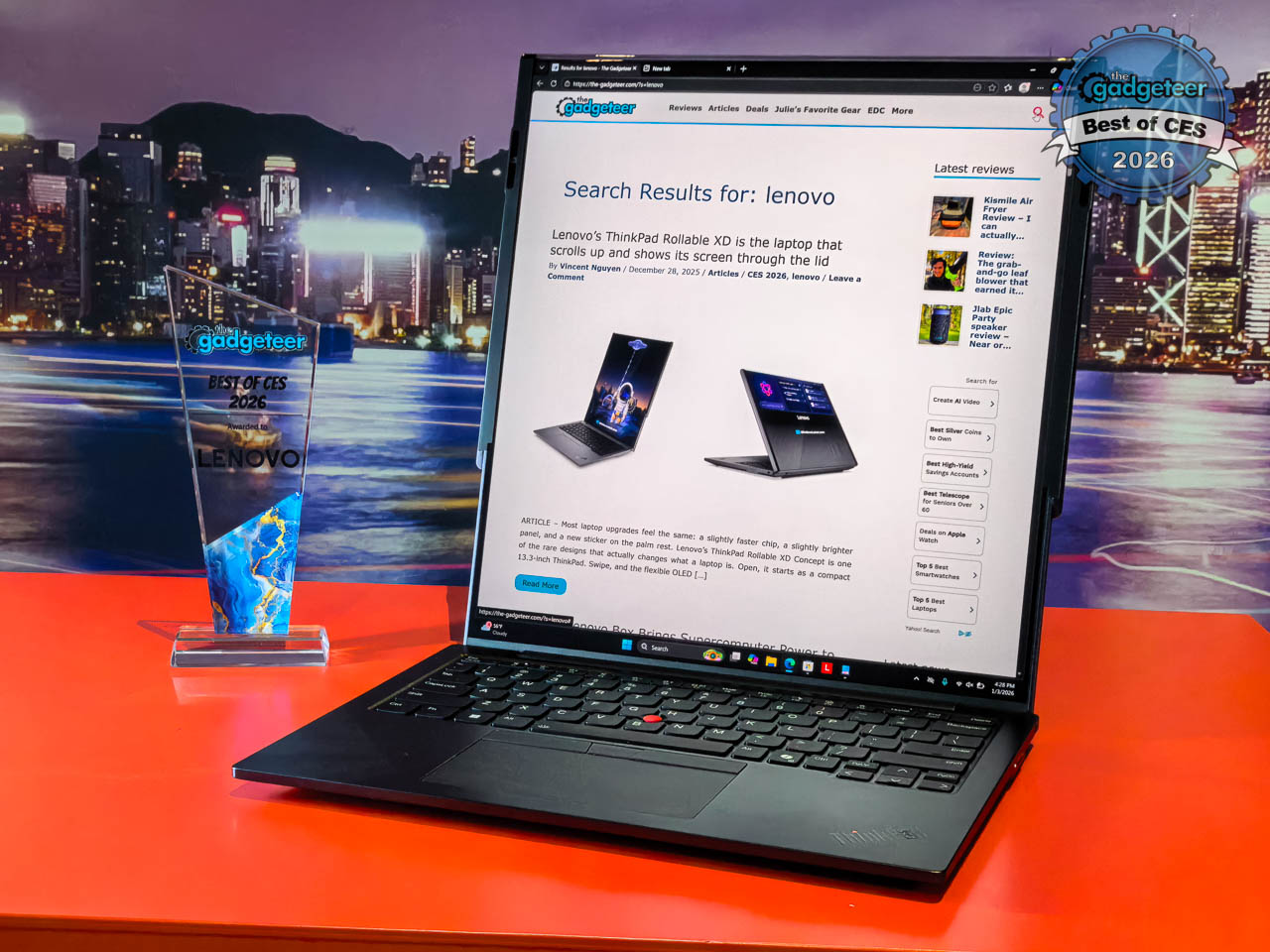
What separates this from previous flexible display experiments is the Victus 2 integration. Rolling a display is one problem. Rolling a display that survives airport security, briefcase compression, and three years of daily use is a completely different engineering challenge.
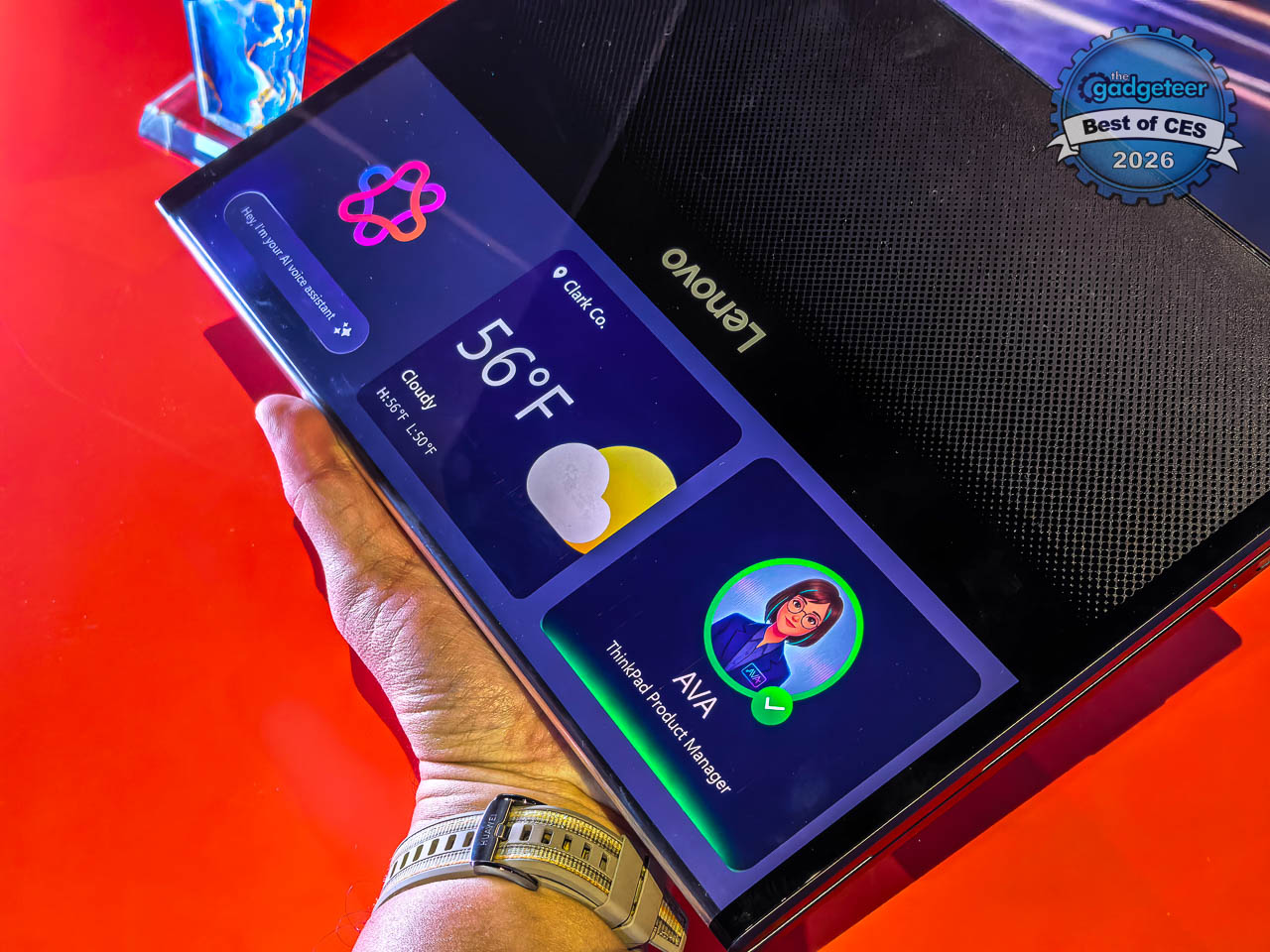
The ThinkPad rollable feels less like a gimmick and more like a legal pad that can stretch on demand: one swipe and suddenly there’s room for your notes, reference doc, and video call without juggling windows.
Lenovo’s 45-gram AI glasses aim for all-day wear, not just CES demos
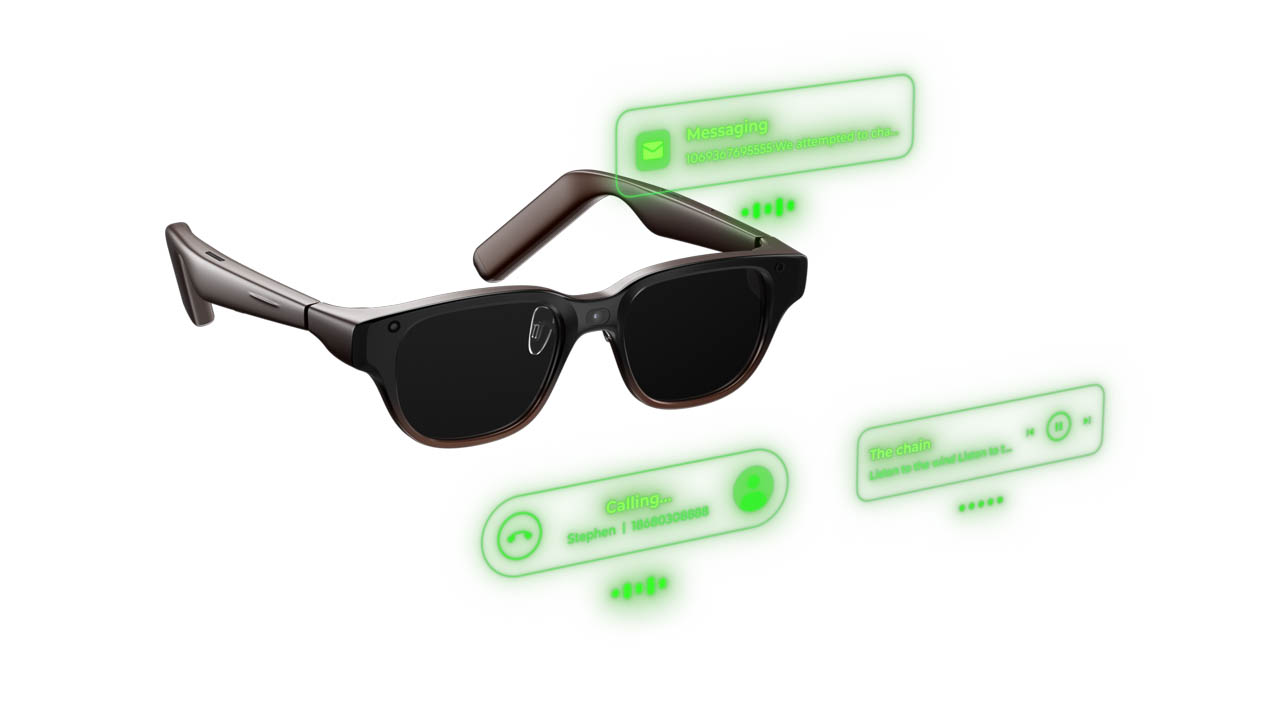
Designed to be lightweight enough for extended daily wear, the Lenovo AI Glasses integrated with the Qira AI ecosystem represent something the smart glasses category has promised but never delivered: a device comfortable enough to use throughout a workday without facial fatigue. If Google Glass felt like a dev kit on your face and Ray-Ban Meta still broadcasts “I’m wearing a camera,” Lenovo’s 45-gram AI glasses are trying to disappear into the same weight class as premium sunglasses, while quietly handling live translation, teleprompter duties, and notification triage. The target here isn’t early-adopter flexing; it’s people who live in presentations, client calls, and multilingual meetings all day.
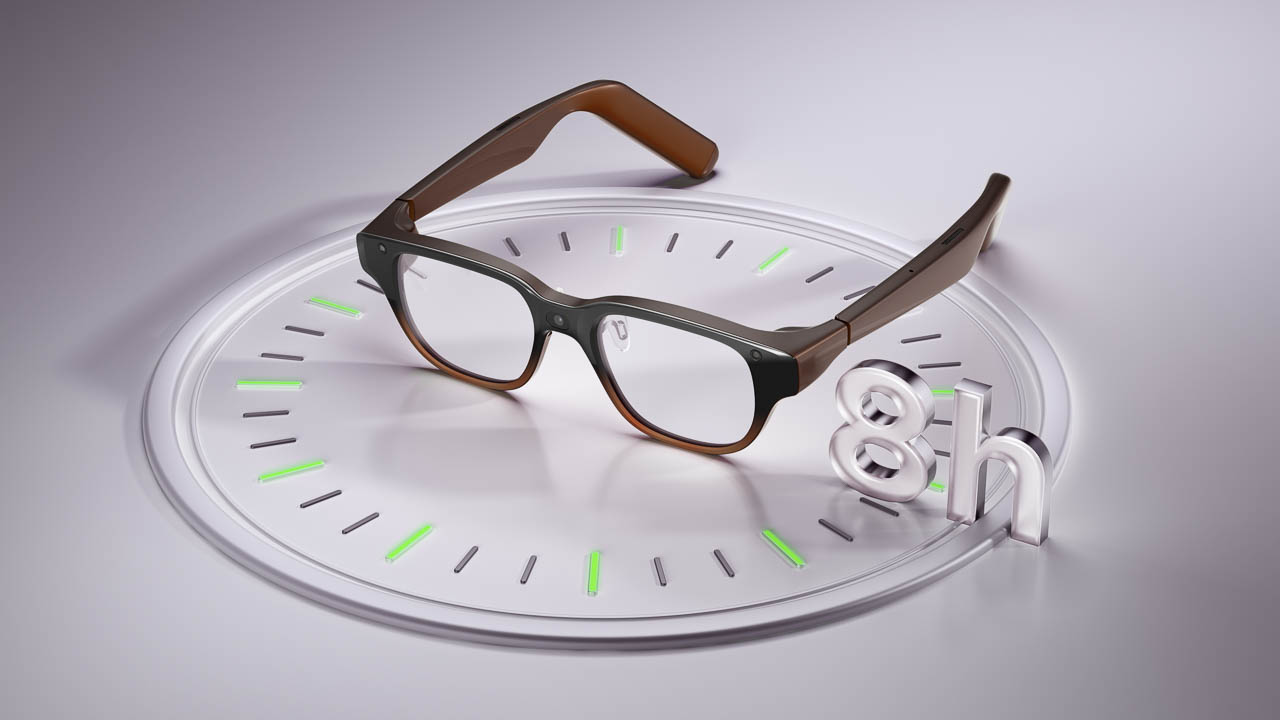
The weight achievement deserves scrutiny because previous smart glasses have consistently underdelivered on comfort. Google Glass felt like a gadget strapped to your face. Meta’s Ray-Ban collaboration improved the aesthetics but still broadcasts “I’m wearing a computer” to everyone in the room. Lenovo’s approach targets the weight of premium sunglasses, which means the social friction of wearing these might actually be manageable. The extended battery life positioning, designed for all-day professional use, addresses the other persistent smart glasses problem: devices that die mid-afternoon aren’t devices you can rely on. Whether all-day reflects light usage or sustained AI processing load matters enormously for real-world utility. The Qira platform integration suggests meaningful onboard processing rather than constant phone tethering, though power consumption across a full workday with active AI features remains an open question.
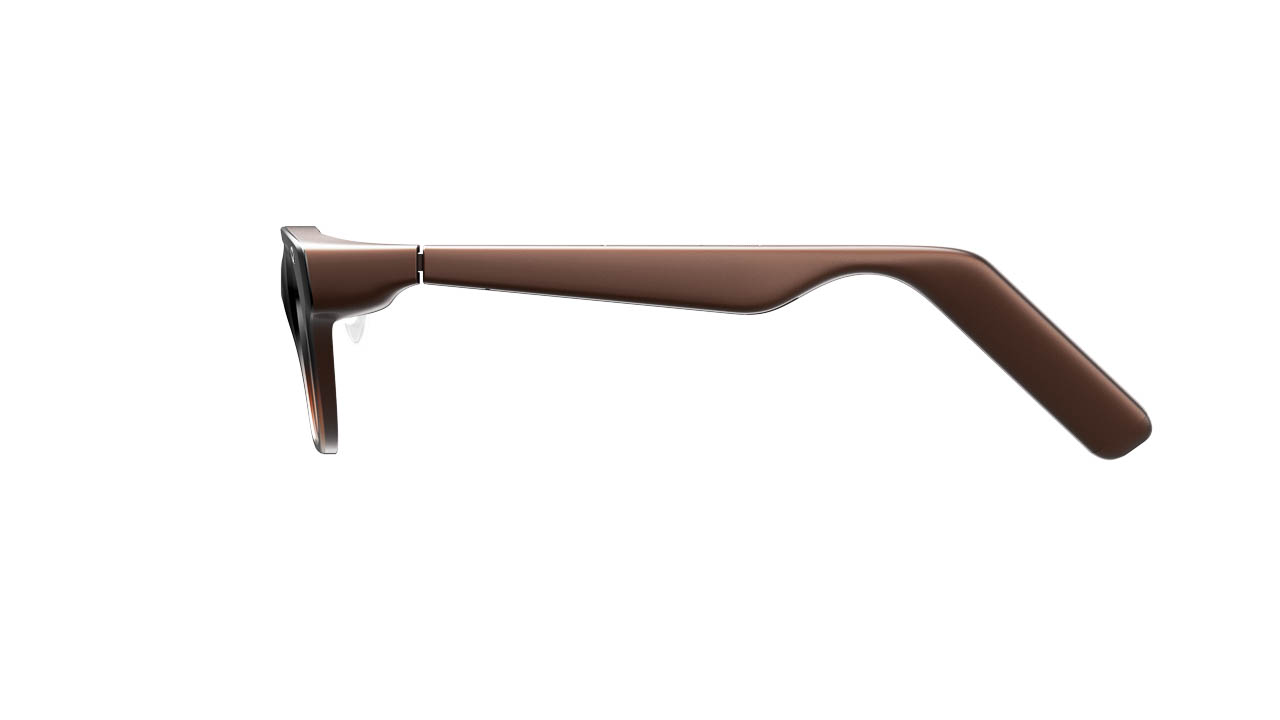
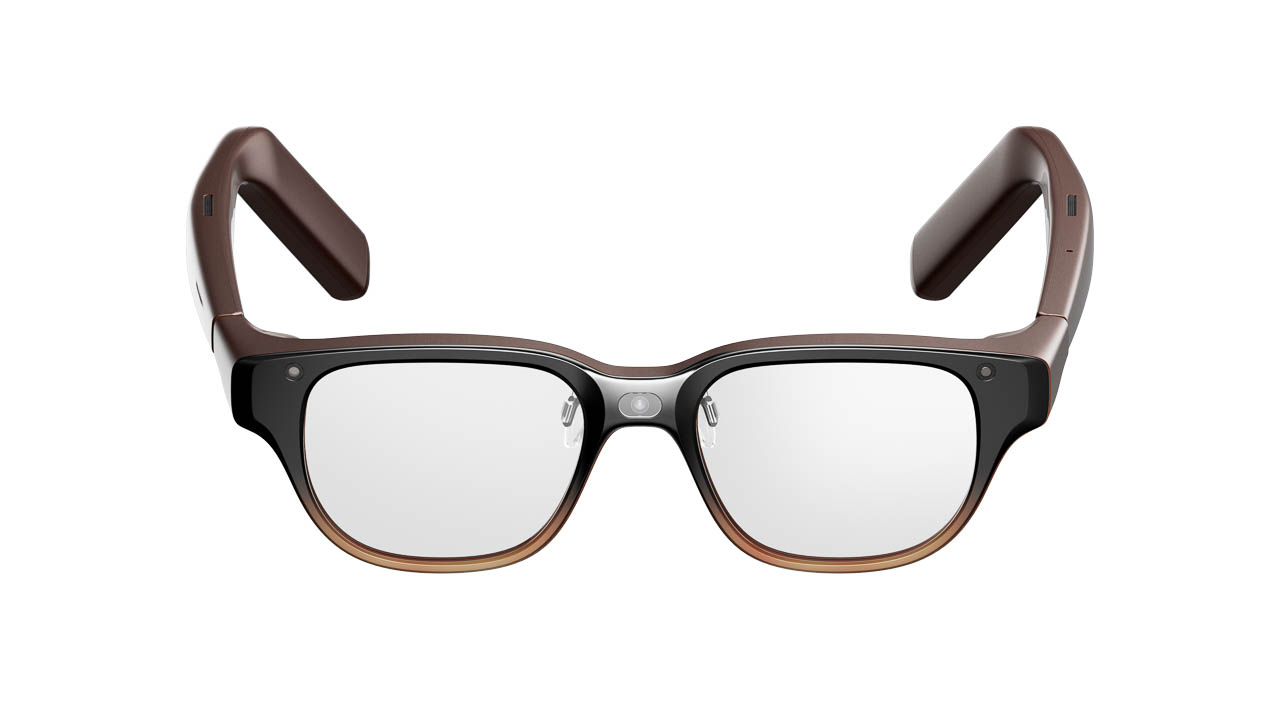
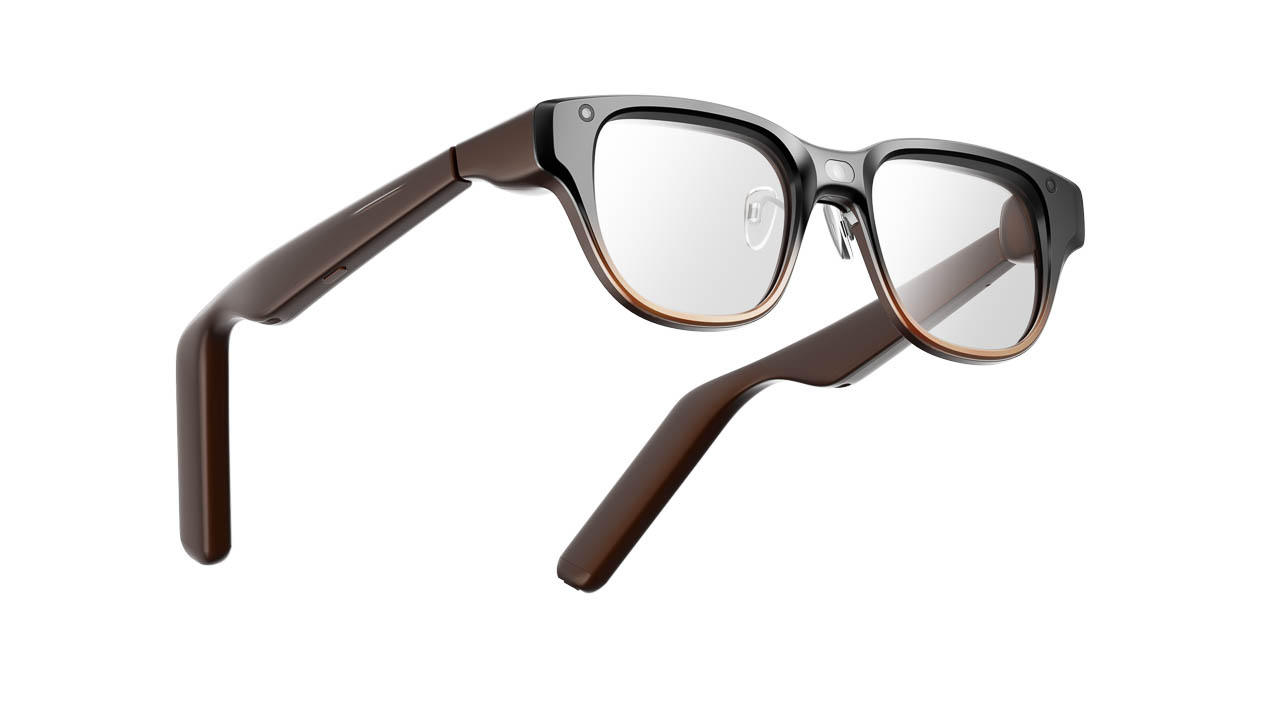
If you look closely at the form factor, the AI Glasses concept appears designed to disappear rather than impress. No obvious tech branding on the frames, no blinking indicators, no bulky battery housings distorting the temple arms.
Monitors that understand context: Lenovo’s Smart Sense and AI-tuned displays
The Smart Sense Display Concept offers wireless multi-device connectivity and natural language control. You tell it what you want rather than navigating menus, which sounds like a gimmick until you consider how much time knowledge workers spend switching input sources and adjusting display settings. The wireless connectivity eliminates cable management for multi-device setups, letting you move between laptop, tablet, and desktop without touching physical connections. Whether the natural language processing handles complex commands or just basic input switching determines whether this feels like genuine workflow improvement or voice-controlled novelty.
The AI-Powered Personalized Display Concept takes a different approach: circadian adaptation and wellness monitoring.
The wellness monitoring may include behaviors like posture awareness and eye fatigue detection, automatically adjusting brightness, color temperature, and reminders based on how you’re actually using the display rather than how you think you’re using it. The circadian integration syncs display behavior with your biological clock, warming color temperature as evening approaches without requiring manual f.lux-style scheduling. Posture-aware features could feel intrusive until you consider that most knowledge workers spend eight hours daily in positions their bodies weren’t designed to maintain. Whether people want their monitor commenting on their ergonomics remains an open question. Eye fatigue tracking could prove genuinely useful for creative professionals who lose track of time during intensive editing sessions.
These display concepts feel more production-ready than the rollable laptops, primarily because they don’t require breakthrough mechanical engineering.
Personal AI hubs and adaptable keyboards: the glue between all these concepts
Project Kubit, the Personal AI Hub Concept, leverages ThinkStation-class hardware for personal AI workloads that exceed what laptop silicon can handle. The form factor suggests a desktop companion for AI-heavy creative work: video processing, model training, inference acceleration. The design implies scalability for professional applications rather than consumer convenience. The Adaptable Keyboard Concept adjusts stroke depth and response based on whether you’re working or gaming, which addresses a genuine friction point for users who switch contexts frequently between productivity applications and leisure.
The Self-Charging Kit Concept operates on ambient indoor lighting, meaning it functions under normal office conditions rather than requiring direct sunlight. The AI Frame Gaming Display adds AI-powered scene awareness and gameplay assistance for competitive gaming support. These accessories feel like explorations of where peripheral intelligence might go rather than finished products approaching market readiness, but the indoor ambient charging capability suggests Lenovo has actually tested real-world scenarios rather than assuming ideal lighting availability. The AI gaming assistance features raise questions about competitive fairness that Lenovo hasn’t addressed, though the framing suggests single-player support rather than multiplayer advantage.
From spec bumps to shape-shifting PCs: what Lenovo’s CES 2026 concepts are really testing
If you need shipping products with firm pricing and warranty coverage, none of this matters yet. Concepts announce direction, not availability. Anyone evaluating actual purchase decisions for 2026 should look at Lenovo’s production announcements instead. The embargo lift on January 6, 2026 reveals what Lenovo thinks is commercially viable right now; the concept showcase reveals what they think might be viable in future product generations.
Whether any of these exact prototypes ship in the next year almost matters less than the direction they point. Lenovo is clearly betting that the next decade of PCs won’t be about squeezing a few more frames per second out of the same slabs: it’ll be about screens that resize to your life and interfaces that understand what you’re doing without being asked. If that’s true, the Legion rollable, ThinkPad scroll-up, and AI glasses on display at CES 2026 might be less “concepts” and more early drafts of the laptops and monitors we’ll actually be using.
The rollable form factor solves a genuine constraint that touch-ups and incremental spec bumps cannot address. Whether Lenovo ships these in coming years, the direction is clear: screen size as a dynamic property, not a permanent choice.
📡 CES 2026 Coverage
Want more from the show floor?
We’re covering the biggest announcements, wildest concepts, and gear that actually matters from CES 2026.

2-Pack LED Video Light Kit, NiceVeedi Studio Light, 2800-6500K Dimmable Photography Lighting Kit with Tripod Stand&Phone Holder, 73" Stream Light for Video Recording, Game Streaming, YouTube
(as of April 8, 2026 11:19 GMT -05:00 - More infoProduct prices and availability are accurate as of the date/time indicated and are subject to change. Any price and availability information displayed on [relevant Amazon Site(s), as applicable] at the time of purchase will apply to the purchase of this product.)
