My daughter Zoey loves clogs, which means I’ve watched a shoe style I once associated with kitchens and gardens become something people plan entire outfits around. Over the last year alone, I’ve seen the Birkenstock Boston pop up on fashion sites, in my Google Discover feed, on the feet of people waiting for coffee, and on my own feet more days than I expected.
The short answer is that the Boston gives people two things that rarely travel together: a shoe that feels deliberately made and a shoe you can kick on and off without bending over. It’s good enough that a 50-year-old clog has become one of the most discussed pieces of footwear in the world.
Where to Buy
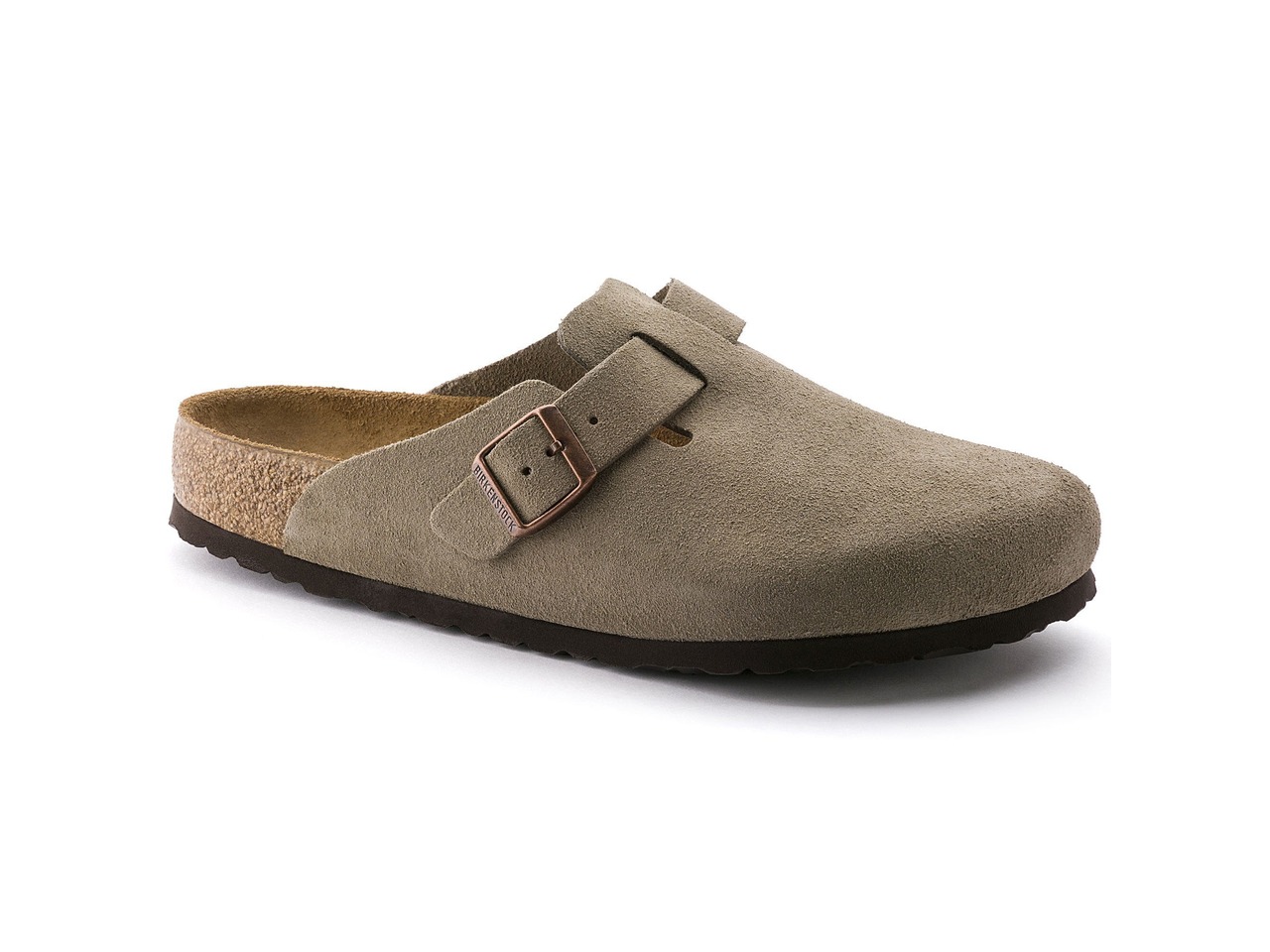
Boston Soft Footbed Suede Leather, Taupe – $154.95 | Amazon
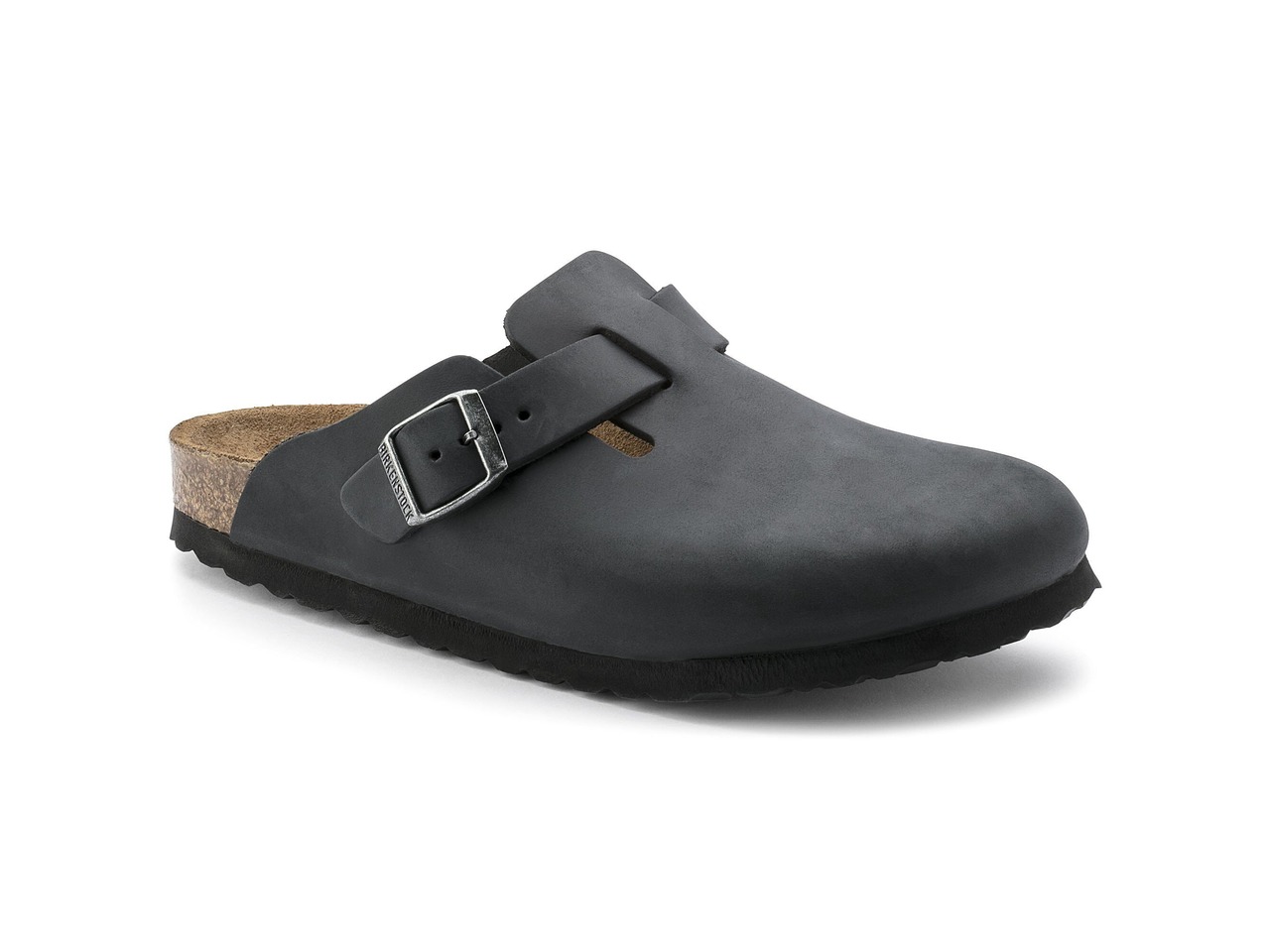
Boston Suede Leather, Black – $154.95 | Amazon
Boston Oiled Leather, Tobacco Brown – $170 | Amazon
(Price may vary)
The clog that escaped the comfort-shoe category
Birkenstock introduced the Boston in 1976, designed by Karl Birkenstock as a lighter, semi-closed, gender-neutral alternative to the Arizona two-strap sandal. It was never meant to be a fashion item it was a functional shoe for feet that needed more support than a sandal but less enclosure than a full shoe.
Then the shoe found its second life. A run of fashion collaborations gave the Boston a different audience, but the wider shift came when people discovered that a clog doesn’t have to look like a nurse’s shoe. The Boston’s proportions are unusual enough to read as intentional, and its silhouette works with wide-legged pants, cropped trousers, and jeans in a way few other closed-backless shoes manage.
Comfort is real, but it isn’t instant
A Boston’s core feature is the contoured cork-latex footbed: a shaped heel cup, raised arch area, toe bar, and a suede-covered footbed that molds over time. That last part is the one most people underestimate. The cork molds, but it doesn’t do it fast.
The original footbed is firmer when new. It’s supposed to gradually take on the shape of its owner’s foot, which is a benefit for long-term comfort but a shock for anyone used to squishy foam insoles. The first three to five wear sessions can make you question whether the shoe actually fits. It does. It’s just breaking in.
Start with shorter wear sessions, pay attention to pressure points, and make sure the length and width are right before you commit to the break-in. A Boston that’s too short won’t mold correctly.
Firmer isn’t automatically worse. It simply asks more of the fit.
The soft-footbed version adds a latex foam layer under the lining. It gives a little more cushion from the start, although it still won’t feel like a sneaker. It’s a reliable first choice for new buyers.
Why suede gets the attention
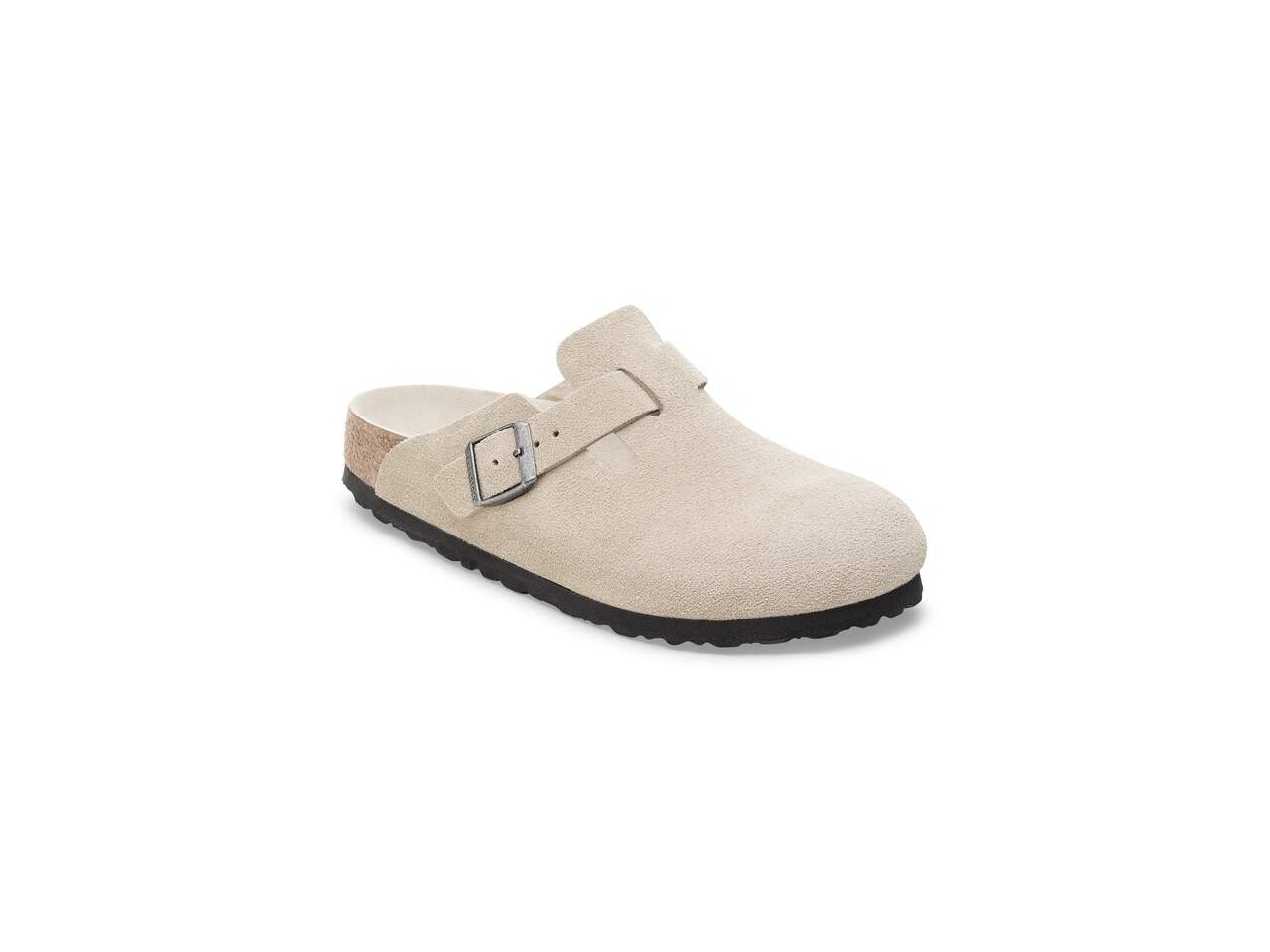
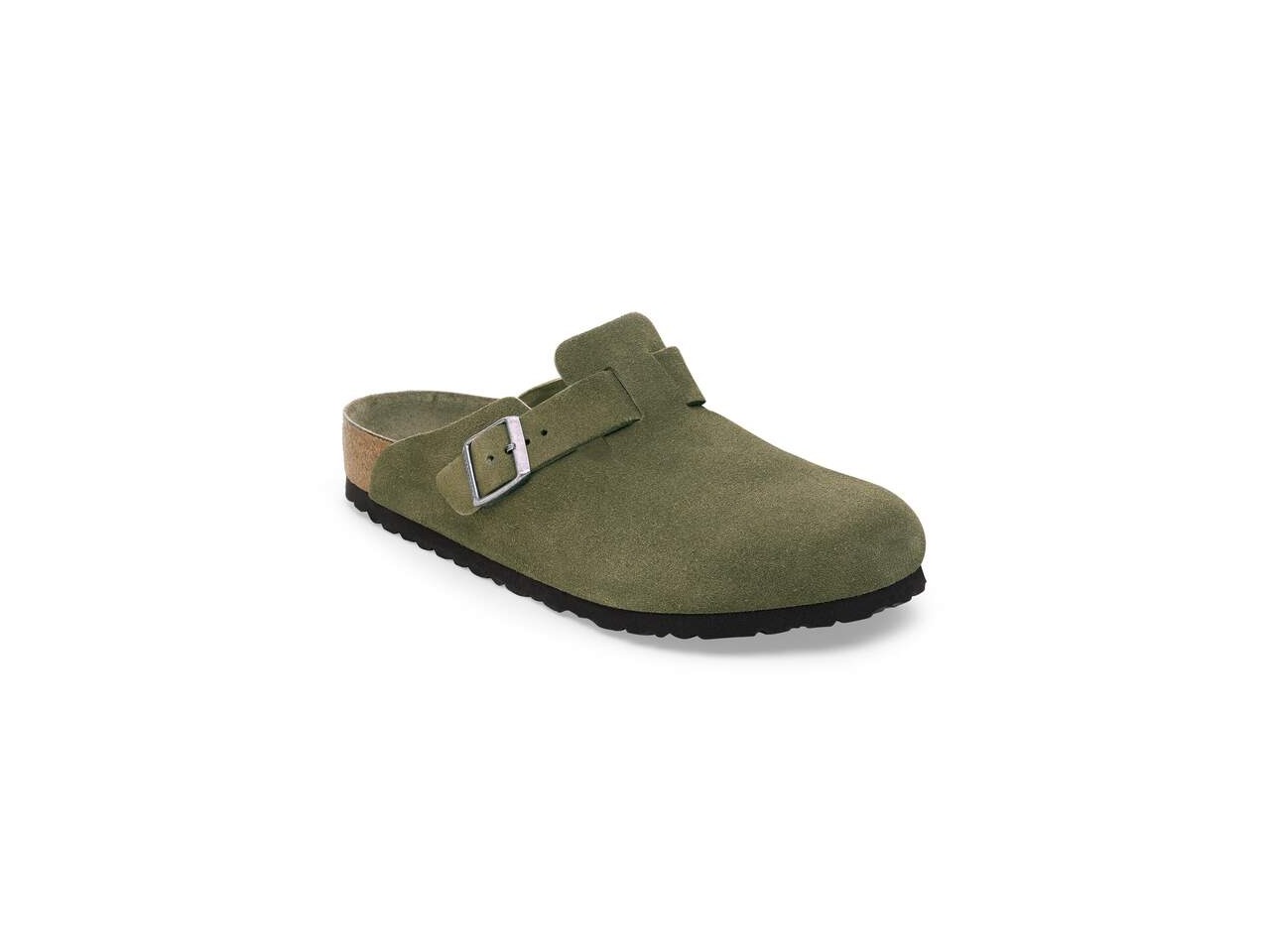
Suede is the Boston people remember because it turns the clog’s orthopedic roots into something soft and casual. Taupe, black, and stone are the core colors, and they work with denim, chinos, and neutral dresses without looking like you’re trying too hard.
The tradeoff is weather and upkeep. Birkenstock notes that suede is softer and less stable than smooth leather, and it needs protection spray and a gentle brush to stay clean. Wear them in dry conditions and they’ll hold up for years. Wear them in rain and you’ll see water spots that don’t brush out.
Choosing your first Boston
Start with the fit, not the color. Birkenstock says its shoes can feel roomier than conventional fashion footwear because the footbed takes up space inside the shoe. A Boston that fits your length may still feel loose if you’re used to snug sneakers. That’s the intended fit.
The important question isn’t whether a sales label calls a shoe men’s or women’s. It’s whether your foot sits on the footbed properly, with your toes behind the toe bar and your heel seated in the cup. Many sellers list unisex sizing.
For a first pair, I’d choose a standard suede or oiled-leather Boston in the width that actually fits, not a limited color. The classic dark brown and taupe are the most versatile, and the suede versions already soften the look enough for most outfits.
The useful differences: Boston, Tokio, Arizona, and Crocs
The Boston is a backless clog. That’s its superpower and its limitation. It’s fast to put on and easy to live with, but it won’t stay on during active use. If you need a shoe that stays secured while walking fast or carrying things, the Boston isn’t that shoe.
The Tokio solves that issue with a backstrap. It’s the better choice for people who want the Boston footbed and closed toe but need retention on the heel. The Arizona is the original two-strap sandal lighter, more open, better for hot weather, but lacking the covered protection of the Boston.
Crocs answer a different question. They’re lightweight, washable, quick-drying foam clogs that make no claim to footbed support. People choose one or the other based on whether they prioritize arch support and materials or convenience and wet-weather use.
The comparison buyers actually need
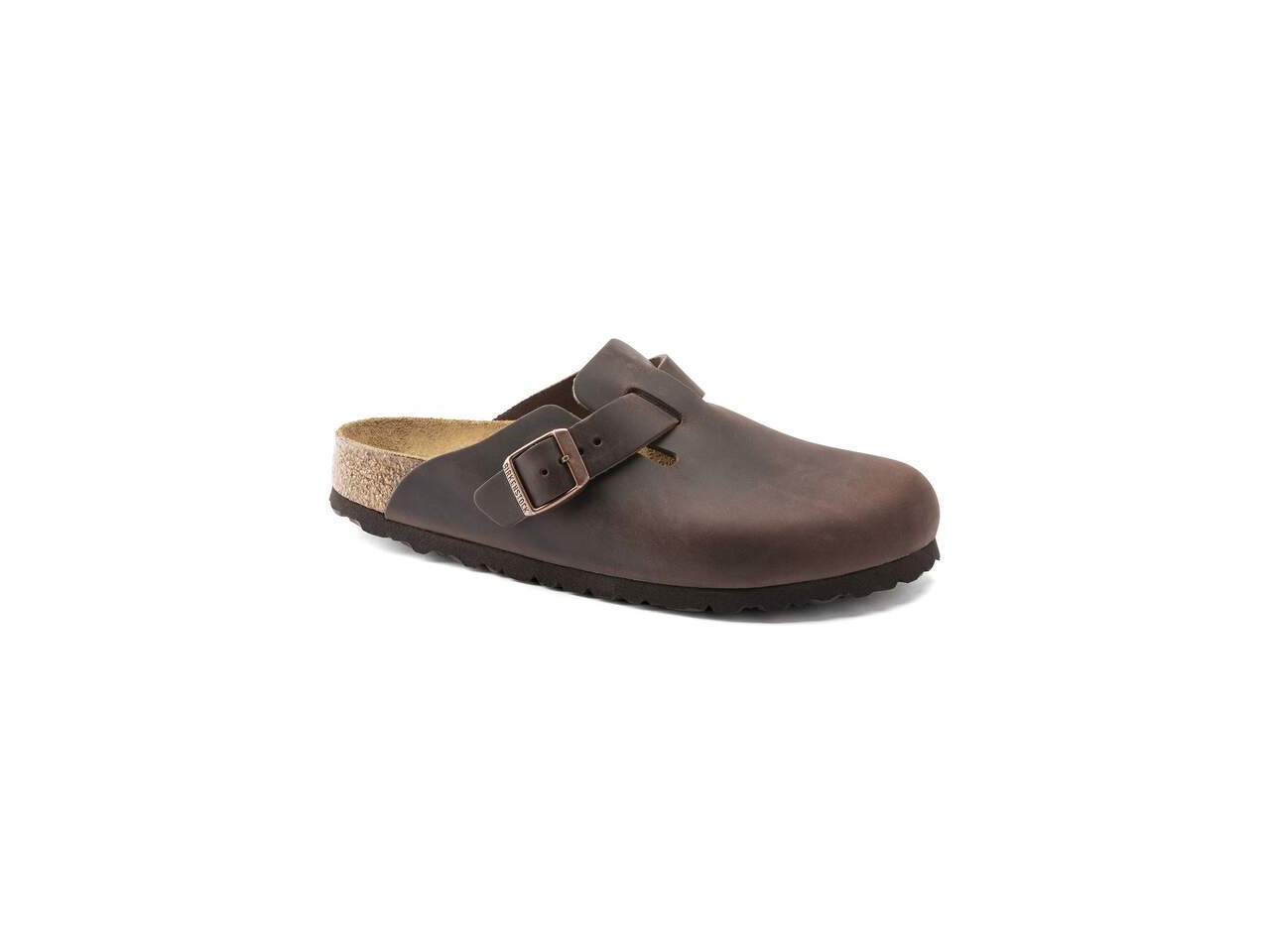
A Boston isn’t cheap because it’s not disposable in the same way as a foam clog. The upper, cork edge, outsole, footbed, and buckle assembly can be repaired or replaced individually by a Birkenstock cobbler. That’s important if you keep footwear for five-plus years.
Birkenstock’s U.S. care guidance says exposed cork arrives with a protective sealer and recommends a thin coat of cork sealer every few months. The outsole can be replaced. The footbed can be replaced. The upper’s buckle is replaceable. These aren’t claims made for marketing; they’re standard Birkenstock service options.
A repaired favorite can be a better buy than a brand-new compromise.
The counterfeit problem is part of the buying decision
A long-running bestseller attracts misleading listings. A suspiciously low price, a marketplace seller with no history, and a product page that avoids the Birkenstock name in the listing title are all signs that the shoe you’re looking at isn’t a real Boston. The counterfeit pairs use cheaper foam materials instead of cork, lack the pronounced arch contour, and won’t break in the same way.
Birkenstock direct, established authorized retailers, and retailers with clear return policies are the safe channels. The small premium you pay for an authorized pair is less than the cost of a fake that hurts your feet.
What the anniversary actually adds
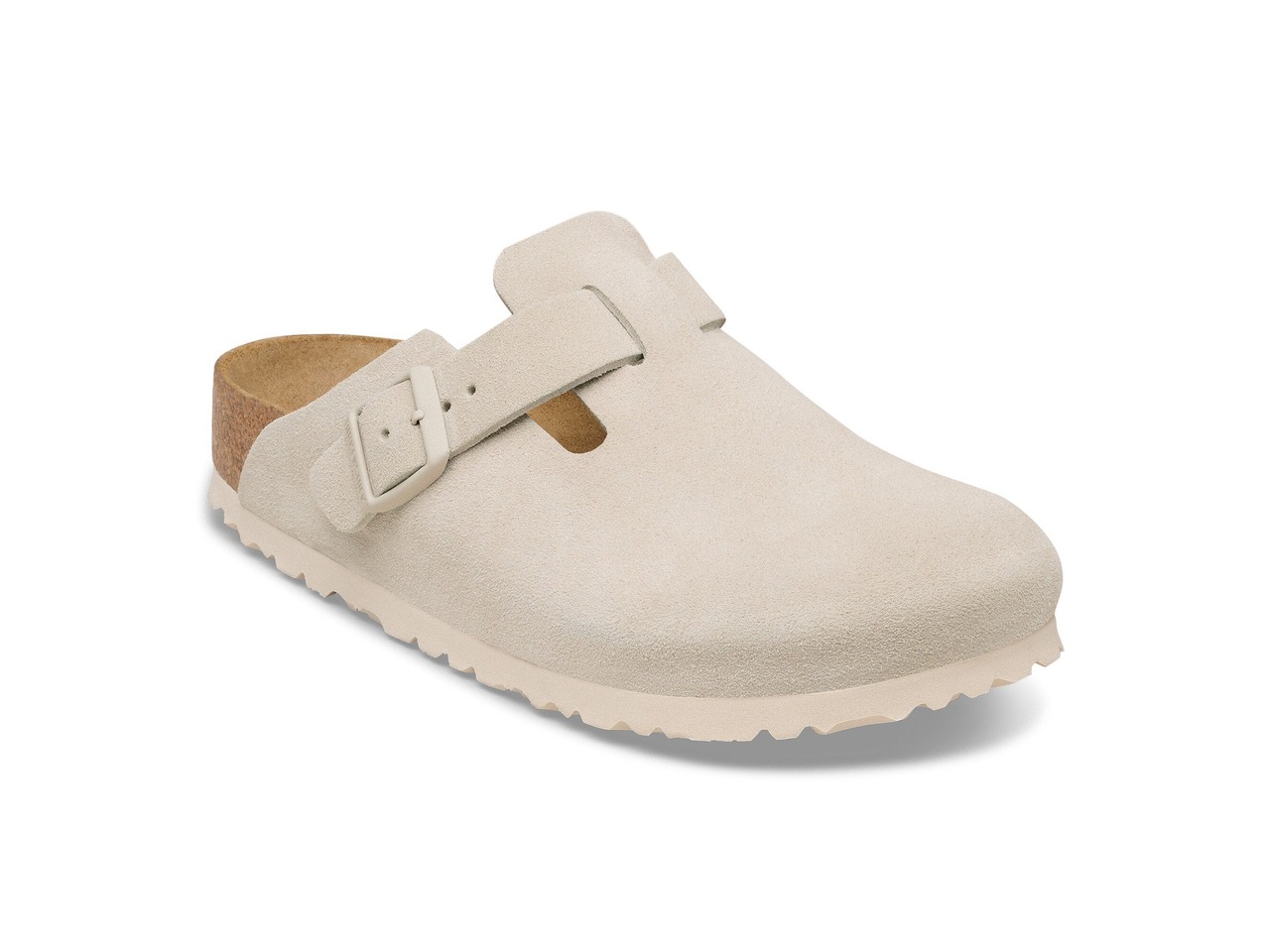
The 50th anniversary is a useful reminder that the Boston has remained recognizable because the fundamental design hasn’t changed. There are currently some special presentations, but the core Boston is the same clog that has been made for decades.
There have also been region-specific anniversary presentations and archive displays. Those editions are collectible in the same way any limited-run shoe is collectible. The real value of the anniversary is the attention it draws to a design that has quietly stayed relevant while the rest of the shoe industry cycled through trends.
Who should buy one, and who should skip it
Buy a Boston if you want a structured, easy-on shoe for dry everyday use and you value the cork footbed’s long-term break-in. Buy it if you stand for long periods at a desk or workbench and want a shoe that encourages better posture.
Skip it if you need a waterproof shoe, want instant plush softness, dislike shaped arch support, or plan to wear them for active walking. Also skip it if you try on a pair and the toe bar presses uncomfortably against the underside of your toes that sensation doesn’t fully go away.
Final TG take
The Boston lasted 50 years because it never had to win one argument. It can be a comfort shoe, a fashion shoe, a work shoe, or a house shoe depending on who is wearing it. The cork footbed is the reason it works, but the design is the reason people keep noticing it.
For most first-time buyers, a properly fitted soft-footbed suede Boston from Birkenstock or a known retailer is the right starting point. If you already know you prefer a stiffer feel, the original footbed version costs less and lasts longer. Either way, give it the break-in time it asks for.
Where to Buy
Boston Soft Footbed Suede Leather, Taupe – $154.95 | Amazon
Boston Suede Leather, Black – $154.95 | Amazon
Boston Oiled Leather, Tobacco Brown – $170 | Amazon
(Price may vary)