
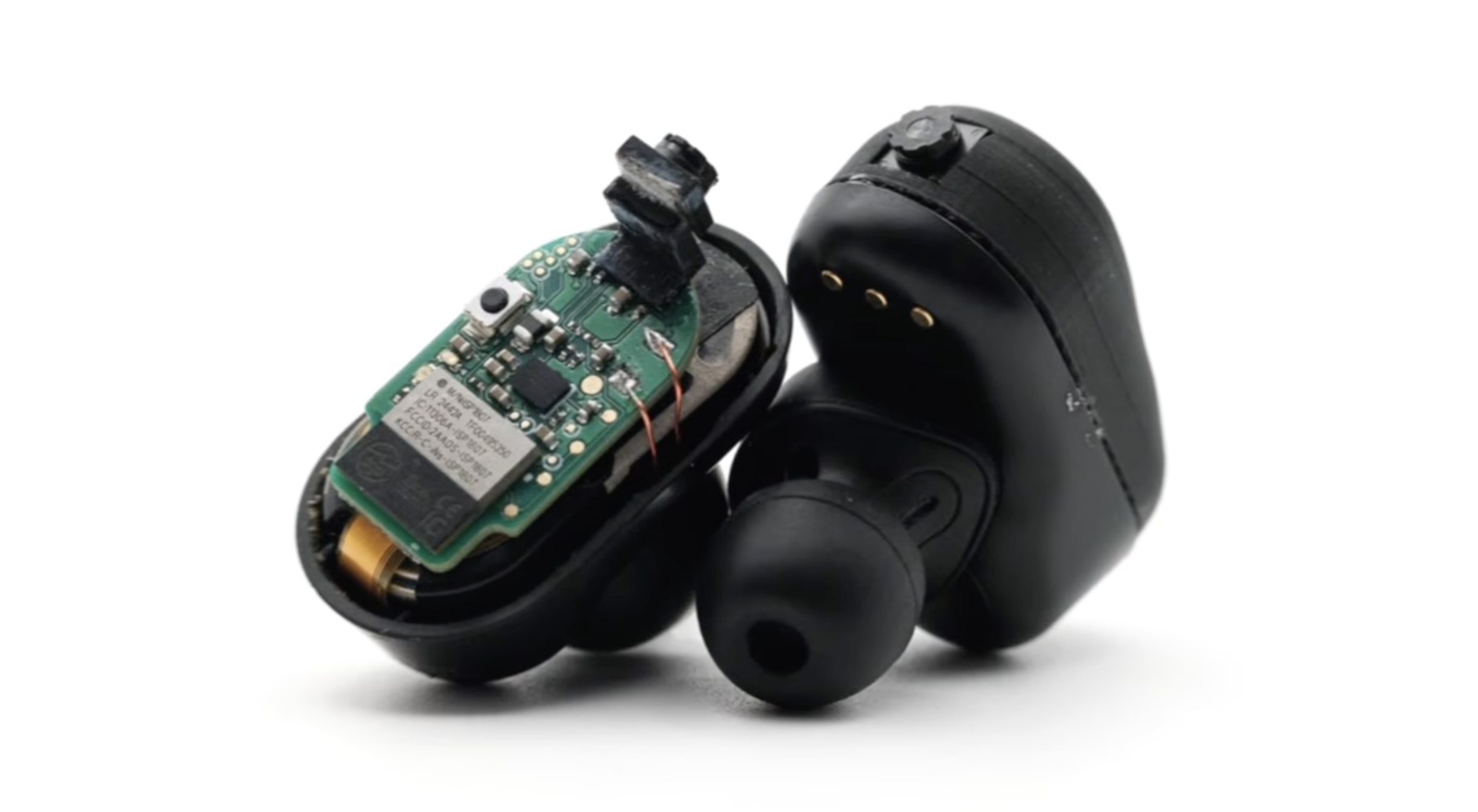
The quietest, weirdest preview of where wearable AI is heading didn’t come from Apple, Meta, or any of the usual hardware giants. It came out of a lab at the University of Washington, where a team of researchers cracked open a pair of Sony WF-1000XM3 earbuds and did something equal parts brilliant and cursed: shoved tiny cameras inside.
The project, called VueBuds, was led by Maruchi Kim with senior author Shyam Gollakota of UW’s Mobile Intelligence Lab, and it picked up an Honorable Mention at CHI ’26. On paper, it’s a research curiosity. In practice, it’s one of the clearest previews yet of what the next generation of “smart” earbuds could look like, and why Apple’s camera-equipped AirPods may be closer than we thought.
How VueBuds use cameras and AI
VueBuds embed rice-grain-sized, low-resolution, black-and-white cameras into each earbud so the device can see what’s in front of you. Pair that with a vision-language model, and suddenly your earbuds aren’t just playing music. They’re translating a foreign-language label, identifying an unfamiliar object, or reading text from a sign out loud, all triggered by a verbal cue like, “Hey Vue, translate this for me.”
Sound familiar? It’s the Ray-Ban Meta pitch in a different form factor. Glasses are still a tough sell, visible and polarizing. Earbuds already live in millions of ears.
Why low-res, why black and white
The team behind VueBuds deliberately chose to keep the cameras bad, at least by smartphone standards. The sensors are low resolution, capture only in monochrome, draw under 5mW of power, and only activate on demand. To compensate for partial occlusion from the wearer’s face, the cameras are angled slightly outward (5 to 10 degrees) and the two views are stitched together for a wider effective field of view.
That’s not a bug. It’s a design choice that addresses the two big problems with putting cameras inside an earbud:
- Battery life. Running color, high-resolution sensors continuously would obliterate the runtime of any earbud. Stripping the cameras down keeps the power draw manageable.
- Privacy. A grainy black-and-white frame is far less useful for surveillance than a crisp color image, and it’s easier to make peace with, both for the wearer and for the people around them.
The trade-off is fidelity. A monochrome thumbnail can read a sign or recognize an object, but it can’t tell you what color the wall is or zoom in on fine text. A real limit for a device pitched as your always-on visual assistant.
Across 17 visual question-answering tasks benchmarked against smart glasses with 90 participants, VueBuds delivered response quality and accuracy comparable to Ray-Ban Meta. That’s not a slam dunk, since Meta’s glasses aren’t perfect either, but it’s a striking result for a pair of modded earbuds running on a fraction of the hardware.
Apple’s AirPods with cameras: what Gurman reported
Bloomberg’s Mark Gurman reported that camera-equipped AirPods have entered an advanced testing stage with a near-final design. The cameras, per his sources, would act as eyes for an AI-enhanced Siri, letting users ask questions about whatever they’re looking at. Bloomberg’s example: pointing your AirPods at the ingredients on your counter and asking what to cook for dinner.
VueBuds is essentially an academic dry run of what Apple is about to commercialize, and it surfaces every question Cupertino will need to answer.
How do you signal to bystanders that an earbud is recording? How much processing runs on your phone versus Apple’s servers? How do you handle the privacy backlash from a camera people can’t see? And how do you make Siri actually answer correctly?
On-device AI: VueBuds vs. Ray-Ban Meta
Here’s the part that quietly makes VueBuds more interesting than most of its smart-glasses cousins. Many AI wearables, Ray-Ban Meta included, pipe image frames to remote servers for processing. VueBuds doesn’t. The cameras stream visual data over Bluetooth to a paired host device, where the vision-language model runs locally. No cloud round trip. No stored images.
That’s a meaningful design choice. It addresses the two complaints that haunt every AI wearable on the market: privacy (your surroundings aren’t being uploaded anywhere) and reliability (no signal, no problem). Combine that with a camera that sips under 5mW and only wakes on demand, and you start to see why the paper picked up that Honorable Mention.
If Apple is paying attention, and based on Gurman’s reporting it is, this is the template.
Should you actually want this?
Here’s the honest answer: not yet. AI wearables in 2026 still suffer from the same three issues: accuracy, latency, and usefulness. Ask a Ray-Ban Meta about your surroundings and the answer is sometimes right, sometimes hallucinated, and sometimes just “I can’t help with that.”
What VueBuds does prove is that the form factor isn’t the blocker anymore. Cameras fit, battery is manageable, privacy is at least partly designable. What’s left is software, models, and trust.
Are AI earbuds the future of wearables?
Wearable AI has been hunting for the right body part. Wrists feel cramped, faces awkward, pendants and pins flopped. Ears, which we’ve already trained ourselves to wear tech in, might just be the answer, especially if the cameras inside them are small enough, dumb enough, and respectful enough to fade into the background.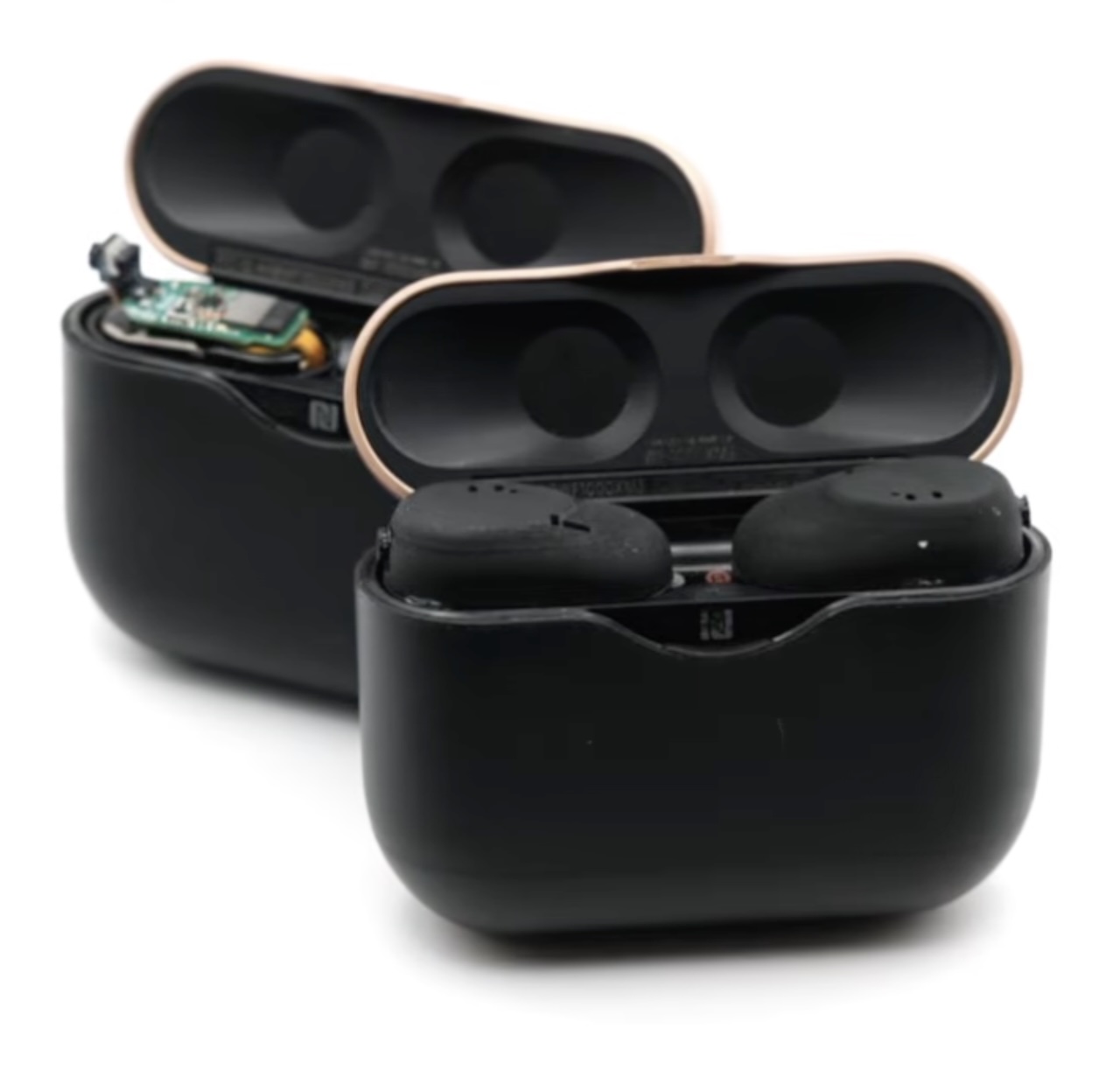
VueBuds isn’t the product. But it might be the proof of concept Apple has been waiting for us to accept.