
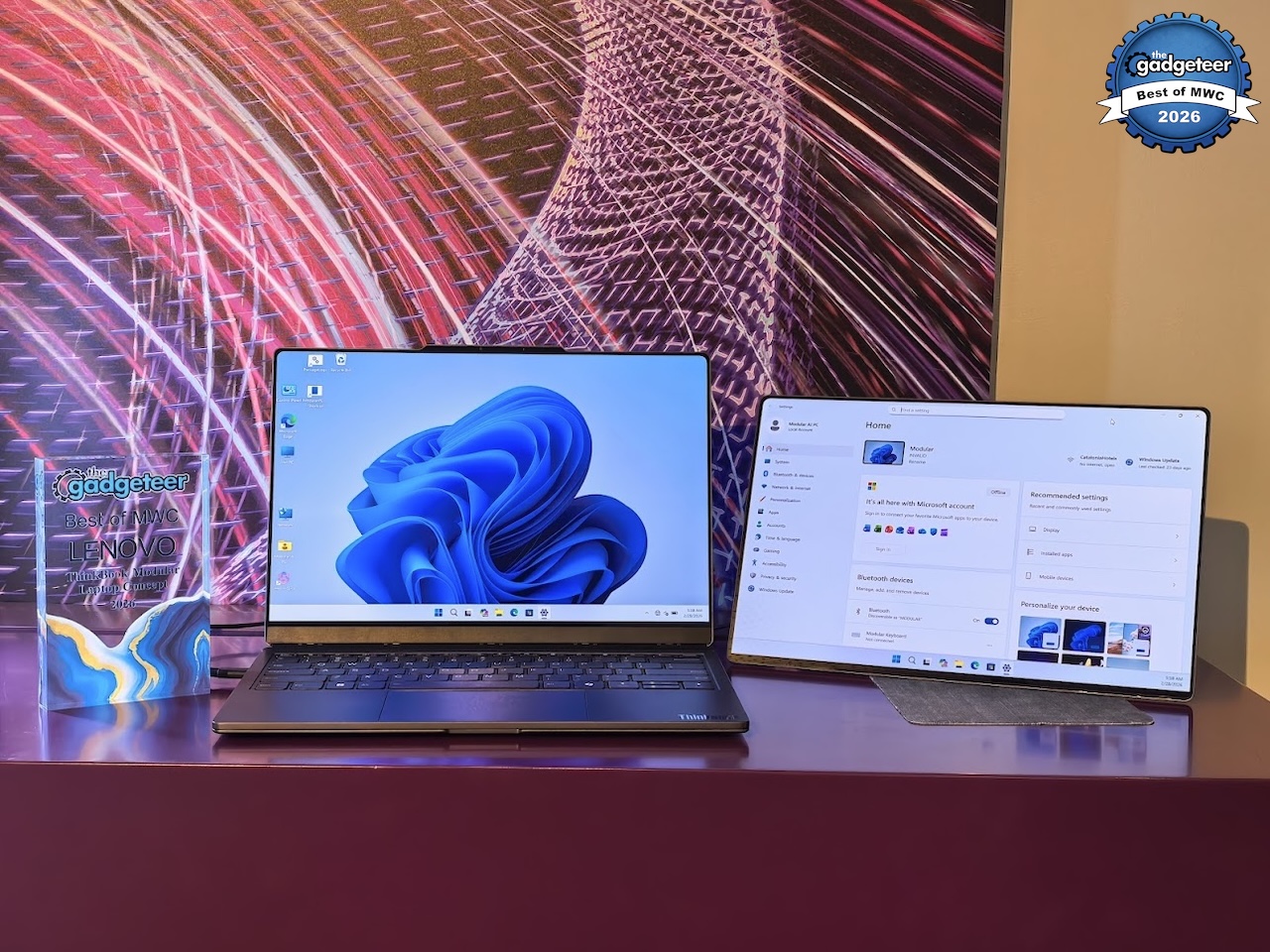
ARTICLE – Most laptop concepts shown at trade shows exist purely to generate press photos and social media clips. They look impressive behind glass, get a few hundred thousand views, and then quietly disappear from the product roadmap. Lenovo has been breaking that pattern with its ThinkBook line, turning recent concepts into confirmed products. The latest addition to the concept stage, the ThinkBook Modular AI PC, brings enough practical ideas to suggest it could follow the same path.
What Lenovo showed at MWC 2026
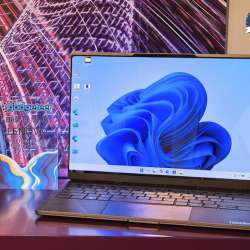
At its core, the ThinkBook Modular AI PC is a detachable screen laptop built around a 14-inch OLED touchscreen in a metal chassis, powered by an Intel Core Ultra 7 255H processor with 32GB of RAM and a 1TB PCIe SSD. Those specs alone aren’t unusual for a premium ultrabook in 2026. What makes the machine interesting is how it treats almost every external component as swappable.
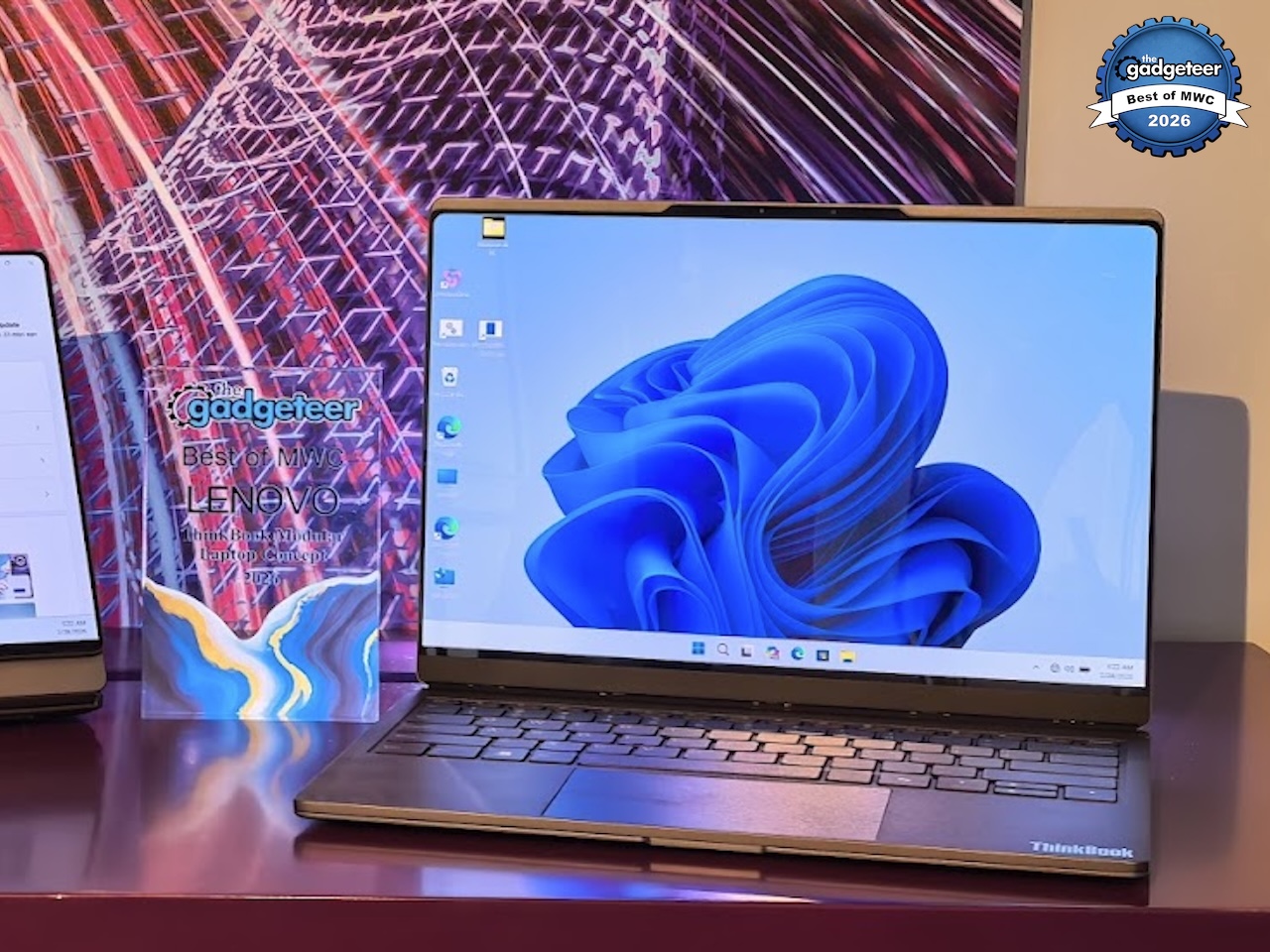
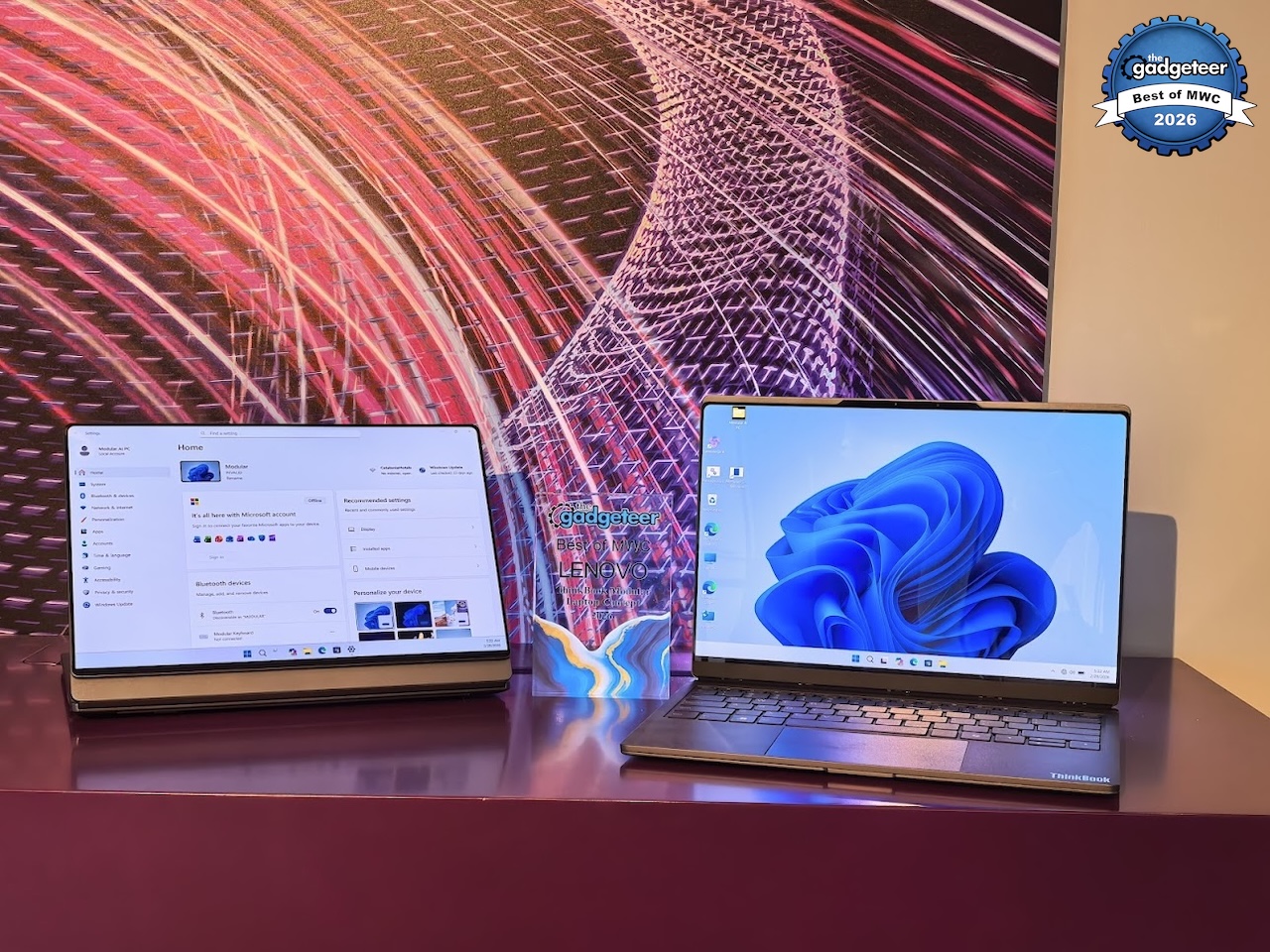
The keyboard detaches entirely, revealing a flat surface that accepts a second 14-inch OLED display via Lenovo’s Magic Bay pogo pin system. That same second screen can also mount on the back of the laptop lid for presentation mode, or disconnect completely and stand on its own as a portable monitor using a kickstand and USB-C cable. With a single display attached, the system weighs 2.54 pounds. Add the second screen and it climbs to 3.11 pounds, still lighter than most 15-inch ultrabooks. Both panels run at 3840 x 2400 resolution with a 120Hz refresh rate.
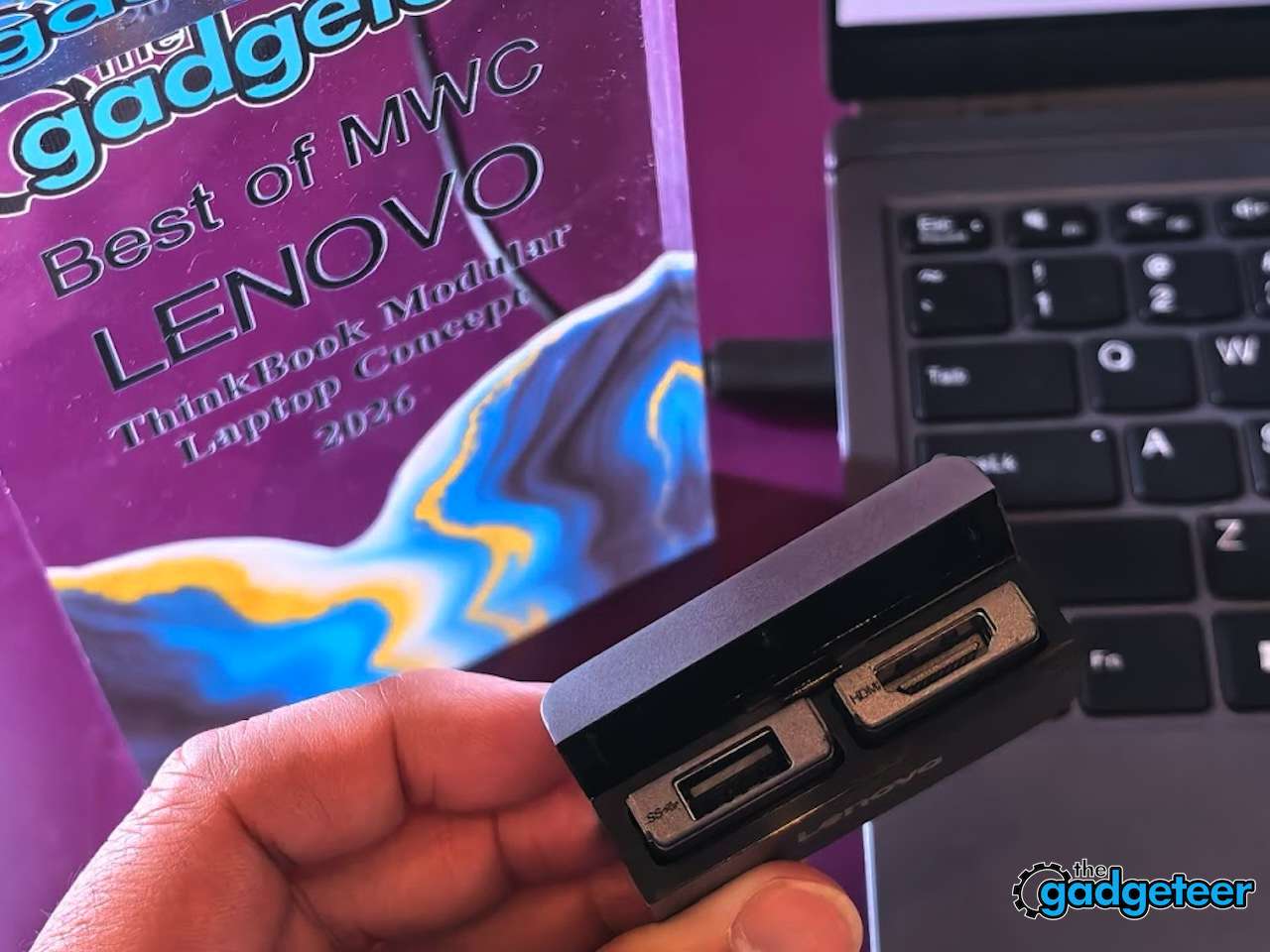
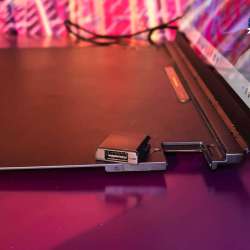
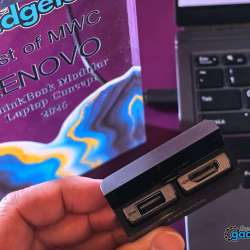
The port situation takes the modularity further. Two slots on either side of the chassis accept swappable modules for USB-C, USB-A, or HDMI, and unlike Framework’s approach, which routes everything through USB-C adapters, Lenovo’s modules connect directly to the motherboard. A fixed USB-C port and 3.5mm headphone jack round out the connectivity.
The concept pipeline that actually delivers
Lenovo’s ThinkBook concept pipeline has a track record that most laptop makers can’t match, and it’s worth paying attention to when evaluating whether the Modular AI PC could become a real product. The ThinkBook Plus Gen 6 Rollable went from a concept that drew skepticism to a shipping laptop with a 14-inch display that physically extends to 16.7 inches. The ThinkBook Auto Twist followed a similar path, starting as a concept device showcasing a screen that could rotate autonomously to follow the user or flip into different orientations.
At CES 2026, Lenovo confirmed it as the ThinkBook Plus Gen 7 Auto Twist, a real product with a $1,650 starting price and a June 2026 release date. Reviewers already got hands-on time with it at the show.
That’s one concept that already shipped and another with confirmed pricing and a launch window. It doesn’t guarantee the Modular AI PC will follow, but it changes the conversation from “cool demo” to “when does this ship?”
What still needs work
The prototype shown at MWC 2026 has some rough edges that Lenovo would need to address before putting a price tag on it. The 33 WHr battery is the most obvious concern, roughly half the capacity of a typical ultrabook battery, and it’s being asked to power dual 4K OLED touchscreens with 120Hz refresh rates. Battery life with two displays running simultaneously could be a real problem.
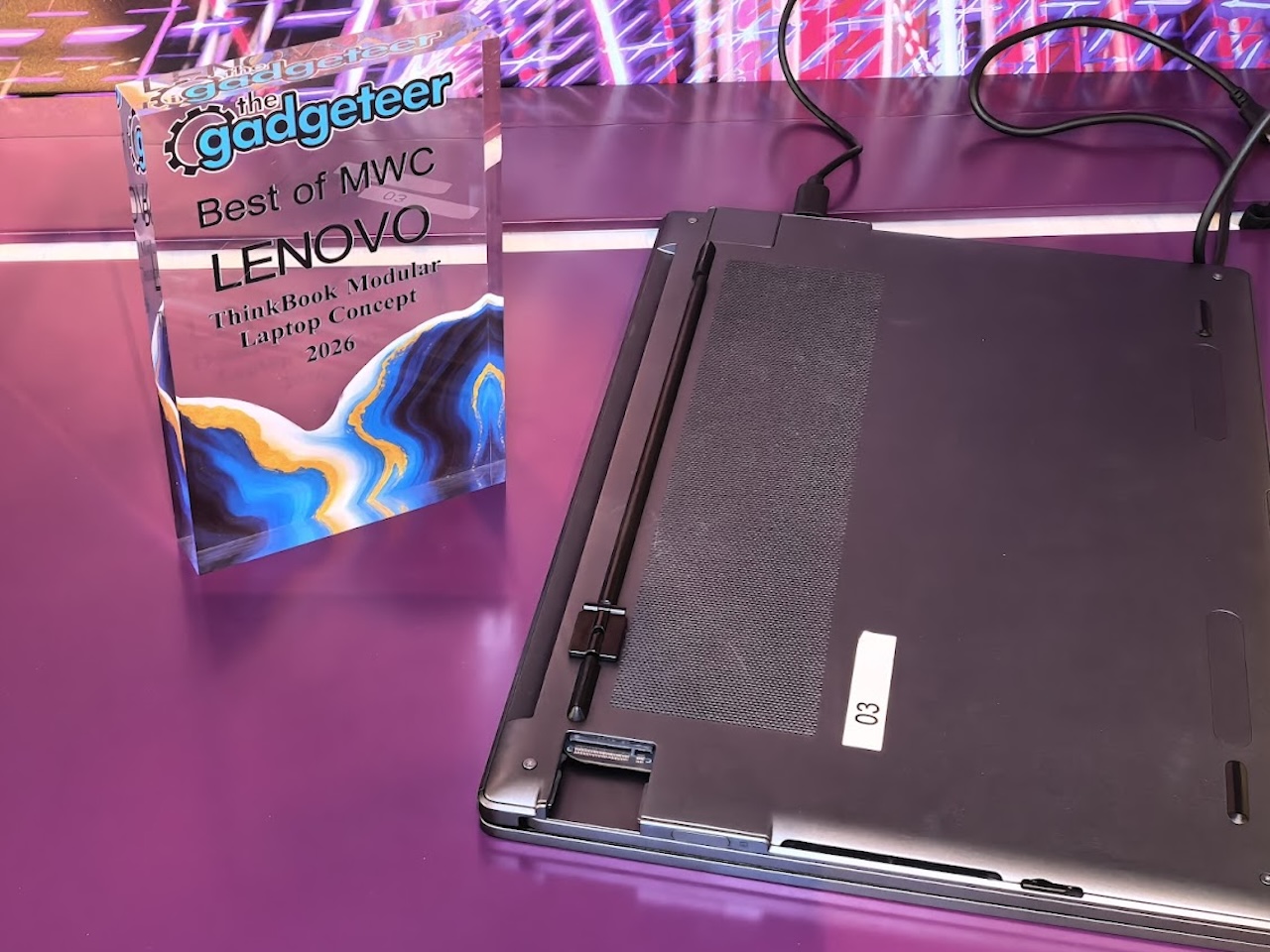
The magnetic stand for the detachable display also needs work. Multiple hands-on reports described it as flimsy and difficult to position reliably. For a device that’s selling the idea of flexible configurations, the connection points need to feel solid and intentional. The second screen can show different content depending on where it’s placed, which opens up genuine workflow possibilities for presentations and collaborative settings, but the execution of those modes still felt early.
Lenovo hasn’t provided any pricing, availability timeline, or confirmed that a production version is in development. That’s standard for concept hardware at MWC, but it also means everything from battery capacity to build quality could change substantially before a retail version materializes.
Where this fits in the modular computing conversation
The Lenovo ThinkBook Modular AI PC occupies a different space than Framework’s modular laptops. Framework focuses on internal repairability and component upgrades over time, letting users swap mainboards, RAM, and storage to extend a laptop’s useful life by years. Lenovo is targeting external adaptability, letting users reconfigure the physical layout of their machine multiple times a day based on what they’re doing.
That distinction matters because it changes who the product is for. A Framework laptop appeals to people who want to upgrade a mainboard or swap out RAM in three years. The ThinkBook Modular AI PC targets someone who wants a dual-screen workstation at a desk and a single-screen ultrabook on a plane, without carrying two separate devices. If Lenovo’s concept track record holds, that’s a product category that could actually find an audience, and the company has the manufacturing pipeline to get it there.

Now retrieving an image set.
2-Pack LED Video Light Kit, NiceVeedi Studio Light, 2800-6500K Dimmable Photography Lighting Kit with Tripod Stand&Phone Holder, 73" Stream Light for Video Recording, Game Streaming, YouTube
(as of July 14, 2026 14:09 GMT -05:00 - More infoProduct prices and availability are accurate as of the date/time indicated and are subject to change. Any price and availability information displayed on [relevant Amazon Site(s), as applicable] at the time of purchase will apply to the purchase of this product.)
