
ARTICLE – Most mid-range phones promise durability in the fine print. The Redmi Note 15 Pro+ 5G puts it in the headline. The phone is rated to survive drops from 2.5 meters, roughly 8 feet for U.S. readers. That claim alone is unusual at this price point. Flagship phones sometimes carry reinforced frames and Gorilla Glass Victus 2, but this level of structural commitment rarely trickles down to the mid-tier segment. Ben decided to test whether the claim holds up by dropping the phone on bare cement in downtown Los Angeles.
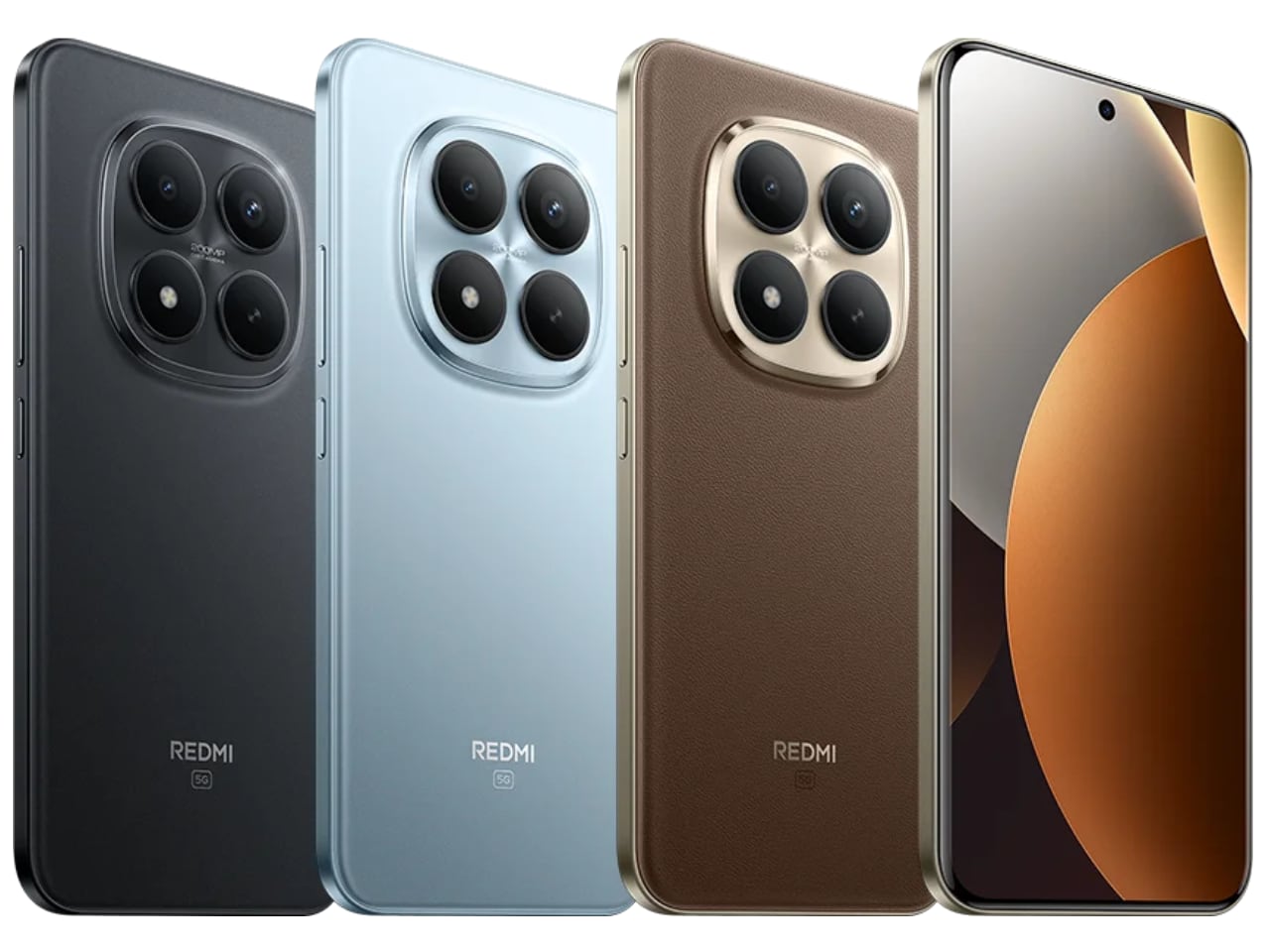
The test conditions were not controlled. No lab mats. No padding. No soft surfaces. Just a sidewalk and gravity.
What Redmi Claims About Titan Durability
The durability system Redmi calls Titan Durability combines several reinforcement strategies. The internal frame has been strengthened to distribute impact forces away from the display and battery compartment. The corners, which typically absorb the most energy during a drop, have been engineered to handle repeated stress. Ben did not cite specific materials in the video. The claim he tested was the outcome: reinforcement that helps the phone survive drops up to 2.5 meters.
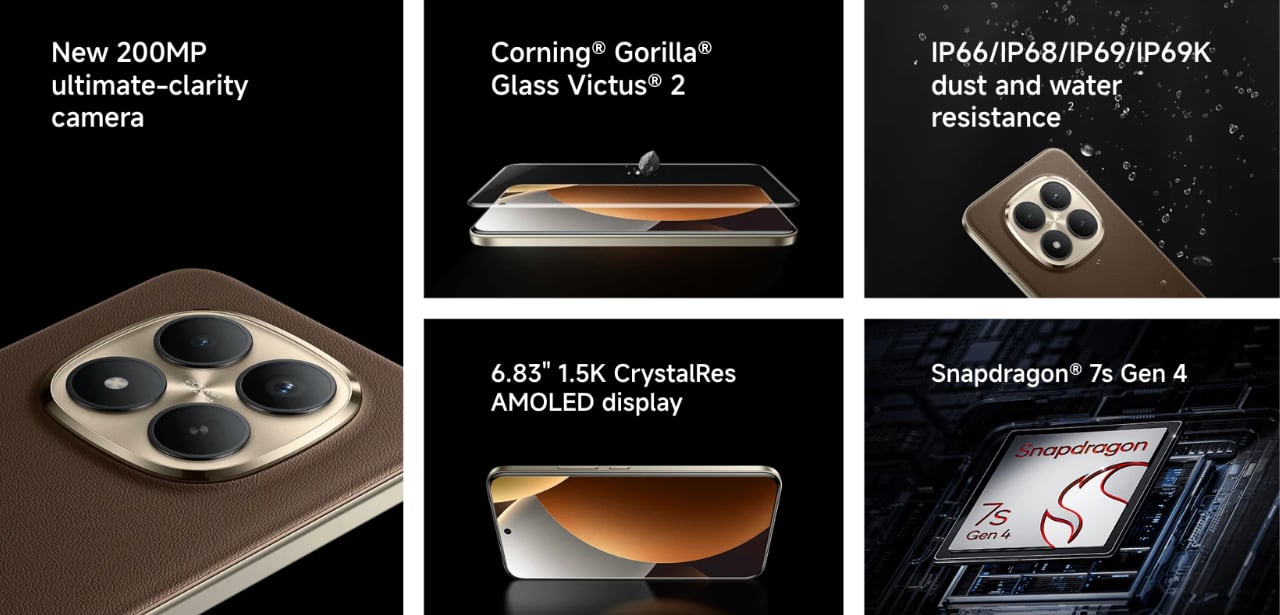
The phone also carries four IP ratings: IP66, IP68, IP69, and IP69K. Ben did not water test the device, so these ratings serve as indirect evidence of the phone’s overall sealing and structural integrity rather than standalone proof of water resistance. The presence of all four ratings signals that the phone was built with tight tolerances and robust gasket work, both of which contribute to drop survivability.
Underneath all of this sits a 6,500 mAh battery. Large batteries increase internal mass, which means more momentum during a fall. The fact that the phone survived repeated drops while housing that much weight says something about how well the frame absorbs and redirects energy.
Price: Price vary by region
More details: Mi
What Ben Actually Tested
Ben dropped the phone face-down onto cement. Not once. Multiple times. Each drop landed screen-first on an unforgiving surface. This is the most common failure scenario for any phone. Edge drops can crack a corner. Back drops can shatter the camera module. But face-down drops kill displays. They are the nightmare scenario for most users, and the reason screen protectors exist in the first place.
The phone had a plastic screen protector installed during testing. Ben acknowledged this clearly. The protector adds a thin layer of cushion, but it does not explain what happened next.
After the first drop, Ben inspected the display. No visible damage. No cracks. No scratches. He turned off the screen to check for abrasions against the reflection. Nothing. He dropped it again. The impact sound was loud enough to make him wince. The display survived again.
Post-Drop Functional Checks
Surviving a drop means nothing if the phone stops working afterward. Ben ran through a series of functional checks immediately after impact.
The touchscreen still responded normally. The in-display fingerprint reader still worked. Ben swiped through the home screen, opened the camera app, and confirmed both launched and responded as expected.
Ben visually inspected the display right after each drop, including with the screen turned off to catch scratches in reflection. He did not see visible scratches, cracks, or other obvious damage, and the phone continued to operate normally.
Why the Face-Down Result Matters
Face-down drops are the most punishing test a phone can face. Most devices fail cosmetically even when they remain functional. Hairline scratches, micro-fractures in the oleophobic coating, and visible scuff marks are common after a single face-down impact on concrete.
The Note 15 Pro+ showed none of that. Multiple face-down drops on bare cement. Zero visible damage to the display.
The 6.8-inch OLED panel is protected by Gorilla Glass Victus 2. The Gorilla Glass Victus 2 protection is designed to improve drop resistance, which aligns with what Ben observed during testing.
The protector could reduce surface scuffing, but the key result here is that the glass and display showed no visible damage after repeated face-down drops on concrete.
The Verdict on Titan Durability
Ben’s conclusion was straightforward. The Redmi Titan Durability system works as advertised.
The phone was dropped multiple times, face-down, onto cement. It survived without visible display damage. The touchscreen, fingerprint sensor, and interface remained fully functional. The reinforced frame and Gorilla Glass Victus 2 did exactly what Redmi claimed they would do.
This does not mean the phone is indestructible. Enough force, or a sharp enough impact angle, could still crack the glass. But for the kind of drops that happen in real life, the accidental slips from pockets, the fumbles while walking, the careless tosses onto hard surfaces, the Note 15 Pro+ appears built to handle them.
Multiple face-down drops on bare cement. Zero visible damage to the display. That result earns the durability claim.
Auto Amazon Links: No products found.
