
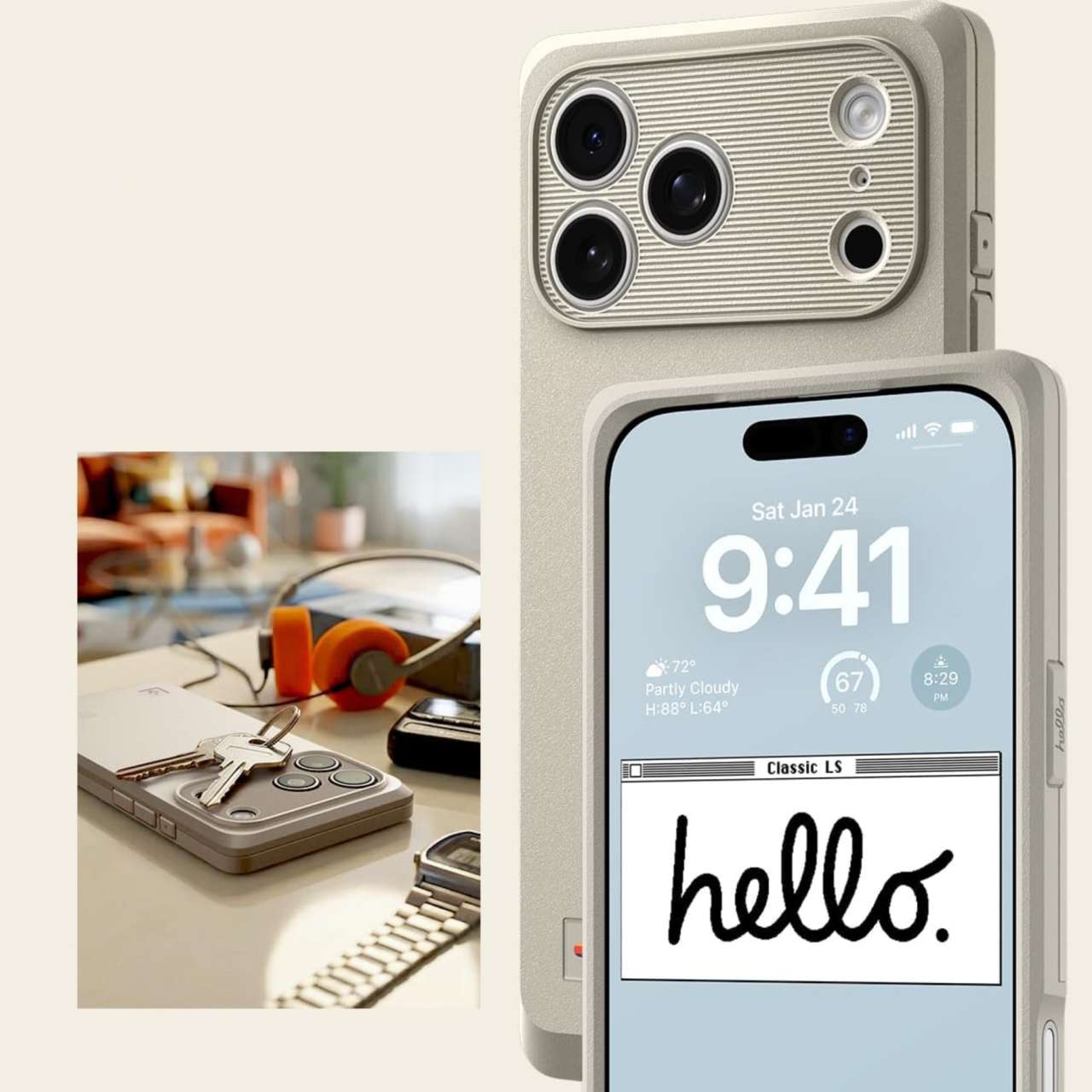
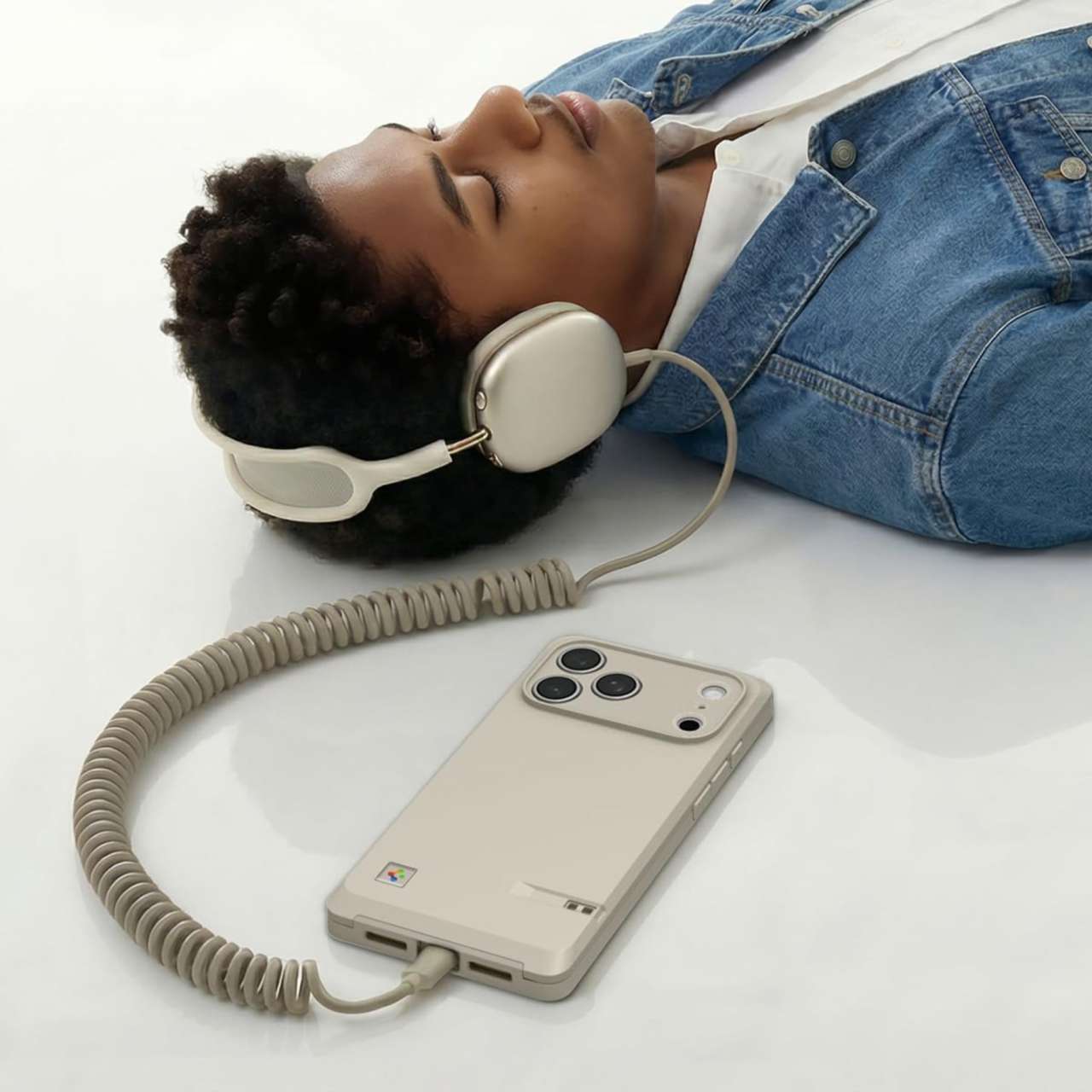
ARTICLE – Spigen just did something genuinely clever with the Classic LS MagFit Case for iPhone 17 Pro. Instead of chasing minimalism or slapping on another carbon fiber texture, the company reached back to 1984 and pulled forward a design language most accessory makers wouldn’t dare touch. The stone colored matte finish, the horizontal ribbing across the back panel, the quiet industrial texture: this is a case built for people who remember when computers had personality. At $39.99, it sits in that premium everyday tier where you’re paying for intent, not just materials.
Price: $39.99
Where to buy: iPhone 17 Pro | iPhone 17 Pro Max
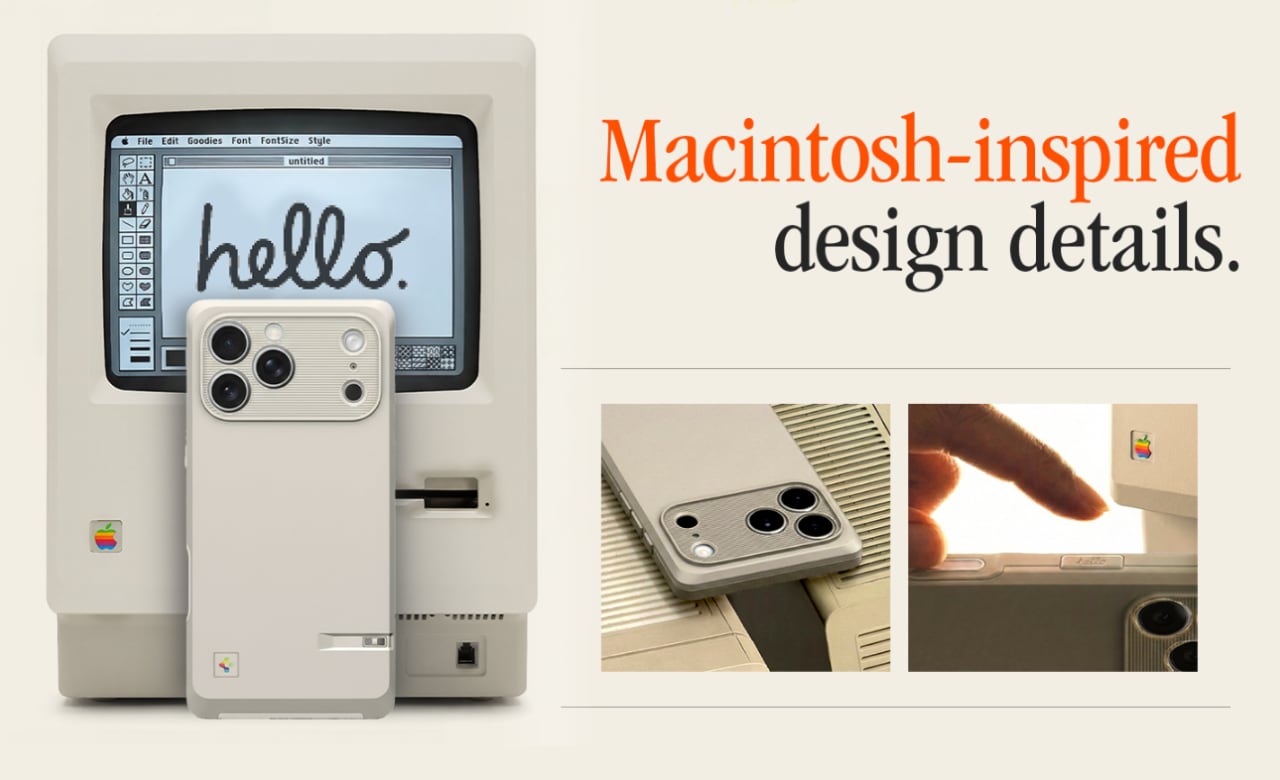
The timing isn’t accidental. Apple turns 50 this year, and Spigen positioned this Special Edition as a direct nod to the original Macintosh 128K. That framing changes everything about how the case reads in your hand. You’re not holding a protective shell. You’re holding a small argument about what technology should feel like when it acknowledges where it came from.
The Nostalgia Layer
The original Mac wasn’t sleek. It was chunky, beige, vertically oriented, and completely unapologetic about its physical presence in a way modern devices have abandoned entirely. Spigen borrows that visual vocabulary with real restraint here. The warm stone finish echoes the plastics of early Apple hardware without becoming costume. The ribbed texture mirrors the ventilation lines that defined the industrial language of those machines. A small square accent near the bottom references original badge placement, but it doesn’t copy it directly.
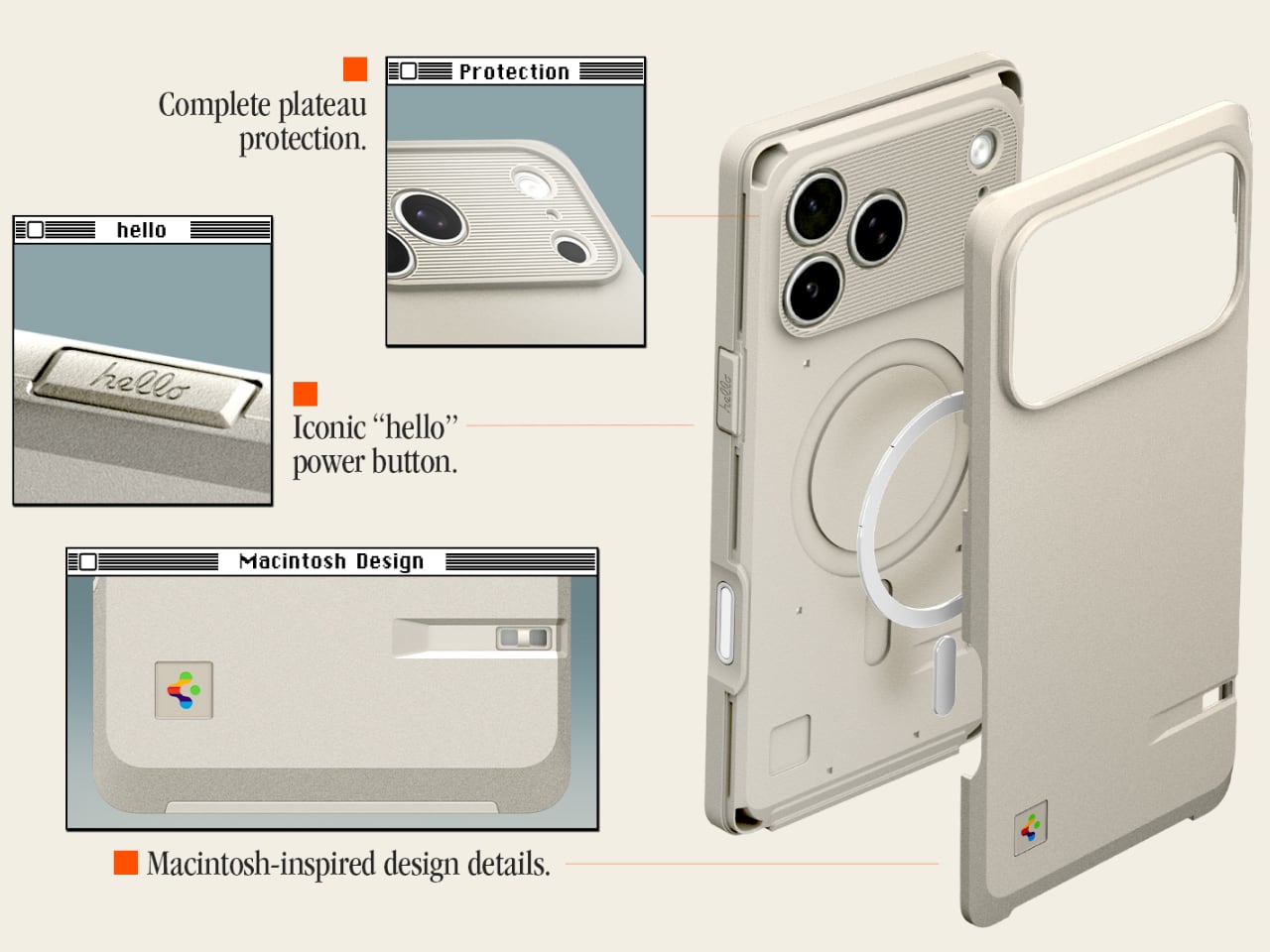
What makes this work is everything Spigen didn’t do. There are no giant rainbow Apple logos. No “Designed in California” stamps. No retro icons plastered across the surface screaming for attention. The case trusts you to recognize the reference subconsciously, and that subtlety separates thoughtful design from nostalgia bait. You notice the connection without being told to notice it.
Add The Gadgeteer as a preferred source to see more of our coverage on Google.
The emotional targeting here is precise. Long time Apple users will feel it immediately. Designers and engineers who care about lineage will appreciate the depth of reference. People who remember unboxing their first Mac, or who grew up around parents who did, will understand why this object exists. It transforms a mass market device into something that carries personal weight.
For everyone else, it’s still a good looking case in an interesting color. The design works whether you catch the reference or not.
Modern Hardware Under Retro Skin
None of this matters if the case fails at being a case. Spigen built this with polycarbonate for structural rigidity and thermoplastic polyurethane for impact absorption, which gives you the best of both worlds: enough stiffness to feel solid in hand, enough flex to absorb drops without cracking or chipping. You can feel the quality differential immediately when you pick it up.

MagFit compatibility means MagSafe charging and magnetic accessories work exactly as expected. Alignment stays strong enough for car mounts and wallets. Wireless charging passes through without issues. This is critical because nostalgia that breaks modern convenience would fail instantly, and Spigen clearly understood that constraint from the start.
The matte stone finish feels deliberately analog in a way most cases avoid. There’s a slight texture under your thumb that reads as intentional rather than cheap, and the weight distribution stays balanced even with a MagSafe wallet attached. Spigen didn’t try to make this case disappear. They made it feel like it belongs.
Camera Control Integration
The capacitive camera control button cover is the detail worth examining closely. Instead of leaving an ugly cutout or adding a stiff plastic barrier that ruins the tactile experience, Spigen engineered a touch sensitive cover that lets the iPhone 17 Pro’s camera control button work naturally. You can tap, press, and slide just like you would on a naked device.
This single detail reveals how much thought went into the design process. A case built purely for aesthetics would have treated the camera button as a problem to work around. This one treats it as a feature to preserve. The difference shows intent.
Protection That Stays Out of the Way
Raised ridges around the camera module shield lenses, flash, and sensors when you set the phone face up on a table. The front lip adds screen protection for face down placement. These are table stakes features, but Spigen executes them without exaggerating thickness or ruining the balance of the phone in your hand.
The built in lanyard strap hole integrates directly into the frame rather than dangling off the bottom as an afterthought. Photographers and travelers will appreciate having that option without needing to attach an external loop. It’s a small touch that signals awareness of how people actually use their devices in the real world.
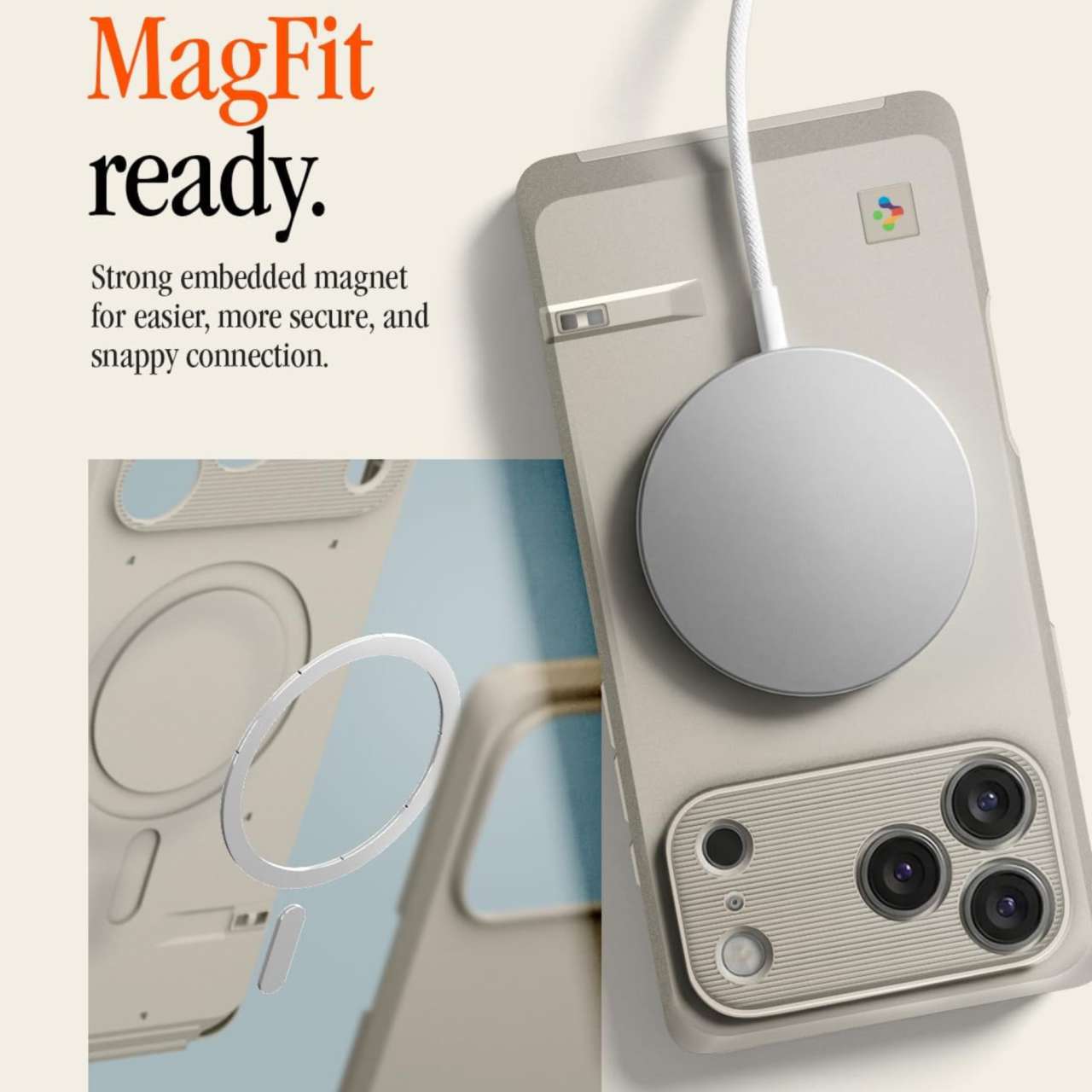
Pocketability stays intact. The case adds protection without transforming your iPhone into a brick. You still get the slim profile that makes the 17 Pro comfortable to carry.
Why This Design Resonates
Nostalgia works when it carries meaning beyond the reference itself. The Macintosh 128K wasn’t just a computer. It was the moment personal computing stopped being purely functional and started being personal. Spigen taps into that emotional layer without overselling it, and the restraint is what makes the design land.
Objects that carry story weight tend to hold attention longer than objects that only solve problems. This case does both. It protects your phone and gives you something to notice every time you pick it up. That combination is rare in accessory design, where most products compete on specs alone.
Who This Case Is Actually For
This isn’t for someone hunting for a clear case or an ultra minimal shell that disappears. If you want your phone to look like it’s wearing nothing at all, keep scrolling.
Price: $39.99
Where to buy: iPhone 17 Pro | iPhone 17 Pro Max
This is for users who want their accessories to carry identity. Apple history fans. Designers who appreciate when form follows lineage. Creators and longtime Mac users who enjoy when technology acknowledges its own past instead of pretending it appeared fully formed yesterday. At $39.99, it turns a device that looks like everyone else’s into something that feels like yours.
The Spigen Classic LS MagFit Case doesn’t try to be invisible. It tries to mean something. That’s a rarer ambition than it should be.
![[MINI SIZE. ULTRA PORTABLE CHARGER]: Roughly the size of an AirPods Pro case, this smallest power bank packs 10,000mAh of long lasting power into a tiny, nano footprint. Easily slide this ultra slim, credit card size charger into your skinny jeans, a...](https://m.media-amazon.com/images/I/41rATpm6dyL._SL160_.jpg)
Now retrieving an image set.
INIU Portable Charger, Ultra Mini 10000mAh 45W Fast Charging with Detachable Cable, Flight-Safe Travel USB C Power Bank External Phone Battery Pack for Xiaomi iPhone 17 16 Samsung S26 Google iPad etc
(as of July 13, 2026 18:57 GMT -05:00 - More infoProduct prices and availability are accurate as of the date/time indicated and are subject to change. Any price and availability information displayed on [relevant Amazon Site(s), as applicable] at the time of purchase will apply to the purchase of this product.)
Now retrieving an image set.

Gadgeteer Comment Policy - Please read before commenting
Love the idea of the tactile case; too many go for the too-hard-to-hold smooth finish that makes them kind of useless for some of us. Too bad it’s only available for the one model.
BTW, the Amazon links note that both are listed as “Currently Unavailable”.