
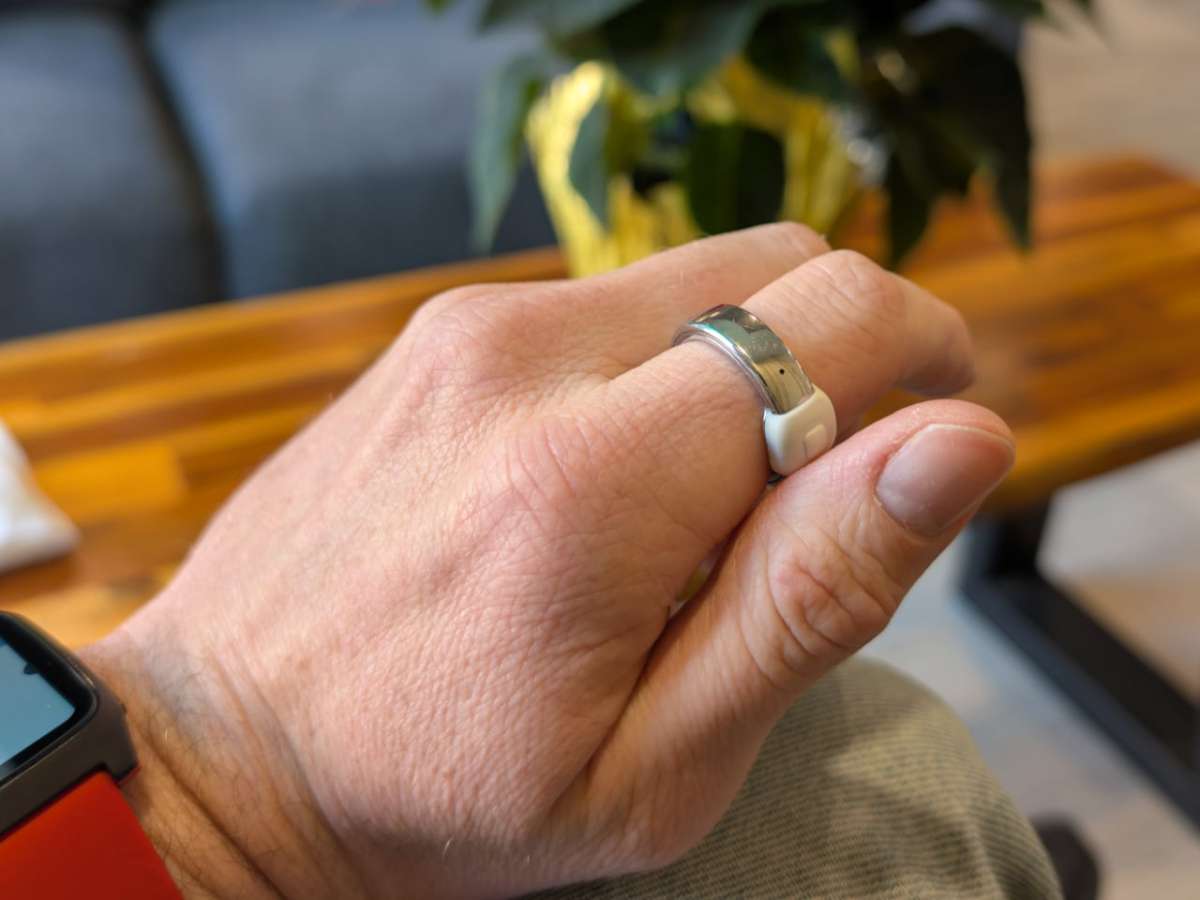
News – Most smart rings arrive loaded with sensors that track your heart rate, analyze your sleep cycles, and count every step toward a daily goal. The Pebble Index 01 ships with none of that. Instead, Pebble founder Eric Migicovsky built a ring that solves exactly one problem: capturing thoughts before they disappear. Press the button, speak for up to five minutes, and the Index stores your idea locally until it syncs to your phone. At $75, this stainless steel ring costs less than a third of the nearest competitor while eliminating subscription fees entirely.
Price: $75 (preorder) / $99 (retail after March 2026)
Where to buy: Pebble
“I’m not trying to build some AI assistant thing,” Migicovsky told TechCrunch. “I build things that solve one main problem, and they solve it really well.” That focus shapes every design decision, from the stripped-down hardware to the privacy-first software architecture. The Index functions as external memory for your brain, always present on your finger, ready when a thought strikes.
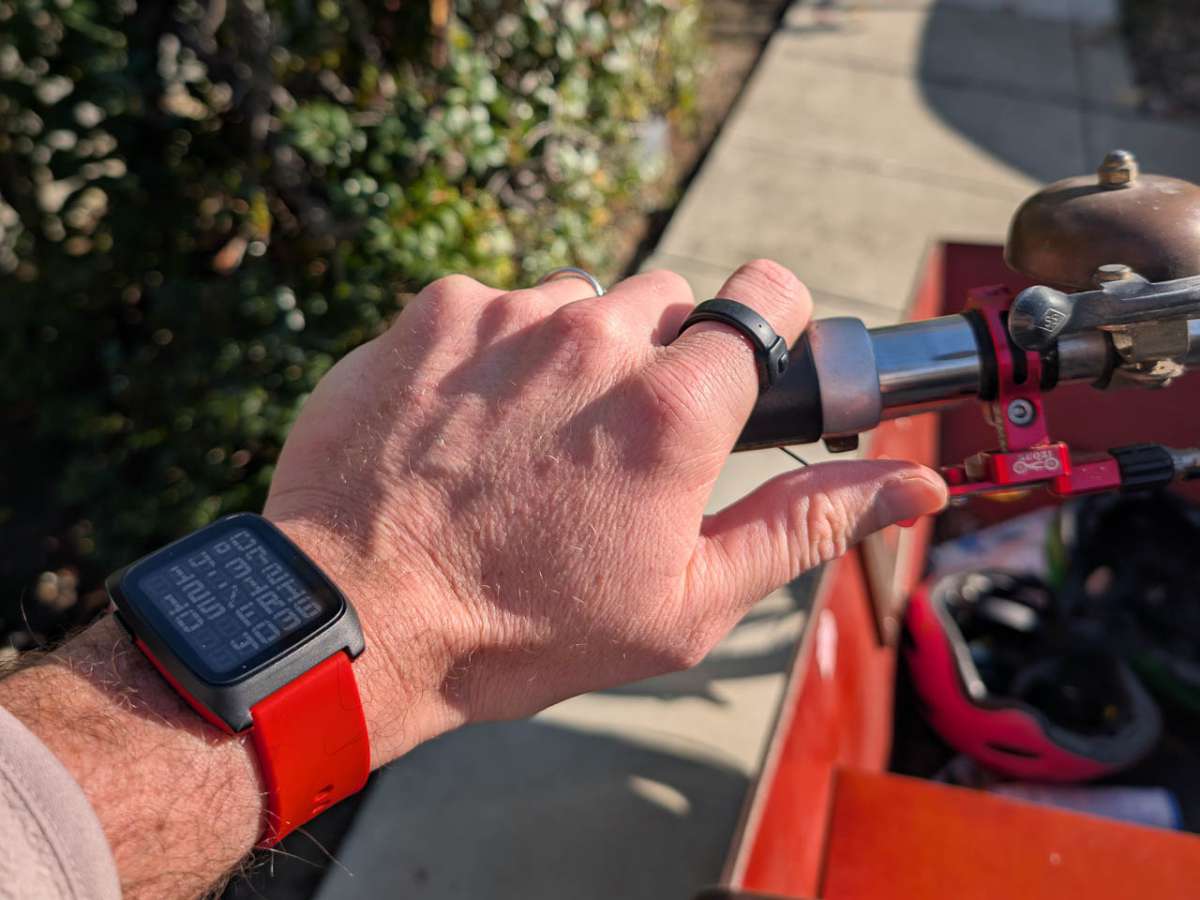
Migicovsky has worn a prototype for three months and now considers the device essential. His usage pattern reveals how the ring fits into daily life: 10 to 20 recordings per day, each lasting 3 to 6 seconds. Quick bursts of thought captured before they evaporate. “The problem is that, during the day, I get ideas or I remember something, and if I don’t write it down that second, I forget it,” he explains. The Index solves that friction point without becoming another gadget demanding nightly charging attention.
Hardware Built for Reliability
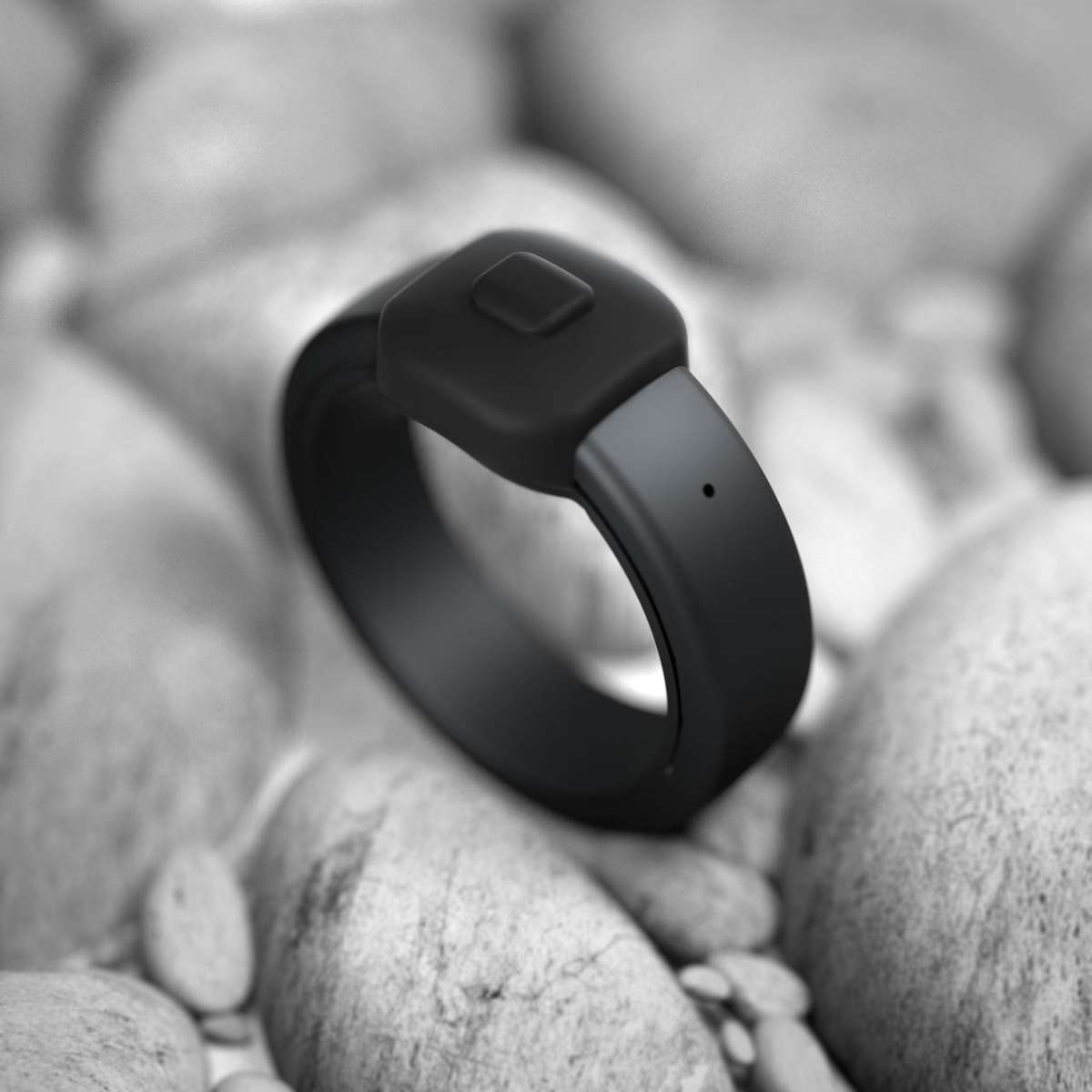
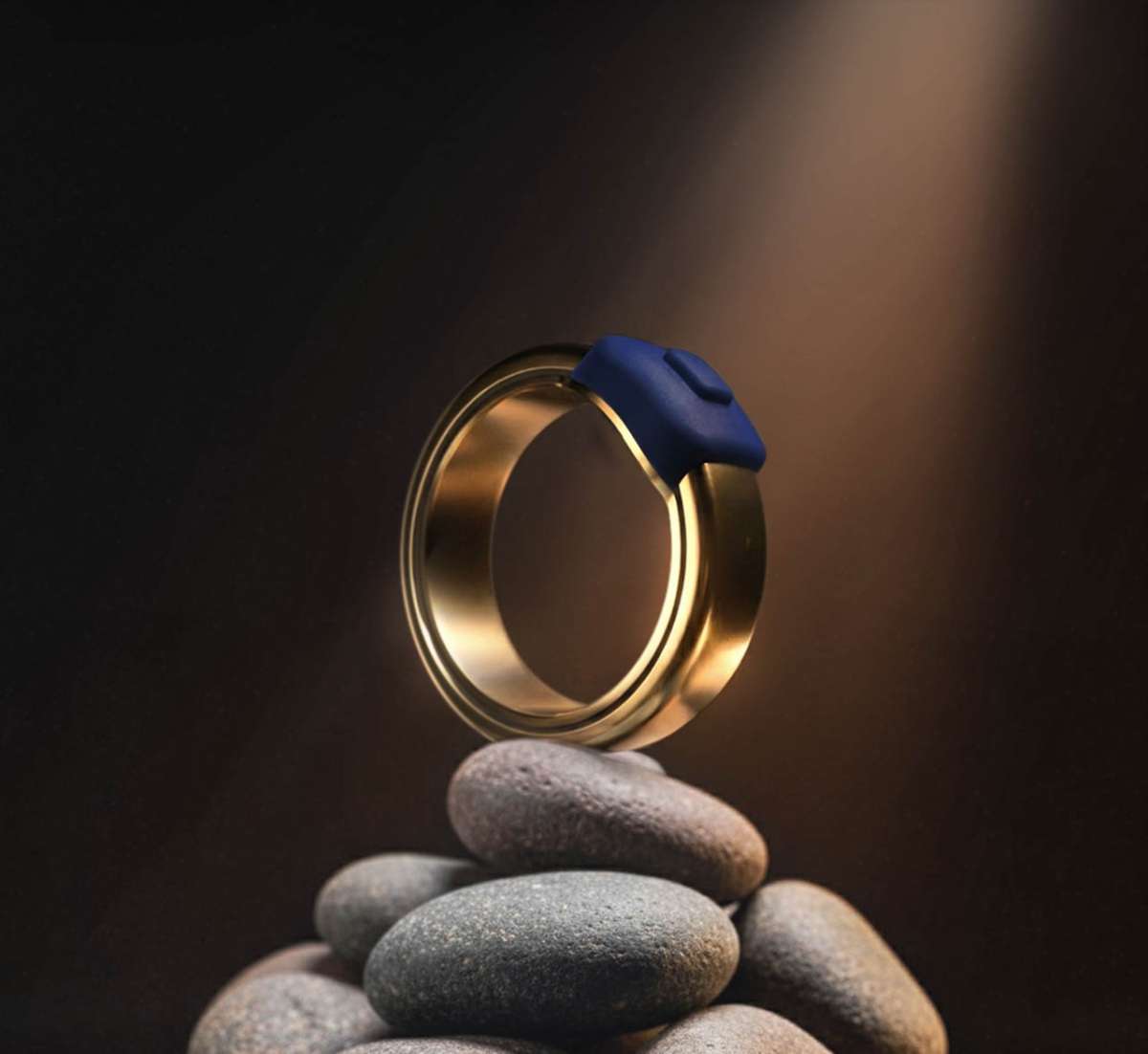
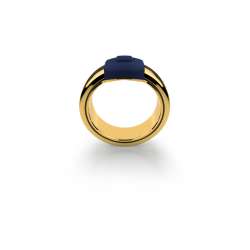
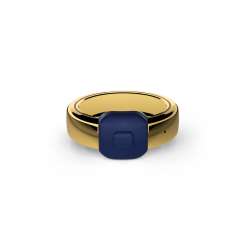
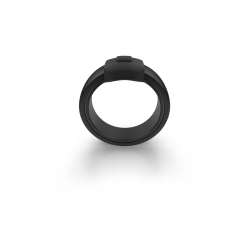
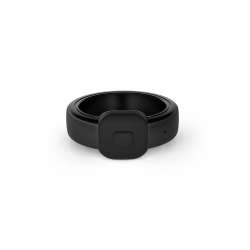
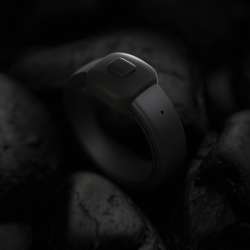
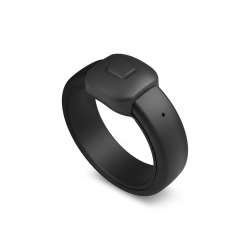
The Index 01 construction prioritizes function over complexity. Stainless steel body available in matte black, polished silver, and polished gold. Eight ring sizes span 6 through 13, covering most finger dimensions. Water resistance rated to 1 meter handles showers, handwashing, dishwashing, and rain without issue, though swimming requires removal.
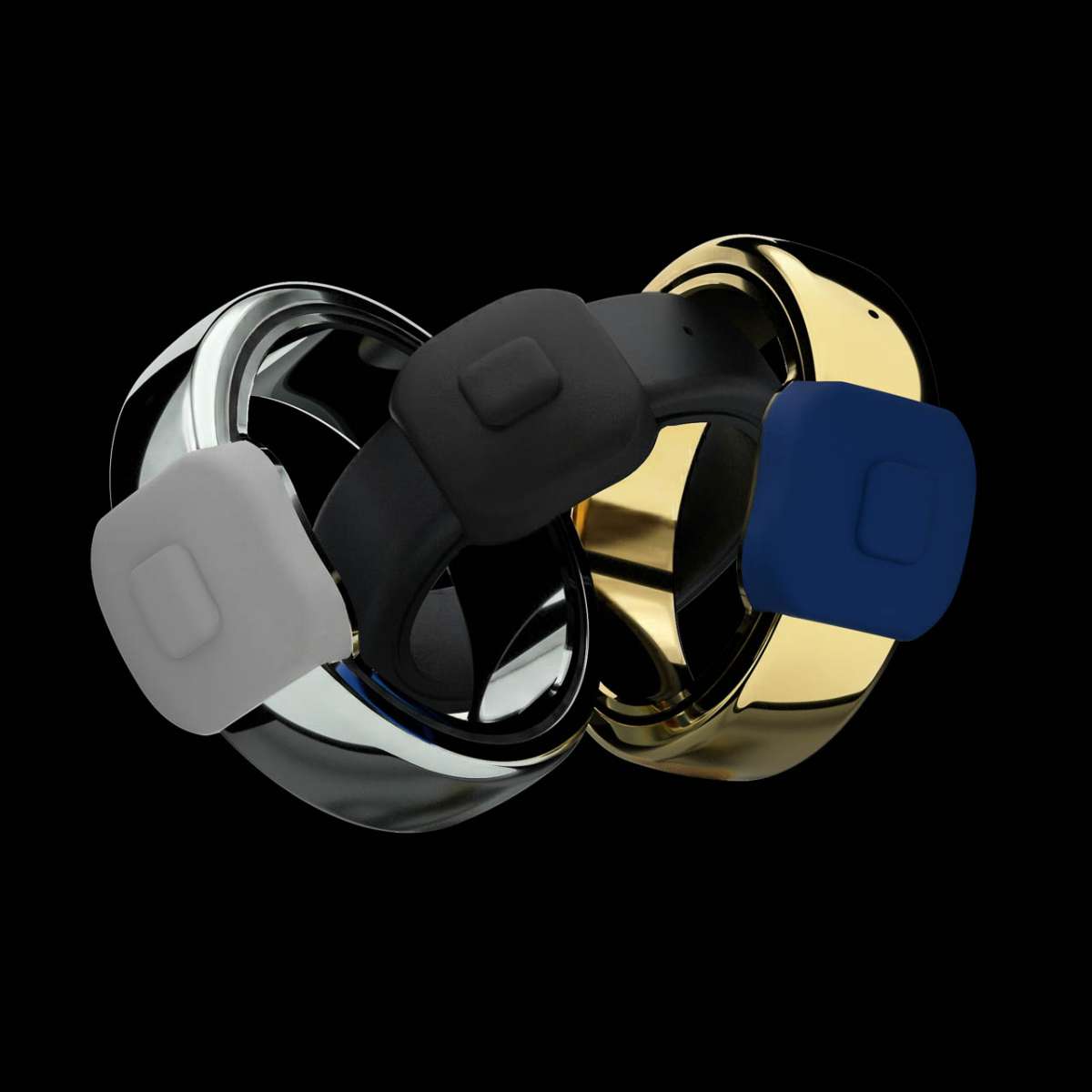
Inside, the component list stays intentionally short. One physical button positioned for thumb activation. One microphone engineered to capture voice clearly even in loud environments. No haptic motors. No vibration feedback. No display. Migicovsky designed these omissions deliberately: he wanted hardware that works 100 percent of the time. The mechanical button either clicks or it does not. The microphone either records or it does not. Software bugs cannot create a failure state where the ring appears functional but fails to capture your thought.
Internal memory stores audio clips when your phone sits beyond Bluetooth range. Once connectivity returns, files sync automatically to the Pebble app. Both Android and iOS receive full support. The raw audio gets retained alongside transcriptions, a smart backup for moments when background noise garbles the speech-to-text conversion. If you own a Pebble smartwatch or compatible device, recorded thoughts can appear directly on the watch screen for immediate verification.
Button gestures layer multiple functions onto that single physical control. Press and hold to record a voice note lasting up to five minutes. Single press triggers a customizable action, with Migicovsky defaulting his to play and pause music. Double-press switches tracks. The same gesture system can snap remote photos, activate smart home routines, or send messages through Beeper, the universal chat app Migicovsky also created. Model Context Protocol support opens the door for developers to build their own voice actions.
Two Years Without a Charger
The battery decision will polarize opinion. Non-rechargeable silver oxide cells, the same chemistry inside hearing aids, power the Index for approximately two years under average use. The ring supports 12 to 14 hours of total recording time. When the battery finally depletes, your phone receives a notification, and Pebble expects you to purchase a replacement ring while recycling the old one.
Migicovsky frames this as liberation from charging anxiety. No dock to forget at home. No percentage to monitor throughout the day. No dead device when you need it most. “The battery lasts for years,” he claims. Whether that tradeoff appeals depends on your tolerance for planned obsolescence. The $75 preorder price, rising to $99 after March 2026, makes replacement economics more reasonable than a $300 ring demanding the same approach. Pebble accepts spent units for recycling, which softens environmental concerns without eliminating them.
Privacy Architecture That Actually Means Something
When audio reaches your phone, processing happens entirely on-device using open-source AI models. An open-source speech-to-text system converts voice to text locally. A separate on-device large language model categorizes each clip, determining whether you spoke a reminder, set a timer, or captured a general note. No cloud upload. No server-side processing. No data leaving your phone.
“These are your innermost thoughts,” Migicovsky says. “You don’t want to send them anywhere.” That philosophy extends through every software layer. The Pebble app maintains a scrollable feed of memory logs with both text transcriptions and original audio available. Over 100 languages receive support. The app itself runs on Kotlin Multiplatform with code published openly on GitHub. You can inspect exactly how your data gets handled. Modifications and forks remain possible. Trust becomes verifiable rather than assumed.
By default, reminders surface within the Pebble app. But open architecture allows routing to other services. Notion handles your task management? Configure the Index to send notes there. Prefer your phone’s native calendar? Events flow directly. The ring becomes an input device for whatever organizational system you already trust rather than demanding adoption of yet another platform.

The contrast with competitors sharpens the value proposition. Sandbar’s Stream Ring, announced last month, costs $249 with a free tier offering limited AI interactions and a $10 monthly subscription for unlimited features. It ships next summer. The Pebble Index costs $75 now, includes everything, charges no subscription, and ships in March. For users who want a memory capture device rather than an AI companion, the math works decisively in one direction.
The Side Door Features
A double-press and hold activates what Migicovsky calls “opening the side door and letting people have some fun.” This gesture routes queries to a ChatGPT-style bot for open-ended questions. Weather checks, quick calculations, search-engine-style lookups. These features require internet connectivity and, by Migicovsky’s own admission, will not work all the time. They ship disabled by default.
Output options depend on your connected devices. Earbuds can deliver spoken responses. A Pebble smartwatch might display weather results on its face. The Pebble app store will host an actions category where the community publishes custom triggers. The MCP support enables sophisticated integrations for developers who want to extend functionality.
But Migicovsky positions these capabilities as bonuses. The fundamental promise remains singular: recording your thoughts reliably, privately, and without subscription fees. Everything else is gravy for enthusiasts who want to tinker.
A Different Kind of Hardware Company
Core Devices LLC operates with five people, self-funded, focused on profitability from day one. Migicovsky brings hard-won perspective to this approach. “I didn’t earn any money during Pebble,” he admits. “We exited, but it was not a great exit.” The original Pebble sold to Fitbit, which Google later acquired in 2021. The experience taught him that venture-backed hypergrowth is not the only path.
Price: $75 (preorder) / $99 (retail after March 2026)
Where to buy: Pebble

“There’s a time and a place for building a venture-backed startup,” he explains. “What I’m doing now is trying an alternative path, which is start from profitability.” The small team has already shipped the Pebble 2 Duo smartwatch, sold out its first run, and collected 25,000 preorders for the upgraded Pebble Time 2 with its color e-ink display.
The Index represents confidence in this sustainable model. Unlike the limited-run Pebble 2 Duo, Migicovsky plans to manufacture these rings at scale. “I have a good feeling about it,” he says. At $75 with no ongoing costs, the barrier to trying the device stays low. Whether it becomes essential depends entirely on how often your best ideas vanish before you can capture them. If your memory already holds everything you need, this ring solves no problem you have. If thoughts regularly escape before you can act on them, the Index offers something no fitness tracker provides: a second brain that lives on your finger.
Auto Amazon Links: No products found.

Gadgeteer Comment Policy - Please read before commenting
If it is not rechargeable, there is an ongoing cost:
100$ every two years.
I don’t know what prevented adding an induction coil and a nice capacitor instead of not replaceable cells, except a strange marketing choice.
I originally thought the same thing. I had an Oura 4. It lasted a year. It was rechargeable. The last 2 months I barely got sleep data for the entire night. It died completely somewhere at the start of month 13.
That was ~$399 IIRC. The battery cannot be replaced. An ongoing cost. And people are still doing it. Not me. That was too high a cost. I was figuring 2-3 years.
Hindsight suggests that maybe the reason is size and final cost considerations. The addition of a battery and recharging mechanism would reduce the ring battery capacity (smaller battery) to make room for the charging circuitry. So, you’re out of an “Index” in about a year if you CHARGE it (and cant change the battery) or you are out of an “Index” in about a year if you have a bigger battery you cant charge or replace but never have to do anything other that put it on.
Maybe not those exact numbers, but I bet they’re pretty close.
Maybe it’s worth ~$8.30 a month? I’ll let you know. I have one that should be arriving in a week or two.