
Adventure routes rarely stick to the plan. Pavement turns to washboard gravel, weather rolls in, and cell service drops away. Rain-soaked gear or a slow leak can turn a ride into roadside troubleshooting. You don’t need to pack the whole workshop; you need gear that solves a real problem without loading down the bike.
This guide focuses on five jobs: keeping gear dry, communicating beyond cell range, coordinating a group, repairing eligible tubeless punctures, and restoring tire pressure.
Start with the fundamentals: a properly fitted helmet, protective gear, a well-maintained motorcycle, route planning, and first-aid skills. These picks add practical backup for day rides, overnighters, and longer backcountry routes.
1. Garmin inReach Messenger Plus for Communication Beyond Cell Service
The first problem on a remote route is not always navigation. It is communication. A phone is useful until there is no usable cellular signal, its battery runs low, or a rider needs to share their location after a breakdown, injury, or unexpected change of plans.
The Garmin inReach Messenger Plus is a satellite communicator that supports two-way text messaging, location sharing, SOS, photo messaging, and voice messaging when paired with the Garmin Messenger app on a compatible smartphone. Garmin states that inReach communication features, including messaging, tracking, weather requests, and SOS, require an active satellite subscription. The device does not replace normal emergency services where cellular coverage is available, but it provides another communication option outside that coverage.
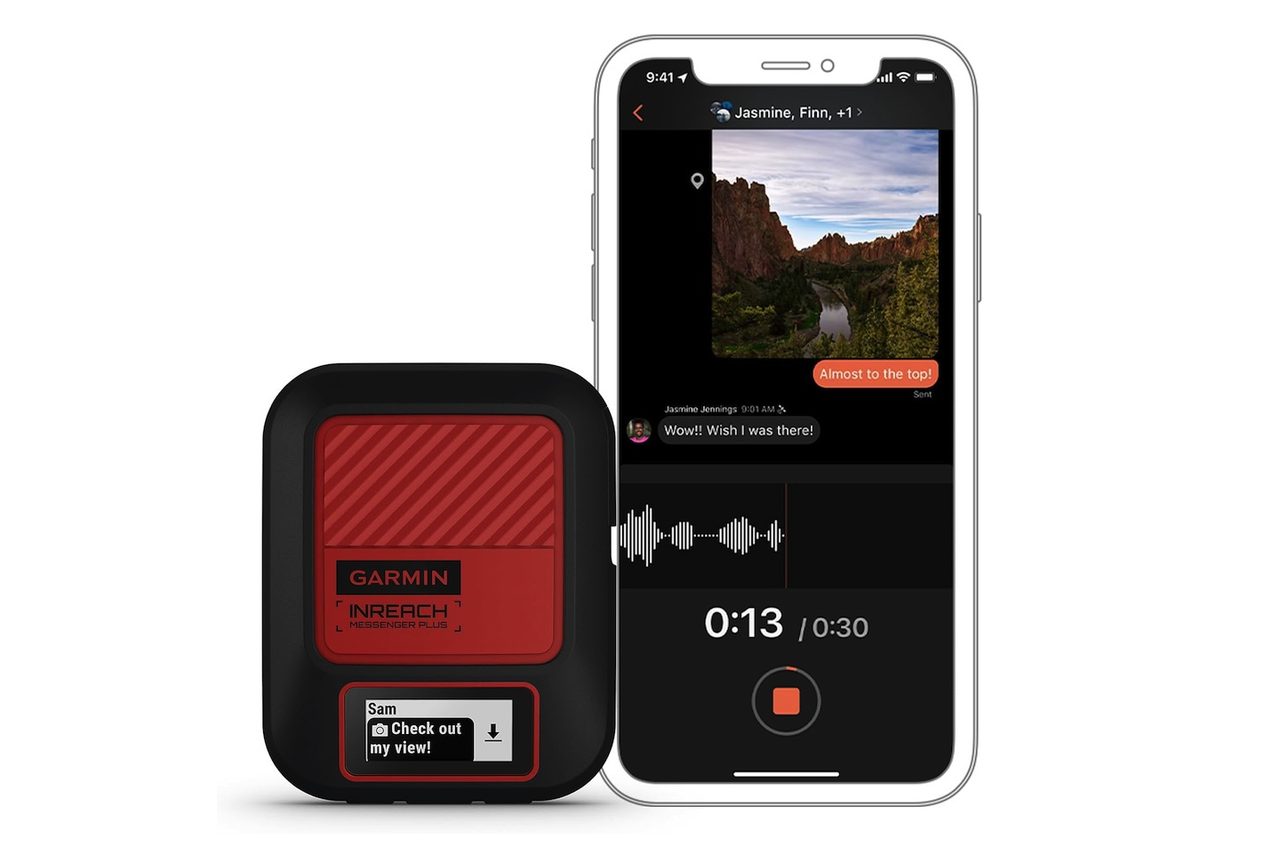
Price: $399.99
Where to Buy: Amazon
Garmin lists battery life of up to 25 days when a text message or location is sent every 10 minutes in low-power messaging mode with a full view of the sky. That is a manufacturer measurement under defined conditions, not a result every trip will achieve. Tree cover, terrain, message volume, tracking intervals, and use of photo or voice features can affect battery life and satellite connectivity.
It is most useful on routes beyond cellular coverage. Before relying on it, check Garmin’s current plan terms, regulations along your route, and expected satellite coverage.
2. Cardo Packtalk Edge for Group Coordination
Group rides become harder to manage when dust, traffic, sharp turns, and uneven terrain spread riders across a route. Hand signals have their place, but they are not always visible to the rider at the back of the group. Frequent stops to regroup can slow progress and make route changes harder to communicate.
The Cardo Packtalk Edge is a helmet communication system using Cardo’s second-generation Dynamic Mesh Communication technology. Cardo lists support for up to 31 riders, a maximum unit-to-unit range of one mile, and up to five miles across the group mesh network. It also lists 40mm JBL speakers, an IP67 rating, and a magnetic Air Mount.
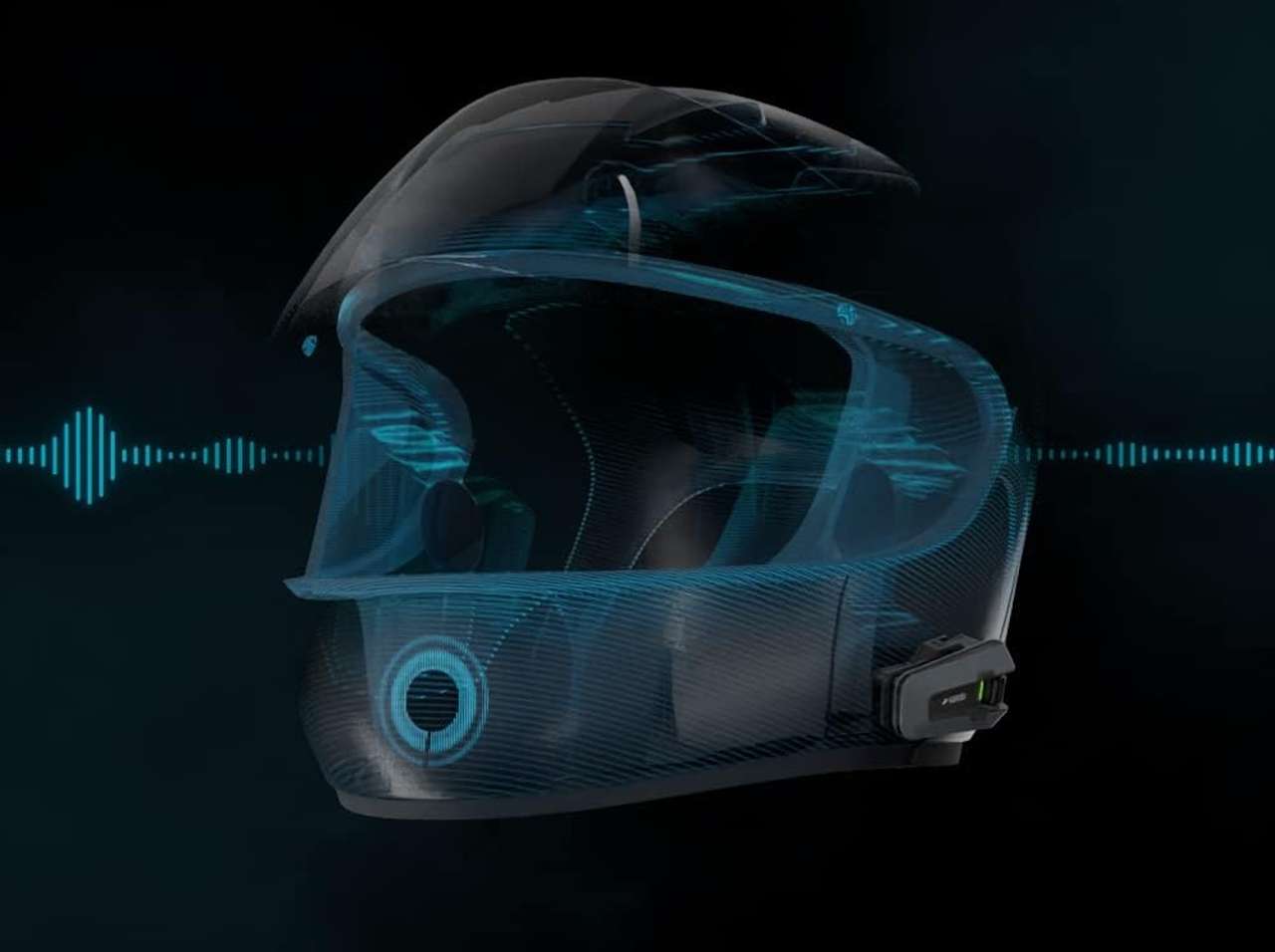
Price: $395.96
Where to Buy: Amazon
Those figures describe Cardo’s stated specifications, not a guarantee that a group will maintain the full claimed range on every route. Trees, hills, traffic, rider spacing, interference, and helmet setup can all affect communication. The practical benefit is the ability to share hazard warnings, fuel-stop plans, route changes, and regrouping instructions without relying only on visual contact.
The Edge is most useful on regular group rides. Confirm helmet compatibility and allow time to position the speakers and microphone correctly.
3. Kriega US-20 Drypack for Protected Storage
Adventure riders often carry extra layers, water, tools, food, documents, and sometimes a change of clothes. The issue is not merely finding enough capacity. Loose luggage can shift, rain can reach poorly protected gear, and awkward mounting can become a distraction on uneven terrain.
The Kriega US-20 Drypack is a 20-liter motorcycle luggage option built around a roll-top main compartment. Kriega lists a waterproof roll-top main compartment, quick-access side and rear mesh pockets, dimensions of 400 by 260 by 190 millimeters, and a listed weight of 850 grams. The brand calls the system universal fit, but also notes that certain motorcycle models require a separate fitment kit.
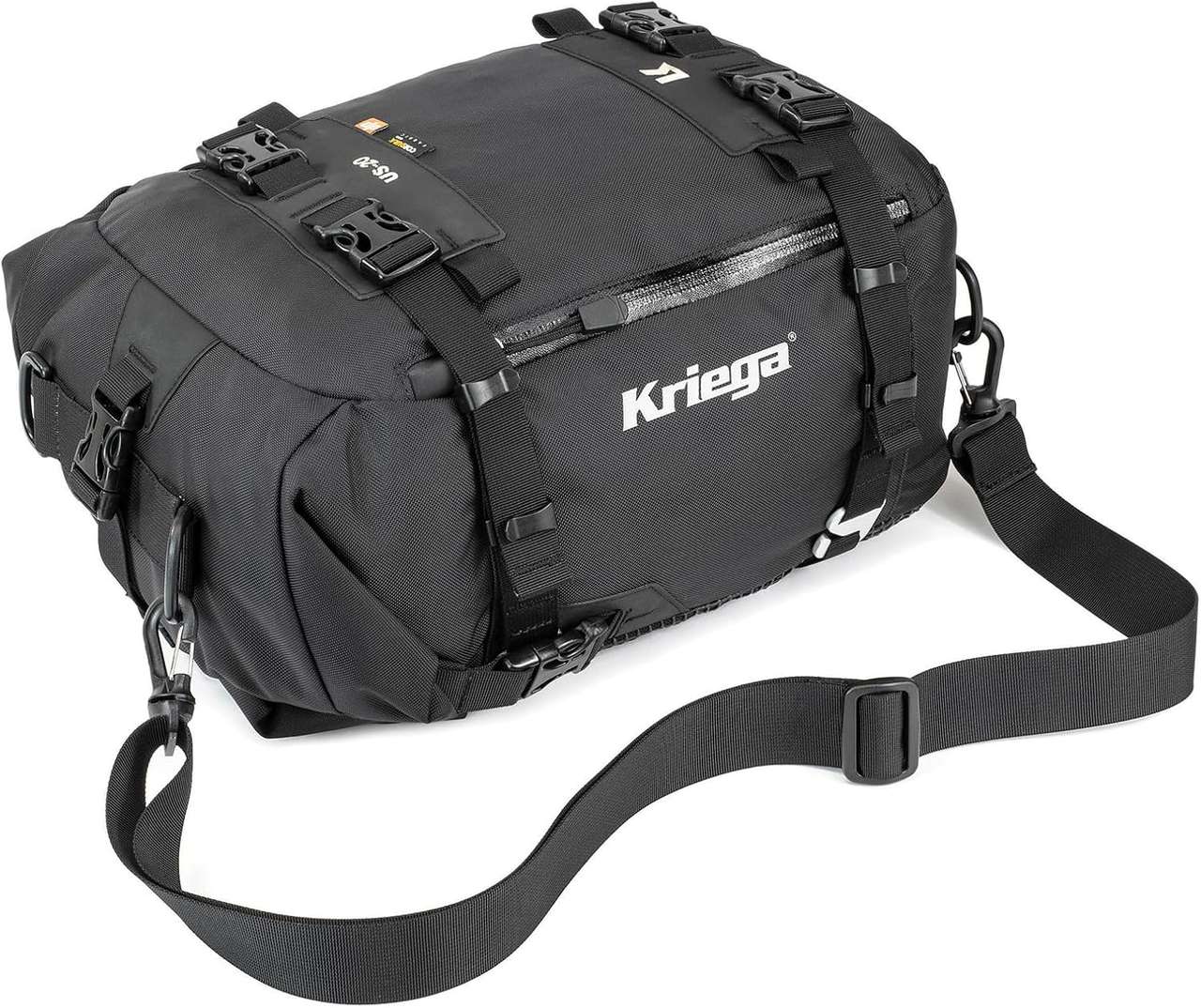
Price: $199.99
Where to Buy: Amazon
Kriega also says the US-20 can connect with compatible US-Drypacks to create a modular setup with up to 70 liters of total capacity. That gives riders a way to scale storage for different trips. The 20-liter bag can cover a long day ride or overnight, while compatible bags can be added for longer travel.
Waterproofing applies to the roll-top main compartment, not the external pockets. Choose it for expandable soft storage; use hard panniers if you need locked storage, more capacity, or rigid protection.
4. MotoPumps Air Shot 2.1 for Tire Pressure Management
Tire pressure is a planning issue on an adventure motorcycle. Riders may choose different pressures for pavement and loose terrain, but any adjustment only helps if the tire can be restored to an appropriate road-going pressure before higher-speed riding. An inflator also becomes important after a repair, when a tire needs air before the trip can continue.
The MotoPumps Air Shot 2.1 is a compact 12-volt inflator made for powersports use. MotoPumps lists a detachable 24-inch air hose, a 90-degree air chuck, a six-foot main power cord, multiple included power-connection options, a 7.5-amp draw at 50 PSI, and a 50-PSI rating. The company says the full kit weighs 19 ounces and that the pump body measures 4.5 by 4.75 by 1.8 inches without the hose.
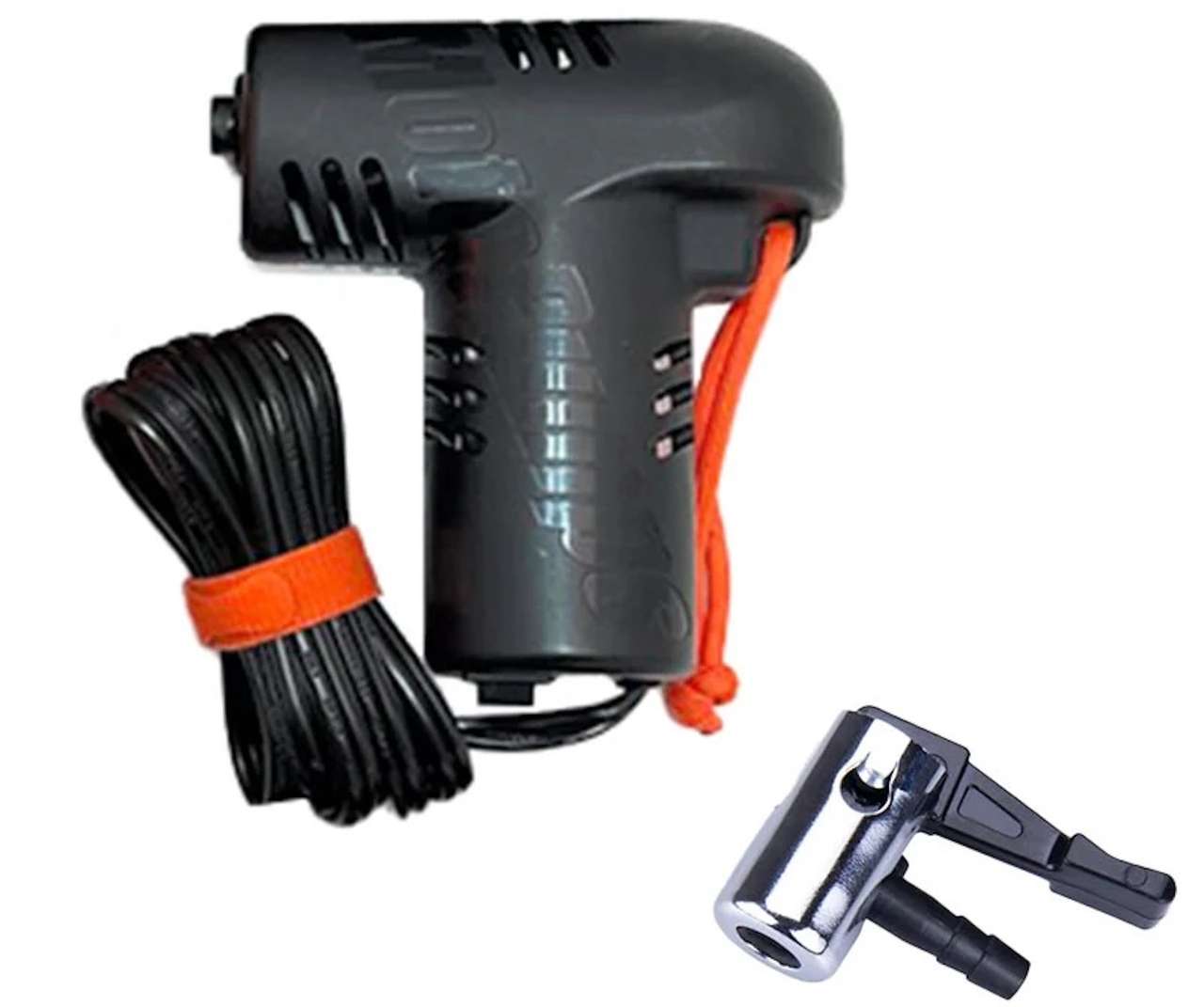
Price: $155.95
Where to Buy: MotoGPS
The compact body and included connectors make the pump easier to pack, but electrical compatibility still needs attention. MotoPumps notes that some CAN bus-controlled motorcycle outlets may shut down because they do not supply enough current. Riders should check their motorcycle’s outlet rating, install the appropriate lead if needed, and test the pump at home before depending on it away from services.
It is most useful for pressure changes off pavement or as part of a roadside repair kit. Use a separate tire-pressure gauge to verify the final pressure.
5. Dynaplug Pro Xtreme for Eligible Tubeless Punctures
A portable inflator does not solve the entire flat-tire problem. If a tubeless tire picks up a nail or similar tread puncture, the tire may need to be sealed before it can hold air. That is why a repair tool and inflator serve different jobs in the same roadside kit.
The Dynaplug Pro Xtreme is a tubeless-tire repair tool. Dynaplug lists a tool body available in aluminum or stainless steel, eight repair plugs, three insertion tubes, an air stopper, a clearing attachment, and a pipe cleaner. The company describes it as intended for heavy-duty tubeless tires within its stated tire-thickness range.
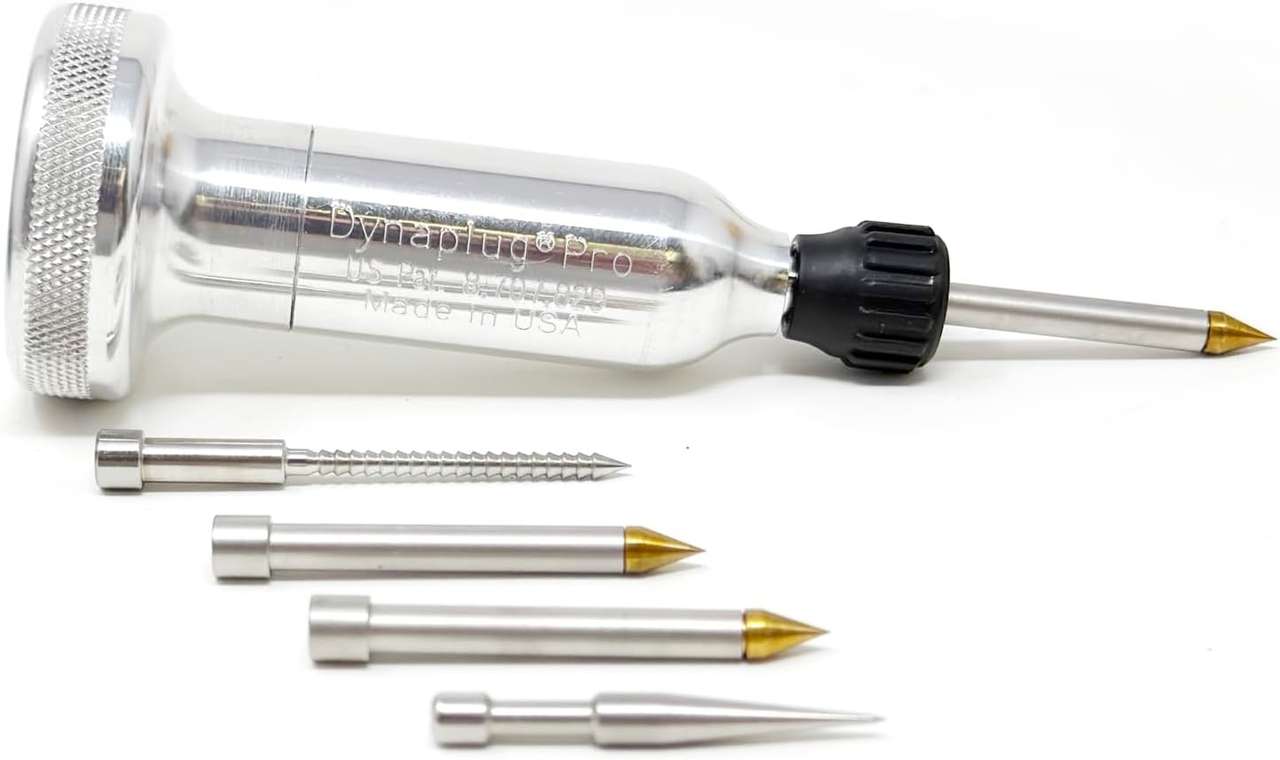
Price: $74.99
Where to Buy: Amazon
A plug kit is for an eligible tread puncture, not every tire failure. It cannot resolve a torn sidewall, wheel damage, a badly damaged tire, or a problem outside the product’s instructions. Riders should also confirm that a product is appropriate for their motorcycle tire, follow tire-maker guidance, and seek inspection after a roadside repair where appropriate.
Confirm the tire is tubeless and within the kit’s stated limits; tube-type tires need separate repair equipment.
Build Around the Problems You Are Most Likely to Face
No single kit fits every ride. Near-town solo rides favor dry storage and tire tools; remote group routes give satellite messaging and an intercom a clearer role. An inflator makes more sense when the route calls for lower off-road pressures and reinflation before pavement. Motorcycle fit and tire construction set the other limits.
[ Cover Image | Pexels ]