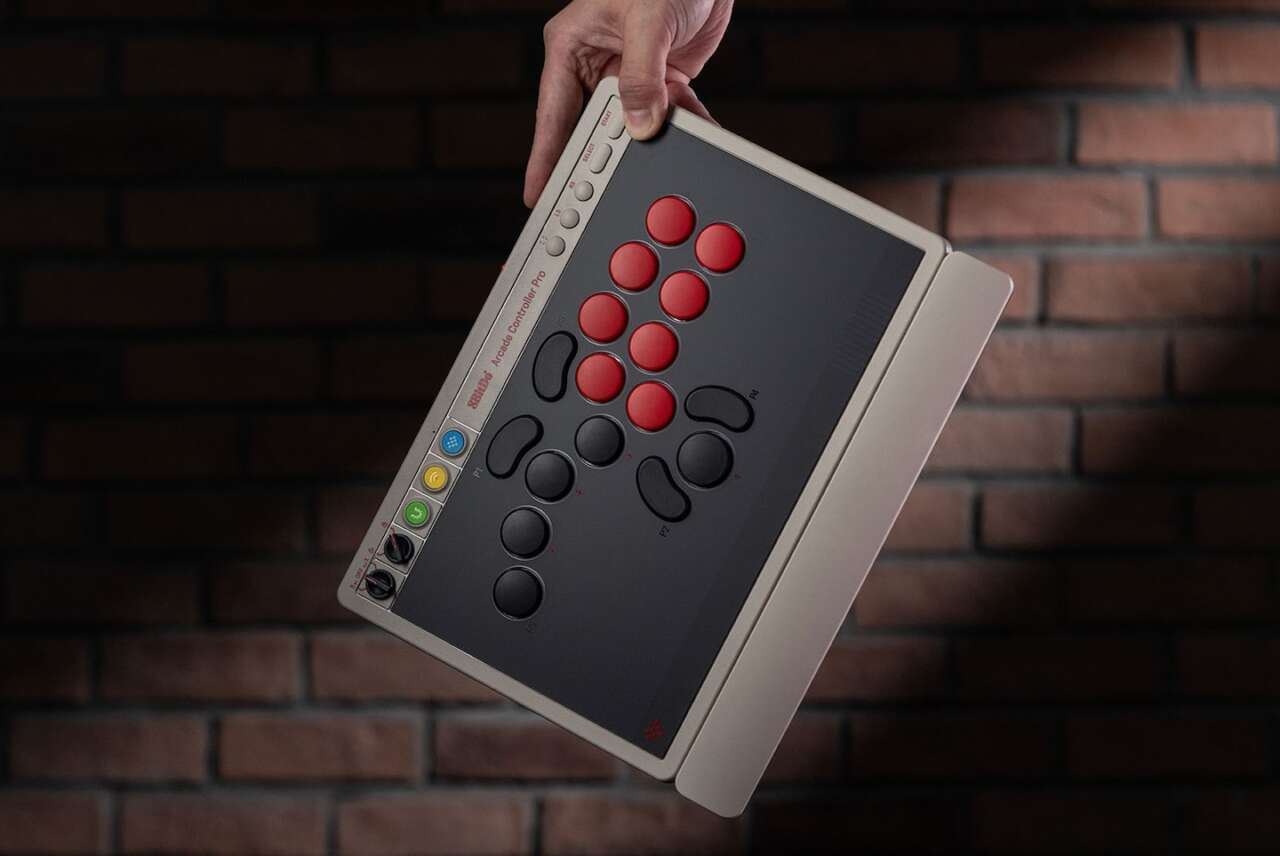
Traditional arcade sticks aren’t for everyone. Some fighting-game players prefer tapping individual directional buttons to moving a joystick, which is where leverless controllers come in.
Price: TBD
Where to Pre-order: 8BitDo
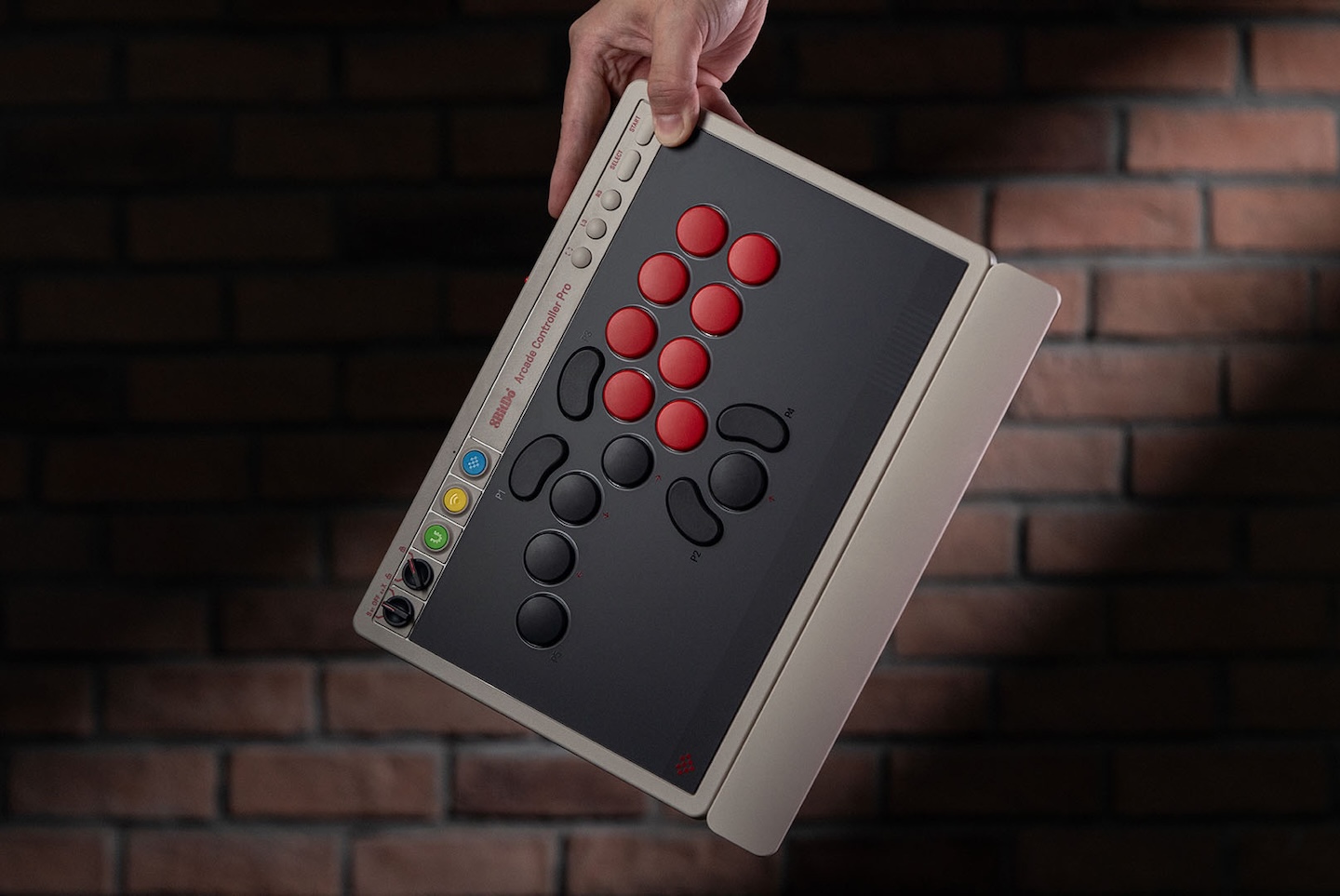
The 8BitDo Arcade Controller Pro takes that all-button approach and adds mechanical switches, five programmable controls, wireless connectivity, and a built-in display. Designed for Windows, Nintendo Switch, and Switch 2, it puts a range of configuration options directly on the controller.
For players who like to fine-tune their setup, the screen is the most interesting addition. But the Pro also includes practical touches such as a removable magnetic wrist rest, hot-swappable switches, and a quick-release faceplate.
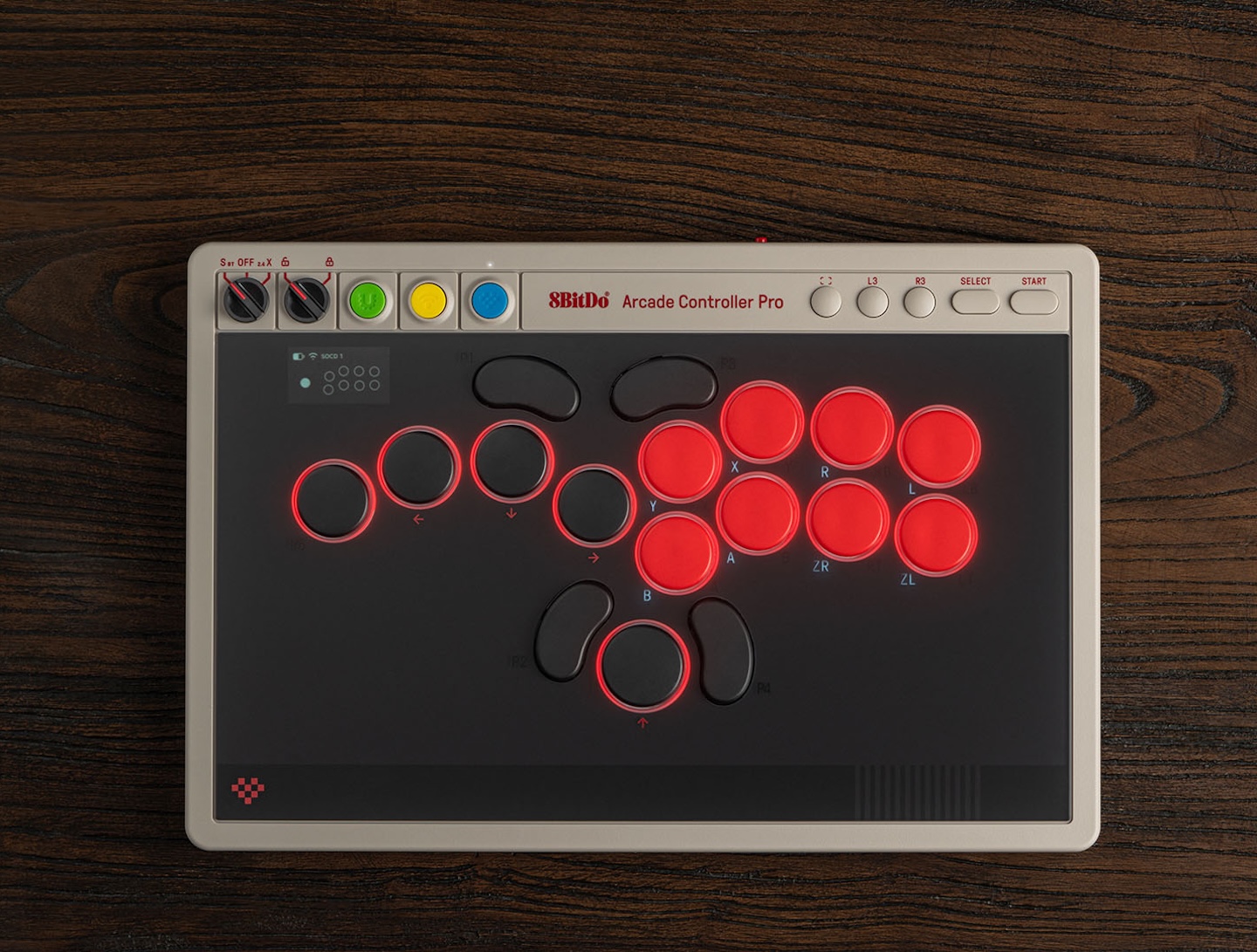
A compact all-button layout
Compared with 8BitDo’s standard Arcade Controller, the Pro uses smaller buttons and tighter spacing. According to 8BitDo, the arrangement keeps inputs within more natural reach. Whether that translates into better comfort will depend on hand size and playing style, so it’s something we’d want to assess through hands-on testing.
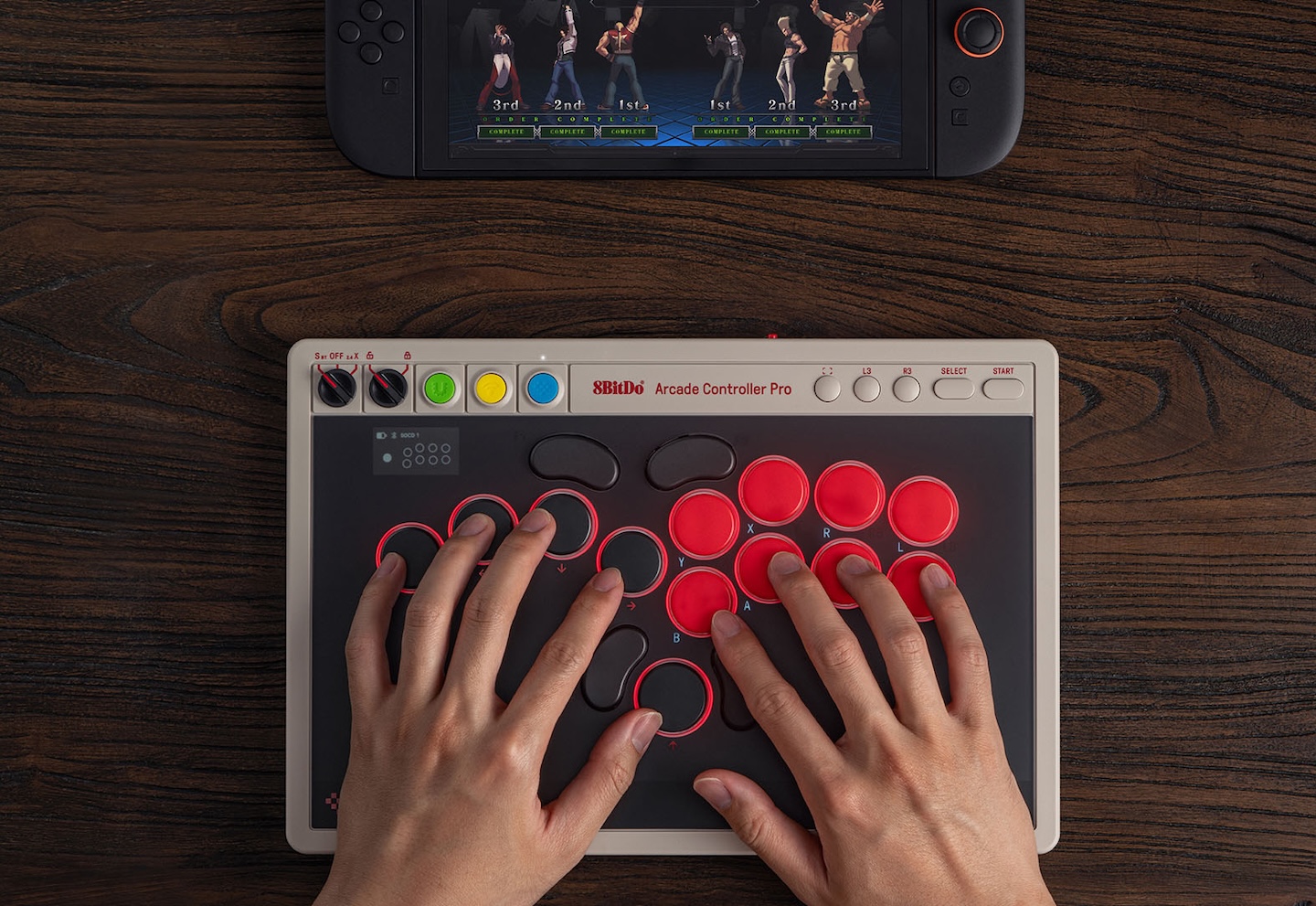
The controller measures 301 × 201 × 16mm and weighs 1,090 grams. Its removable magnetic wrist rest provides additional support and doubles as storage for five included lock caps.
Players already familiar with leverless controllers should recognize the appeal of the layout. For longtime joystick users, however, switching to individual directional buttons means learning a different way to enter movement commands. The Pro offers another approach to fighting-game controls, not a guaranteed shortcut to better results.
Settings on the built-in screen
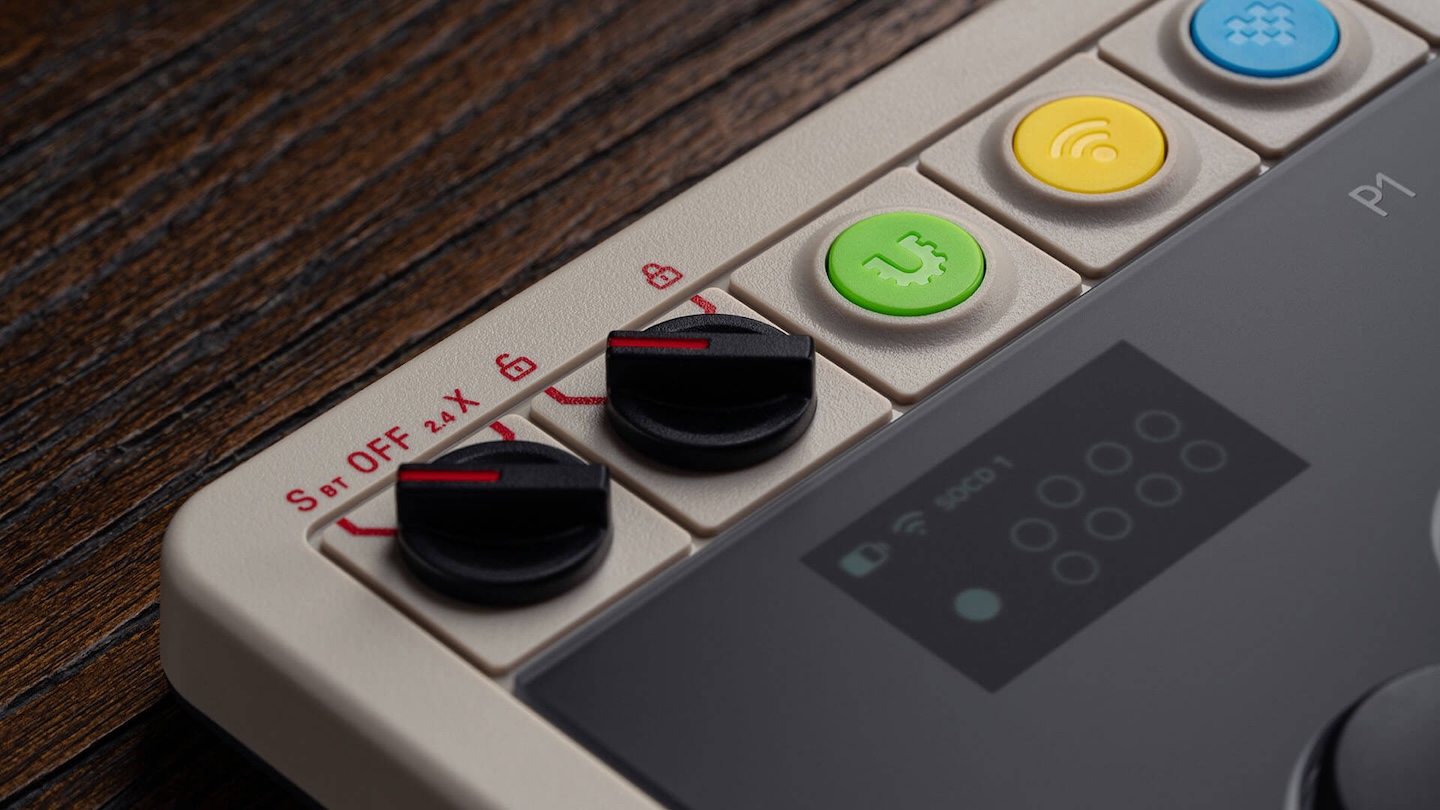
The 1.47-inch display does more than show inputs and battery status. With built-in Ultimate Software, it also provides access to essential settings without requiring a computer for every adjustment.
The controller supports 8BitDo Ultimate Software V2 for additional configuration, giving players both on-device controls and a desktop software option.
Five programmable buttons, labeled P1 through P5, support fast mapping directly on the controller. If you don’t need all five, the included flat lock caps replace their regular button caps to help prevent accidental presses. The unused caps can be tucked into the magnetic wrist rest.
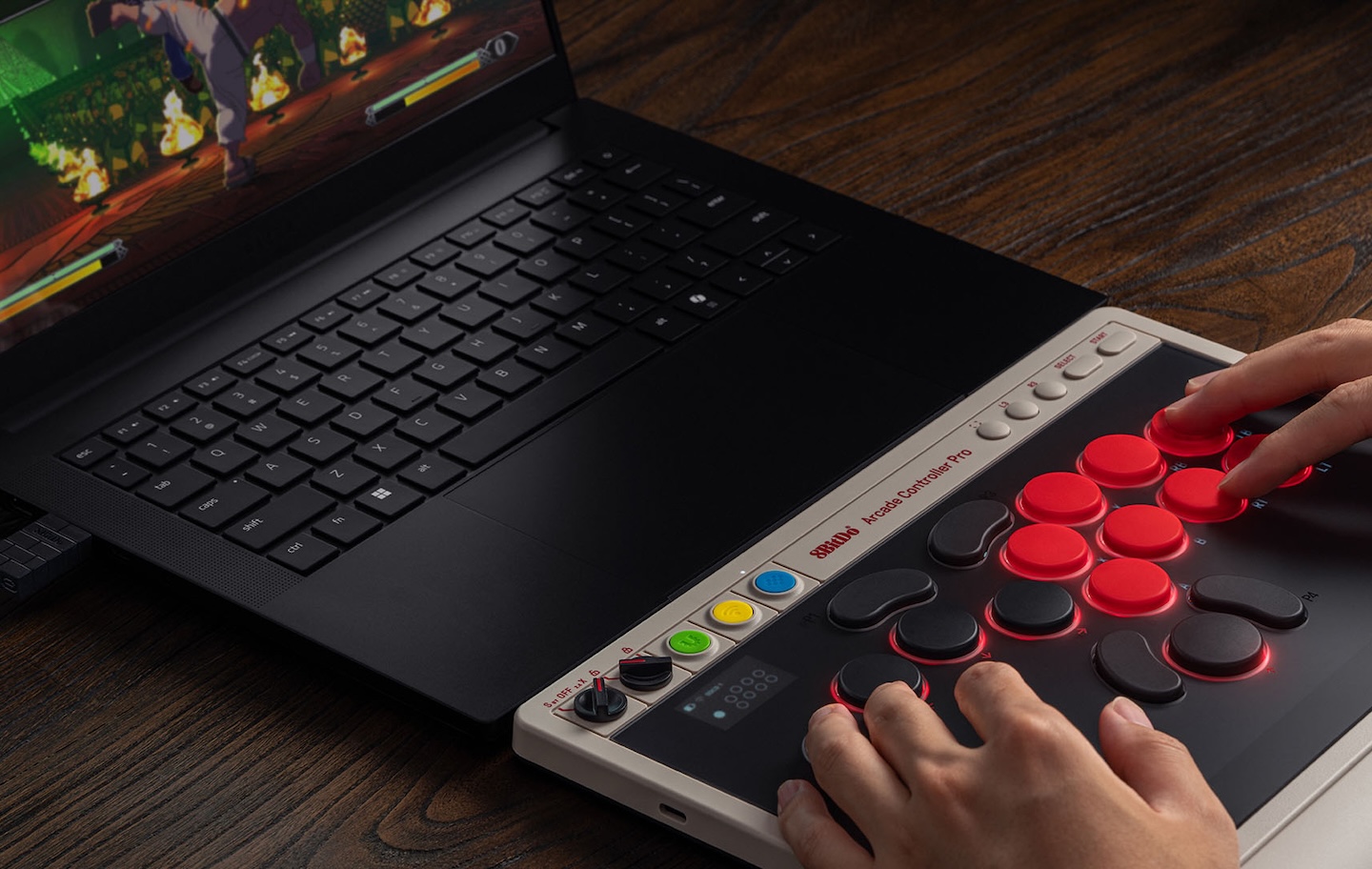
An independent control panel separates system functions from the main fighting-game inputs. A turn-and-click dial handles connection modes, volume and display settings, and Tournament Lock. The Pro also offers SOCD cleaning settings for managing simultaneous opposing directional inputs.
Tournament Lock is intended to help prevent unwanted inputs during play, but players should still check their event’s controller rules. Its presence doesn’t automatically make every configuration tournament-legal.
RGB lighting adds another customization option, while illuminated button labels switch between PC and Nintendo layouts.
Hot-swappable switches and easier access
The Pro uses 8BitDo Core Green low-profile linear mechanical switches co-developed with Kailh. The company describes them as fast, quiet, and smooth, although those characteristics will need hands-on testing rather than being taken as established performance advantages.
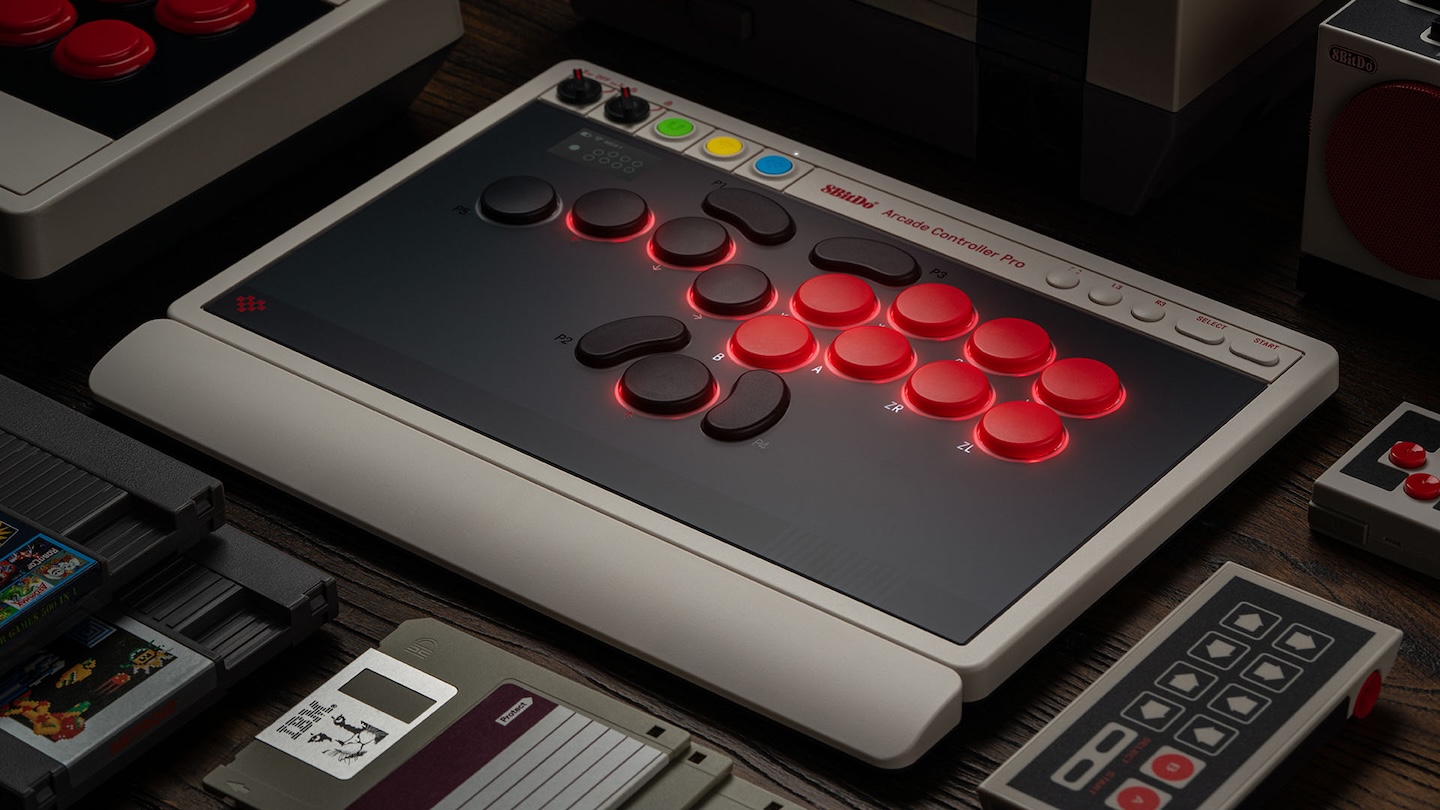
The hot-swappable design is a more concrete maintenance feature. A release button on the back opens the quick-release tempered-glass faceplate, providing access to the internal components.
Three spare switches and a switch puller are included, giving owners replacement parts from the start. Being able to replace an individual switch is useful if one wears out or develops a problem, without needing to replace the whole controller.
Wireless play and cable routing
Wireless connectivity depends on the platform. Windows uses the included 2.4GHz adapter, while Nintendo Switch uses Bluetooth. Wired connections are also supported.
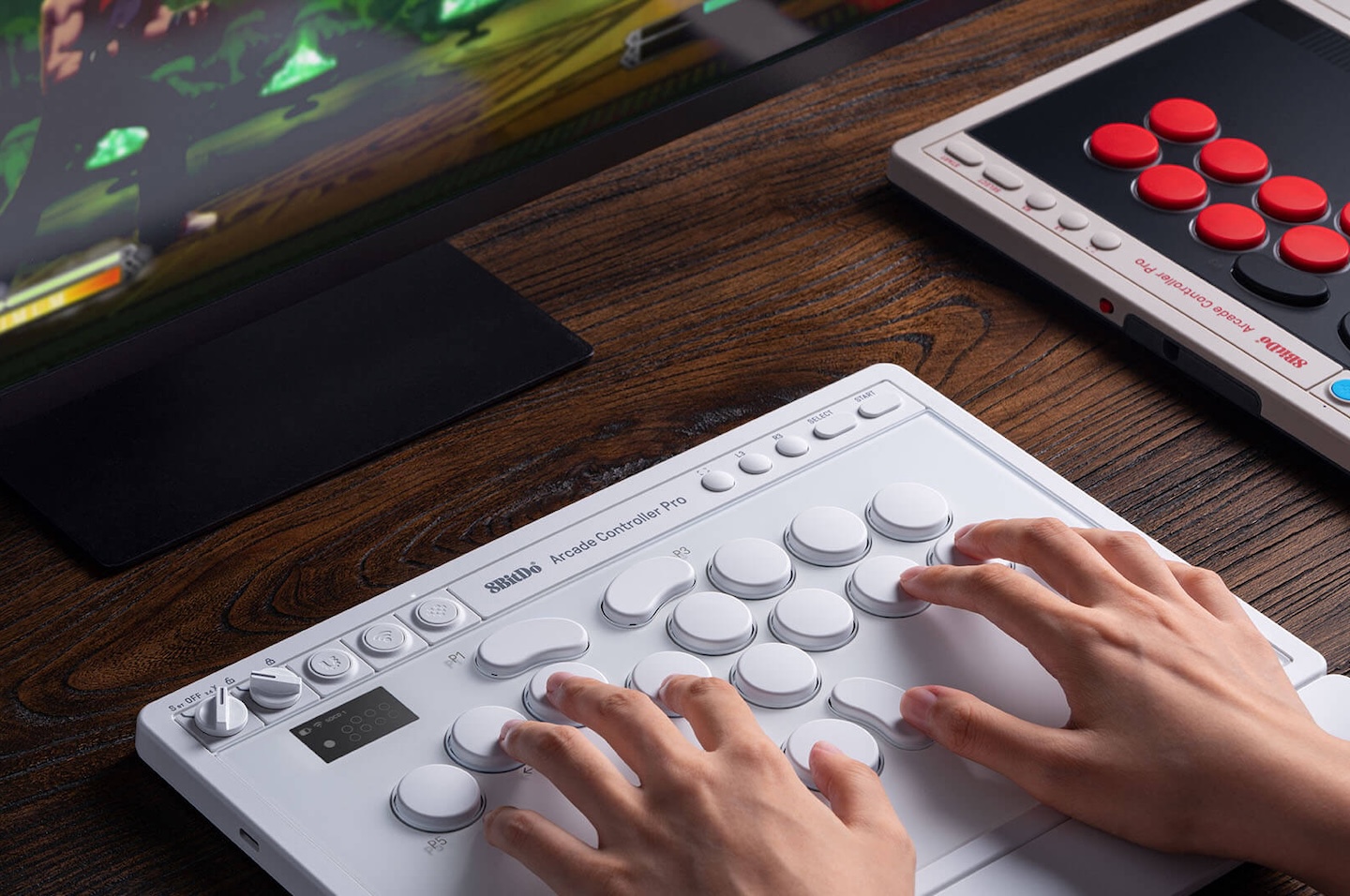
Official compatibility covers Windows 10 version 1903 or later, Nintendo Switch system version 3.0.0 or later, and Switch 2 version 20.1.1 or later.
For wired setups, top and side USB-C connection positions give players a choice of cable routing. The metal Cable Lock System helps secure the connection against an accidental disconnect.
Power comes from a 3,000mAh rechargeable battery. 8BitDo rates it for up to 15 hours over Bluetooth or 2.4GHz with RGB lighting switched off, with a quoted four-hour charging time. Those are manufacturer estimates; actual runtime will depend on settings and use.
Price, availability, and who it suits
8BitDo’s official product page says Arcade Controller Pro preorders start in October, but it does not currently list an exact preorder date or a price. That leaves an important part of the buying decision unresolved.
The Pro looks most relevant to fighting-game players who already want a leverless controller and expect to use its customization features. Five programmable buttons, on-device settings, hot-swappable switches, and wired or wireless connectivity give them several ways to tailor the setup.
It’s a less obvious choice for someone who is already comfortable with a conventional gamepad or arcade stick and rarely changes controller settings. An all-button directional layout is a different control method, and a screen or extra programmable buttons won’t automatically improve anyone’s results.
The Arcade Controller Pro brings a substantial set of configuration and maintenance features to 8BitDo’s leverless lineup. Whether it offers good value will depend on its final price and how well those features work in actual play.
Price: TBD
Where to Pre-order: 8BitDo
More 8BitDo Prime Big Deal Days deals
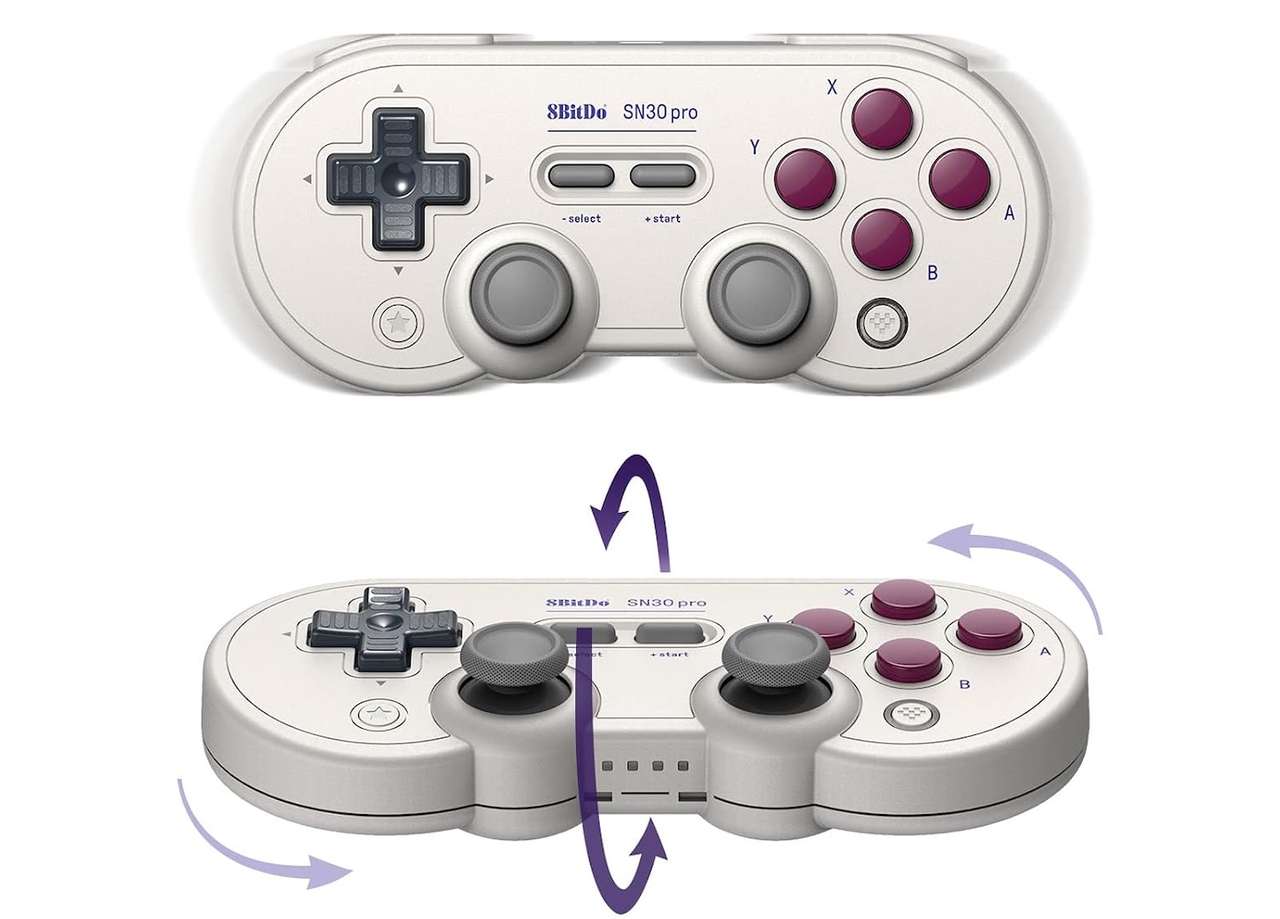
If the Arcade Controller Pro isn’t the type of controller you’re looking for, 8BitDo also has several other products discounted for Prime Big Deal Days. The sale includes the 8BitDo Ultimate 2 Wireless Controller ($49.99), 8BitDo Retro R8 Mouse ($39.99), 8BitDo Ultimate C Bluetooth Controller ($27.99), and 8BitDo Ultimate 2C Wireless Controller ($33.74). These give shoppers alternatives ranging from conventional wireless gamepads to a retro-inspired mouse, so it’s worth checking the current Prime price on each before deciding which 8BitDo device best fits your setup.