A convincing photograph used to be reasonably strong evidence that someone had pointed a camera at something. Generative AI has complicated that assumption. Images and videos can now be created without a camera ever being involved, making the origin of digital media increasingly important.
Camera company Caimera thinks part of the answer should happen at the moment of capture. Its prototype CAIM1, short for Counter Artificial Intelligence Machine 1, is being developed to generate cryptographic proof alongside photographs and videos. Instead of asking someone to judge authenticity from the pixels alone, the system is intended to provide information that could help verify a recording’s claimed origin.
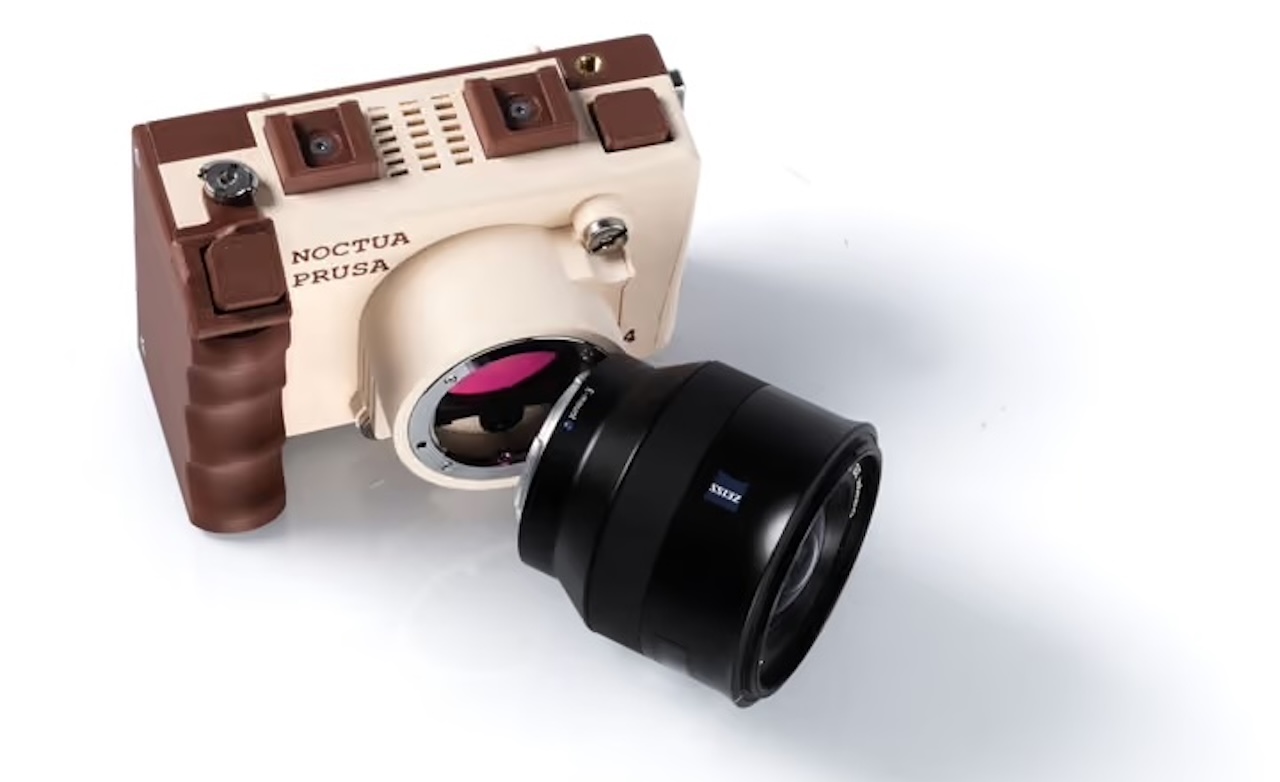
That is an ambitious idea, but CAIM1 is still a prototype. Its authentication system, camera performance, and production hardware have not undergone the kind of independent testing needed to determine how well the complete system will work in practice.
The Camera Creates Proof While You Shoot
CAIM1’s defining feature is not its sensor or lens mount. It is the additional processing happening alongside image capture.
According to Noctua, the camera combines onboard hardware attestation with cryptographic proof generation at the edge. The resulting proof information is passed to what Noctua describes as immutable decentralized storage, which it says could let third parties verify a recording’s claimed capture provenance.
 The practical goal is straightforward: give someone receiving a CAIM1 recording more than the image itself when deciding where that file came from.
Caimera describes the technology as attesting the “human origin” of captured moments. That wording needs qualification. Cryptographic provenance could provide evidence that a file came through authenticated hardware and carries a verifiable capture record, assuming the underlying hardware, cryptographic keys, and verification infrastructure remain trustworthy. It cannot, by itself, establish that everything depicted in the scene is truthful, unstaged, or presented with accurate context.
That distinction matters because proving provenance is not the same as proving reality.
Authentication Creates a Heat Problem
Generating cryptographic proofs during video recording creates an unusual engineering challenge. Noctua says CAIM1 is being designed to capture and process 4K video at 60 frames per second while also performing the cryptographic calculations needed to create verification proofs. According to the company, those workloads place considerable thermal pressure on the processor and image sensor.
Cooling becomes more difficult because everything sits inside what Noctua describes as a highly protective, mostly enclosed shell designed for harsh environments and prolonged UV exposure.
During development, passive heatsinks reportedly were not sufficient. Noctua says the processors could thermally throttle and drop frames without active airflow, preventing the prototype from maintaining its intended video performance.
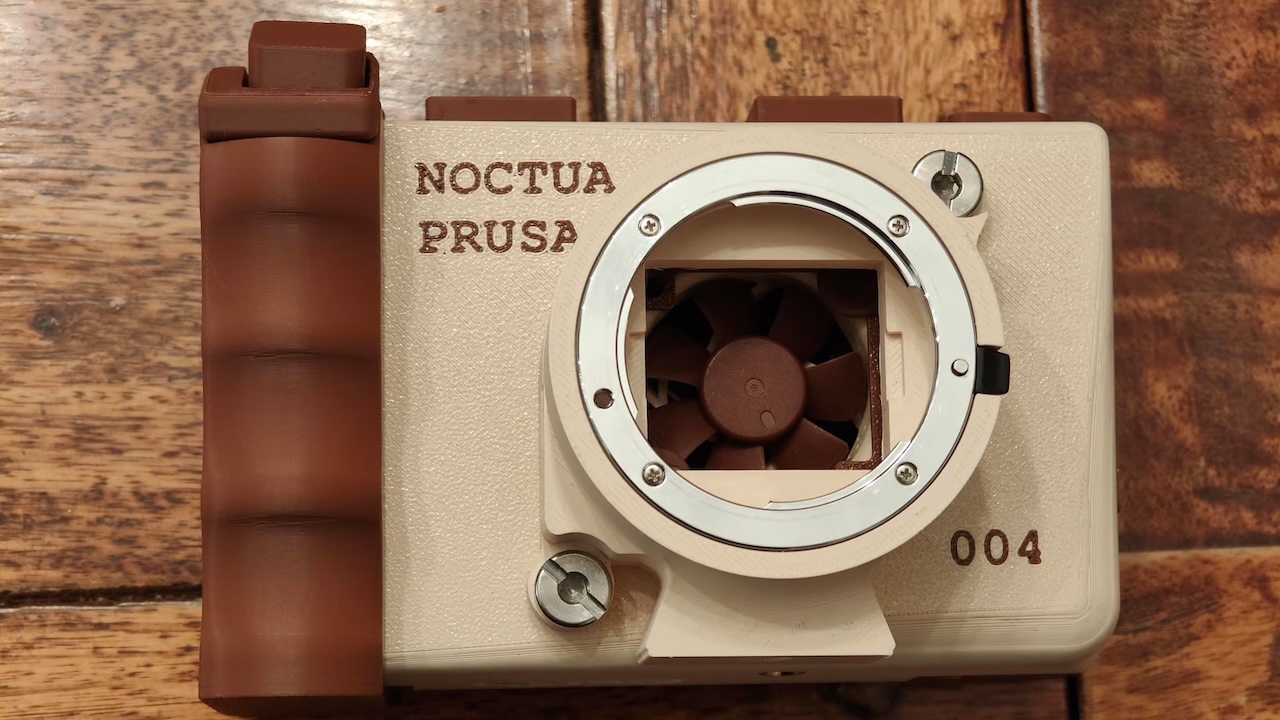
That is why this camera contains something you would not normally expect to find behind an image sensor: a tiny Noctua fan.
There’s a Noctua Fan Behind the Sensor
Caimera chose the Noctua NF-A4x10 5V PWM, a fan measuring just 40 × 40 × 10 mm. The team considered it important enough to redesign CAIM1’s main circuit board around it.
In the prototype layout, the fan sits directly behind the image sensor and is isolated from the main chassis with anti-vibration mounts. Fresh air passes over the sensor’s alloy heatsink backplate, through the fan, across the processor heatsinks, and then exits through the side of the camera.
That single airflow path cools both major heat sources instead of requiring separate fans. The fan’s 5V operating voltage is also important because CAIM1 uses a low-voltage battery system. Noctua says using a conventional 12V fan would have required additional voltage-conversion hardware.
Caimera creator Josh Cowell says the setup keeps the processors operating without interfering with audio or image capture. That remains a developer claim rather than an independently established result. Fan noise, vibration, battery consumption, thermal behavior, and sustained recording performance still need to be evaluated on production hardware.
The Camera Itself Is Still Taking Shape
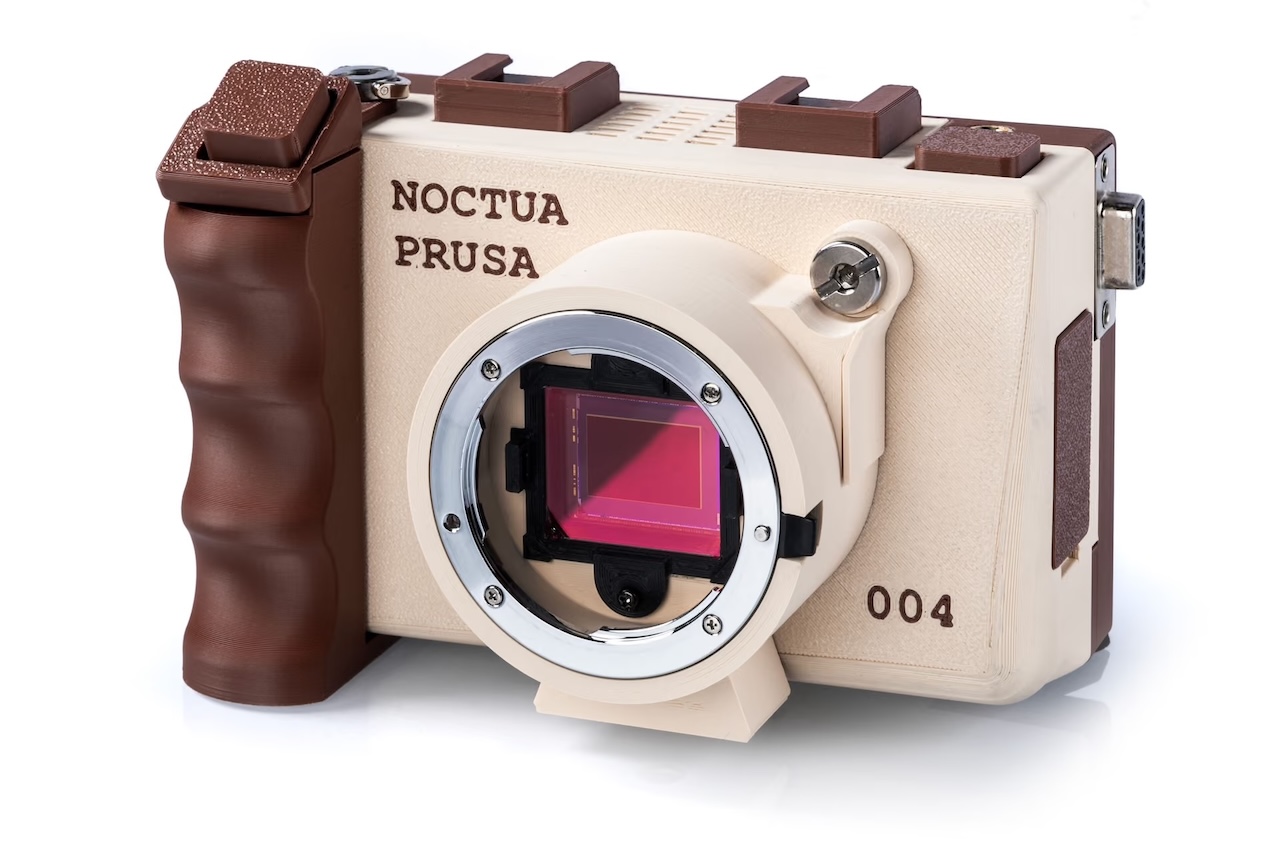
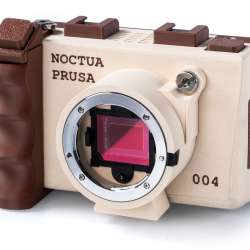
Caimera has not released a complete production specification sheet. Current reporting indicates that CAIM1 pairs a Micro Four Thirds sensor with a Sony E-mount, an unusual combination that separates sensor format from the lens system normally associated with it.
PetaPixel reports that Caimera describes the sensor as optimized for 4K recording and fitted with what it calls a built-in anti-reflective 650 nm infrared filter. The company has not yet provided enough technical detail to clarify the filter’s exact spectral behavior or its effect on color reproduction. Detailed specifications such as sensor resolution, dynamic range, autofocus performance, recording formats, battery life, dimensions, weight, and final production features remain unclear.
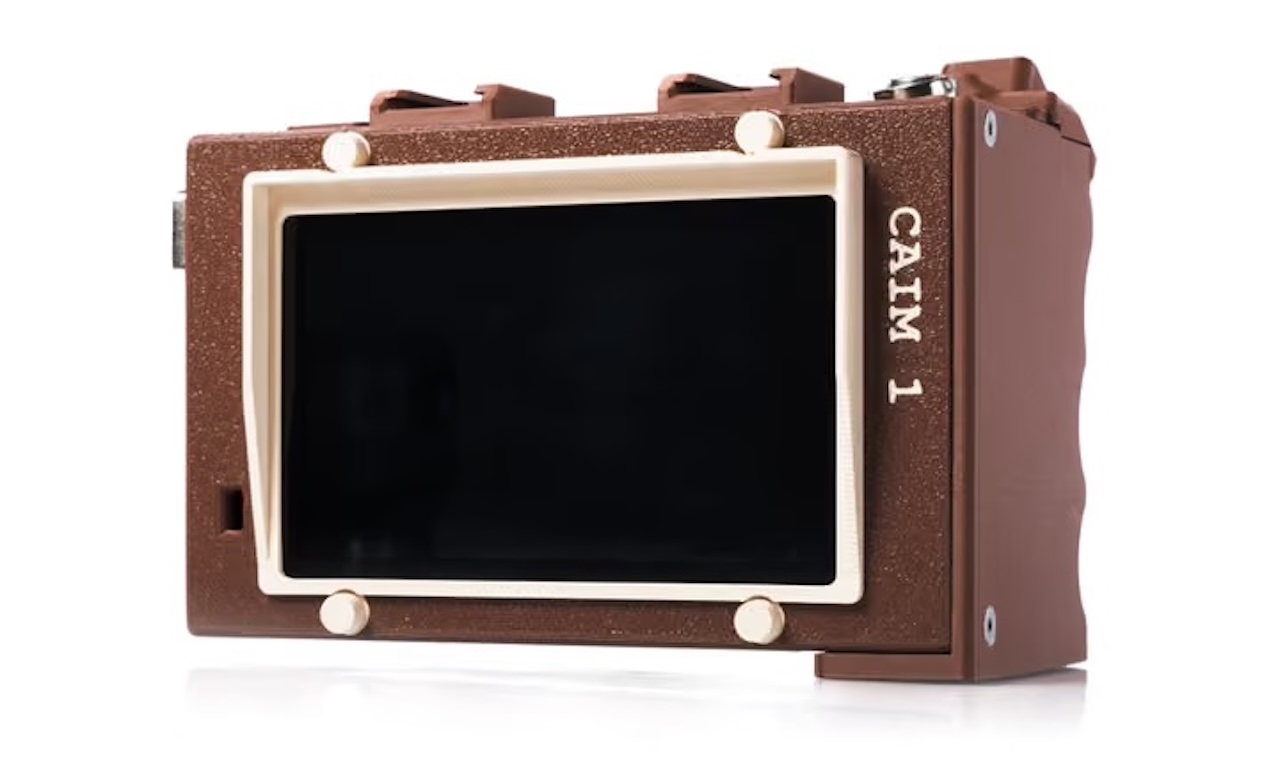
The prototypes shown in Noctua’s material use Prusament PETG in Noctua Beige and Noctua Brown for the outer shell and fan mount. Those 3D-printed prototypes should not be treated as confirmation of what the eventual production camera will look like.
Noctua says Caimera’s current target is to make the first batch available in Q1 2027. That leaves substantial development time before CAIM1 can be judged as a finished camera.
Authentication Is Not a New Idea
CAIM1 also should not be presented as the first attempt to address photographic provenance.
Some cameras already support cryptographic provenance records for still images. PetaPixel points to the Leica M11-P, introduced in 2023, as one example. The broader Content Authenticity Initiative and C2PA ecosystem have also been developing standards for recording and verifying media provenance, though CAIM1’s exact interoperability with those standards remains unclear.
What makes CAIM1 particularly interesting is the amount of computing apparently being dedicated to authentication while simultaneously handling 4K/60 video. That workload is substantial enough that cooling has become a central part of the camera’s physical design.
Whether Caimera’s particular implementation provides meaningful advantages over existing authentication approaches will require more technical information and independent testing.
Who Would Actually Need CAIM1?
Most photographers do not need cryptographic processing every time they press the shutter. For vacations, family photos, pets, and landscapes, a conventional camera remains the simpler choice.
CAIM1 is more compelling where provenance matters nearly as much as the image itself. Photojournalists, documentary filmmakers, researchers, investigators, and organizations documenting sensitive material could benefit from stronger evidence of how a file originated.
That evidence still has limits. An authenticated camera can record a staged scene, misleading framing, or an event stripped of context. It may strengthen the chain between camera and file, but it cannot establish that the story the file tells is true.
That is CAIM1’s more interesting proposition: if viewers can no longer judge an image’s origin simply by looking at it, should cameras create evidence of origin at the moment of capture?
Caimera believes they should. CAIM1 is an intriguing prototype, but its real value will depend on whether the finished camera and verification system can withstand independent scrutiny.