Windows gaming handhelds have a portability problem. More performance usually requires more cooling, more battery capacity, and enough physical space for controls that don’t feel squeezed together. Eventually, the handheld you bought because it travels easily can start feeling like another substantial piece of hardware to carry.
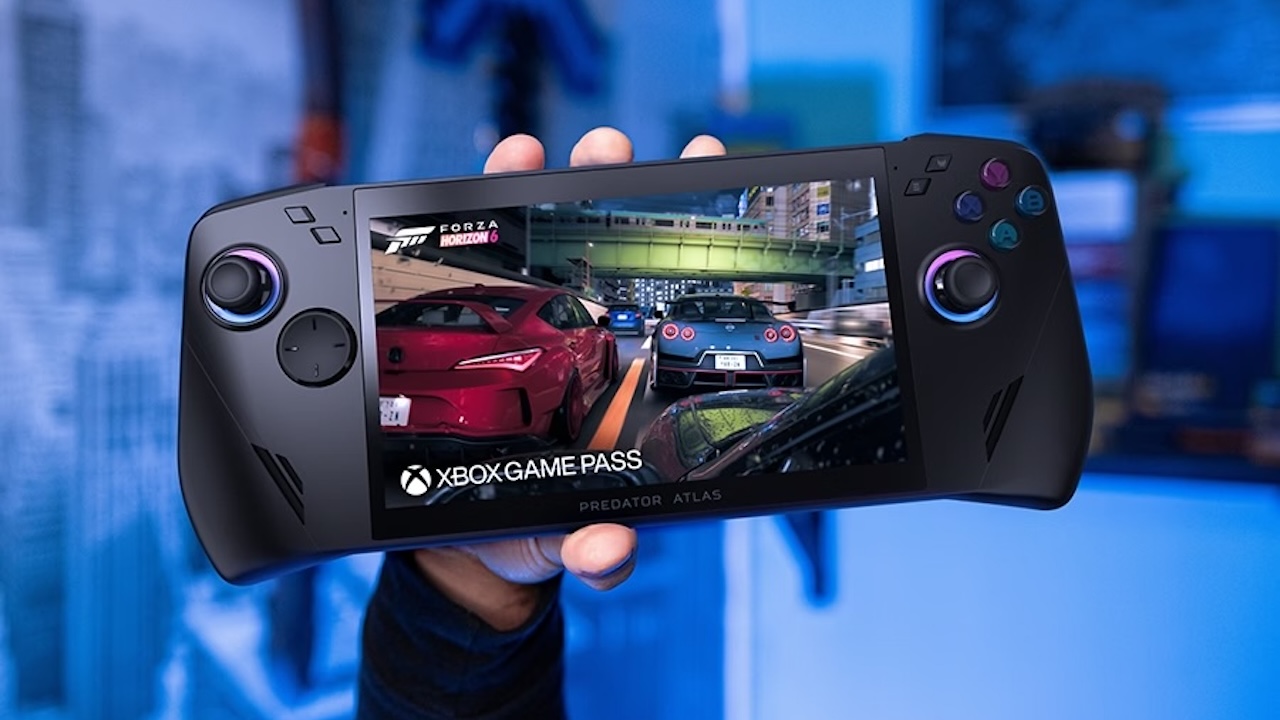
The Acer Predator Atlas 7 tries to find a better balance. Acer has built its latest Windows 11 handheld around a 7-inch 1080p display while still offering up to an Intel Arc G3 Extreme processor with Arc B390 graphics, 24GB of memory, an 80Wh battery option, dual-fan cooling, and two Thunderbolt 4 ports.
That’s an impressive collection of hardware. Whether Acer has actually made high-end Windows gaming more portable is the more interesting question.
A 7-Inch Screen Doesn’t Necessarily Mean a Small Handheld
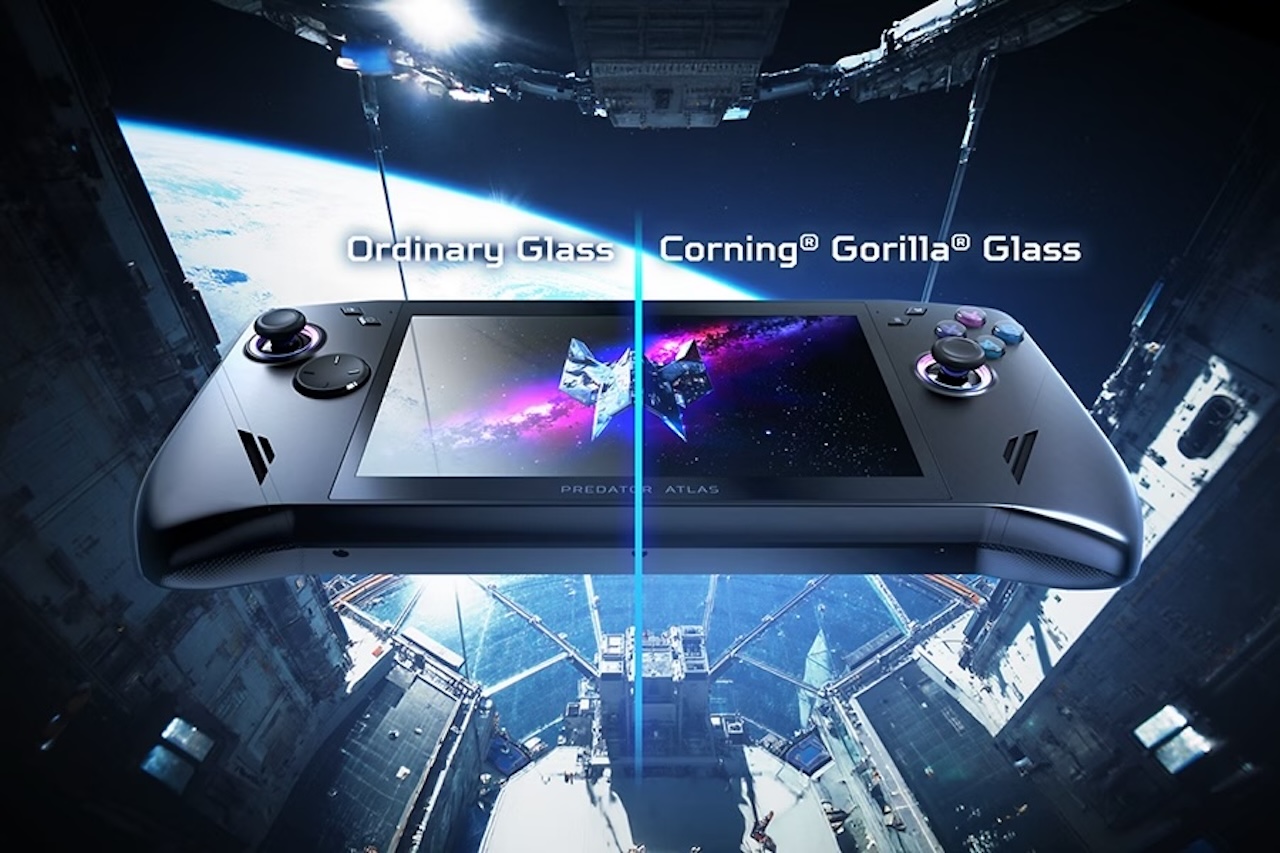
The Atlas 7 uses a 7-inch 1920 x 1080 IPS-level touchscreen with a 120Hz refresh rate, Variable Refresh Rate support, claimed 500-nit brightness, and 100% sRGB coverage. Acer also specifies Gorilla Glass Victus with DXC surface treatment and includes a tempered-glass screen protector.
VRR is particularly useful on a gaming handheld because frame rates can fluctuate as graphics loads change. Matching the display’s refresh behavior more closely to the game’s output can make those fluctuations less visually disruptive.
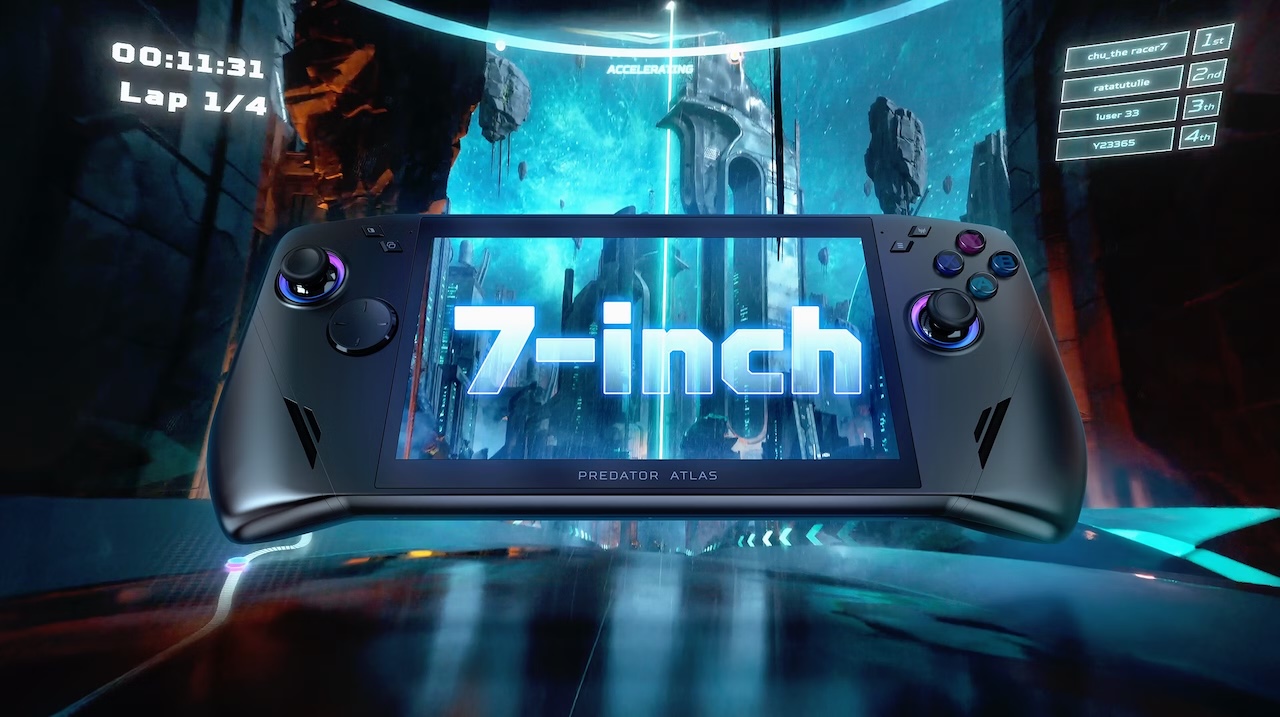 The physical dimensions put that 7-inch display into perspective. Acer lists the Atlas 7 at 292mm wide, with thickness varying between 28.5 and 48.4mm depending on where it’s measured.
Weight depends on the battery. Models with the larger 80Wh battery weigh under 750 grams, while 60Wh versions come in under 700 grams. A smaller screen, then, doesn’t automatically make this a lightweight handheld.
 Intel’s New Hardware Needs Benchmarks
Configurations reach an Intel Arc G3 Extreme processor with Intel Arc B390 graphics, while other versions use an Arc G3 processor with B370 graphics. The platform also supports Intel XeSS 3 features in compatible games.
Memory reaches 24GB of LPDDR5X-7467, while storage tops out at a 1TB PCIe 4.0 NVMe M.2 2280 SSD. Those specifications suggest Acer is targeting the upper end of the handheld gaming market, but they don’t tell us how the Atlas 7 will perform in actual games. Acer describes the platform in flagship terms, while real results will depend on power limits, cooling, drivers, game settings, and how Intel’s new hardware behaves under sustained handheld workloads.
Until independent benchmarks arrive, the processor names tell us what Acer is putting inside the Atlas 7 rather than how many frames per second buyers should expect.
 A Dual-Fan System Handles Cooling
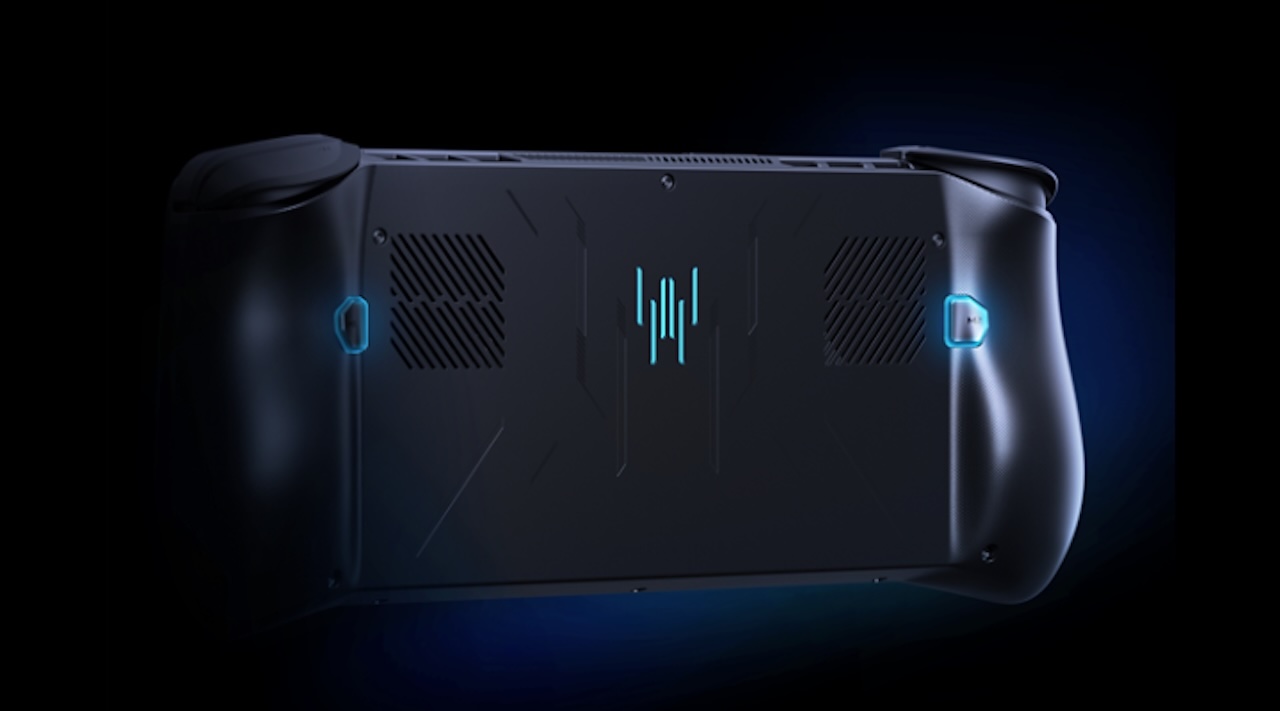
Acer uses a dual-fan cooling system consisting of an 89-blade Predator AeroBlade metal fan and a second plastic fan. The metal blades are just 0.1mm thick, while Acer’s Vortex Flow design uses internal ducting to direct heated air through the chassis.
Acer claims its metal fan can increase airflow by more than 10% compared with a plastic fan. That’s an internal manufacturer figure, not evidence that the finished Atlas 7 will run 10% cooler or perform 10% faster.
The important measurements will be sustained processor performance, fan noise, external temperatures, and throttling during longer gaming sessions. Those results aren’t available yet.
TMR Sticks Are Optional, Not Standard
The Atlas 7 includes Hall-effect analog triggers, rear macro buttons, a D-pad, and full-size analog sticks. Depending on configuration, those sticks use either conventional carbon-film technology or optional TMR sensors.
TMR, or tunneling magnetoresistance, uses magnetic sensing rather than the contact-based mechanism found in conventional potentiometer sticks. Acer claims its TMR implementation provides zero-dead-zone input, lower power consumption, resistance to drift, and greater long-term reliability.
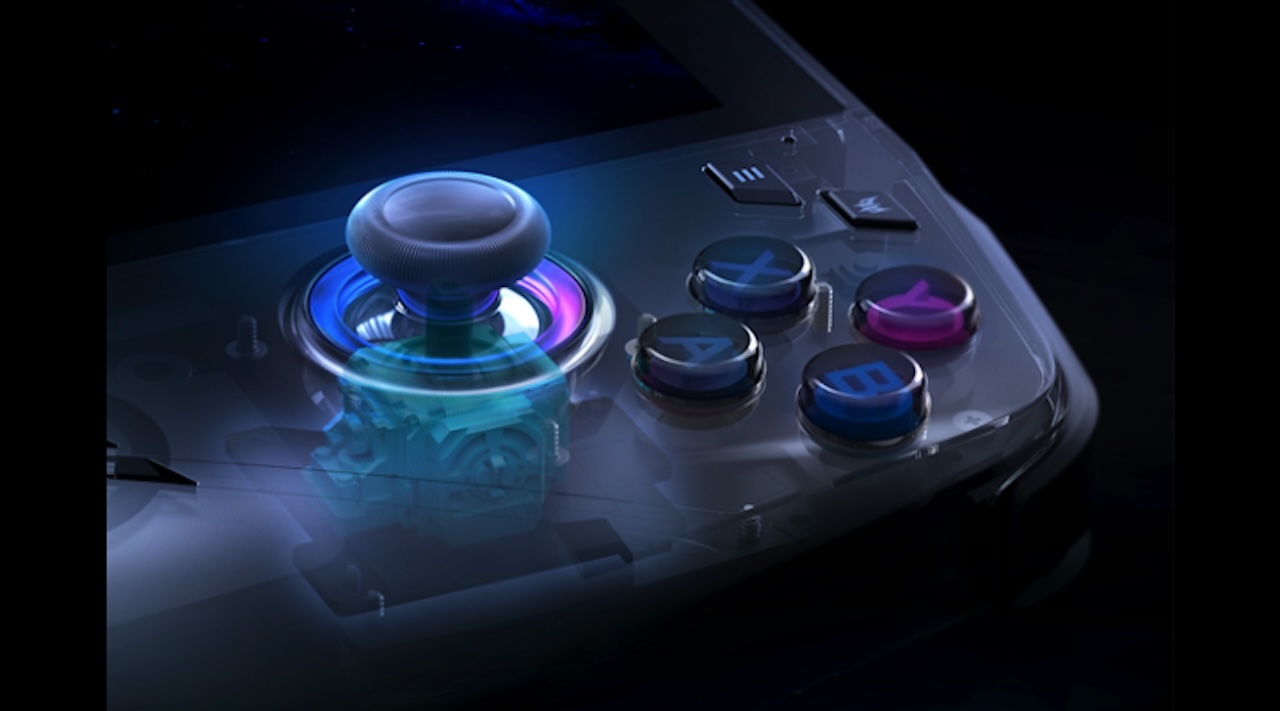 Those potential advantages shouldn’t be confused with independent testing of Acer’s controls. Calibration, firmware, stick tension, and manufacturing quality still affect how a joystick behaves regardless of its underlying sensor technology.
Acer has also added contoured grips, a larger palm-rest area, recessed controls, and anti-slip texture. Those are observable design choices, but comfort remains subjective and will need to be judged with the Atlas 7 actually in hand.
Dual Thunderbolt 4 Ports Add Flexibility
Connectivity is one of the Atlas 7’s stronger arguments. It includes two Thunderbolt 4 ports, a UHS-II microSD card reader, 3.5mm audio jack, Wi-Fi 7, and Bluetooth 5.4.
Two Thunderbolt ports give you more flexibility when connecting power, docks, displays, storage, and other accessories. That’s particularly useful for a Windows handheld that may spend part of its life connected to a desktop setup.
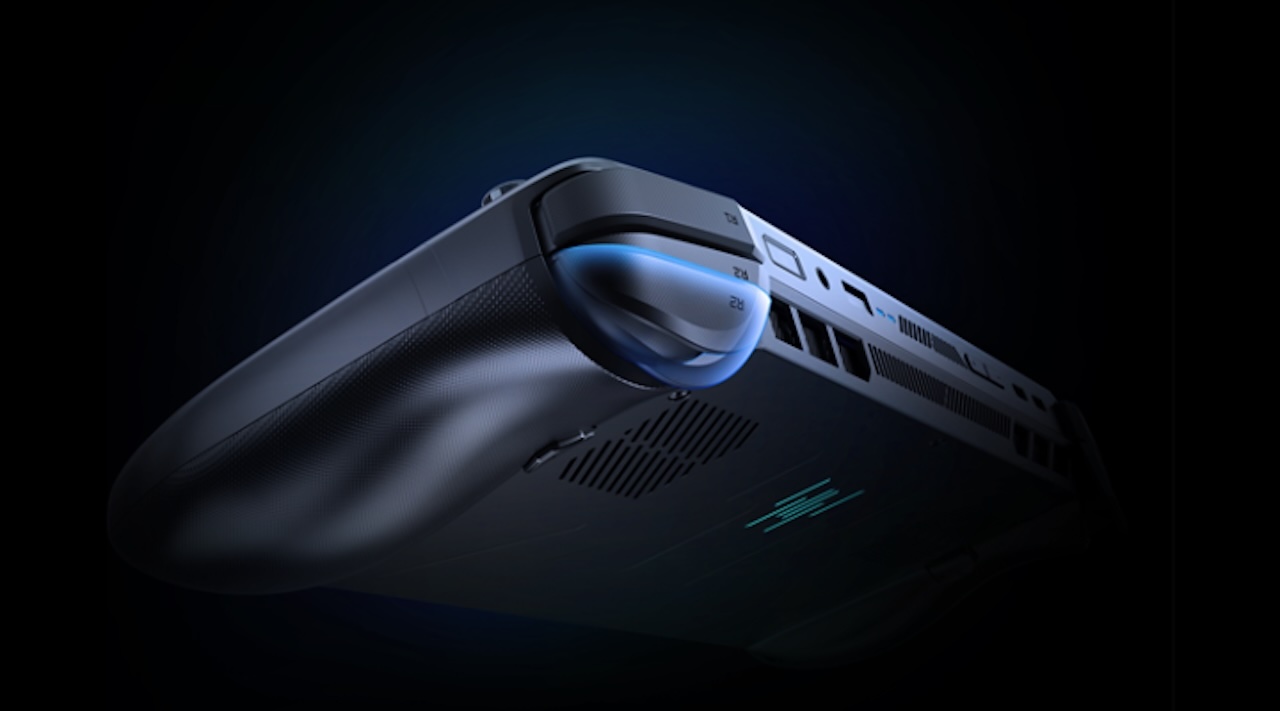 There’s also a fingerprint reader built into the power button for Windows Hello, dual 2W speakers, two microphones, and Acer’s PredatorSense software for monitoring the system and adjusting performance settings.
Battery capacity reaches 80Wh, with a 60Wh option available on some configurations. Acer hasn’t published a standardized gaming-runtime figure, so capacity alone shouldn’t be converted into promises about how many hours you’ll actually play. Game workload, display settings, processor power, and configuration will determine that.
The Missing Specification Is the Price
The Predator Atlas 7 makes the most sense for PC gamers who want a full Windows handheld but would rather stay with a 7-inch display than move to one of the increasingly large alternatives.
Its 120Hz VRR touchscreen, new Intel Arc hardware, optional TMR sticks, Hall-effect triggers, dual Thunderbolt 4 ports, expandable storage, and choice of 60Wh or 80Wh batteries give it the ingredients of a serious portable gaming PC.



The problem is that Acer hasn’t announced the price. North American availability is planned for Q4 2026, while EMEA availability is scheduled for November, with exact specifications and availability varying by region.
That missing number matters because the Atlas 7 isn’t competing on specifications alone. It will face established Windows handhelds whose performance, battery life, ergonomics, and street prices buyers can already evaluate.
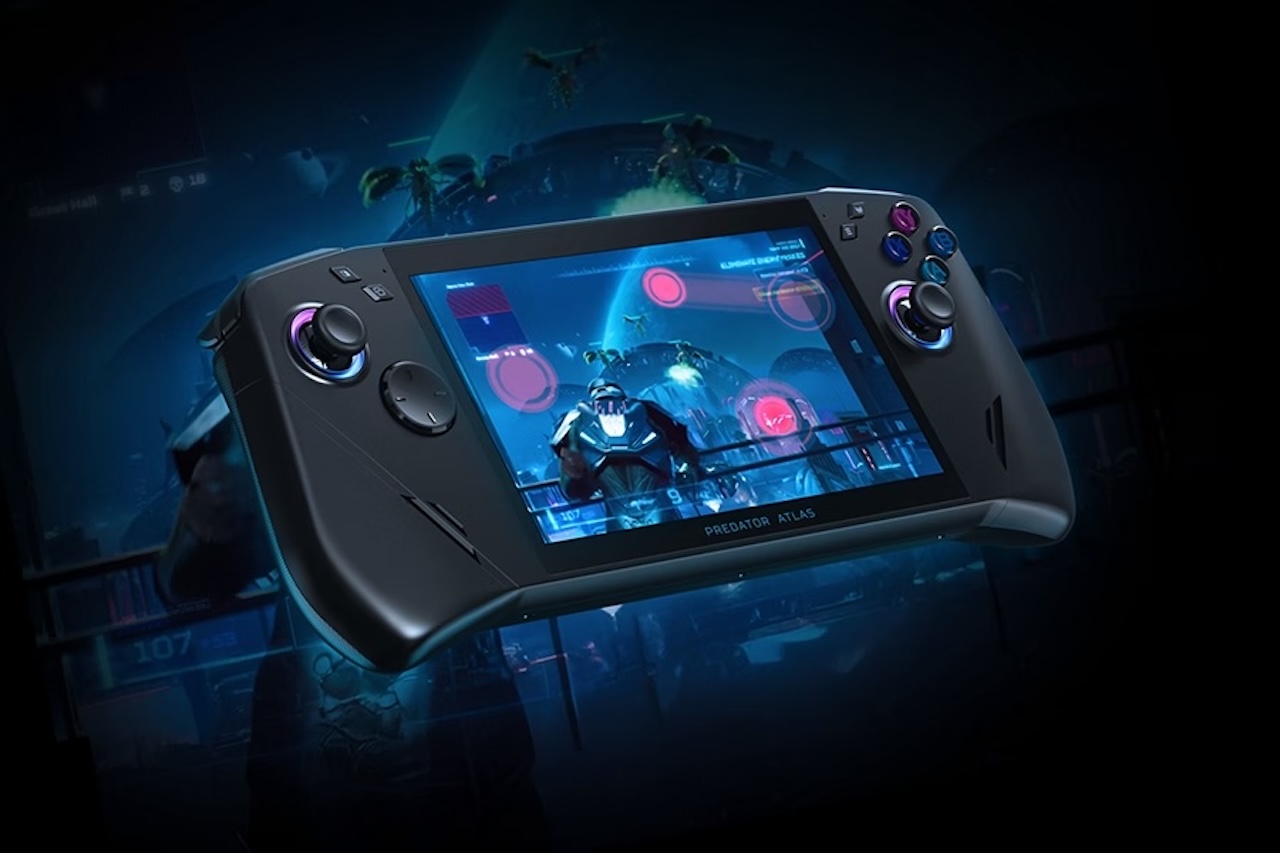
If Acer gets the price right, the Predator Atlas 7 could appeal to gamers who want premium handheld hardware without moving to an 8-inch screen. If it lands too close to larger, established alternatives, a 7-inch display alone may not make it the more portable choice.