
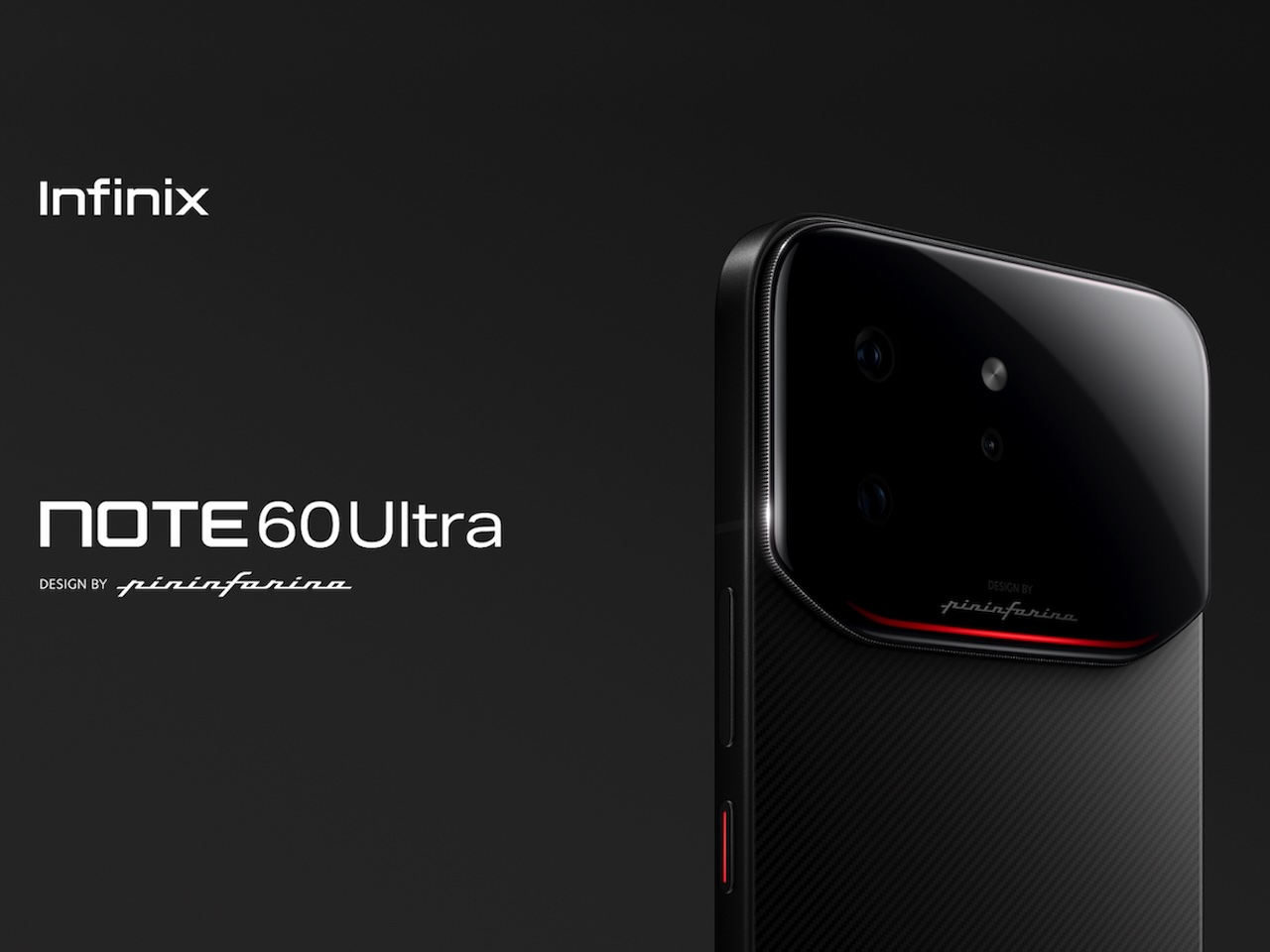
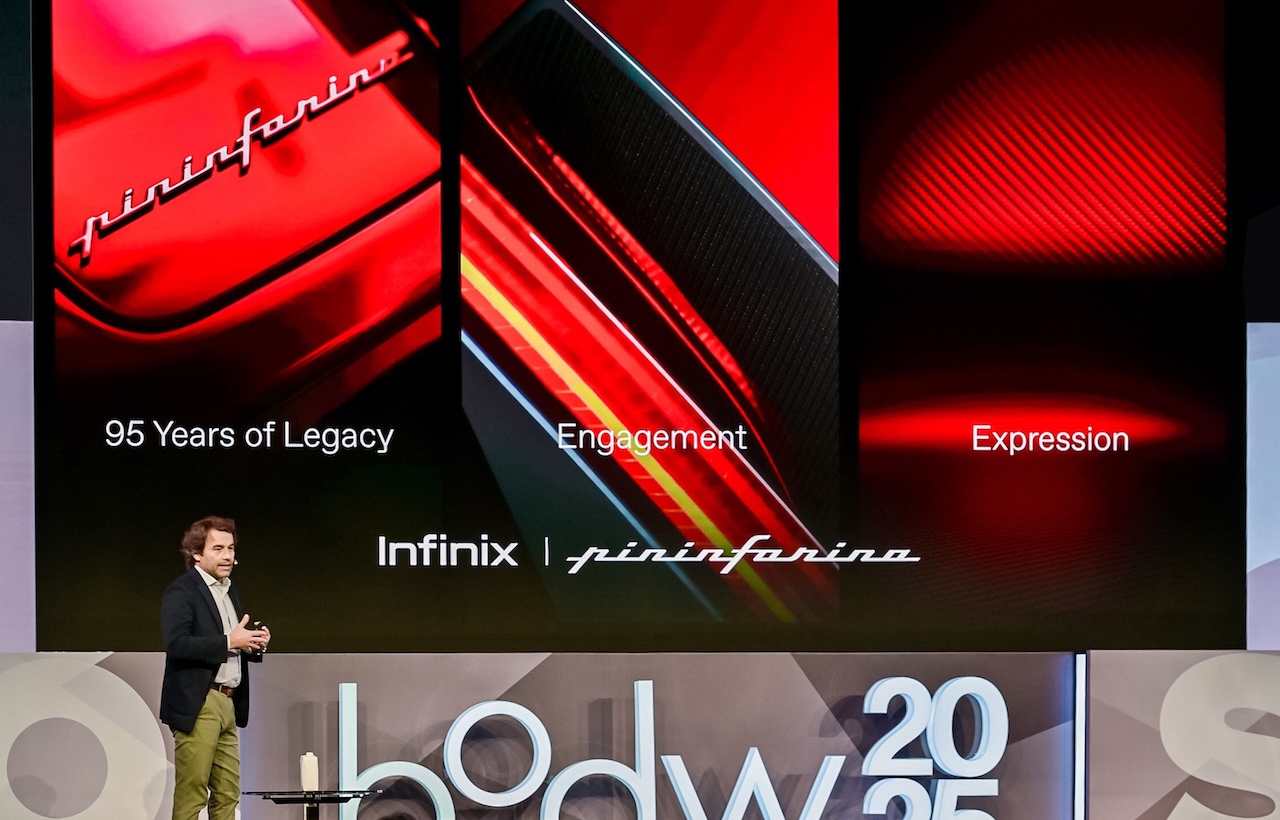
The design house that shaped some of Ferrari’s most recognizable silhouettes just finished its first smartphone. Pininfarina, the Italian firm celebrating 95 years of work spanning supercars, architecture, and industrial design, co-developed the Infinix NOTE 60 Ultra. The phone debuted at MWC 2026 in Barcelona this week with two firsts that feel genuinely surprising from a brand most people outside Africa and South Asia haven’t spent much time thinking about. Infinix has spent over a decade building market share across emerging regions with aggressively priced hardware, but this is the company’s first real push into premium territory.
Price: MYR 3,000 (Estimated $760)
Where to Buy: Infinix
The first is a design move that goes against everything the phone industry has been doing for five years. While every major manufacturer keeps making camera bumps bigger, Infinix and Pininfarina eliminated theirs entirely. The NOTE 60 Ultra uses what Infinix calls a Uni-Chassis Cam Module, where a single continuous sheet of Corning Gorilla Glass Victus spans the camera module, sitting perfectly level with the aluminum back panel. The second is satellite voice calling across multiple countries, not emergency-only text messaging, but actual two-way calls routed through satellites when cellular networks aren’t available.
A supercar ritual, miniaturized
Pininfarina didn’t just lend its name. The collaboration shaped the phone’s aluminum unibody frame and four colorways pulling from Italian motorsport heritage: Torino Black, Monza Red, Amalfi Blue, and Roma Silver. A thin Floating Taillight signature spans the rear panel and glows when the phone powers on, mimicking a sports car’s ignition sequence in a way that’s more charming than gimmicky.
Flip the phone over and there’s another surprise beneath the glass. A hidden Active Matrix Display sits concealed in the rear surface, lighting up to show notifications, expressive icons, or a pixel-style virtual companion. Pininfarina turns 95 this year, and the fact that its first smartphone hides a Tamagotchi-style companion in the back panel says something about where phone design might be heading.
NOTE 60 Ultra: 200 million pixels, zero bump
The camera system hiding under that seamless glass is more serious than the playful rear display suggests. A 200MP Samsung ISOCELL HPE main sensor anchors the triple-camera array on a 1/1.4-inch sensor with optical image stabilization. A 50MP Samsung ISOCELL JN5 periscope telephoto handles 3.5x optical zoom and 7x lossless zoom, while an 8MP 112-degree ultra-wide rounds out the trio. The full zoom range stretches from 2x lossless crop to 100x digital.
Infinix also introduced its proprietary XDR Image Engine, bringing Ultra HDR Capture to the brand for the first time. The system targets better dynamic range in high-contrast scenes, and paired with what Infinix calls an XDR Display standard, photos captured in Ultra HDR should look correct on the phone’s own screen.
Calling from the middle of nowhere
Infinix says the NOTE 60 Ultra is the first commercially available phone to support dual-way satellite voice calling across multiple countries, going beyond emergency messaging from Apple and Huawei. The service runs through Space42’s Thuraya satellite network and requires a separate plan and SIM, worth knowing before anyone assumes it works out of the box.
That capability matters more in Infinix’s core markets than in Manhattan or London. Large parts of Africa, South Asia, and Southeast Asia still have significant cellular gaps, and a phone that can make actual voice calls via satellite in those regions isn’t a novelty. It’s potentially the reason someone picks this phone over a competitor.
Power that heals itself
The NOTE 60 Ultra carries a 7,000mAh silicon-carbon battery with what Infinix calls Proprietary Battery Self-Healing Technology, claiming the system restores up to 1% of battery health every 200 charge cycles. Whether that holds up over two years of daily use is something only time will answer, but it’s an ambitious attempt to address the slow degradation every lithium battery suffers.
Charging supports 100W wired, reaching full from 1% in 48 minutes, and 50W wireless through Infinix’s MagCharge system. The retail box includes a supercar-inspired MagCharge Base in zinc alloy, a Kevlar-pattern MagPad, and a custom Kevlar MagCase.
The chip, the screen, and everything in between
A MediaTek Dimensity 8400 Ultimate runs the show, a 4nm processor with an all-big-core CPU architecture using eight Cortex-A725 cores and a Mali-G720 MC7 GPU. Infinix paired it with 12GB of RAM across 256GB and 512GB storage configurations. It’s not the Dimensity 9400 in the priciest Android flagships, but the 8400 Ultimate occupies a sweet spot between raw performance and power efficiency.
The display stretches to 6.78 inches with a 1.5K OLED panel at 144Hz, peaking at 4,500 nits. Gorilla Glass 7i covers the front, and the phone carries an IP64 rating. Audio comes through stereo speakers tuned with SOUND BY JBL, and it ships with Android 16 running Infinix’s XOS 16 with a new interface called GlowSpace. Infinix promises three years of OS updates and five years of security patches, with eSIM support across both variants.
Infinix NOTE 60 Ultra pricing and availability
Infinix confirmed pricing for Malaysia at MYR 3,000, roughly $760. The phone comes in 256GB and 512GB storage options, though Infinix hasn’t clarified whether the Malaysian price applies to one or both configurations. Global pricing hasn’t been announced yet. K-pop group ITZY’s YUNA was revealed as the brand’s first global ambassador alongside the launch, signaling that Infinix is treating this as a serious play beyond its traditional markets.
For a brand that’s spent most of its history competing on value in emerging markets, the NOTE 60 Ultra represents something different. Partnering with the studio that shaped Ferraris, shipping satellite voice calls, and hiding a 200MP camera under completely flush glass aren’t the moves of a company content to stay in the budget lane.
Who should skip this
If you need guaranteed carrier support, a wide accessory market, or tight integration with iMessage or Google’s Call Screen, the Infinix NOTE 60 Ultra isn’t built for that world. Infinix’s software ecosystem is thinner than Samsung or Apple, and XOS 16 won’t feel familiar coming from One UI or stock Android. The IP64 rating means splashes but not a drop in the pool. And if satellite calling sounds exciting but you don’t travel to areas with spotty coverage, you’re paying for a feature that won’t change your daily life.
Price: MYR 3,000 (Estimated $760)
Where to Buy: Infinix
Who the Infinix NOTE 60 Ultra is for
The NOTE 60 Ultra makes the most sense for buyers in regions where Infinix already has strong retail and service presence, particularly across Africa, South Asia, and Southeast Asia. If you want a phone that doesn’t look like anything else at $760, the Pininfarina design and flush camera module give it a physical identity most competitors can’t match. Satellite calling adds genuine utility for anyone who regularly moves through areas where cellular towers thin out. It’s a phone for people who want flagship-tier hardware without the flagship-tier price, and who don’t mind stepping outside the usual brand names.

HP 15.6" Business Laptop Computer with Microsoft 365 • 2026 Edition • Copilot AI • Intel 4-Core N100 CPU • 1.1TB Storage (1TB OneDrive + 128GB SSD) • Windows 11 • w/o Mouse
(as of March 6, 2026 12:50 GMT -06:00 - More infoProduct prices and availability are accurate as of the date/time indicated and are subject to change. Any price and availability information displayed on [relevant Amazon Site(s), as applicable] at the time of purchase will apply to the purchase of this product.)