ARTICLE – Every flat iron on the market works the same way. Two ceramic plates heat up, you clamp your hair between them, and the heat forces it straight. It’s effective, it’s simple, and it’s been slowly cooking your hair for decades. Dyson looked at that entire concept and decided to throw it out.
Price:$549.99
Price: From $549.99
Where to Buy: Amazon, Dyson
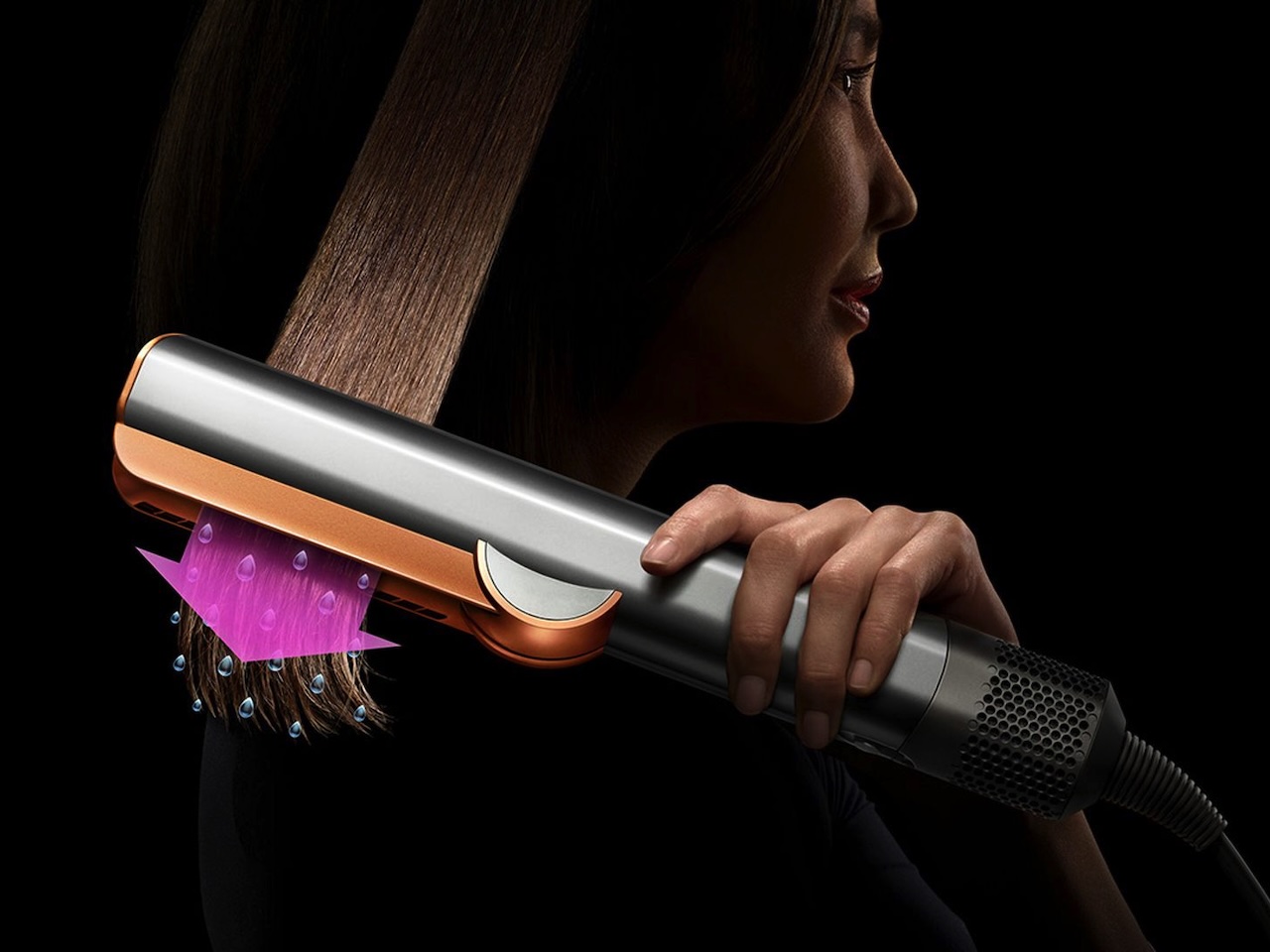
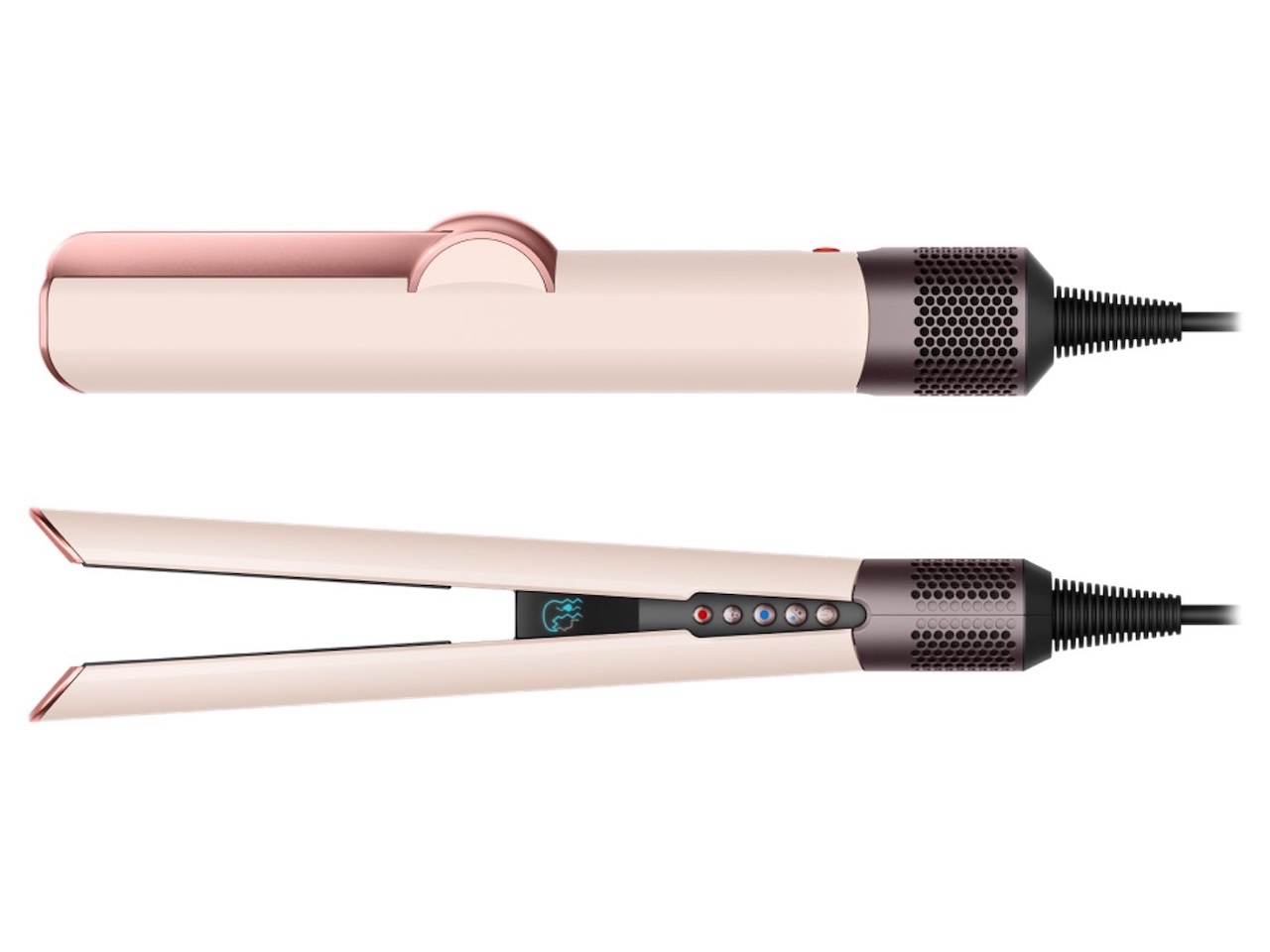
The Dyson Airstrait is a $549.99 hair straightener that doesn’t use hot plates at all. Instead, it pushes high-pressure airflow through 1.5mm gaps in each arm, angled at 45 degrees, to straighten hair wet to dry in a single pass. No sizzle. No steam. No contact heat. Just air.
It sounds like marketing nonsense until you look at what’s actually inside the handle. Dyson’s V9 motor, the same one powering the Supersonic dryer and the Airwrap, spins 13 blade impellers at 106,000 RPM. That generates roughly 12 liters of air per second, enough force to reshape wet hair into a straight position as it dries. The “plates” you feel when you clamp down? Those are unheated tension bars. They hold your hair in place while the airflow does the actual work.
Add The Gadgeteer as a preferred source to see more of our coverage on Google.
How the Dyson Airstrait actually works
The physics here aren’t complicated, but they’re different from anything else in the category. Traditional straighteners heat ceramic plates to 400 degrees or higher. That heat drives water out of the hair shaft and creates temporary bonds that lock hair into a straight position. The Airstrait uses the same principle (heat plus tension equals straight hair) but caps its maximum temperature well below the damage threshold.
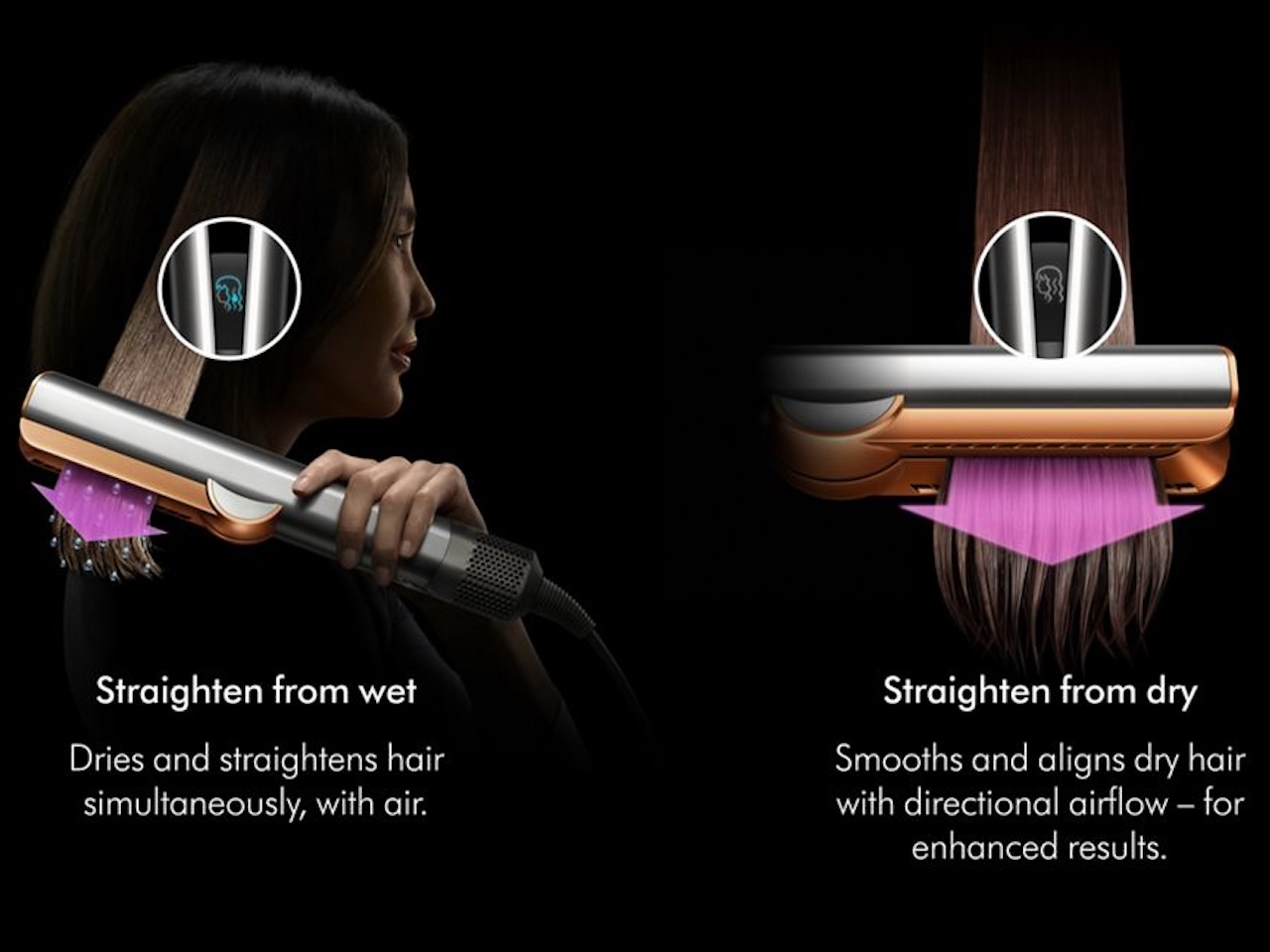
In wet mode, you get three heat settings: 175, 230, and 285 degrees Fahrenheit. Dry mode bumps those to 250, 285, and a 320-degree boost for quick touch-ups. A cosmetic chemist from TRI Princeton has noted that hair damage typically starts above 375 degrees. The Airstrait never gets close.
A color LCD screen on the body lets you toggle between wet and dry modes, adjust airflow, and monitor temperature in real time. There’s also a cool-shot button to lock in your style once you’re done, and an auto-pause feature that kills the airflow after three seconds when you set the tool down. Small detail, but it means nothing on your bathroom counter gets blown across the room.
What it does well (and where it gets honest)
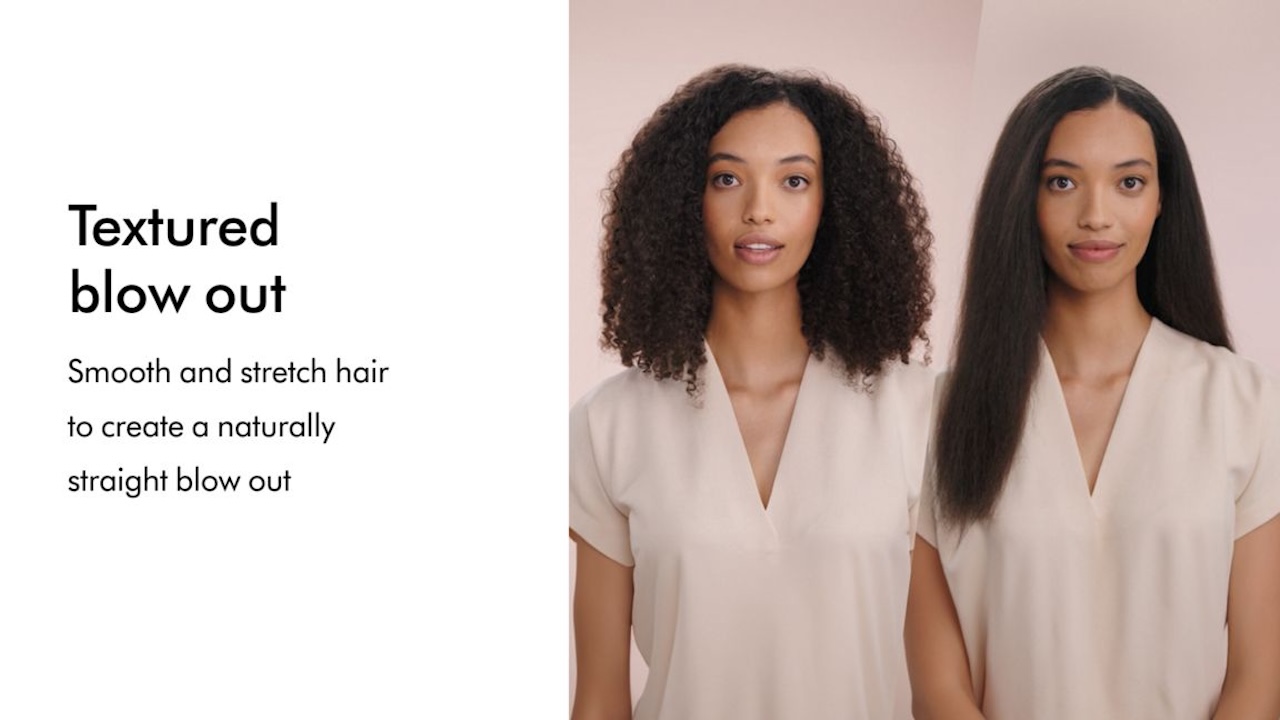
The trade-off for skipping hot plates is straightforward: you won’t get the glass-flat, pin-straight finish that a traditional flat iron delivers. Allure’s testing team found that the Airstrait produces a softer, more natural-looking straight, which is great if that’s what you’re after. If you want mirror-shine sleekness, you’ll likely need a quick pass with a conventional iron afterward.
For people with fine to medium hair, the Airstrait cuts total styling time roughly in half. One tester went from a 60-minute blow-dry-plus-flat-iron routine down to 30 minutes. Thicker, coarser hair types reported needing more passes and more patience, with total styling times closer to 45 minutes to an hour.
The tool weighs 2.2 pounds, which is almost a full pound heavier than Dyson’s own Corrale flat iron. After 15 or 20 minutes of continuous use, that weight starts showing up in your wrist.
The standard colorways include Ceramic Pink/Rose Gold, Prussian Blue/Rich Copper, Amber Silk, and Red Velvet. All are available through Dyson’s website, Amazon, Costco, Sephora, and Ulta Beauty. On Dyson.com, the Airstrait currently holds a 4.6 out of 5 rating across nearly 18,000 reviews. The Dyson Airstrait price has held steady at $549.99 since launch, and refurbished units haven’t shown up in meaningful numbers through authorized channels yet.
Where the Airstrait fits in the market
Dyson’s closest competition here is the GHD Duet Style, which also offers wet-to-dry straightening but uses heated plates capped at 248 degrees with airflow reaching 302 degrees. It costs about $100 less. The Revair takes a completely different approach, using vacuum suction to pull hair straight while drying it, and also comes in around $100 cheaper. The Shark SilkiPro has also entered the conversation as a budget alternative, though it uses a more traditional heated-plate design rather than airflow alone.
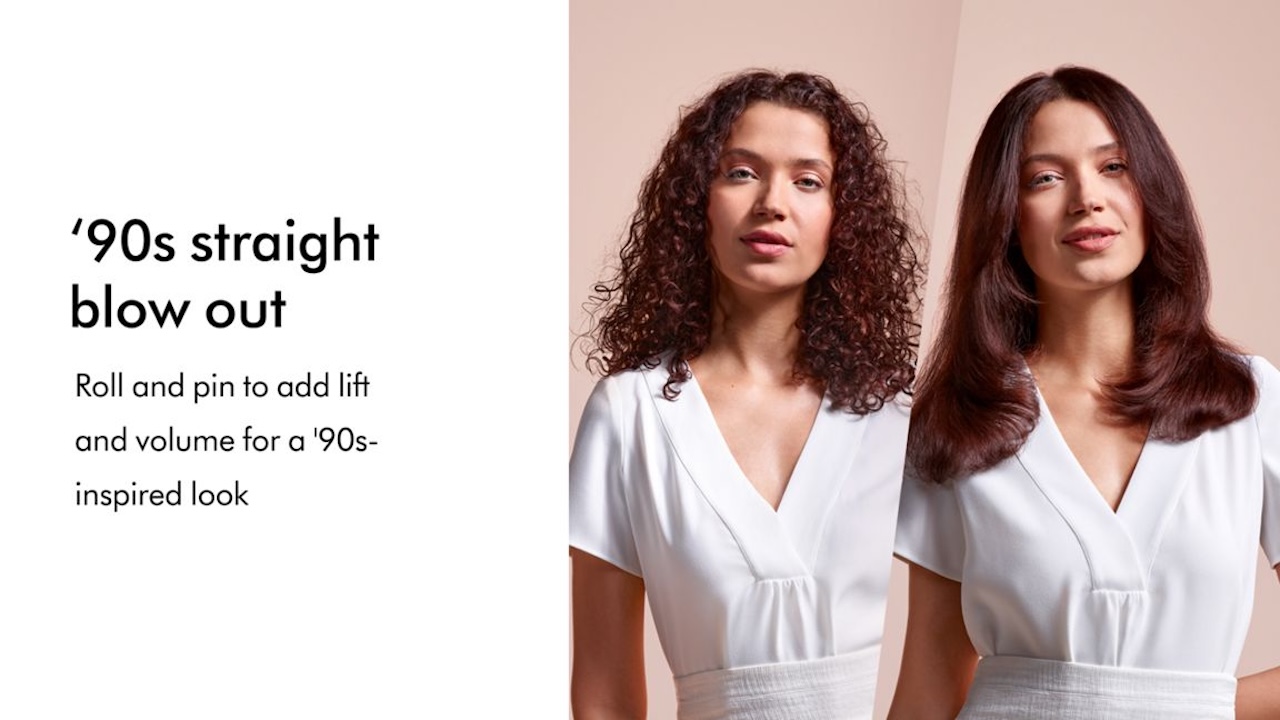
The Airstrait isn’t trying to replace your flat iron if your goal is bone-straight, salon-level silk. It’s trying to eliminate the step where you damage your hair getting there. For anyone who heat-styles more than a couple of times a week, that’s a meaningful difference over months and years. The “no heat damage” claim holds up under the physics: when your hottest setting tops out at 285 degrees in the mode most people will use, you’re operating well within safe territory.
Who should skip this
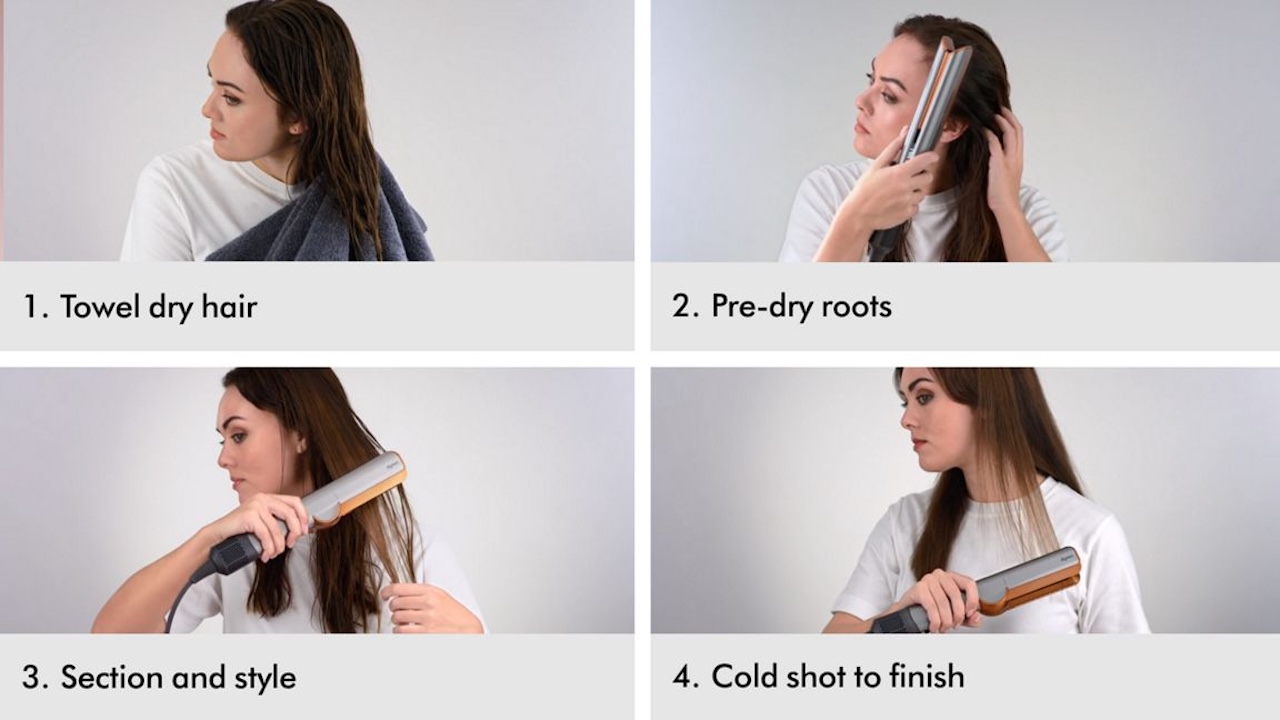 If you need glass-flat, pin-straight results every time, the Airstrait won’t deliver that on its own. It gives you a softer, more natural straight. Good for most days, but not salon-level sleek.
Thick or coarse hair types will need more passes and more patience, which cuts into the time savings. At 2.2 pounds, you’ll feel it in your wrist after 20 minutes. And if you already own a Dyson Airwrap, the overlap here is hard to ignore for another $549.99.
Is the Dyson Airstrait worth it?
Whether that’s worth $549.99 depends on how much you value your hair’s long-term health versus a perfectly flat finish right now. For a lot of people, the answer to that question has apparently changed.
Price: From $549.99
Where to Buy: Amazon, Dyson
That’s a lot of people rethinking how they straighten their hair.

Gerber Gear Diesel Multitool Needle Nose Pliers Set, 12-in-1 EDC Multi-Tool Knife, Survival Gear and Equipment, Black
(as of April 8, 2026 18:41 GMT -05:00 - More infoProduct prices and availability are accurate as of the date/time indicated and are subject to change. Any price and availability information displayed on [relevant Amazon Site(s), as applicable] at the time of purchase will apply to the purchase of this product.)