
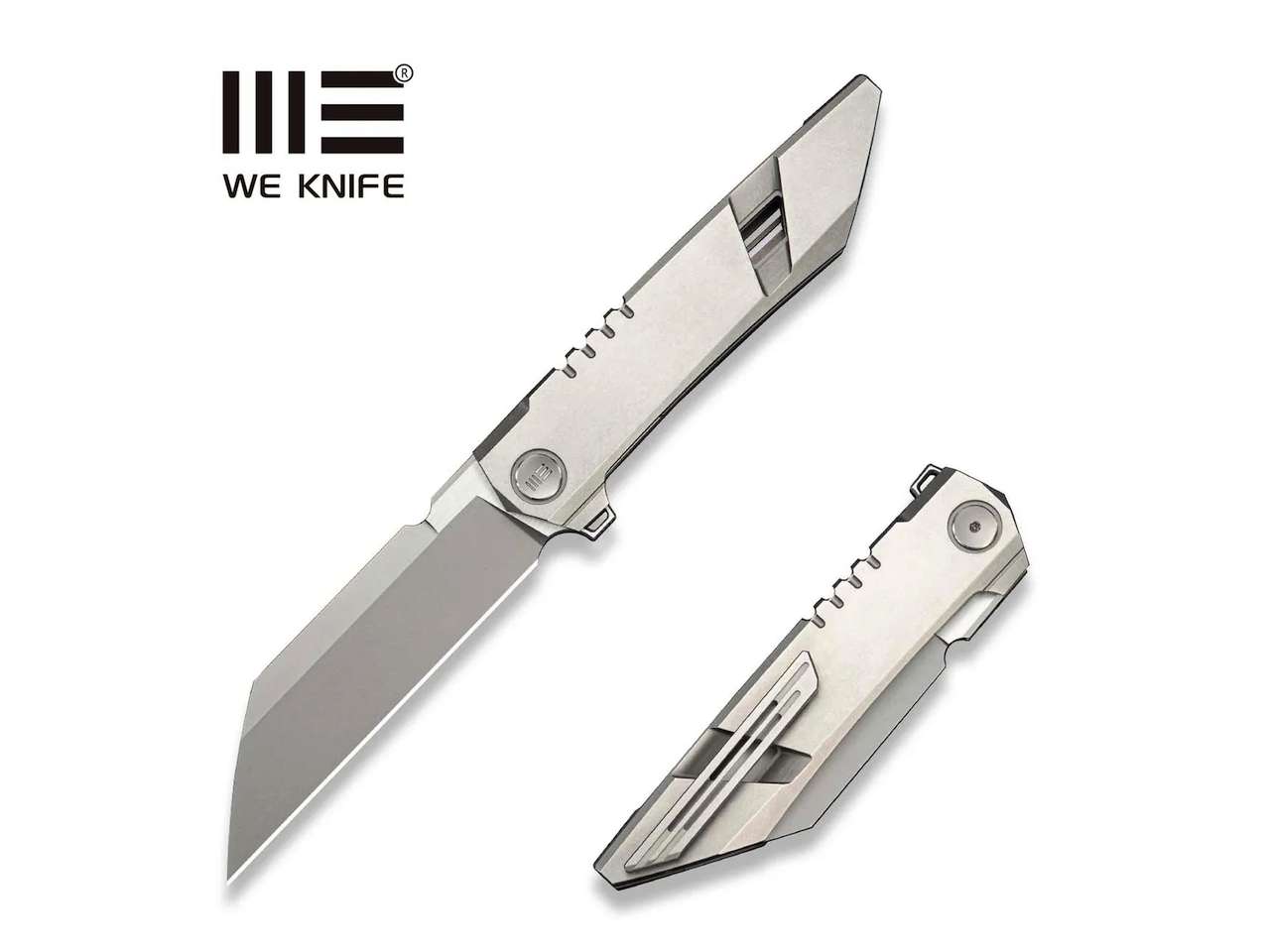
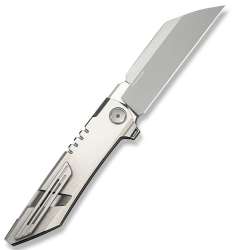
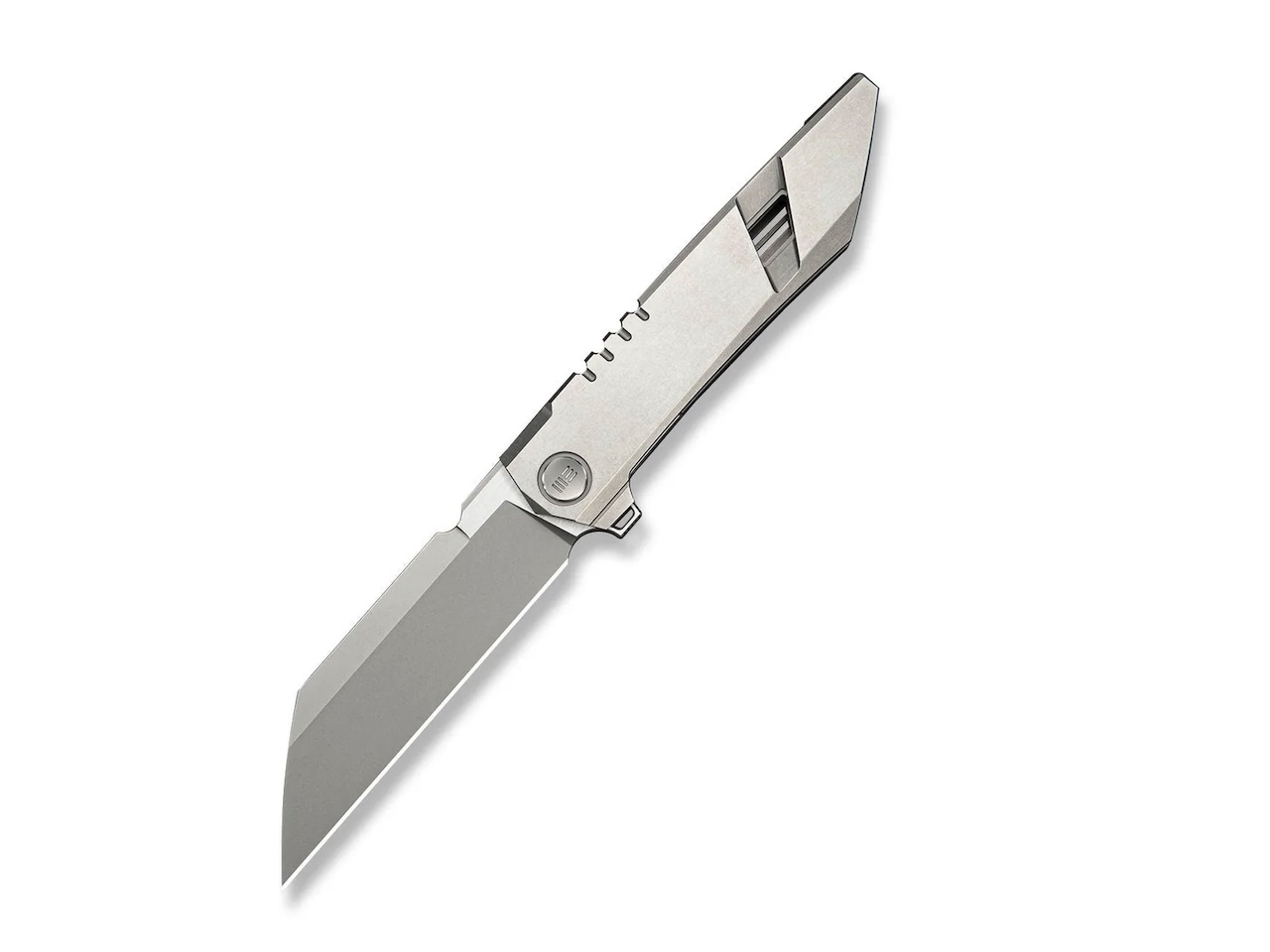
ARTICLE – We Knife doesn’t design folders for people who want their EDC to blend in. Their latest release, the Anglex Flipper Knife, doubles down on that philosophy with angular geometry, full titanium construction, and nearly four inches of M390 super steel wrapped in a reverse tanto profile that looks like it was sketched by someone who thinks rounded edges are overrated. The blade shape leans aggressive, the handle geometry commits to tactical aesthetics, and the materials list reads like a custom knife spec sheet. Nothing about this folder tries to soften its presence. It’s built for users who want their carry knife to look as purposeful as it performs.
Price: $357
Where to Buy: We Knife
Aggressive styling in EDC knives usually means compromise somewhere else: cheaper steel to offset machining costs, aluminum handles to keep weight reasonable, or deployment that feels gritty after a month of pocket lint. Budget constraints push most manufacturers toward tradeoffs that soften performance or longevity. We Knife built the Anglex around ceramic ball bearings, 6AL4V aerospace titanium throughout, and Austrian super steel running between 59 and 61 HRC hardness. The bearing system stays smooth under dust and debris, the titanium handles won’t corrode or degrade with daily carry, and that M390 blade edge outlasts conventional steels by months. Materials this good typically show up in customs or limited runs, not production folders at $357. This isn’t a knife trying to slip unnoticed into a business casual pocket, which seems entirely deliberate. The design vocabulary screams tactical, not tasteful, and that commitment to aesthetics matters when you’re choosing something you’ll carry every day for years.
The company positioned this alongside their 2025 Collinear and Essential Knight models, creating a lineup that explores different expressions of premium EDC without repeating itself. Where the Collinear strips everything back to geometric minimalism and the Essential Knight nods toward Bowie heritage with Jason Knight’s design input, the Anglex occupies tactical-inspired territory sized for daily pocket carry rather than hard use.
Folder design spent 2024 and early 2025 chasing gentleman’s aesthetics: slim profiles, brushed finishes, ergonomic contouring that works in boardrooms and doesn’t raise eyebrows during TSA pre-check. Brands competed to see who could make the most inoffensive EDC folder, optimizing for discretion over presence. The Anglex represents what emerges when manufacturers stop worrying about looking too aggressive and start asking what happens when you build around materials first and compromise never. It’s designed for users who want materials that’ll outlast the trend cycles and styling that commits to a specific aesthetic rather than hedging with safe curves and neutral finishes. We Knife prioritized performance characteristics that matter in five years over design choices that blend into today’s carry trends. That reverse tanto blade won’t age out of style because it never tried to fit current aesthetics in the first place.
What We Knife Built
The knife centers on a 3.89-inch reverse tanto blade machined from Böhler M390, the Austrian super steel known for edge retention that stretches months between sharpenings and corrosion resistance that handles sweat, rain, and neglect without pitting. The 59-61 HRC heat treatment range typically balances edge retention with toughness in M390 steel. Most production knives use softer steels that sharpen easily but dull quickly, requiring frequent maintenance. M390 inverts that equation, demanding more effort during sharpening but maintaining working sharpness through months of daily cutting tasks. The reverse tanto profile splits the edge into two functional sections: a long flat cutting surface for slicing cardboard, rope, or food prep, and a reinforced piercing tip that punches through tougher materials without flexing. That tip geometry concentrates force at a hardened point instead of distributing it across a curved edge, creating penetration power without requiring excessive pressure. If you look closely at the blade geometry, you’ll notice how that reinforced tip creates practical advantages for detail work that softer profiles can’t match. The flat grind tapers evenly from spine to edge, reducing friction during cutting while maintaining structural rigidity.
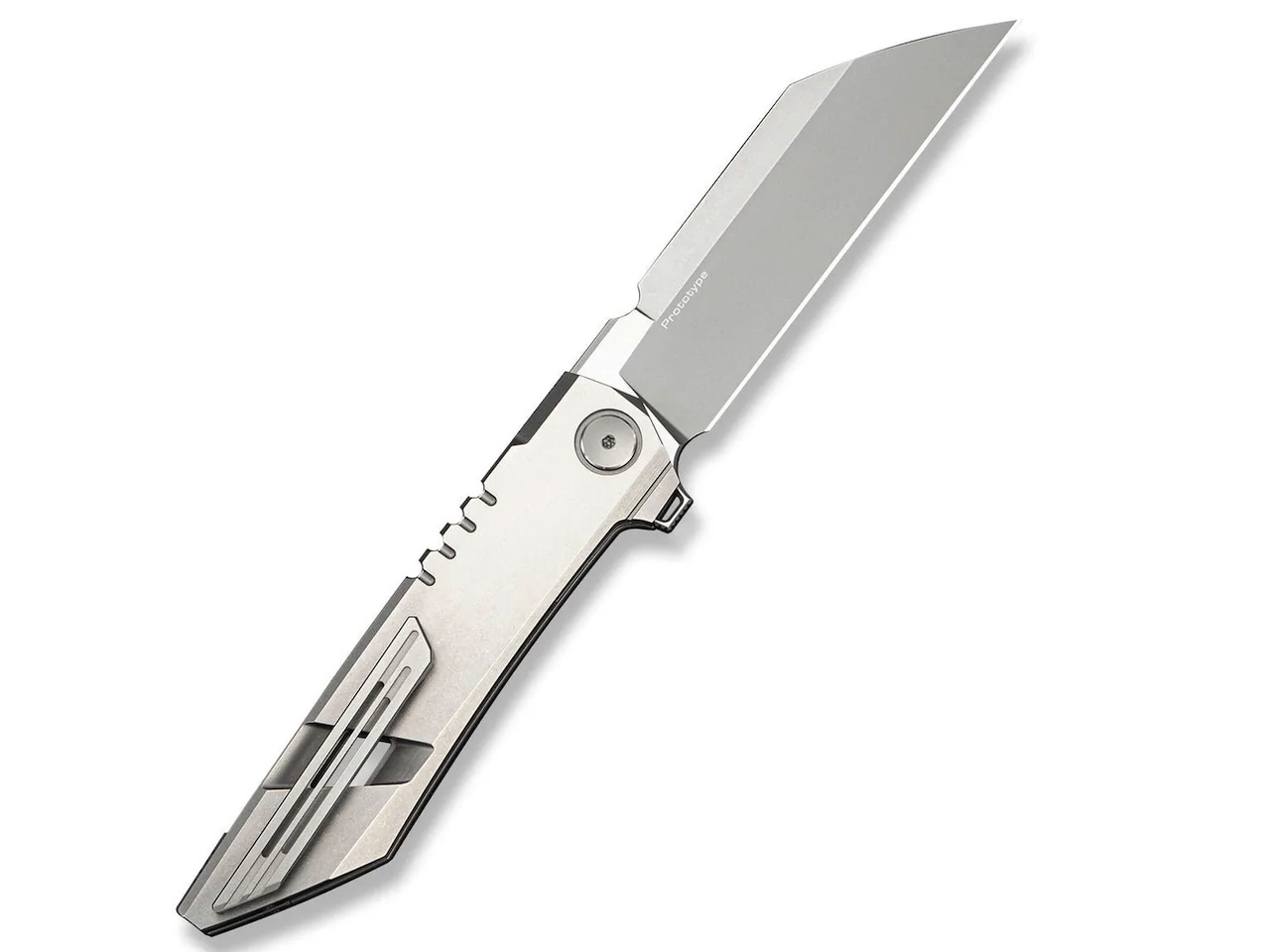
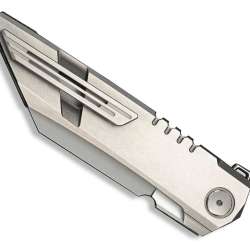
Handle construction is 6AL4V titanium for every component: scales, backspacer, internal liners, pocket clip, and fastening hardware. That’s the same aerospace-grade alloy used in aircraft structural components, chosen for a strength-to-weight ratio that makes aluminum feel insubstantial and stainless steel seem heavy. Satin gray finish on the scales shows handling gradually rather than highlighting every contact mark, and the stonewashed blade treatment follows similar logic. Closed length measures 4.79 inches, fitting front pockets without printing through fabric or requiring dedicated belt carry. Weight lands at 4.65 ounces, providing enough heft that you know you’re carrying something substantial without becoming burdensome during all-day pocket time. Flipper tab geometry means your index finger finds the activation point naturally without requiring grip adjustment for one-handed deployment, which matters more than spec sheets suggest when you’re actually using the knife one-handed throughout the day.
Design Choices That Commit
Sharp transitions between handle surfaces replace the flowing curves most manufacturers default to for ergonomic reasons. Hardware sits flush rather than recessed beneath decorative bezels. That reverse tanto blade profile creates visual weight through deliberate angles instead of trying to soften into something less confrontational. What you notice immediately is how committed the design feels compared to knives that hedge with rounded transitions and safe geometry.
We Knife borrowed aesthetic language from tactical folders but applied it to an EDC context, creating something that won’t disappear in your hand or blend into neutral office environments. The handle scales feature aggressive chamfers and clean geometric transitions instead of organic curves. Every surface change happens at a defined angle rather than flowing smoothly, creating visual interest through geometry instead of decoration. Pocket clip placement sits high on the handle for deep carry, keeping most of the knife concealed even with aggressive styling. When clipped in a front pocket, only the clip and about half an inch of handle show above the pocket line. The overall design doesn’t apologize for its tactical roots or try to soften them for broader appeal. Most manufacturers would round those corners, soften those transitions, and add contouring to make the design more palatable. We Knife committed fully to angular aesthetics instead.
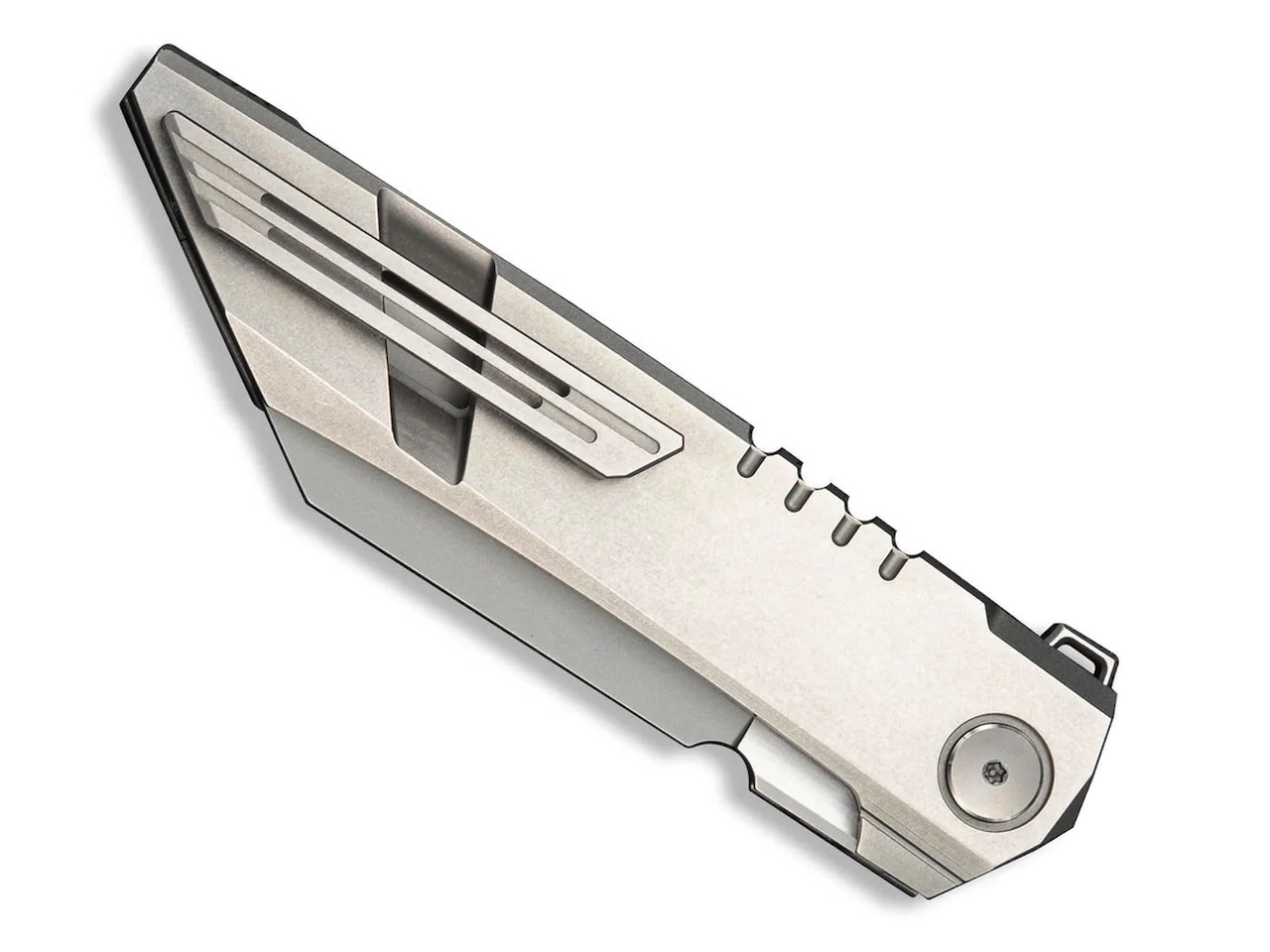
Folders released between 2024 and early 2025 leaned heavily into subtlety, with brands competing to see who could make the most unobtrusive gentleman’s knife that carried well in professional settings. The Anglex moves the opposite direction, embracing tactical-inspired geometry without apology and targeting users who view their EDC knife as something that should look as purposeful as it performs. Full titanium construction ages through use rather than showing wear, developing character that adds to the knife instead of subtracting from it. The stonewashed blade finish hides scratches and marks that would show clearly on polished or satin-finished steel. Handling develops subtle texture changes in the titanium scales over months of pocket time, creating patina that adds visual depth rather than looking damaged. The hardware picks up its own wear patterns, each screw head and contact point developing its own signature from repeated assembly and disassembly. The satin gray scales darken slightly in high-contact areas, creating contrast that makes the knife look used rather than abused. Some users actively seek this aging characteristic in premium materials, viewing it as evidence of quality that improves with time rather than materials that deteriorate toward eventual replacement. This knife improves aesthetically with age instead of degrading toward replacement.
Who This Is For
We Knife positioned the Anglex for users who treat their folder as a long-term carry piece rather than something they rotate seasonally through a collection.
At $357, the knife sits where most production folders make tradeoffs between materials and build quality, choosing good steel with mediocre handles or solid construction with boring finishes. The Anglex skips those compromises by committing fully to M390 steel, complete titanium construction, and ceramic bearing deployment. You’re getting materials and mechanisms that compete with knives priced higher, wrapped in angular industrial design that doesn’t try to blend in. If you want premium materials that’ll outlast budget alternatives, deployment smoothness that doesn’t degrade after months of pocket lint exposure, and styling that commits to a specific aesthetic instead of trying to please every demographic, this delivers those things without hedging. The price positions it below custom makers but well above mass-market production folders.
It won’t work for everyone, which seems like part of the point. That 3.89-inch blade length exceeds the UK’s 3-inch carry limit for folding knives, and some local jurisdictions in the US impose their own restrictions, so check local laws before buying. The aggressive styling won’t suit workplaces with conservative dress codes or environments where tactical aesthetics draw unwanted attention.
At 4.65 ounces with 4.79 inches of closed length, this is a dedicated EDC knife rather than something you clip on occasionally when you remember. You’ll notice the weight in your pocket throughout the day without it becoming uncomfortable or pulling your pants down. That heft signals quality materials rather than bulk. The right-hand-only clip configuration eliminates left-handed carry unless you add aftermarket solutions, which is frustrating given the premium positioning and the fact that ambidextrous mounting is standard on many modern production folders. We Knife could’ve easily added mounting holes on both sides of the handle without affecting aesthetics or performance.
Price: $357
Where to Buy: We Knife
If you rotate through multiple knives weekly, prefer ultralight carry under three ounces, or need something that blends into professional environments without drawing attention, this isn’t built for that. Budget folders with safe styling serve that market segment better. The Anglex commits fully to a specific user profile rather than hedging with features that try to please everyone while satisfying nobody completely. This is a knife for people who’ve tried cheaper alternatives, discovered their limitations after six months of daily carry, and decided to invest in materials that won’t require replacement in two years. If you want one knife with premium materials and angular styling that doesn’t apologize for looking aggressive, the Anglex makes sense as a long-term EDC solution. The price point reflects materials quality and build precision rather than brand markup or artificial scarcity. We Knife built this for users who know exactly what they want and aren’t interested in compromises that soften performance or aesthetics to appeal to broader demographics.

2-Pack LED Video Light Kit, NiceVeedi Studio Light, 2800-6500K Dimmable Photography Lighting Kit with Tripod Stand&Phone Holder, 73" Stream Light for Video Recording, Game Streaming, YouTube
(as of March 22, 2026 10:56 GMT -05:00 - More infoProduct prices and availability are accurate as of the date/time indicated and are subject to change. Any price and availability information displayed on [relevant Amazon Site(s), as applicable] at the time of purchase will apply to the purchase of this product.)
