
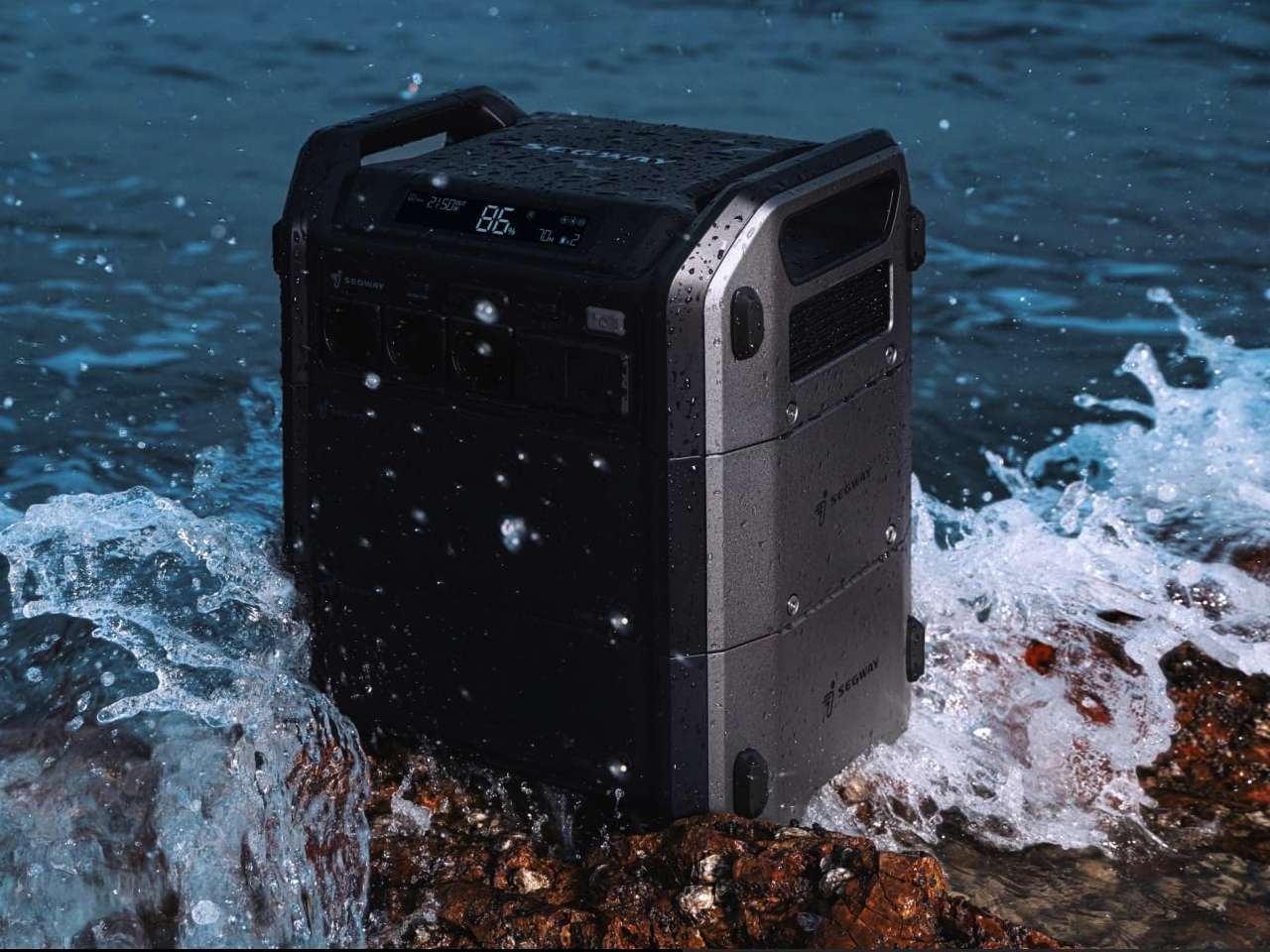
ARTICLE – Segway has reduced the Cube 1000 Power Station to $330, down from its standard $500 retail price. The 1024Wh unit occupies the middle capacity range for portable power stations, positioned between lightweight camping solutions and comprehensive home backup systems.
Price: $329.99
Where to Buy: Amazon
Battery Technology and Expansion Capability
LiFePO4 battery chemistry powers the Cube 1000, rated for over 4,000 charge cycles before significant capacity degradation occurs. This translates to approximately ten years of weekly use, exceeding typical replacement timelines for consumer electronics in this category. This pricing places the unit in direct competition with smaller capacity models that typically offer 500-700Wh storage at similar price points.
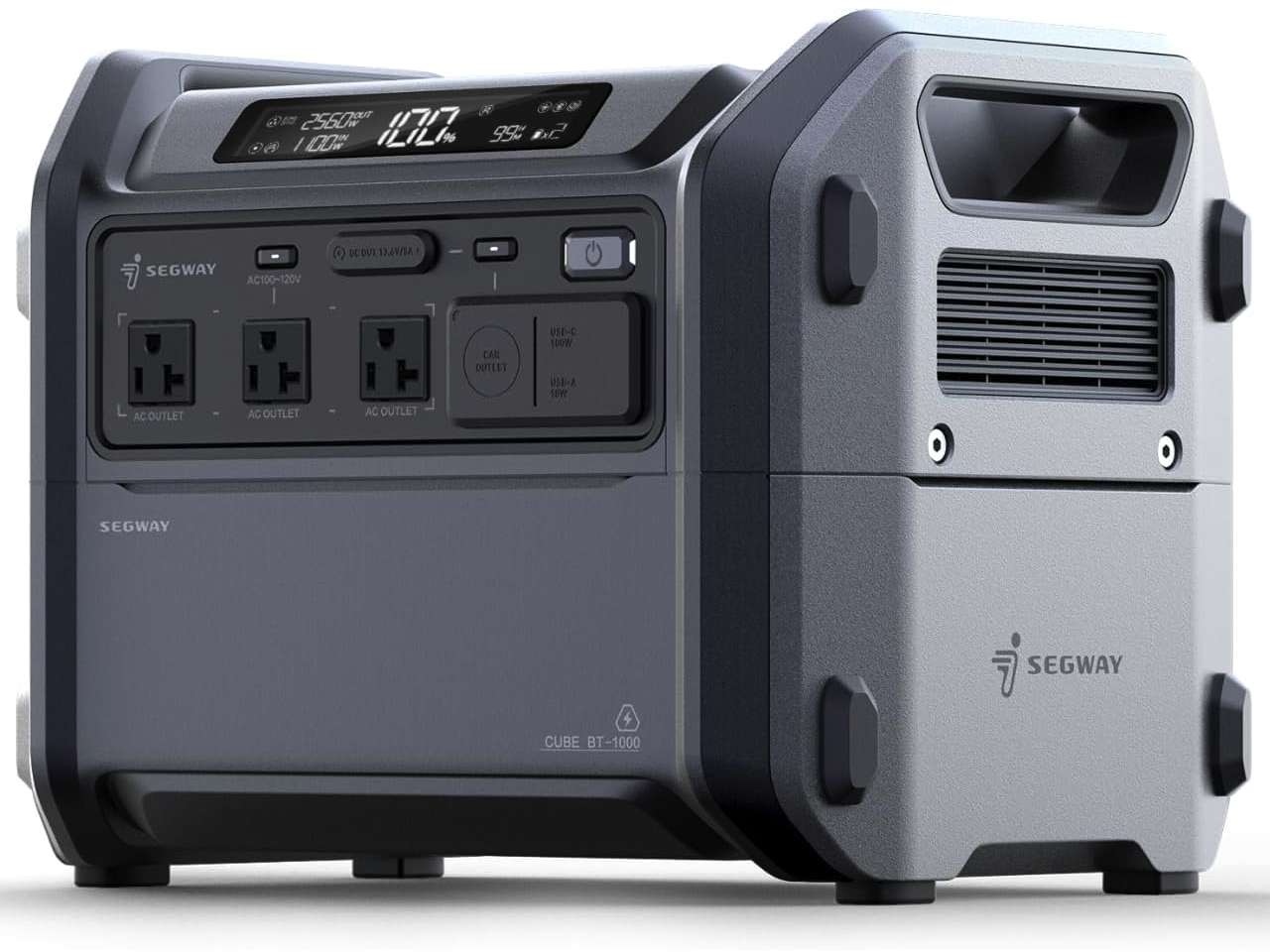
The base unit stores 1kWh of energy. Expansion packs extend total system capacity to 5kWh when fully configured. Modular expansion allows incremental capacity additions without replacing the base station.
Each expansion pack retails at approximately the same price as the base unit, making a fully expanded 5kWh system cost roughly $1,650 at current pricing.
Cube-shaped housing design enables stable stacking when multiple units are deployed together. The geometric form factor distributes weight evenly across the contact surface, preventing tipping when expansion packs are added.
Power Output and Charging Systems
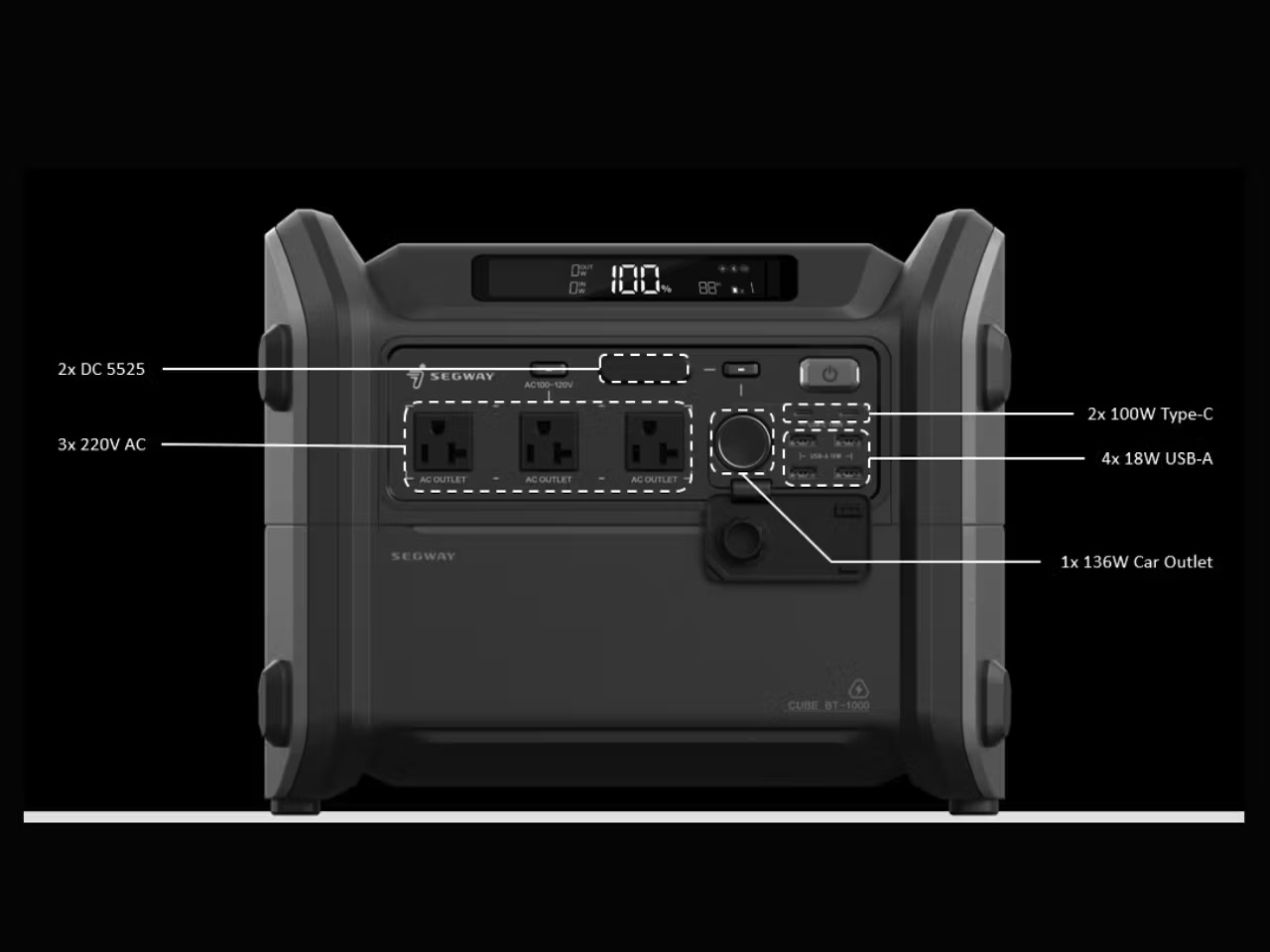
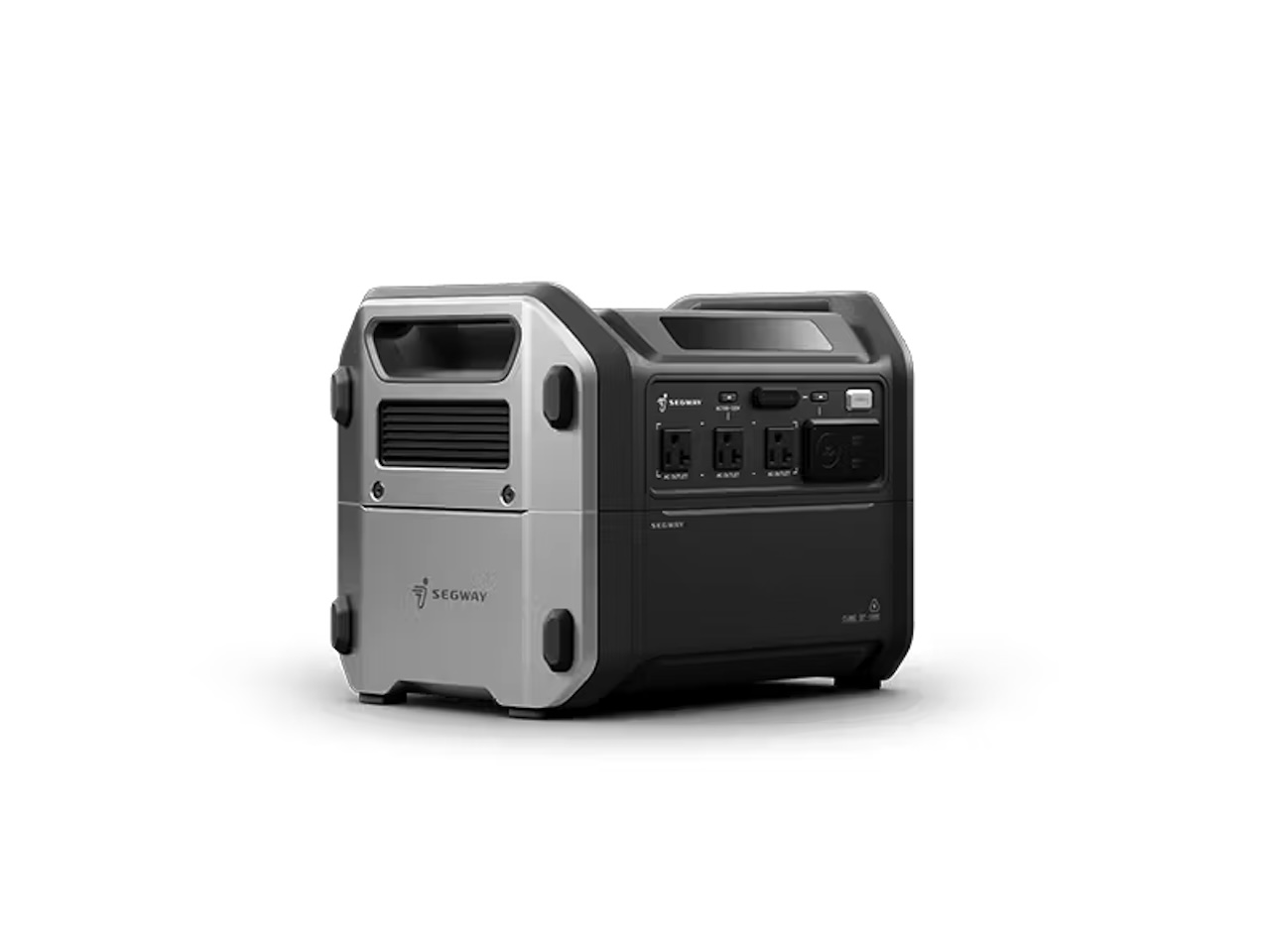
Continuous AC output delivers 2200W through three standard outlets. Segway’s R-Drive mode handles surge loads up to 4400W, covering startup requirements for refrigerators, microwaves, power tools, and medical devices including CPAP machines. DC connectivity includes multiple USB-A ports, two 100W USB-C fast charging port suitable for laptops, a 12V automotive-style outlet, and additional DC outputs.
AC input enables full recharge in 1.2 hours when connected to wall power. The charge controller can process simultaneous AC and solar input during daylight hours, accelerating recovery time when both sources are available. Solar input capability supports panel arrays for off-grid charging scenarios. Car charging remains functional as a backup charging method. This differs from rectangular designs that can become unstable when stacked vertically.
Construction and Environmental Protection
The battery pack carries an IP56 rating for dust ingress protection and water jet resistance.
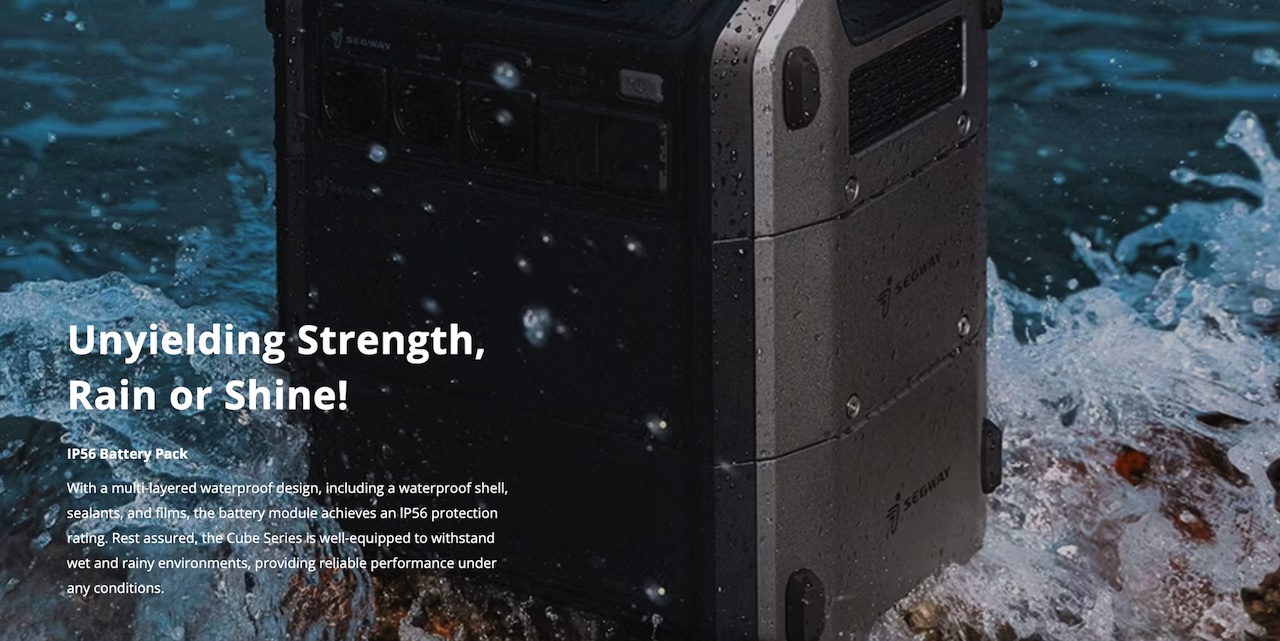
Operating temperature range extends to 113°F, covering most summer storage and outdoor deployment conditions without thermal shutdown. The complete unit meets IPX3 standards, providing protection from rain and splashing but not submersion or sustained water exposure. Handle mounts connect to internal structural members rather than surface-mounting to the case, distributing lift forces across the frame.
Impact-resistant corners use reinforced thermoplastic that absorbs shock without cracking.
Interface Design and Safety Architecture
The Segway-Ninebot mobile application provides remote monitoring of battery levels, power settings, and output management through Bluetooth connectivity. A physical LCD display on the unit shows essential data including remaining capacity, real-time input/output wattage, and estimated runtime calculations based on current draw.
Safety systems include overload protection, short circuit prevention, and thermal cutoff mechanisms that engage when operating parameters exceed safe thresholds.
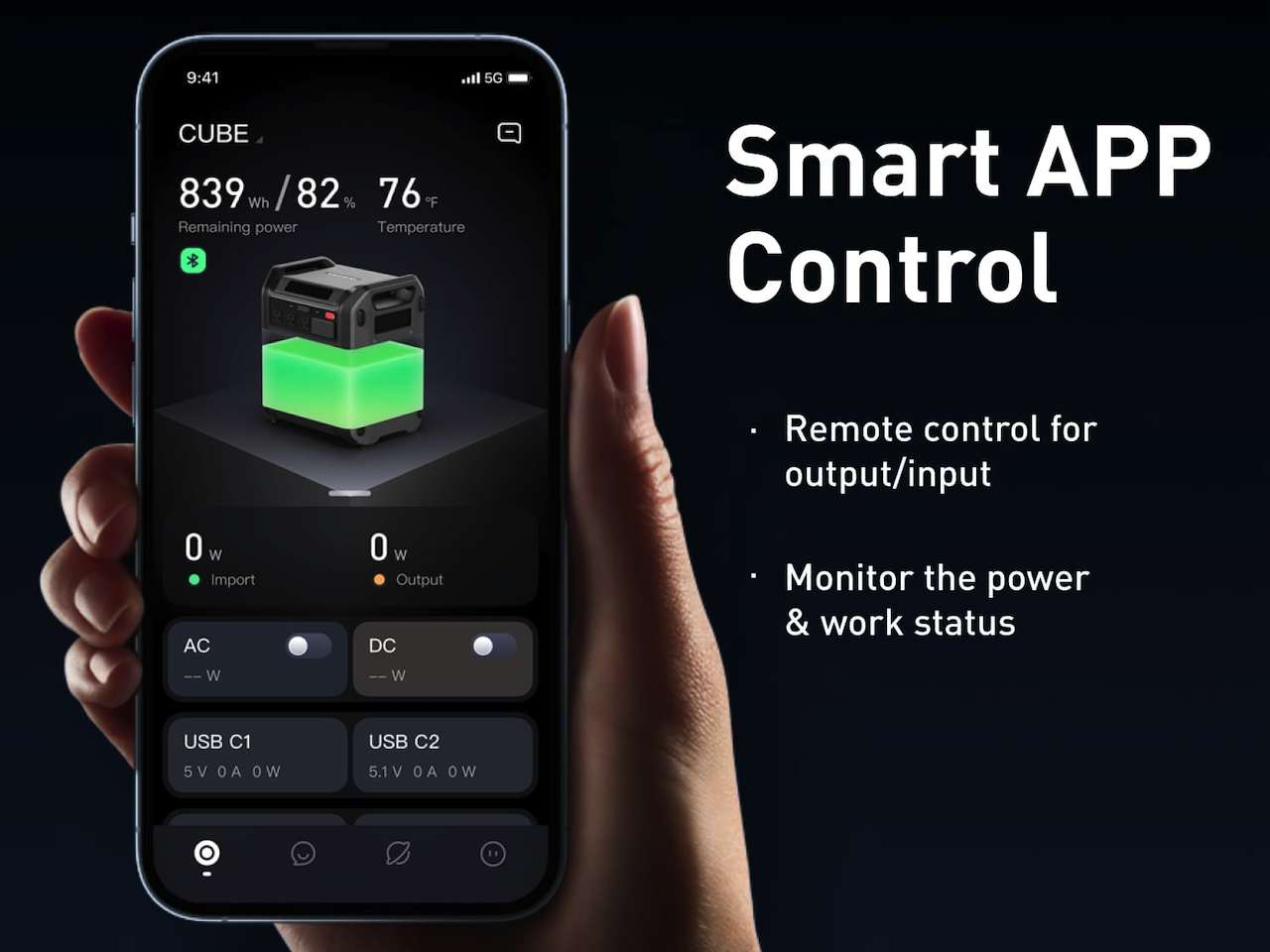
Automatic shutdown protects both the power station and connected devices from damage during fault conditions. The control logic prioritizes equipment protection over continued operation when voltage anomalies, temperature extremes, or current spikes are detected by internal monitoring circuits. This dual-interface approach allows basic operation without smartphone dependency while offering advanced control through the app.
Thermal management operates passively without active cooling fans or forced air circulation.
Heat dissipation relies on conductive pathways through the aluminum battery housing and convective airflow around the unit. Surface temperatures remain touchable under sustained load conditions, though users will notice significant heat buildup during extended high-draw operations exceeding 1500W. The cube geometry contributes to thermal performance by maximizing surface area relative to volume.
Market Position and Competitive Differentiation
Cost per watt-hour at the $330 price point falls below many competing units in the 1kWh capacity range. LiFePO4 chemistry carries higher initial costs compared to standard lithium-ion alternatives but offers extended cycle life that can offset the price differential over years of operation. The 4,000-cycle rating suggests the battery will outlast the electronic components and housing in typical use scenarios.
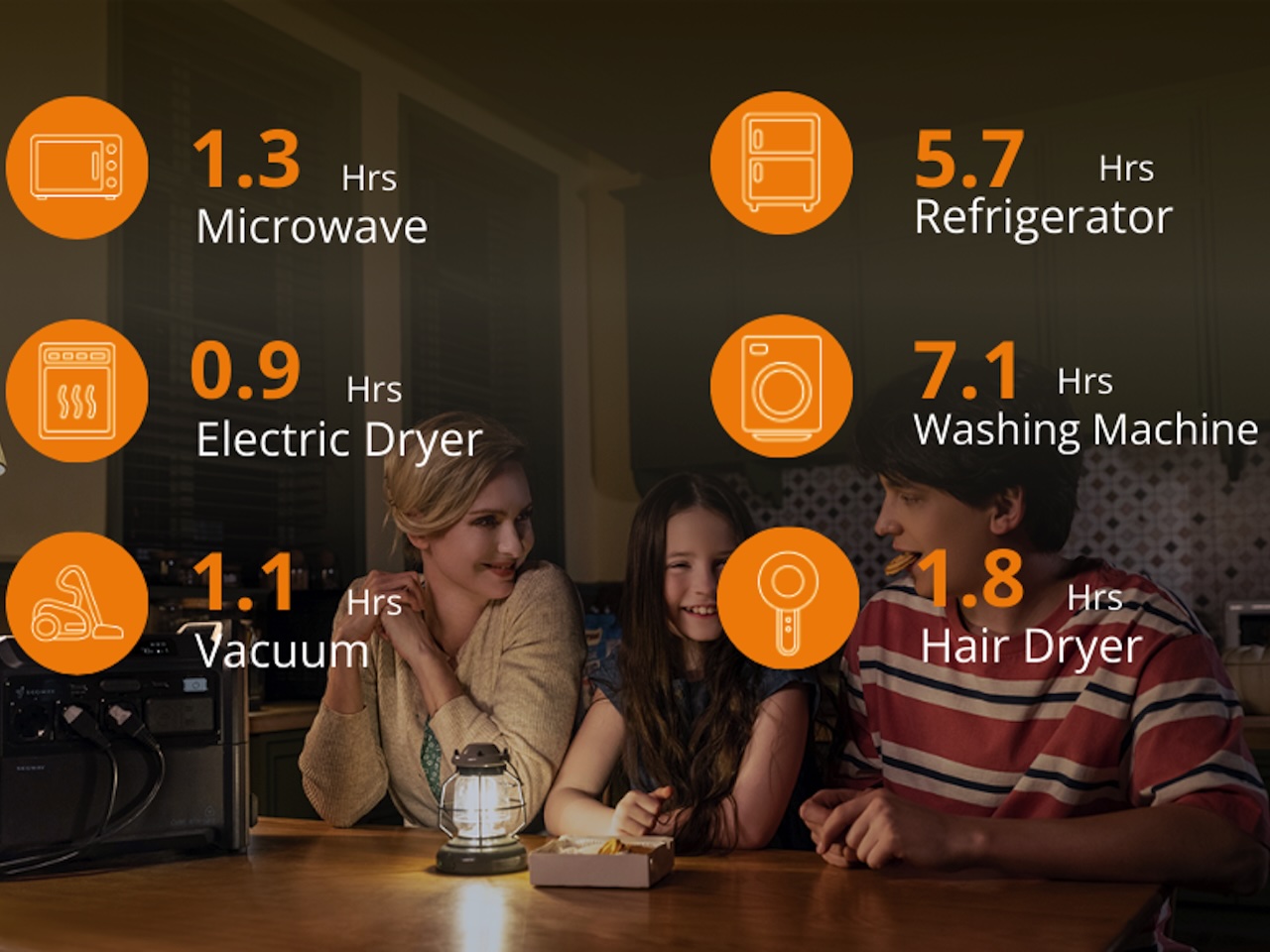
R-Drive mode commits to handling brief power spikes that can reach double the continuous rating, differentiating the Cube 1000 from competitors that specify only continuous output capacity. Surge handling at 4400W addresses a common limitation in mid-range portable power stations.
Application Scenarios and Use Case Analysis
The 1kWh capacity threshold serves both recreational and emergency preparedness applications effectively. Weekend camping trips, tailgating events, and outdoor photography sessions fall within the lower capacity range, typically consuming 200-400Wh over a day of use. Many units in this category fail during high startup loads from air conditioners, compressors, and motor-driven appliances that draw two to three times their operating current during the first few seconds of operation.

Solar charging at 800W input requires portable panel arrays in the 600-800W range to achieve meaningful recovery rates during daylight hours. These panel systems typically weigh 40-60 pounds and require dedicated mounting or ground deployment, making them more suitable for stationary installations or vehicle-based camping rather than backpacking or portable recreational use.
Modular expansion architecture changes the upgrade path for users whose power requirements increase over time.
Twelve total outputs span AC and DC connections, enabling simultaneous power delivery to phones, laptops, lights, and small appliances without adapter management or power strip requirements. Based on the 1024Wh capacity, the base unit can recharge a typical smartphone 80 to 90 times, operate a compact refrigerator for several hours, or power a laptop with LED lighting for an evening’s use.
Price: $329.99
Where to Buy: Amazon
The product is available now through Amazon and other retailers carrying Segway power equipment.

Gerber Gear Suspension 12-in-1 EDC Multi-Plier Multitool with Pocket Knife, Needle Nose Pliers, Wire Cutters and More, Gifts for Men, Camping and Survival, Grey
(as of March 20, 2026 18:25 GMT -05:00 - More infoProduct prices and availability are accurate as of the date/time indicated and are subject to change. Any price and availability information displayed on [relevant Amazon Site(s), as applicable] at the time of purchase will apply to the purchase of this product.)
