Running a capable AI model on a laptop is an appealing idea. Buying that laptop still comes down to familiar questions: how much it costs, which apps work, and what it can do away from a power outlet. Microsoft’s October 7 Windows and Surface event is the next place to look for those answers.
The official event page sets the start for Wednesday, October 7, at 10 a.m. Pacific, noon Central, and 1 p.m. Eastern. Surface Laptop Ultra and the RTX Spark platform already have public announcements behind them. The useful development now would be a clearer path from those announcements to products people can buy and software they can use.
Surface Laptop Ultra already has a substantial spec sheet
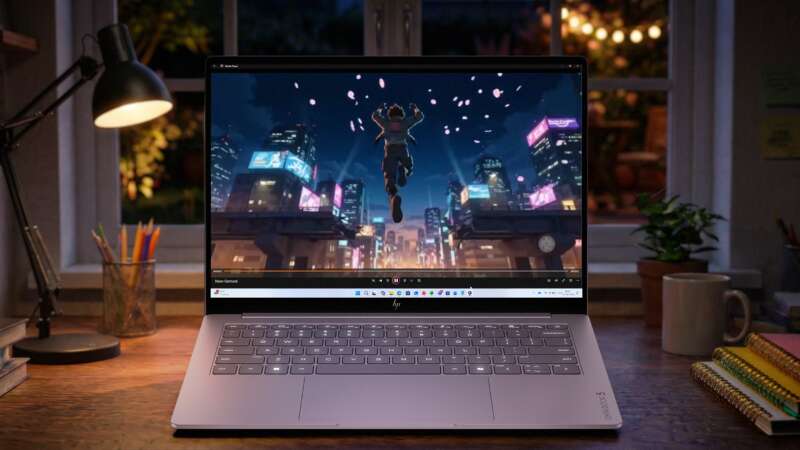
Microsoft introduced Surface Laptop Ultra in May. Its NVIDIA Blackwell RTX GPU, CUDA support and up to 128GB of unified memory target developers and creators working with large models, complex scenes and demanding projects.
Shared memory gives the CPU and GPU access to the same pool. That makes the available capacity worth watching alongside the processor options, particularly if a local model will run while another application is doing heavy work.
The physical design is already detailed, too. Microsoft lists a 15-inch, 3:2 mini-LED touchscreen with up to 2,000 nits of peak HDR brightness, plus USB-C, USB-A, HDMI, a headphone jack and a full-size SD card reader. Its current product page describes a body less than 18mm thick and under 4.5 pounds.

Price and an exact shipping date are still absent from the US product page checked October 6. It offers an updates sign-up and says shipment depends on successful FCC authorization. An event date alone doesn’t settle availability.
New reports point to two processor tiers
Ahead of the event, Notebookcheck reports two Surface Laptop Ultra configurations: an RTX Spark S2 with 18 CPU cores and 5,120 GPU cores, and an S3 with 20 CPU cores and 6,144 GPU cores. Its report lists 24GB or 32GB of memory for S2, with S3 options stretching from 32GB to 128GB.
The 20-core platform itself is established: NVIDIA announced a 20-core Grace CPU paired with 6,144 CUDA cores in June. The reported S2/S3 names and retail combinations still await Microsoft’s confirmation.
Pricing needs extra care. Roland Quandt’s original post describes demo configurations offered by a channel partner in Germany, Austria and Switzerland. His approximate price range isn't an official US price list. Notebookcheck also reports expected October 7 preorders and mid-October shipments, while Microsoft’s public product page still leaves the exact order and delivery dates open.
The Windows side needs to earn its place in the workflow
GADGETEER covered the broader platform in our RTX Spark introduction. This week’s question is how the hardware and operating system fit together in everyday use.
Microsoft’s earlier Windows announcement describes work on CPU scheduling, power management, unified memory and Prism, the compatibility layer for x86 applications on Windows on Arm. It also describes NVIDIA OpenShell arriving on Windows, with operating-system controls intended to contain agents and govern their access.
For someone considering one of these PCs, the next useful demonstration would show an actual task across applications, what access the agent requests, and how the user can stop or correct it. The same applies to app compatibility. A creative application opening successfully is only the start; the extensions, peripherals and workload someone depends on have to work, too.
Those are questions for the event and later hands-on testing. They aren't results we've established on Surface Laptop Ultra.

Microsoft’s product illustration shows Unreal Engine on Surface Laptop Ultra. This is not our hands-on test or an October 7 event screenshot. Image: Microsoft.
There’s a desktop version to watch as well
The Surface RTX Spark Dev Box, announced in June, takes the local-development idea to a compact desktop. Microsoft lists 128GB of unified memory and Windows 11 Pro configured with tools including WSL 2, CUDA support, VS Code, Git, Python and Node.js.
Its original announcement points to US availability later in 2026 through Microsoft’s online store. Final pricing and a firm delivery date would make it easier to compare that dedicated desktop approach with a portable machine.

Microsoft’s Surface RTX Spark Dev Box in an official product image. Image: Microsoft.
For now, the decision is straightforward: watch for the exact configurations, pricing and shipping terms, then check which Windows features are available at launch. A polished demonstration can explain the direction. Those details tell you whether the new hardware fits the work you need to do.