
Picture a blackout driveway: the porch light’s dead, the fridge’s gone quiet, and there’s a two-ton battery sitting fifteen feet from the kitchen door doing nothing but existing. The company wants to close that gap with the Hyundai AllDayEnergy.
Hyundai Motor Group unveiled AllDayEnergy on July 24, a single brand covering its vehicle-to-everything energy services: smart charging today, with grid-feeding and home-powering planned to follow.
Three letters, one energy plan
Bidirectional flow means the battery can push power out, not just soak it in. V1G, or smart charging, adjusts charging time around live electricity prices and grid conditions, and it’s the only piece shipping first. V2G sends power back to the grid when a utility needs it. V2H, vehicle-to-home, is the one that matters during a storm: it lets a parked EV keep the lights, the fridge, and the router running while the street stays dark.
V1G is the piece that shows up on a bill first, nudging charging into cheaper hours automatically. But availability depends of the Hyundai AllDayEnergy on market, hardware, and utility rules, and the rollout starts small: smart charging in the UK, nothing more.
Ford and GM already do this today
Hyundai is describing a plan. Ford has been shipping one. The F-150 Lightning’s Intelligent Backup Power, built with Sunrun’s Home Integration System and a Charge Station Pro, can push up to 9.6 kilowatts into a house the moment the grid drops. Ford also sells a cheaper retrofit: a $1,100 Vehicle Connector and GenerLink transfer switch that route power from the truck’s 240V Pro Power Onboard outlet into the home panel.
GM Energy sells the same idea under its own name, pairing a PowerShift Charger with an enablement kit across the Silverado EV RST, Equinox, Blazer, Sierra, and Lyriq.
That timing gap is the real story hiding under the press release. Hyundai AllDayEnergy sounds like new technology, but it’s mostly Hyundai catching up to hardware Ford and GM buyers can already install in a garage. The stakes keep climbing: the average major U.S. outage stretched from 9.6 hours in 2018 to 11.8 hours in 2024, and the costliest state’s outage bill went from $7.8 billion to $38.9 billion over the same period.
The app is the planned front door
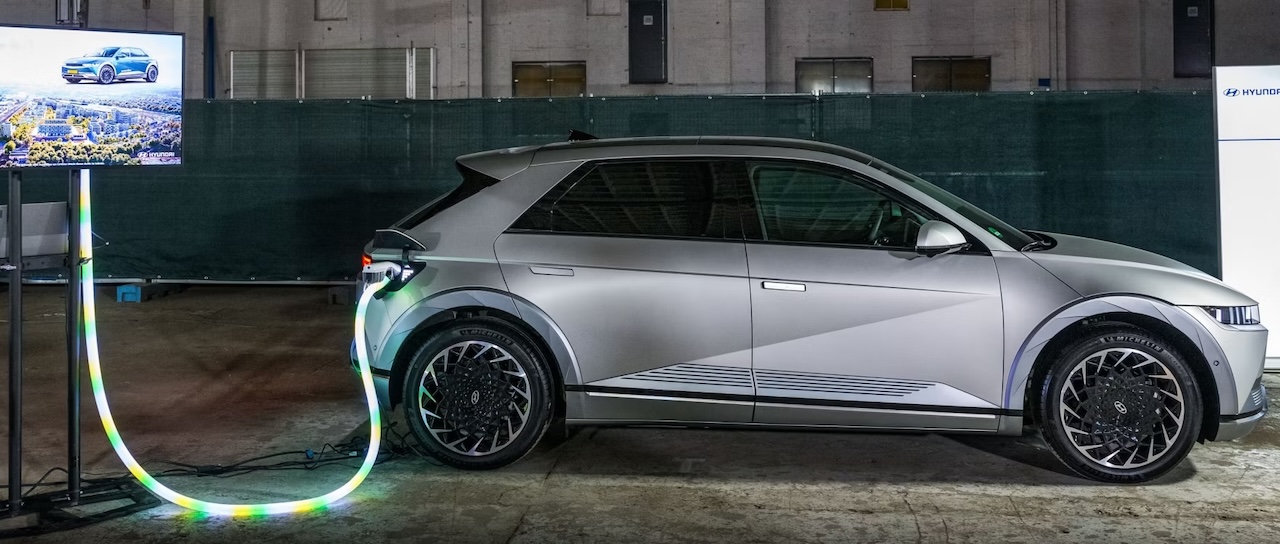
AllDayEnergy will live inside the Hyundai Motor and Kia apps, starting with V1G through the UK Kia App in the second half of 2026. Europe, the US, and Korea are named as later stops, future expansion slides rather than dates on a calendar. That’s worlds apart from “coming to America.” Readers who want home charging hardware now can already shop what TG covered in Lectron’s New Nexus EV Chargers Put Home Charging on a More Practical Footing.
Hyundai’s own pilots hint at what’s coming
None of this starts from zero. Hyundai’s V2G pilot on Jeju Island put free bidirectional chargers in the driveways of about 40 residents with a Kia EV9 or IONIQ 9, run with the provincial government and Korea Electric Power Corporation. The island makes more renewable power than its grid can absorb, so those 40 EVs work as a scattered battery farm rather than a marketing prop.
The U.S. side is narrower than the press release lets on. It’s Kia, not Hyundai, that has V2H live today, and only for EV9 owners in select states, through a Wallbox-built system running since February 2025. Wildfires are the headline use case, a blunt way to learn whether a car battery can keep a fridge cold when the grid stays down for days.
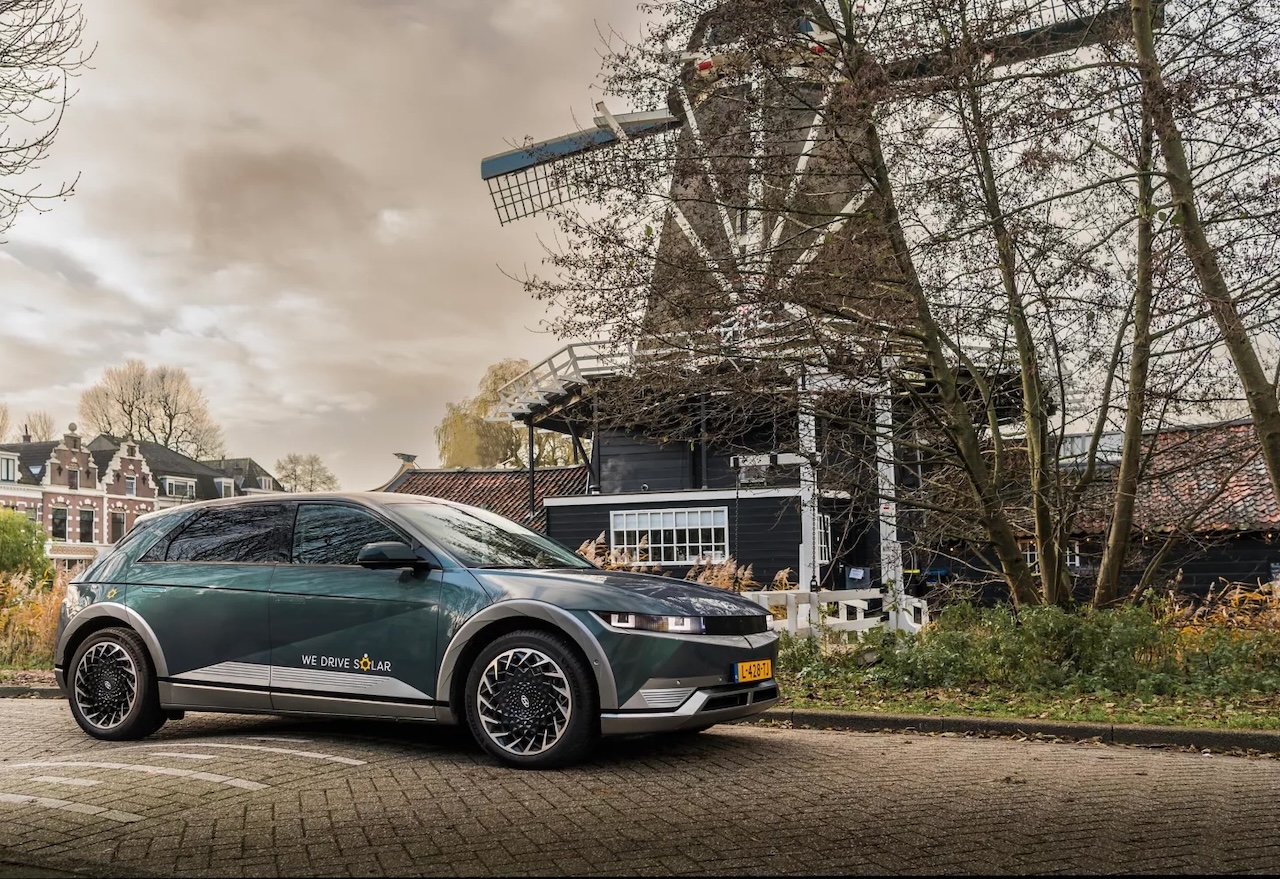
Europe has the longest track record. Hyundai first tested V2G in Utrecht in 2022 with We Drive Solar, and this year expanded into a Vattenfall pilot for up to 80 Dutch households, who get a free bidirectional charger, installation, and up to €500 of home charging reimbursed over six months, in exchange for letting Vattenfall pull power between 4 and 9 p.m. Four years of Utrecht data is a big part of why this pilot exists.
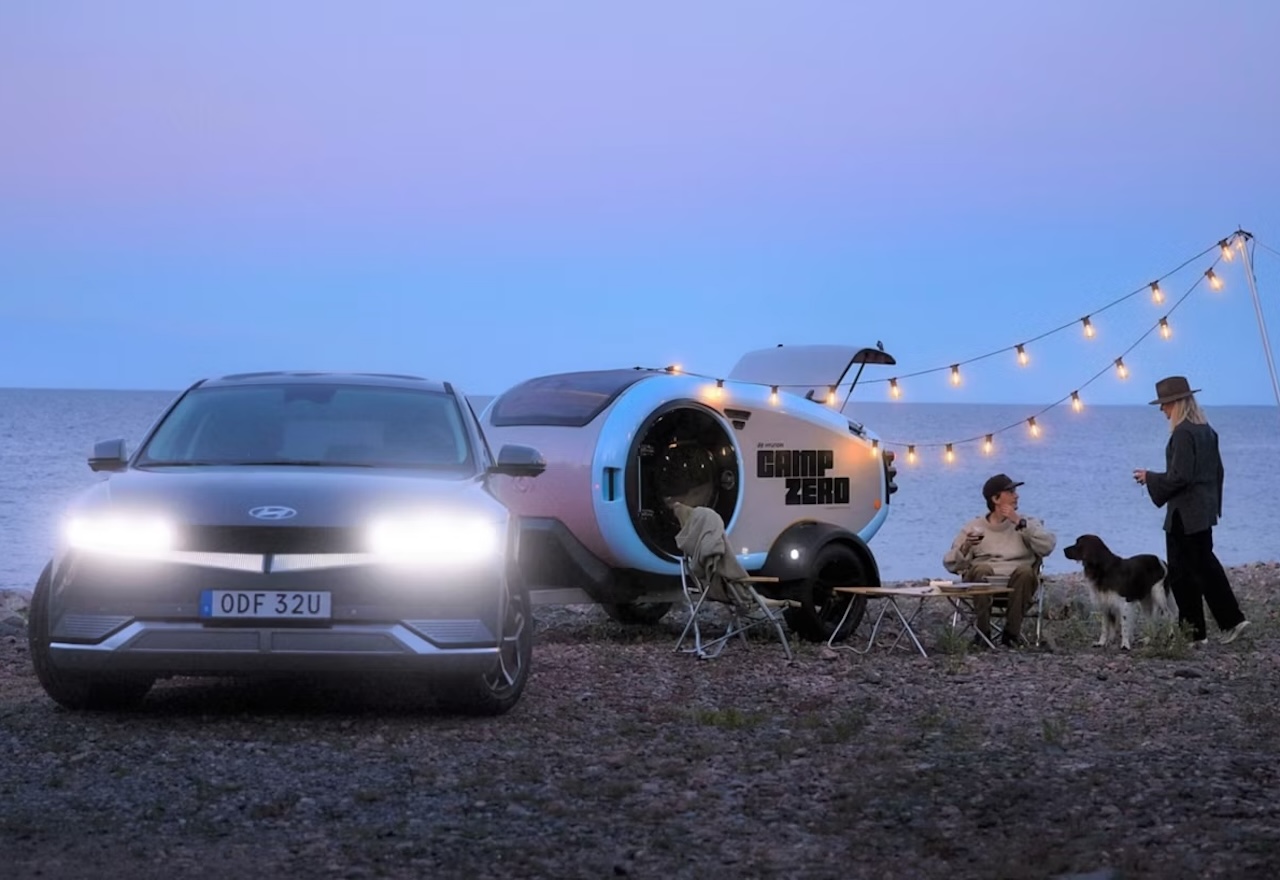
The foundation already exists in Hyundai’s hardware: the IONIQ 5 ships with a 3.6-kilowatt vehicle-to-load socket that powers tools and small appliances off the battery. AllDayEnergy isn’t inventing new plumbing. It’s putting one label on pipes Hyundai has been laying for four years.
The bet Hyundai is making
The interesting part isn’t the badge. It’s the attempt to make charging, grid export, and blackout backup feel like one service instead of three experiments in different countries.
Whether it pays off depends on execution we can’t see from a press release: utility partnerships, hardware pricing, and whether V2H reaches a U.S. driveway before Ford and GM extend their head start. The UK launch is the first real test. Everything else is a promise with a name attached. TG will check back the day the app goes live.
