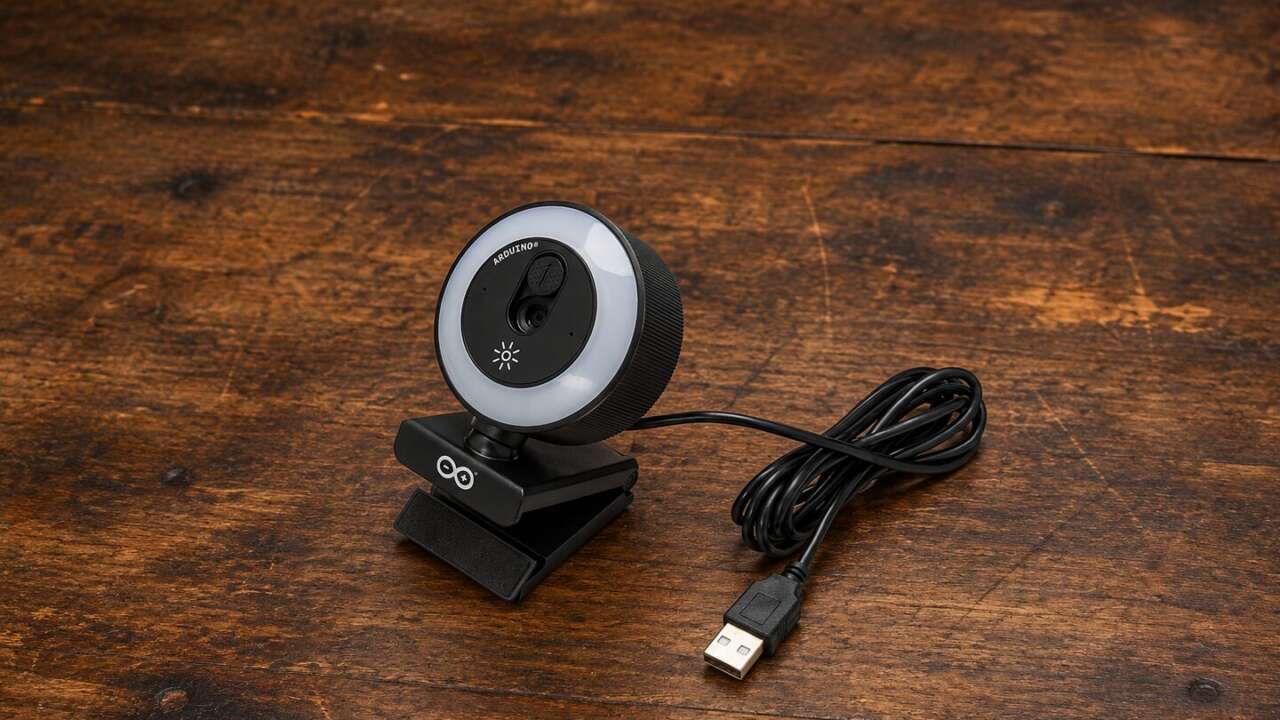
The Arduino USB Camera puts a camera, microphone and adjustable ring light in one USB accessory for projects that need to see and hear. Pair it with an UNO Q or VENTUNO Q, and you can feed those inputs into local models for object recognition, gesture controls or an interactive desktop assistant.
The light is part of the appeal. A touch control adjusts brightness, with warm and cool white settings around the lens. You can change the illumination at the camera instead of adding a separate lamp to the project, while a sliding shutter covers the lens when you don’t want it exposed.
Price: $34
Where to buy: Amazon
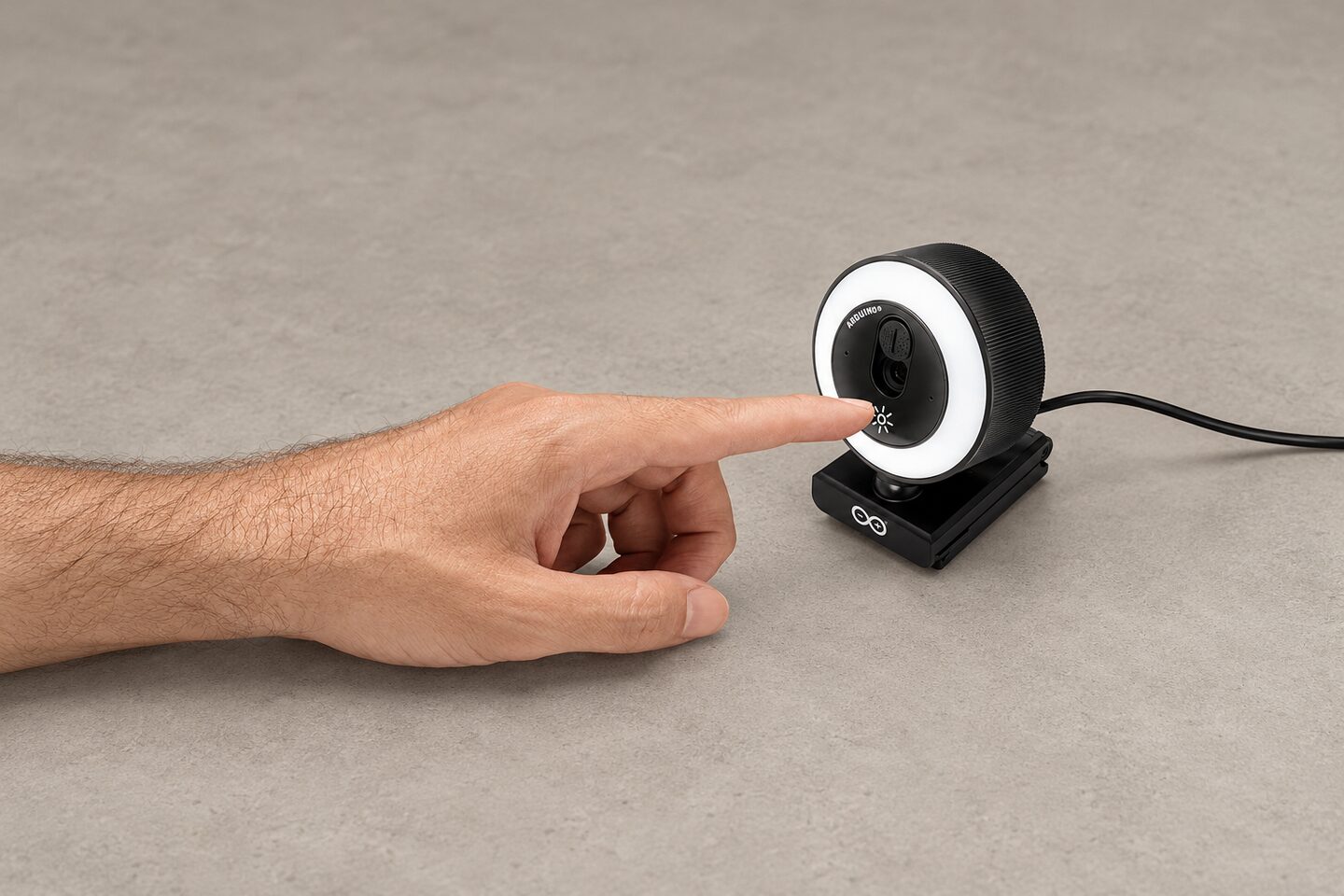
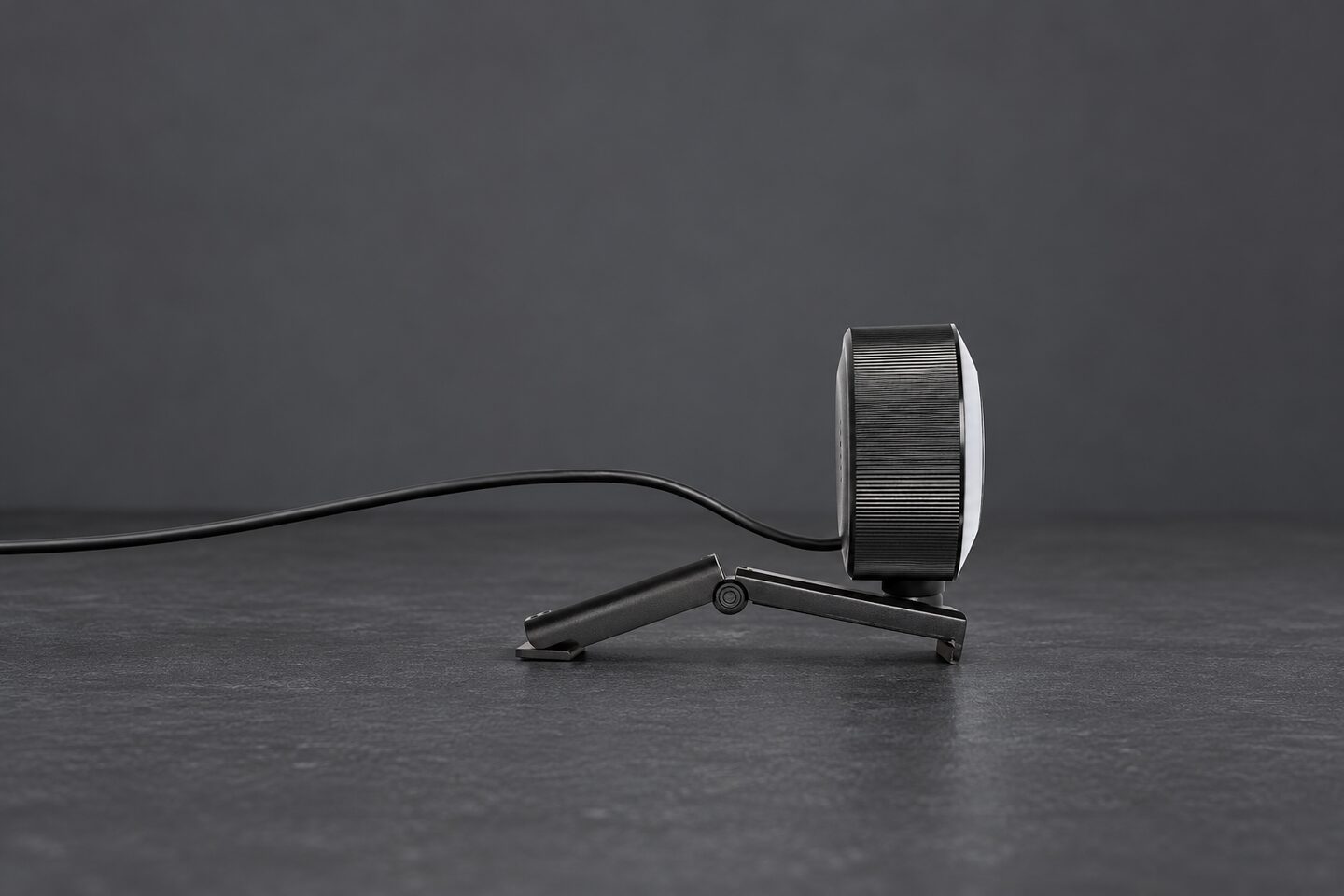
Position the camera, then choose what it watches
Inside is a Sony IMX376 sensor with capture up to 3840 × 2160 at 30 frames per second in MJPEG. That’s the video capture specification, not a promise that an AI model will process every frame at that speed. The autofocus lens focuses from 20 centimeters to infinity and has an 80-degree diagonal field of view.
A hinged monitor clip also works as a desk stand, and there’s a tripod thread for positioning it separately. That gives you a choice between watching the person in front of a screen and aiming at a work area. The built-in microphone adds an audio input without another microphone occupying a USB port.
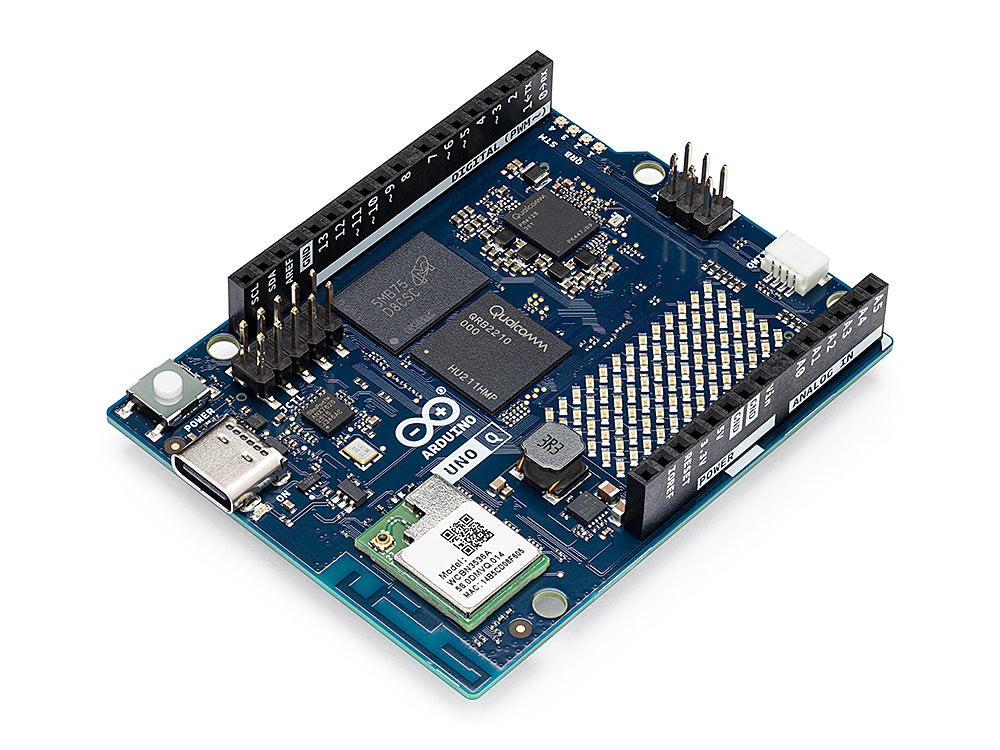
The board runs the model
Arduino’s examples include object detection with YOLO-X, image classification with MobileNet and gesture recognition with MediaPipe. VENTUNO Q can also use a vision-language model such as Qwen VLM to turn a camera view into a scene description. The camera supplies the picture and sound; the connected board and software do the interpretation.
The connection differs between the two boards. UNO Q needs a USB-C hub for the camera, while VENTUNO Q accepts it directly through a USB-A port.
You can also use it as a webcam with Windows, macOS or Linux. Its standard USB Video Class connection doesn’t require an extra driver, so the same camera can move between a computer and a supported Arduino project. For a vision project, that’s a bonus, not the main job.
Price: $34
Where to buy: Amazon