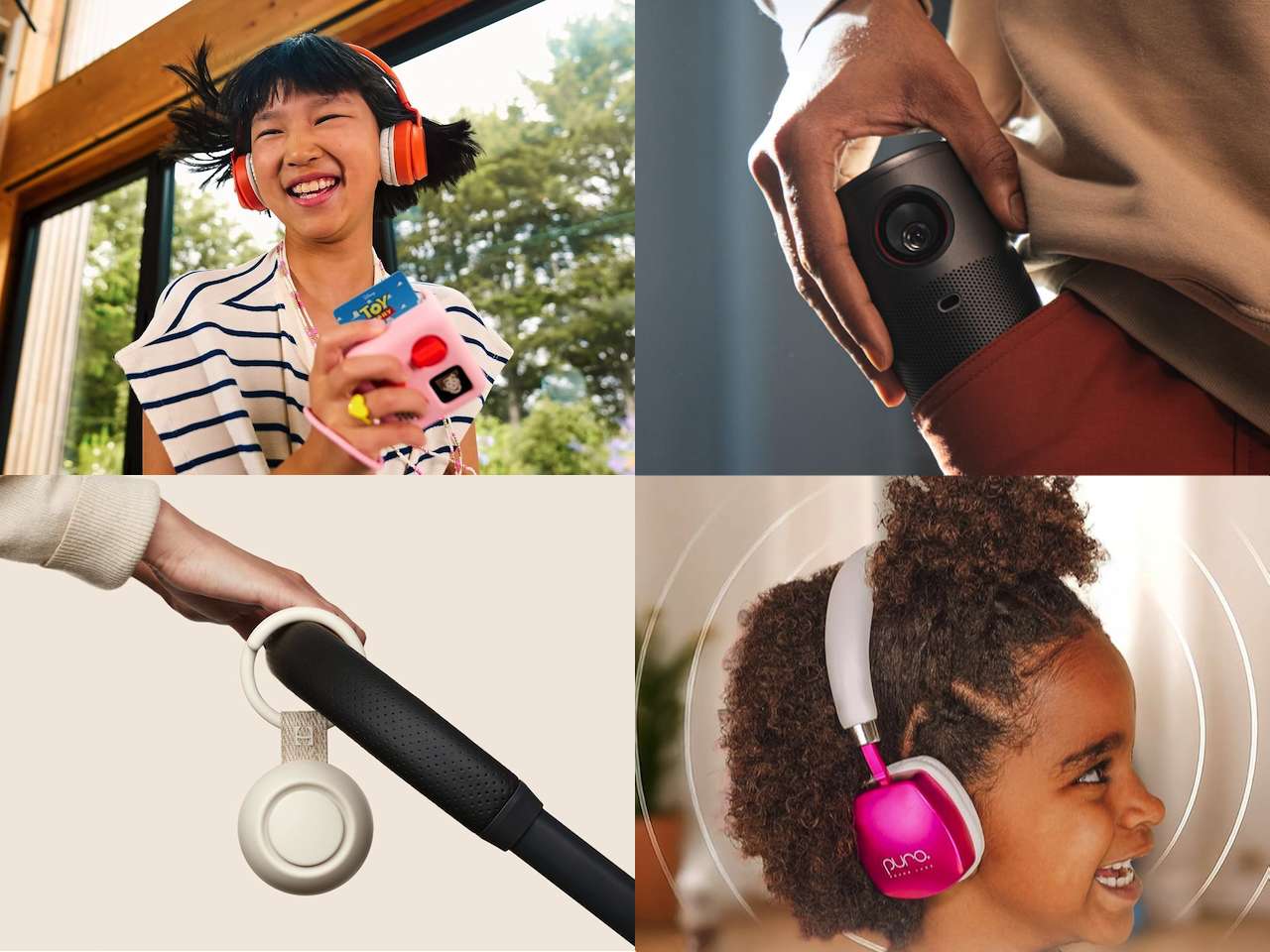
The first ninety minutes are always fine. It’s the stretch after that, somewhere past the second rest stop, when the tablet hits four percent and the questions start rolling in on a loop. None of the six gadgets below will fix traffic, but each one removes a specific thing that makes traffic worse.
The weekend problem isn’t the distance, it’s the last hour
Most family travel gear gets sold on the promise of comfort. That’s the wrong pitch. What actually breaks down on a Saturday drive is predictability, because the tablet dies at an unplanned moment, the hotel room has the wrong ambient noise, and the backpack with the snacks is somehow in the trunk under everything.
The fix isn’t more stuff. It’s a small number of things that each hold up for a full day without needing a wall outlet or a parent turning around in the passenger seat. Battery life matters more than features here, and every pick below was chosen on runtime first.
One note before the list. Every pick here charges over USB-C except the AirTag, which runs on a coin cell, so a single cable and one power bank cover the whole kit for a weekend.
1. Yoto Mini: The audio player that ends the tablet negotiation
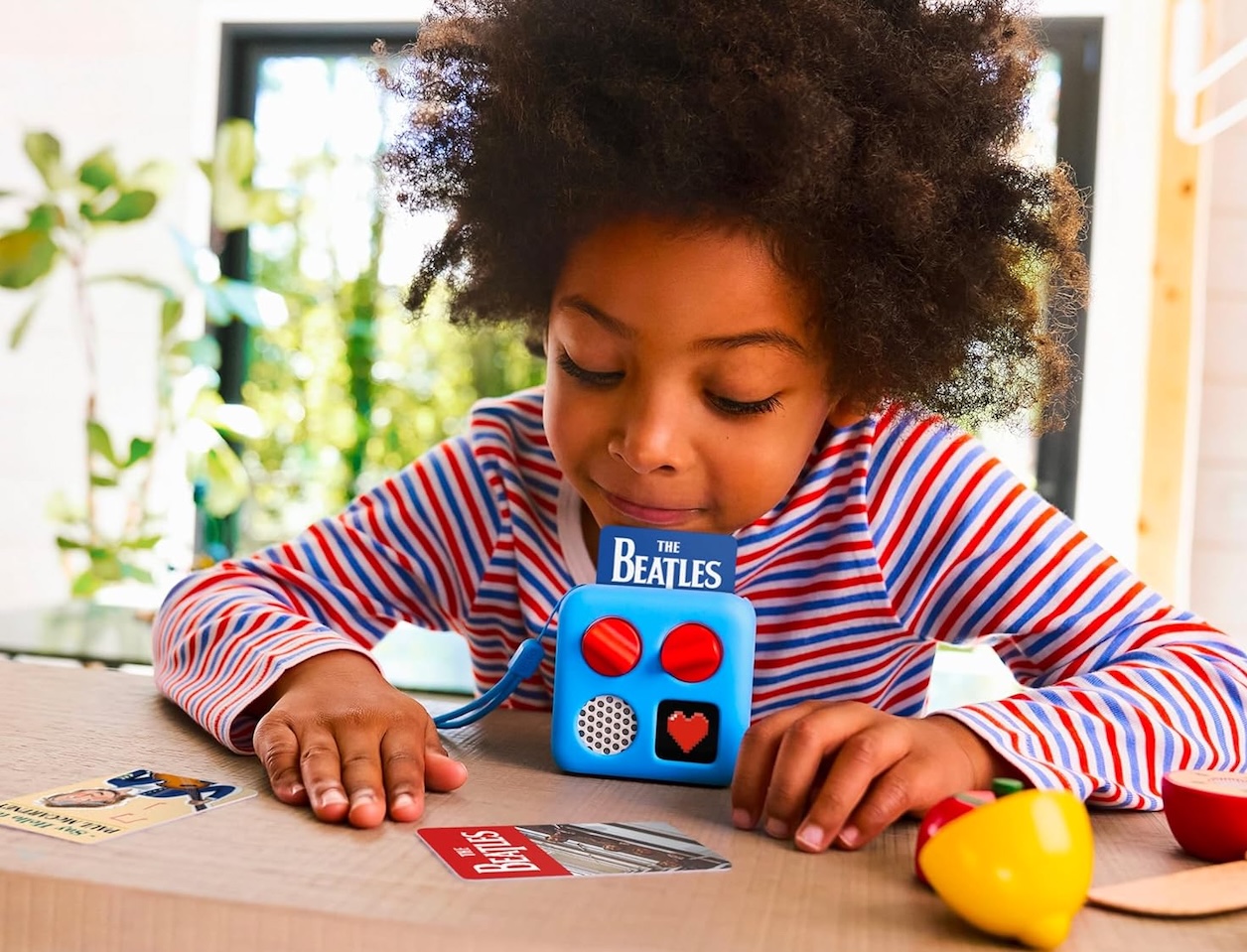 The Yoto Mini is a screen-free audio player that takes physical cards, so a kid picks a story the way they’d pick a book. Yoto lists up to 14 hours of playback, a 33mm 3W mono speaker, 32GB of internal memory, and a headphone jack, which means it works as a shared speaker in the car and a private player on a plane. Yoto states it plainly on the product page: no microphone, no camera, no ads.
What makes it a travel device rather than a nursery device is the offline behavior. Cards download over WiFi once and then live in internal memory, which Yoto rates at 500 hours or more of stored audio, and the lanyard holes mean it clips to a booster seat instead of sliding into the footwell. The tradeoff is that you’re buying into a card ecosystem, and cards add up fast.
What works: You get up to 14 hours of playback on a charge and full offline operation once the cards are loaded. There’s no camera and no microphone, and the only display is a small pixel readout rather than a screen worth fighting over. The headphone jack covers planes and quiet hours, it doubles as a Bluetooth speaker and an OK-to-wake clock, and USB-C charging means it shares a cable with everything else in the bag.
What doesn’t: The card library gets expensive quickly, and the mono speaker struggles against road noise.
Yoto Mini
Price: $79.99
Where to Buy: Amazon
2. Puro Sound Labs PuroQuiet Plus: Hearing protection that survives a full travel day
 Volume-limited kids’ headphones usually make you choose between a hard safety cap and battery life worth carrying. Puro Sound Labs rates the PuroQuiet Plus at up to 35 hours of playtime without active noise cancelling and 23 hours with it on, plus 200 hours of standby. The volume ceiling sits at 85dB, which Puro calls the maximum safe listening level, and it holds in both wireless and wired modes.
The active noise cancelling is the part that matters on a plane or a long highway stretch. Cabin and road noise are what push kids to crank the volume in the first place, so cutting the floor noise does more for hearing safety than the cap alone. There’s a built-in mic and one-touch Bluetooth 5.0 pairing with about 30 feet of range, running 40mm drivers behind 22dB of noise reduction and 78 percent isolation.
Puro also includes a daisy chain cable with a built-in splitter, so two sets of headphones can run off one tablet. That’s a small thing that prevents a specific and very loud category of backseat argument. Wired mode uses a volume-limiting cable, so the cap holds even with the battery flat.
What works: Up to 35 hours of playtime, or 23 with noise cancelling engaged, sitting behind a hard 85dB cap that holds in wireless and wired modes alike. The ANC cuts the cabin roar that causes volume creep in the first place, the daisy chain splitter feeds a second headset, and the volume limiting still holds in wired mode with a flat battery.
What doesn’t: The on-ear cups are sized for children, so teens and adults will find them tight, and several colors sell out regularly.
PuroQuiet Plus
Price: $119.00
Where to Buy: Amazon
3. Hatch Go: The nap-anywhere machine
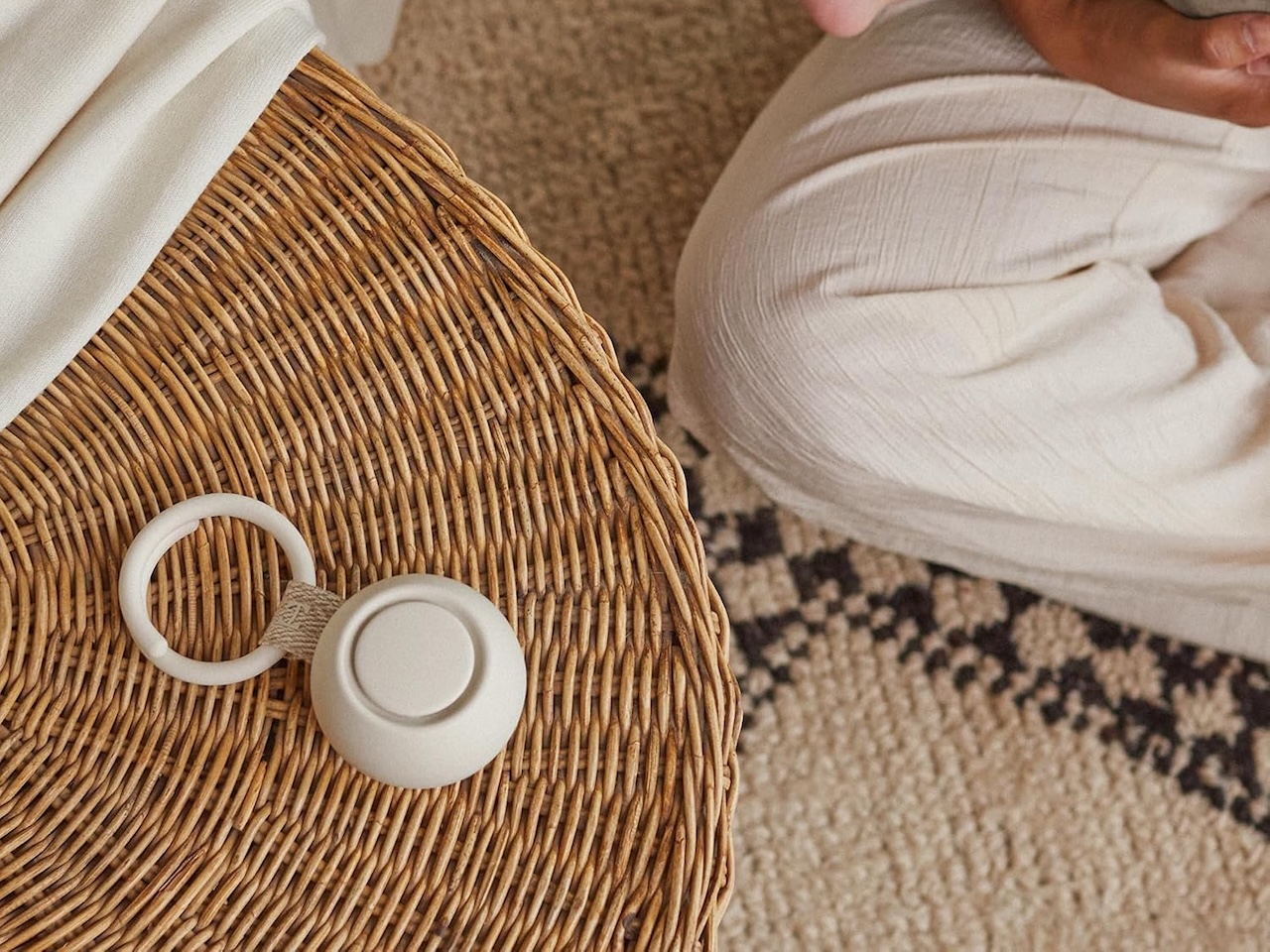 A portable sound machine sounds like the most skippable thing on this list right up until the first hotel nap. The Hatch Go carries 10 sounds including white noise, hush, heartbeat, and ocean, and Hatch rates the battery at up to 15 hours from a roughly two-hour charge on a 5v/0.5A wall adapter. A ring light reads red for low, amber for charging, and green for full, so you can check it without waking anyone.
The deliberate part of the design is what’s missing. There’s no app, no WiFi, and no Bluetooth, just three buttons and a ring that clips to a stroller or a diaper bag. That means it works in an airport with hostile WiFi and it can’t be accidentally reconfigured by a five-year-old.
What works: Up to 15 hours of battery from a two-hour charge, which covers a night plus the next day’s car nap. There’s no app, WiFi, or Bluetooth to fail on you mid-trip, the clip ring attaches to strollers and bag handles, and the status ring shows the charge state at a glance.
What doesn’t: You’re limited to ten sounds with no custom uploads, and Hatch tells you to charge it only with the cable in the box.
Hatch Go
Price: $39.99
Where to Buy: Amazon
4. Apple AirTag: For the backpack, not the kid
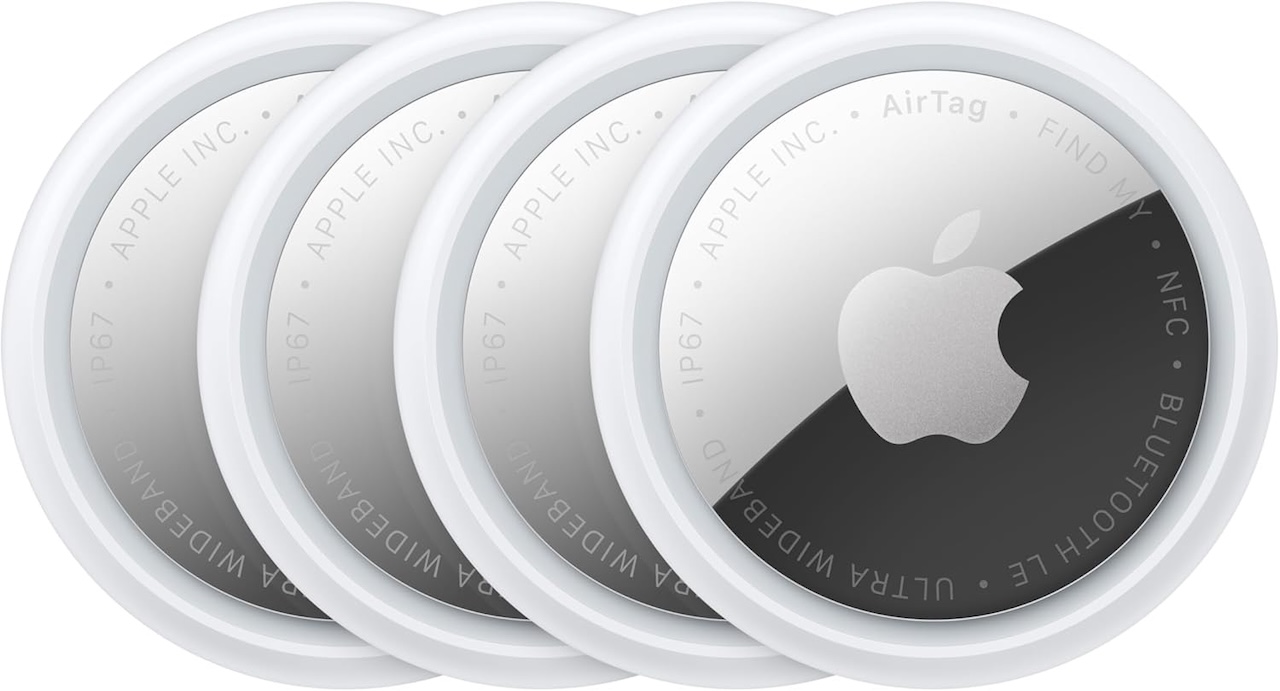 An AirTag in a kid’s backpack answers the question that eats twenty minutes at every hotel checkout, which is where the stuffed animal and the tablet ended up. Apple sells them at $29 for one and $99 for a four pack, and the current generation runs 50 percent louder than the original with Precision Finding that reaches 50 percent farther.
The honest framing here is that this is luggage tracking, not child tracking. AirTags run on Bluetooth and the Find My network, which means they report where the bag was last seen by a passing Apple device, not where your kid is right now. Anyone selling it the other way is overselling it.
Where it earns the money is the boring stuff. One in the checked bag, one in the backpack that holds the tablet and headphones, one clipped inside the stroller if it’s getting gate-checked. It’s iPhone-only for full functionality, so Android households should look at a tracker built for Google’s Find Hub network instead.
What works: Precision Finding narrows the hunt down to a specific bag, and Apple rates the current generation as audible from twice the distance of the original. It runs on a replaceable coin cell so there’s no recharging schedule to forget, the Find My network reaches far beyond Bluetooth range, and a four pack covers a whole family’s luggage.
What doesn’t: Full functionality needs an iPhone household, and the location you get is last-seen rather than live.
Apple AirTag
Price: $29.00 (1-pack) / $99.00 (4-pack)
Where to Buy: Amazon
5. Anker Nano Power Bank: The 10,000mAh brick with the cable attached
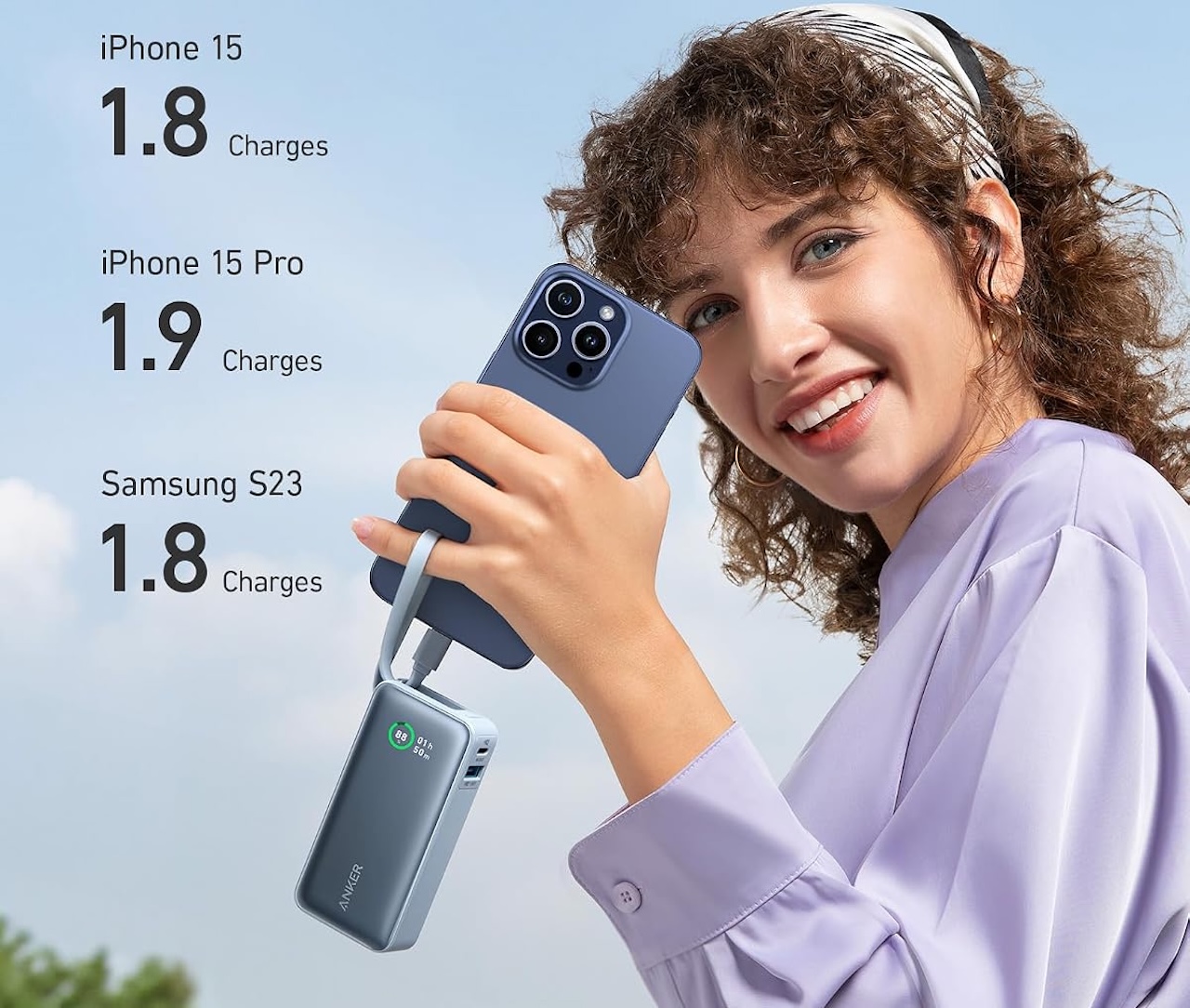 The reason most power banks fail on family trips isn’t capacity, it’s that the cable is in a different bag. Anker’s Nano Power Bank builds a USB-C cable into the body, carries 10,000mAh, and runs 30W bi-directional charging, which Anker rates at 50 percent on the bank itself in about 45 minutes.
Ten thousand milliamp hours is the right size for this job. It’s enough to bring a tablet back from empty and still cover a phone, it’s small enough to live in a door pocket permanently, and it clears airline carry-on rules without a conversation at the gate. There’s a USB-C port and a USB-A port alongside the built-in cable, so three things can charge at once.
What works: the built-in USB-C cable removes the missing-cable problem entirely, and 10,000mAh refills a tablet with enough left over for a phone. You get 30W bi-directional charging in a body that fits a door pocket, extra USB-C and USB-A ports for a third device, and a color display that shows exactly how much charge is left.
What doesn’t: Total output drops to 24W once you’re charging more than one device, and the built-in cable is short and can’t be replaced.
Anker Nano Power Bank
Price: $49.99
Where to Buy: Amazon
6. Nebula Capsule Air: The hotel room reset button
 This is the splurge, and it solves the 8pm problem in a room where everyone shares one bed. The Capsule Air is a soda-can-sized Google TV projector weighing about 1.4 pounds, throwing a 720p image at 150 ANSI lumens across a 30 to 80 inch range, with autofocus and Netflix licensed on board.
The specs read modest and that’s the point. A hotel room at night is a dark room, which is the only condition where 150 lumens looks fine, and nobody is grading a projector on contrast when the alternative is four people watching a phone. It runs Google TV natively, so it doesn’t depend on the hotel’s smart TV or its login screen.
Battery is the real limit at roughly two hours, which covers one film and nothing more. Nebula’s support pages note the USB-C port handles charging only, so plan on keeping it plugged into wall power for anything longer than a single film. This is the one item here you should skip unless hotel nights are a regular part of your travel.
What works: It weighs about 1.4 pounds and packs like a water bottle, with Google TV and licensed Netflix already on board. Autofocus handles setup on an uneven nightstand, the image scales from 30 to 80 inches in a dark room, and it runs as long as you want it to once it’s plugged into wall power.
What doesn’t: Roughly two hours of battery caps you at one film, and 720p at 150 lumens needs a genuinely dark room to hold up.
Nebula Capsule Air
Price: $399.99 (frequently ~$280)
Where to Buy: Amazon
How to pick if you’re only buying one
Start with the failure that actually happens to your family. If the tablet dying is the recurring crisis, the Anker power bank is the cheapest fix and it helps every adult in the car too. If bedtime falls apart the moment you leave the house, the Hatch Go costs forty dollars and solves a problem nothing else on this list touches.
For families with kids under seven, the Yoto Mini and the PuroQuiet Plus work as a pair rather than alternatives, because one supplies the content and the other makes it safe to listen to for six hours. Skip the projector unless you’re doing hotel nights more than a few times a year, and treat the AirTags as luggage insurance rather than a gadget purchase.
Questions parents actually ask
Do kids really need volume-limited headphones, or is that marketing?
Both the peak level and the length of the exposure matter, and a six hour drive is a long exposure. An 85dB hard cap paired with noise cancelling addresses both the ceiling and the reason kids reach for the volume button.
Will a portable sound machine actually help in a hotel?
It helps because it makes an unfamiliar room sound like the familiar one. The consistency of the sound matters more than the volume, which is why a device with no app and no connection tends to beat a phone app that gets interrupted by notifications.
Are AirTags safe to put on a child?
They’re designed for objects, and Apple builds in unwanted-tracking alerts that will notify nearby phones. Put them in bags, not on kids, and use a dedicated child locator if live tracking is what you need.
How much battery capacity is enough for a weekend?
A 10,000mAh bank covers a tablet from empty plus a phone top-up, which handles a normal two-day trip. Anything larger starts adding weight you’ll notice in a carry-on without adding a meaningful number of extra charges.