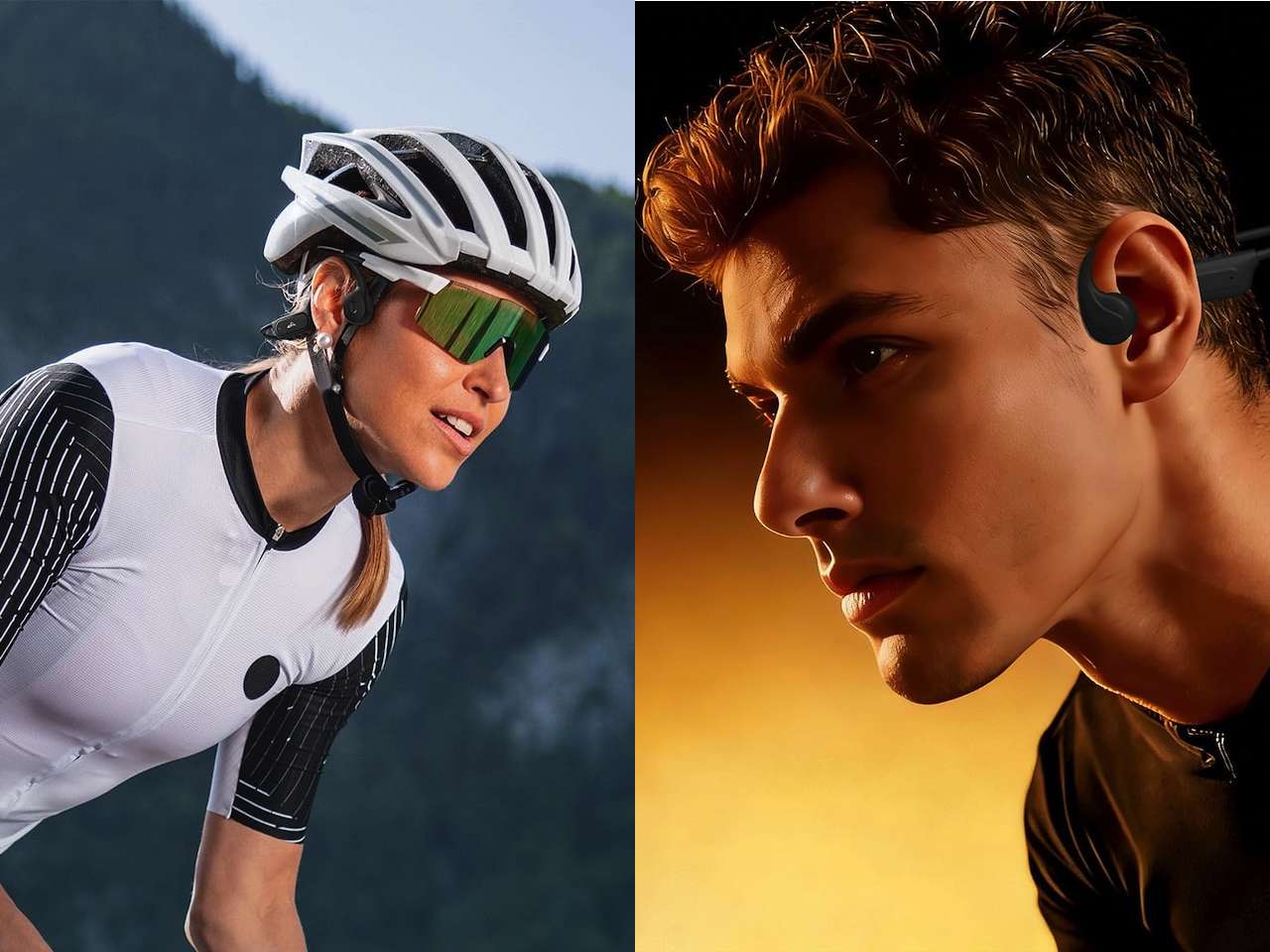
Open-ear headphones solve a different problem than earbuds. They’re for people who want audio without shutting out traffic, coworkers, kids, gym noise, pool instructions, or the rest of the room. That makes them useful for running, cycling, swimming, walks, yard work, and desk calls where full isolation is the wrong answer.
The tradeoff is also the reason to be careful. Open-ear headphones usually give up bass, privacy, and noise blocking. Some use bone conduction. Some use small speakers near your ears. Some are swim tools with onboard music storage. They shouldn’t all be judged by the same checklist.
This buyer’s guide compares five budget Amazon options as practical tools, not audiophile upgrades. The goal is to help you decide which one fits your use case before you chase Bluetooth numbers or waterproof claims. If you’re looking for the best open ear headphones for every possible situation, the honest answer is that there’s no single best pair here. There are better and worse matches for running, swimming, gym use, and calls.
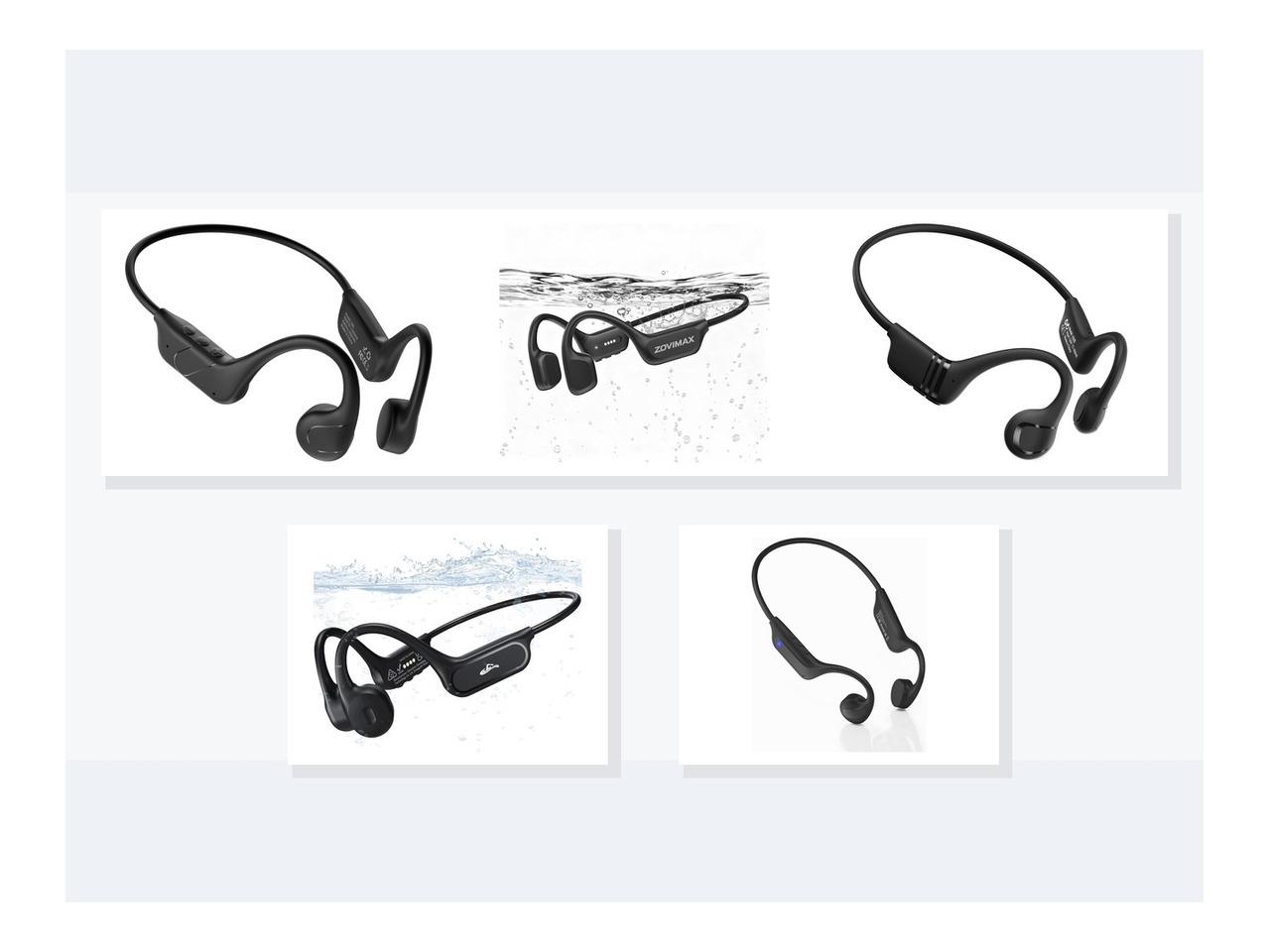
Quick picks
| Pick | Live price | Best for | Why it stands out | Main caveat |
| Gavhaio Bluetooth 6.0 open-ear headphones | $59.99 | Everyday awareness | IP54, mic, wraparound fit, and reduced-leakage claim | Not for swimming, and bass expectations should stay modest |
| ZOVIMAX IPX8 swimming open-ear headphones | $39.99 | Budget pool audio | IPX8 rating, MP3 mode, and 8GB onboard storage | Better as a swim tool than a daily call headset |
| Galopge 22g open-ear sport headset | $28.45 | Lightweight gym use | 22g body, IP55 rating, mic, and claimed 10-hour battery life | Long-term durability is the question at this price |
| SAMVEK swimming headphones | $39.99 | Storage-heavy swim use | IP68 rating, MP3 mode, and 32GB onboard storage | The storage advantage is wasted if you rarely swim |
| Vonlaxi IP65 open-ear headphones with EQ | $59.99 | Desk calls plus walks | Dual pairing, EQ modes, IP65, and anti-leak claim | Feature-heavy listing claims still need realistic expectations |
How to choose open-ear headphones
Start with where you’ll use them most.
For road running and cycling, awareness is the point. You want to hear cars, dogs, people, and warning sounds. An open design helps, but the headset still needs a secure fit and sweat resistance. IP54 or IP55 can make sense here because sweat and light rain are the normal enemies, not pool water.
For swimming, shop differently. Bluetooth doesn’t behave well underwater, especially when your head is submerged and your phone is away from the headset. That’s why swim-focused models need MP3 mode and onboard storage. For swimmers, storage isn’t a throwback feature. It’s what makes the headphones useful in the water.
For desk calls, waterproofing drops down the list. You care more about microphone behavior, leakage control, dual pairing, and comfort over long sessions. If calls matter more than awareness, The Gadgeteer’s Poly Voyager 5200 UC headset review is a better office-first reference point.
For gym use, comfort and stability beat feature count. A light headset that stays put is more useful than a spec-heavy one that bounces during burpees or pinches after twenty minutes.

What the water ratings mean
Waterproof ratings are easy to overread. They are not interchangeable.
- IP54 usually belongs to sweat, splashes, light rain, walks, workouts, and outdoor runs. It is not a pool rating.
- IP55 adds stronger water resistance for workout abuse, but it is still not permission to swim.
- IP65 is stronger for dust and water jets, which helps for workouts and bad weather, but it still does not automatically mean submersion.
- IPX8 belongs in the swimming conversation, but the X means the dust side was not rated in the same way.
- IP68 also belongs in the swimming conversation, but you still need to read the listing depth and time claims.
The buyer shortcut is simple: sweat ratings belong to workouts and bad weather. IPX8 and IP68 belong in the swimming conversation, and even then the listing limits matter.
Open-ear, bone conduction, air conduction, and swim hybrids
Open-ear is an umbrella category. Bone-conduction headphones send vibration through the bones near your ear. They’re popular for running and swimming because the ear canal stays open. The Gadgeteer has a broader bone conduction headphones buyer’s guide if you want to compare these budget picks with higher-end running options.
Air-conduction open-ear headphones use small speakers near the ear instead of sealing inside it. They may sound more natural than some bone-conduction designs, but they can leak more sound and still cannot isolate noise. Swim hybrids add another requirement: local playback. For a swim-focused reference point, see The Gadgeteer’s Naenka Runner Diver bone conduction swimming headphones review.
Comparison table
| Product | Best fit | Water rating | Storage | Claimed battery | Weight | Call-friendly features | Who should skip it |
| Gavhaio Bluetooth 6.0 open-ear headphones | Walking, cycling, general awareness | IP54 | Not listed | Up to 10 to 12 hours per listing copy | 28g | Mic and reduced-leakage claim | Swimmers and bass-first listeners |
| ZOVIMAX IPX8 swimming open-ear headphones | Pool laps on a budget | IPX8 | 8GB MP3 mode | Up to 8 to 12 hours depending on listing section | Not listed | Calls are secondary | Desk-call buyers and people who never swim |
| Galopge 22g open-ear sport headset | Gym, running, cycling | IP55 | Not listed | 10 hours | 22g | Mic | Buyers who want proven durability over low price |
| SAMVEK swimming headphones | Pool laps with more offline audio | IP68 | 32GB MP3 mode | Up to 8 hours | 30g per listing copy | Calls on land only | Anyone buying mainly for office calls |
| Vonlaxi IP65 open-ear headphones with EQ | One pair for calls, walks, and workouts | IP65 | Not listed | 10 hours | 25g | Dual pairing, anti-leak claim, EQ modes | Swimmers and buyers who want the simplest sport headset |
Gavhaio Bluetooth 6.0 open-ear headphones: the everyday awareness pick
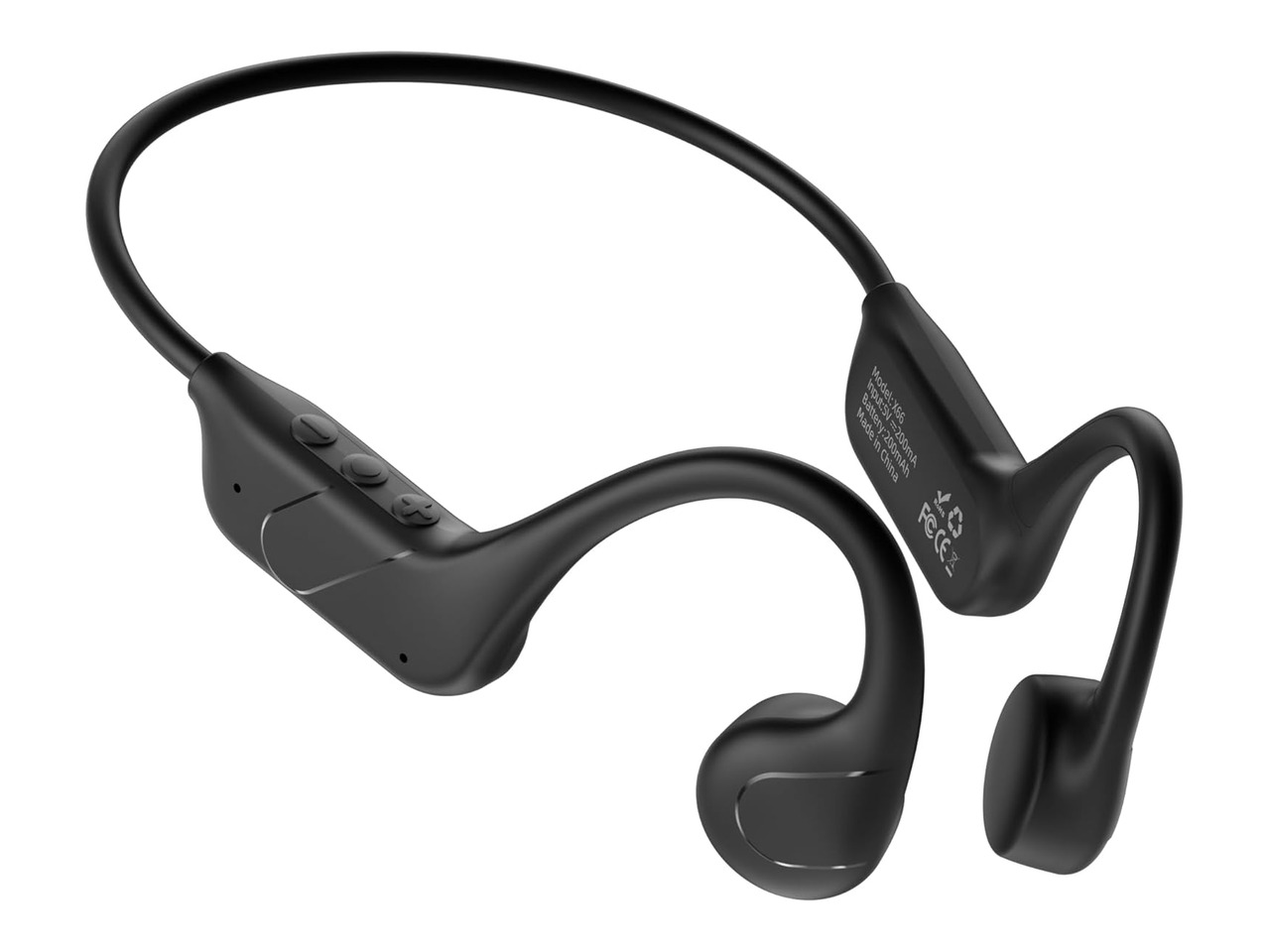
Price: $59.99
Where to Buy: Amazon
This Gavhaio headset is the most normal open-ear pick in the group. The feature mix is aimed at daily awareness: Bluetooth 6.0, a microphone, IP54 water resistance, secure wraparound fit, and a reduced sound leakage claim.
The useful part is the lane it fits into. IP54 belongs to sweat, light rain, outdoor runs, cycling, walks, and casual calls. That makes this the safest everyday pick if you want an affordable headset for moving through the world without sealing your ears.
The caveat is sound. Open-ear headphones rarely deliver the bass weight or privacy of sealed earbuds. The listing’s reduced-leakage claim is worth noting, but not overtrusting. At low to moderate volume in a home office it may be fine. In a quiet shared room, people nearby may still hear some sound.
Buy it if: you want a basic open-ear headset for everyday awareness, walks, outdoor running, cycling, and occasional calls.
Skip it if: swimming is the main reason you’re shopping, or if you want noise isolation and heavy bass.
ZOVIMAX IPX8 swimming open-ear headphones: the budget pool-lane option
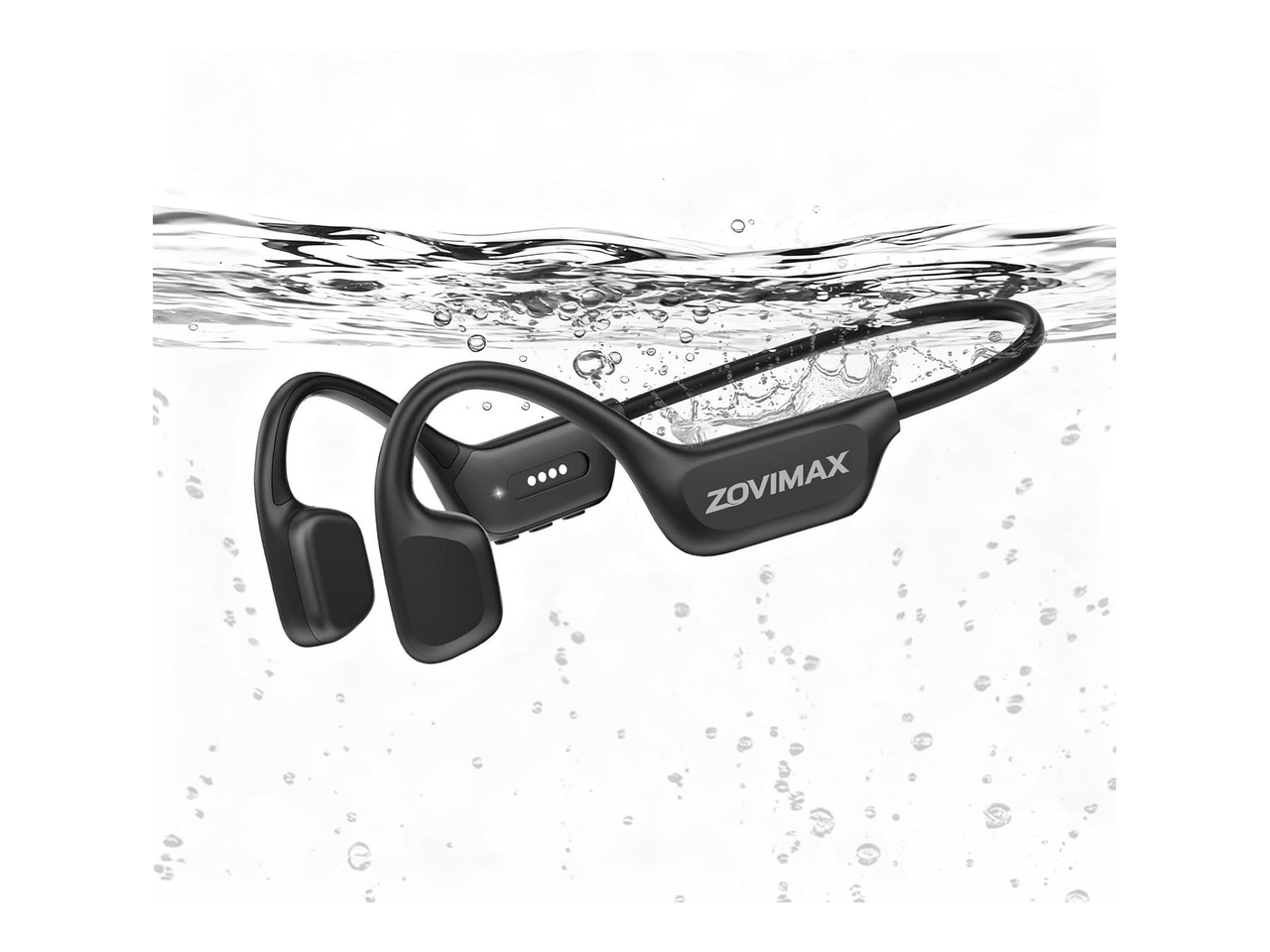
Price: $39.99
Where to Buy: Amazon
The ZOVIMAX IPX8 headphones are built around a different problem. They aren’t trying to be the best office headset. They’re trying to make pool laps less boring without depending on underwater Bluetooth.
The key features are IPX8 waterproofing, MP3 mode, 8GB of onboard storage, Bluetooth 6.0, and a secure fit for swimming and fitness. For normal headphones, local storage can feel unnecessary. For swim headphones, it can be the reason the product exists.
The caveat is convenience. You need to load files, manage playback mode, and accept that this is a budget swim tool. It makes sense if you want to try pool audio without spending much, but it isn’t the cleanest choice for all-day calling or commuting.
Buy it if: you swim often enough to want audio and want the lowest-cost way to test the category.
Skip it if: you mostly run, walk, or take calls on land. A swim-first design isn’t the best daily headset.
Galopge 22g open-ear sport headset: the lightest gym pick
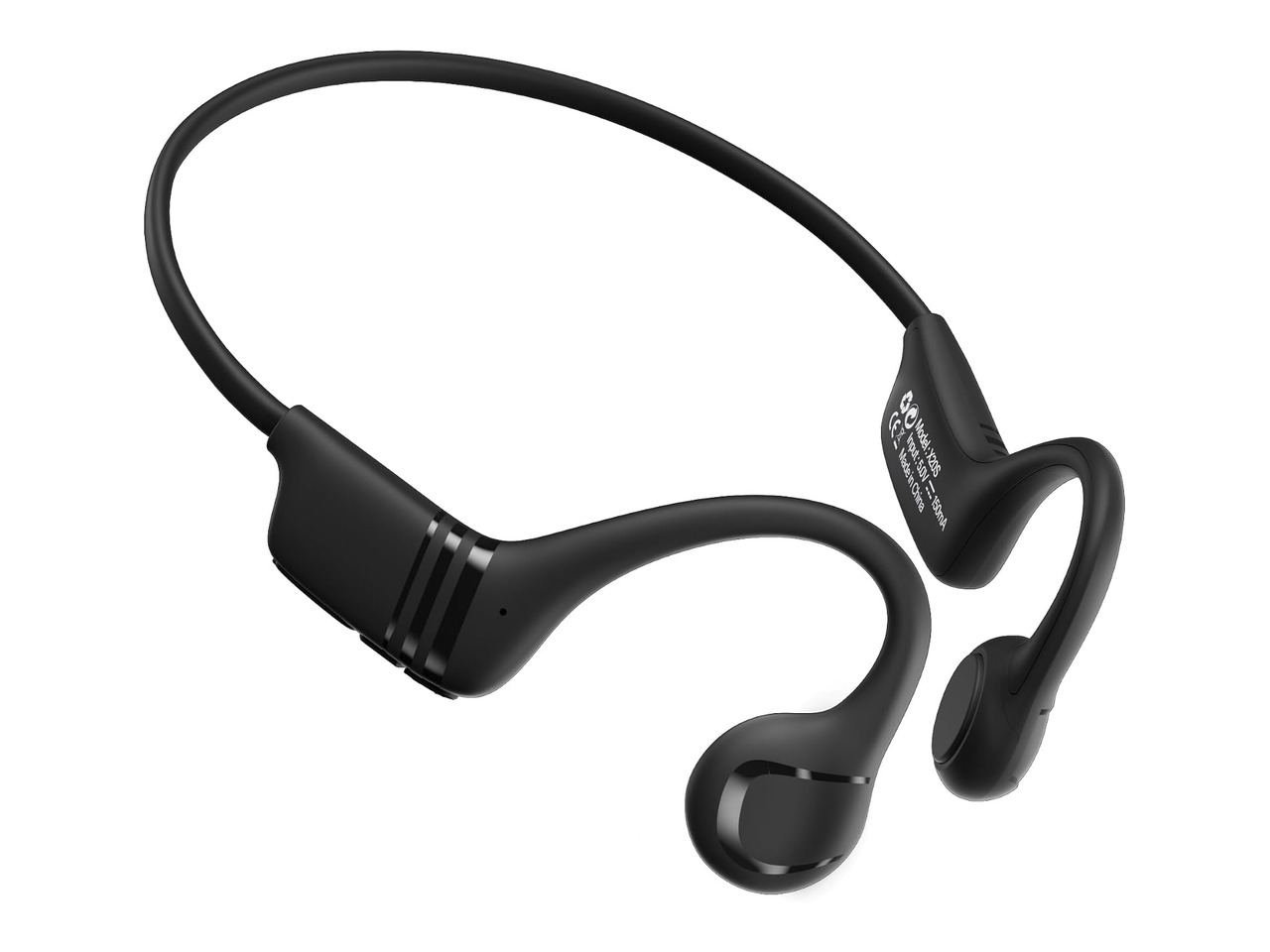
Price: $28.45
Where to Buy: Amazon
The Galopge headset is the cheapest pick here, and its most important spec is the 22g weight. A workout headset can have a long feature list and still fail if it bounces, pinches, or feels annoying after the warm-up.
The listing calls out Bluetooth 6.0, a microphone, 10-hour battery life, IP55 water resistance, and use for running, cycling, and gym workouts. That’s a reasonable feature set for a budget sport headset. IP55 is useful for sweat-heavy sessions and outdoor use.
The caveat is the same thing that makes it appealing: price. At this live price, treat it as a trial pick. I wouldn’t buy it expecting premium build quality or years of abuse. Buy it for comfort per dollar, not for the most proven long-term durability.
Buy it if: you want the cheapest way to try open-ear sport audio and care most about a lightweight fit.
Skip it if: you need a headset you can depend on for daily work calls or heavy long-term use.
SAMVEK swimming headphones: the storage-heavy swim pick
Price: $39.99
Where to Buy: Amazon
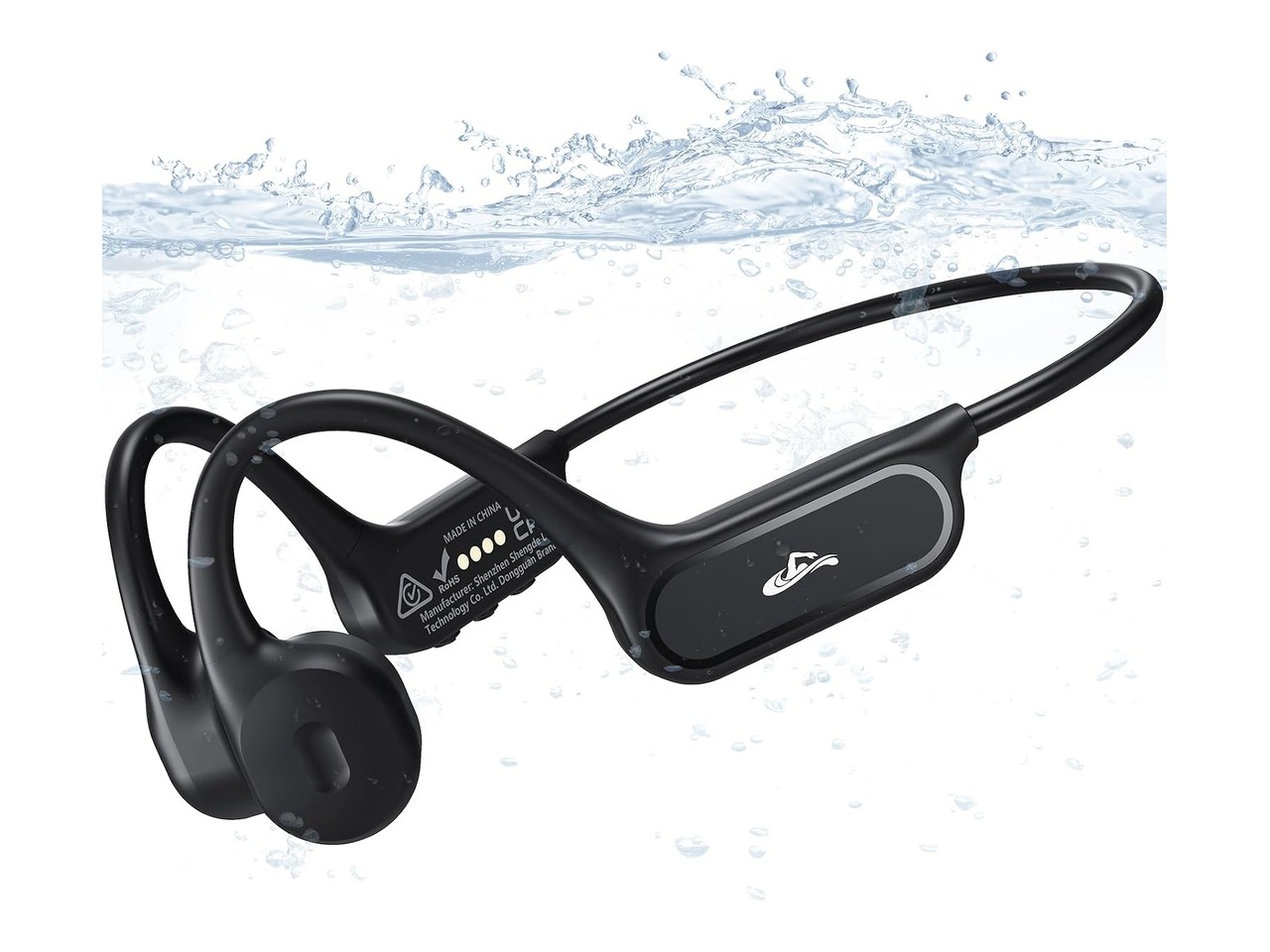
The SAMVEK model pushes harder into the swim category with IP68 waterproofing, Bluetooth 6.1, MP3 mode, and 32GB of onboard memory. The 32GB storage is the reason to compare it directly against the cheaper ZOVIMAX swim pick.
For a runner, 32GB of local storage isn’t very exciting. Your phone is nearby, and streaming is easy. For a swimmer, it can matter. More storage means more playlists, audiobooks, podcasts, or workout mixes loaded directly onto the headset.
The caveat is that the advantage is narrow. If you only need one short playlist, 32GB may not change much. If you don’t swim, the storage isn’t solving your main problem. This is a pool-first choice, not a general desk-call recommendation.
Buy it if: you swim regularly and want more room for offline audio files.
Skip it if: your main use is walking, commuting, or office calls. Extra storage won’t help much there.
Vonlaxi IP65 open-ear headphones with EQ: the desk-call and walking compromise
Price: $59.99
Where to Buy: Amazon
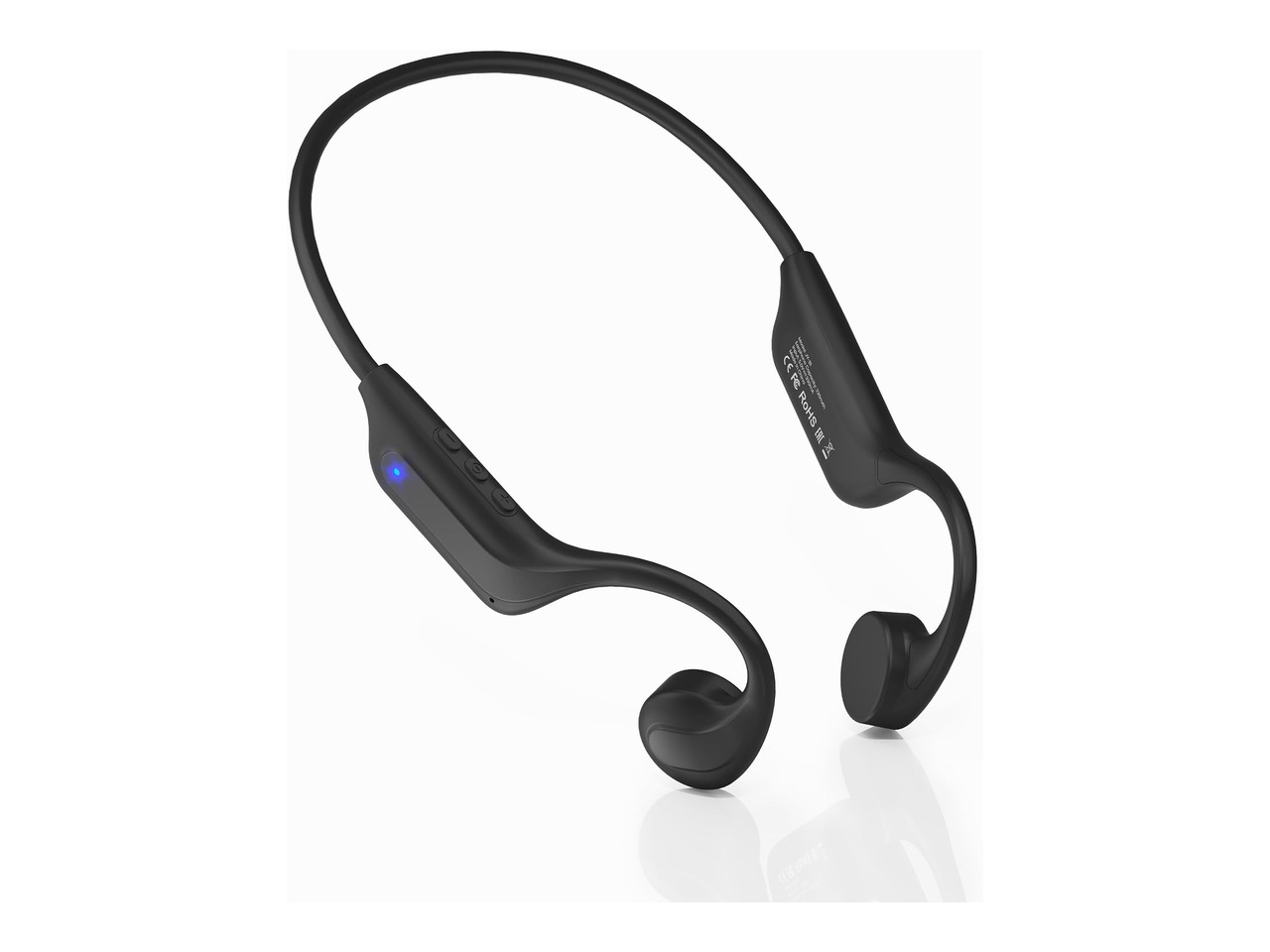
The Vonlaxi headset is the most feature-stuffed daily-use pick in this group. The listing calls out Bluetooth 6.0, three EQ modes, anti-leak audio, dual pairing, 10-hour playtime, a 25g body, and IP65 water resistance.
The two features that matter most for desk use are dual pairing and leakage control. Dual pairing can make a headset less annoying if you move between a laptop and a phone all day. Anti-leak audio is harder to judge from a listing, but it’s the right problem to solve in open-ear headphones.
The caveat is expectation management. EQ modes can adjust tone, but they cannot turn an open design into sealed earbuds. IP65 is stronger for workouts and rain than IP54, but it’s still not a pool rating.
Buy it if: you want one open-ear headset for calls, laptop audio, walks, and workouts.
Skip it if: swimming is the priority, or if you want the simplest possible sport headset.
Buying advice
Don’t buy open-ear headphones for silence. They’re designed to let the outside world in.
Don’t buy a swim model just because it has Bluetooth. If you plan to use headphones in the pool, look for onboard storage and MP3 mode.
Don’t treat water ratings as equal. IP54 and IP55 are workout ratings. IP65 is stronger for everyday abuse. IPX8 and IP68 are the ratings that belong in a pool conversation.
Don’t overvalue Bluetooth version numbers. Fit, comfort, water resistance, microphone behavior, storage, and controls will matter more in daily use.
Don’t expect EQ modes to create sealed-earbud bass. Open designs have physical limits.
FAQs
Are open-ear headphones better than earbuds?
They’re better for awareness and long-wear comfort. They’re worse for isolation, privacy, and bass. If you need to hear traffic, coworkers, kids, or your surroundings, open-ear headphones can make sense. If you want to shut out the world, buy noise-canceling earbuds instead.
Can I swim with regular open-ear headphones?
No. For swimming, look for swim-specific models with IPX8 or IP68 ratings and onboard MP3 storage. Sweat resistance isn’t the same as submersion resistance.
Why does onboard storage matter for swimming?
Bluetooth streaming is unreliable underwater. Onboard storage lets the headset play files directly without depending on a phone connection in the pool.
Will other people hear my music?
They might, especially at higher volumes or in quiet rooms. Some open-ear headphones claim reduced leakage or anti-leak audio, but the design is still more exposed than sealed earbuds.
Are open-ear headphones good for calls?
They can be fine for casual calls, especially in quiet rooms. For serious work calls, look for dual pairing, leakage control, and a microphone setup that has some noise handling. Wind and gym noise can still be a problem.
Which water rating should I choose?
For running and workouts, IP54, IP55, or IP65 can be enough depending on how much abuse you expect. For swimming, focus on IPX8 or IP68 and read the product’s stated limits before you buy.
Final recommendation and decision tree
If you want the safest everyday pick for walks, runs, cycling, and casual calls, choose the Gavhaio Bluetooth 6.0 open-ear headphones.
If you want one pair that leans more toward desk calls, laptop audio, and walking, choose the Vonlaxi IP65 open-ear headphones with EQ because dual pairing is useful in that role.
If you want the cheapest swim experiment, choose the ZOVIMAX IPX8 swimming open-ear headphones. If swimming is definitely the point and you want more offline storage, choose the SAMVEK swimming headphones.
If you only want a cheap, light gym headset and can accept the durability risk, choose the Galopge 22g open-ear sport headset.
The bigger decision is whether awareness is actually what you want. If it’s, open-ear headphones make sense. If you want silence, heavy bass, or private listening, this is the wrong category.