
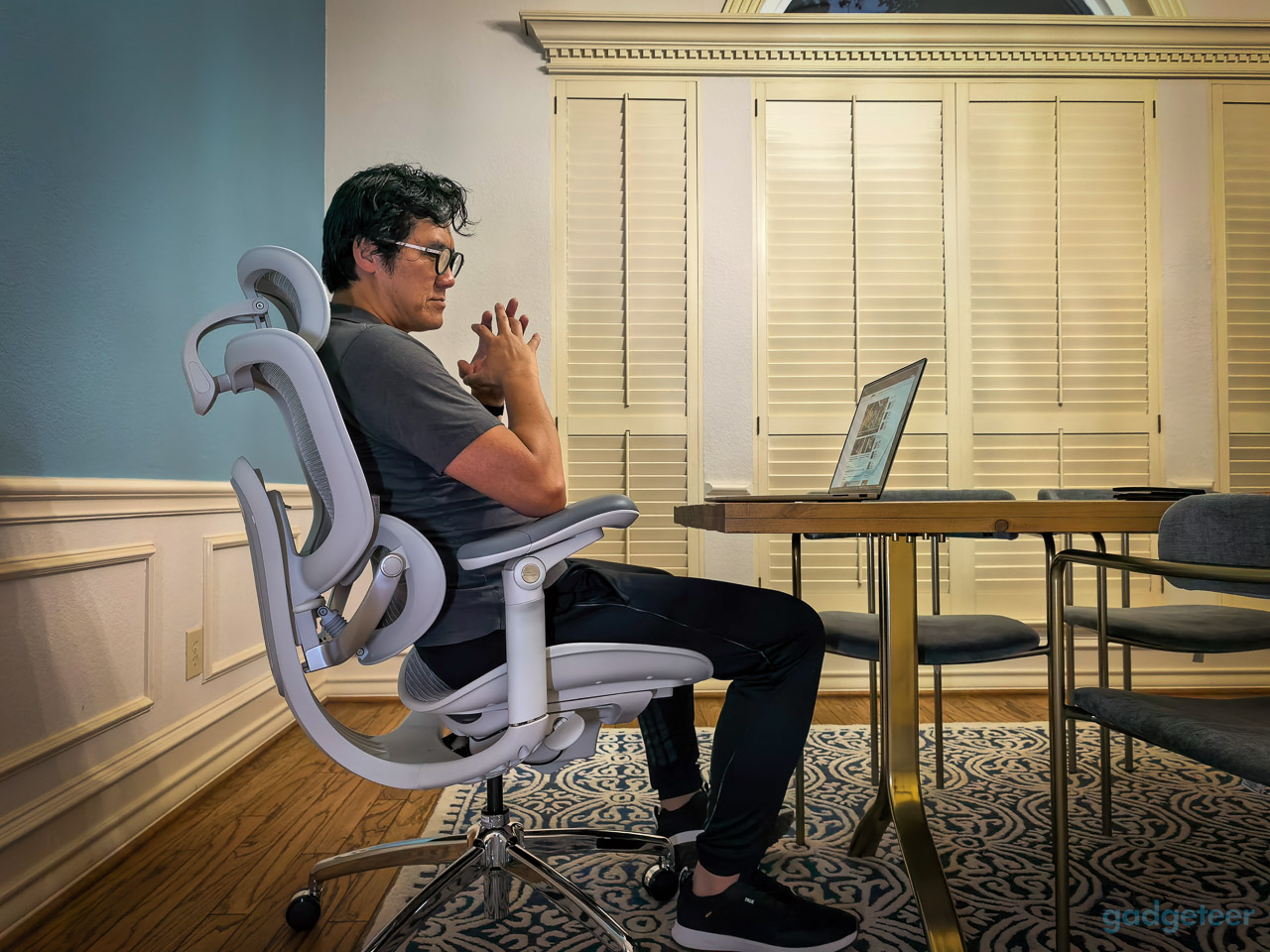
Most ergonomic chairs promise your back will thank you. Then you lean forward to type, shift sideways to grab your coffee, or recline to watch a video, and that promise quietly breaks. The lumbar pad stays where it was. The armrests don’t follow. Your lower back finds open air where support used to be.
Sihoo built the Doro C300 Pro V2 around the idea that your body doesn’t sit still, so your chair shouldn’t either. It’s the second generation of the brand’s best-selling ergonomic chair, and every major upgrade targets the specific complaints that followed the original into review after review. The armrests are completely redesigned. The SyncroFlex Backrest tracks your spine as you move. The headrest is wider. And the DynaCore System coordinates across four zones (head, back, lumbar, and arms) so nothing falls out of sync when you shift posture.
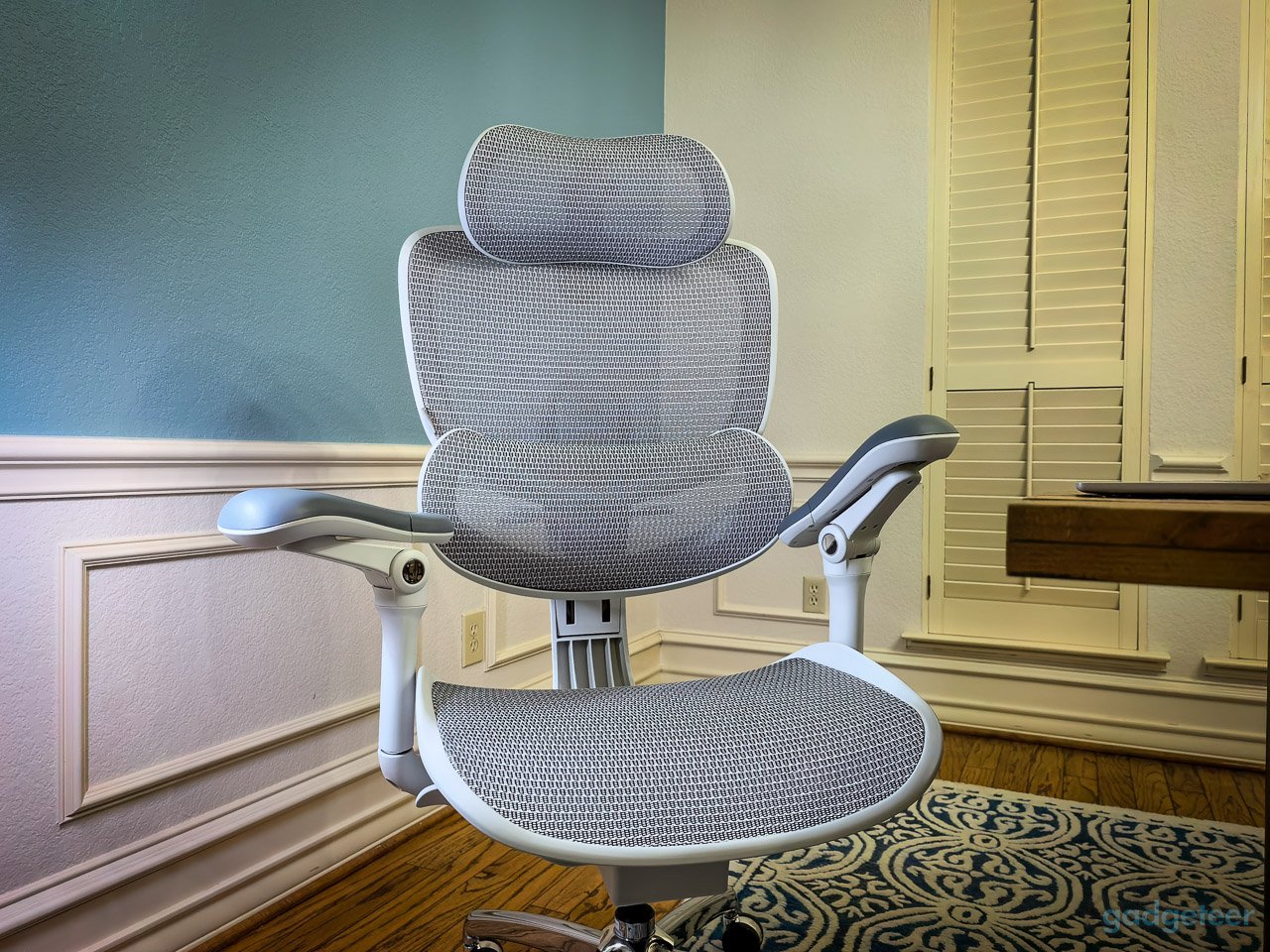
At $499 retail ($379 during the early bird window), it sits in the sweet spot between budget mesh chairs and the $1,000+ options from the big names. Whether it earns that position comes down to one question: does the “full-body adaptive” claim hold up when you’re actually sitting in it all day?
Sihoo Doro C300 Pro V2 Ergonomic Office Chair
Price: $429 ($499)
Where to buy: Sihoo
Unboxing and first impressions
The Sihoo Doro C300 Pro V2 itself clocks in at a substantial 57.3 pounds, and you feel every bit of that heft during the unboxing. This is not the hollow rattle of a $200 budget chair; the weight signals industrial-grade steel and reinforced polymers, the kind of frame that earns a Whole Chair BIFMA Certification. Inside, every component is nested in high-density foam, sorted and secured. The mesh backrest arrives pre-tensioned on the frame, which prevents the “shipping sag” that plagues cheaper units. Even the bolts are organized in a blister pack rather than tossed in a bag.
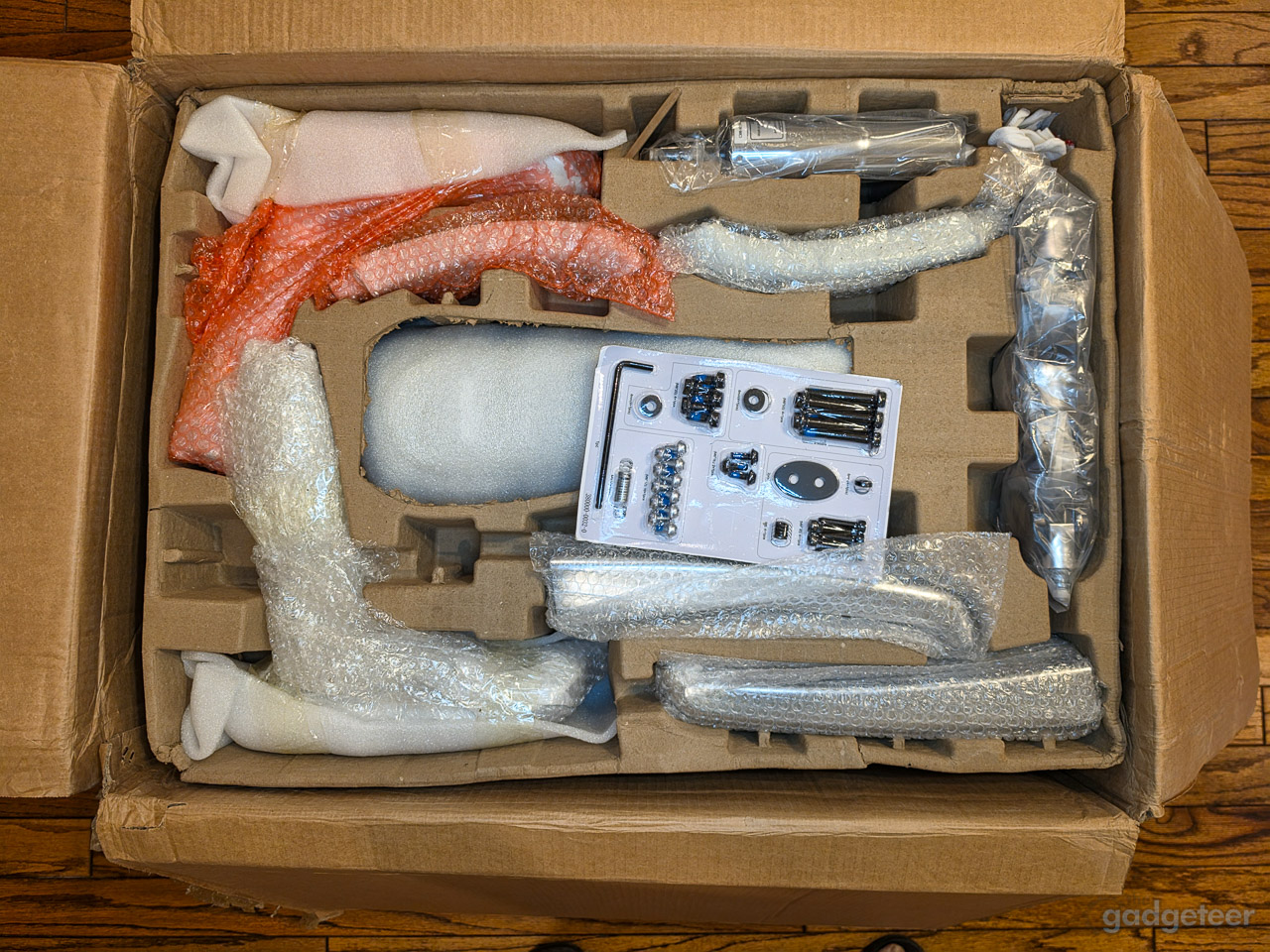
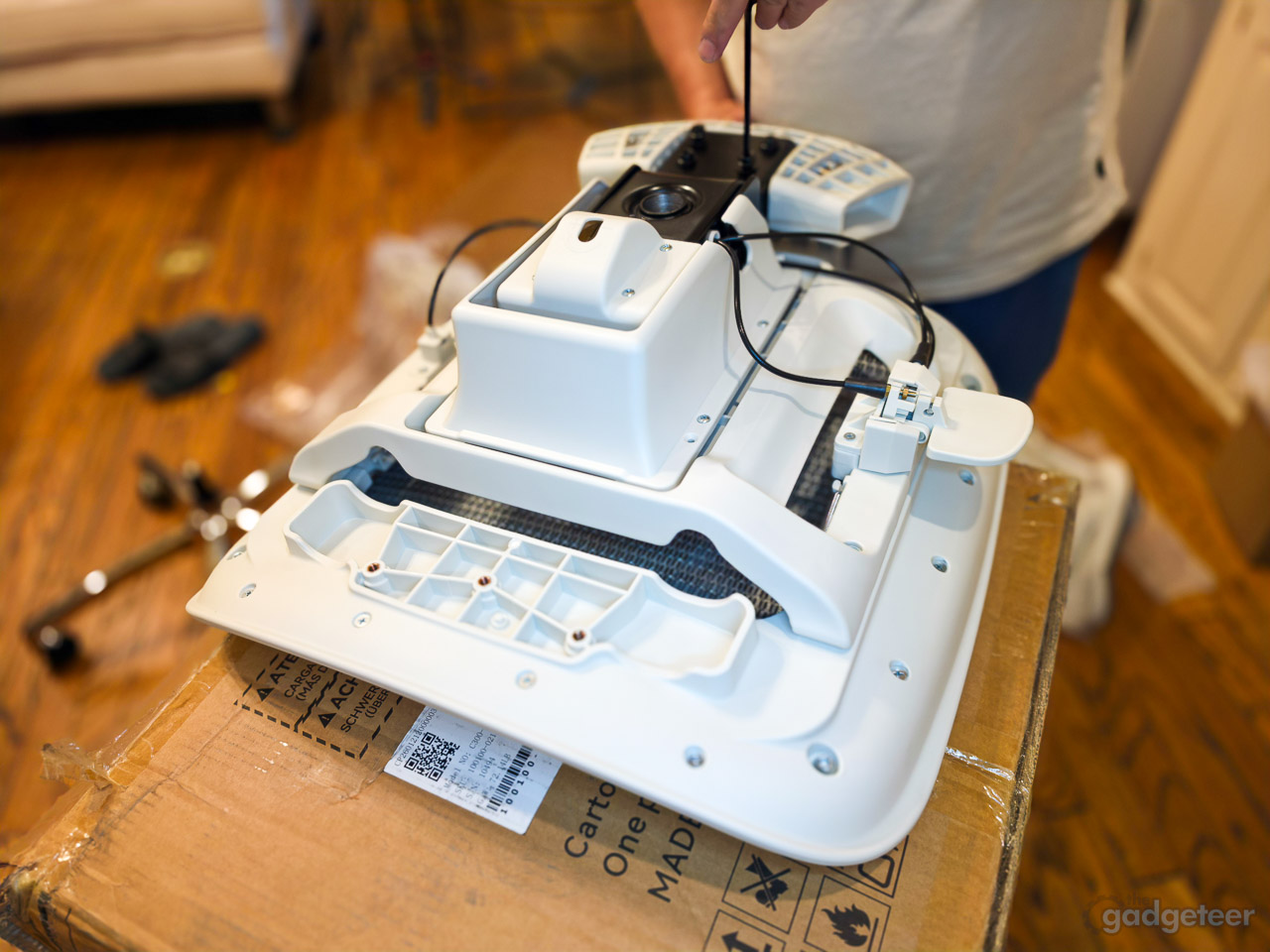
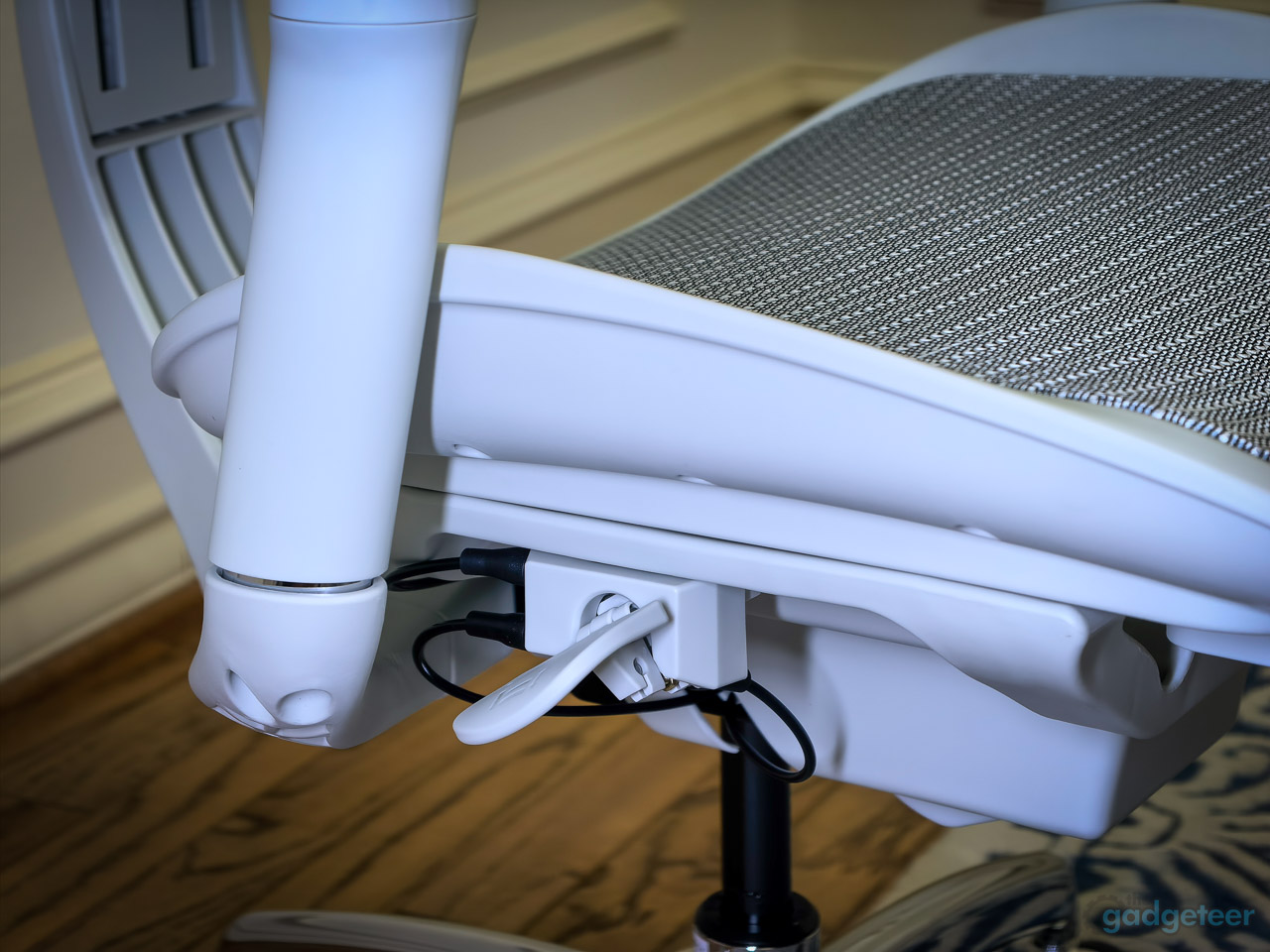
Assembly takes about 18 minutes. The standout detail is the included T-handle Allen key, which allows significantly more torque than a standard L-key. That extra leverage means the armrests and chassis lock down tight from the first bolt, eliminating the creaks often found in self-assembled furniture. The Gravity-Sensing Chassis 2.0 is the heaviest single component, and unlike older chairs with a bulky tension knob jutting out from underneath, this chassis is sleek and self-contained. There is nothing to adjust manually on the underside.
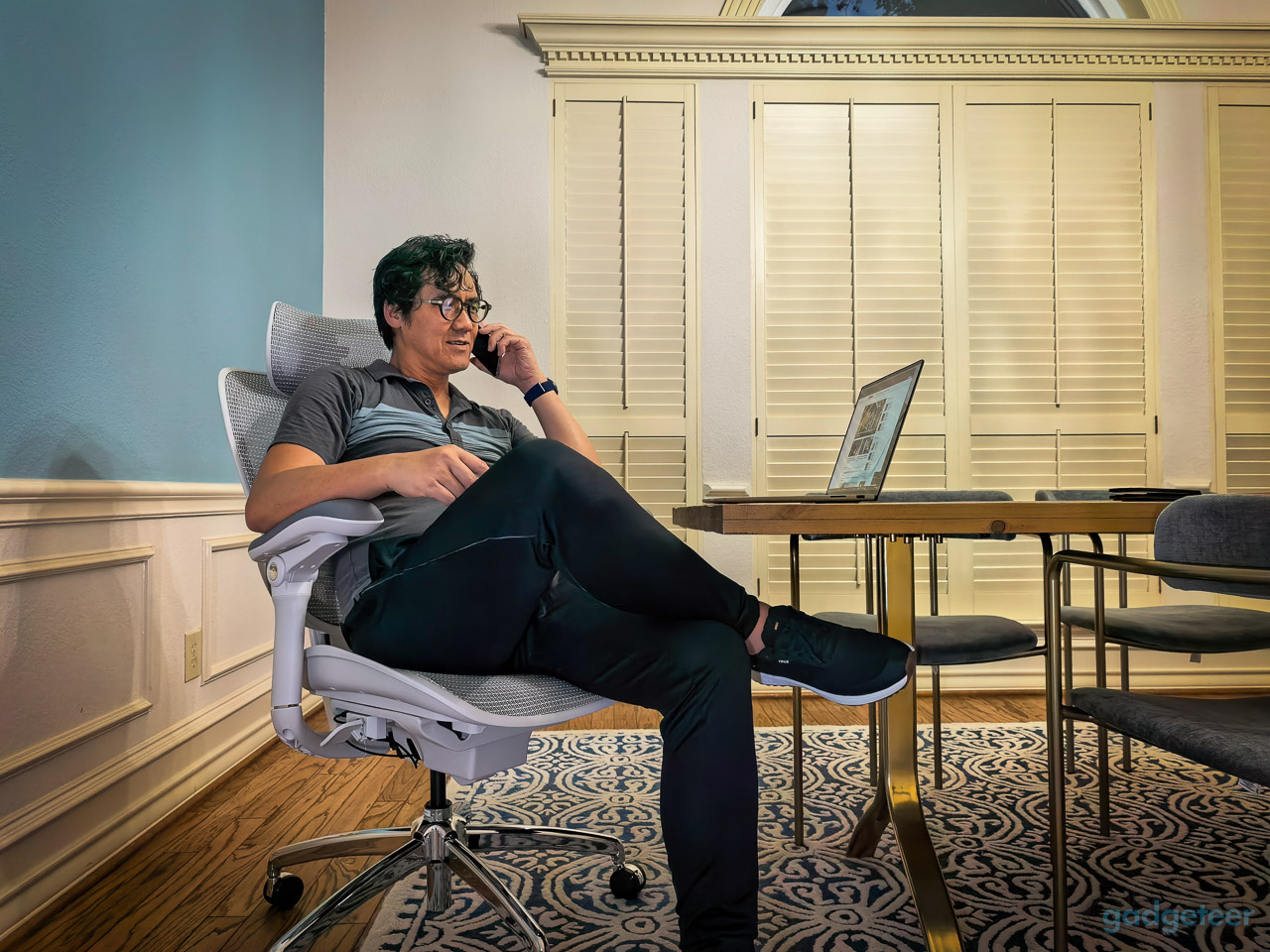
The first time you sit down, the chair does something most ergonomic seats cannot: it feels right without any setup. There is no “bottoming out” sensation. The Gravity-Sensing Chassis reads your weight and finds your center of gravity instantly. It feels pre-calibrated. As a 6’2″ tester, the Ultra-Wide 3D Headrest, which is 28% larger than the V1, cradles the neck perfectly rather than just touching the back of the skull. This makes a noticeable difference when shifting your gaze between dual monitors.
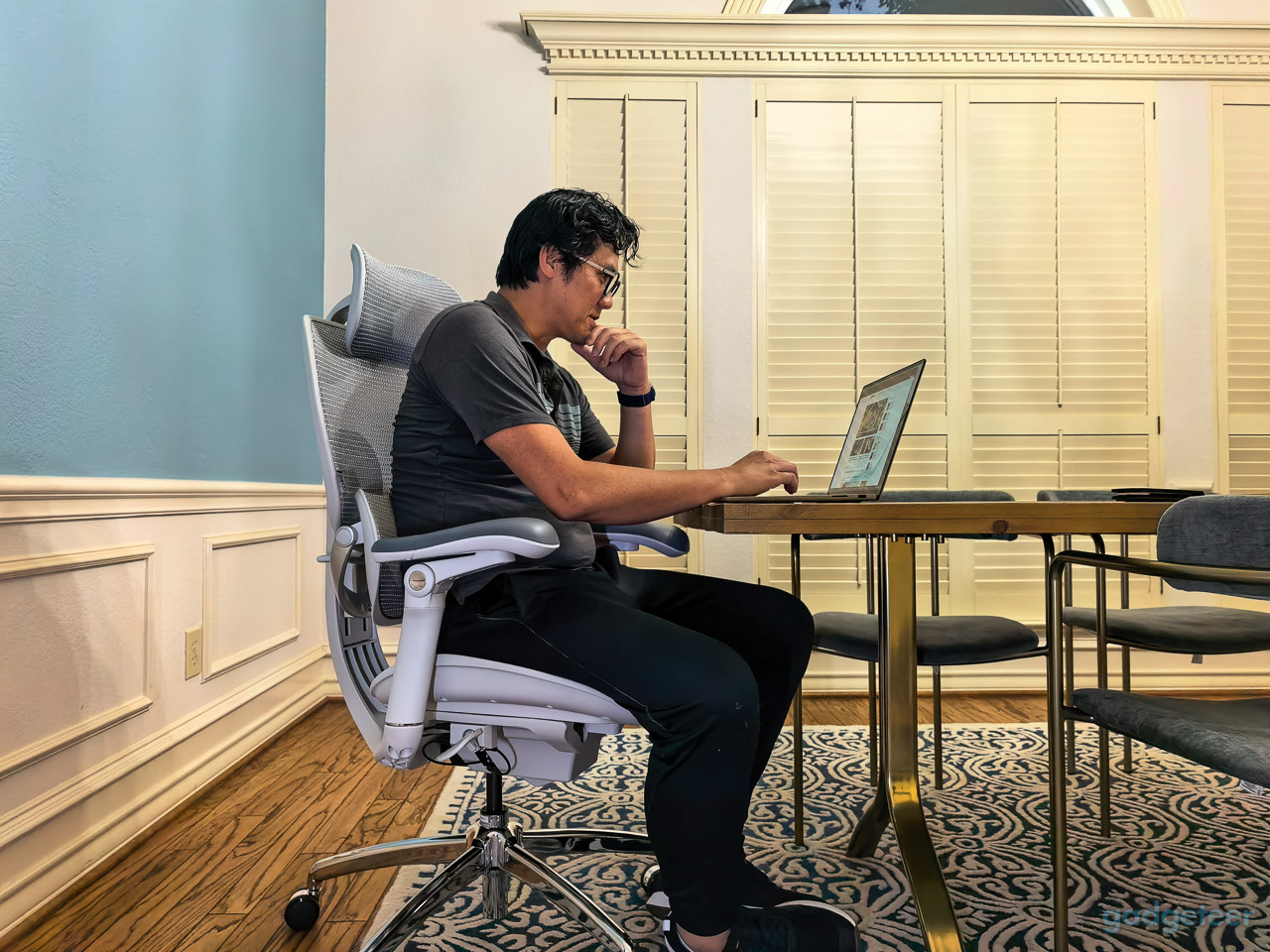
One detail worth calling out is the pressure-minimized seat cushion with its 4cm depth adjustment. It prevents the “numb leg” feeling that sets in with chairs that have a hard front plastic lip. By extending the seat pan, you spread your weight across the full length of your thighs. It is the kind of engineering that separates a task chair from a gaming chair, and the reason the V2 holds up through 8-hour sessions.
The DynaCore System: four zones, one coordinated response
Sihoo calls its core technology the DynaCore System, and the pitch is straightforward: instead of supporting your body at a few fixed contact points, the chair tracks movement across four zones (head, lumbar, back, and arms) and keeps them coordinated as you shift. Real-time gravity sensing drives the whole thing. You don’t pull a lever or flip a switch. You just move, and the chair responds.
The concept addresses something most office workers recognize instinctively. Traditional ergonomic chairs test well in a showroom because you sit down, adjust everything, and it feels great. Then you spend eight hours shifting between typing posture, leaning back to think, reaching for things, and slouching when you’re tired. Every shift pulls you away from that showroom sweet spot. The DynaCore approach tries to keep the sweet spot moving with you.
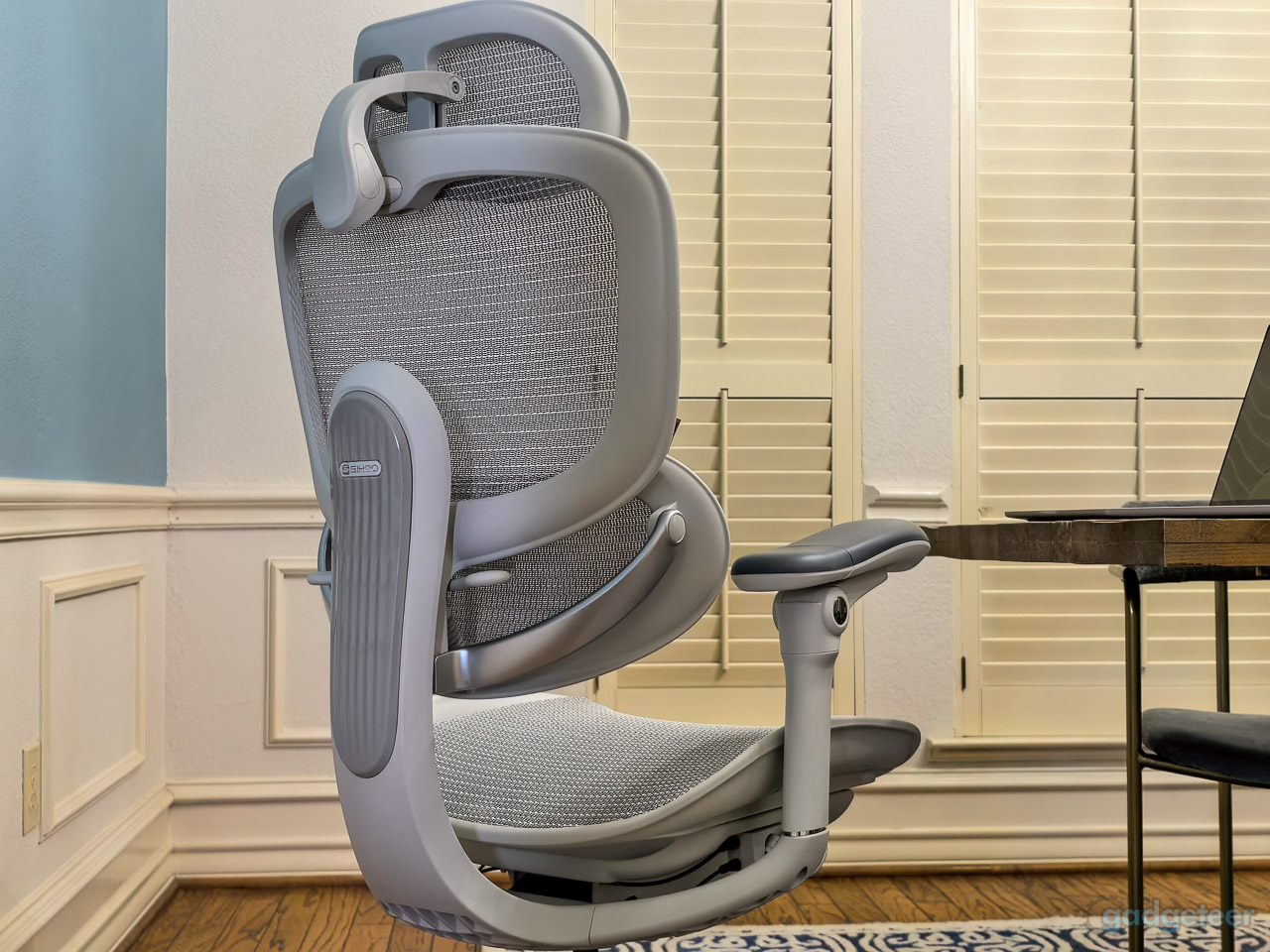
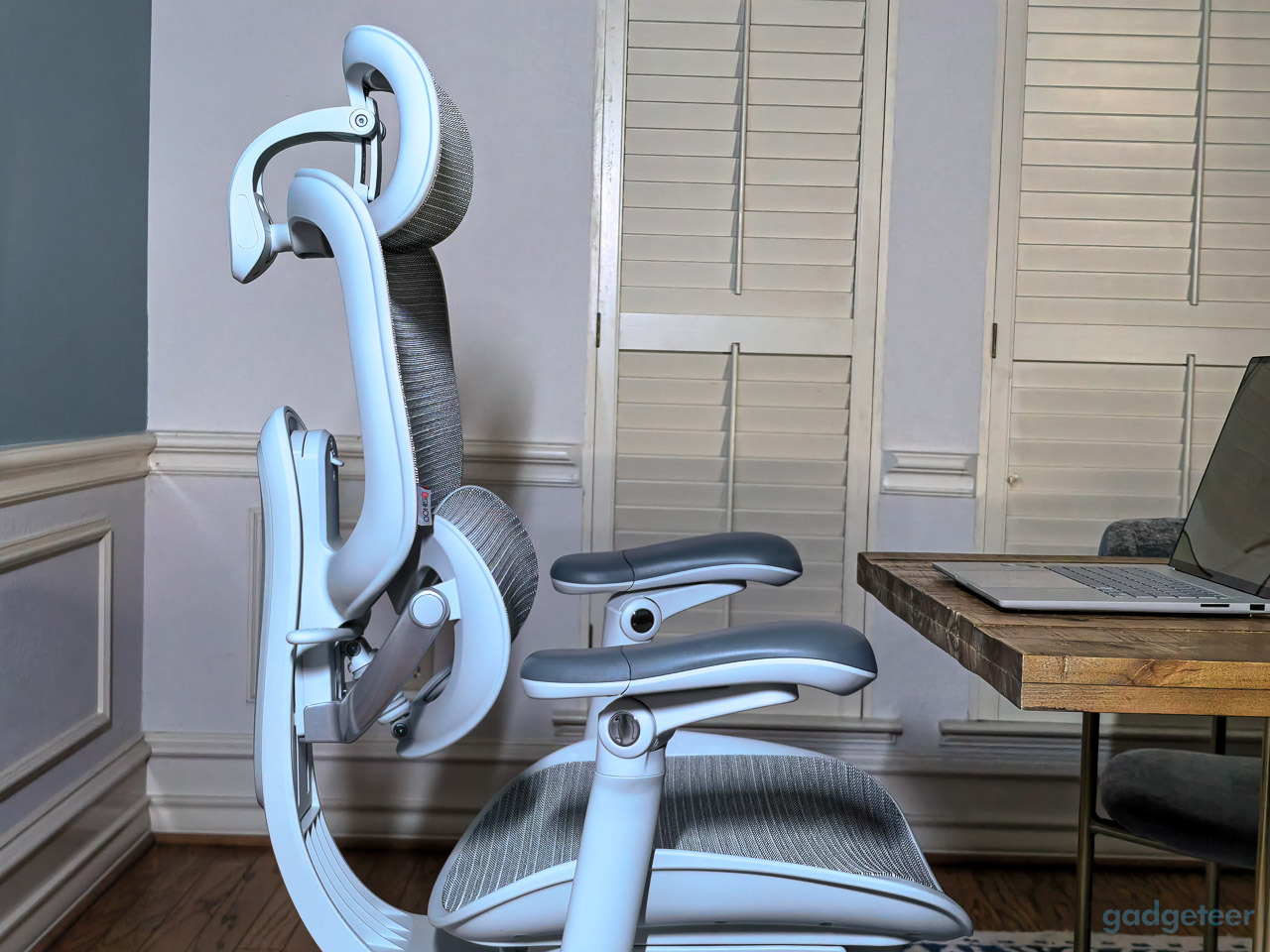
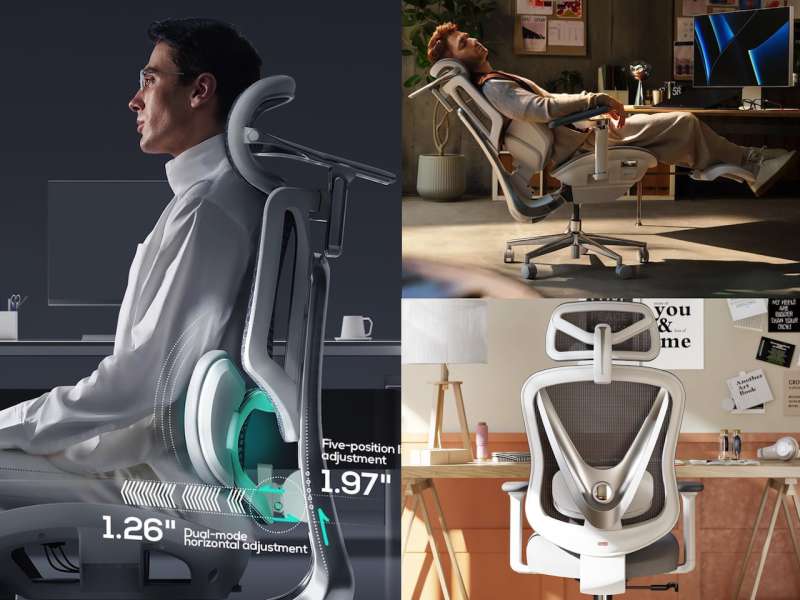
You can actually feel the backrest “breathe” with you. Lean forward to type, and the lumbar does not stay behind; it maintains contact. Unlike the static standard support of competitors like the Hbada E3 Pro, the V2 uses Four-Zone Linkage. When you recline, the armrests, headrest, and lumbar move as a single unit, keeping your body’s geometry consistent. It is the “lazy-friendly” dream: zero manual tuning required.
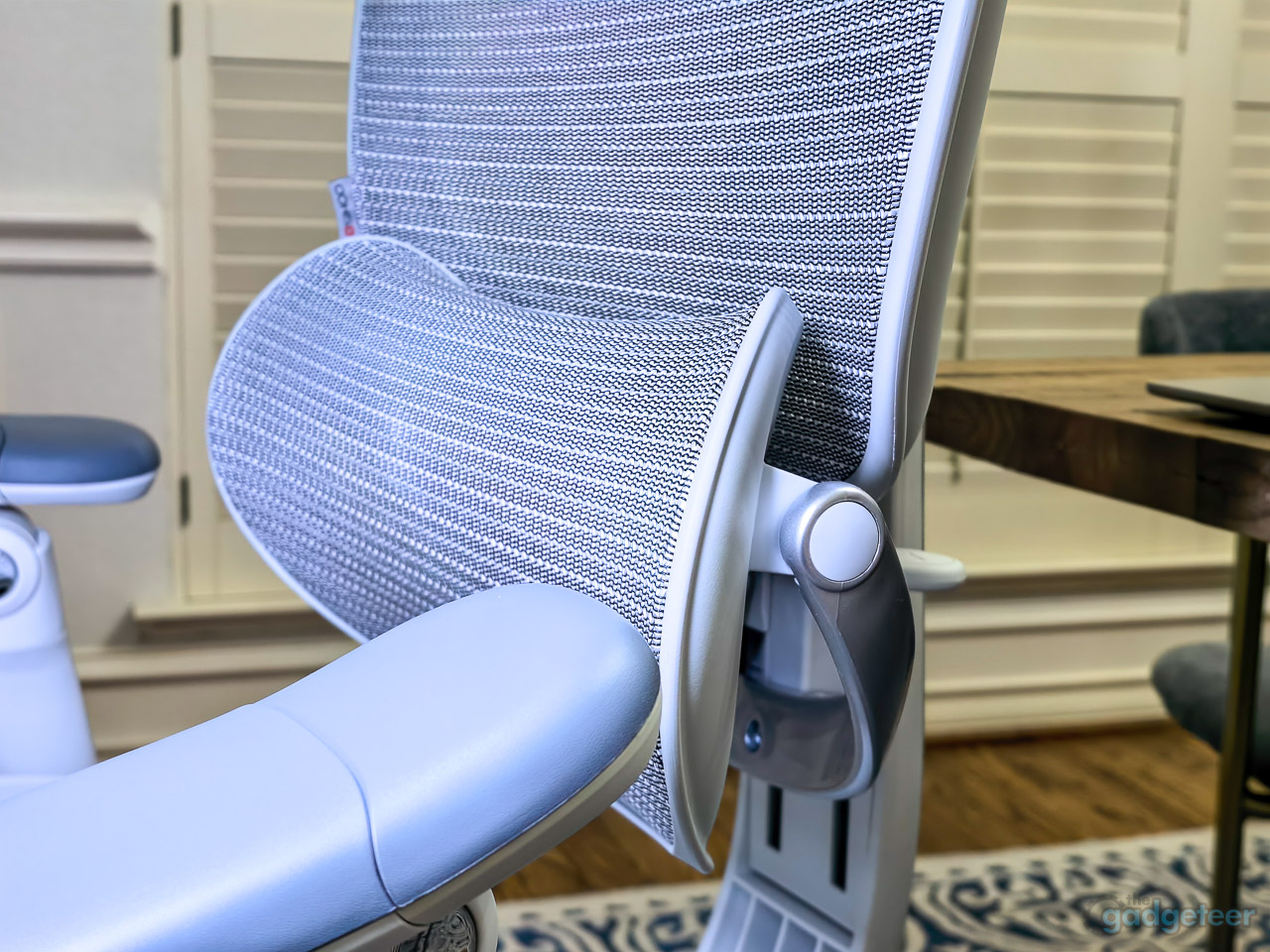
The SyncroFlex component is the mechanical backbone of this system. It uses a dual-spring, dual-track structure that lets the backrest physically glide along with your spine’s curvature. When you sit down for the first time, the chair reads your body shape and conforms to it without any manual adjustment. Different person sits down, it conforms again. That’s a meaningful convenience detail for shared home offices or hot-desk setups.
📰 Add The Gadgeteer on Google News
Get the latest gadget reviews, tech news, and deals delivered to your Google News feed. Follow The Gadgeteer on Google News to stay updated on the products that matter.
Closing the sacrum gap
This is the section that matters most if you’ve owned a mid-range ergonomic chair before. You know the feeling: you lean back to relax, and your lower back separates from the lumbar support. There’s a gap between your sacrum and the chair. You’re technically reclining, but your back isn’t resting; it’s working to bridge that empty space.
The Sihoo Doro C300 Pro V2’s Self-Adaptive Dynamic Lumbar Support 2.0 directly targets this problem. When you recline, the lumbar pad slides downward with your center of gravity instead of staying fixed in place. This eliminates the sacrum gap entirely. Three support modes let you choose how the lumbar engages: Firm Lumbar Support for aggressive lower back pressure, Gentle Lumbar Support for a lighter touch, and Sacrum Support that extends coverage below the typical lumbar zone.
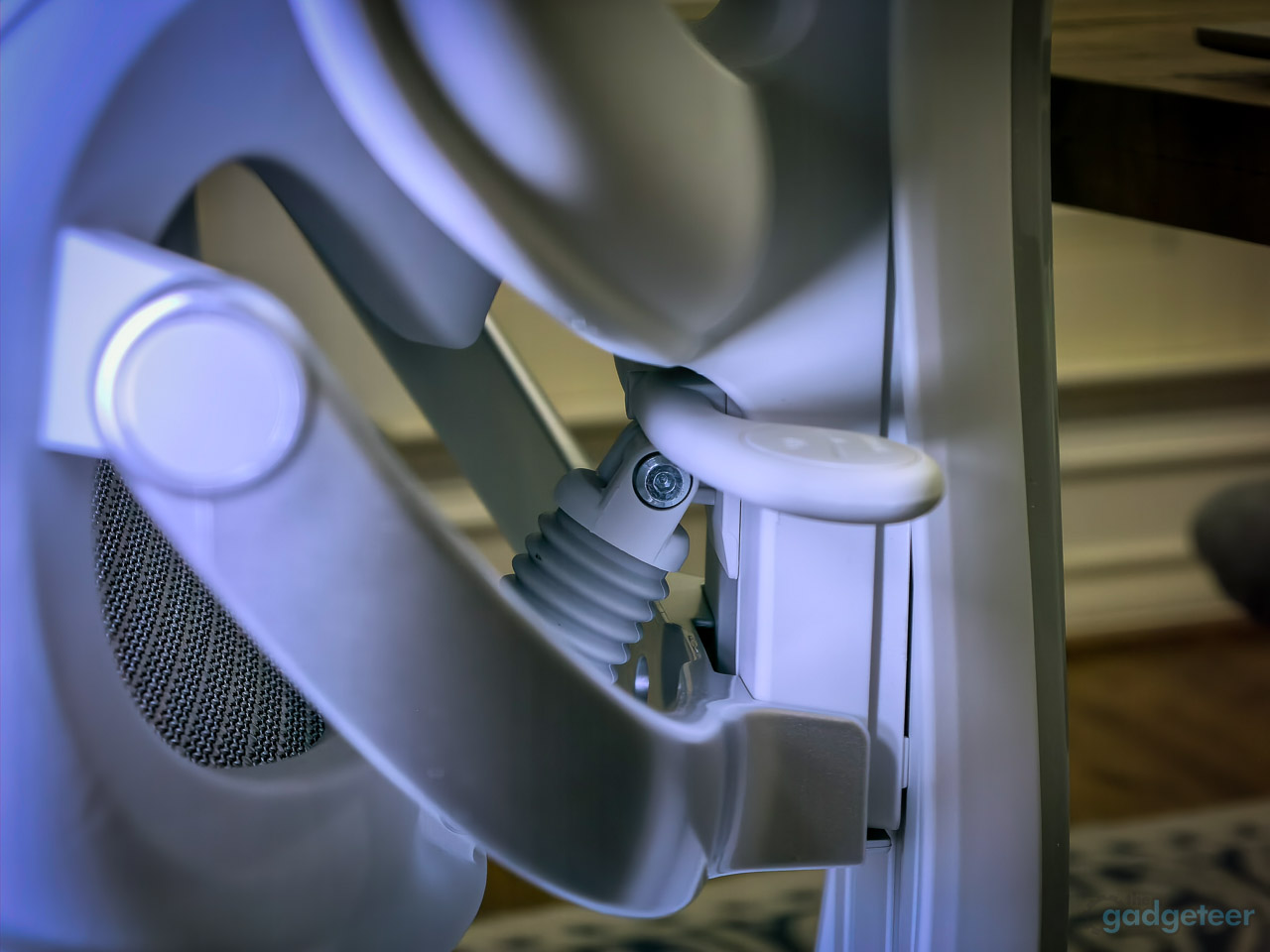
The wider support area compared to the original C300 Pro comes with an extra pressure-relief spring built into the mechanism. For larger body types, this means more of the lower back makes contact with the chair at any given moment. During a full 135-degree recline, the lumbar pad physically glides downward. You can feel it filling the “hollow” space that usually leads to lower back fatigue during long breaks. Firm mode feels like a foam roller pressing into your lower back during deep work, while Sacrum Support is specifically for the “deep lean” while gaming or watching media. It is a level of customization usually reserved for chairs in the $1,200 range.
8D Bionic Armrests: the upgrade that actually matters
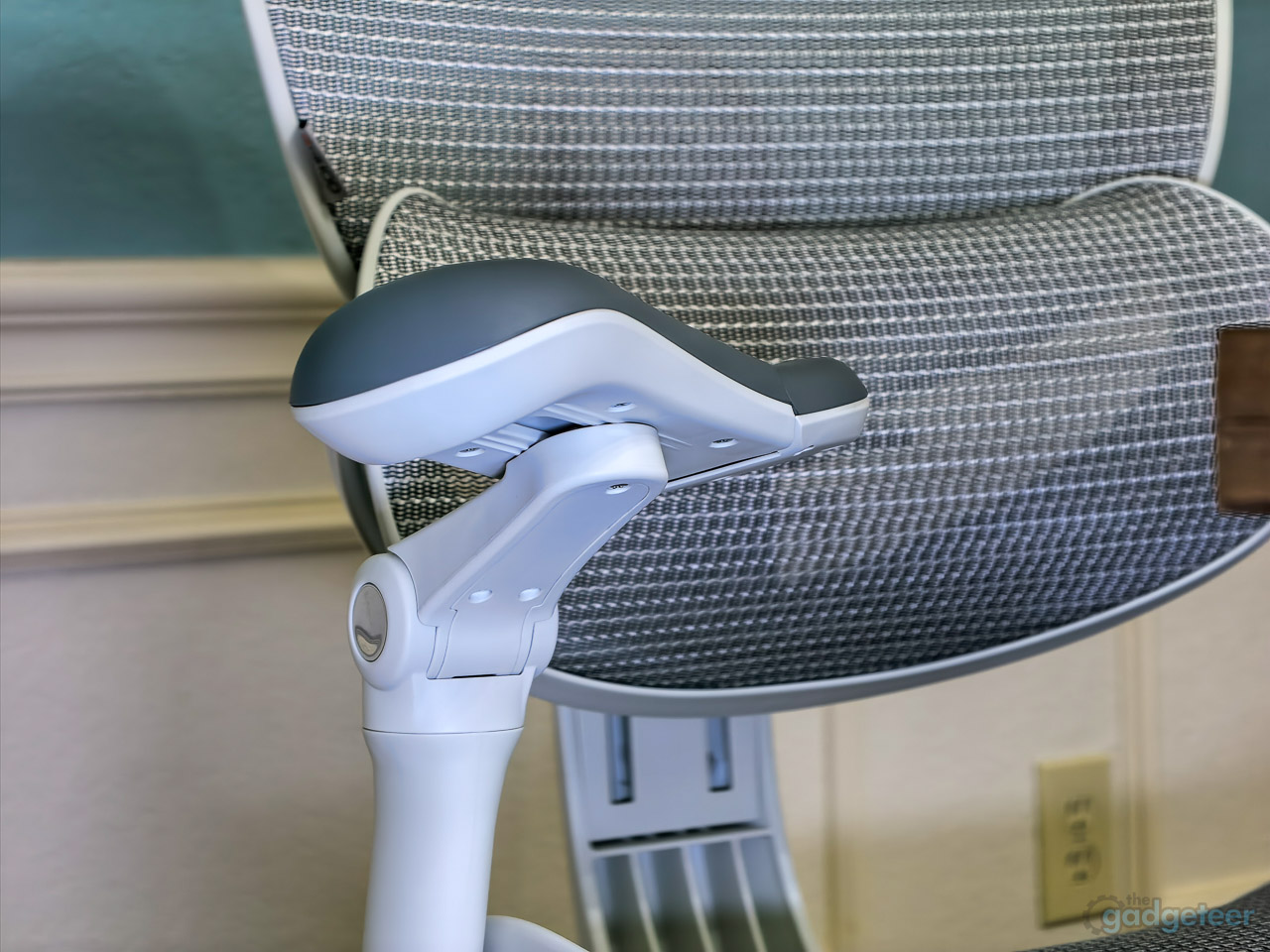
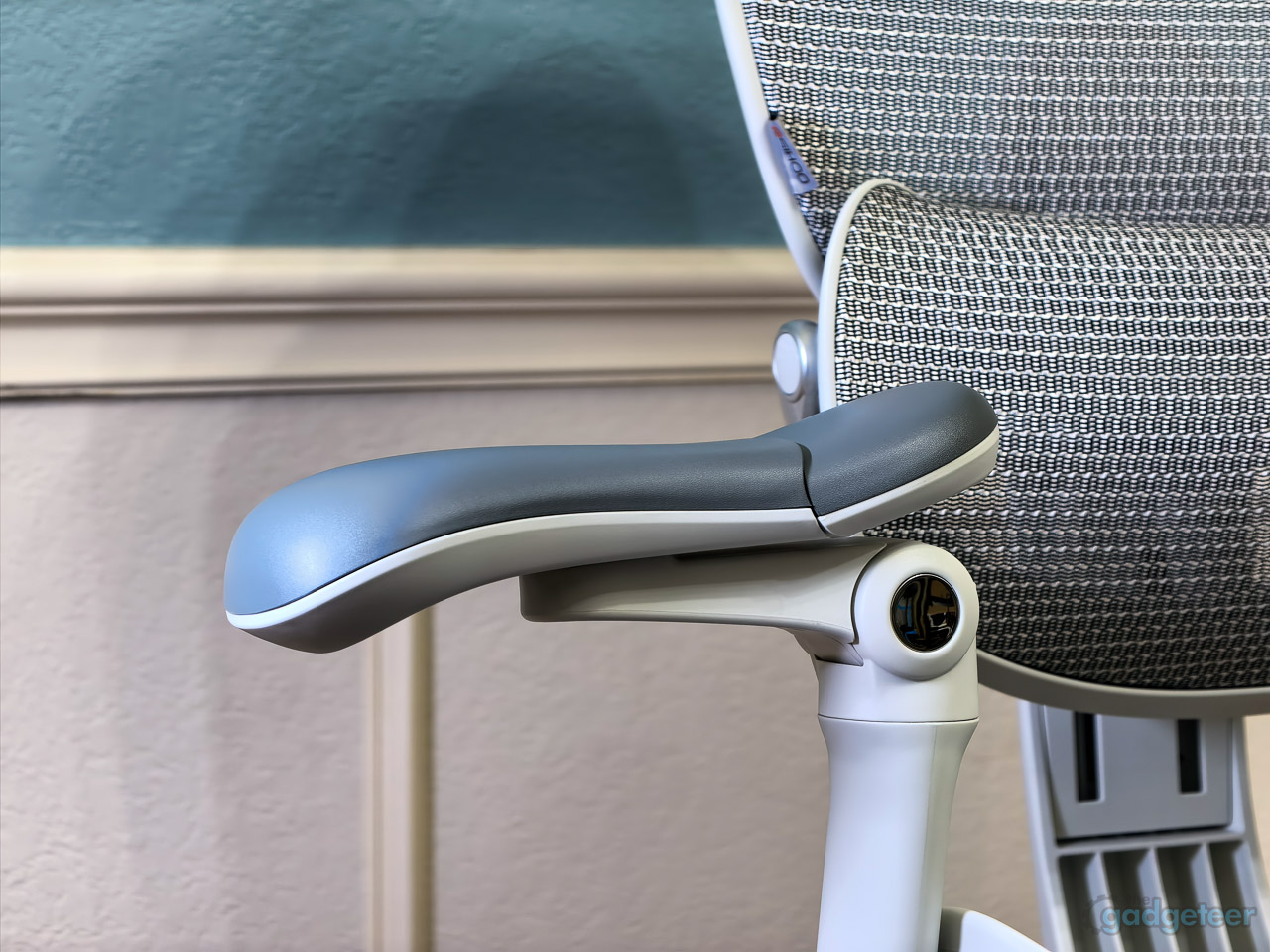
The original C300 Pro had 6D armrests, and they were the most common complaint in almost every review. They shifted too easily and lacked a solid locking mechanism. Sihoo clearly heard the feedback. The V2 jumps to 8D Bionic Armrests with a completely different set of capabilities. The adjustment range is substantial: 85mm of vertical travel, 40mm of forward and backward slide, and 125mm of lateral movement.
The front section tilts 20 degrees downward to match natural typing angles, while the rear section flips up 36 degrees and tilts 40 degrees upward. This flip-up feature is specifically designed for handheld gaming or reading on a phone. It is a legitimate “tech-neck” killer; by propping up your elbows while holding a device, you stop hunching your cervical spine.
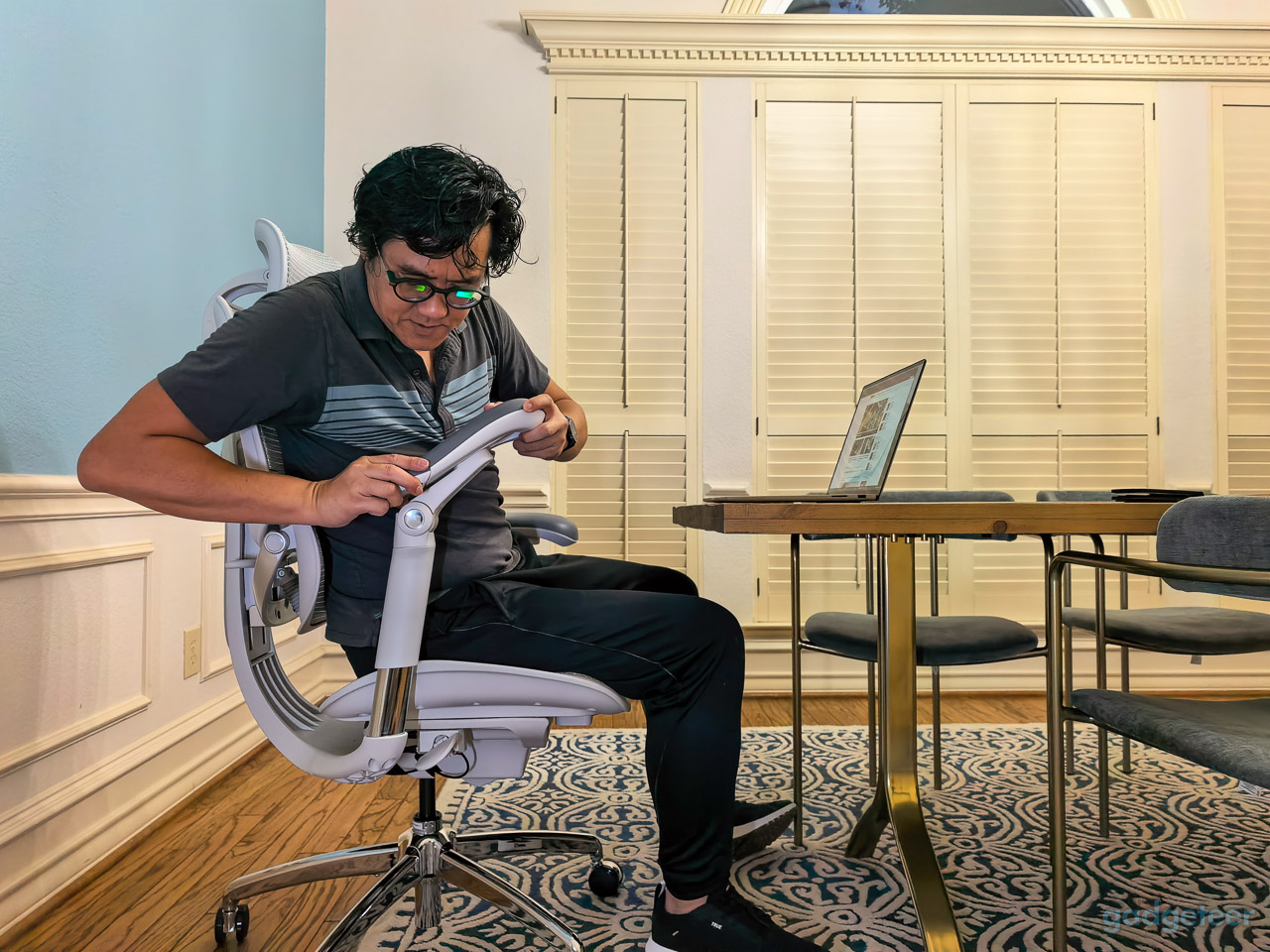
The real story, though, is linked recline. When you lean back, the armrests follow the backrest angle. Your arms don’t get pushed upward or left floating; they stay in position relative to your body. The armrests are significantly more rigid than the V1, and the locking mechanism is tactile and firm. Your arms stay parallel to the desk or controller even at a full tilt, ensuring you don’t get “left behind” like you might in the Hbada’s static 6D arms.
Cloud Mesh 2.0 and all-day comfort
Sihoo uses Cloud Mesh 2.0 across the entire seating surface. This is a multi-filament weave that is softer to the touch than standard nylon mesh (there is no “scratchiness” on bare skin) but it has enough “return” that you never feel the frame beneath you. The mesh is breathable by design, which matters significantly if you work from home in a space without aggressive air conditioning.
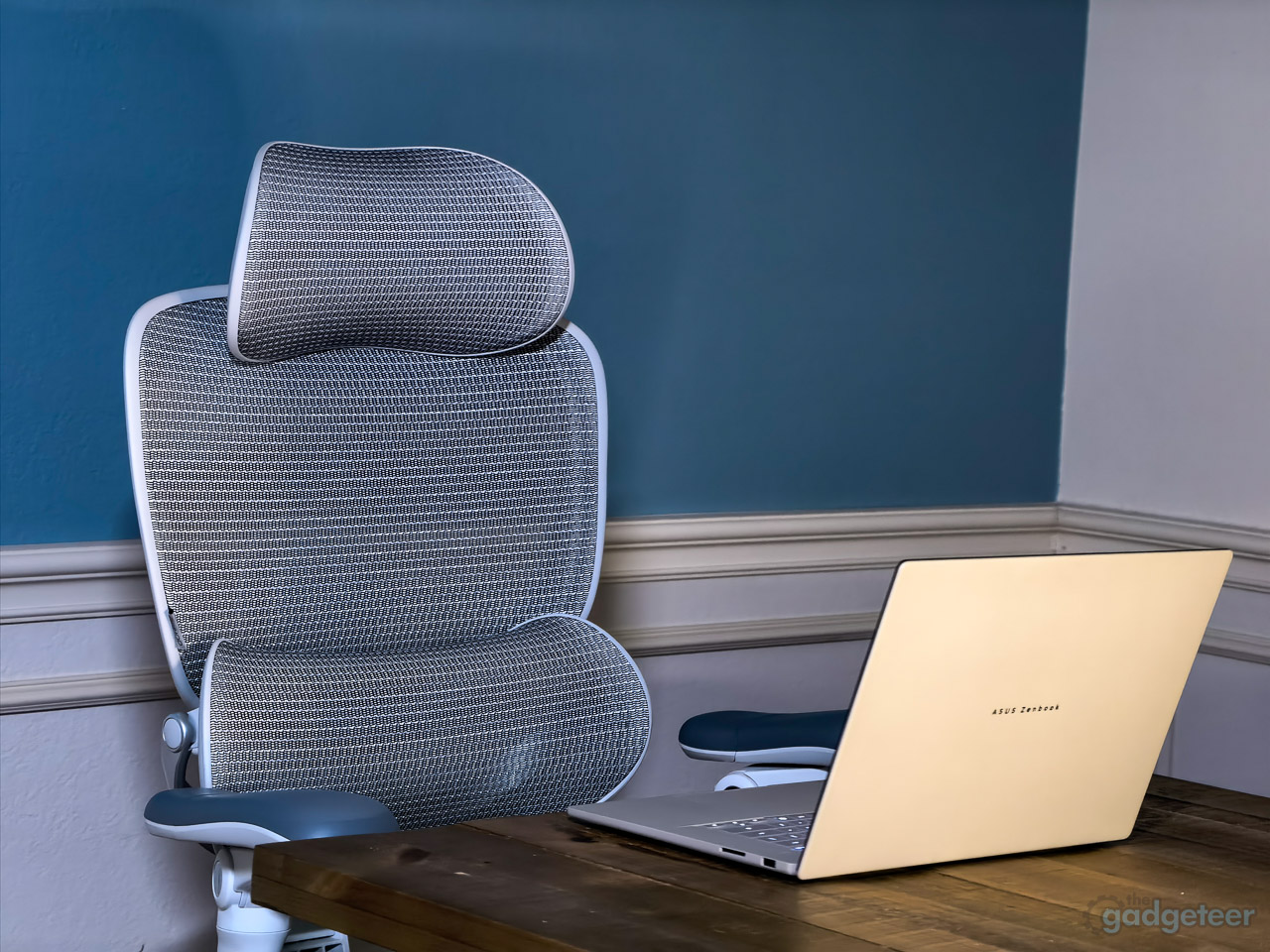
The 4cm seat depth adjustment is a welcome inclusion at this price point. As a 6’2″ user, extending the seat pan was vital for long-term comfort. By extending the seat, you distribute weight across the full length of your thighs, preventing the “numb leg” syndrome that sets in after four or more hours of deep work. This is the difference between a chair designed for gaming sessions and one engineered for genuine task endurance.
What the V1 got wrong (and what V2 fixes)
The original Sihoo Doro C300 Pro was a strong contender, but it had clear room for improvement. The V2 addresses these pain points with surgical precision. Armrest stability, once the top complaint, is now a non-issue thanks to the 8D Bionic system. Lumbar depth, which used to be purely auto-adaptive with no user control, now offers three distinct modes to fit personal preference.
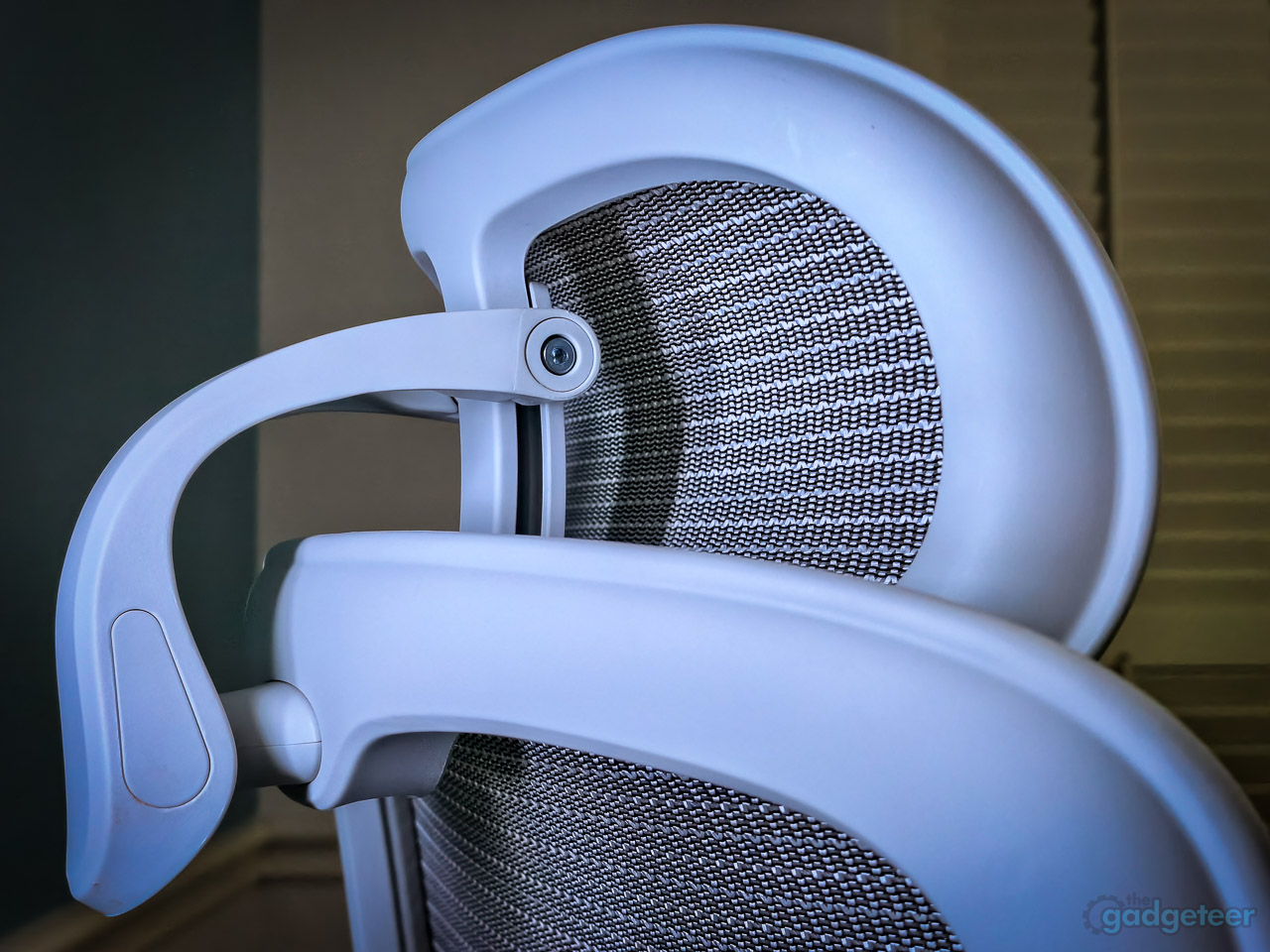
The headrest mechanism has also been smoothed out. While the V1 headrest often clicked loudly during adjustment, the V2’s Ultra-Wide 3D Headrest moves with a more refined, dampened feel. Visually, the chair has evolved as well. The technical aesthetic, featuring the visible SyncroFlex mechanism on the backrest, looks much more premium and modern in person than it does in marketing renders. It feels like a piece of high-end machinery rather than just an office chair.
The recline and the extras
The Gravity-Sensing Chassis 2.0 handles recline resistance automatically based on your body weight. Lean back at 130 pounds or 220 pounds, and the chair adjusts how much pushback you feel. The transition is remarkably smooth, with no “clunk” as you hit different stages. The range tops out at 135 degrees across three positions: 105 degrees for focused, upright work; 120 degrees for relaxed brainstorming; and 135 degrees for an actual break.
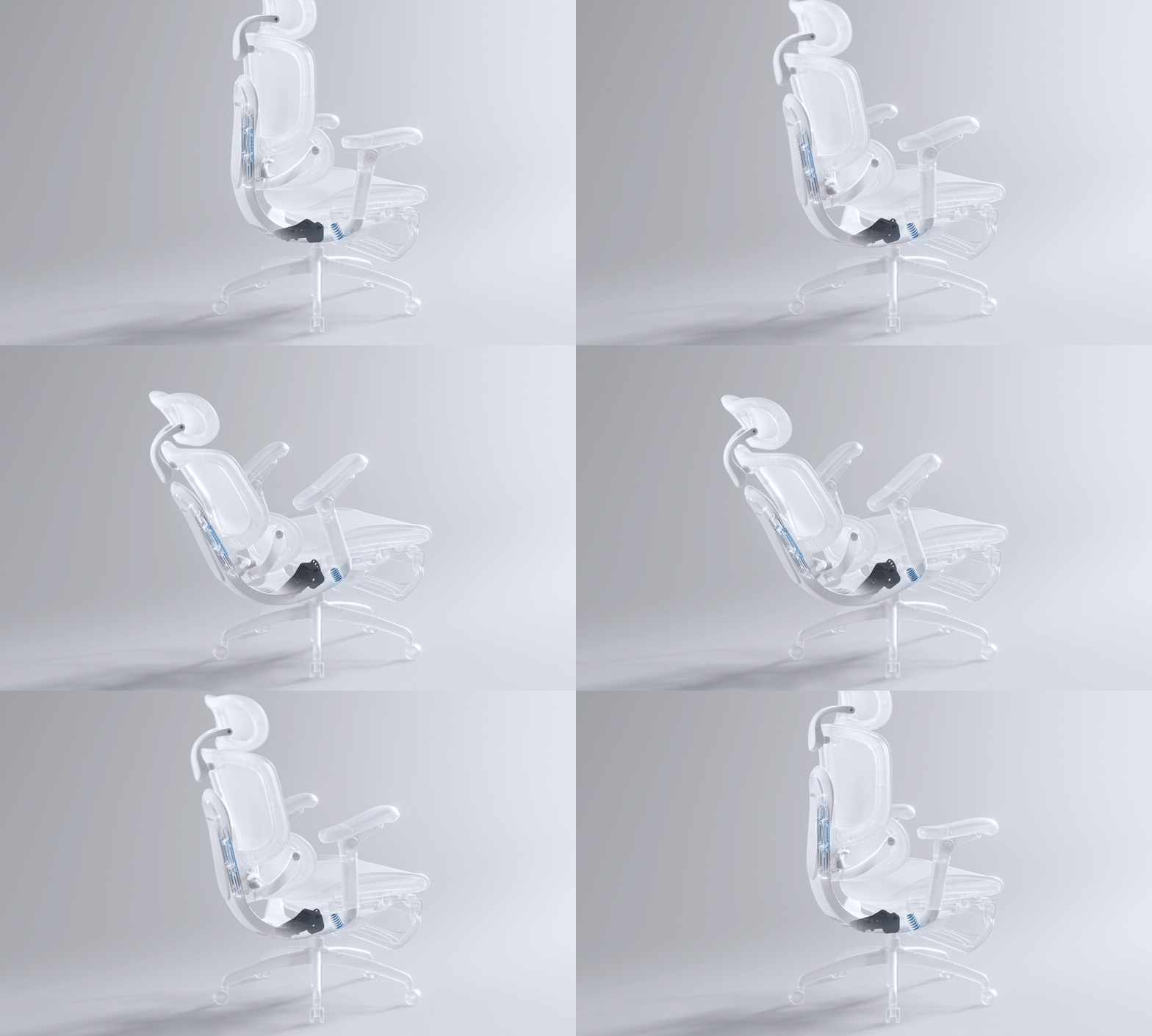
Because the resistance is already calibrated, you aren’t manually cranking a tension knob every time someone else uses the chair. Sit down, lean back, and the pushback matches your weight instantly.
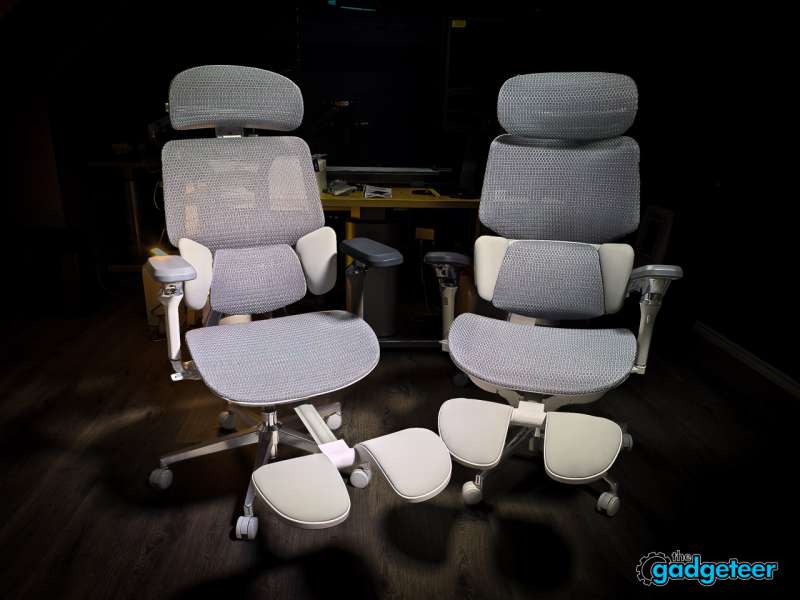
While the Sihoo Doro C300 Pro V2 includes an integrated mesh footrest for deep recline sessions, my specific review unit is still in transit. I will update this section with hands-on comfort and stability notes once it arrives. For now, the 135-degree recline remains perfectly usable for quick breaks even without the leg support deployed.
How I tested
I tested the Sihoo Doro C300 Pro V2 over a two-week period, averaging 8 to 10 hours of daily usage. My setup included a variable-height standing desk, and at 6’2″, I specifically focused on the limits of the headrest and seat depth adjustment. Scenarios included deep-work typing, handheld gaming using the 36-degree armrest flip-up, and several 20-minute recline breaks at the full 135-degree angle to test the sacrum support.
Who is this for
Best for: People who spend 6+ hours a day in an office chair and hate fiddling with adjustment levers every time they shift posture. The DynaCore and SyncroFlex systems are built for the person who wants to sit down and forget about the chair.
Also good for: Multi-device users who switch between keyboard, phone, and controller throughout the day. The 8D Bionic Armrests with their flip-up rear section and linked recline handle those transitions better than any chair at this price.
Skip it if: You prefer a firm, traditional padded seat over mesh, or if you are looking for a “gaming chair” aesthetic with a recline that goes past 135 degrees.
What I like about the Sihoo Doro C300 Pro V2
The DynaCore system is the best “set it and forget it” mechanism in the sub-$500 category. You sit down, and the chair handles the rest. The sacrum support truly eliminates the lower-back gap that ruins most mesh chairs during recline, and the lumbar glide is the real deal. The 8D armrests bring legitimate innovation for mobile users, with the flip-up rear section solving a problem most chairs do not even acknowledge, and the linked recline keeping your arms anchored at every angle. Whole-chair BIFMA certification provides long-term peace of mind at a price point where most competitors skip it entirely.
What could be improved
Extremely tall users (over 6’4″) might find the headrest sits slightly low even at max extension. The chair is officially rated for users up to 6’3″. And while the technical SyncroFlex aesthetic looks great in Black, the White version can feel a bit “medical” for some home office setups.
The bottom line: is it worth it?
The Sihoo Doro C300 Pro V2 is arguably the most sophisticated ergonomic chair you can buy for under $500. By shifting the focus from manual levers to a dynamic, weight-sensing chassis, Sihoo has created a “lazy-friendly” experience that actually works. It solves the biggest mechanical failures of the previous generation, specifically the loose armrests and the reclining “sacrum gap,” while maintaining a price point that undercuts major competitors like the Hbada E3 Pro.
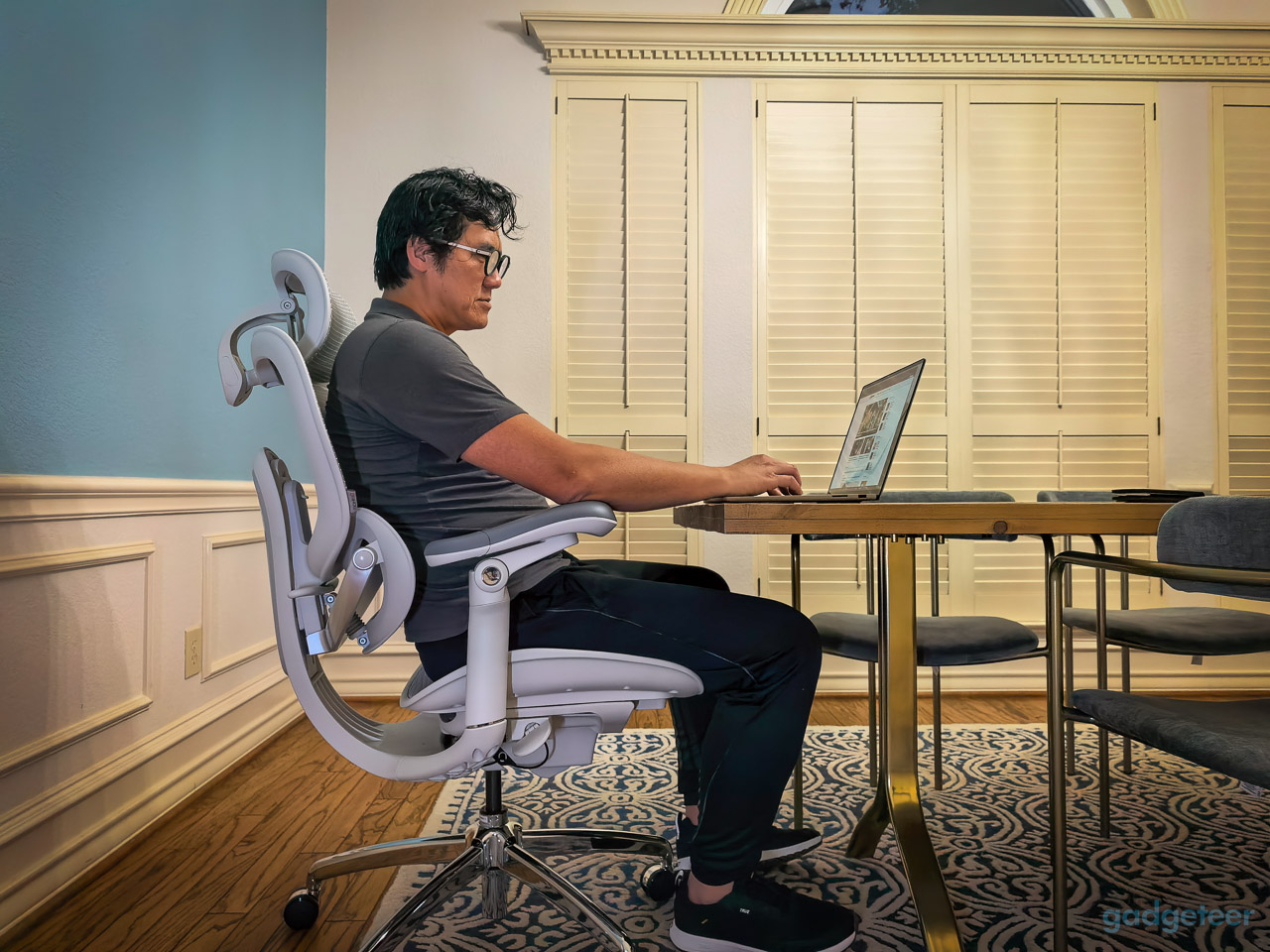
If you are a 6’2″ user like me, or anyone who spends 8+ hours a day switching between intense focus and relaxed media consumption, the Doro C300 Pro V2 is an easy recommendation. It is a rare example of a “Version 2.0” that does not just add features but fundamentally corrects the engineering.
Final Verdict: If you can snag it at the $379 early bird price, do not hesitate. Even at the $499 retail price, the whole-chair BIFMA certification and the 8D Bionic armrests make it the objectively better value in today’s market.
Sihoo Doro C300 Pro V2 Ergonomic Office Chair
Price: $429 ($499)
Where to buy: Sihoo
Source: The sample of this product was provided for free by Sihoo. Sihoo did not have a final say on the review and did not preview the review before it was published.
FAQ
Is the Sihoo C300 Pro V2 worth the upgrade from the original C300 Pro?
If armrest stability and lumbar tracking bothered you on the V1, the V2 addresses both directly. The jump from 6D to 8D armrests with linked recline is a meaningful improvement, and the three-mode lumbar system adds control that wasn’t available before. At $379 during early bird, the upgrade cost is reasonable. At full retail of $499, it depends on how much the V1’s limitations affected your daily use.
How does it compare to the Hbada E3 Pro?
While both chairs are similarly priced, the Sihoo Doro C300 Pro V2 offers 8D armrests versus Hbada’s 6D and carries a whole-chair BIFMA certification that the Hbada lacks. The Hbada offers a slightly deeper 140-degree recline, but the Sihoo’s dynamic lumbar tracking feels more sophisticated in daily use.
What’s the weight capacity of the Sihoo C300 Pro V2?
The C300 Pro V2 supports up to 300 lbs (136 kg). The heavy-duty steel frame and Whole Chair BIFMA Certification back that number with tested structural integrity, not just a marketing claim.
Does it work for tall people?
Yes. The chair is designed for users up to 6’3″. As a 6’2″ tester, the 4cm seat depth adjustment and ultra-wide headrest provided a perfect fit without reaching the adjustment limits.
Is BIFMA certification important for office chairs?
BIFMA (Business and Institutional Furniture Manufacturers Association) certification means the chair has passed standardized testing for structural integrity, stability, and durability. It’s the industry benchmark for commercial-grade furniture. The C300 Pro V2 carries whole-chair BIFMA certification, which covers the entire assembly rather than just individual components. For a chair in this price range, that’s a solid reassurance on build quality.



Gadgeteer Comment Policy - Please read before commenting
This is a really interesting evolution of ergonomic design — especially the idea of everything (lumbar, armrests, backrest) staying in sync as you move instead of forcing you into a “perfect” fixed posture. That’s usually where most chairs fall short over a full workday.
I just got one, the v2 model ofcourse, and still trying to remain open minded about it.
A couple flaws in my view:
> the arm rests lack of locking and a tad too firm; also they remain a bit too high if you like to seat low
> lack of seat suspension; it’s not like I drop my butt hard into it, but makes a difference when comparing to my old Steelcase
> seat adjustment lacks tilt, and the front edge is a bit rough
So, week one, halfway and getting some doubts if itis a keeper
This review of the Sihoo Doro C300 Pro V2 is super helpful! I love that the DynaCore system adjusts without levers and the self-adaptive lumbar prevents that gap. The 8D armrests sound amazing for keeping arms comfortable while reclining. Great value for under $500!
This review is super helpful! I love that the DynaCore system moves on its own without levers. The part about the armrests staying with you when you recline sounds awesome. Great to know it’s sturdy too, especially for under $500.
I really like how this chair adapts to your body as you move, especially the backrest tracking your spine. The redesigned armrests sound like a big upgrade too. Makes me think my old chair is way too static now!