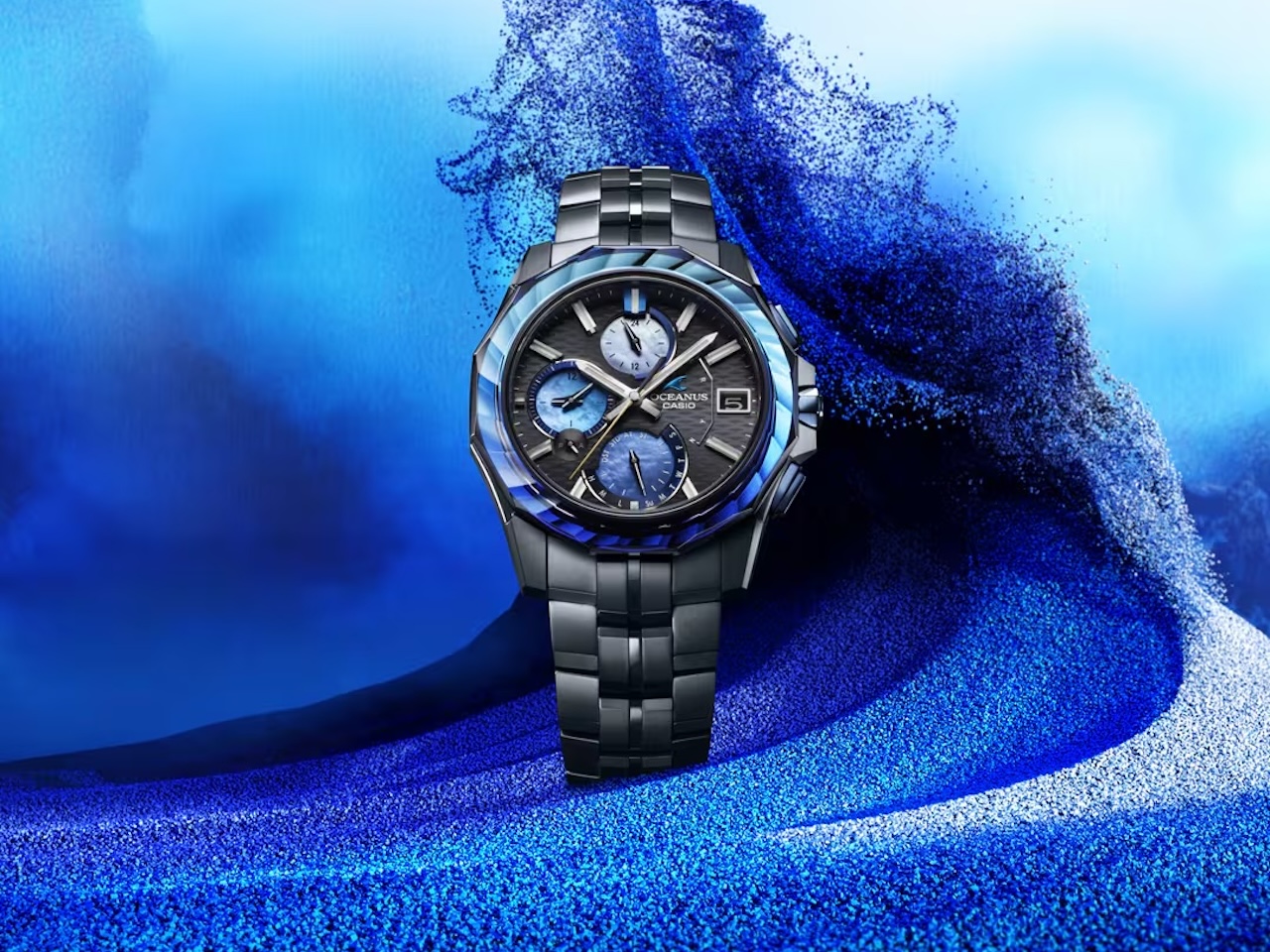
You know how Casio usually lives in that affordable-but-clever corner of your drawer? The new Oceanus Manta OCW-S6000AP-1A is not that Casio. It’s a limited run of 700 pieces, the dial uses a traditional Japanese indigo dyeing technique, and it’s asking about $3,100. Yes, for a solar quartz. That’s the sentence that’ll make a lot of you blink, and it should.
Price: ¥495,000 (About $3,100)
Where to Buy: Casio
Here’s the pitch Casio is making. The Oceanus line has quietly been Japan’s answer to dressy titanium sport watches for years, the kind of thing you buy when you want something thin, light, and functional without wearing your taste on your sleeve. This new Manta variant takes that formula and pushes it into territory most people don’t associate with Casio at all: an Awa indigo artisan dial, a spiral-cut sapphire bezel, and a piece count low enough to make the whole thing feel like a collectible instead of a catalog release. Whether that’s worth the ask is the real question, and we’ll get there in a minute.
The indigo dial is the whole point
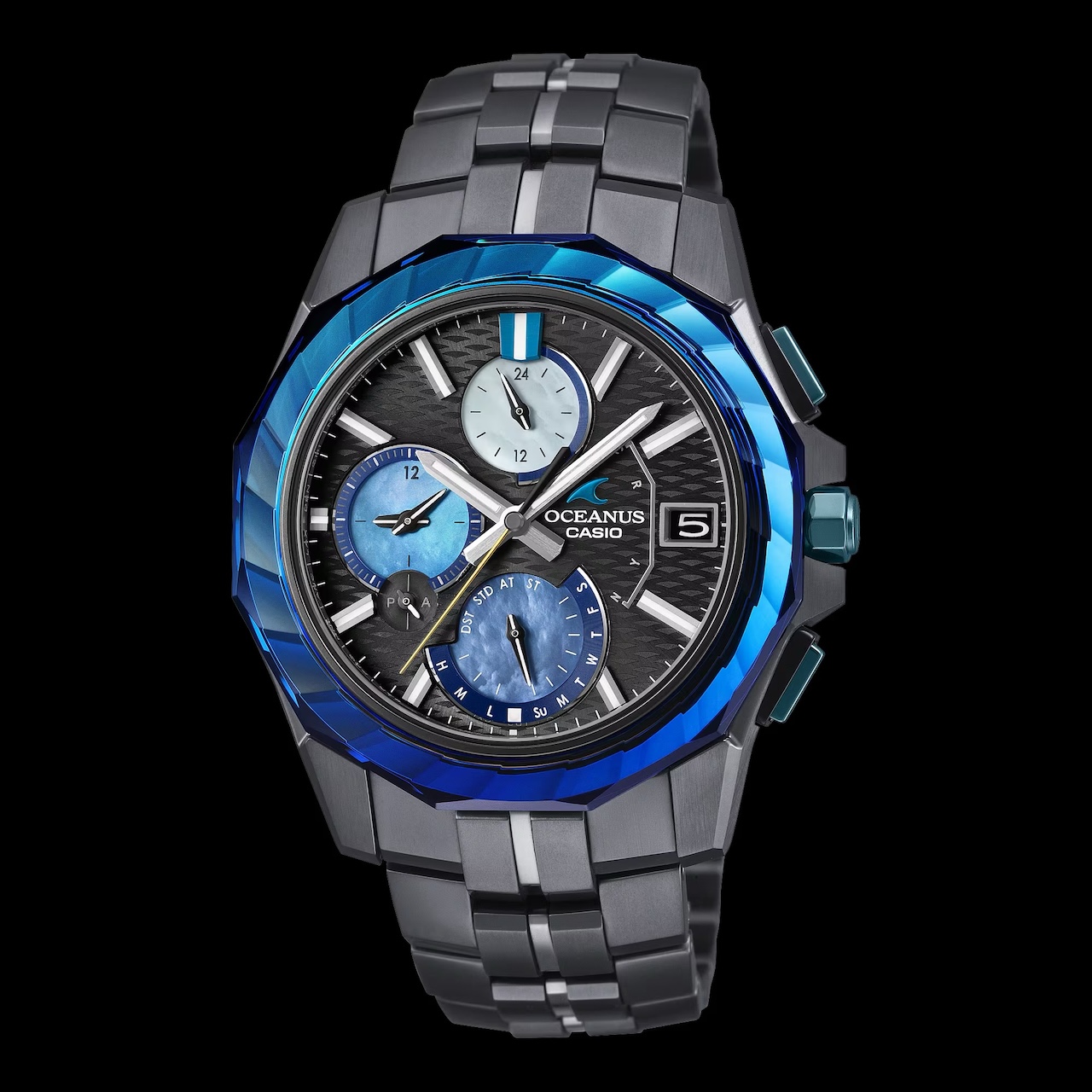
Casio is calling the theme “Indigo Ocean,” and it leans on Awa indigo, a traditional Japanese dyeing technique. Oceanus has used Awa indigo on a dial before, so the method itself isn’t new to the line. What’s new is how much of this watch is built around it.
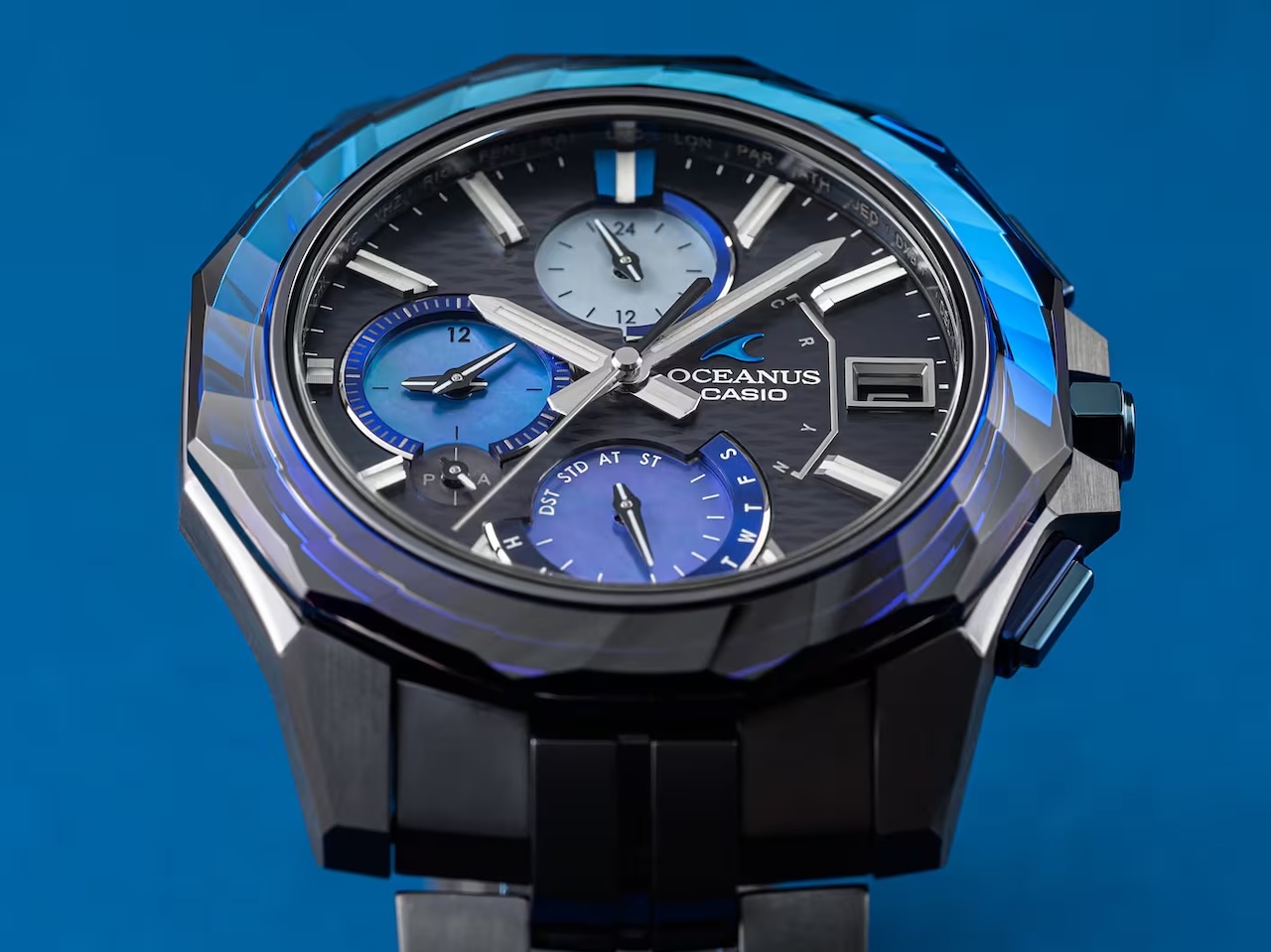
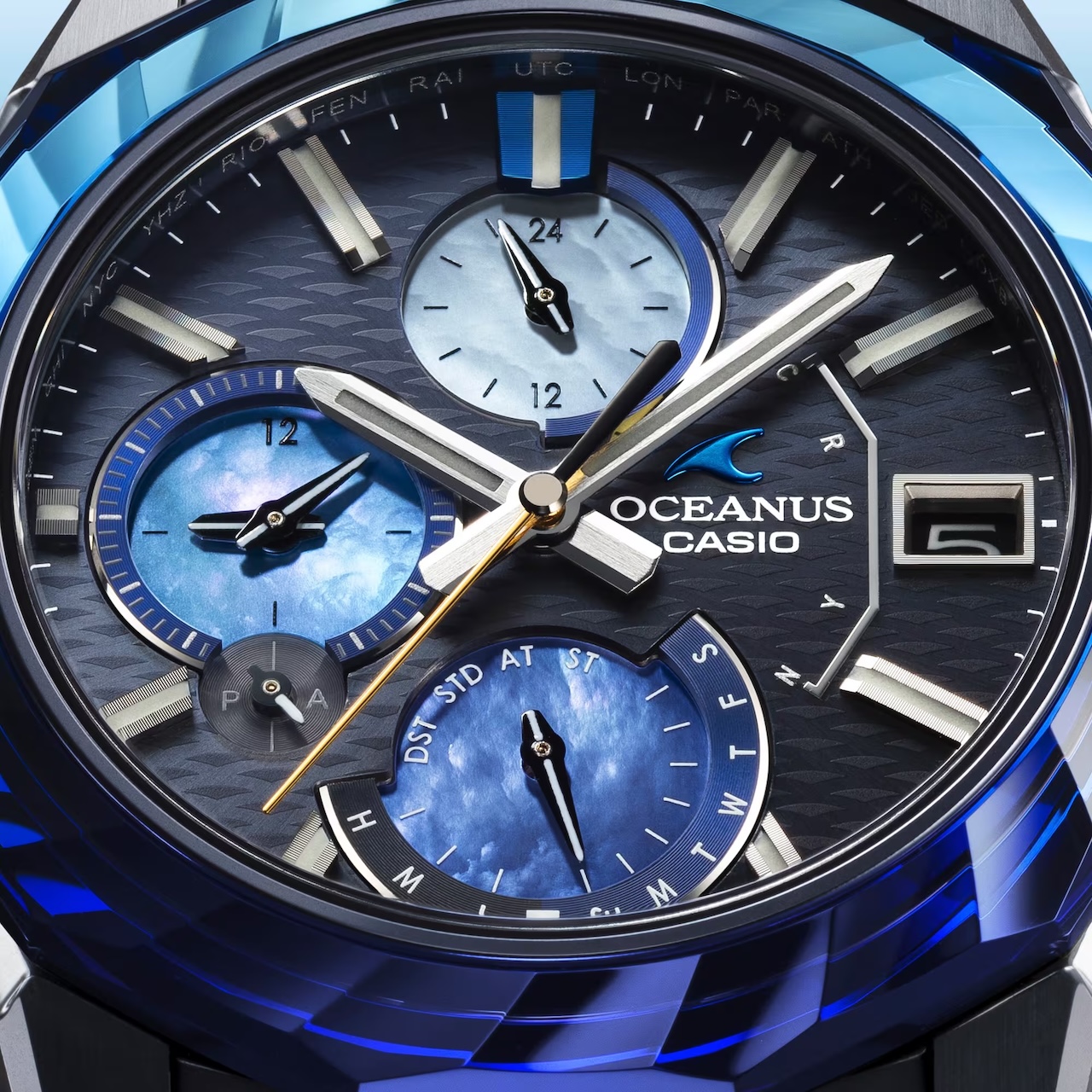 The sub-dials at six, nine, and twelve are mother-of-pearl, each one treated with the Awa indigo dyeing process, and each one comes out a slightly different shade of blue. Set against the black, wave-patterned main dial, the effect is subtle until you look closer.
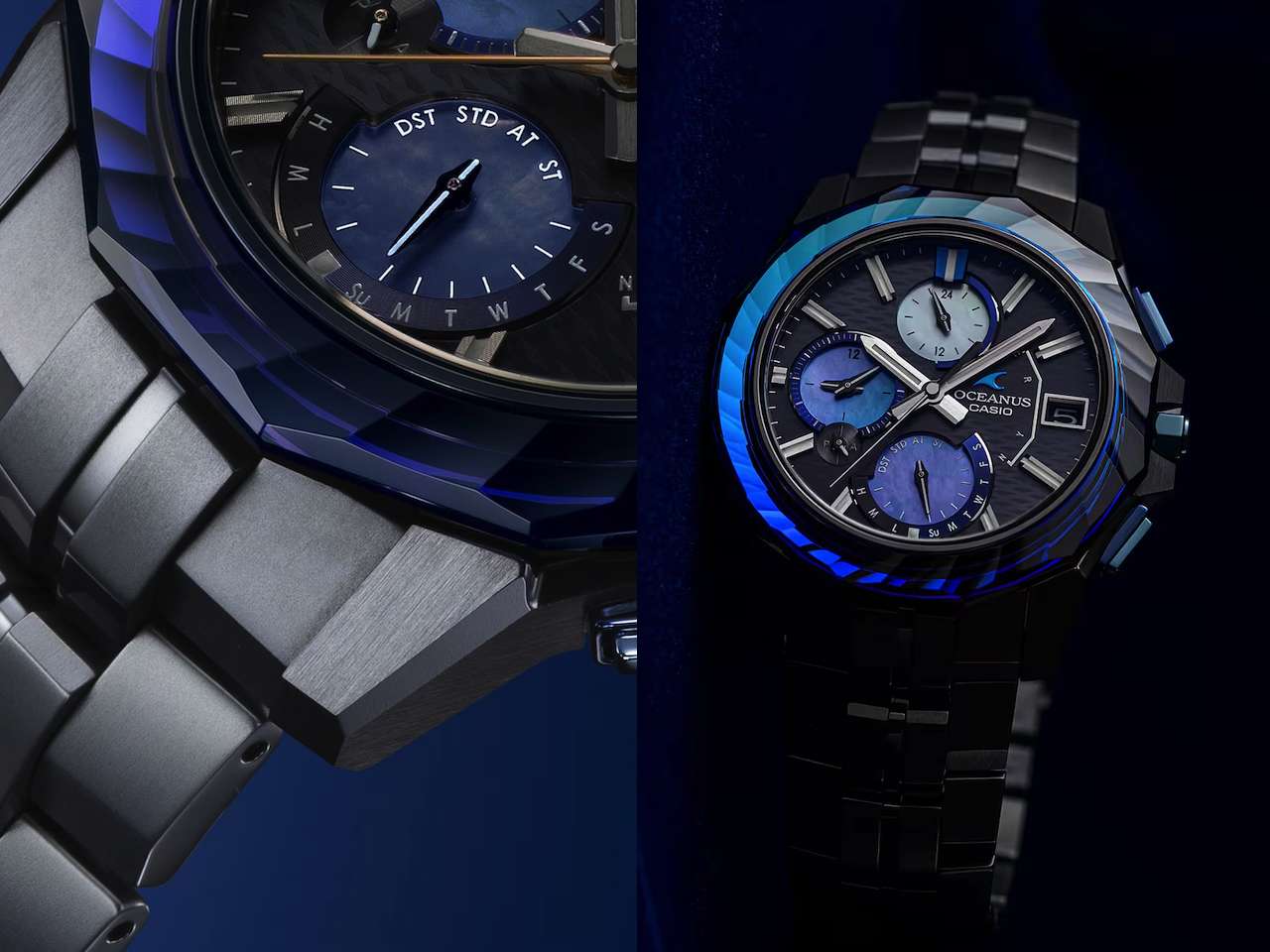 Then you can’t stop noticing it. The sapphire bezel gets a spiral cut that picks up the same blues and bounces them back, which photographs beautifully and will probably be the thing that gets people to stop scrolling. Whether it reads the same way in person is the usual question with artisan dial work.
What you’re actually getting underneath
Once you get past the dial, this is a familiar Oceanus Manta. The titanium case measures 47.1 by 42.5 by 9.2mm, so it’s wide but stays under 10mm thick. That matters more than the raw numbers suggest: at 9.2mm, it’s on the slim side for a titanium sport-dress watch with this much feature density, and that keeps it workable under a shirt cuff.
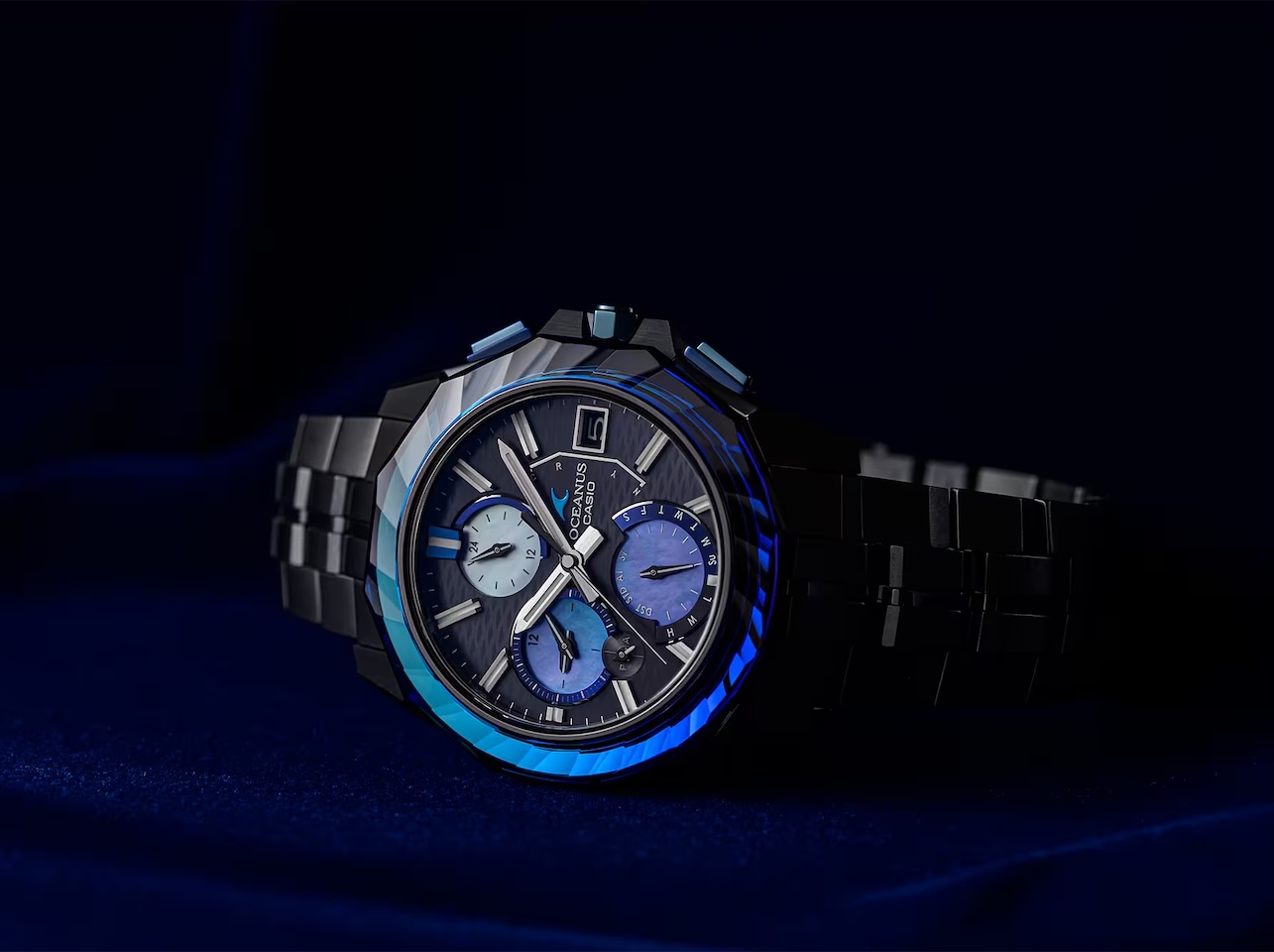 You get Tough Solar charging, which means no battery swaps for years. Multiband 6 radio sync auto-corrects the time when you’re in signal range in Japan, the US, Europe, or China, and Bluetooth pairing with the Casio Watches app handles sync everywhere else.
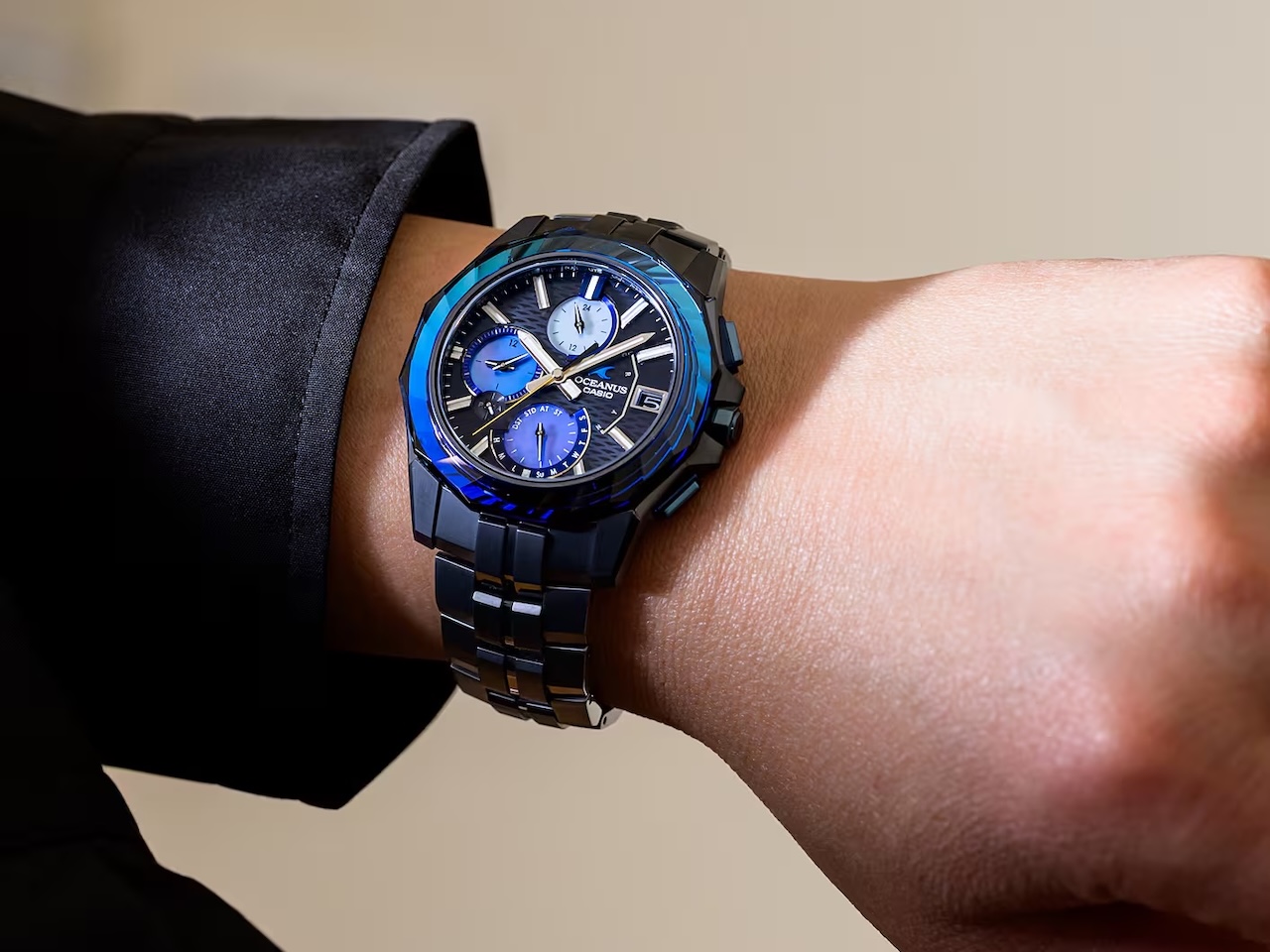 A power-saving mode kicks in when the watch has been sitting in the dark. The dial handles date, day of the week, a second time zone, a 24-hour indicator, and a world-time function covering 27 cities. Water resistance is 100 meters, so it’s fine for swimming and a surprise rainstorm but isn’t a dive watch spec. For a watch that’s going to spend most of its life on a desk or at a dinner table, those are the right priorities.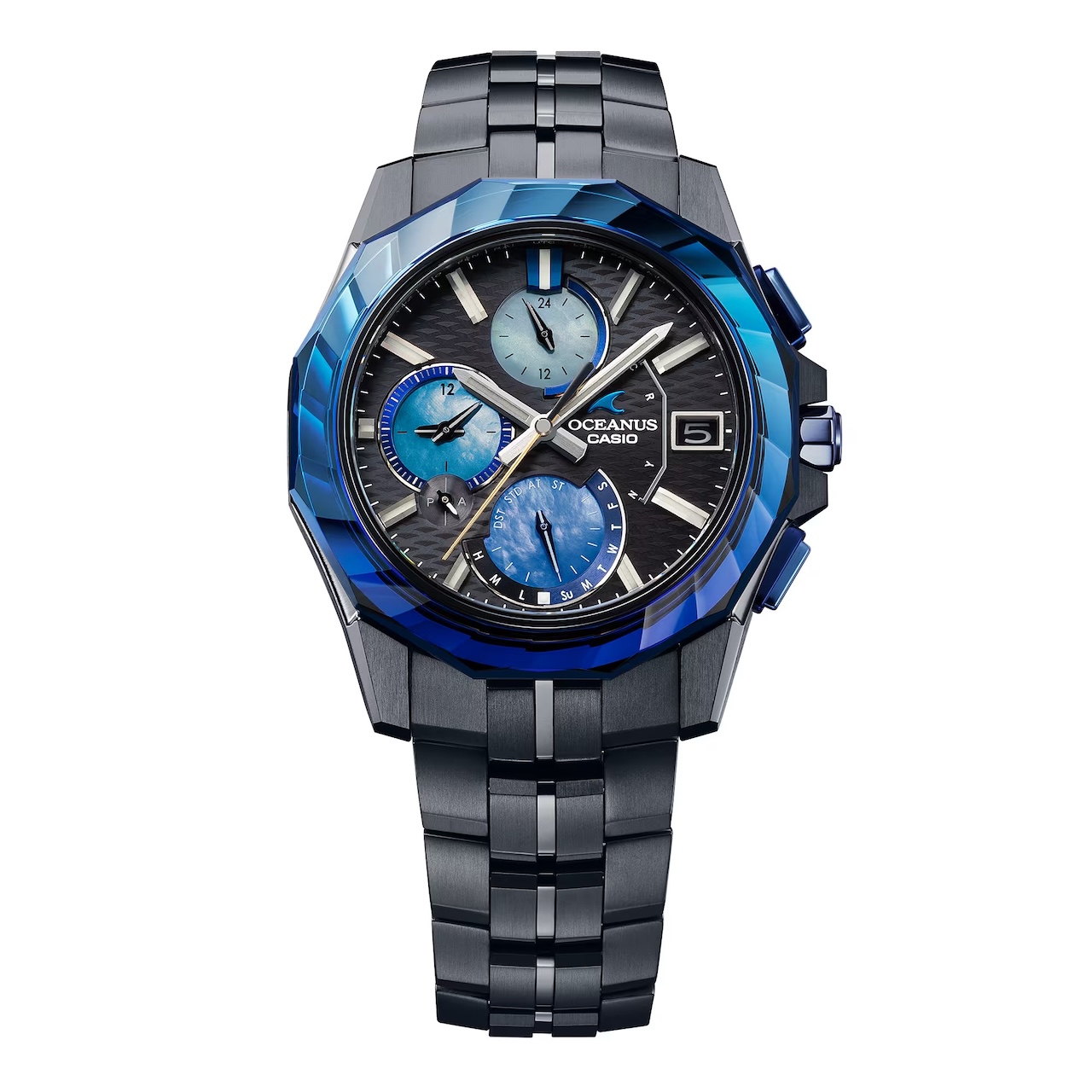
The solar charging is the sleeper feature here. Radio-synced timekeeping powered by ambient light means no long-term drift to chase down and no DST switch to remember, which is a spec that quietly matters more the longer you own a watch. That’s a different kind of reliability, and it’s one of the reasons Oceanus has kept its following despite never chasing trends. None of this is new to the S6000 platform, but it’s a solid feature list for a quartz watch, and it’s the kind of stuff you stop noticing after a week, which is the whole point.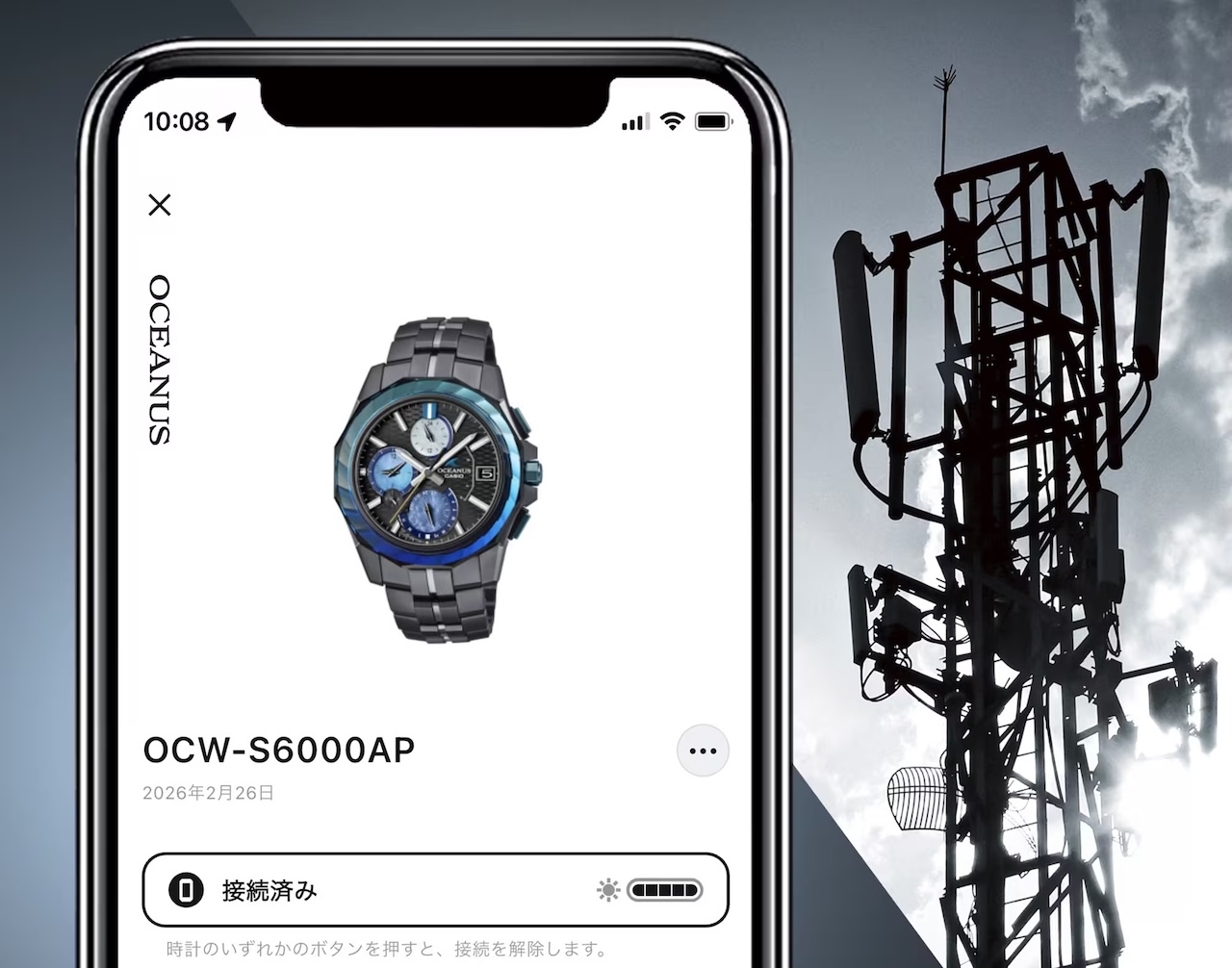
About that price
Then there’s the $3,100. At ¥495,000, this Manta is sitting in mechanical watch territory. That’s the floor for a decent Swiss mechanical. Casio has been pushing the Oceanus line upward for a few years now, and a 700-piece artisan dial does earn some of that premium on paper.
 Whether buyers read it as aspirational or expensive is a different question. Longtime Oceanus fans will probably shrug and hit pre-order. Everyone else will have to decide if a solar Casio at this price is something they can get comfortable with.
 The counterargument is worth hearing out. You’re paying for the artisan work, not the movement. A mother-of-pearl sub-dial treated with Awa indigo costs real money to produce, and a 700-piece ceiling means the economics of it can’t scale. A mechanical watch at this price is trading on pedigree, polish, and decades of movement R&D. This Casio is trading on craft and rarity. Those aren’t the same product, even if they land in the same spot on the price tag.
 Price: ¥495,000 (About $3,100)
Where to Buy: Casio
When you can actually buy one
Japan sales start June 12. International availability isn’t confirmed, and if past Oceanus releases are any guide, getting one outside Japan will probably mean secondary channels at a markup. Whether the run sells out fast will say something about where this kind of artisan positioning is landing. The craftsmanship story is strong. The audience for a $3,100 solar quartz is the part that’s still sorting itself out.