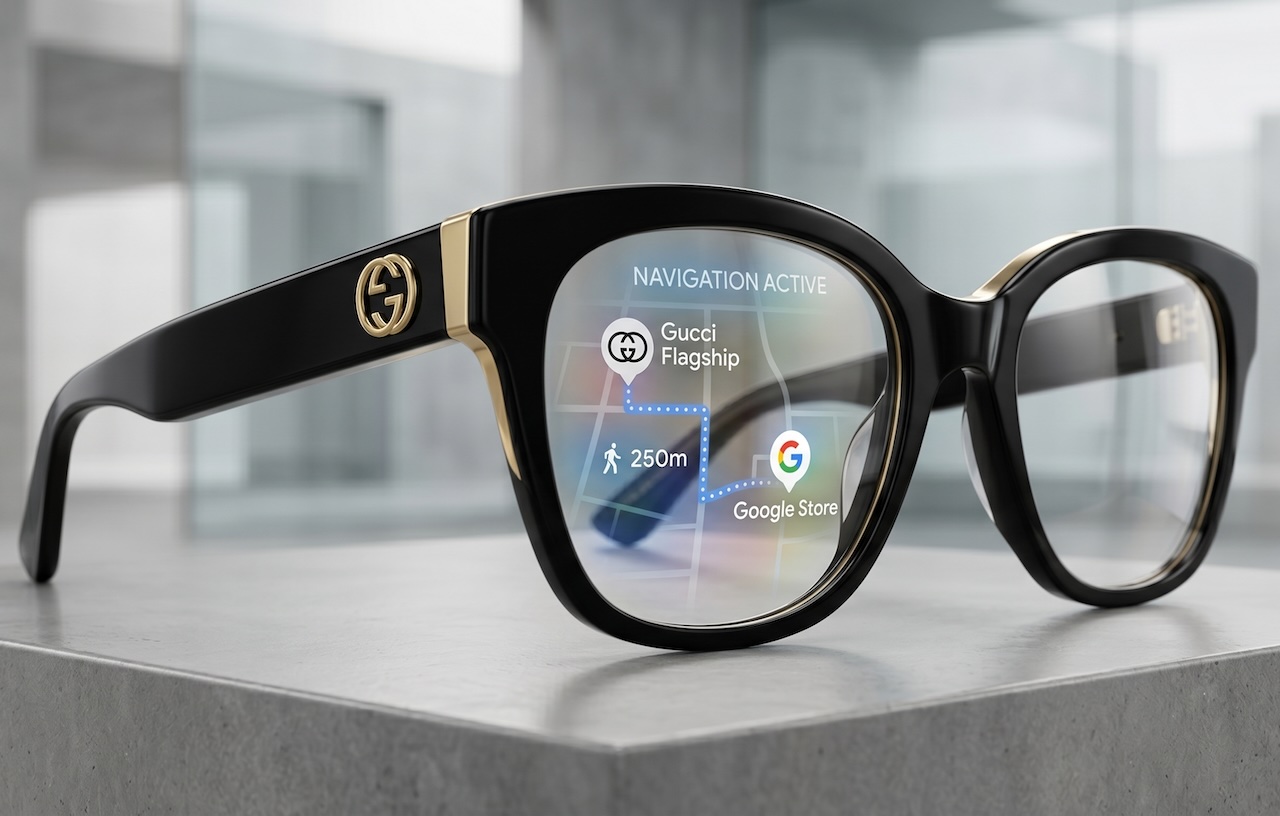
Luxury AI eyewear is about to meet your face, and the name on the temples might just be Gucci. Kering CEO Luca de Meo has confirmed that Gucci is teaming up with Google on a pair of AI smart glasses, widely reported to run on Android XR, and the project is already shaping up to be one of the more interesting wrinkles in the growing fashion-tech smart glasses race. It’s also a clear signal that the next wave of AI wearables isn’t going to be defined purely by which company has the best chipset or the slickest voice assistant.
Branding, style, and the fashion house on the box are becoming just as important as the silicon inside. Here’s what’s actually known so far about the Gucci x Google collaboration, separated from the speculation, and why it matters for where smart glasses go next.
1. Kering Confirmed the Partnership, Not a Leak
The news came straight from the top, not from a supply chain leak or a fuzzy render on social media. Kering CEO Luca de Meo confirmed the Gucci and Google collaboration in an interview on the sidelines of Kering’s capital markets day in Florence on April 16, 2026, saying the glasses would arrive “probably next year, 2027.”
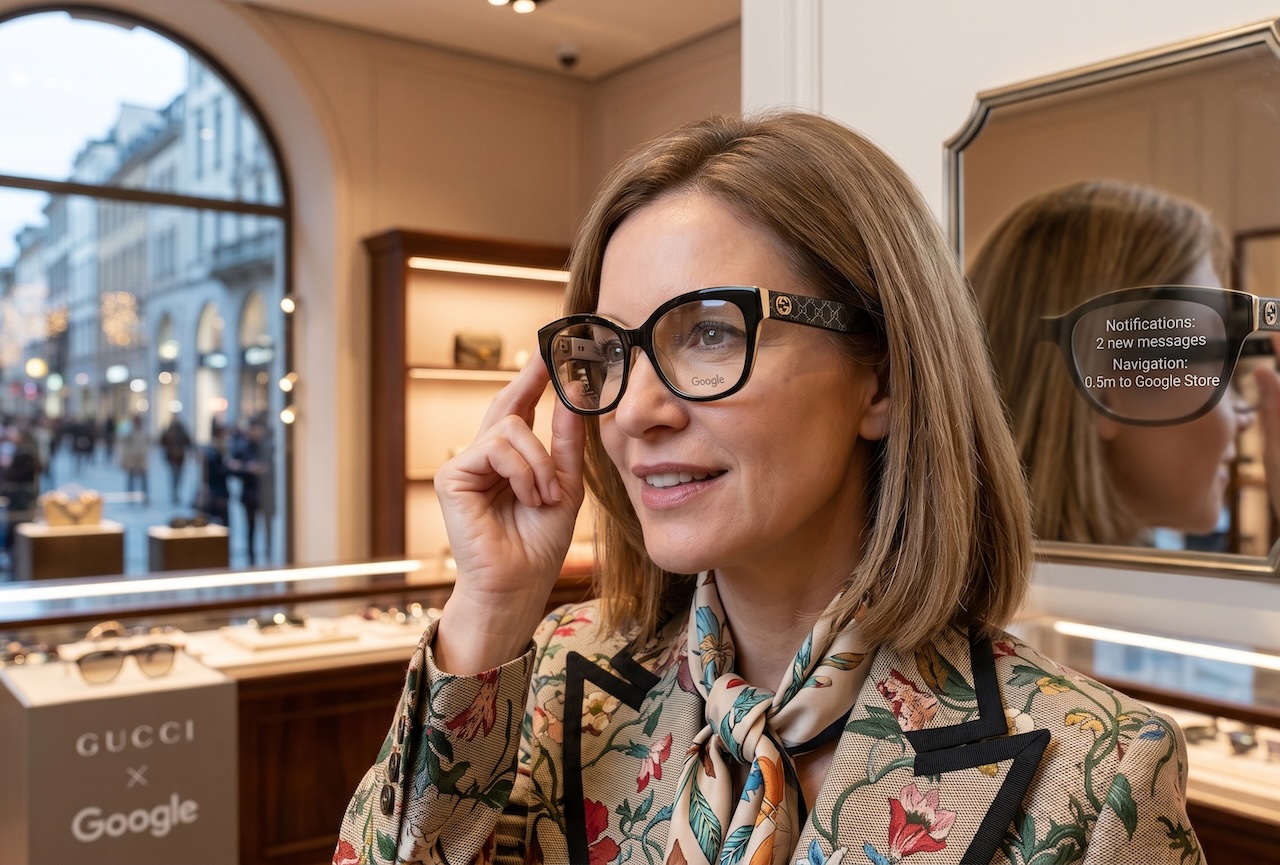
That matters because this isn’t a rumor pieced together from factory chatter or a trademark filing. It’s the luxury group’s own CEO setting expectations publicly, which tends to mean the project is further along than a typical fashion-tech tease. For readers who have watched a long list of concept glasses quietly disappear, that top-down confirmation is worth flagging on its own.
2. You Won’t Be Wearing Them in 2026
If you were hoping to slide these on for the holidays, you’ll want to recalibrate. Kering is aiming for a 2027 launch, a timeline that puts the Gucci glasses a full product cycle behind Google’s first Android XR eyewear, known as Project Aura, which is expected to arrive this year. In practical terms, that means Google gets to ship, learn, and iterate on a more mainstream pair of Android XR glasses before the Gucci-branded version shows up on storefronts.
For shoppers, it also means there’s time to see how Android XR actually performs in the real world before committing to a luxury-tier purchase. Multiple outlets are lining up behind the same 2027 window, so this isn’t a single-source date.
3. Android XR Is the Expected Platform, But Not Officially Confirmed
Here’s where the reporting gets a bit murkier, so it’s worth being precise. Early coverage says the Gucci glasses will run on Google’s Android XR platform, with Gemini AI anticipated to be baked in as a core system feature rather than treated as an add-on. More cautious reporting points out that de Meo did not actually confirm the Gucci glasses will use Android XR, even though Google’s other eyewear partnerships clearly do.
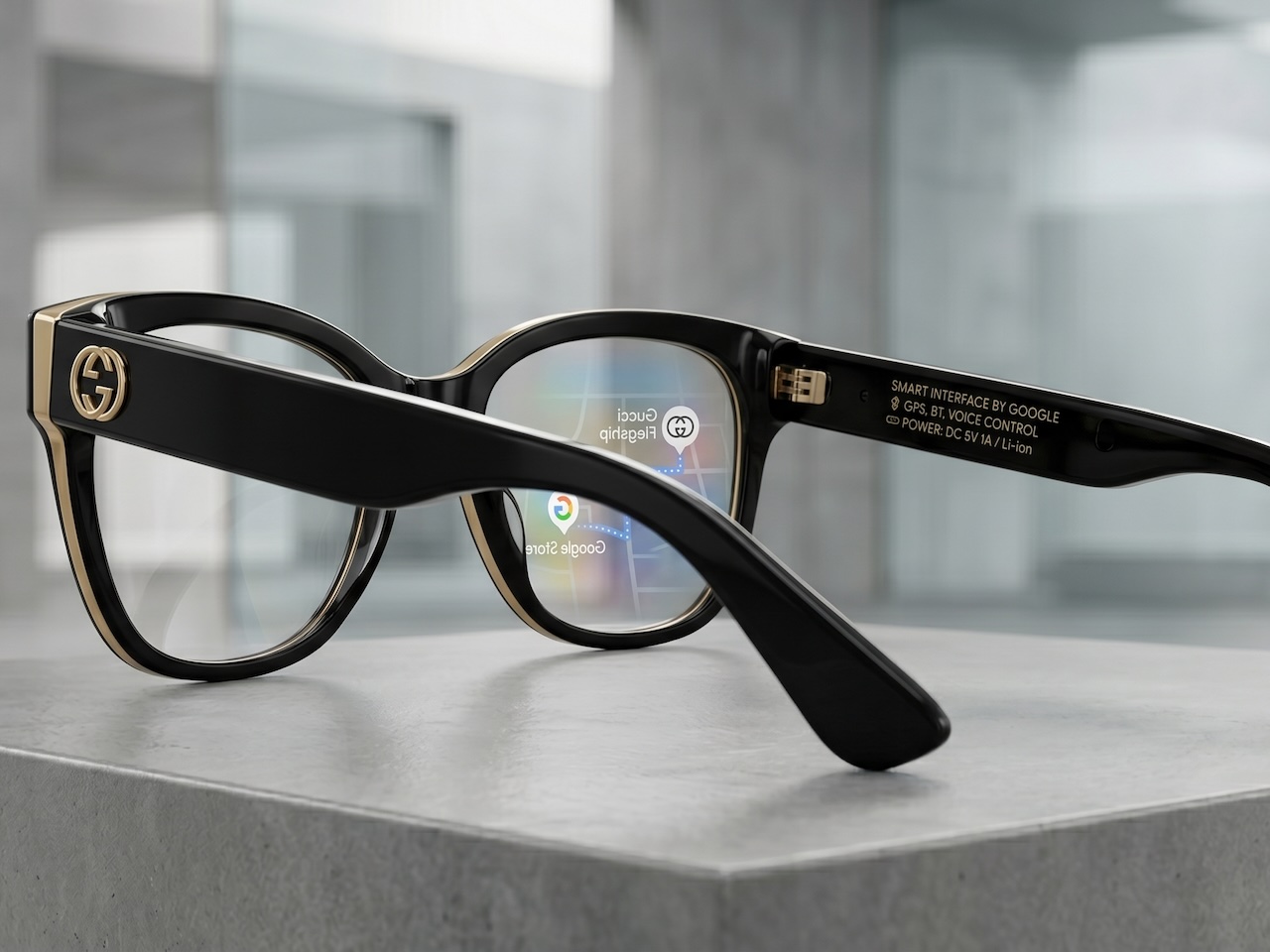
Android XR with Gemini is the heavily expected platform given Google’s broader wearables push, but it isn’t on the official record from Google or Kering yet. Coverage also anticipates the hardware will include cameras, microphones, and speakers to feed that AI pipeline, enabling voice interaction, real-time assistance, and contextual awareness, again, anticipated, not confirmed.
Specific feature sets, battery life, camera details, display specs, and pricing still haven’t been officially shared by either company. If you see a spec list floating around, treat it as rumor until Google or Kering publishes one. Everything beyond “Gucci, Google, 2027” is still unconfirmed.
4. Gucci Joins a Growing Lineup of Google Fashion Partners
Google is clearly borrowing a page from Meta’s playbook, which paired Ray-Ban and Oakley frames with Meta’s AI hardware to build category momentum. Google’s Android XR rollout already includes collaborations with Warby Parker and Gentle Monster, and the Gucci tie-up pushes that lineup into genuinely luxury territory. The move is part of de Meo’s broader strategy to scale up Kering’s eyewear and jewellery divisions and shield the group from a downturn at Gucci, a diversification push that tracks with Kering’s stated plan to scale up its eyewear division.
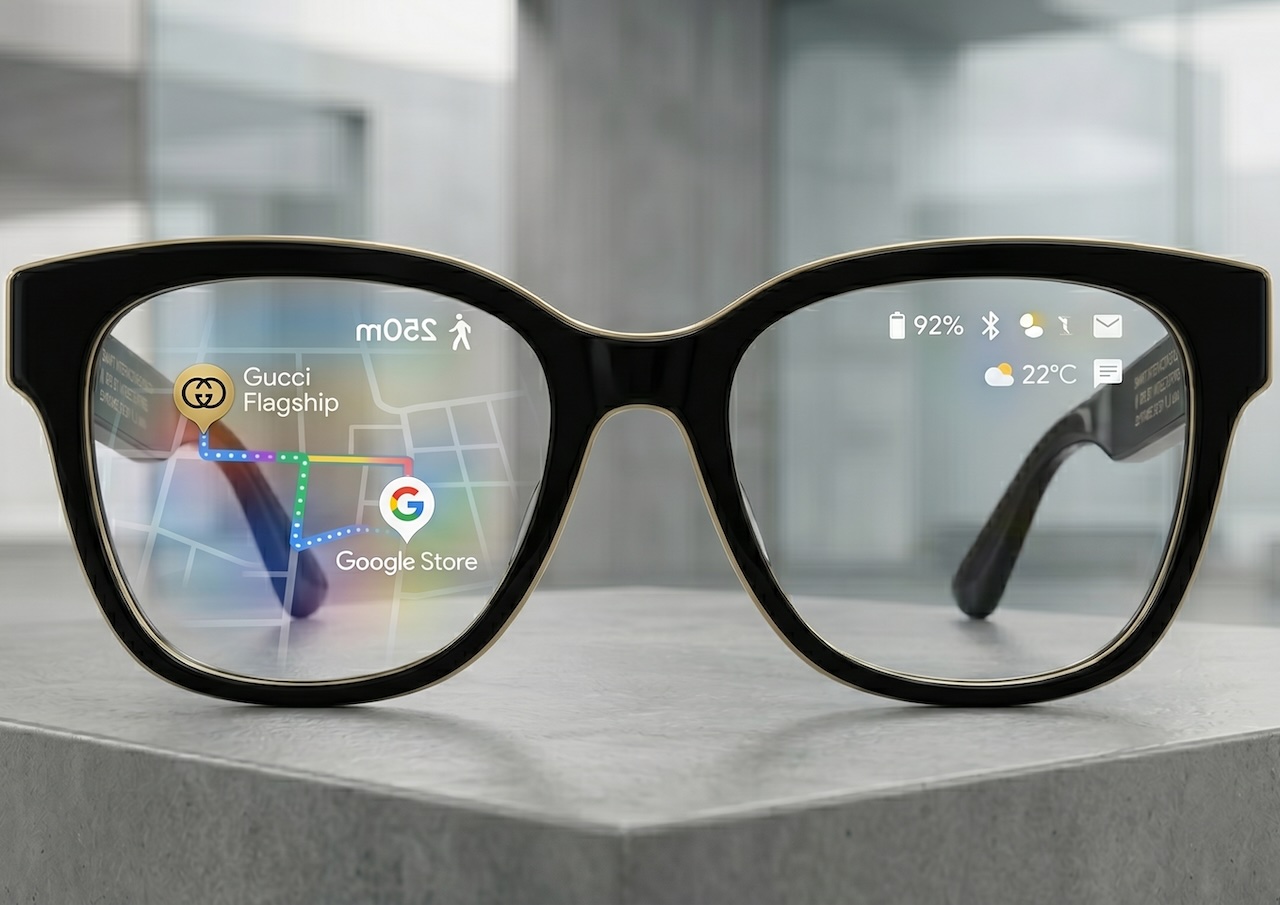
Read together, the picture is of Google trying to cover multiple price tiers and style identities at once: accessible everyday eyewear through Warby Parker, trend-forward design through Gentle Monster, and aspirational luxury through Gucci. That multi-brand approach is how fashion has always worked, and it’s a contrast to earlier fashion smart glasses efforts that rarely spanned multiple style tiers at once.
5. The Competitive Target Is Ray-Ban Meta and EssilorLuxottica
The positioning writes itself. The Gucci glasses are being lined up to compete with Meta’s Ray-Ban and Oakley smart glasses, both made in partnership with eyewear giant EssilorLuxottica. The deal potentially makes Gucci the first major luxury brand in the AI-powered eyewear sector, directly pitting Kering against EssilorLuxottica, and Gucci sits in a much more premium fashion tier than Ray-Ban. In other words, Google isn’t just chasing Meta on features, it’s trying to pull the category upmarket, where a pair of glasses is as much a status object as it is a gadget.
Pricing hasn’t been announced, so how aggressive Gucci gets with that luxury tier is still an open question, and it’s arguably the single biggest variable for whether these glasses become a real product or a halo play. The final price could be eye-watering even by luxury eyewear standards, but nothing official has been confirmed on cost. For now, the safest read is the simplest one: the smart glasses race just got a lot more fashionable, and Gucci is the clearest sign yet that luxury houses see this category as worth showing up for.
Wrap-Up
Nothing here is definite until the official launch. Google and Kering still have to confirm the platform, the feature set, the hardware, and the price tag, and any of those could shift between now and 2027. It’s also worth remembering that Google has been here before with Google Glass, which it ultimately discontinued, so a splashy announcement is not a guarantee the product sticks around.
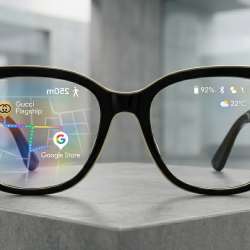
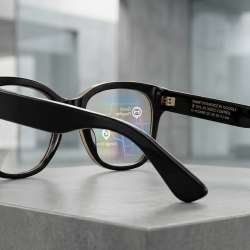
What we do know is that a major luxury house and one of the biggest names in AI are publicly working on the same pair of glasses, and that alone is enough to reshape expectations for what smart eyewear can look and feel like. Until the first official reveal, we’re excited to begin imagining how the Gucci x Google smart glasses will look and work, and we’ll update this post as soon as Google or Kering drops real details.