
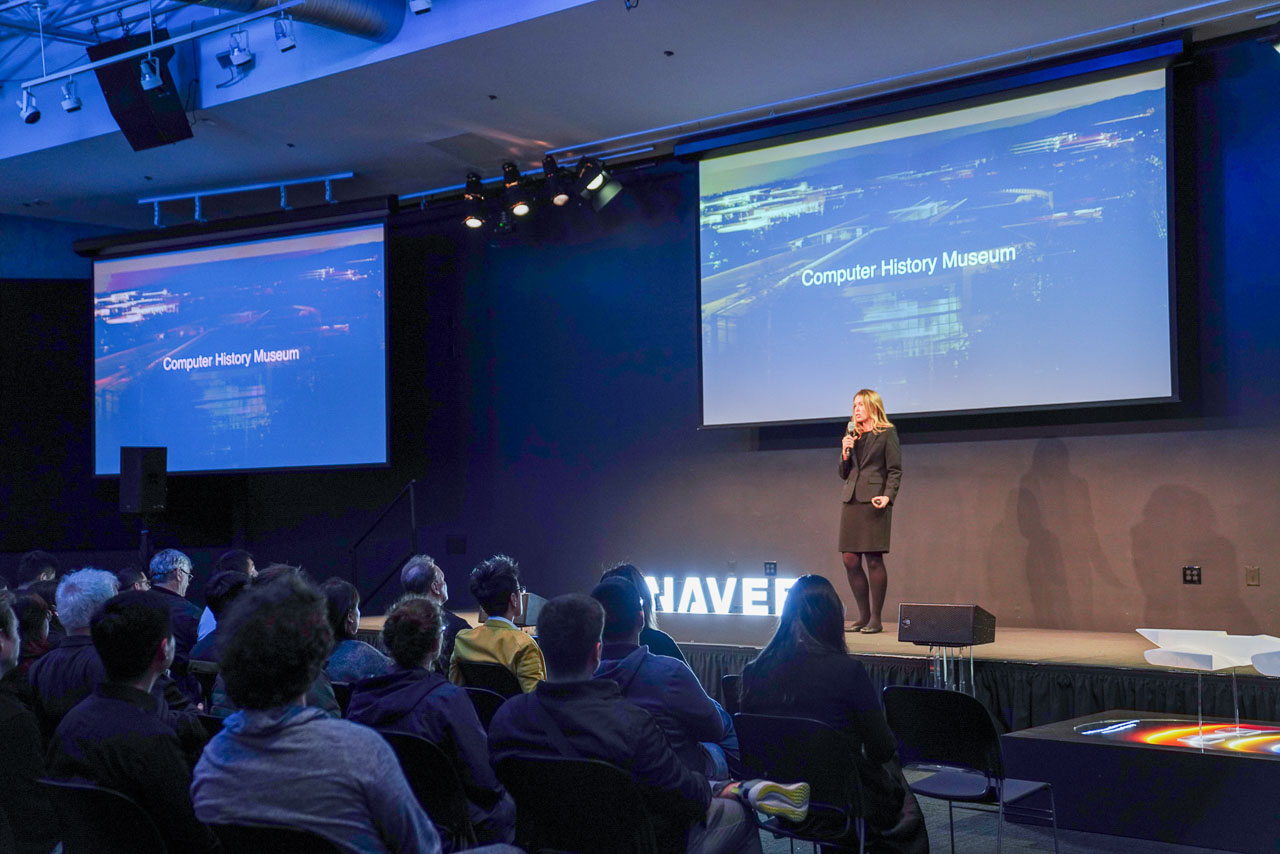
NEWS – On January 23, 2026, NAVEE held its first global brand strategy event at the Computer History Museum in Silicon Valley. This was not a typical product launch. It was a statement of intent. The company is making a clear push to evolve from a micro mobility brand into something much bigger, what it calls a full-spectrum intelligent mobility provider.
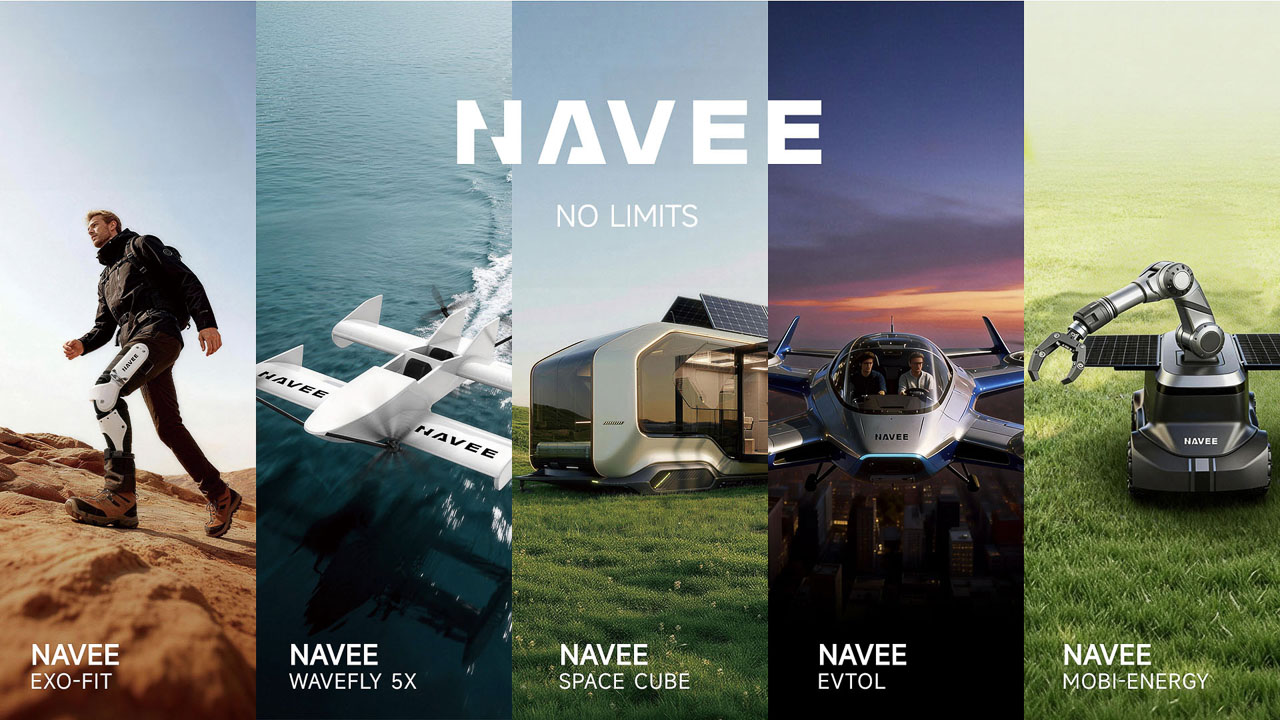
The event, running under the tagline NO LIMITS, marked NAVEE’s formal expansion into the U.S. market. It introduced a five-line product ecosystem that stretches across land, human-powered mobility, air, and water. The message NAVEE is trying to send is clear. The company wants to be known for more than scooters.
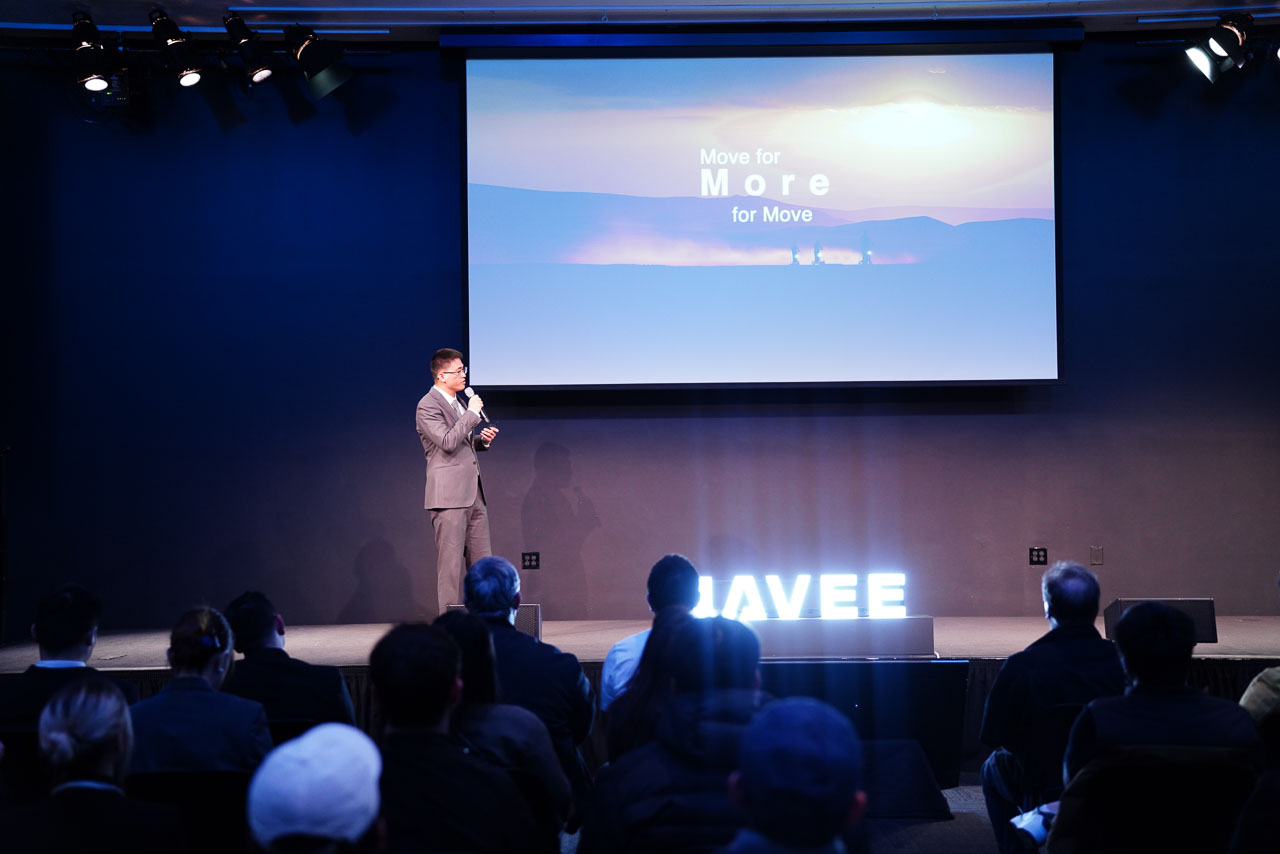
This was about setting the narrative before the products arrive at scale.
As Sharon Wang, Head of NAVEE Global, put it: “This event marks a defining moment for NAVEE as we expand our vision beyond land-based micro-mobility. We are applying the world’s leading engineering and intelligent systems across every category to create solutions that meet the diverse needs of how people around the world live, work, and play.”
Underneath the product announcements, there is a philosophical claim worth noting. NAVEE’s brand materials frame mobility not just as transportation, but as self-expression: “Mobility is not just about reaching a destination. It’s about exploring the world and expressing individuality.” Whether that framing resonates will depend on execution, but it signals that NAVEE sees itself as building lifestyle products, not just vehicles.
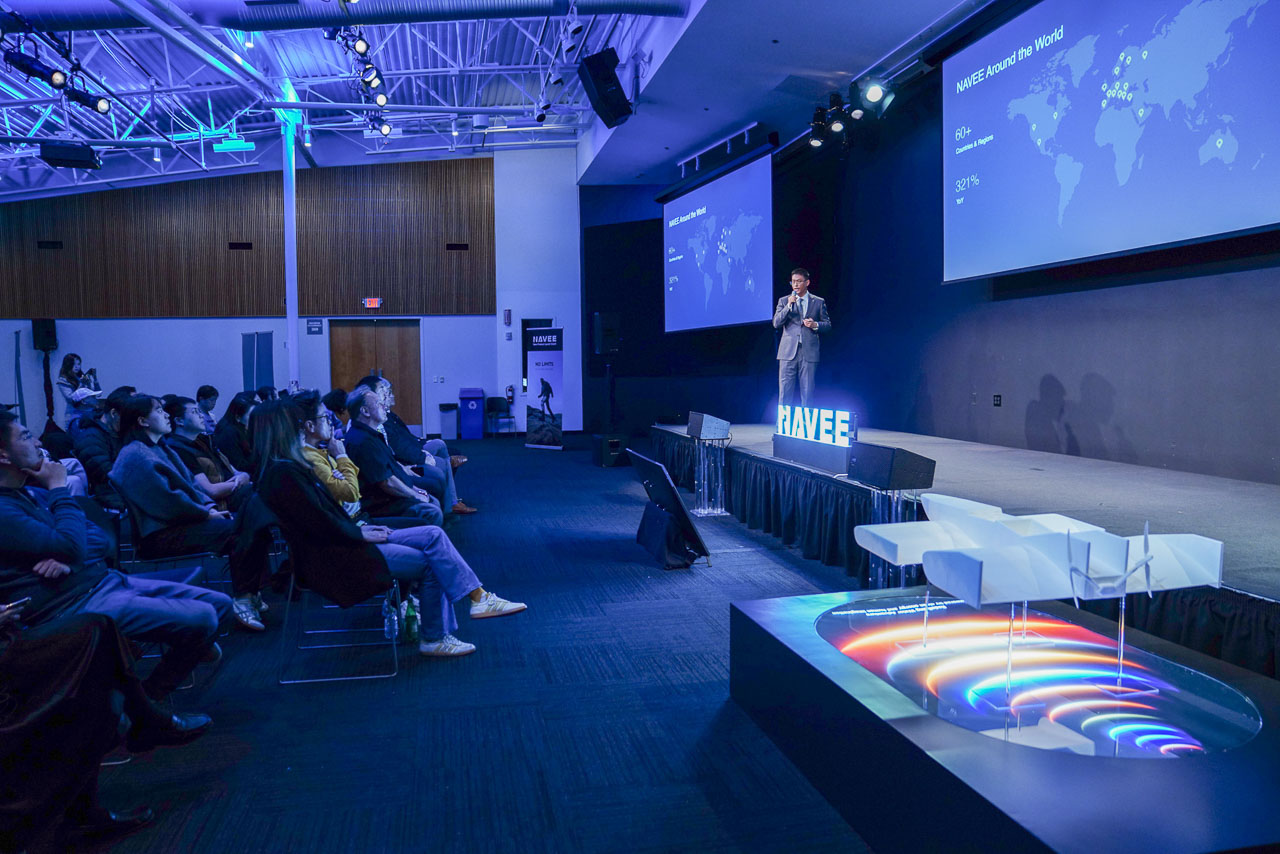
This is not about what you can buy today, but about understanding where mobility design and technology are being pushed next.
Why Silicon Valley, Why This Venue
The Computer History Museum is a meaningful choice. It is where the tech industry traces its roots. Holding the event there connects NAVEE to the story of innovation itself, and that is exactly the association the company wants.
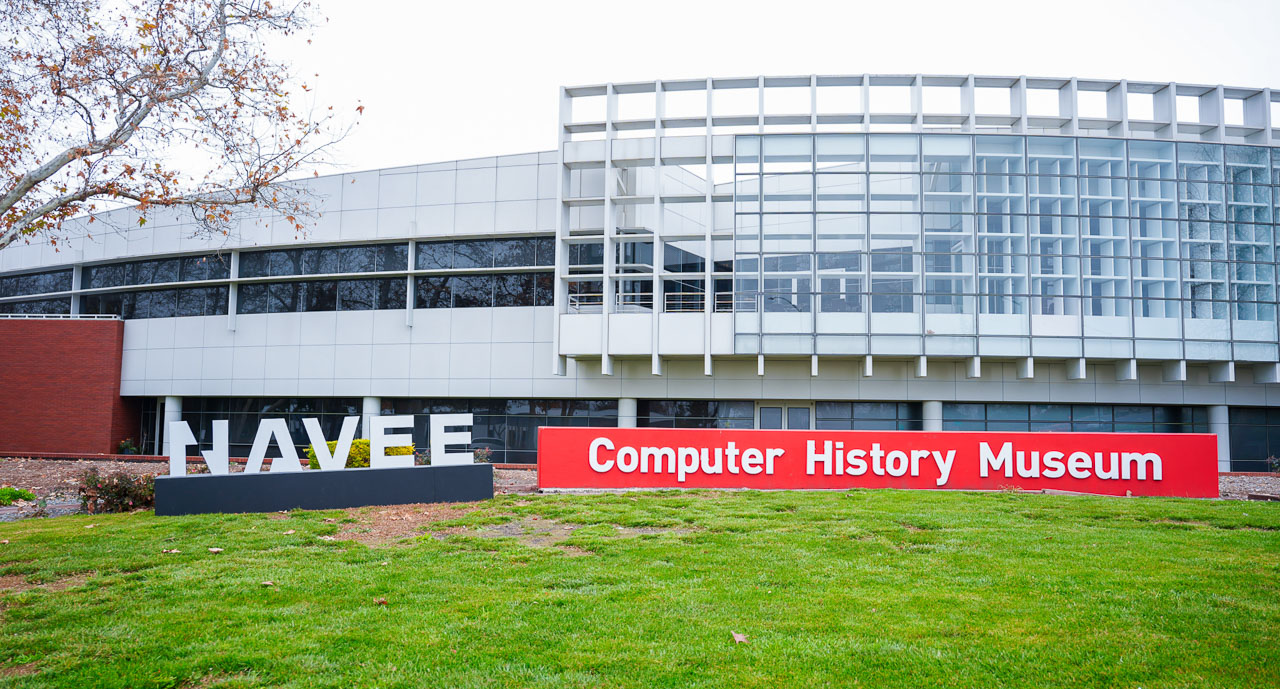
Polo Huang, Vice President of NAVEE, addressed this directly: “Hosting this event at the Computer History Museum is meaningful. This museum has witnessed the evolution of technology worldwide.”
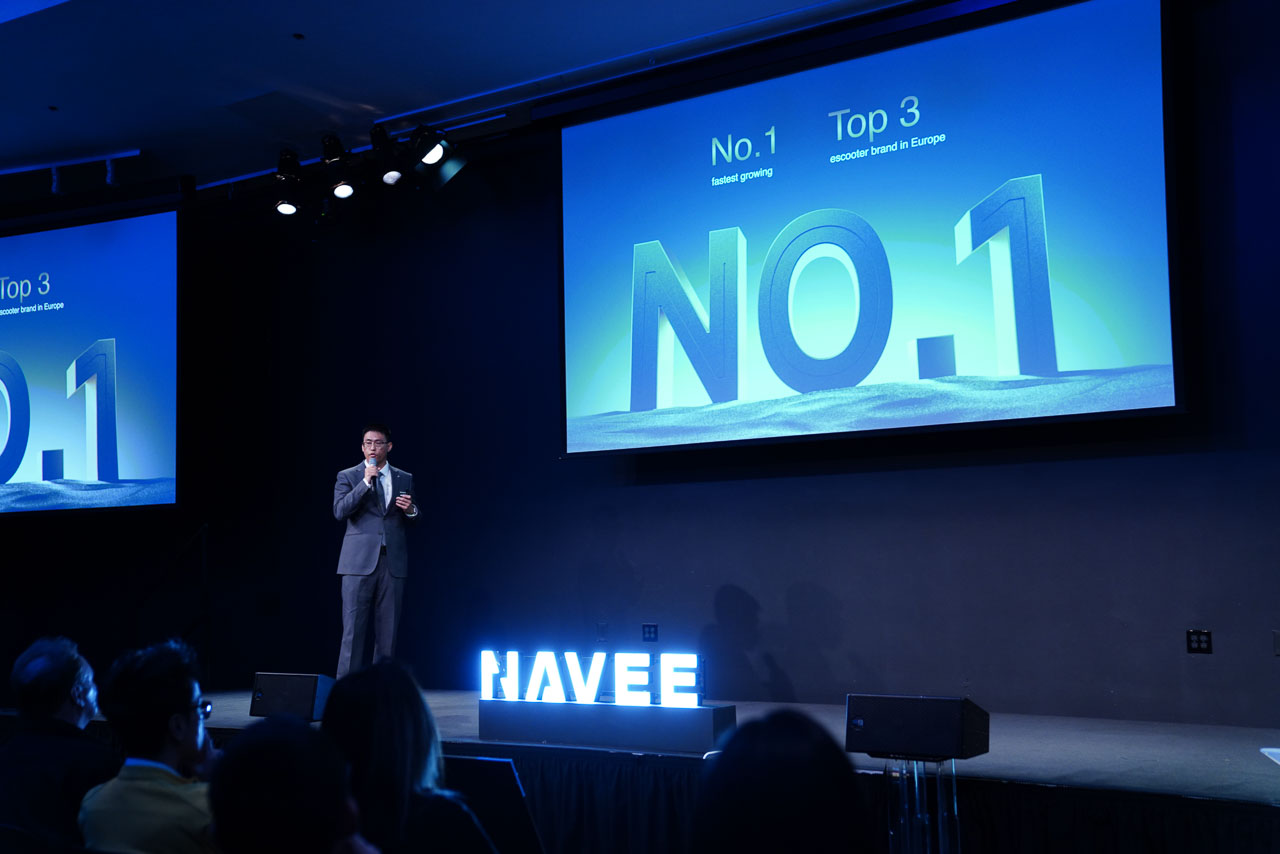
The U.S. matters to NAVEE for obvious reasons. This is where mobility trends get set, where regulations shape what products can actually reach consumers, and where brand perception can make or break a global expansion. NAVEE reports 321 percent revenue growth in 2025 and describes itself as the fastest-growing e-scooter brand globally. The company says it is top three in Europe. Now it wants the same momentum here.
This was not a booth at a trade show. It was a calculated move to control how people think about NAVEE before the products hit shelves.
The Five-Line Mobility Ecosystem
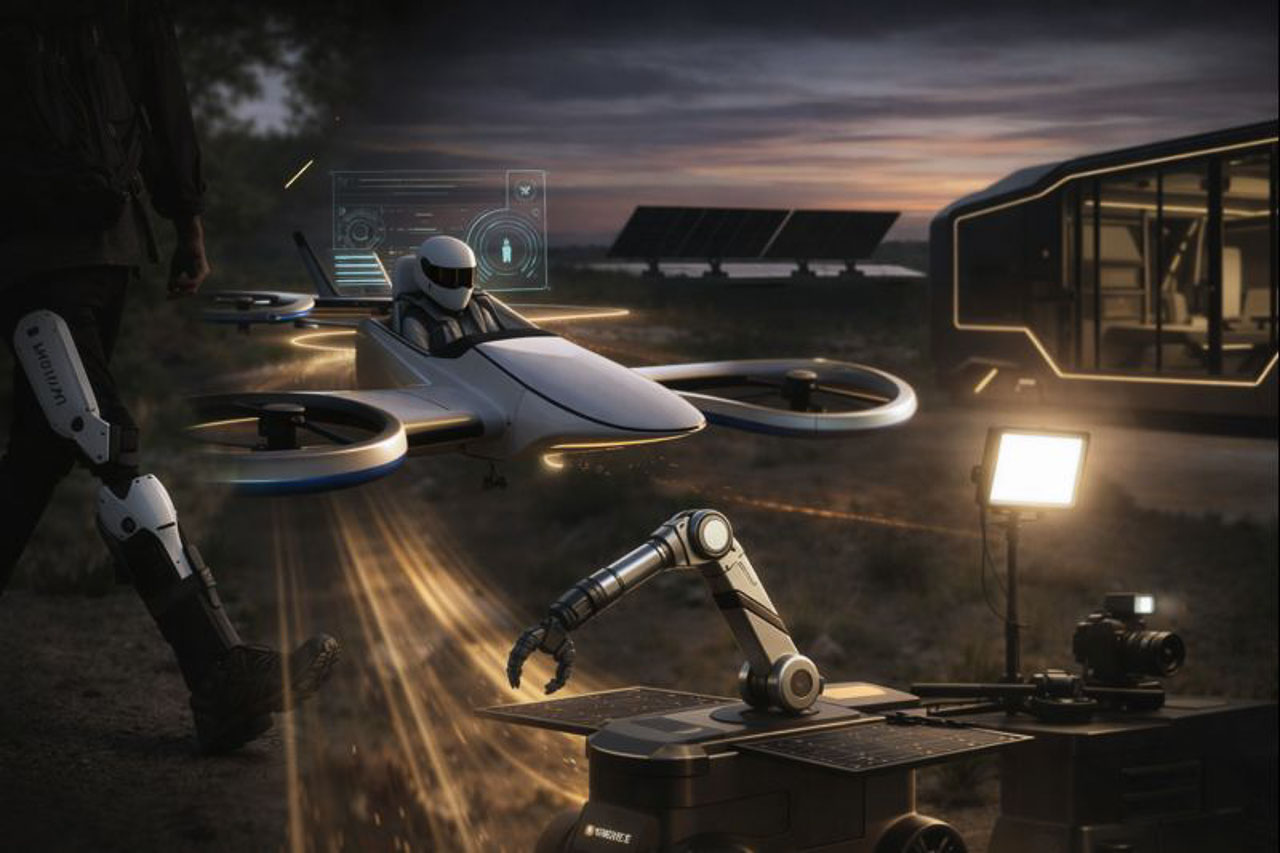
NAVEE introduced five product lines at the event. Each one targets a different kind of movement, and each one is still in concept form. The ideas are interesting, and the ambition is hard to ignore.
What ties these five ideas together is not form factor. It is intent. NAVEE is treating mobility less as a vehicle problem and more as an interface problem. How does power move with you. How does shelter adapt to where you are. How does assistance feel invisible rather than mechanical. That philosophy shows up in different shapes, but it remains consistent.
NAVEE frames this moment as what it calls the Fifth Mobility Revolution, following steam, combustion, electrification, and connectivity. In Polo Huang’s words: “Now, we enter the Fifth Revolution: Intelligent Mobility, autonomous, seamless movement across every physical domain. This is the future NAVEE is building.”
This kind of thinking is emerging now because everyday life is changing faster than the tools built around it. Work is becoming more distributed. Energy is becoming more mobile. People increasingly expect technology to adapt to how they live rather than forcing them into fixed patterns.
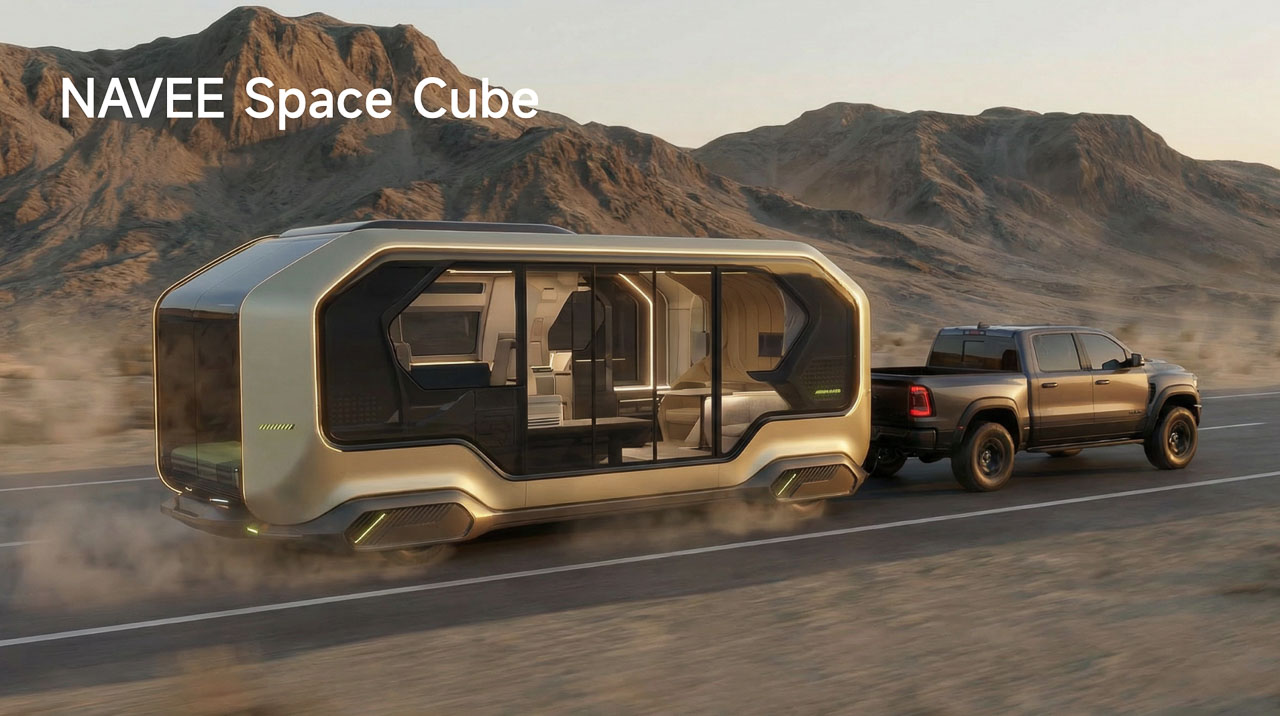
NAVEE Space Cube: A Transformable Motorhome for the Road
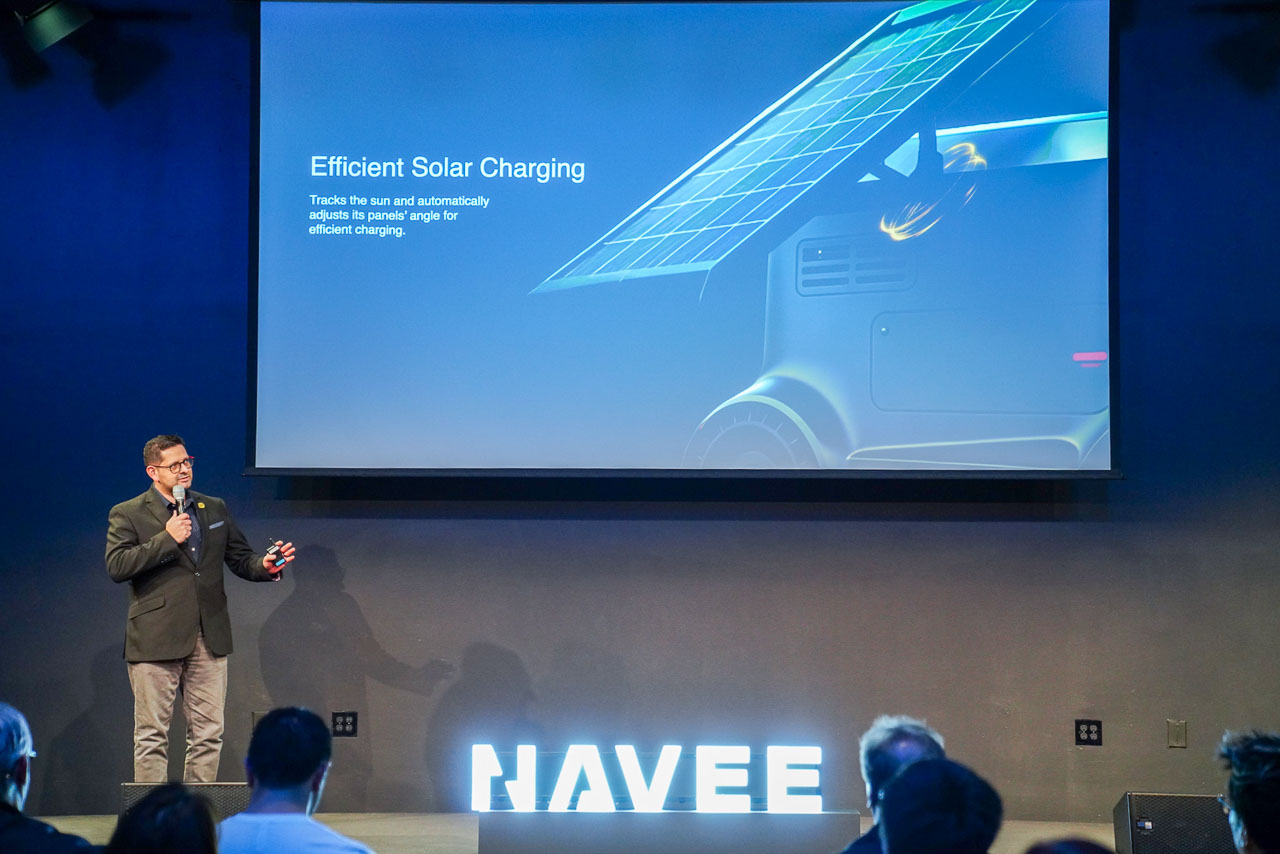
At its simplest, Space Cube is a towable trailer that expands when parked, turning a compact shell into a livable space. According to NAVEE, it expands from 200 square feet to 296 square feet in about three minutes, a 48 percent increase. It runs on solar power with panels that auto-track the sun and is built for off-grid living. NAVEE positions Space Cube as approachable even for first-time owners, emphasizing that its AI systems are meant to reduce the learning curve.
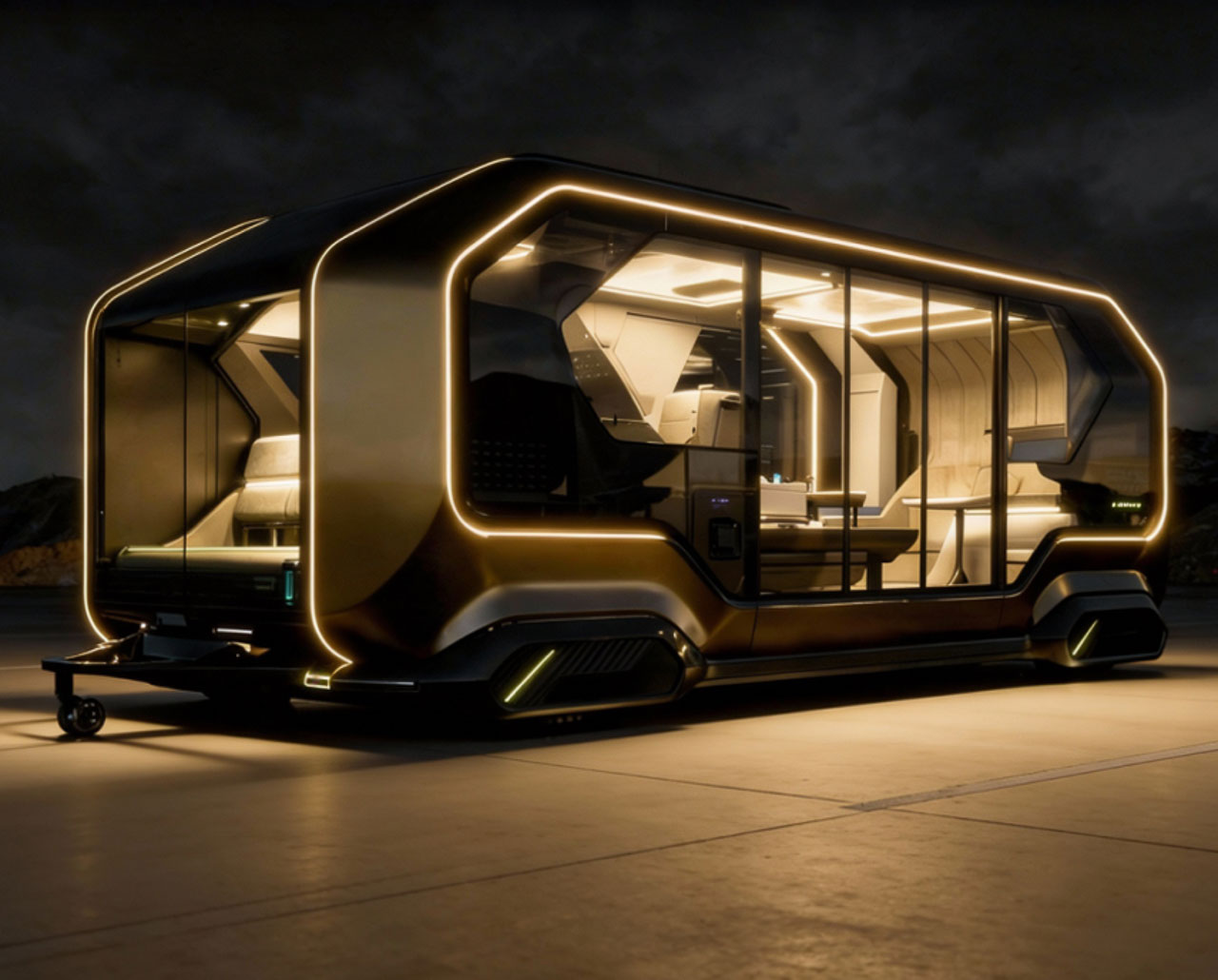
As the company puts it: “Towing and parking? No experience needed. The AI handles the hard stuff.”
The mobile living market is having a moment, and NAVEE is reading the room correctly. Industry estimates place the global travel trailer market in the mid-teens of billions, with steady single-digit annual growth projected through the mid-2030s. More telling, about 486,000 Americans now live full-time in RVs, more than double the number from 2021, driven largely by housing costs that have priced out traditional homeownership.
What makes Space Cube interesting is not the trailer itself. It is the assumption baked into it. A growing segment of workers and creators no longer plans life around a fixed address. Mobility is no longer about movement between places. It is about enabling work, rest, and daily life to happen wherever you are.
NAVEE Mobi-Energy: A Mobile Energy Storage Robot
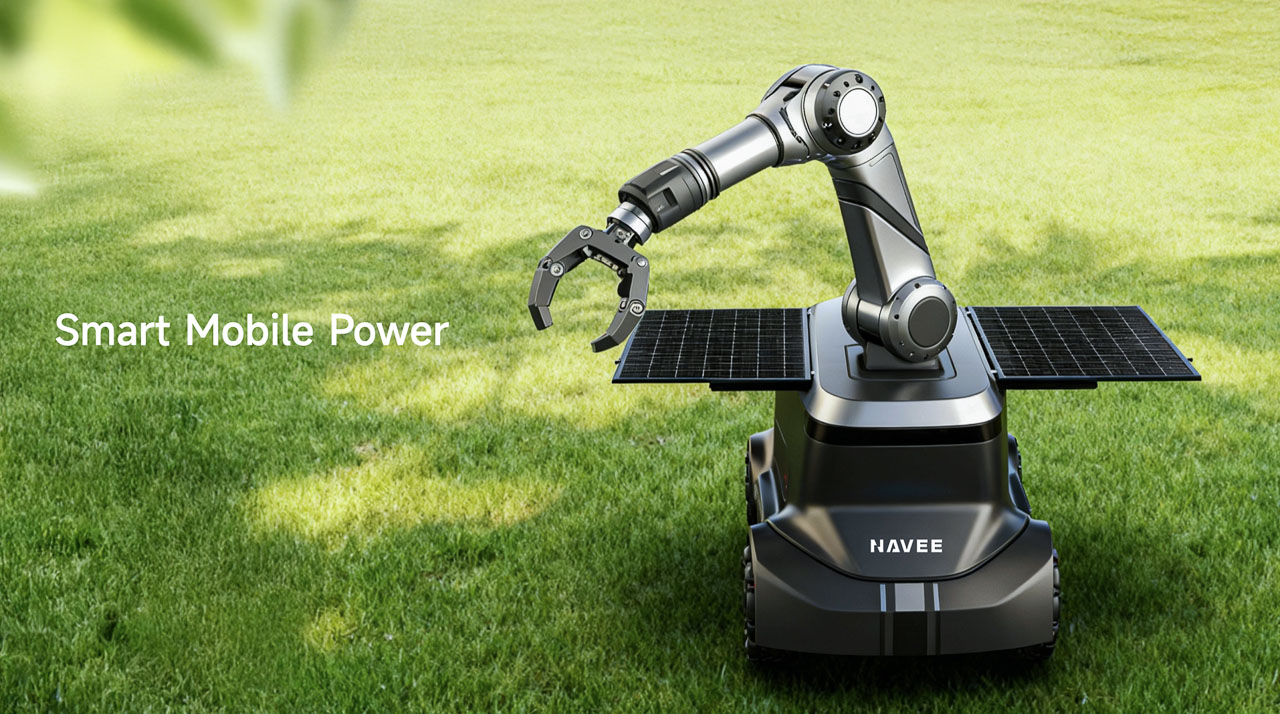
Mobi-Energy can be thought of as a portable battery that moves itself instead of being carried. It is a power station with legs. It follows the user, charges via solar with autonomous angle adjustment, and includes a robotic arm for assistance. NAVEE describes it as a robotic energy assistant that moves with you.
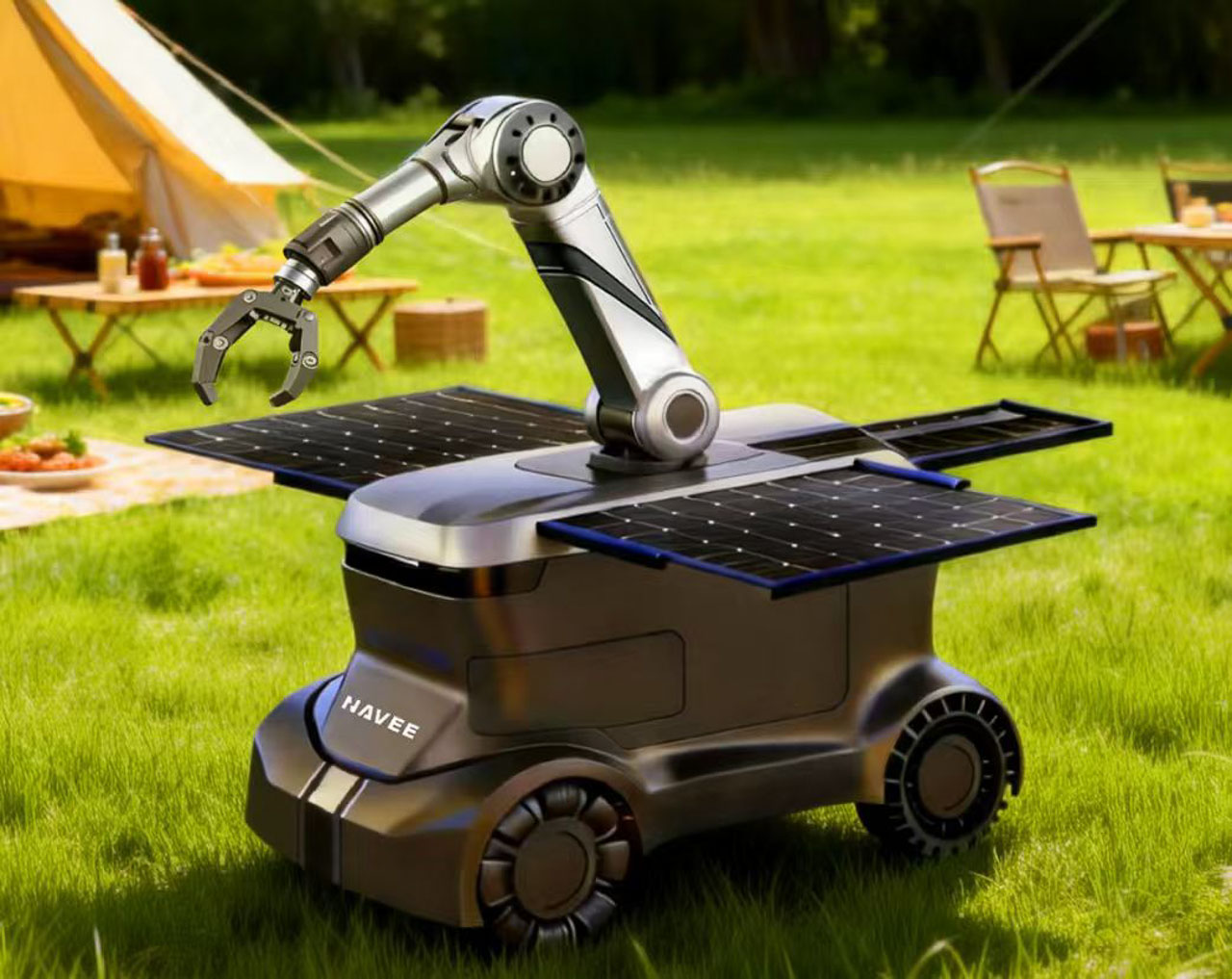
Industry forecasts place the portable power station market in the tens of billions by the early 2030s, with double-digit annual growth expected. Lithium-ion costs have dropped dramatically over the past three decades, making serious energy storage commercially viable for the first time. Yet most products in this category remain static boxes that must be carried and repositioned manually.
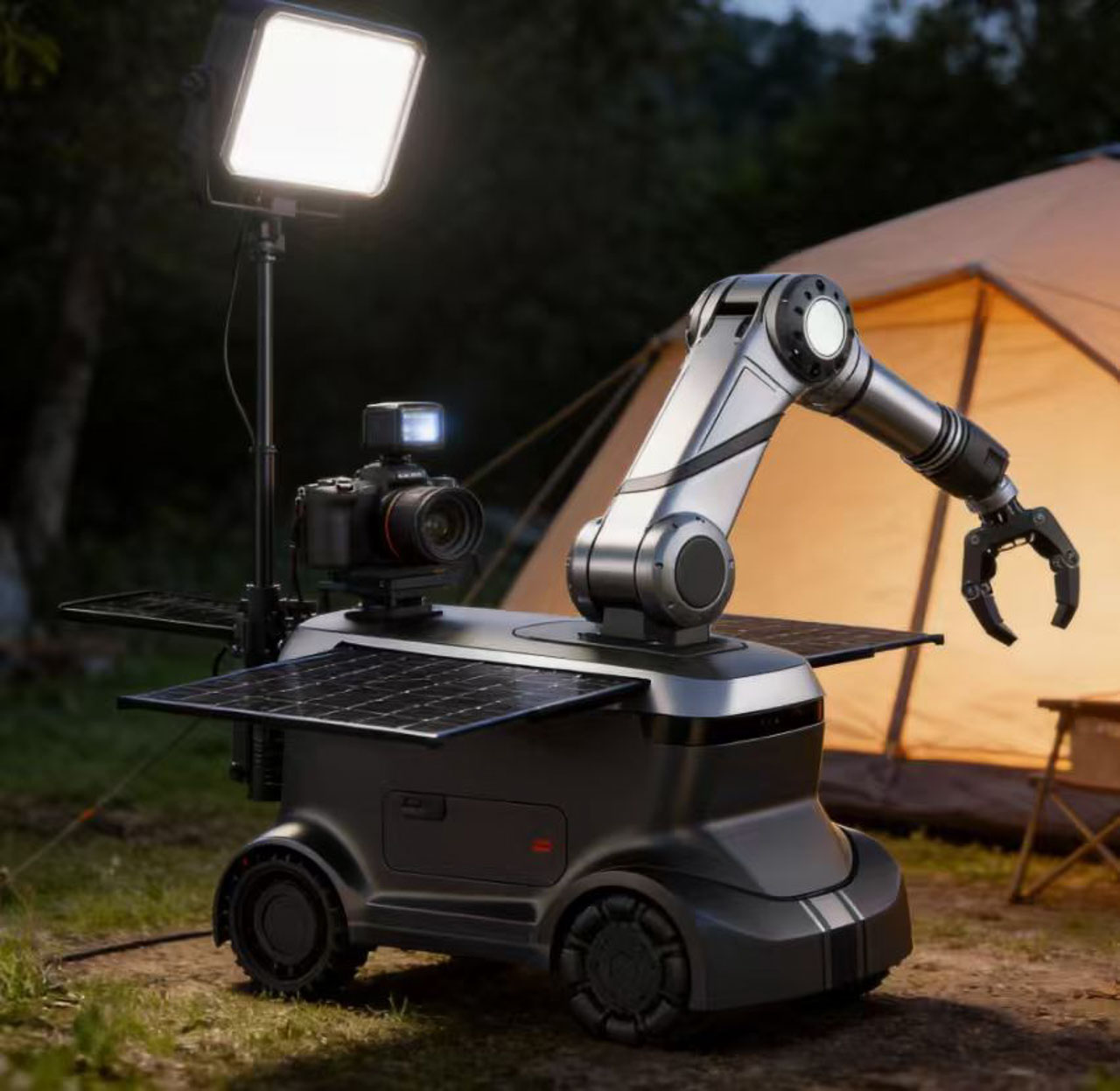
Mobi-Energy reframes power as an active participant rather than a passive object. A system that removes setup friction and follows the user suggests a shift from passive storage to active assistance, with implications for outdoor work, emergency response, and mobile operations.
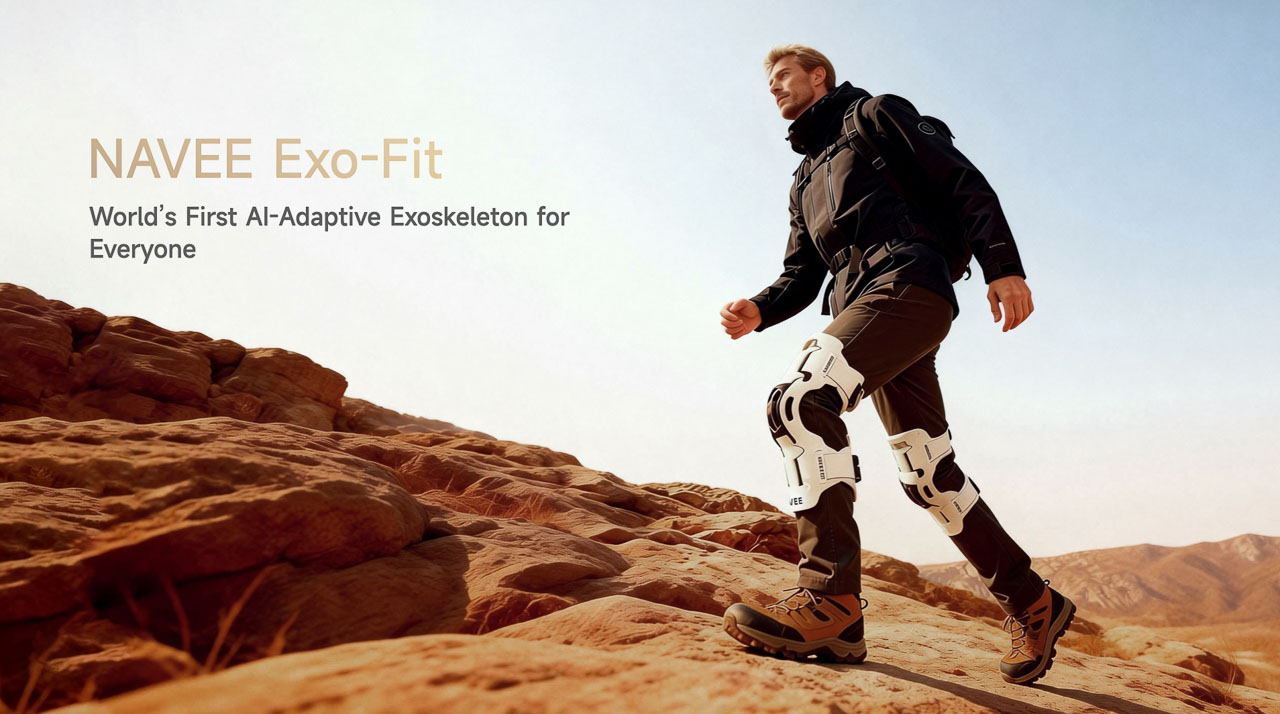
NAVEE Exo-Fit: An Intelligent Exoskeleton for Work and Play
Exo-Fit is a wearable support system designed to help the body perform physical work with less strain. NAVEE says it calibrates to the user’s body in five minutes, adjusts to terrain in real time, and can be worn under clothing. The pitch is straightforward: you move, it adapts.
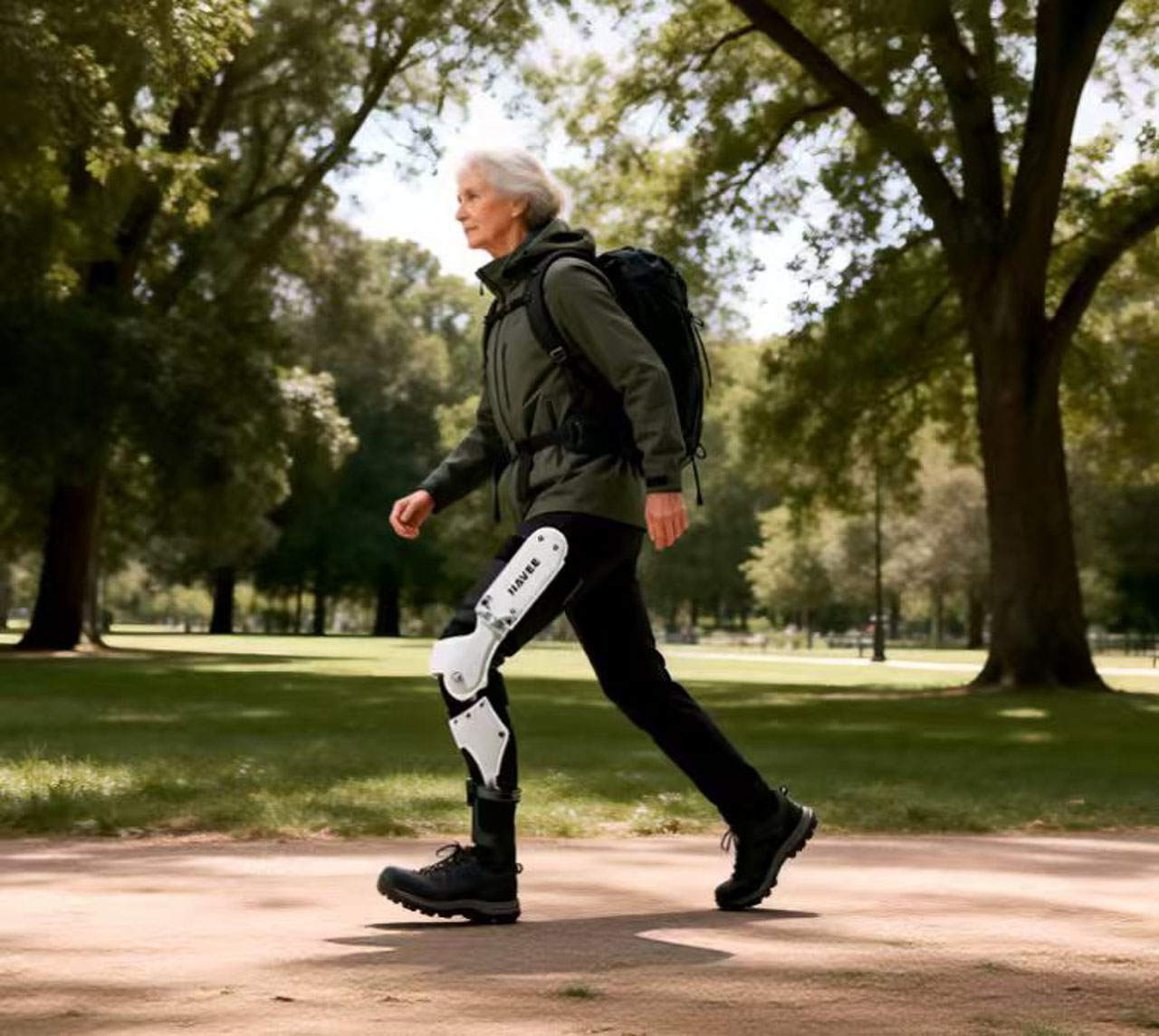
The exoskeleton market is still early. Consumer-oriented systems remain largely experimental, with CES 2026 marking one of the first times multiple consumer exoskeletons appeared publicly. Most remain bulky and mechanical, which has limited adoption.
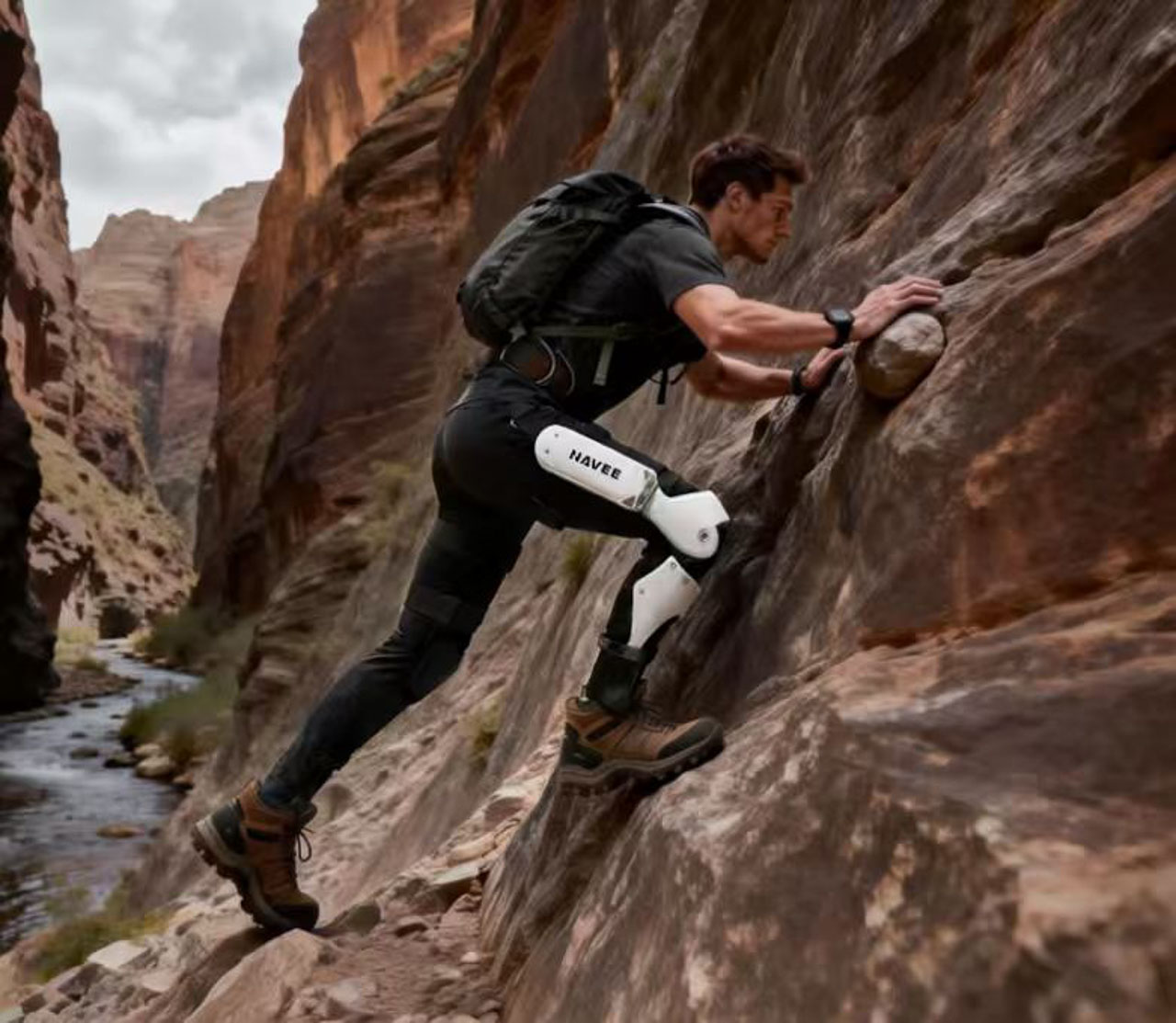
If NAVEE can deliver on comfort, wearability, and ease of use, Exo-Fit could address the usability barrier that has kept exoskeletons confined to factories and clinics. That would make it relevant not only for workers, but also for hikers and mobility assistance users.
NAVEE WaveFly 5X: A Personal Aerial Watercraft
WaveFly 5X is a personal watercraft that lifts above the surface as it moves, reducing drag and allowing it to glide rather than plow through water. It operates roughly 12 inches above the surface and features a quick-swap battery system. NAVEE lists a top speed of 53 mph, a range of up to 50 miles, and approximately 70 minutes of flight time.
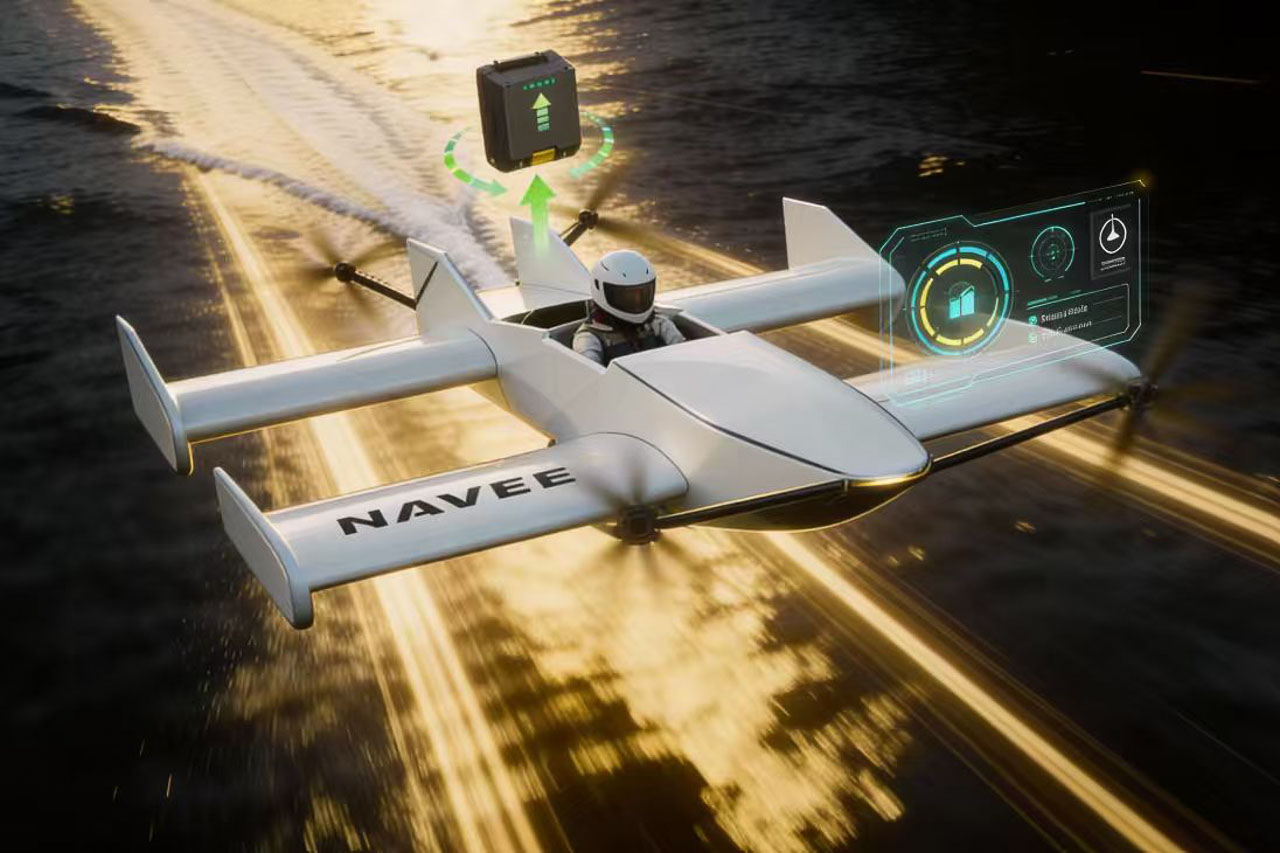
Electric hydrofoils represent a small but rapidly evolving segment of marine mobility. By reducing drag, hydrofoils extend range and improve efficiency compared to traditional hulls. Commercial hydrofoil ferries are already operating in Europe, and interest from larger manufacturers is increasing.
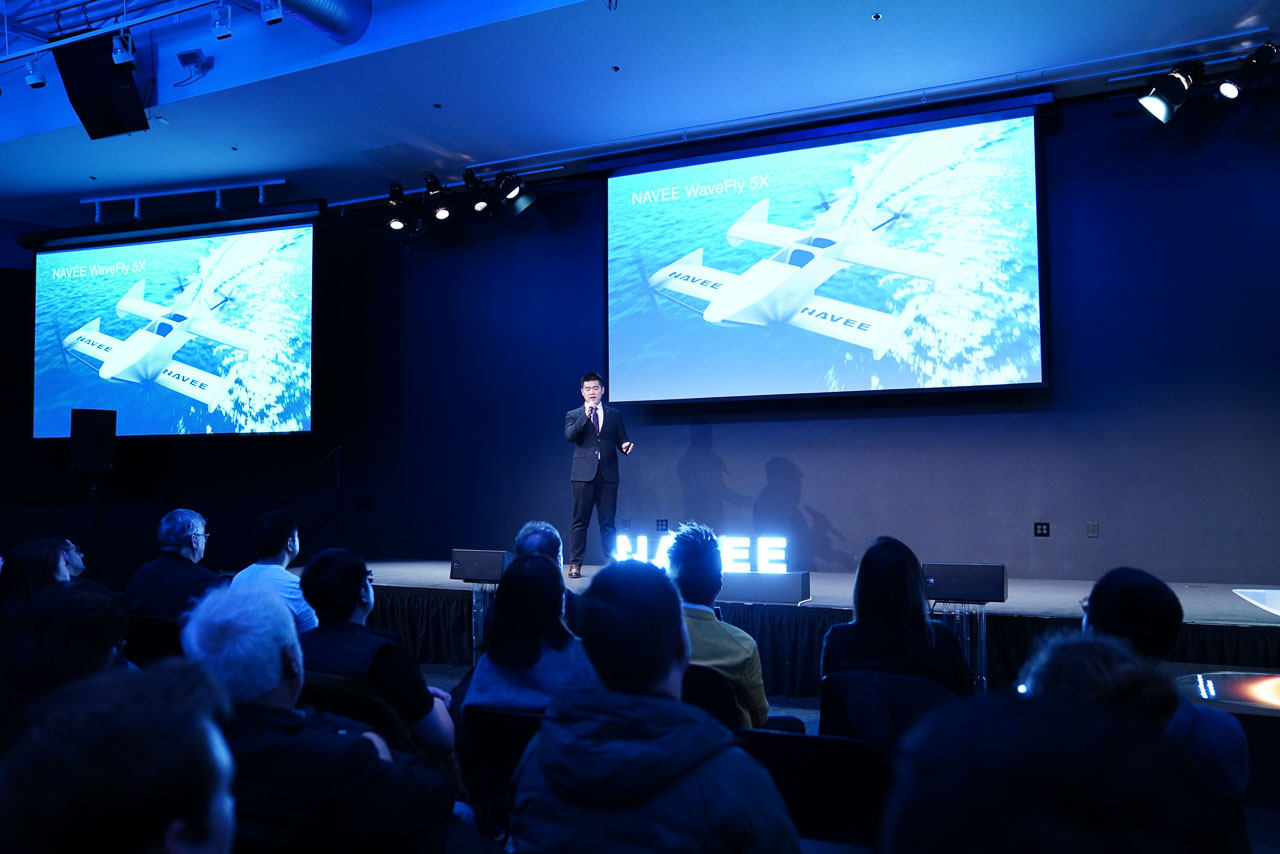
WaveFly 5X also serves a strategic role. Water provides a lower-risk environment for testing control systems and flight dynamics. As such, it functions as both a recreational product and a stepping stone toward more advanced mobility platforms.
NAVEE eVTOL: An Urban Air Mobility Aircraft
An eVTOL is an electric aircraft capable of vertical takeoff and landing. NAVEE’s concept targets short urban trips and is built around AI-driven flight systems and an advanced electric powertrain.
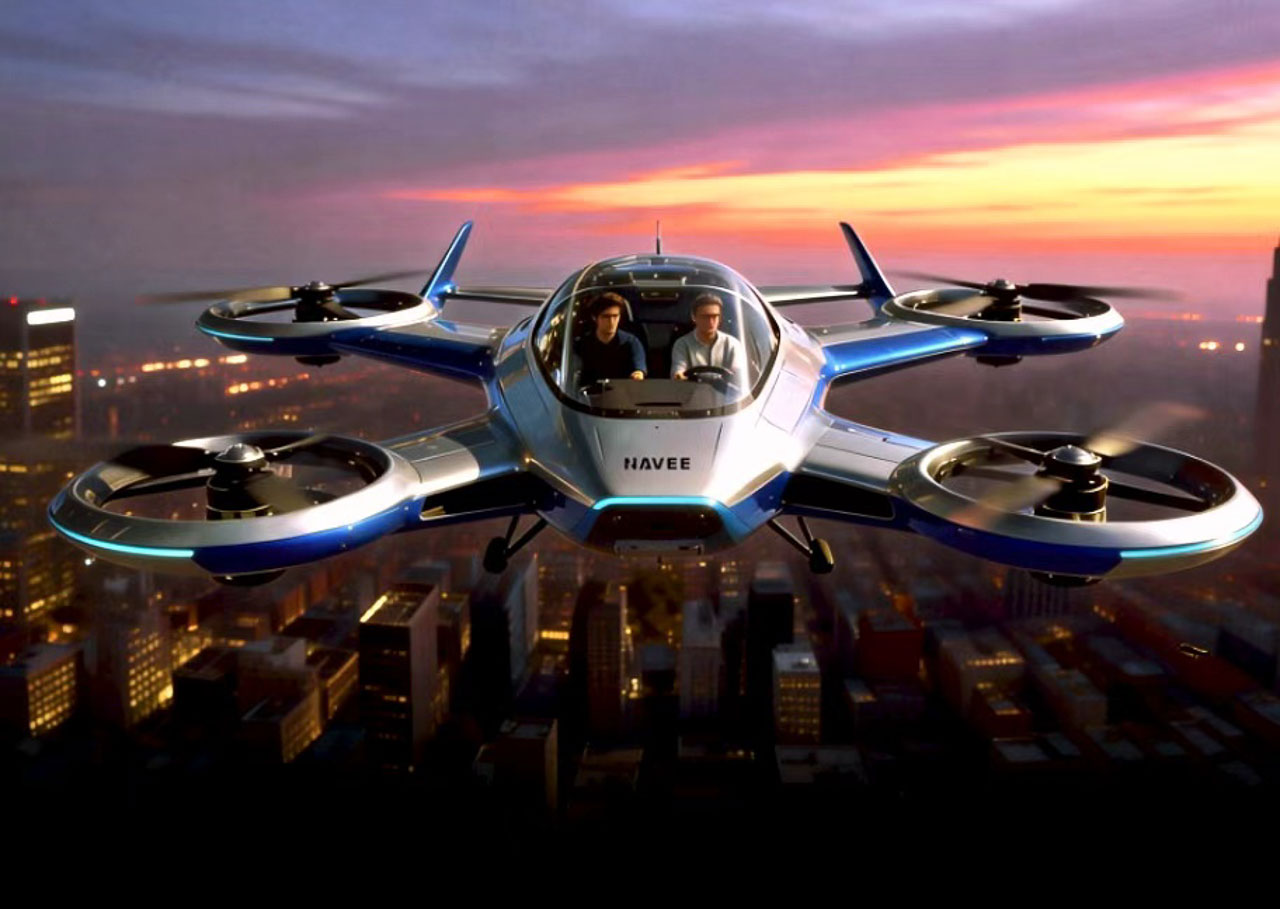
The regulatory landscape for powered-lift aircraft is becoming clearer, though timelines remain long. In late 2024, the FAA published its Special Federal Aviation Regulation for powered-lift aircraft, defining certification and operational frameworks for the first new aircraft category in decades.
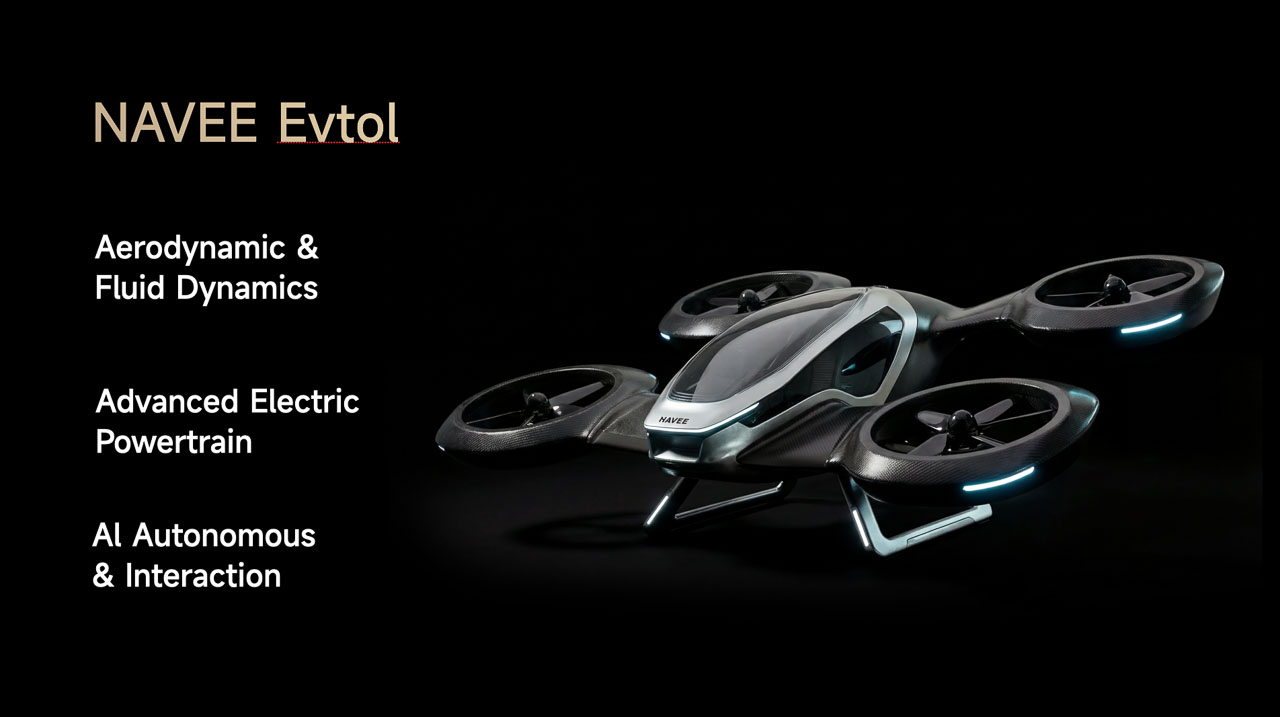
NAVEE is not presenting this as a near-term product. Instead, the eVTOL concept signals long-term intent. It reflects a desire to build control, autonomy, and energy management expertise that can scale across mobility domains.
Engineering and Credibility
NAVEE has made a point of emphasizing execution alongside ambition. The company says it allocates roughly 20 percent of its resources to research and development and spent $13.8 million on R&D in 2025 alone.
NAVEE reports holding 342 patent applications, with 199 already granted, and says its products undergo more than 140 tests at globally recognized labs including TÜV Rheinland, SGS, BV, and UL. It also highlights a retail footprint spanning Amazon, Target, Walmart, and its own online store, with operations in more than 60 countries.
The goal is clear. NAVEE wants to be seen as an engineering-driven company with scale and credibility, not a speculative brand built on concept renders.
What This Launch Signals and What Comes Next
NAVEE’s Silicon Valley event is best understood as a repositioning move rather than a product rollout. The company built its name on electric scooters. Now it is attempting to redefine itself as a multi-domain mobility brand.
Land, human, air, and water mobility each present distinct engineering and regulatory challenges. If NAVEE can successfully deliver even part of this portfolio, it would stand apart from competitors focused on single categories.
Taken together, these concepts suggest a focus on reducing friction and increasing flexibility across everyday movement. The NO LIMITS event was a starting line, not a finish line. The next phase will determine whether NAVEE can translate ambition into products that withstand real-world scrutiny.


Gadgeteer Comment Policy - Please read before commenting
Ambitious! It will take a lot of $$$ to make all of this happen. Also interesting that they talk about mobile living while at the Computer History Museum in Mt View, CA. Not far away there are dozens of RVs parked along nearby streets where people are living on a regular basis.