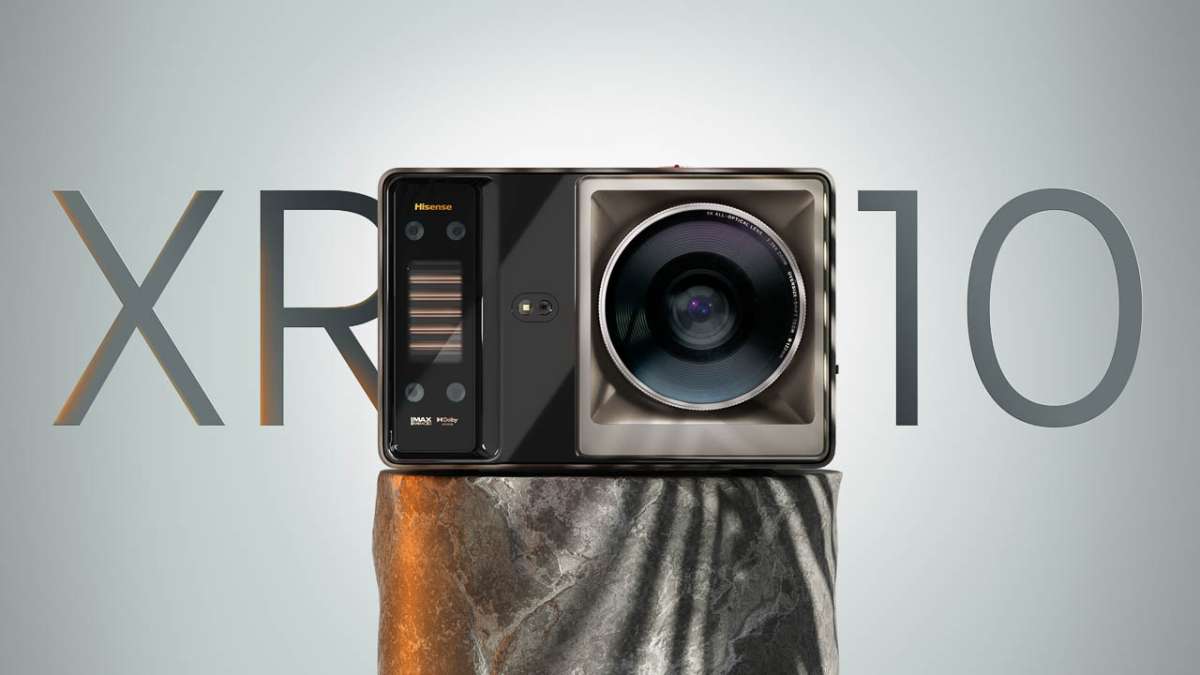
NEWS – There are two ways to get a really big picture in your living room. You can mount a massive television on your wall, or you can use a projector. Until recently, the choice came down to one thing: how much do you care about watching during the day?
Televisions handle daylight by being extremely bright. A panel like the Hisense 100U8QG 100-inch we reviewed earlier this year pumps out thousands of nits of brightness, enough to overpower sunlight coming through your windows. The picture stays punchy and vivid no matter what is happening in the room. That is not magic. It is just brute force. The screen makes so much light that ambient light stops mattering.
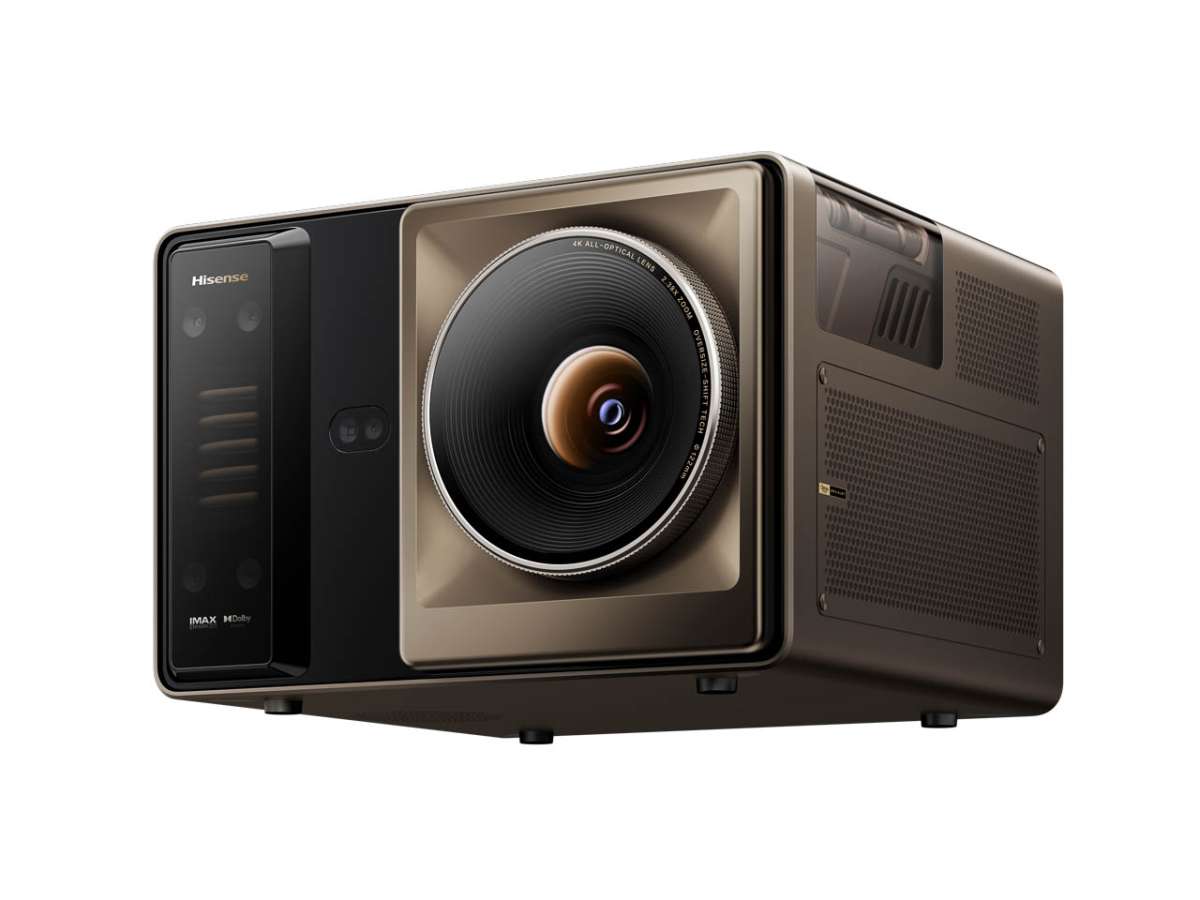
Projectors have historically struggled with this. They throw light onto a surface, and that light has to compete with everything else bouncing around the room. Open a window, turn on a lamp, or have someone walk into the kitchen, and suddenly your movie looks washed out. Most home projectors sit around 2,000 to 3,000 lumens, which works fine in a dark basement but falls apart in a normal living room during the day.
The XR10 changes that calculation. At 6,000 lumens, it puts out roughly twice the brightness of typical home projectors. That is enough to hold a watchable picture in a room with the blinds partially open on a sunny afternoon. It is not going to match the raw brightness of a high-end LED television, but it gets close enough that you can actually use it during the day without blacking out your windows.
Add The Gadgeteer as a preferred source to see more of our coverage on Google.
How This Compares to a Big Television
The Hisense 100U8QG 100-inch and the XR10 both solve the same problem: getting a really large picture into your home. But they demand very different things from your space.
A 100-inch television is a permanent installation. It weighs over a hundred pounds. It needs reinforced wall mounting or dedicated furniture. Once it is up, it is up. The wall behind it stops being a wall and becomes a TV wall. If you decide later that you want the screen somewhere else, or you want the room to serve a different purpose, you are looking at a significant project.
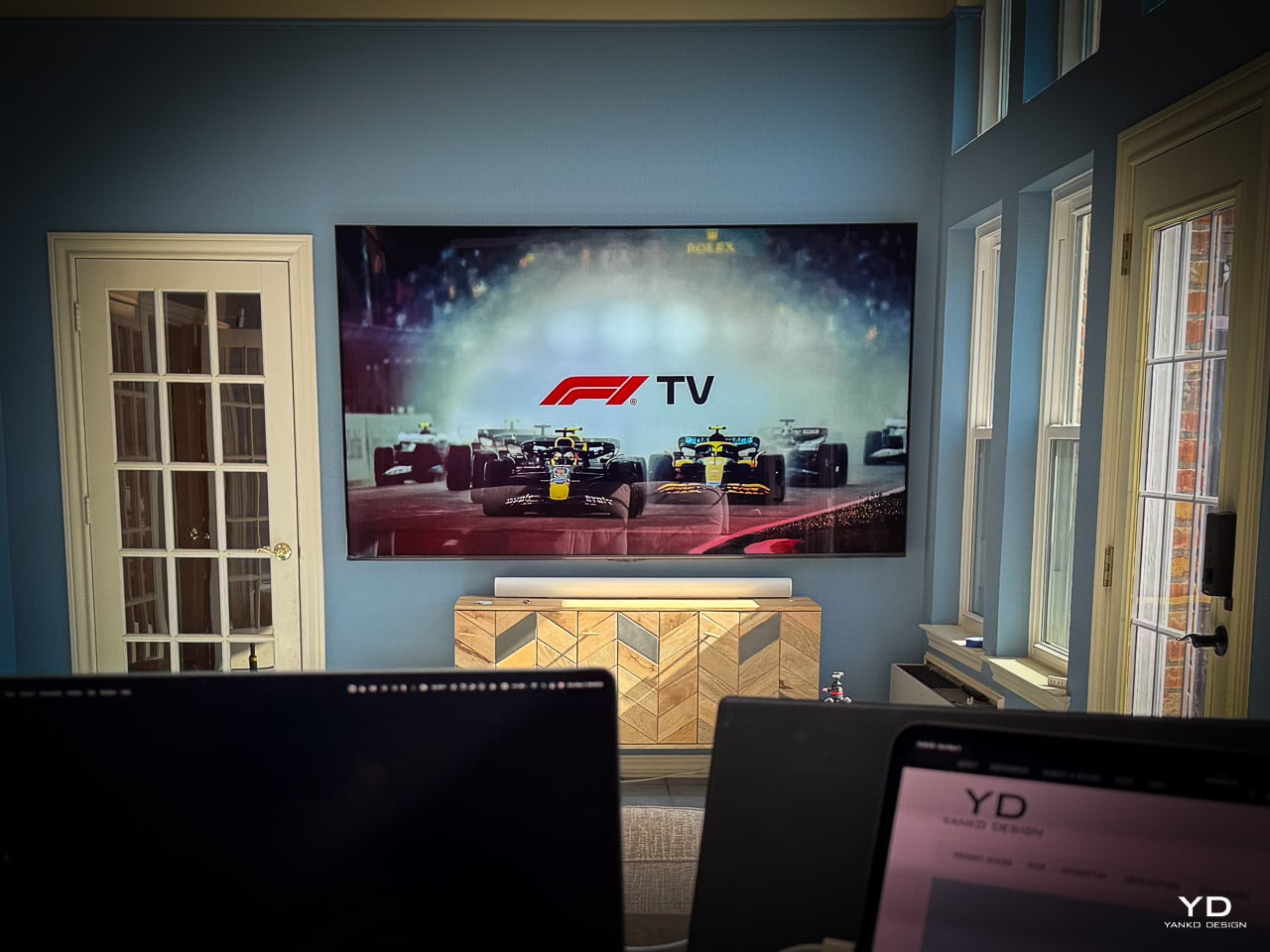
The XR10 sits on a table or media console, projects onto any flat light-colored surface, and can be moved if you need to. It scales from 65 inches up to 300 inches depending on how far you place it from the wall. When you turn it off, your wall goes back to being a wall. If you move houses, you bring the projector with you without calling movers to deal with a 100-inch panel.
That flexibility has tradeoffs. The Hisense 100U8QG 100-inch will look exactly as bright at 2 PM on a sunny day as it does at midnight. The XR10 will look better in some conditions than others. If you close your blinds most of the way, you get a great picture. If you leave them wide open with direct sun hitting the wall, the image fades. You can work around this with curtains or screen placement, but it requires some awareness of your lighting situation.
Brightness in Practical Terms
Televisions and projectors measure brightness differently, so comparing raw numbers does not tell you much. What matters is whether you can actually use the thing in your house during the hours you want to watch.
For the XR10, the answer is mostly yes. Sunday afternoon football with the blinds tilted? Looks good. Morning cartoons while sunlight streams through east-facing windows? Probably a bit washed out unless you adjust the blinds. Evening movie with a few lamps on? No problem at all.
The television wins on consistency. It looks the same no matter what. The projector wins on flexibility. You get a giant screen without permanently dedicating a wall to it, without reinforcing your studs, without figuring out how to get a 100-inch panel into your house through a standard doorway.
If your living room is the kind of space where you want a huge screen sometimes but need the room to do other things too, or if you rent and cannot make permanent modifications, or if you just do not want a television the size of a mattress dominating your space, the XR10 offers something the Hisense 100U8QG 100-inch cannot. You trade some brightness certainty for the ability to have a big screen experience without reorganizing your life around it.
Colors That Look Like They Should
Let me explain something without getting too technical: most TVs and projectors aim for a color standard called BT.2020, which is basically the full range of colors the human eye can see. Cheaper projectors hit maybe half of that range. The XR10, because it uses three separate colored lasers instead of filtering white light, gets much closer to the full spectrum.
What you actually notice is that reds look like reds instead of slightly orange. Greens have actual depth instead of looking like highlighter ink. Blues stay rich across the brightness range instead of fading out. If you have ever watched something on a mediocre projector and felt like the picture looked kind of flat or fake, that is usually a color gamut problem.
The reason this matters beyond just picture quality is that pushing brightness usually means sacrificing color accuracy. Most projectors that get really bright start looking washed out or weird. Hisense is betting that using separate laser modules for each primary color lets them push both brightness and color accuracy at the same time, rather than trading one for the other.
Getting colors right at high brightness is genuinely hard engineering, which is why most companies either give you a dim projector with good colors or a bright projector with meh colors. The XR10 is trying to do both, and if it actually works as advertised, that would be a notable achievement for laser TV technology overall.
The Optics Stuff (In Plain English)
The lens system uses 16 glass elements instead of cheaper plastic ones. Glass handles heat better and does not warp over time, which means your picture should stay sharp even after years of use. It also includes something called an IRIS system that automatically adjusts how much light passes through based on what you are watching, boosting contrast so bright scenes look bright and dark scenes actually look dark.
You also get a really wide zoom range, which matters more than you might think. If your room is a weird shape or you cannot put the projector exactly where you want it, the zoom lets you dial in the image size without moving the physical unit around. The auto-calibration system uses cameras and sensors to correct for angled placement, so if you have to put it slightly off-center, the picture does not turn into a trapezoid.
Why This One Might Actually Last
Here is a dirty secret about projectors: a lot of them slowly get dimmer and weirder-looking over time. Traditional cooling systems pull air (and dust) through the unit, which gunks up the optics. Lamps dim gradually. Colors shift. That expensive projector you bought starts looking mediocre after a few years.
The XR10 uses a sealed liquid cooling system, which is the first time Hisense has done this in a laser TV. Think of it like how a car radiator works. The coolant circulates through the laser module without exposing the internal optics to dust and debris from your room. The sealed design means the guts of the projector stay clean, which should help it look as good in year five as it does out of the box.
Laser projectors also have this issue called speckle, where coherent laser light creates a subtle grainy texture on screen. It looks kind of like static or film grain, but less pleasant. Hisense claims the XR10 suppresses speckle down to about 6 percent, which should make the image look smooth and natural rather than digitally crunchy. If they pulled this off, it removes one of the last real complaints videophiles have about laser projection compared to traditional displays.
Actually Fitting In Your House
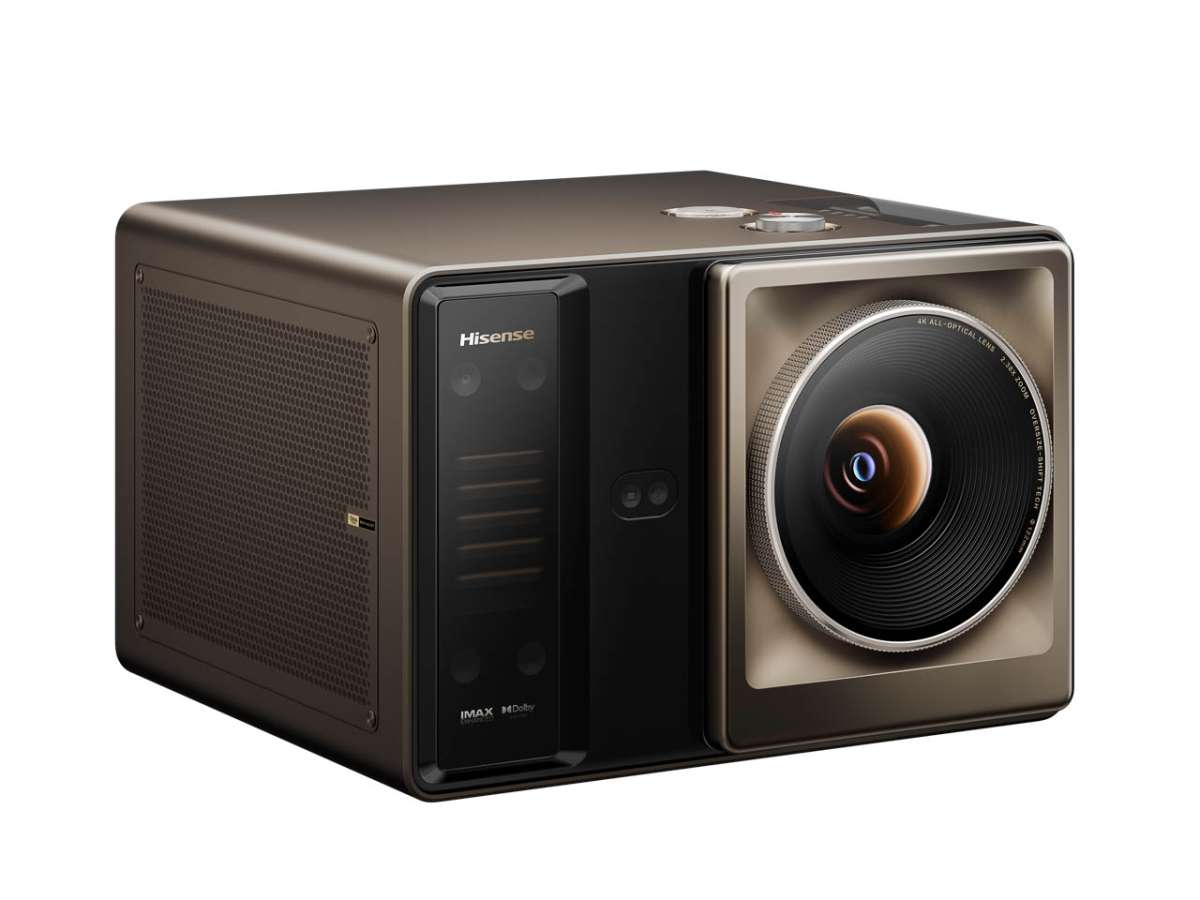
Despite all this technology, Hisense says they managed to make the XR10 smaller than previous high-brightness laser TVs. The liquid cooling system actually helps here because it dissipates heat more efficiently than fans, so the whole unit can shrink without cooking itself. Previous generations of these things were big enough to need their own furniture. The XR10 should work on a normal media console without dominating the room.
Ultra-short-throw projectors like this one sit right next to the wall rather than across the room. You put it on a table or cabinet a few inches from your screen, and it projects upward. No mounting a projector on your ceiling, no running cables across the room, no worrying about people walking through the beam during movie night. For a lot of people, this setup is way more practical than traditional projector installations.
The size thing matters because Hisense is positioning this as a living room product, not a home theater product. They want people who have nice but normal houses to consider this instead of a big TV. Whether that actually works depends on how it looks in real rooms with real lighting, but the pitch makes sense.
This is the kind of projector you could leave set up permanently without it looking like you built a home cinema. It sits there like a soundbar, projects a massive image when you want it, and does not require architectural modifications to your house. For people who want big screen experiences but do not want to dedicate a room to it, that flexibility matters.
When Can You Actually Buy One
Hisense will be showing off the XR10 at CES 2026 in Las Vegas from January 6 through 9. Their booth is in Central Hall at the convention center, number 17704, and they will be running hands on demos so people can see how it performs in different lighting conditions. I will be at CES and am looking forward to checking out the XR10 in person to see what 6,000 lumens actually looks like on a busy show floor. I plan to spend time with the demo and will be sharing full coverage once I have had a chance to see how this projector performs outside of the spec sheet.
Pricing and availability have not been announced yet. Given that this is the flagship of their laser TV lineup, expect flagship pricing, probably several thousand dollars at minimum. The laser TV market has gotten more competitive since Hisense pioneered it, with Samsung, LG, and several Chinese brands all offering alternatives. Where the XR10 lands relative to those options will determine whether the technical advantages translate to actual sales.
📡 CES 2026 Coverage
Want more from the show floor?
We’re covering the biggest announcements, wildest concepts, and gear that actually matters from CES 2026.