Fall camping has a particular kind of friction. Daylight disappears earlier, temperatures can drop quickly after sunset, and a scenic campsite may be well outside dependable phone coverage. The right electronics can make a trip safer and more comfortable, but the wrong ones simply add weight, cables, and charging anxiety.
These seven products are not meant to turn a campsite into a living room. Each addresses a specific outdoor problem: communication, light, power, group coordination, or mosquito control. The specifications below come primarily from the manufacturers, so treat runtime, charging, and coverage figures as controlled-condition claims rather than universal real-world promises.
1. Garmin inReach Mini 2 for off-grid communication
A smartphone is useful until it has no signal. That makes a satellite communicator the most consequential electronic item on this list for campers who travel beyond reliable cell coverage.
Price: $324.89
Where to Buy: Amazon
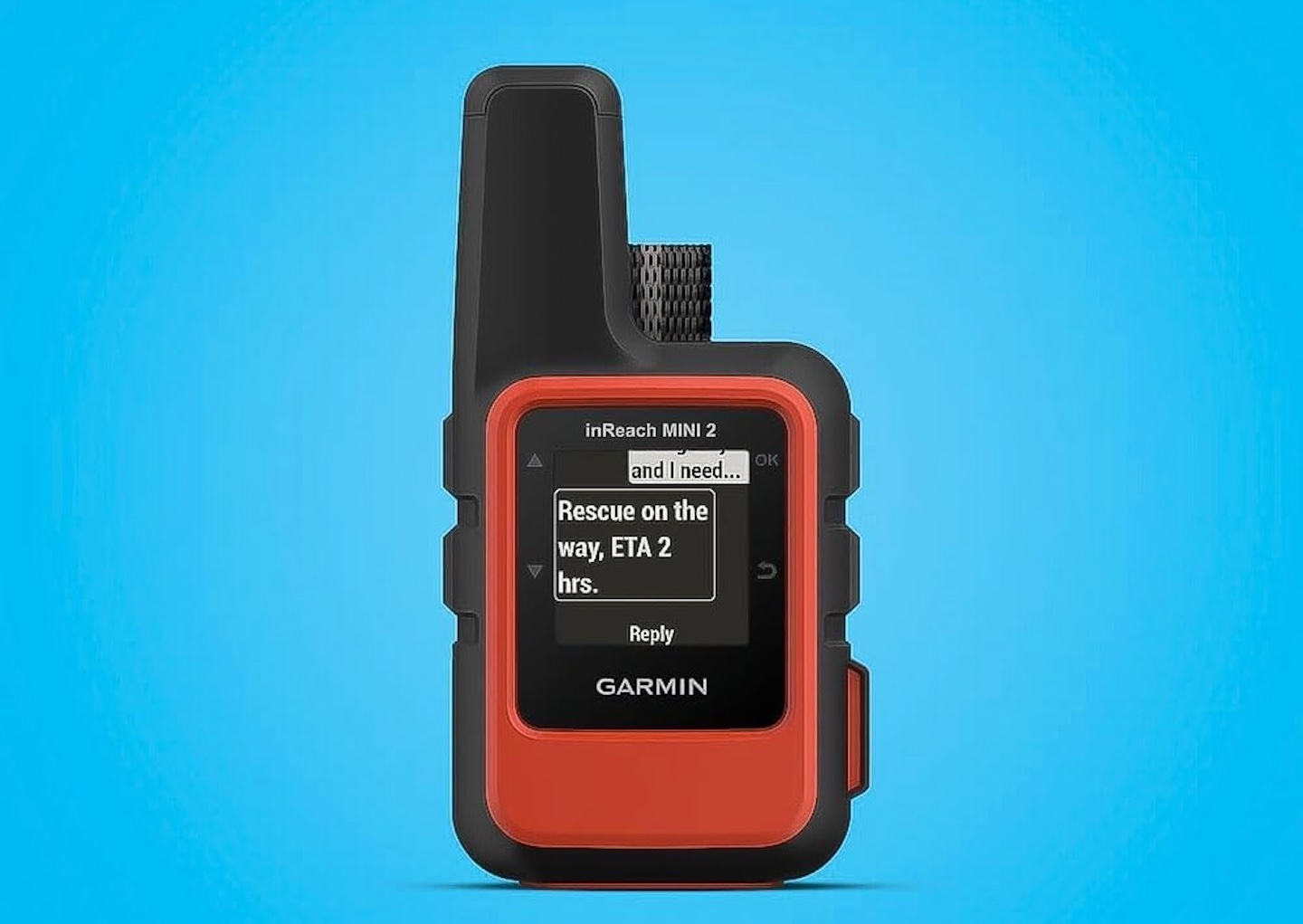
Garmin’s inReach Mini 2 supports two-way satellite messaging, location sharing, weather requests, and interactive SOS communication through the Iridium satellite network. Garmin lists it at 100 grams with an IPX7 water rating. Garmin claims up to 14 days with 10-minute tracking intervals or up to 30 days with 30-minute intervals, both with standard activity recording and a full sky view.
Those battery figures depend on tracking settings, messaging, tree cover, and a clear view of the sky. Garmin also requires an active satellite subscription for messaging, tracking, SOS, and weather functions. The device is not a substitute for route planning, first-aid skills, or sharing an itinerary before departure.
Buyer fit: The inReach Mini 2 makes sense for backcountry hikers, overlanders, hunters, and campers who regularly leave cellular service. It is excessive for a typical campground weekend with dependable coverage.
2. EcoFlow RIVER 3 Plus for a vehicle-supported campsite
A full power station does not belong in every tent. For car campers, RV travelers, photographers, or anyone powering several devices, however, it can be far more useful than a stack of small power banks.
Price: From $279
Where to Buy: Ecoflow
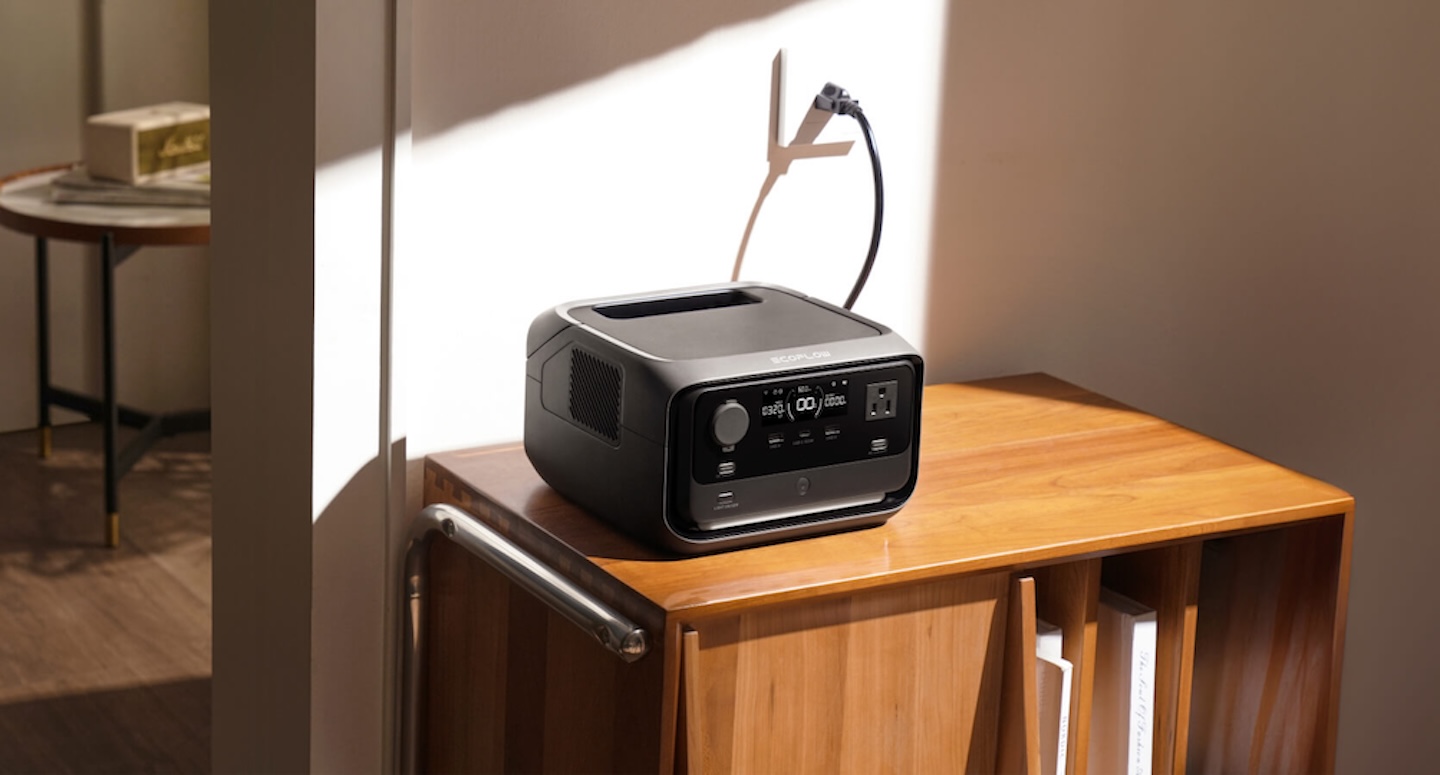
EcoFlow lists the RIVER 3 Plus with a 286Wh LiFePO4 battery, 600W of rated AC output, a 100W USB-C port, and up to 220W solar input. It weighs about 10.4 pounds, putting it firmly in the car-camping category rather than the backpacking category.
Its practical value is flexibility. It can recharge phones, lights, cameras, and laptops while also powering lower-wattage AC equipment. EcoFlow says the battery is rated for 3,000 cycles to 80% capacity under its test conditions.
Capacity is not the same as unlimited runtime. Conversion losses reduce the energy delivered to plugged-in devices, and its 600W rated AC output limits which appliances it can power normally. EcoFlow also lists 1,200W surge and X-Boost capabilities, but those should not be confused with 1,200W of standard rated AC output. Heating gear is especially demanding. Check the wattage label on anything you intend to connect, and do not assume a small power station can replace a campsite electrical hookup.
Buyer fit: Buy the RIVER 3 Plus for a base camp where multiple people or devices need power. Backpackers should choose a lighter USB-C power bank instead.
3. BioLite HeadLamp 800 Pro for early darkness
A headlamp is one of the most useful pieces of camping electronics because it gives you light while leaving both hands free. That matters when cooking, pitching a tent, handling a map, or walking back from the restroom after dark.

Price: $69.95
Where to Buy: Amazon
BioLite’s HeadLamp 800 Pro uses a rechargeable battery and offers white spot, flood, red, and strobe modes. The company lists an 800-lumen burst mode, IPX4 water resistance, and a 150-hour maximum runtime on its lowest setting. It weighs 150 grams.
The important qualifier is that the 800-lumen setting is a 30-second burst, not an all-night output level. BioLite advertises up to seven hours on high in regulated mode, which allows brightness to decline to conserve battery life. That is not seven hours at constant high brightness. It also charges through Micro-USB, which is worth considering if the rest of your equipment has moved to USB-C.
Buyer fit: This is a good fit for campers who hike at dawn or dusk, cook after dark, or want a serious rechargeable headlamp. Casual campers may be better served by a smaller, less expensive model.
4. Goal Zero Crush Light Chroma for low-impact camp lighting
A headlamp is best for tasks. A lantern is better for making a table, tent, or camp kitchen easier to use without shining a beam into everyone’s face.
Price: $34.95
Where to Buy: Amazon
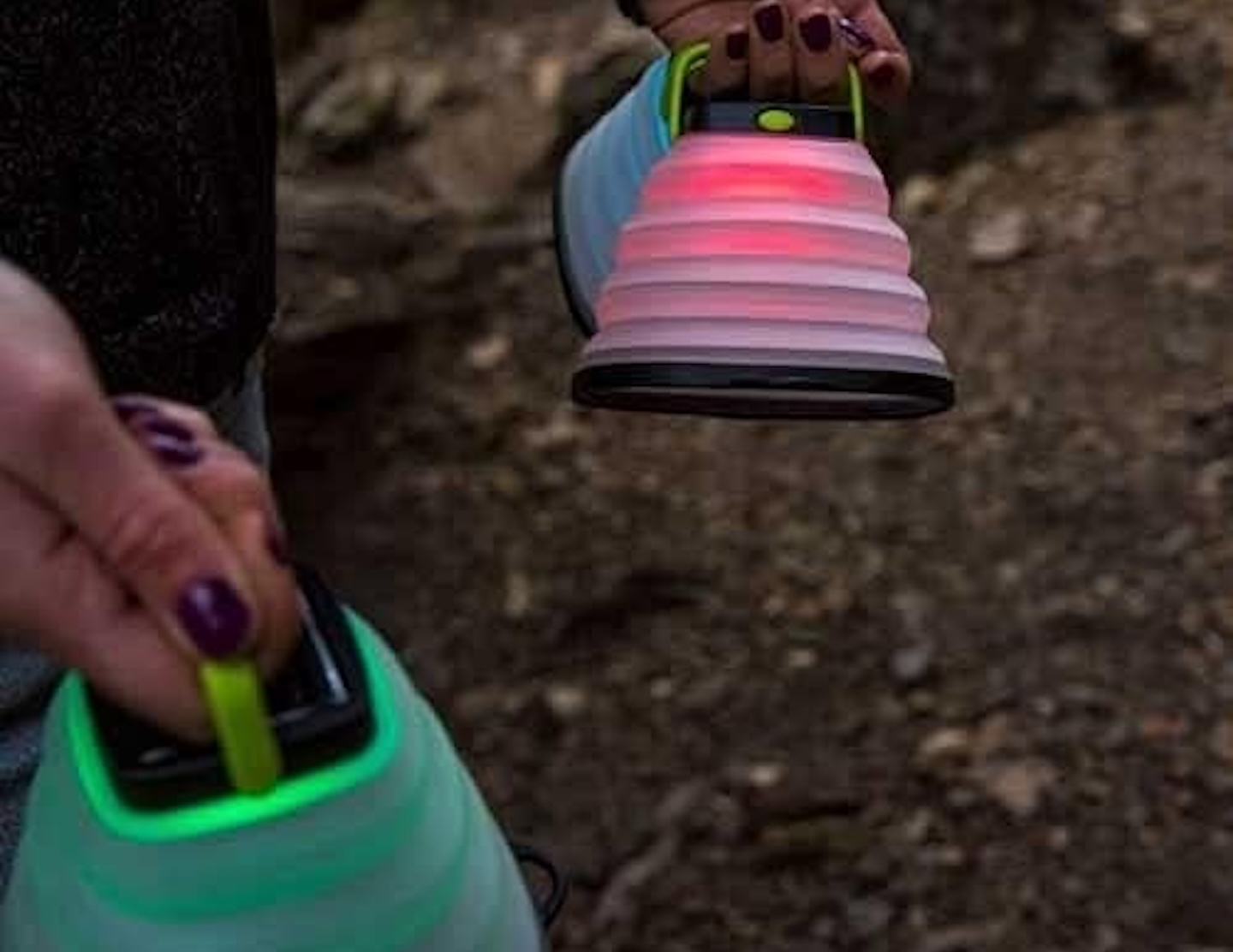
The Goal Zero Crush Light Chroma is a collapsible lantern that weighs 3.2 ounces and folds to roughly 0.6 inches thick. Goal Zero lists 60 lumens on high, up to 35 hours on low, six color modes, and a candle-flicker setting. It can charge by USB-C or through its small integrated solar panel.
The solar panel is a backup feature, not a fast primary charging method. Goal Zero estimates about 20 hours to recharge from the built-in panel, versus about 2.5 hours from USB. It is also a small-area light, not a replacement for a high-output lantern at a large group campsite.
Buyer fit: Choose the Crush Light Chroma for lightweight table lighting, tent organization, or a gentle evening lantern. Choose a larger lantern if you need broad, bright area illumination.
5. Midland GXT67 Pro for groups that separate
A campsite group can spread out quickly. One person may return to the vehicle, another may head down a trail, and another may be setting up camp. Two-way radios provide local communication without counting on a cell tower.
Price: $219.99
Where to Buy: Amazon
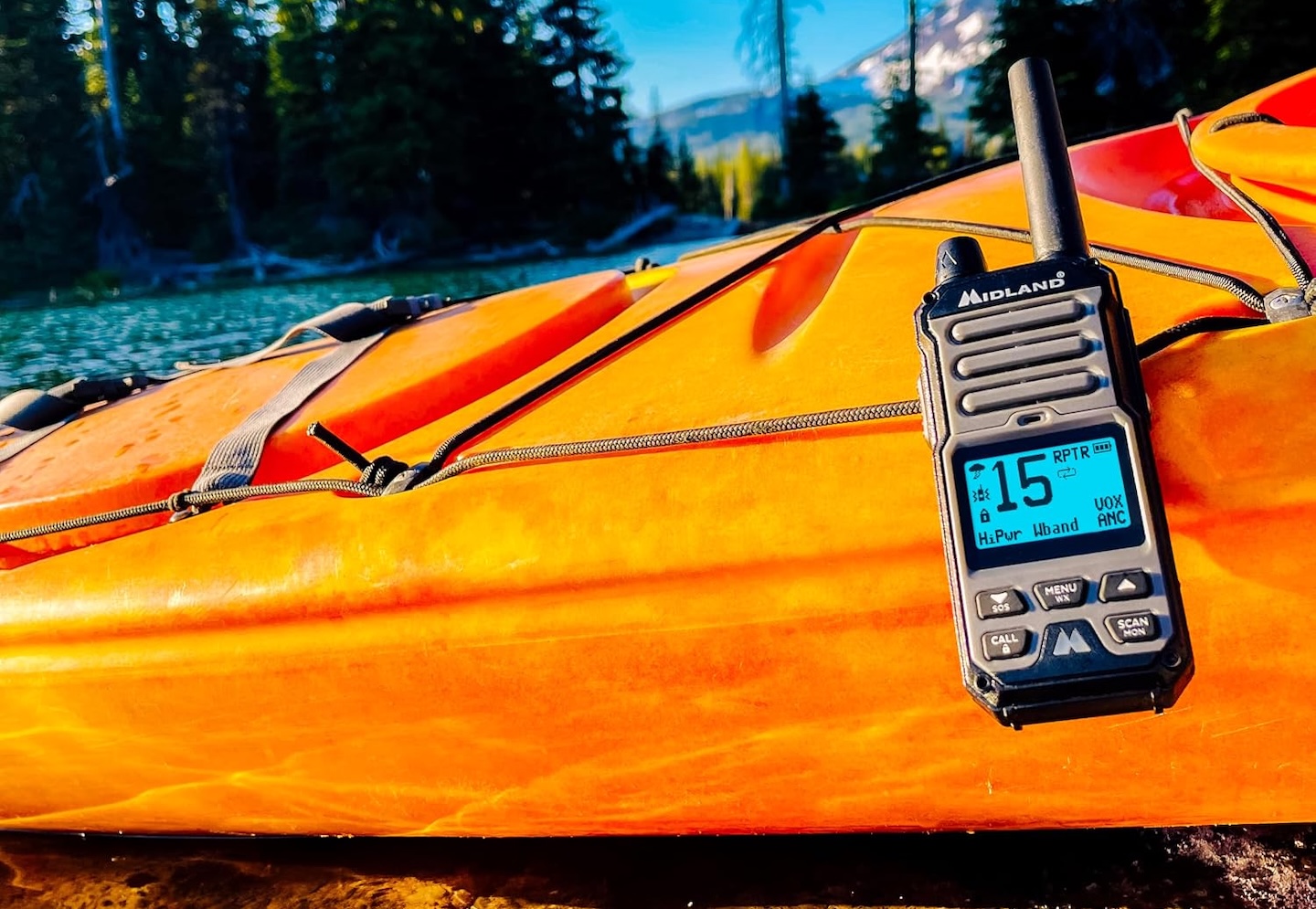
Midland’s GXT67 Pro is a GMRS handheld radio with up to 5 watts of output, IP67 dust and water protection, NOAA weather alerts, and repeater capability. Midland’s published battery-life figures differ: its product page claims up to four days, while its support FAQ lists 16 hours. Realistic battery life will depend on transmit time, power setting, temperature, and radio activity.
Range deserves the same caution. Terrain, trees, weather, and obstructions can cut usable range dramatically, so large headline range figures should never be treated as a guarantee.
In the United States, operating the GXT67 Pro requires an FCC GMRS license, including when using frequencies shared with FRS radios. Read the current FCC guidance and the radio manual before transmitting.
Buyer fit: The GXT67 Pro is for groups who hike, hunt, overland, or camp in separate parties. It is unnecessary for solo campers without a specific communication plan.
6. Thermacell E55 for still-air mosquito control
Cooler weather does not always mean fewer mosquitoes. Near water or in warmer regions, they can remain a nuisance well into fall, particularly when campers are sitting still around a table or fire.
The Thermacell E-ZoneGuard Patio E55 is a rechargeable mosquito repeller that uses a replaceable liquid cartridge with metofluthrin. Thermacell lists a 5.5-hour runtime and a 20-foot protection zone.

Price: $35.99
Where to Buy: Amazon
Placement matters. Thermacell says its rechargeable repellers work best outdoors in areas with minimal air movement and should not be used indoors or in enclosed spaces. The device needs about 15 minutes to establish its stated full protection zone, according to the company.
It should not replace clothing, nets, or a skin-applied repellent when conditions are severe. It also needs refill cartridges, so account for that ongoing cost.
Buyer fit: The E55 is useful for still-air campsites where people will remain in one area. Skip it for windy trips, active hiking, or enclosed tents.
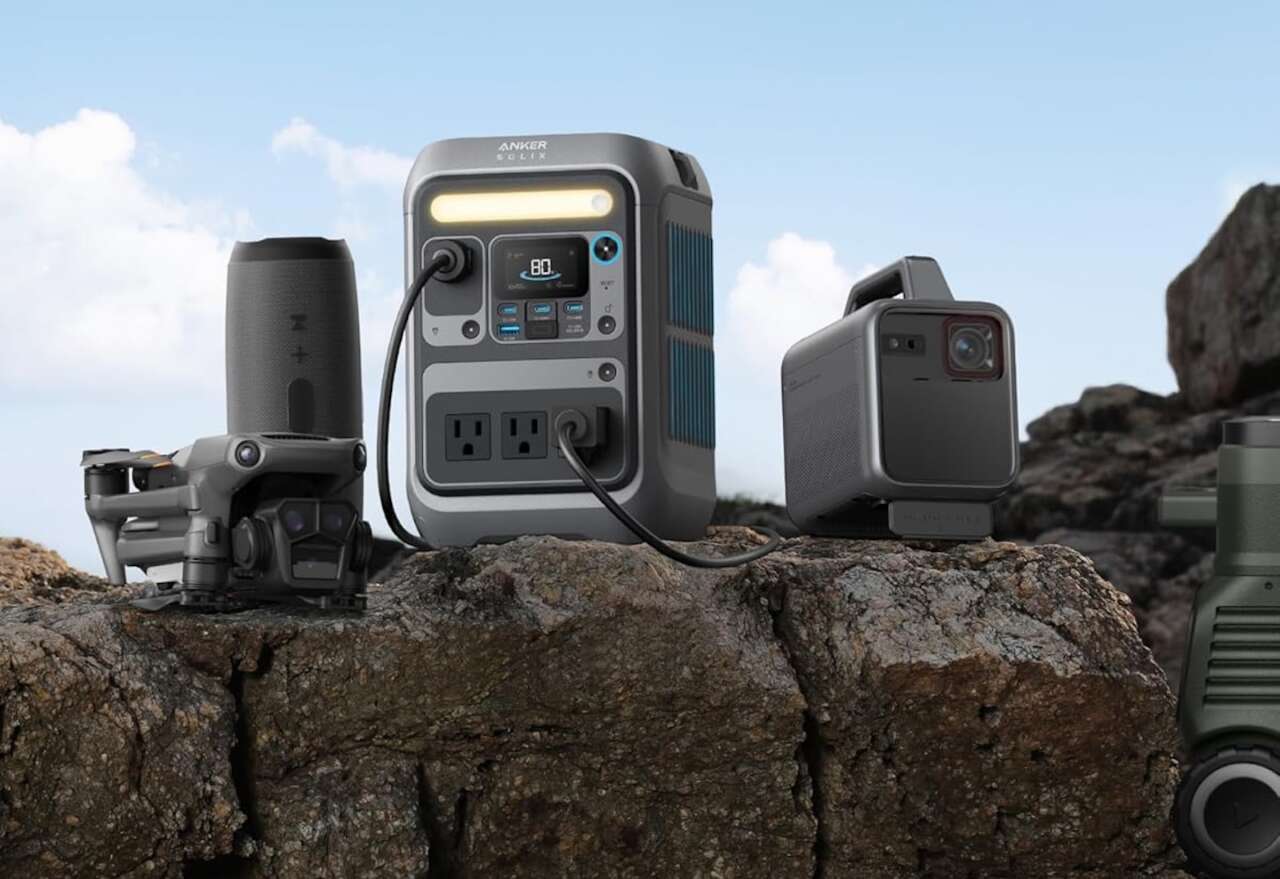
7. Anker SOLIX C300 DC for USB-C-centered trips
Not every camper needs AC outlets. If your essential kit consists of phones, cameras, tablets, drones, lights, and USB-C accessories, a DC-first power station can make more sense.
Price: $329.99
Where to Buy: Amazon
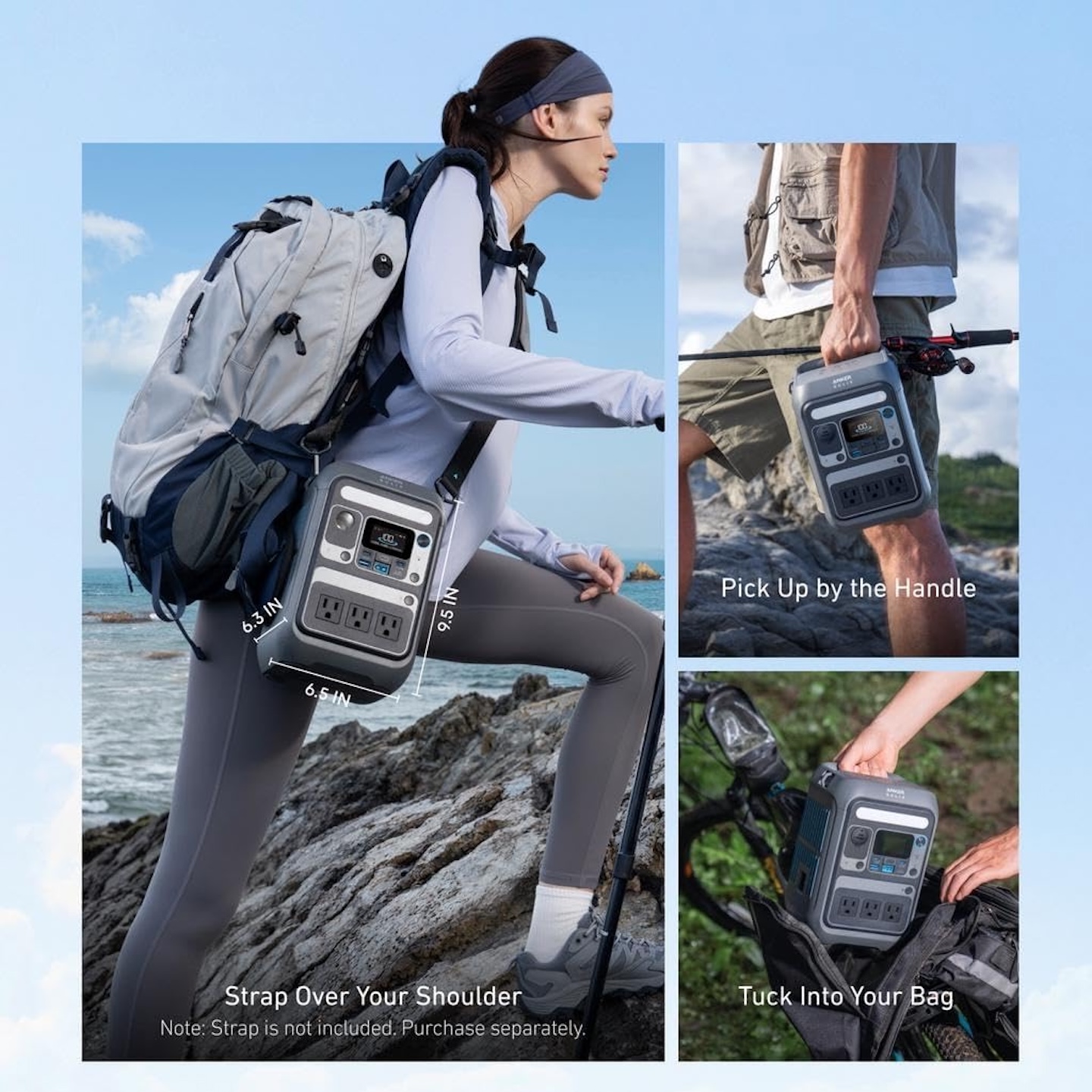
Anker lists the SOLIX C300 DC with a 288Wh battery, up to 140W USB-C output on supported ports, 100W solar input, and a 12V car outlet. It is designed around DC outputs rather than household AC power.
That is both its advantage and limitation. USB-C charging can avoid some conversion loss, but you cannot plug in ordinary wall-powered devices. Check whether each laptop or camera charger supports USB-C power delivery before relying on this unit.
Buyer fit: Choose the C300 DC for car campers, road-trippers, and photographers with mostly USB-C gear. Choose an AC-equipped power station if your trip requires a wall-powered appliance or medical device.
Buyer fit: solve the risk you actually have
Start with the problem, not the gadget. Off-grid trips justify a satellite communicator. Early sunsets justify a dependable headlamp and modest lantern. Vehicle-supported camping can justify a power station, while groups moving apart may benefit from radios.
Buy electronics that match your route, group, weather, and charging plan. The best outdoor gadget is the one that reduces a real problem without becoming another thing you have to manage.