Small pocket knives solve an obvious carry problem, but they can create another one. Shrink the entire knife around a short blade and eventually the handle becomes so small that you sacrifice gripping area just to save a little pocket space.
Price: $25.43
Where to Buy: Amazon
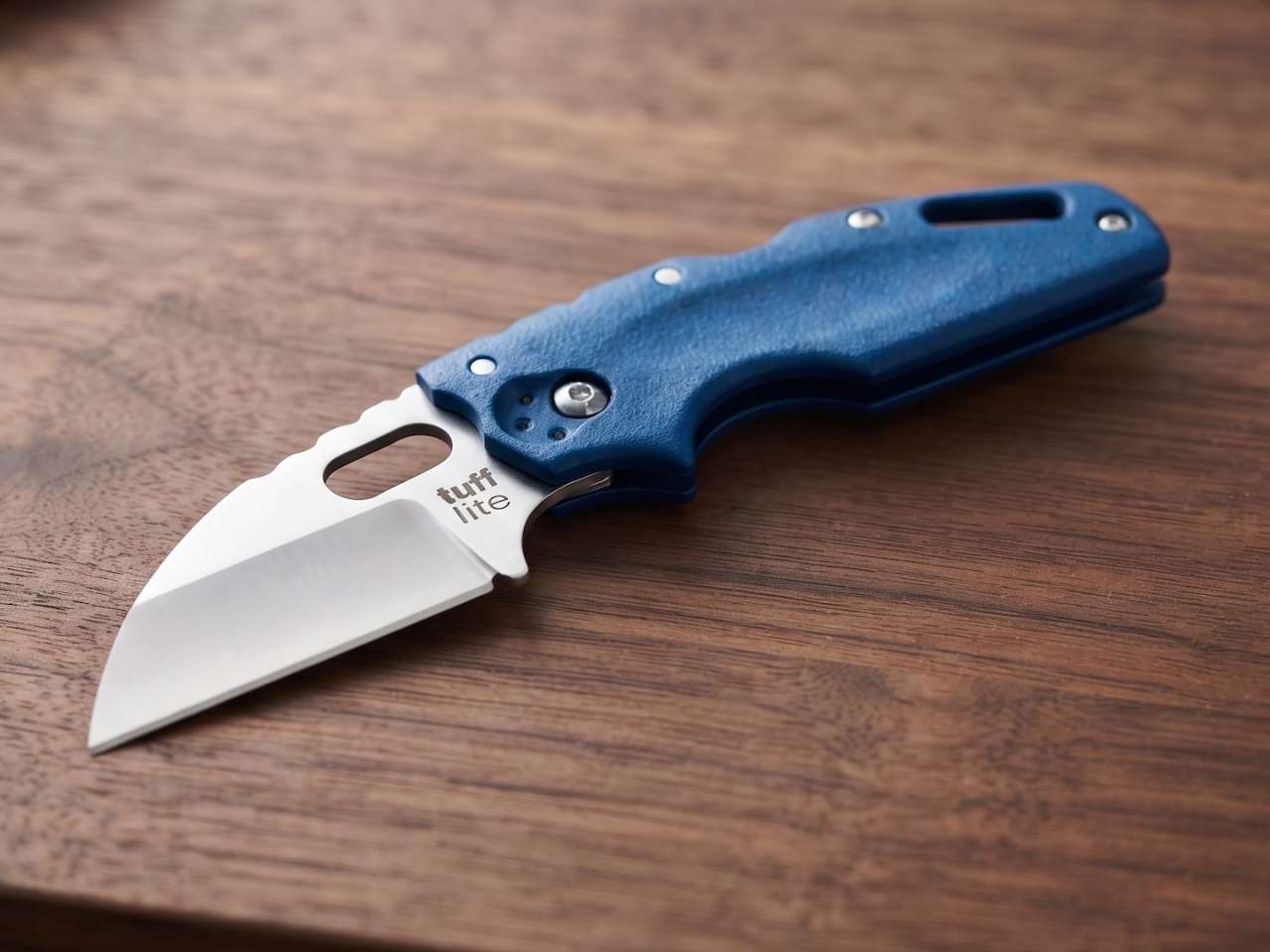
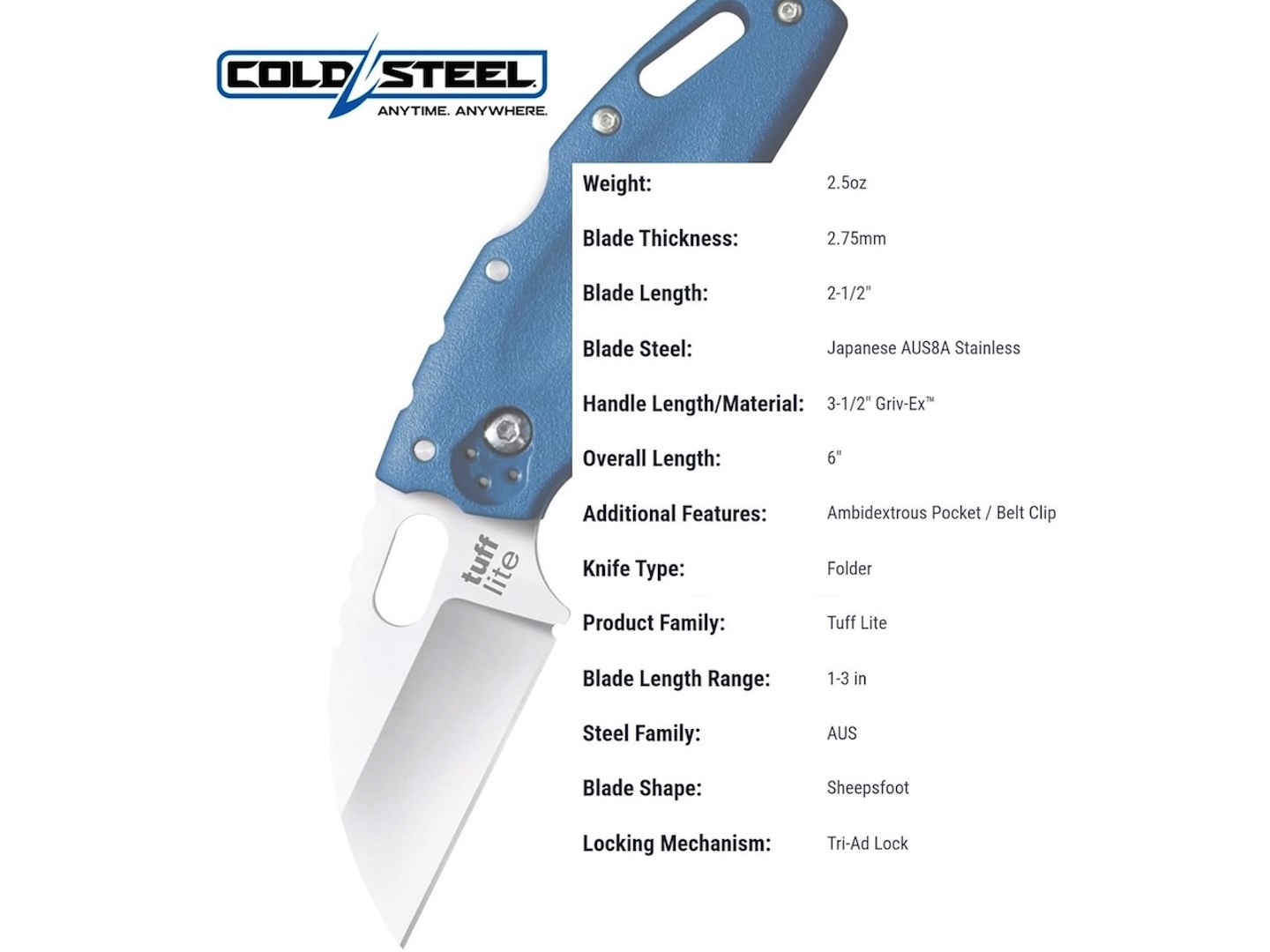
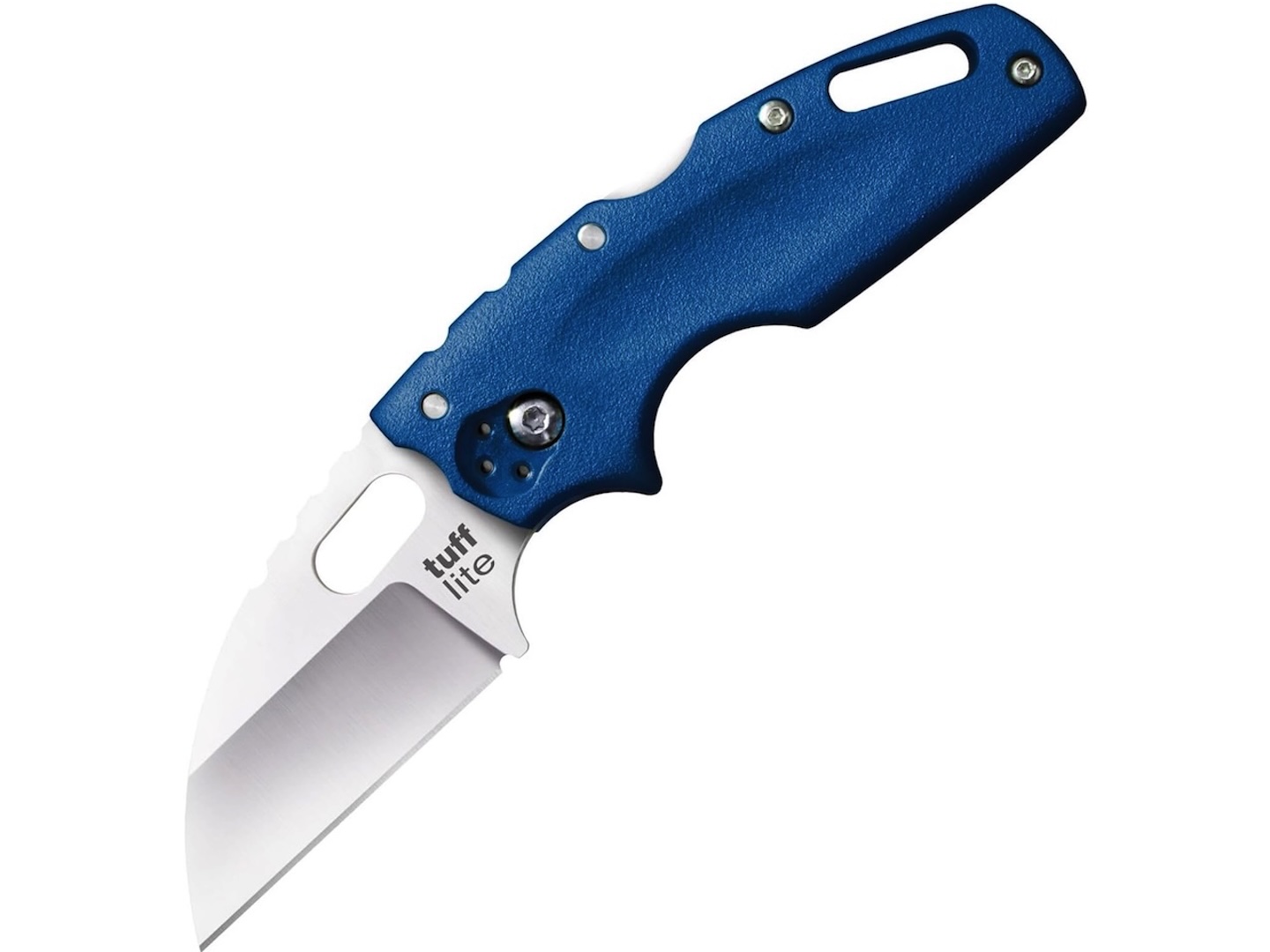
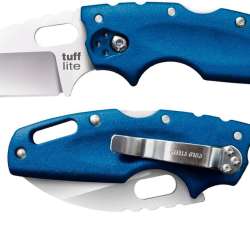
The Cold Steel Tuff Lite takes a different approach. Its blade measures only 2.5 inches, but Cold Steel pairs it with a 3.5-inch handle featuring pronounced finger shaping. The entire knife is 6 inches long when open and weighs approximately 2.5 ounces, keeping the package compact without shrinking every dimension equally.
That is the Tuff Lite’s more interesting proposition. It is not trying to give you the most blade possible. Instead, it is designed around giving a short blade enough handle to remain useful as a working pocket knife.
A 2.5-inch blade keeps the cutting end compact
Cold Steel specifies a 2.5-inch blade made from Japanese AUS-8A stainless steel. The blade is approximately 2.75 mm thick, while the 3.5-inch handle brings overall length to 6 inches. The knife weighs 2.5 ounces.
Those dimensions put it comfortably below the three- and four-inch folders common elsewhere in Cold Steel’s lineup. The tradeoff is obvious: You have less cutting edge available, but you also have less knife occupying your pocket.
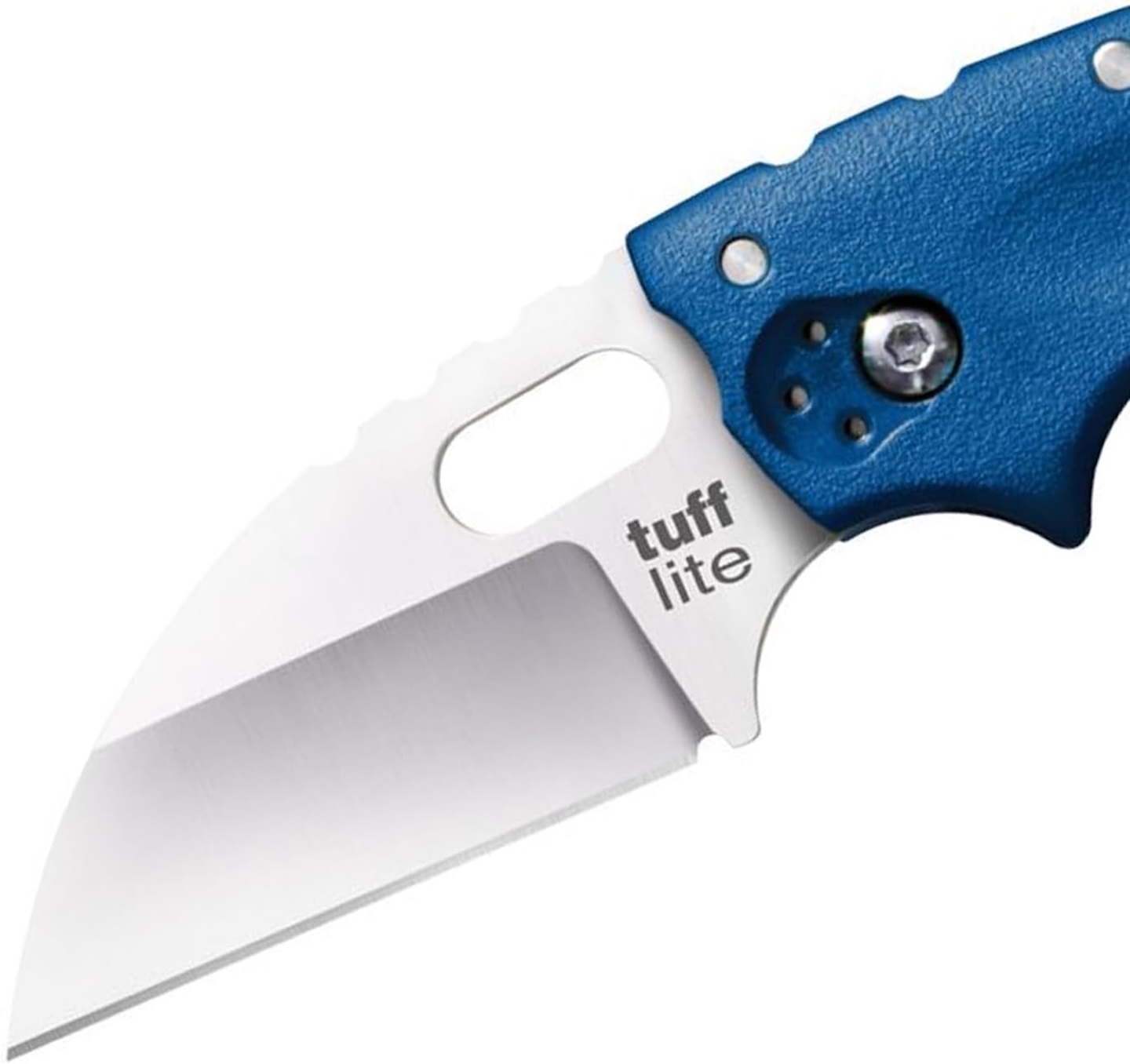 That can make sense if your everyday cutting jobs do not require a long blade. Opening packages, cutting tape, trimming cord, and other controlled utility jobs often involve relatively short cuts. That does not prove how effectively the Tuff Lite handles those materials, but it does illustrate the type of work where its limited blade length may be less restrictive.
Anyone regularly making long slicing cuts will have a different calculation. The Tuff Lite does not hide the compromise. You are deliberately trading working edge for a smaller package.
The blade favors controlled utility work
The Tuff Lite is sometimes described as a sheepsfoot, Wharncliffe-style, or slant-point knife, depending on the seller or discussion. Cold Steel’s current product listing identifies its blade as a sheepsfoot.
 Whatever label is used, the physical geometry is what matters. The spine angles down sharply toward the tip instead of creating the more pronounced point found on many general-purpose folding knives.
That gives the Tuff Lite a distinctly utility-oriented profile and helps explain why the knife is frequently discussed as a compact working cutter. However, blade geometry alone does not establish real-world cutting performance. How well this particular knife moves through cardboard or how long its edge lasts would require hands-on testing.
AUS-8A keeps the spec straightforward
The Tuff Lite uses Japanese AUS-8A stainless steel rather than one of the premium powder-metallurgy steels found on more expensive modern folders.
That fits the rest of the design. The Tuff Lite is not positioned around exotic materials or collector appeal. Its specifications focus on making a small locking utility knife rather than giving buyers a premium blade-steel designation.
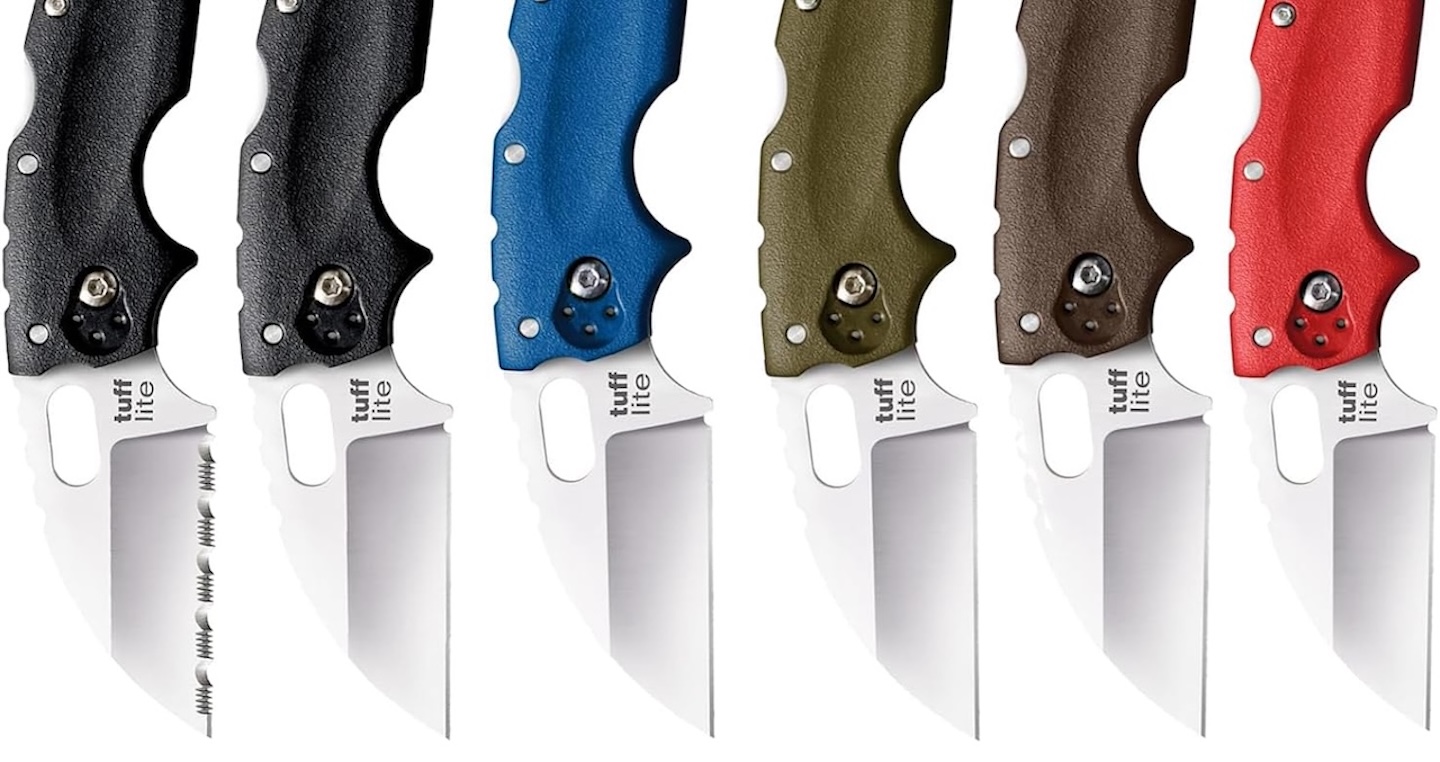 The steel name should not be treated as shorthand for exactly how the finished knife performs. Edge retention, sharpening behavior, and cutting performance also depend on heat treatment, blade geometry, and edge geometry.
For buyers specifically shopping for premium steel, AUS-8A may be enough reason to look elsewhere. For someone primarily interested in the Tuff Lite’s unusual dimensions and utility-focused design, the steel may be a secondary consideration.
The 3.5-inch handle is the real story
The Griv-Ex handle measures 3.5 inches—only an inch shorter than twice the blade length. Cold Steel also heavily contours the handle, with finger recesses taking up much of its underside.
That helps explain why the Tuff Lite does not look like a conventionally miniaturized folding knife. Cold Steel has preserved considerable gripping area despite limiting the blade to 2.5 inches.
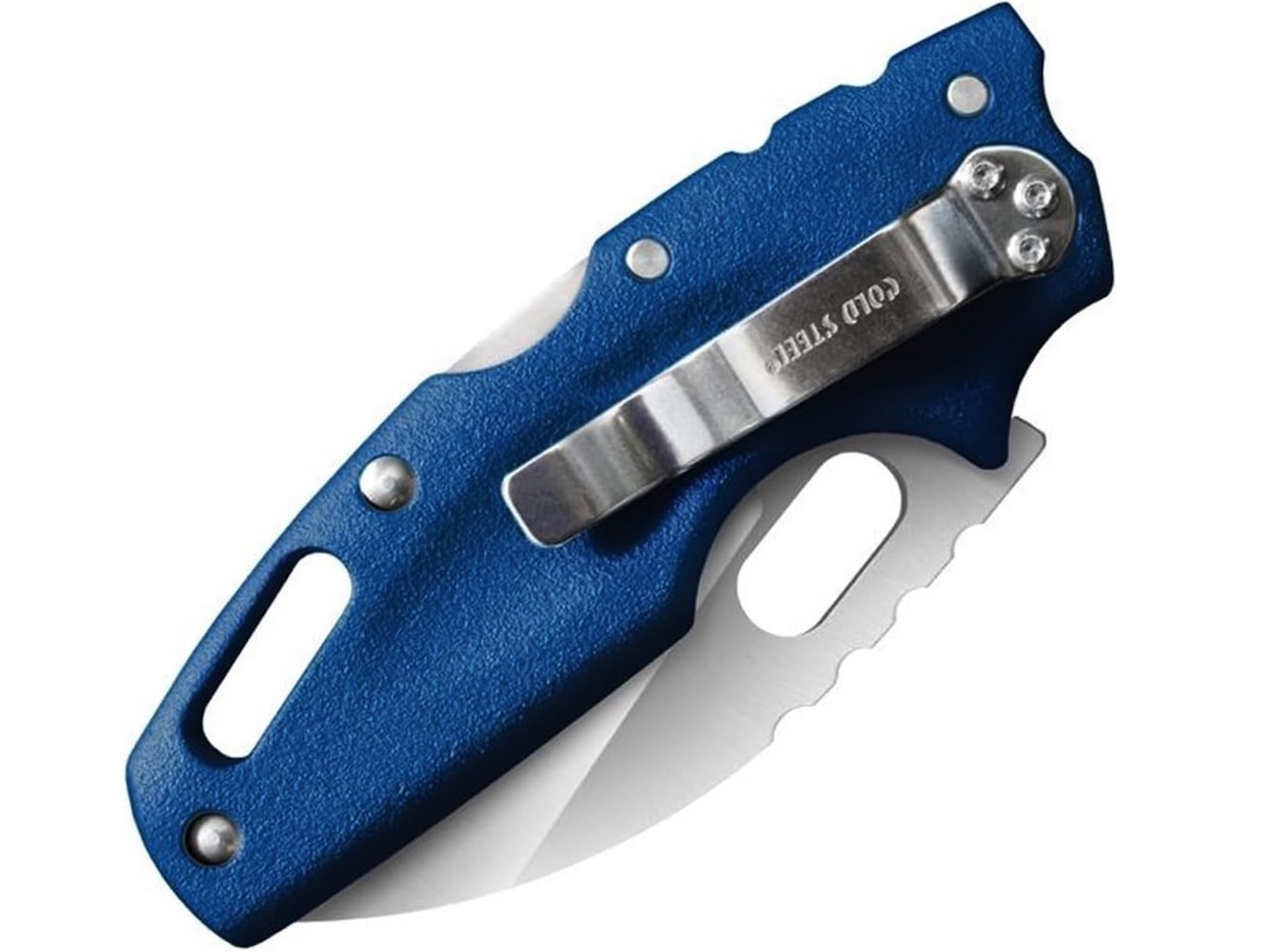 Whether those contours actually fit your hand is something specifications cannot answer. Strongly shaped handles can be more sensitive to differences in hand and finger size than relatively neutral designs, so comfort remains a hands-on consideration.
Still, the proportions themselves are notable. Cold Steel devoted significantly more of the Tuff Lite’s overall package to the handle than someone looking only at its blade length might expect.
Cold Steel includes its Tri-Ad lock
The other notable feature is Cold Steel’s Tri-Ad lock. The company presents the mechanism as a key part of the Tuff Lite’s strength-for-size proposition, although that is the manufacturer’s characterization rather than a conclusion from independent testing.
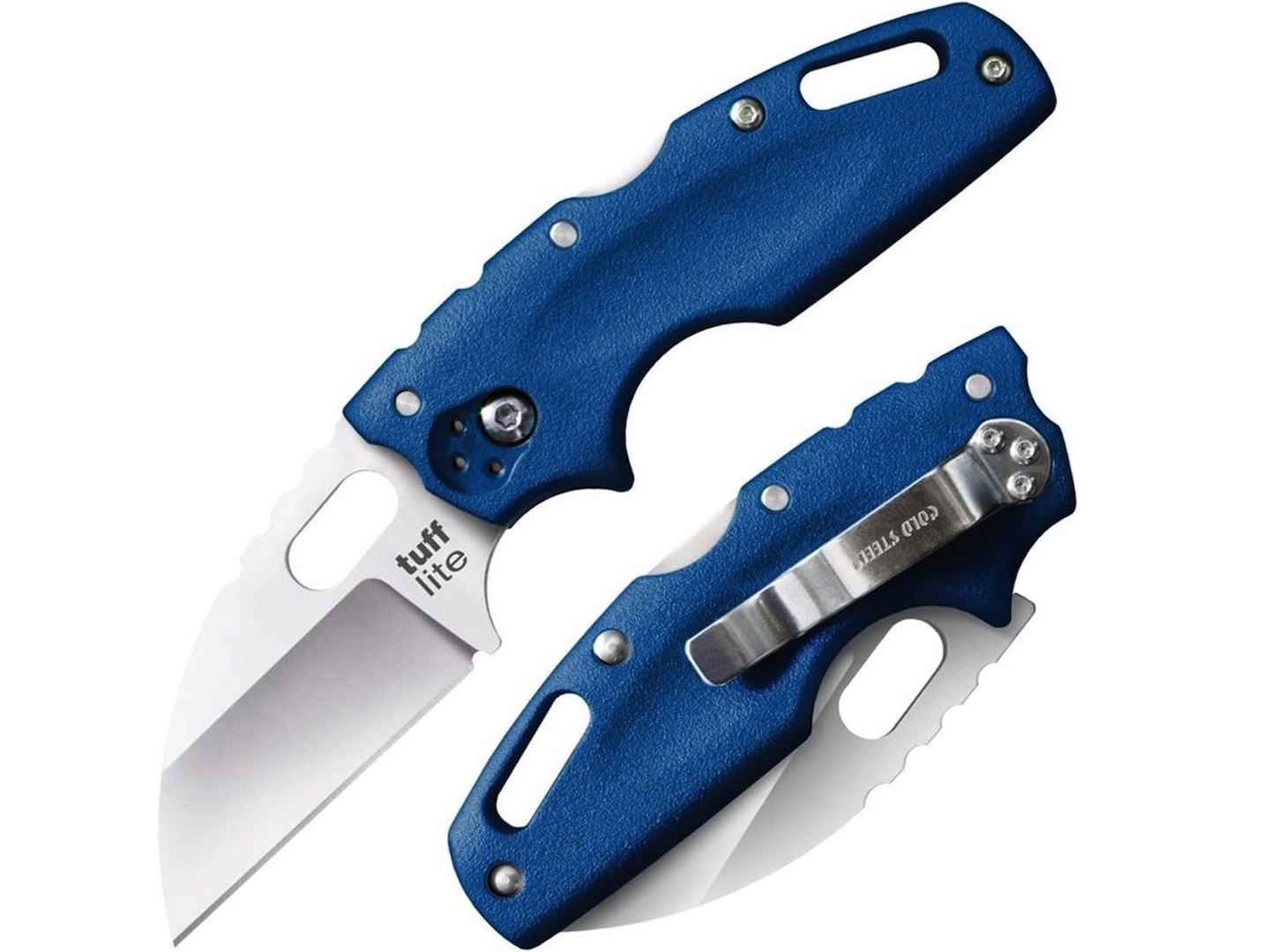 For buyers, the important point is simpler: This is a locking folder using Cold Steel’s Tri-Ad mechanism rather than a non-locking slip joint.
Lock operation and release effort are ultimately hands-on considerations that can vary by knife, break-in period, and user preference. Buyers who strongly prefer an especially easy one-handed closing action may want to handle one before buying.
Who should buy the Cold Steel Tuff Lite?
The Cold Steel Tuff Lite suits buyers who want a short blade without an equally small handle. Its 2.5-inch AUS-8A blade, 3.5-inch Griv-Ex handle, 2.5-ounce weight, and Tri-Ad lock make it a compact locking folder, but the deeply contoured handle is its defining feature.
Look elsewhere if you want premium steel, more cutting edge, or a more neutral grip shape. The Tuff Lite’s short blade is a deliberate tradeoff, not one its design erases.
Price: $25.43
Where to Buy: Amazon
It makes the most sense for short, controlled utility work where grip matters more than blade length. Cold Steel kept the blade compact while leaving your hand more knife to hold.