Qualcomm covered my trip to Maui for Snapdragon Summit.
There’s a point where an AI assistant stops being a clever way to search and starts asking for your credit card. Qualcomm reached it during the Snapdragon Summit keynote in Maui. In a shopping demonstration involving Mastercard, an agent compared an in-store card discount with an online rewards offer, then chose the online store after the person told it to. The assistant confirmed the order and said the PC would arrive Tuesday. The interesting moment wasn’t the reward calculation. It was the instruction to buy. If an agent is going to do the legwork, how much do you let it decide for you?
That question ran through a keynote packed with new hardware. Qualcomm introduced two Snapdragon 8 Elite chips for the next Android flagships, showed how it wants a phone to remember context and coordinate tasks, and brought Xiaomi and Motorola onstage with devices built around the new silicon. The wider Summit plan stretches into earbuds, PCs, new Surface models and Google’s laptop work. It’s a much bigger pitch than this year’s phone being a little faster.
From opening apps to getting something done
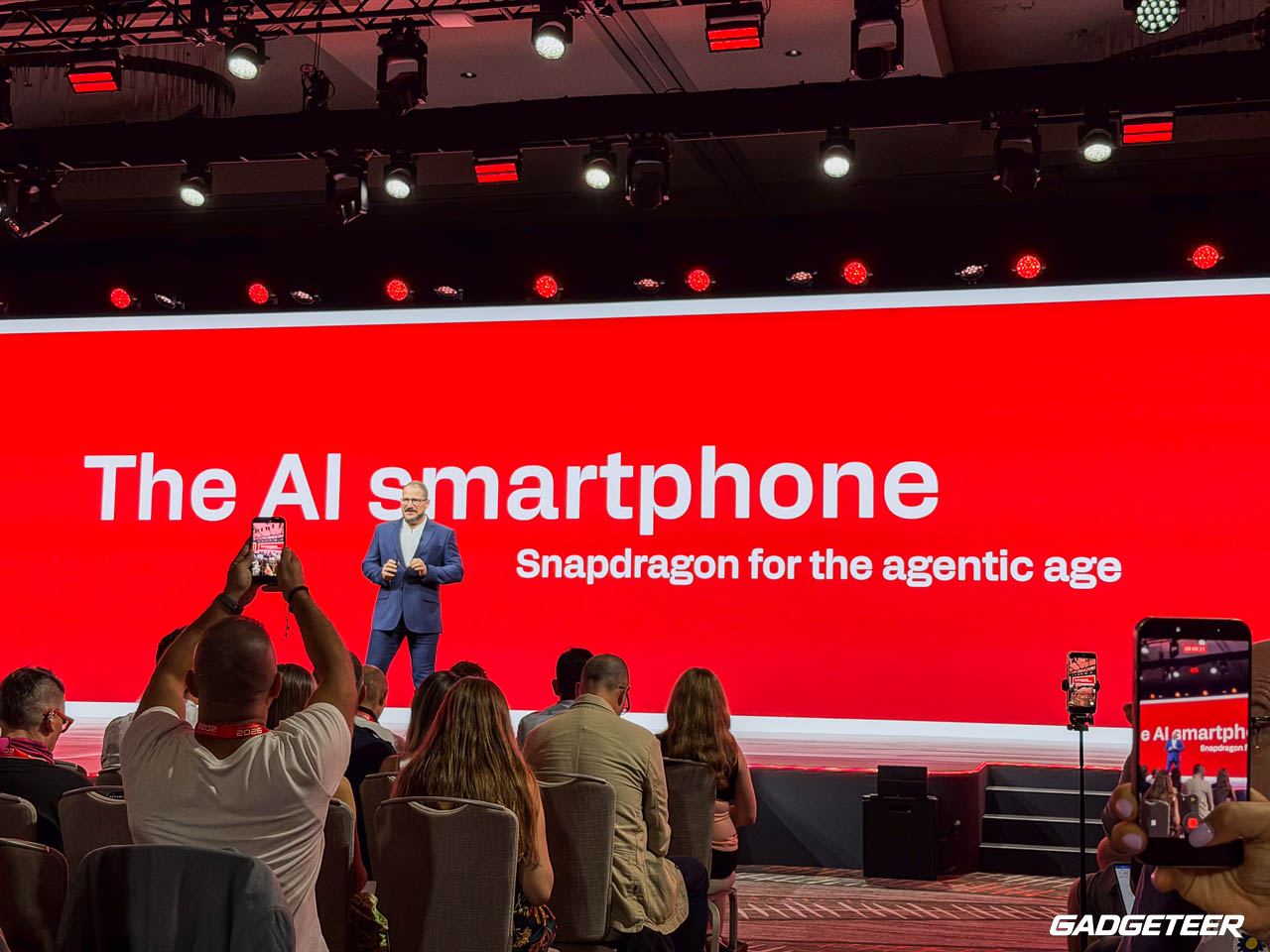
Qualcomm CEO Cristiano Amon was blunt about the device at the center of his plan: “Your phone isn’t going anywhere.” It already travels with you, holds your apps and collects the context an assistant would need to be helpful. What changes is the starting point. You tell an agent what you’re trying to accomplish instead of deciding which app to open first, and the phone coordinates the work across the services you already use. That’s a more persuasive pitch than replacing a device people know how to live with.

Amon used the example of a band you like coming to town. An agent could notice the show, check whether you want to go, and start coordinating tickets and schedules. We’ve all done the version that involves six tabs, a text exchange and a calendar check. Getting rid of that busywork sounds appealing. Amon gave it a simple test: using an agent must be “easier than you doing it yourself”. It also depends on an assistant that understands which ticket you actually wanted and knows to stop before spending your money without permission.
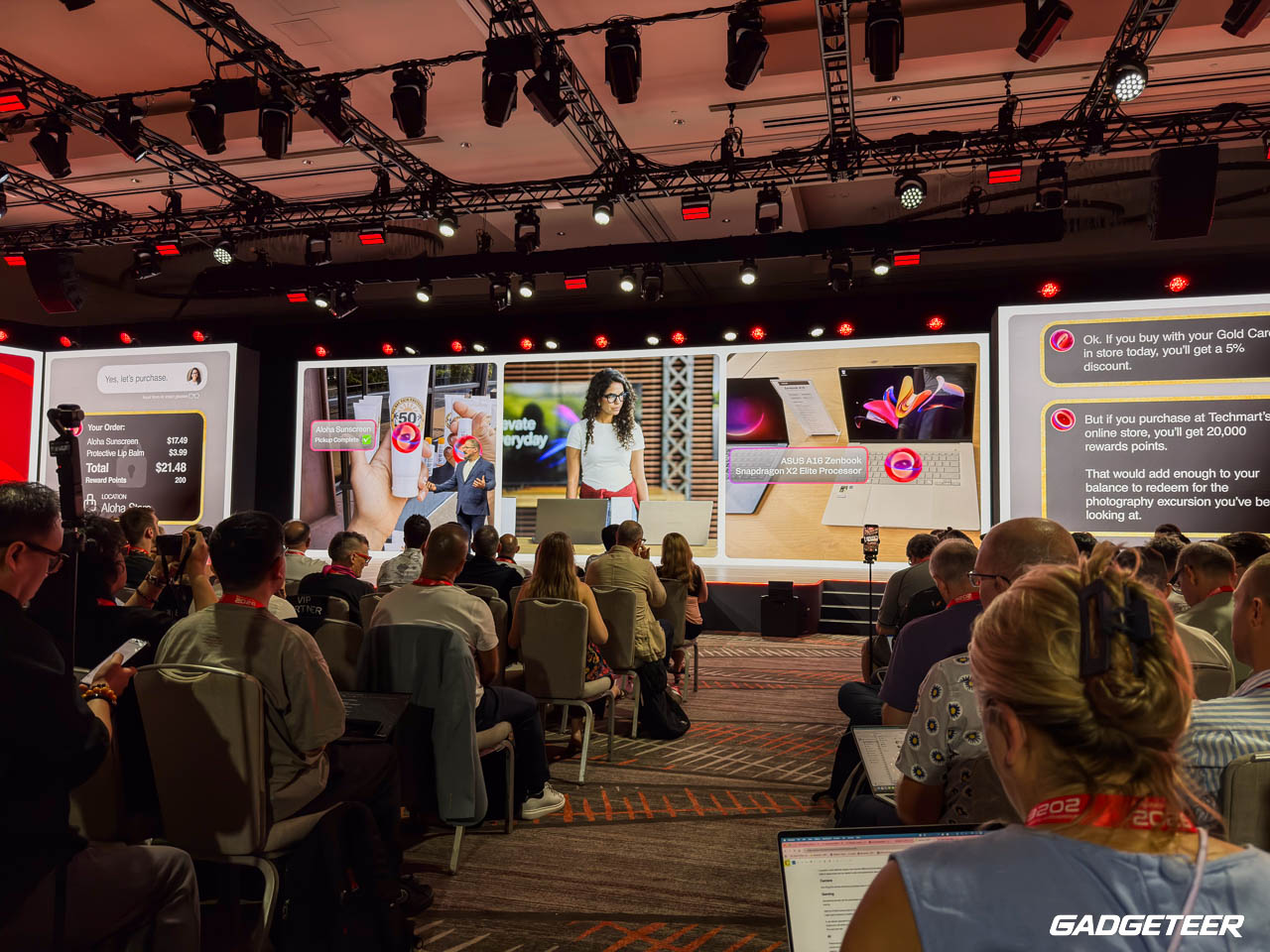
The Mastercard demo gave that last step some weight. Mastercard’s Raja Rajamannar talked about the trust needed when an assistant goes beyond suggesting a purchase and actually makes one. His concern was specific: spending money is final in a way that finding a bad search result isn’t. The stage demo doesn’t prove the flow works across every store today. It does show why an agent must make its choice clear and leave you a chance to say no.
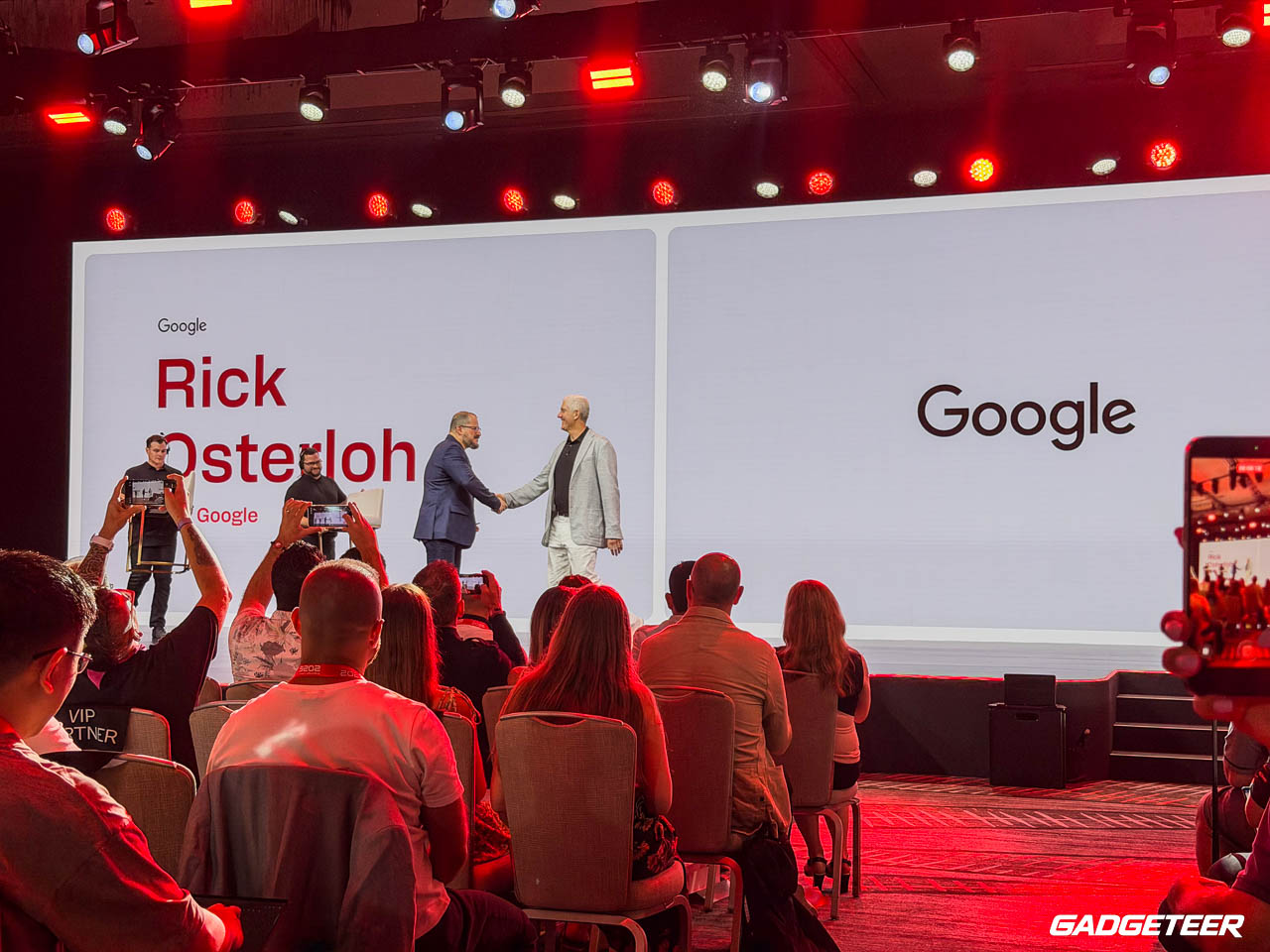
Google’s Rick Osterloh joined Amon and described Gemini Intelligence as a move “from an operating system to an intelligence system.” His point was that context should travel through the experience. If you ask for help with a trip, the assistant shouldn’t make you reintroduce yourself, your calendar and your preferences at every step. Google is carrying that idea from phones into its new Googlebook laptops, which makes the handoff between the two devices more than a slide about an ecosystem.
Two flagship chips, not one chip with a new label
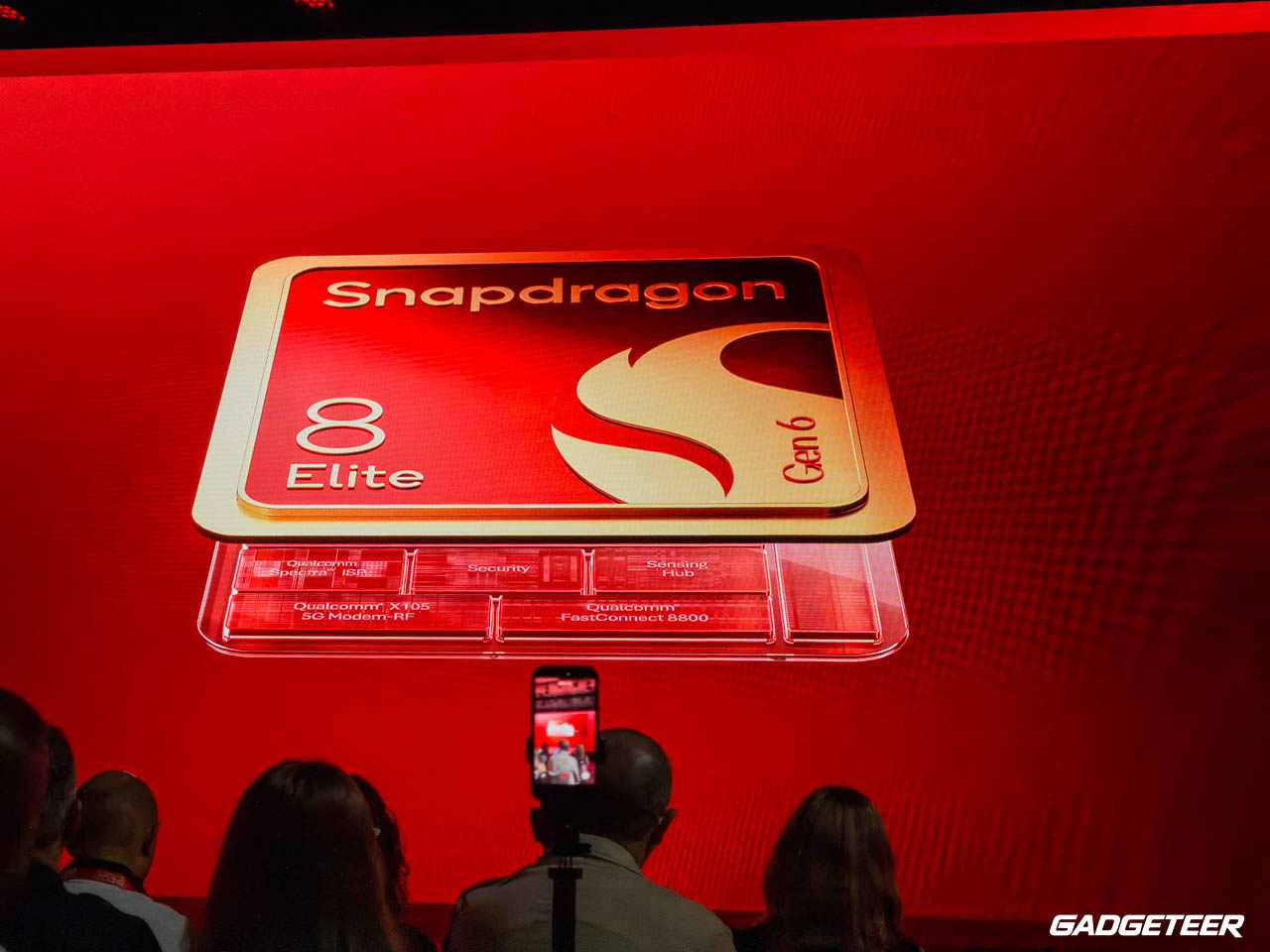
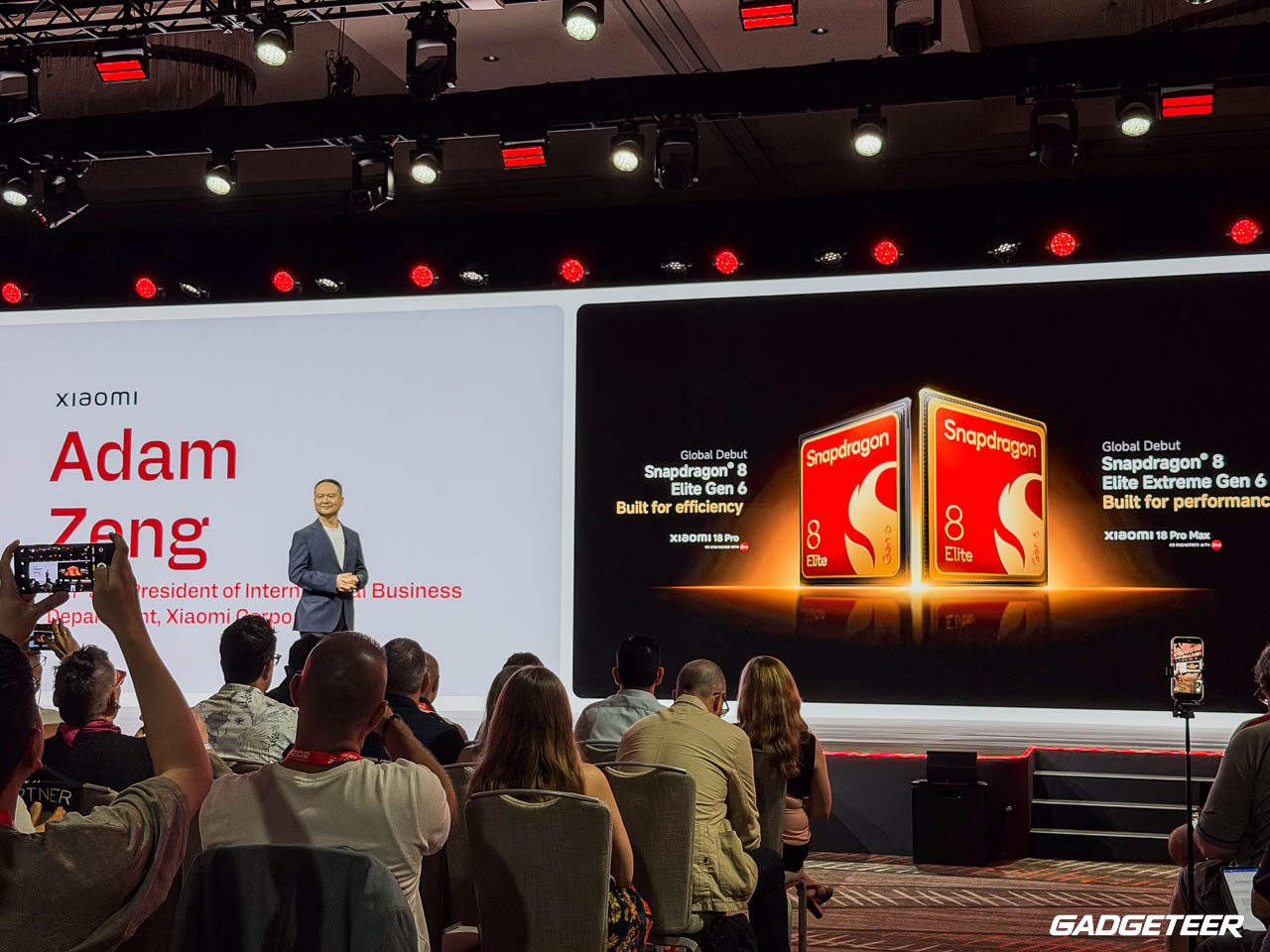
The hardware announcement was a pair: Snapdragon 8 Elite Gen 6 and Snapdragon 8 Elite Extreme Gen 6. Qualcomm says this is the first time it has launched two Snapdragon 8 Elite tiers together. They are distinct 2nm designs. The regular Gen 6 follows the existing flagship line, while Extreme gives phone makers extra room for the most demanding AI, gaming and camera designs.
At a mobile Q&A after the keynote, Qualcomm’s executives made that distinction sharper. These aren’t faster and slower bins of the same piece of silicon. They share a core architecture, but they’re separate designs with different packages and implementations. Extreme is the route for a phone maker that wants more demanding video formats, the fullest version of its new gaming features or larger on-device AI jobs with quicker responses. That’s an OEM decision before it’s a badge on a box.
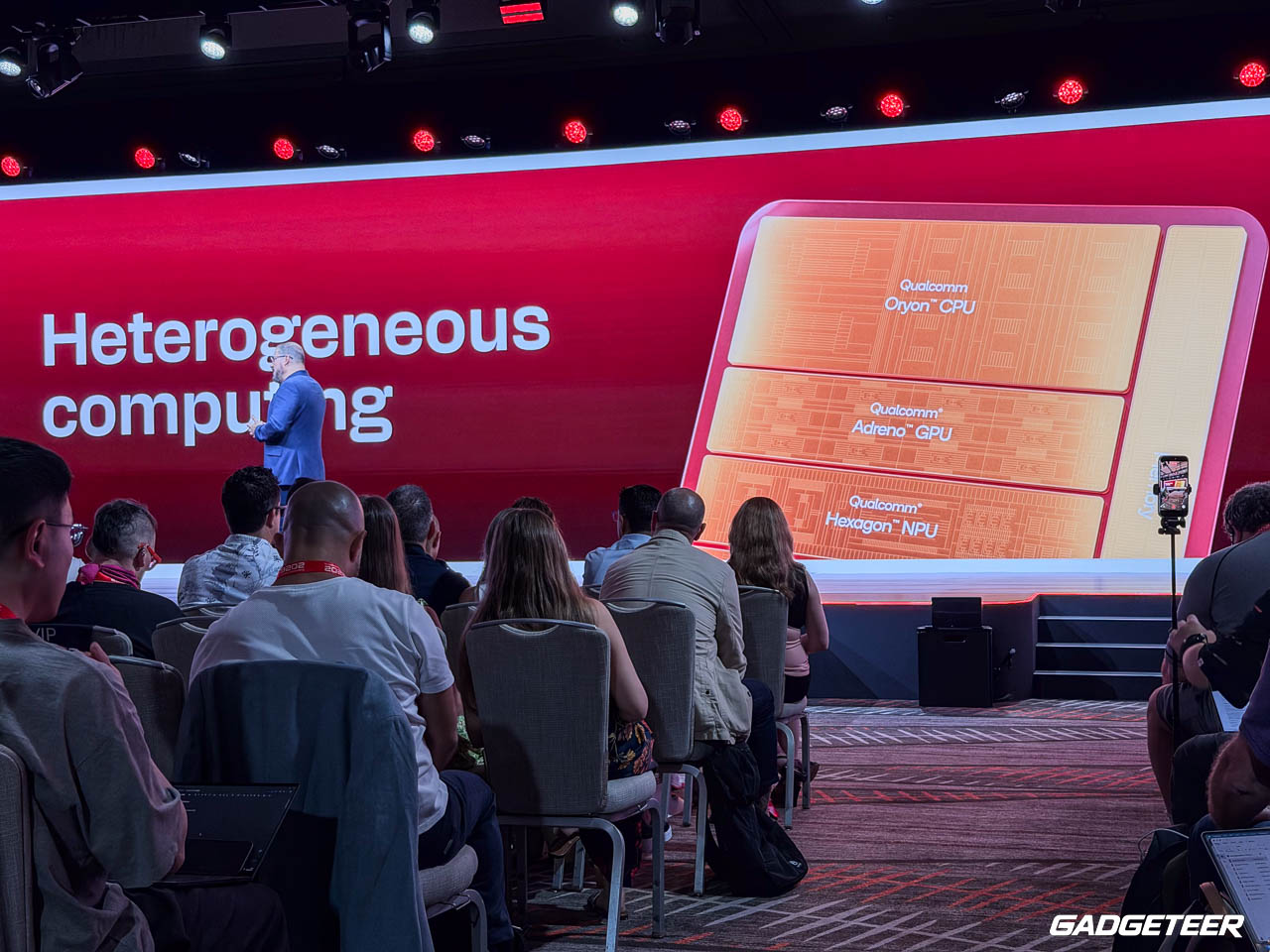
That distinction is useful because “flagship” has become a loose description. A thin everyday phone, a gaming handset and a camera-focused Ultra model don’t make the same tradeoffs. Qualcomm can offer a common Oryon CPU, Adreno graphics and Hexagon AI foundation while letting manufacturers choose where to spend power, space and money. The chip doesn’t choose the battery, cooling system, cameras or amount of memory. The company building the phone does.
On Extreme, the Oryon CPU has two prime cores reaching 5 GHz and six performance cores. An executive at the Q&A explained that peak clock as a short burst of responsiveness, not a speed the phone is supposed to hold all day. Opening an app from storage takes loading and decompression; a game can suddenly have far more happening on screen than it did a second ago. In both cases, getting through that brief spike quickly is more useful than staring at a clock-speed number.
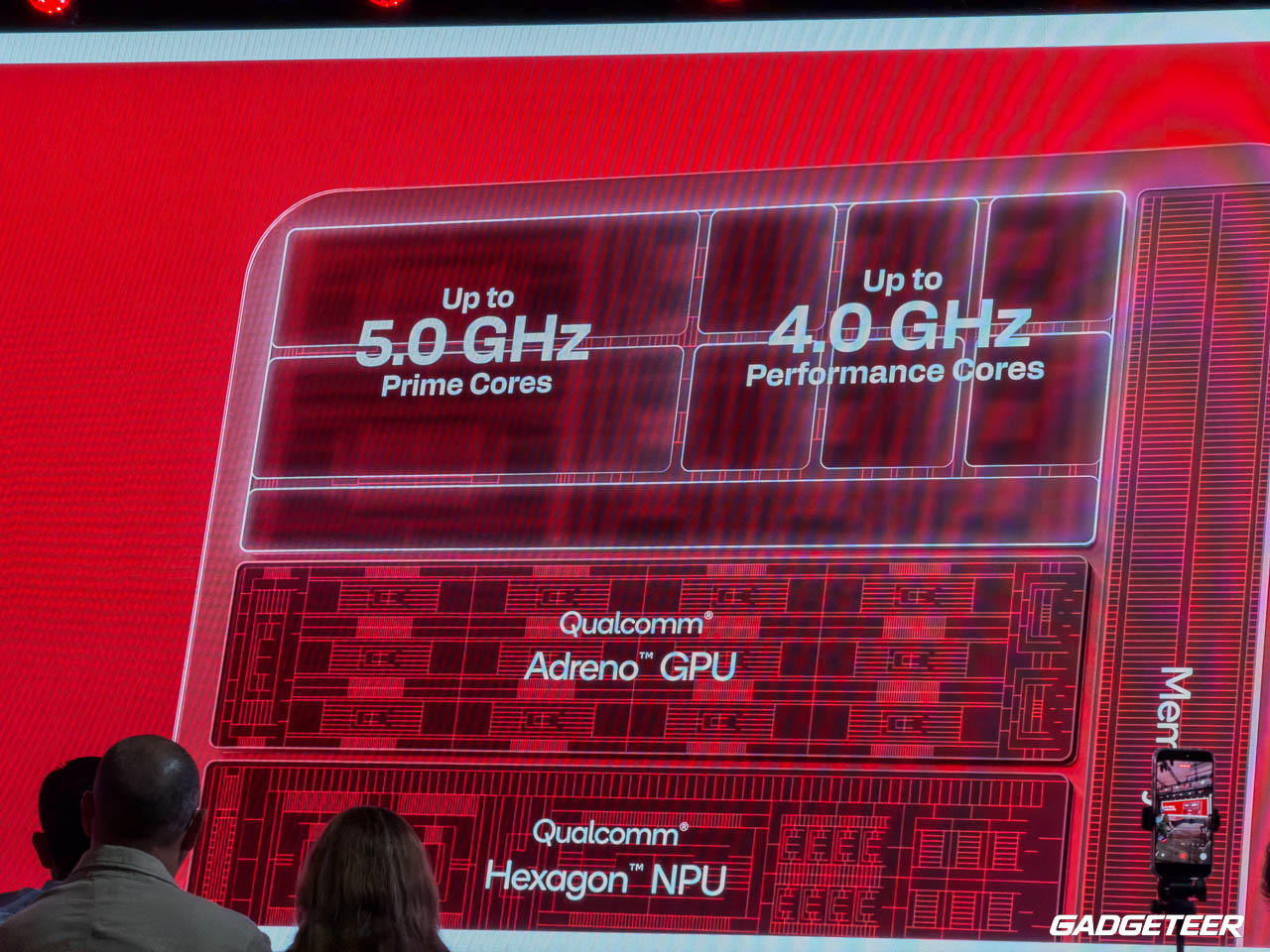
FlexCache addresses another part of the wait. It lets the cores draw dynamically from a shared cache pool rather than repeatedly reaching out to main memory for every handoff. If an agent is sensing something, reasoning about it and then launching another task, those handoffs add up.
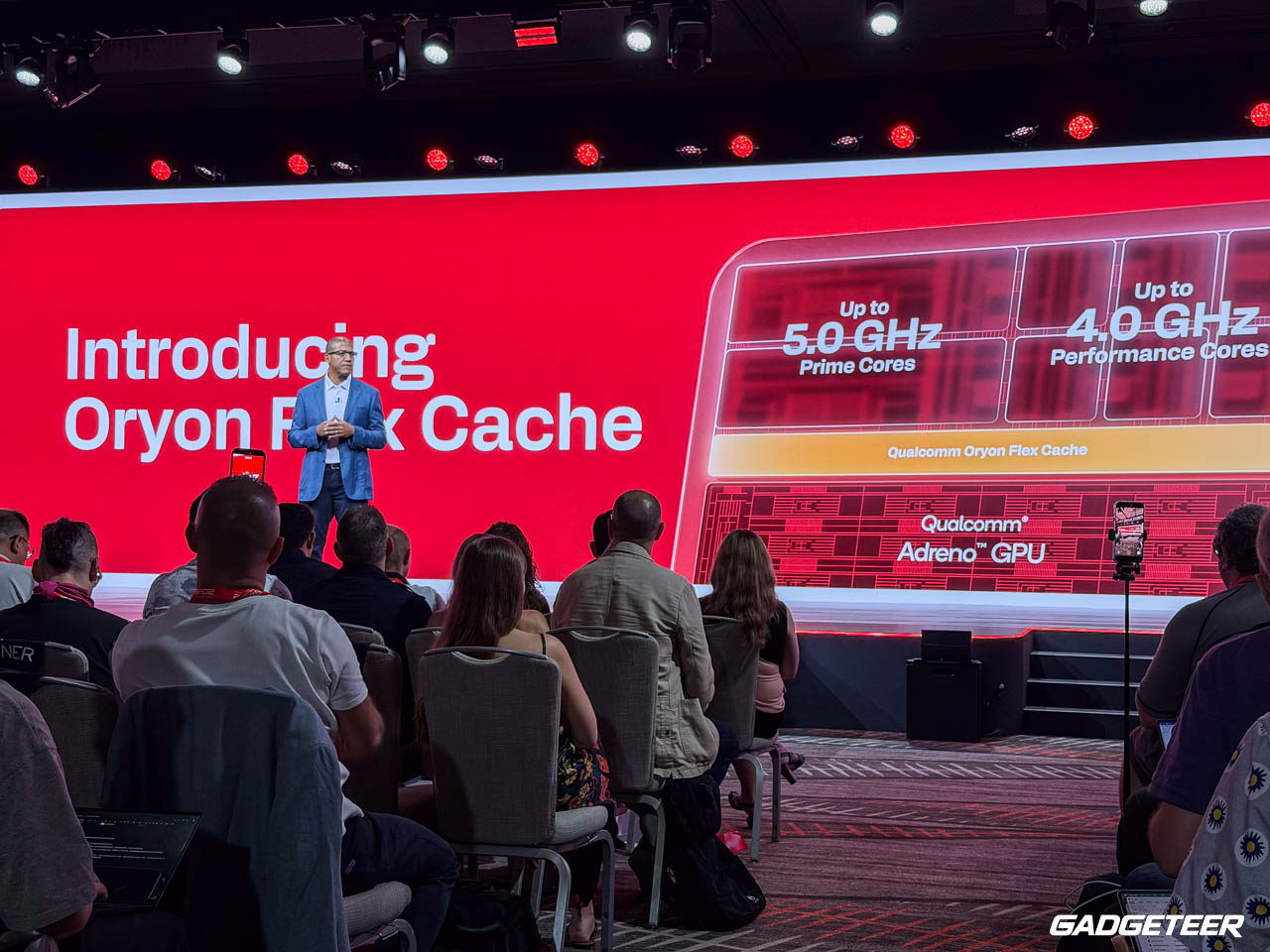
Heat remains the reality check for any phone chip. Qualcomm’s offset package-on-package design rearranges the memory and silicon to give heat a better route away from the processor. At the Q&A, an executive traced the problem from the chip die through its package to the outside of the phone, which still has to be comfortable in your hand. Qualcomm can improve efficiency at the chip and package level; the manufacturer has to finish the job with the phone’s chassis and cooling system. Two Extreme phones may therefore hold their speed differently after a long game. That’s something a peak benchmark won’t tell you.
The part of AI that keeps working when the screen is off
An agent can’t wait for you to tap the screen before it notices anything useful. Qualcomm’s Sensing Hub has two small, always-on NPUs for lightweight work. They don’t both have to run constantly; the job and the number of things happening at once determine what is active. Heavier work moves to the Hexagon NPU, where Qualcomm says shared memory is 50% larger. Keeping more context close to that processor reduces the trips to system memory that cost time and battery.
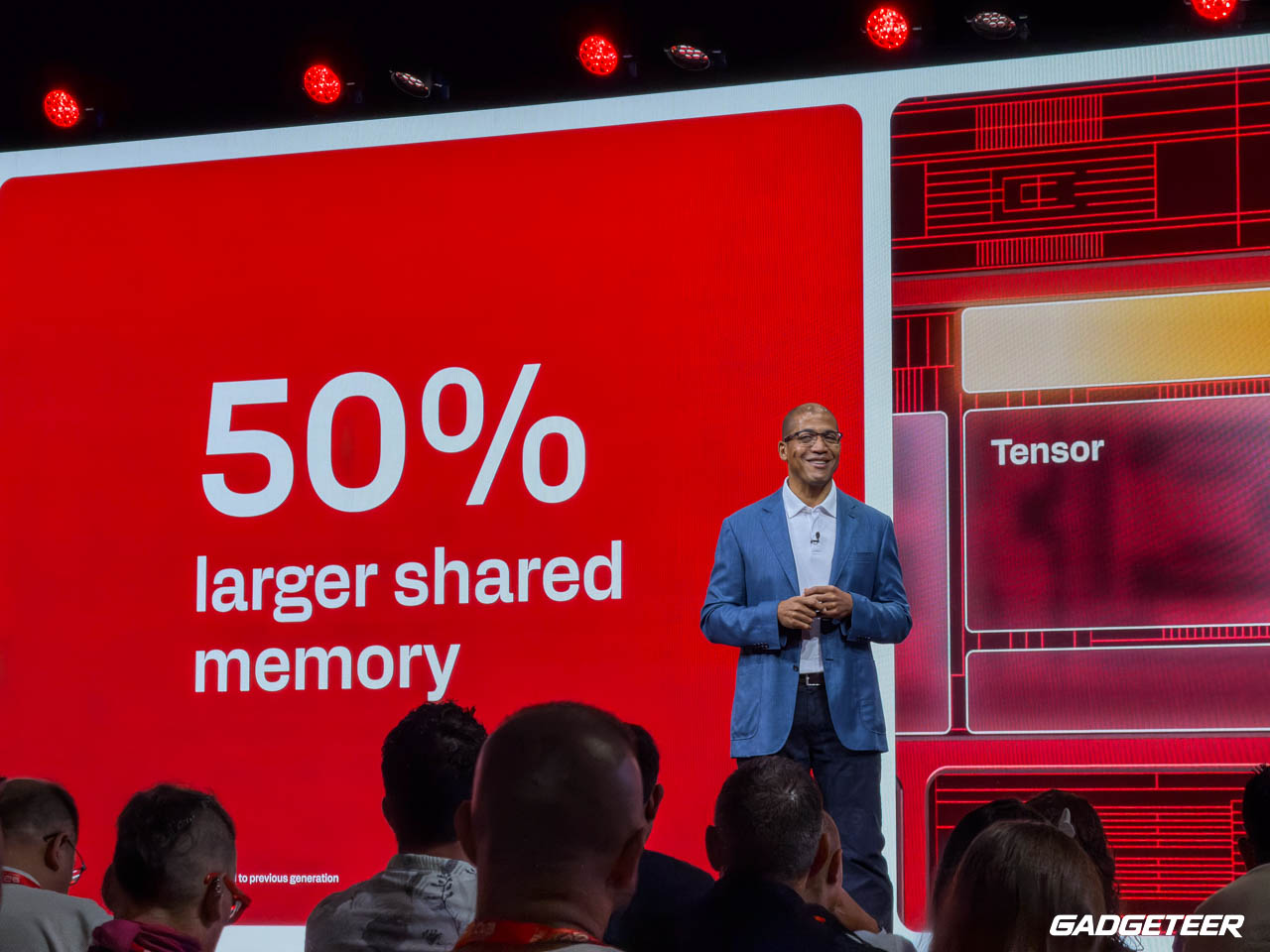
Personal Scribe is Qualcomm’s attempt to make the memory useful. It can build a persistent layer of context from conversations and information you choose to share. That could help an assistant remember a plan instead of treating each request as the first one. It also creates a basic ownership question: can you see what it remembers, decide what it may use and remove something you don’t want kept? Qualcomm emphasized permissions and on-device processing. We’ll need the finished software to answer those questions for an actual owner.
The keynote also sketched a larger on-device model coordinating a schedule over several days. That is a better illustration of the workload than asking a chatbot for a paragraph of text. The CPU schedules actions, the Sensing Hub notices context, the NPU works through the model, and connectivity reaches services when the job can’t stay local. All of that has to happen while your phone still fits in a pocket and lasts the day. “It cannot be hot,” Amon said of the phone. It’s the sort of unglamorous constraint that could decide whether anyone keeps using a background agent after the first week.
The executives didn’t describe this as the end of cloud AI. Their argument is that an assistant working throughout the day changes the economics of sending every small task to a server, just as smaller models are becoming more capable on the phone. Bigger jobs can still use the cloud. The interesting question for a finished device is which steps happen locally, which leave the phone and whether you can tell the difference.
A memory idea for the next wave of devices
Amon also reached beyond the two chips launched today. Qualcomm is adapting its High Bandwidth Compute, or HBC, work from data centers for a future Snapdragon co-processor. The idea is to bring memory and AI processing closer together, so an assistant that has to work throughout the day spends less time and energy moving information between them. He pointed to possible uses in phones, laptops, glasses and cars, and said to watch for more at Mobile World Congress.
That’s a roadmap announcement, not a specification for a phone you can buy now. It belongs in this story because it explains why Qualcomm keeps returning to the same constraint. An agent that is useful only while a device is plugged in, or only when it sends everything to a remote server, won’t feel like the always-available helper shown onstage. HBC is one possible answer, but its mobile implementation and real-world gains still need to be demonstrated.
Games and cameras get their own AI hardware
On Extreme, Adreno Matrix Cores put AI-dedicated processing inside the graphics pipeline. Adreno Neural Fusion can use it for super resolution, frame generation and image reconstruction, rather than sending every step away from the GPU. Qualcomm rates the new Adreno architecture for a 44% performance gain and 40% better power efficiency against the previous generation. Those are platform comparisons, but they point to a reader-facing benefit: a game that stays smooth without turning a phone into a hand warmer.
Qualcomm has plug-ins for Unity and Unreal Engine, which gives developers a way to build around the new rendering path. In the Q&A, its executives made an interesting distinction: in a game capped at 60 frames per second, the benefit of reconstructing an image from less rendering work might be longer play time, rather than a bigger frame-rate counter. That outcome still depends on developer support and the finished phone. A supported game will tell us more than a demo reel, especially after the first few minutes, when heat and battery have joined the conversation.

The camera work is just as specific. Qualcomm’s Spectra image processor is now more tightly coupled to the NPU, so AI can work on the scene during capture. Intelligent Pixel Control gives it finer information about parts of an image. The keynote described 16 bits of data per pixel and used moving children and changing light to show why that might help. A parent trying to keep a face sharp as a child runs in and out of the frame will appreciate that more than another abstract AI label.


Extreme also supports Advanced Professional Video, or APV, along with 8K video at 60 frames per second. Qualcomm’s current product page lists 4K capture at up to 240 frames per second and support for three 64-megapixel cameras. Adobe Premiere is planned for Android with native APV support, offering a path from capture to edit on the same device. These are capabilities for phone makers and app developers to use. They don’t mean every handset will expose every mode, or that a sensor and lens can keep up with the silicon behind them.
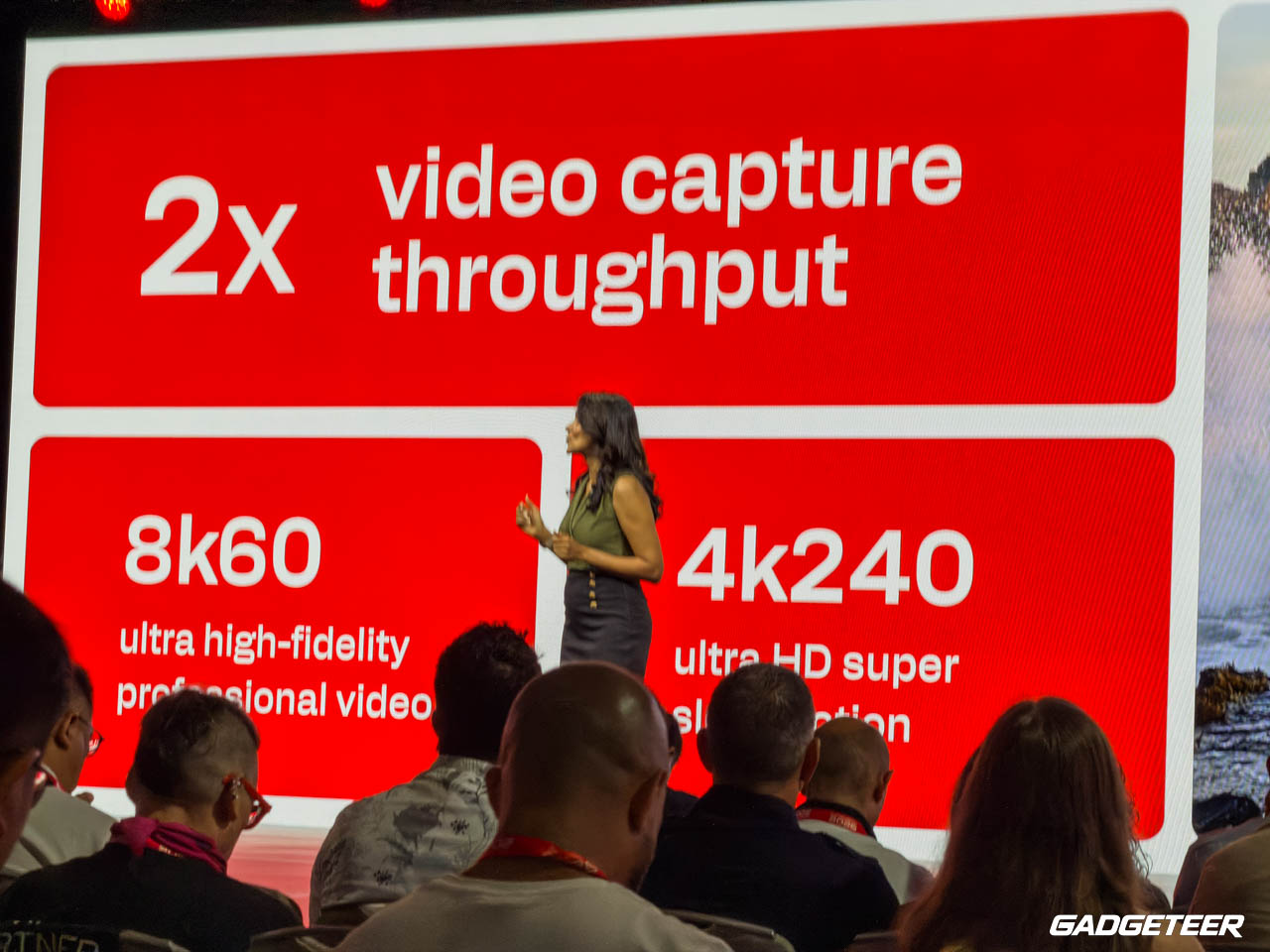
There was another camera question at the Q&A: as AI makes images easier to alter, how do you show what the camera originally captured? Qualcomm described signing media early in the imaging path and recording later edits through C2PA provenance. Its Extreme Gen 6 product brief lists secure C2PA AI provenance support. That’s a capability for phone makers to build into their products, not a promise that every handset will give you a visible, compatible edit history. I’d want to see the finished camera app before calling it a solved problem.
The connection has to follow the job
A personal agent will sometimes need the cloud, and it may need to pass a task to another device. Qualcomm paired the new mobile platform with its X105 5G Modem-RF system and FastConnect 8800. The Extreme product page lists peak cellular download speed of 14.8 Gbps and Wi-Fi 8 support through a 4×4 Wi-Fi design. Those are ceiling figures for compatible networks, not speeds to expect on a coffee-shop connection.
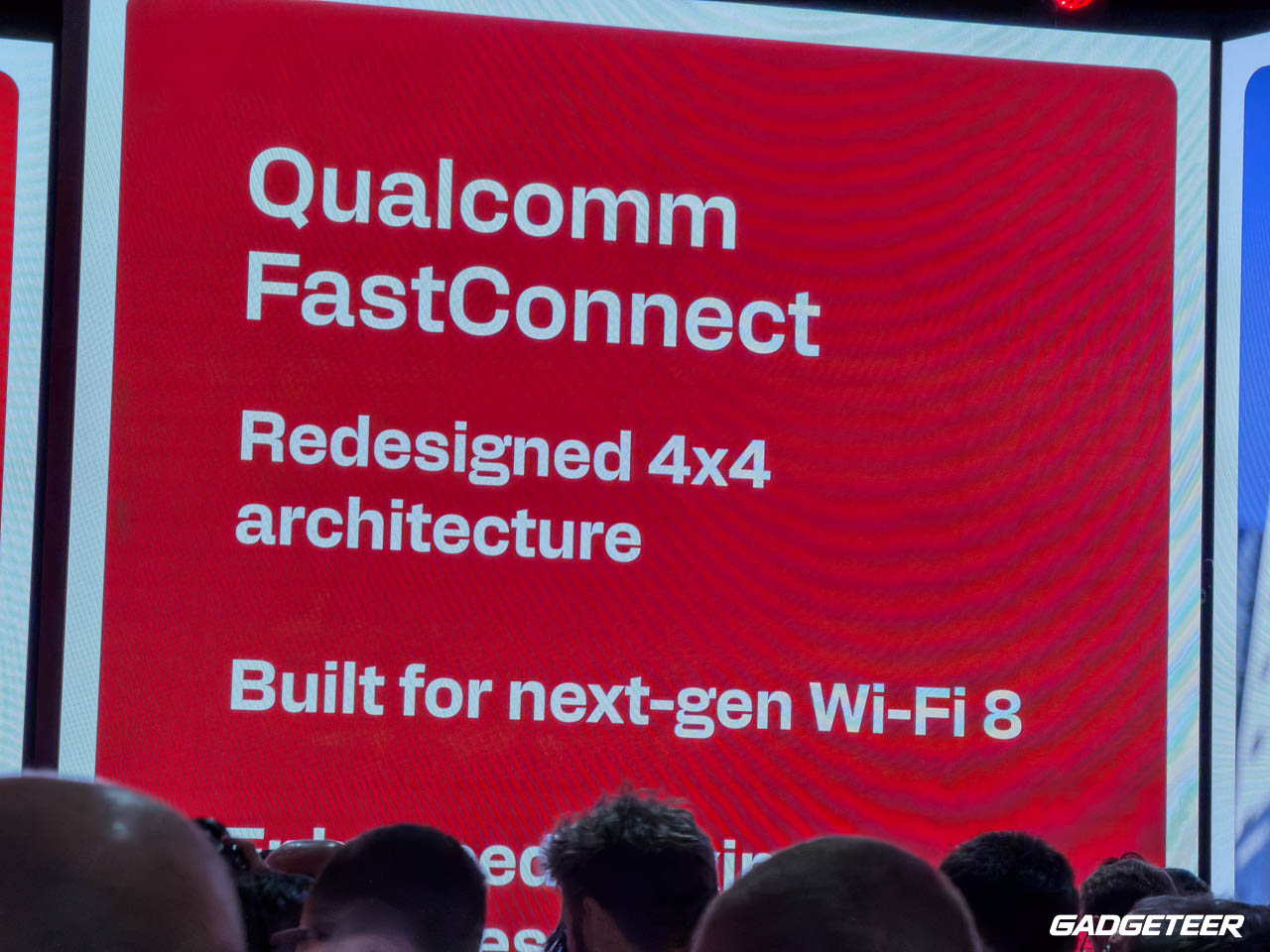
The useful part is continuity. A phone can’t feel like the center of an assistant if the request stalls every time it moves between cellular, Wi-Fi, an earbud and a PC. Qualcomm is building more of that connection into the platform, including satellite readiness and proximity features. How well it works will depend on carriers, networks and the products on both ends.
Xiaomi and Motorola put faces on the chips
Xiaomi used the keynote to preview the 18 Pro family. The 18 Pro and 18 Pro Max span Qualcomm’s two new flagship tiers, which is exactly the choice the dual-chip launch was meant to give manufacturers. Xiaomi talked about a Leica camera system, display work and its own performance tuning. It promised broader availability later in the year, but the full phone launch and market-by-market details belong to Xiaomi. For now, the keynote tells us where the chips are going first.


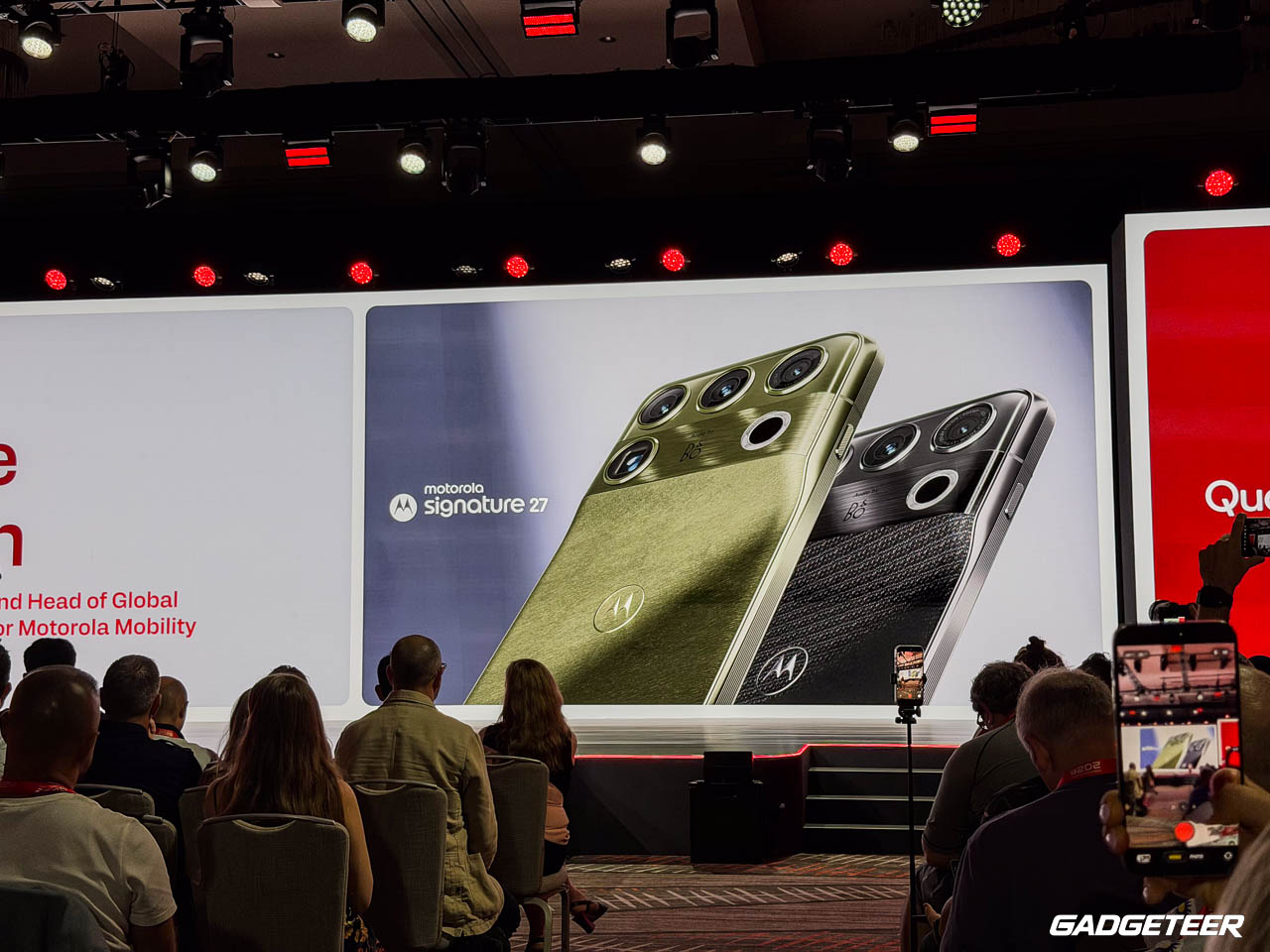
Motorola gave a closer look at the Signature 27, one of the first phones planned around Snapdragon 8 Elite Extreme Gen 6. It described a six-antenna design, AI-assisted video processing, Bang & Olufsen audio and seven years of OS upgrades. Google Gemini is part of Motorola’s software pitch, including help with creative tasks. Seven years of updates is the detail I’d keep in mind alongside the AI demos: a premium phone should still be useful after the launch-day excitement has worn off.


HONOR brought a more playful demonstration, with a robotic phone that reacted to people and music. It was a reminder that the “ecosystem of you” can take stranger shapes than a conventional rectangle. Qualcomm also named iQOO, OnePlus, OPPO, REDMI, RedMagic and vivo among future device partners. Those names establish reach. They don’t yet establish which phone will deliver the most useful assistant.

The software has to cross chip boundaries, too
Before handing the stage to the mobile team, Amon brought up another part of Qualcomm’s plan: its acquisition of Modular. Mojo and MAX are meant to give developers a more consistent way to build and optimize AI across different processors and accelerators. That is easy to overlook beside a new flagship chip, but it addresses a real obstacle. A personal assistant won’t be very personal if a task works on one piece of hardware and stalls when it moves to another.
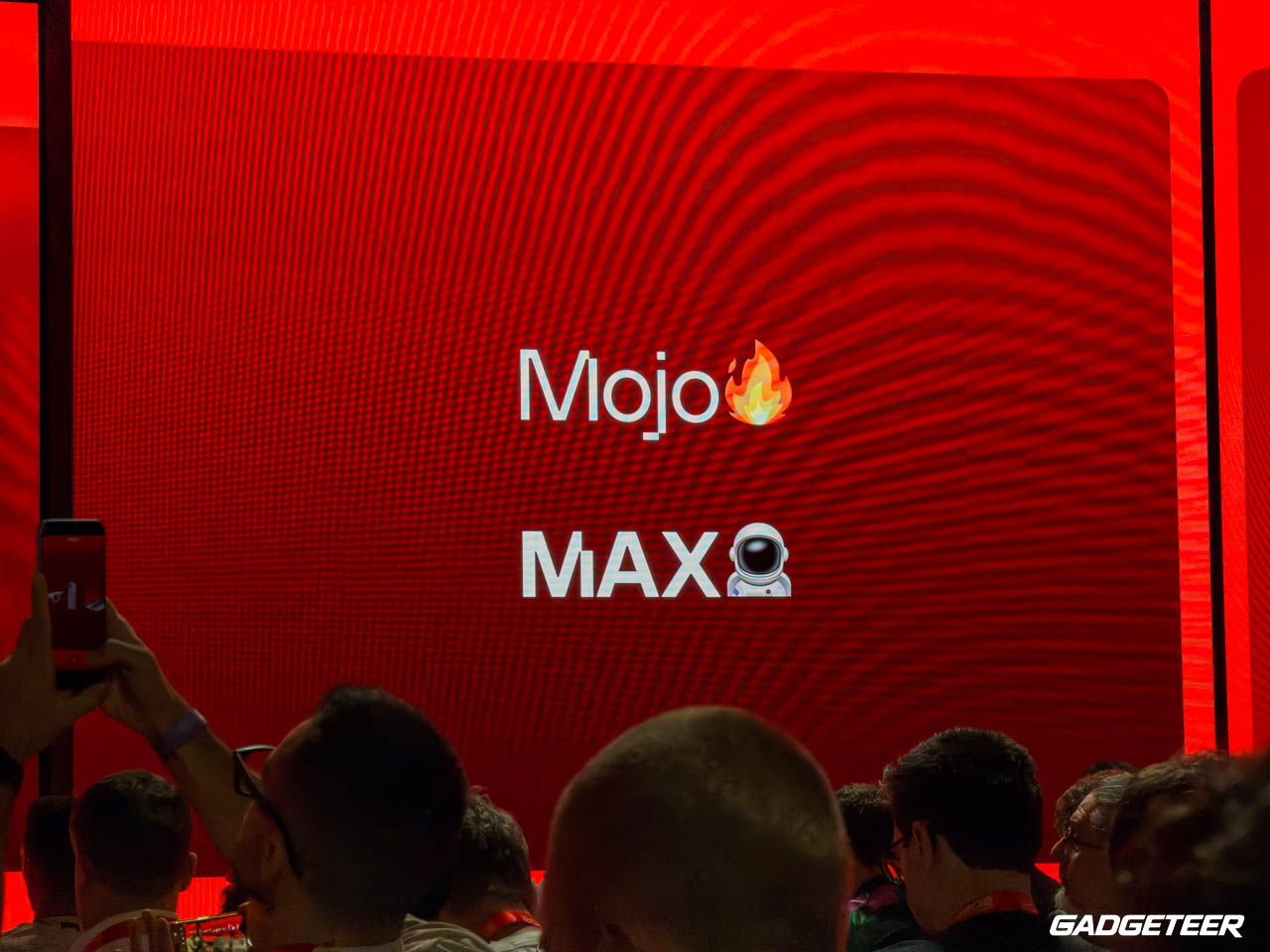
Qualcomm completed the Modular acquisition in July, and Modular’s work on an open ecosystem continues. Amon described Mojo and MAX running beyond Snapdragon hardware, with more developer detail on the Summit agenda. The practical test is still ahead: whether developers can make one useful workflow follow you among devices without rewriting or compromising it at every stop.
The work has to follow you beyond the phone
Amon kept returning to the phone as the device that knows you best. Osterloh pushed the thought further: a useful assistant shouldn’t make you start over when you move from a phone to a car or sit down at a laptop. That is where the rest of Qualcomm’s Summit story becomes a test of the keynote, rather than a stack of unrelated launches. Earbuds need to hear a request, a PC may need to work through the larger job, and the handoff has to leave you in control of what each device knows and does.
The mobile executives gave the word “ecosystem” a more demanding definition: devices actually working together on a task, rather than several products merely carrying Snapdragon chips. That’s the right bar to set. The next announcements show the hardware Qualcomm and its partners are putting behind that idea. They still have to prove the experience on finished products.
Earbuds that don’t need a phone for every request
Qualcomm’s Snapdragon Sound Elite Gen 2 is meant to give a small wearable more independence. It brings Micro Power Wi-Fi 6E to the audio platform, with an embedded NPU for voice and audio work. There are two Wi-Fi ideas here, and they’re easy to confuse. XPAN extends a stream coming from a phone or another source, so you could leave the phone on the kitchen counter and keep listening as you move around the house. Direct to Cloud lets a supported app on the earbud reach a service itself. In that case, the phone doesn’t have to relay the request.
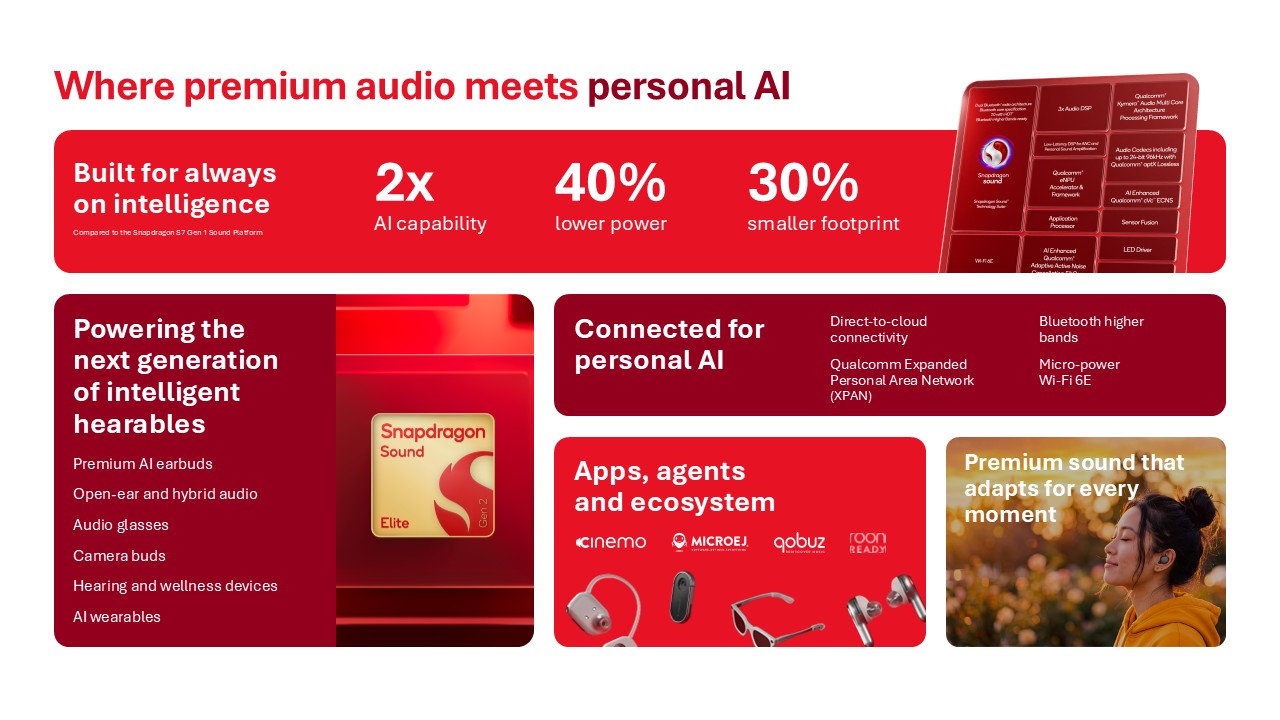
Neither feature promises that every pair of earbuds will work on every network. The manufacturer still has to build the product, choose the services and handle setup. But it’s a meaningful shift from earbuds as little more than wireless speakers and microphones. Ask for a translation or a piece of information while your phone stays put, and the response could begin in the device you’re already wearing.
The sound side hasn’t been forgotten. Qualcomm describes aptX Lossless, fifth-generation adaptive noise cancellation and microphone processing intended to make calls, dictation and assistant requests clearer. Its example of an earbud noticing an approaching siren and letting the sound through is interesting; it isn’t a safety guarantee until we can test a finished product in the real world. The platform’s stated gains in AI capability, power use and size are comparisons with Snapdragon S7 Gen 1, not a battery-life estimate for an earbud you can buy.
A laptop has room for a bigger job
The Snapdragon X2 Elite PC story is about keeping more of a task in view. Qualcomm described up to 85 TOPS of NPU capability and a context window of up to 200,000 tokens. If you ask an assistant to read a long folder of notes, pull out decisions and revise a follow-up list, a larger context window could help it remember the early pages while it works on the later ones. Faster token generation could make that back-and-forth less tedious. Neither figure tells you whether its answer is right.
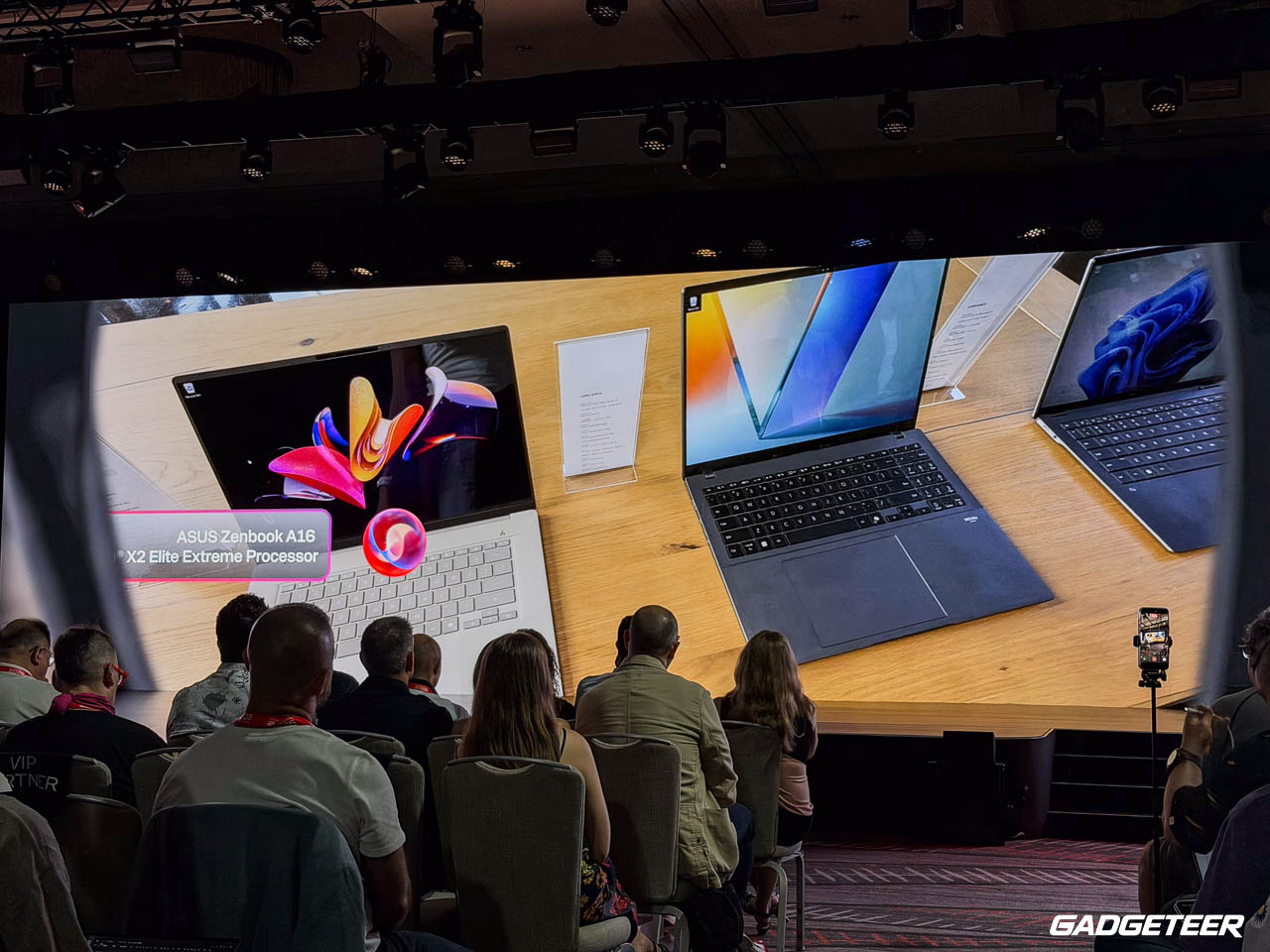
Qualcomm also cited up to 228 GB/s of memory bandwidth across the X2 Elite family and more than 450 enabled AI models. There are agent tools and model runners in the PC ecosystem already, including AnythingLLM and Hermes Agent. What I’d want from the finished laptop is a clear choice: which files stay on the machine, which model runs locally, and which step is about to reach a website or cloud service. A chip that can run a model locally doesn’t make every app private by default.
The keynote’s shopping demo actually used a Snapdragon PC as the object of the purchase. That was a neat way of putting the two halves of Qualcomm’s pitch onstage together: an agent on one device helping choose another. The PC sessions will give us a closer look at how the work runs once that laptop is open in front of you.
Googlebook makes the phone handoff tangible
Google and Qualcomm didn’t leave their laptop collaboration at the level of a concept. The first announced Googlebooks from HP and Dell use Snapdragon X Elite and run Google’s Android-based laptop platform. HP’s Googlebook 14 is a particularly clear example of why the connection might appeal to someone who already uses an Android phone. Quick Access is designed to show files from a compatible phone in the laptop’s file browser. Cast My Apps can bring supported phone apps to the larger screen without installing each one again.
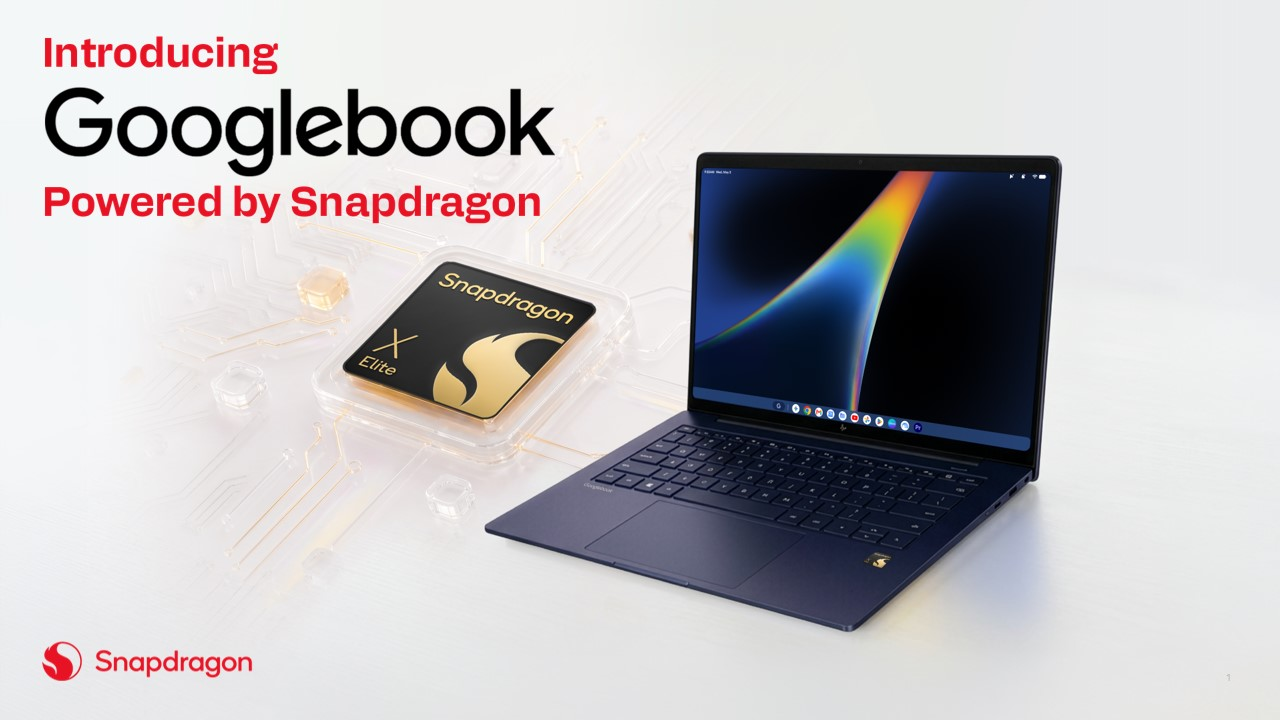
That saves a very familiar step: sending yourself a photo or document so you can work on it with a keyboard. It does require setup and a compatible phone running Android 17 or newer, and “supported” apps doesn’t mean every app on your phone. Those details are worth knowing before the word seamless does too much work.
HP’s machine has a 14-inch OLED touchscreen in the current base listing, 16 GB of memory and 512 GB of storage, with Snapdragon X Elite inside. The Dell XPS Googlebook has a 13.4-inch LCD touchscreen with the same listed base memory and storage. Google’s current preorder pages put them from $1,299 and $999 respectively. HP announced a lower $1,199.99 starting price through its own channels, so check the exact configuration and checkout price rather than assuming those numbers describe identical machines.
There are smaller ideas here I’d enjoy trying. On HP’s model, a Glowbar shows charge status with the lid closed. Magic Pointer is meant to call up Gemini around something you select on screen; Rambler turns rough spoken thoughts into cleaner text; and Spark is designed to work through assigned tasks after the lid closes. Those functions have compatibility, language and network conditions. They deserve to be tested as distinct tools, not wrapped into one vague promise that the laptop “has AI.”
Surface takes a different route
Microsoft’s compact Surface refresh is about choosing how you work, not asking Googlebook to do the same job. The Surface Laptop 13-inch has the built-in keyboard that makes sense if your day begins with email and documents. The Surface Pro 12-inch gives the pen and touch screen a bigger role. Its new Ink Canvas is designed as an AI-assisted place to develop a sketch or rough thought before it turns into a polished document.
Both use Snapdragon X2 Plus, a different PC tier from the X2 Elite platform numbers above. Don’t carry the 85 TOPS or memory-bandwidth ceiling over to these Surface configurations without Microsoft confirming the exact model. Select commercial Surface Pro versions are planned with optional 5G. Microsoft also has a separate haptic Surface Mouse. The devices are slated for Surface markets from October 13 in Platinum, Violet and Black, while final prices and configurations still need checking.
A Pro buyer should think about the keyboard and pen as part of the real setup and cost. A Laptop buyer gets the simpler open-and-type arrangement. That’s a more useful distinction than treating both as interchangeable “AI PCs.”
The most revealing Summit test won’t be a single agent demo. It’ll be moving a real task between a phone, earbuds and laptop without losing the thread, then seeing exactly where the system asks for your permission. Qualcomm has supplied a lot of the underlying hardware and several specific products. The experience has to earn the right to do the next step for you.